
WILD AND WOOLY


BY SUZANN YASSIN “ZAN ASHA” PHOTOS BY SARAH SHIPES
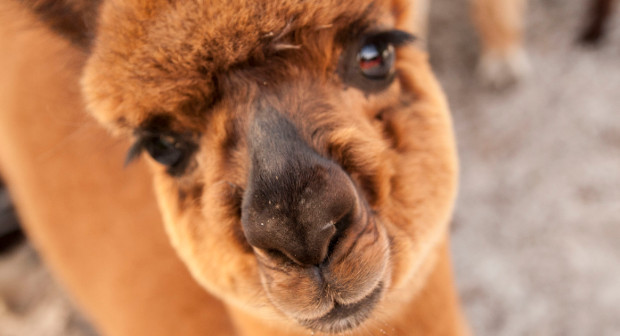
When thinking of Florida farms, perhaps visions of orange groves, farm fresh produce, Tupelo honey, or pasture-raised cattle come to mind. Even in Bay County, quaint farms feature postcard scenes of barnyard livestock alongside sunny gardens-save one. Tucked away along a winding dirt road in Fountain, Florida, you will find Fountain Feather Fiber Farm. There are colorful heritage chickens, exotic quail, a merry band of Tennessee Fainting Goats (they really DO faint), and even a trio of peacocks that dwell in a mauve peacock shed aptly named The Purple Peacock Palace. But the stars of this rural show? A pack of alpacas, the largest herd in Bay County.
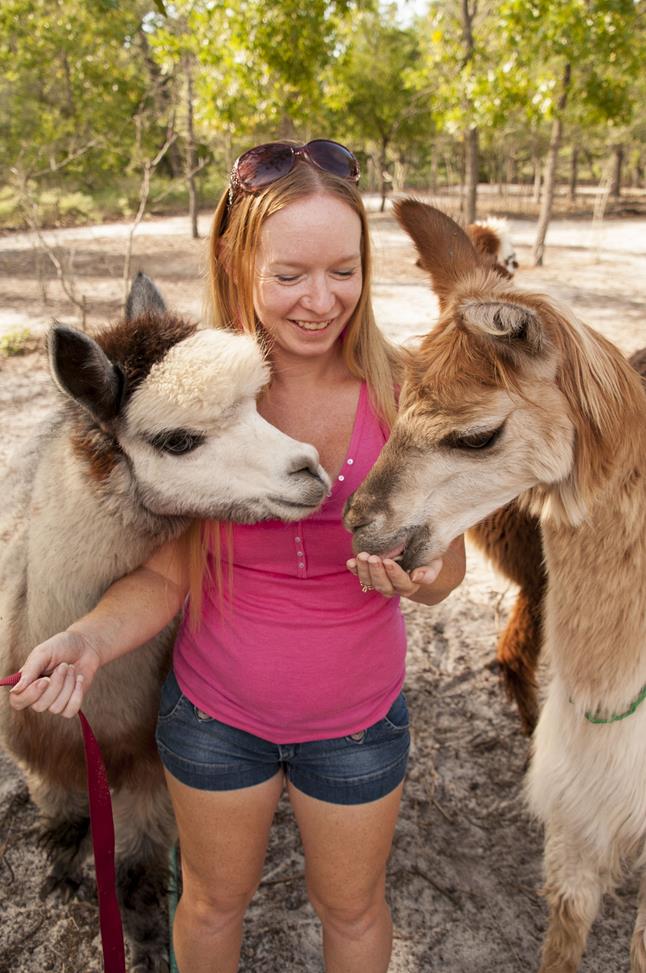
Running the farm is Mary Freeman, who is as unconventional as the farm she has surrounded herself with. She is a diminutive firecracker, speaking excitedly, and ready with good-natured jokes, she is a warm and witty personality. She speaks passionately of the peaceful five-acres that is shared with her two daughters and husband, but it is clear that the farm is her proverbial “baby.” It has been a 15-year project fueled by her love of the countryside and animals, with alpacas holding a particular soft spot in Mary’s heart.
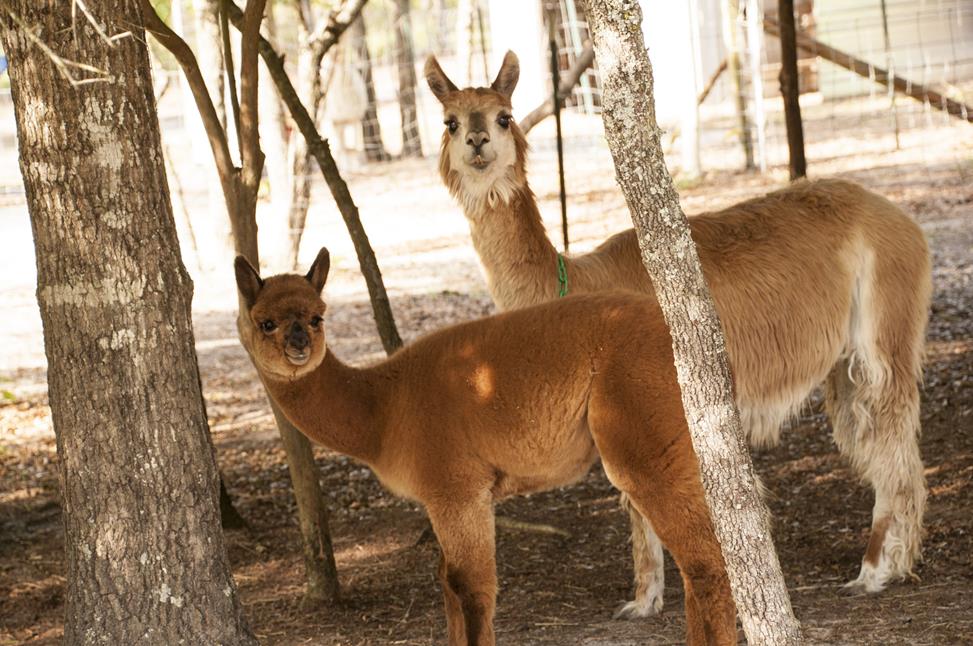
A recent visit and interview with her revealed an extremely well-kept, tidy farm with charming outbuildings (besides the purple peacock abode, there is a pink chicken house, and a red alpaca barn), and a passel of alpacas in several large outdoor pastures.
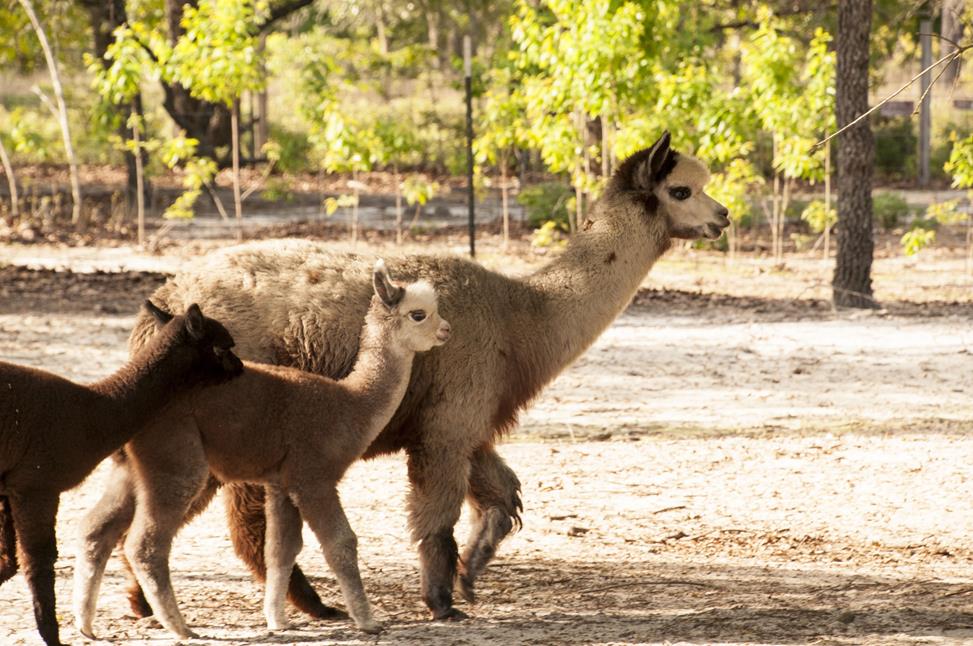
She currently has 16 alpacas in all, including two males (or herd sires), one gelding (castrated male), eight females, and four crias (baby alpacas). Alpacas, which may look like large furry gazelle to the uninitiated, are actually related to llamas and camels, and are part of the Camelid family. They are herbivores found in the Andes of Peru and, because of the cold temperatures at such altitudes, they grow a thick “fleece,” or fiber, which is much coveted for its softness as well as durability.
The fiber is ideal for woven projects, as well as making felt and felted items, and rugs. Females gestate for 11-months, and their offspring are known as crias. As with other Camelids, they are known for their habit of “spitting” when feeling threatened or angry. They are also fastidious in their eating habits, consuming their food sparingly, and using a communal dung pile far away from their grazing pastures.
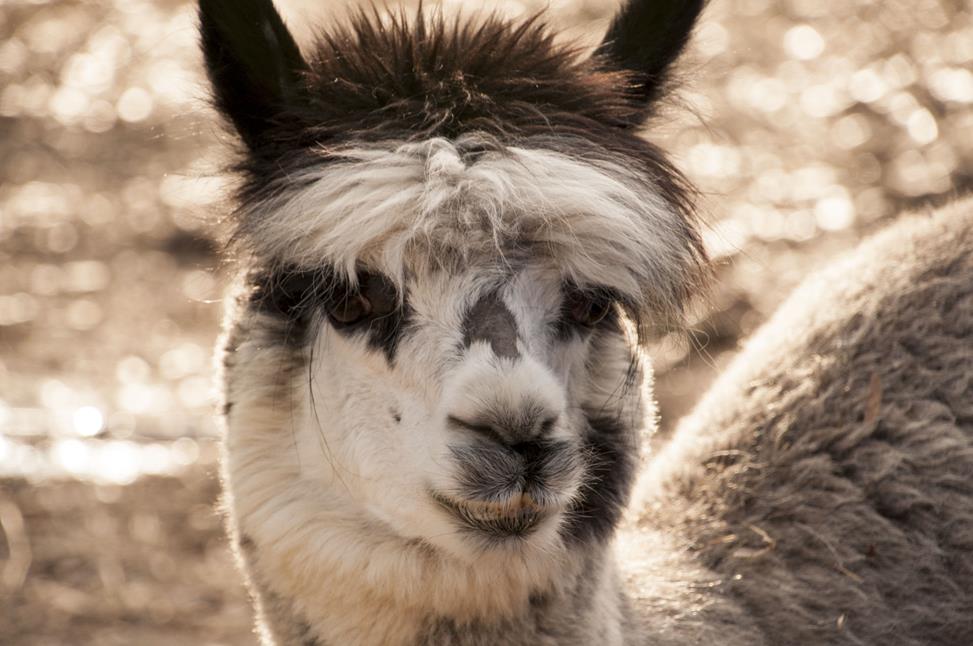
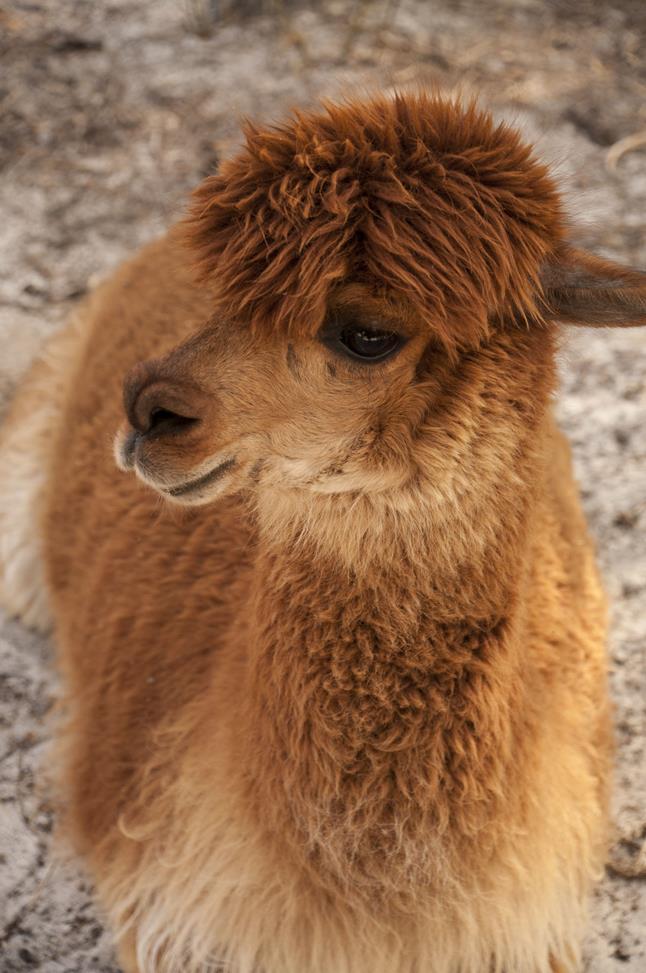
When sitting down for an interview in the barn, these slightly aloof creatures with colorful pelts and even more colorful names are seemingly everywhere. Grace Kelly is an elegant female with soft blue fleece that runs downward into a burnt orange . Her baby, Arianna, is a near-replica of her mother. Hannah is a full black alpaca with a similarly dark-fleeced cria-a boynamed Tyler. There are orange, chocolate, and champagne colored females and outside, one blue-hued male stands in an enclosure opposite a slightly larger all-white male. “That’s so they don’t fight,” Mary explains, in regard to the territorial bravado of the intact males. What else was there to know about alpacas, and this interesting alpaca farm? Sitting midst racing crias and contented mother alpacas, it was easy to see that the answer was A LOT.
Zan: How did you begin this farm journey?
Mary: I lived here most of my life . Before we got married, my husband and I always spoke of our dream to have a lot of property . I have always loved and wanted animals in my life . There was clearly no way to get property in town, so that’s how we ended up on our Fountain farm in 1997 .
Zan: Tell us about your farm animals.
Mary: Two years ago, we obtained three alpacas as rescues. There were two gelding males and a much older intact male named Zephyr. Zephyr actually was very sweet and loved being handled and hand fed. I’m not sure if his age made him more predisposed to being this sweet, because alpacas, by nature, are a little more nervous. In the wild, they are prey animals so their natural instinct is to move away from anything that looks threatening, doesn’t look like an alpaca . It was heartbreaking when he eventually passed away.
Zan: But you eventually brought more to the farm…
Mary: Yes. I just loved the unique nature of alpacas and how easy they were to handle. It honestly didn’t even occur to me to do anything with the fiber at first! We eventually got several more females from a breeder in Blountstown.
Zan: Tell us about the business aspects of owning alpacas.
Mary: I researched what to do with the fiber and I started getting interested in working with our animals’ fleece. And we did need to shear them last spring because their fur had gotten quite long and it was getting too hot outside. I thought I would be able to do it with the help of my husband, but it actually just turned into a rodeo. Even though alpacas are smaller and lighter than llamas, they really do throw their weight around in situations they don’t like. It was quite an ordeal to keep them still, especially since we weren’t fully sure of what we are doing, ourselves. We did manage to get fiber from the animals but, needless to say, we have hired a professional shearer to come out at the end of this spring.
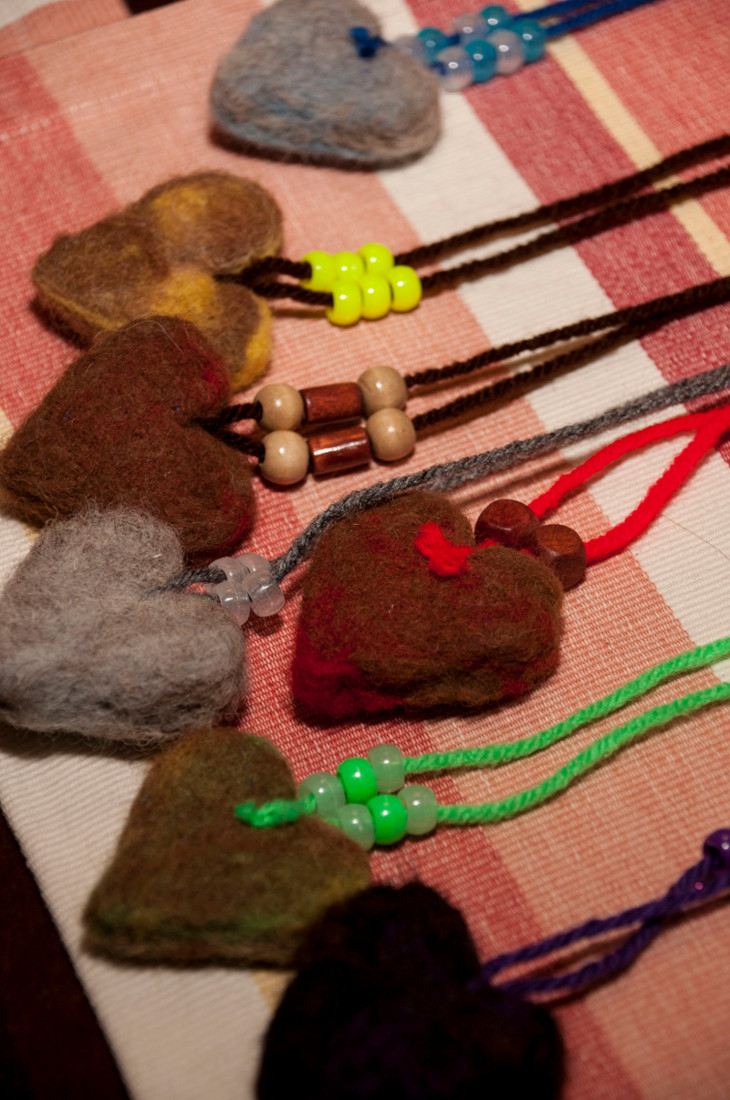
Alpaca fleece can be used to felt or spun into yarn or even sold as is by the ounce. This coming year we are exploring the spinning of the fiber into yarn to be able to make sellable items like crochet hats, gloves, etc. But the bottom line is we have our farm for enjoyment and we know there are many different things we can do or do differently.
Zan: What is your advice to people seeking to have alpaca as pets or fiber animals?
Mary: Clearly, you should have some pasture land or enclosure set up, including a three-sided shelter so that they can get out of the elements.
And, because alpacas are originally from a cooler, dryer climate, you should also be sure to make water available to them, both to drink and as a way to cool off. You can provide a kiddie pool, livestock tank, or sprinklers. A few of ours love playing in the sprinkler system we have set up for them.
Zan: What do you see for yourself, your farm, and your alpacas in the future?
Mary: We hope to move into selling the fiber, fiber crafts, and jewelry in a few months. We are currently working with the newly formed Florida Arts and Rural Market and are also hoping to provide these items at various markets in and around Bay County. I would love to hopefully sell the crias and maybe even teach classes on some of these fiber crafts in the coming years. And I always love talking about and sharing information on alpacas and encouraging that sort of interest in others.
Mary and her Fountain Feather Fiber Farm can be contacted at Fountain_feather_fiber_farm@ yahoo.com