
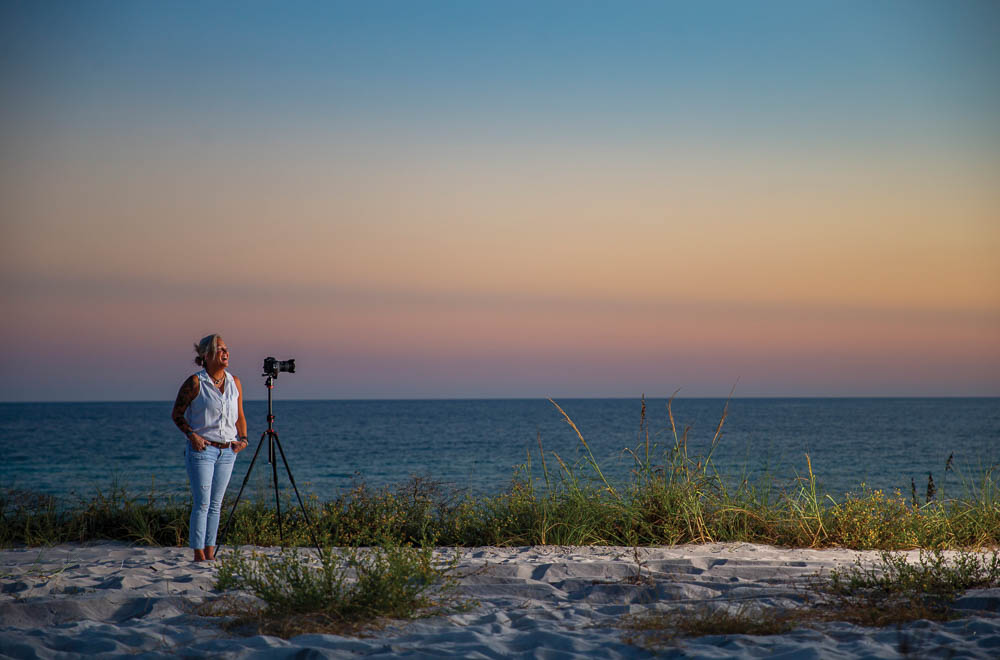
TO CAPTURE A STORM – Photographer Susan Gunn


BY MIKE FENDER
PHOTOGRAPHY BY MIKE FENDER AND SUSAN GUNN
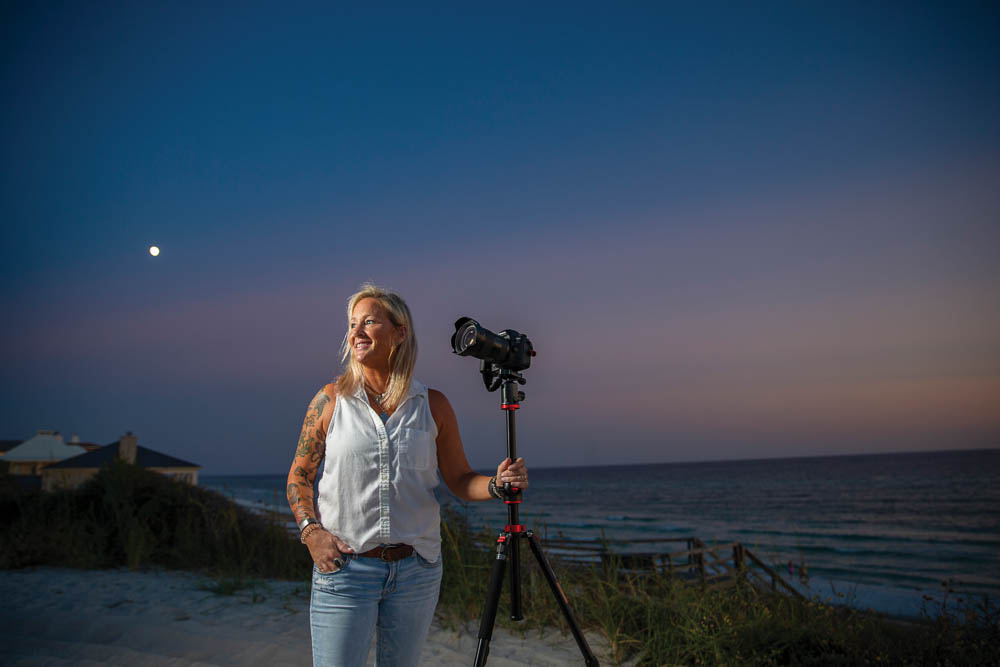
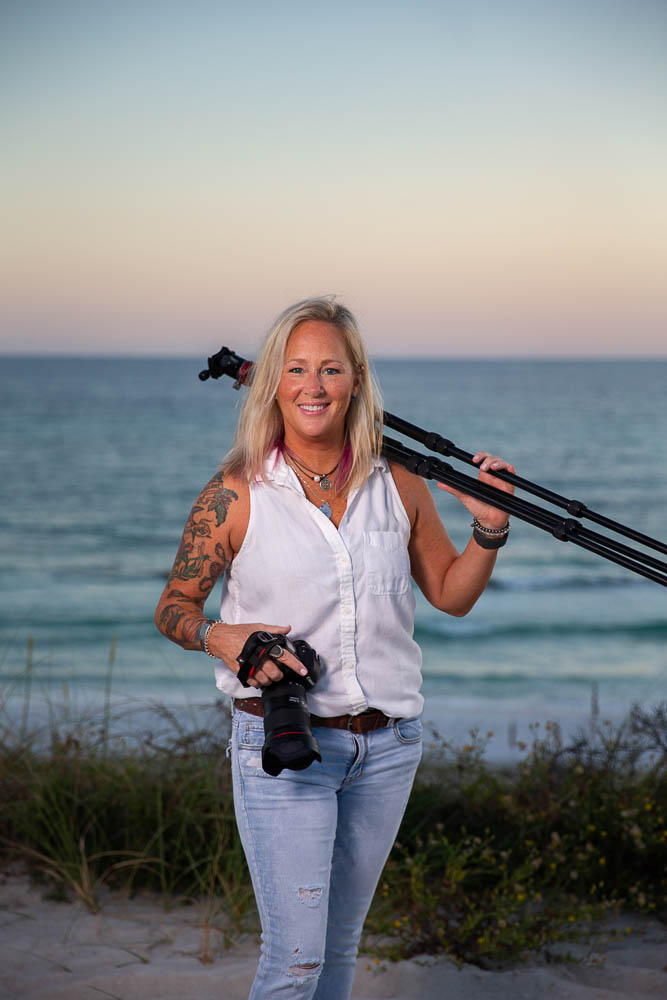
Nature’s beauty and tranquility can turn into drama and danger at a moment’s notice along Florida’s Gulf Coast. The split second when lightning is at its brightest and the atmosphere carries electricity when nature unveils its full force that has the entire sky illuminate has been a motive in paramedic-turned photographer Susan Gunn’s work. Her beautiful and uncanny captures of nature’s unleashed energy strike a nerve with Northwest Florida residents, where hurricanes are a common and respect-inducing occurrence.
Fascinated with nature, the sky, peaceful moments, minutiae, and guided by a fierce pursuit of ideals, she chose a career path as a first responder in Atlanta. Her work of saving lives endangered her own more than once. She was attacked by a patient with a straight razor, faced the muzzle of a gun, escaped an attempted assault thwarted by one of her fellow crew members, and even endured the theft of narcotics from her ambulance. She saved lives and watched lives slip away.
Those experiences, she says, taught her to look at life a little closer and not take it for granted. These days she carries a camera as well as a medical bag. Gunn, as friends call her, left the hectic life in Atlanta just a little more than five years ago to fulfill a dream of living on the Gulf Coast in Santa Rosa Beach. She worked for Bay County’s Emergency Management Services and Sacred Heart Hospital when a lifelong heart condition manifested into a bigger problem and the realization that her years as a paramedic were numbered.
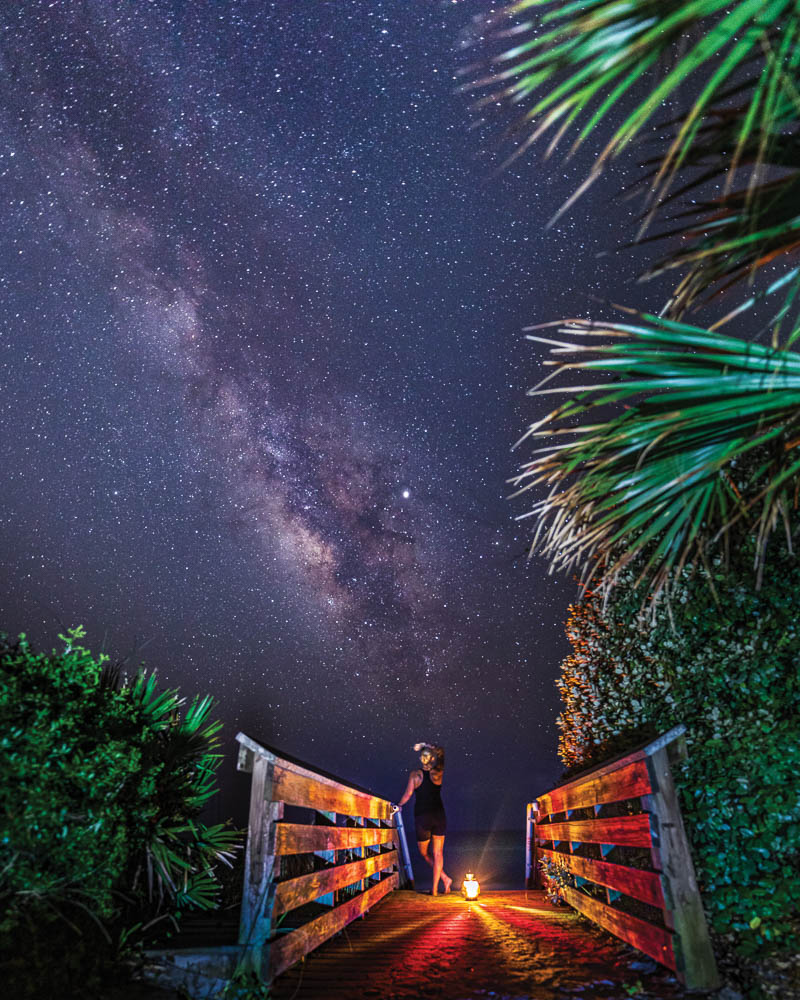
Following heart surgery, Gunn has taken on photography fulltime and has built a steady stream of followers and fans with her Milky Way and lightning images. On social media, she can be found under her @susangunnphotography handle and also owns the large lightning-dedicated hub @girlswhobolt.
The adrenaline rush she gets from capturing bolts of lightning with her cameras is similar to what she experienced rolling up on an emergency scene. Only now it is the first whisper of thunder and the weather alert app on her phone that wakes her up and gets her working instead of the emergency scanner.
While her storm photography is getting her noticed, Gunn finds purpose in her work with a camera. She is a conservationist, nature, and wildlife advocate at heart still holds licenses as paramedic and rescue diver and wants to do her part to help protect and preserve the beautiful things she photographs along the coast.
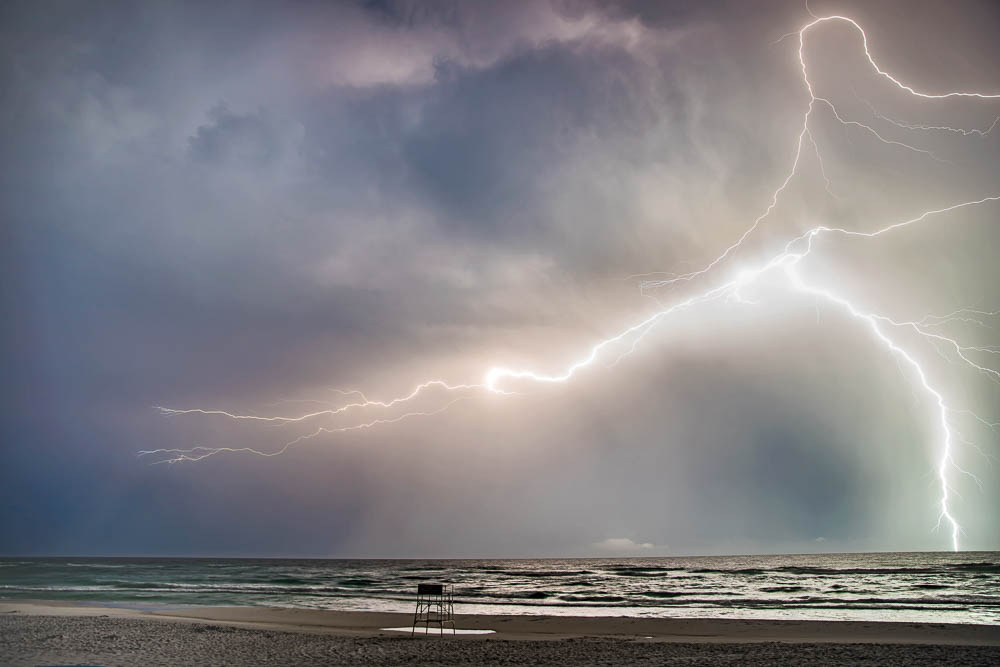
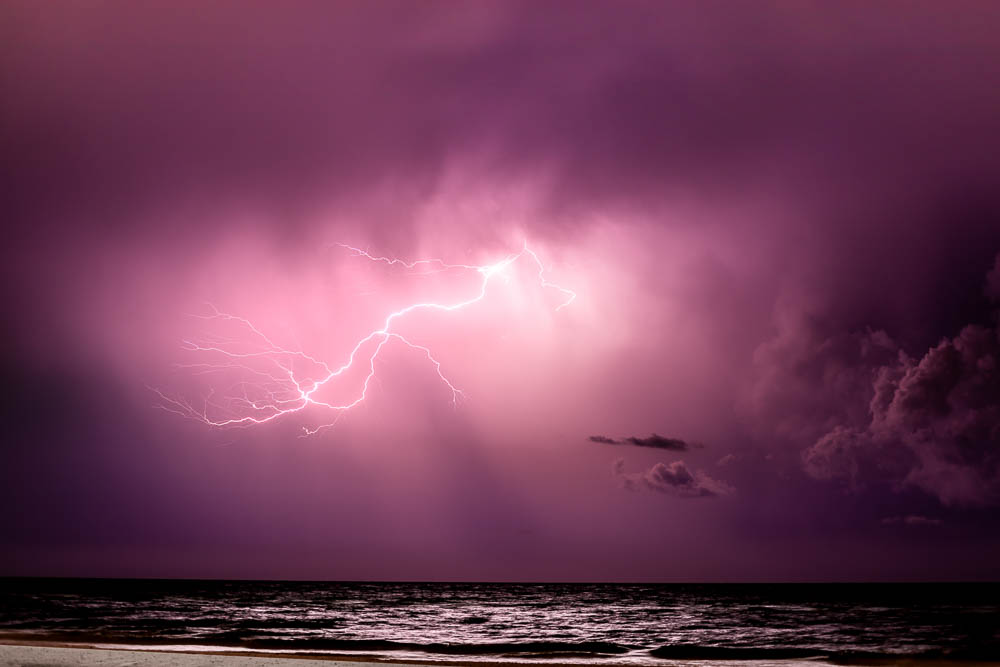
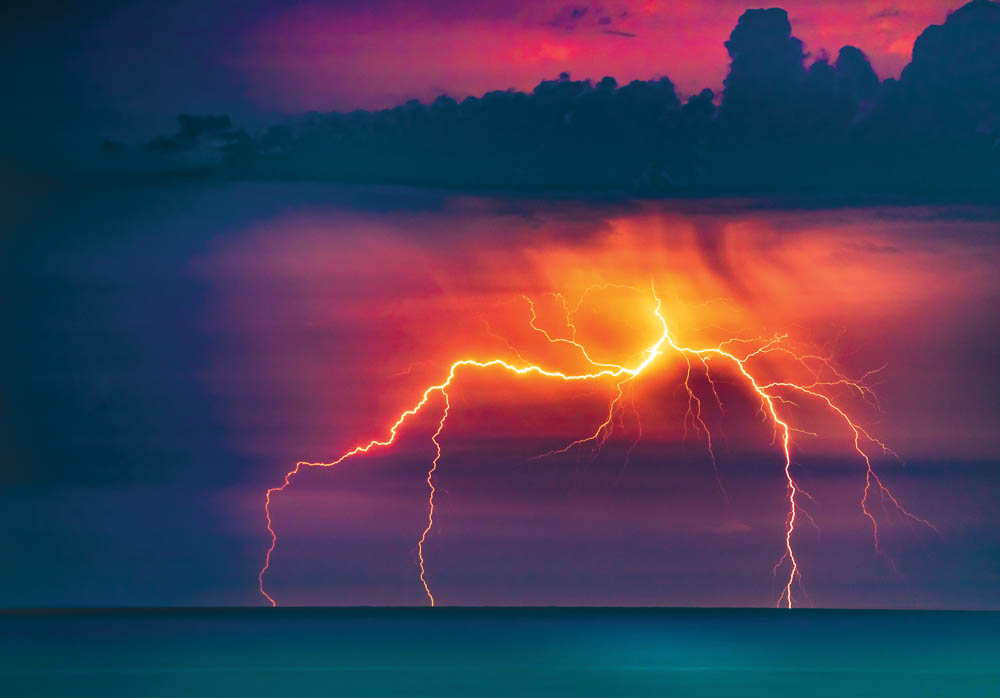
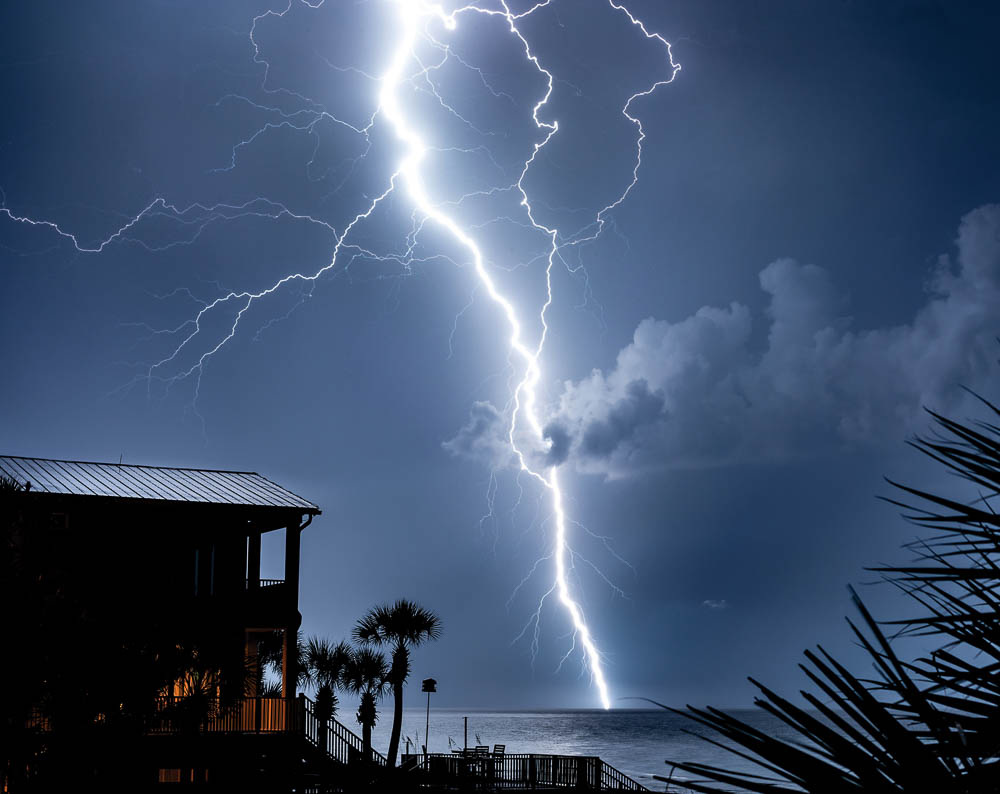
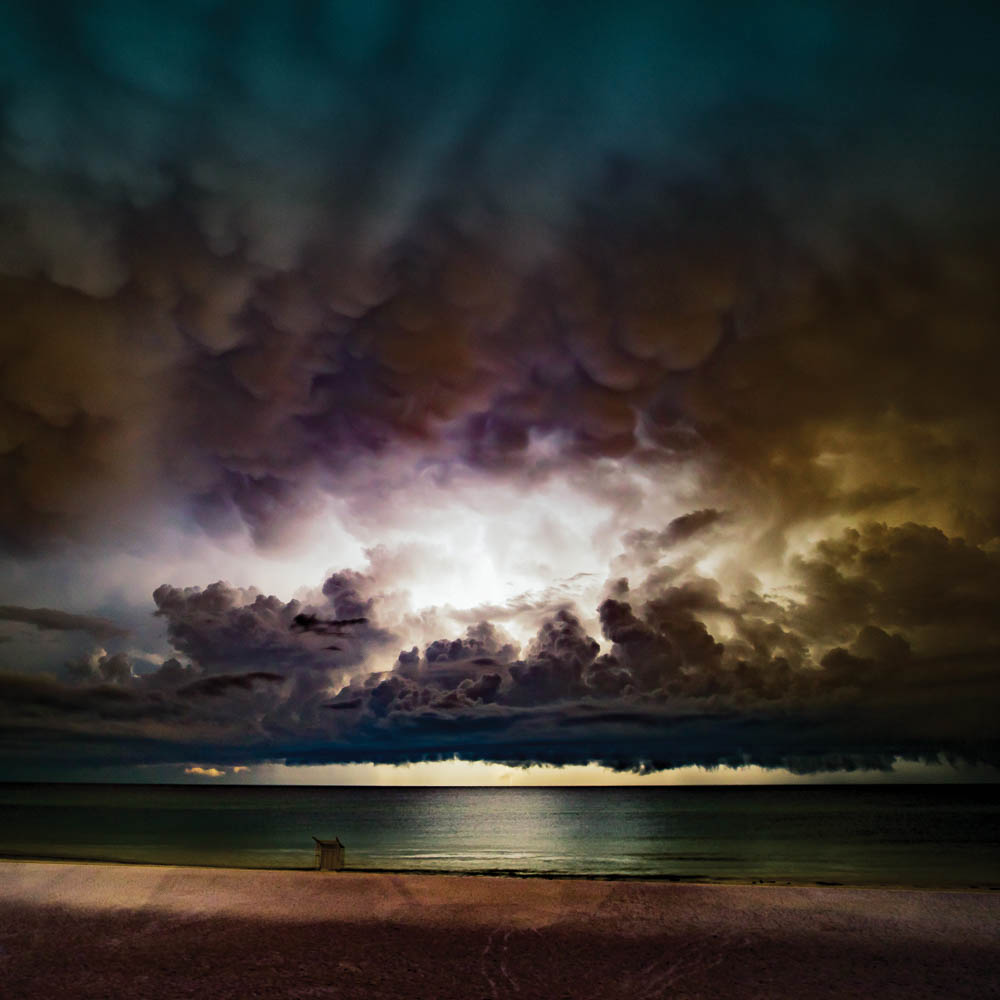
“There is meaning in everything, you just have to use your heart and mind,” she says on her website. We sat down and asked her a few questions about her transition from paramedic to photographer and how she approaches her work as a storm chaser. She shares a few of her favorite photographs with our readers to witness the beauty of the Gulf Coast she has been able to capture.
“Don’t wait until the last minute to prepare… One thing people don’t always consider is that it might also save the life of that first responder who has stayed behind to watch over them.”
What came first, your passion for photography or for storms?
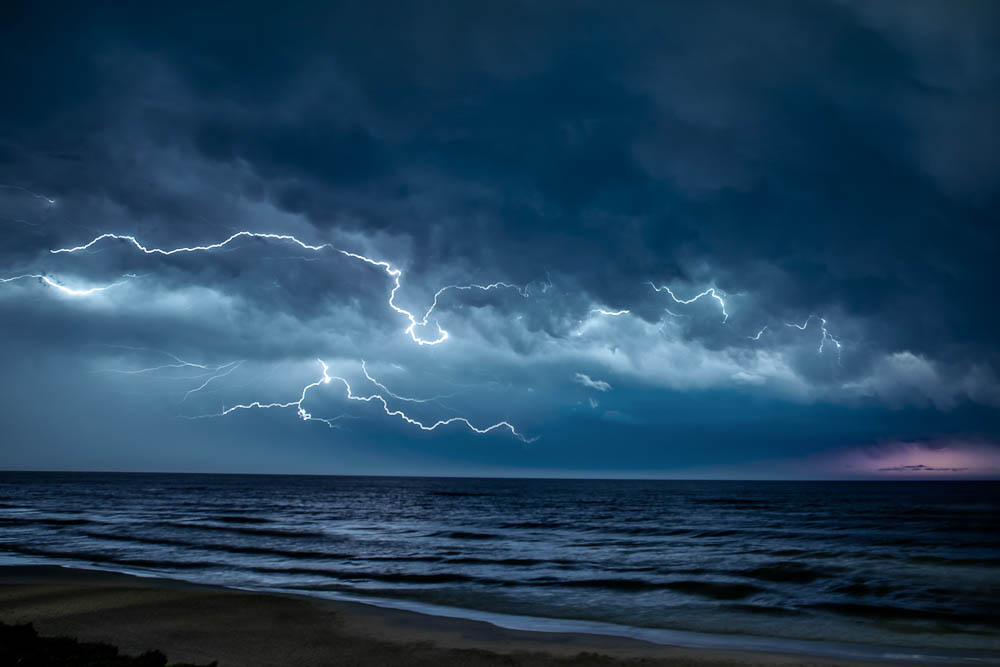
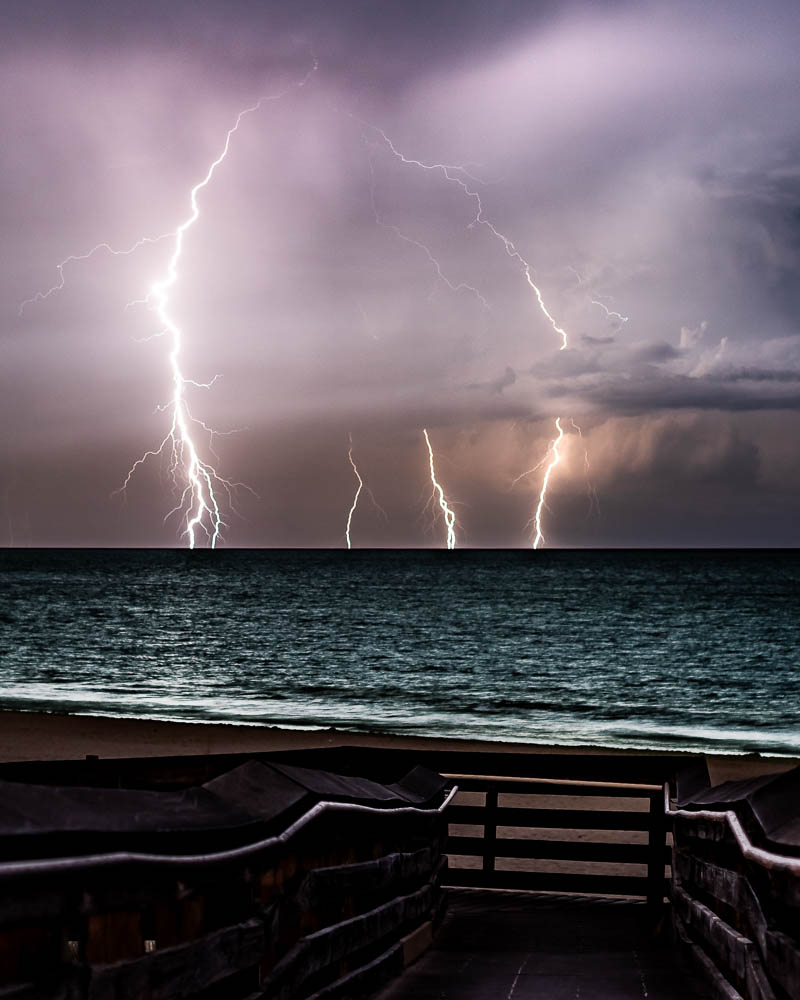
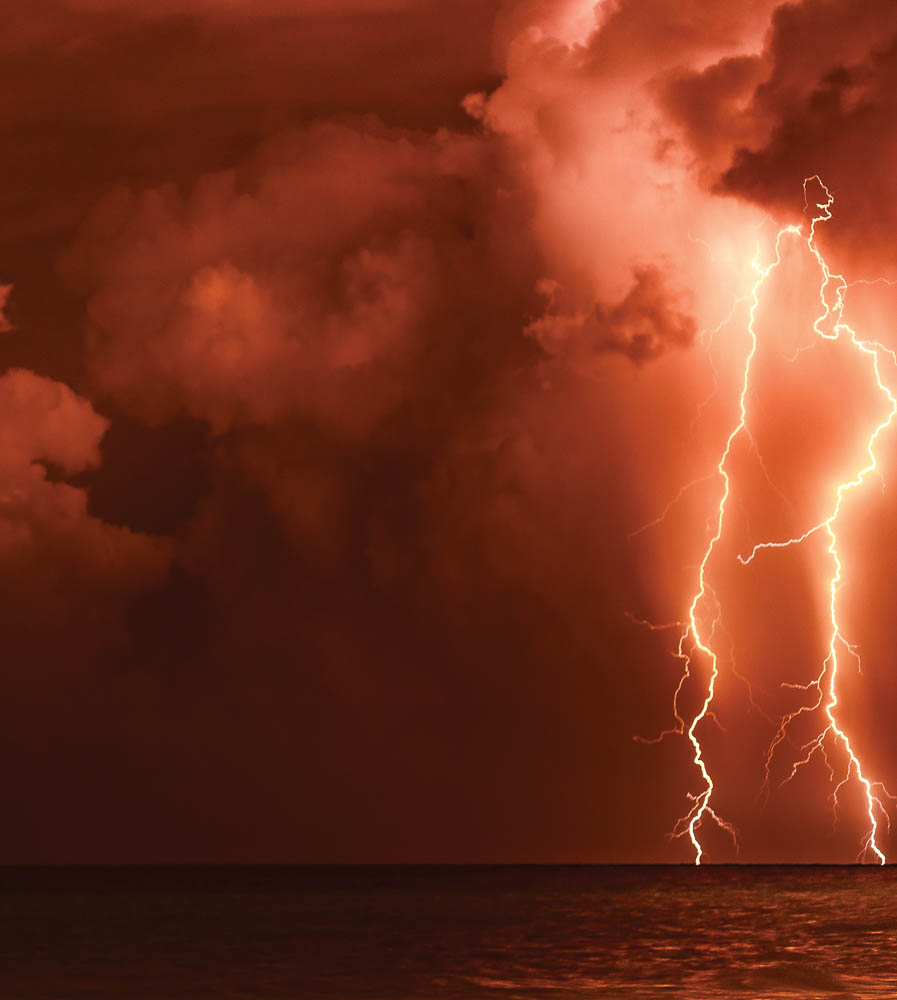
I have always had a passion for photography. My grandfather was a photographer, so I think it’s in the blood. It was an organic evolution that steered me mostly into nighttime and low-light photography. I love the challenge of capturing single exposure, low-light shots using only the light emitted from the subject in a progressing age where so many photographers are using multiple layered shots, or Photoshop to compose a digital scene. Don’t get me wrong, these graphic arts produce beautiful images, and I have used layering and stacking techniques, but all my photography in my online shop is single exposure. Milky Way and lightning photography are by far my favorite. There is no way to describe the sense of excitement and satisfaction when you know you’ve captured a gorgeous lightning strike. They are something so beautiful to see in a still image. Each strike is like a fingerprint, and they make for stunning works of art.
Where do you do most of your storm photography?
This is an easy one: wherever the radar takes me! Seriously, most of my lightning photos are shot on the Panhandle’s Emerald Coast, Panama City Beach, and the 30A/Santa Rosa Beach area. I adore sea breeze and offshore storms as they make for elegant and sometimes visceral bolt shots. I would like to branch out and capture lightning in a different setting. I hope to travel out west next year to capture some of the monsoon season in Arizona.
What type of research, preparations, and security measures need to be made/taken for your storm photography?
Research and prep for storm photography basically consist of weather forecast watching, sky watching, and weather app monitoring. I feel like I’ve become a mini meteorologist as I’ve evolved into a lightning photographer. I always make sure my gear is clean and ready to go. Storms on the Panhandle can be intense and super fast movers. I try to stay ahead as I watch the weather apps when a storm is brewing, plan where I’m headed and what cover might be there for my protection. I have the sound of thunder as a notification on one of my apps, so if that alert sounds in the night, I wake up and go no matter what time it is.
 Describe your equipment and the process of storm photography.
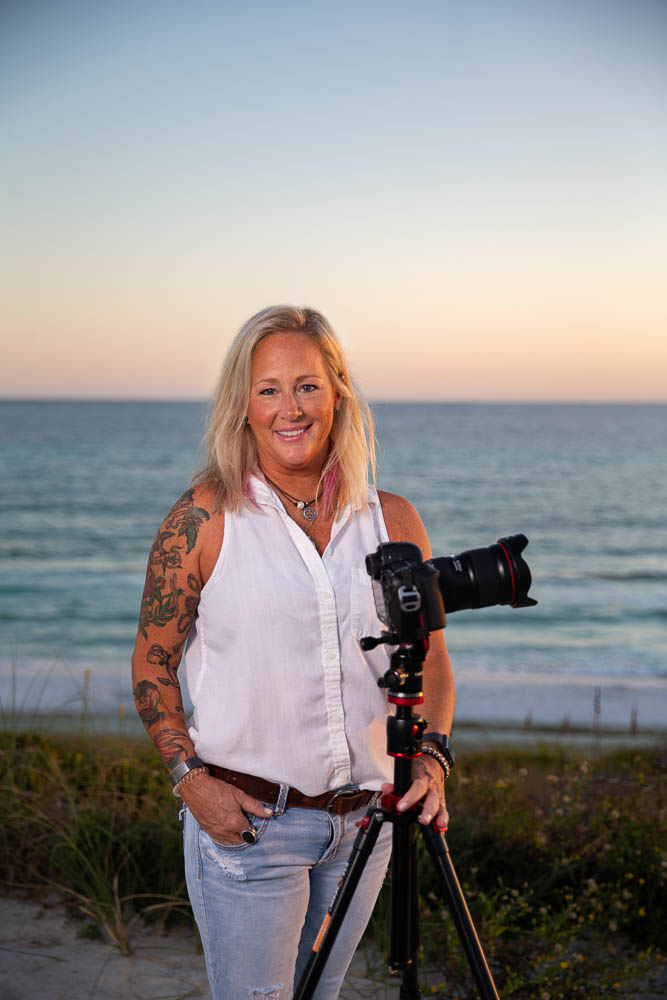
As far as equipment goes, it doesn’t take a professional camera to capture lightning. Although I do use one, and in my humble opinion, it’s one of the most versatile DSLRs I’ve had the pleasure to use. I have shot with so many different big-name brands, but I’m a Canon girl at heart, and currently use the Canon EOS 5D Mark IV for most of my Milky Way and lightning photography. I use mostly Canon prime lenses and choose which one depending on the storm quality and proximity. There are lightning triggers on the market that attach right to the top of your camera, and by using infrared sensors, they trigger the camera to shoot when there is a flash of light detected. The triggers are great for capturing daytime bolts, which are very difficult, as well as night bolts, and they can produce some gorgeous images. I typically don’t use a trigger at night but prefer instead to use manual settings and long exposure time, though I have used a trigger at night. It’s a personal preference. I just prefer a challenge! It goes without saying that there is an inherent risk if you choose to photograph lightning. I try to be as mindful as possible when I’m storm-chasing, and on occasion have photographed bolts from the safety of my vehicle. I always encourage the members of @girlswhobolt to practice safety first when shooting. These are mostly professional women, and all intelligent, intuitive photographers, so like me, they experience a heightened sense of awareness in a storm, that natural instinct that says “enough is enough.”
 How predictable/unpredictable are storms? What’s the worst that can happen? What unusual things have happened and how do you ensure your safety?
With today’s technology, storms are becoming more precisely predictable. I have a lightning app that shows me precisely when and where a strike occurs. This also helps me stay a little safer. But we all know the worst that can happen is someone getting struck. As a paramedic, having the unfortunate experience of running lightning strike victims, I’m acutely aware of the danger and risk, and I try to practice safety to the best of my ability. One time something unusual happened during a storm that really got my attention. I have what’s called a “link loop” monitor in my chest that has wires running into the electrical pathways of my heart for a rare congenital condition. I was shooting a particularly intense storm one night when suddenly I felt a tiny electrical tingle at the top of the heart monitor, then almost simultaneously one of the biggest bolts I have ever captured hit hard. I was standing with a group of people and every one of us had that instant involuntary “duck and dive” reaction. I was too close! Lesson learned.
“I feel so lucky to have captured those images, but more importantly, to have seen it with my own eyes.”
How much time do you dedicate to photography?
I am a full-time photographer now. It’s not as easy as people might think. Any dedicated photographer will tell you it’s hard work, but a labor of love. I spend lots of time shooting hundreds of photographs, then I get home and work on post-editing and development. That’s really the most time-consuming part. If you love photography, it does become an art form, and if you are fortunate, people will want your art.
What’s on your bucket list for storm photography, and generally, on your bucket list for life?
In regards to the bucket list: it’s a long one. Some of those items have already been crossed off, but I have to say that I want to travel to the Midwest, Australia, and Africa during their monsoon seasons. I am an extreme lover of nature, the ocean, our planet. I am a conservationist, also an underwater photographer and diver, and I have not done as much of that lately as I had hoped. I’ve had the great pleasure to dive open water with reef sharks, but imaging great white sharks is definitely near the top of my bucket list. Also, I hope to have a small brick-and-mortar gallery here on the Emerald Coast one day. Lofty goals! Ultimately, like any artist, I wish for my photography to elicit a reaction in people. If I have moved even a single soul with an image, I’m happy.
 What are the thoughts that go through your mind while waiting for the perfect moment during a storm?
There is a misconception about storm photography that those of us who shoot lightning are always standing out in the rain. While I do capture “rain-wrapped” lightning, most of the storms I shoot are not producing rain at the time of capture. Some of these storms are intense and fast movers, so there really isn’t much time to focus on anything but the storm itself. Using a trigger can make for a more relaxing photo session, but I find using the trigger as well as manual long exposure make for the best photos.
 What’s the most thrilling, scary, or impressive thing that has ever happened?
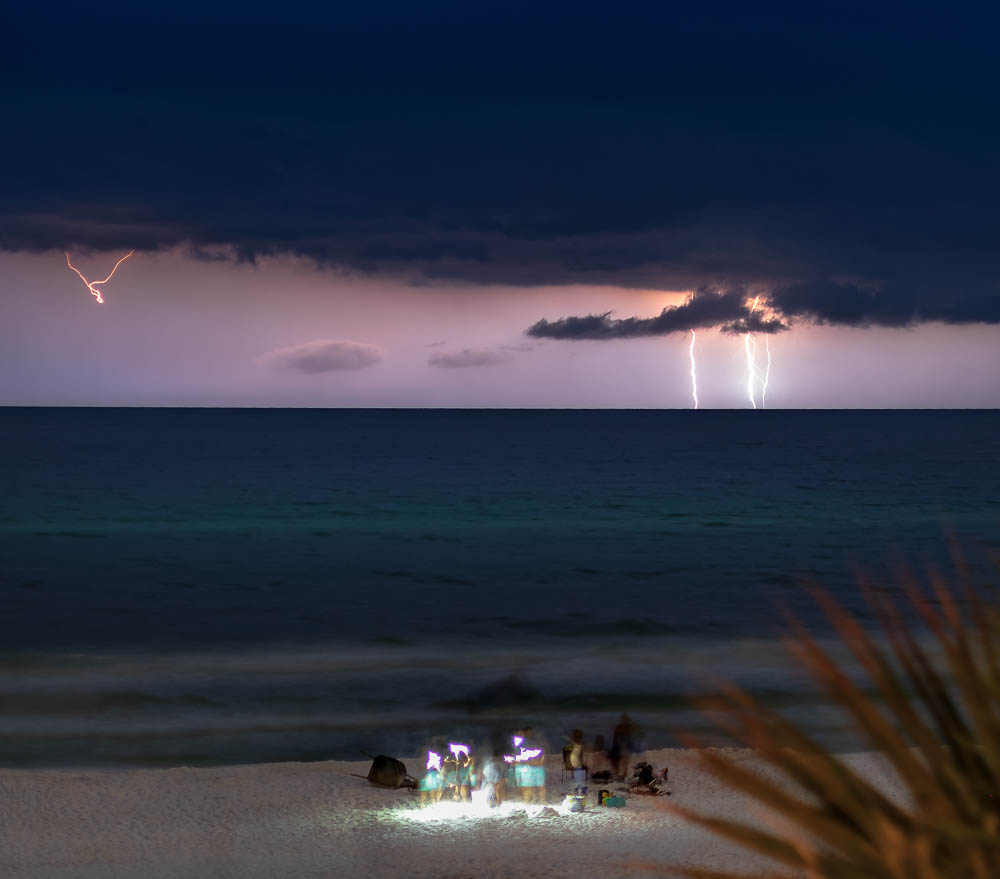
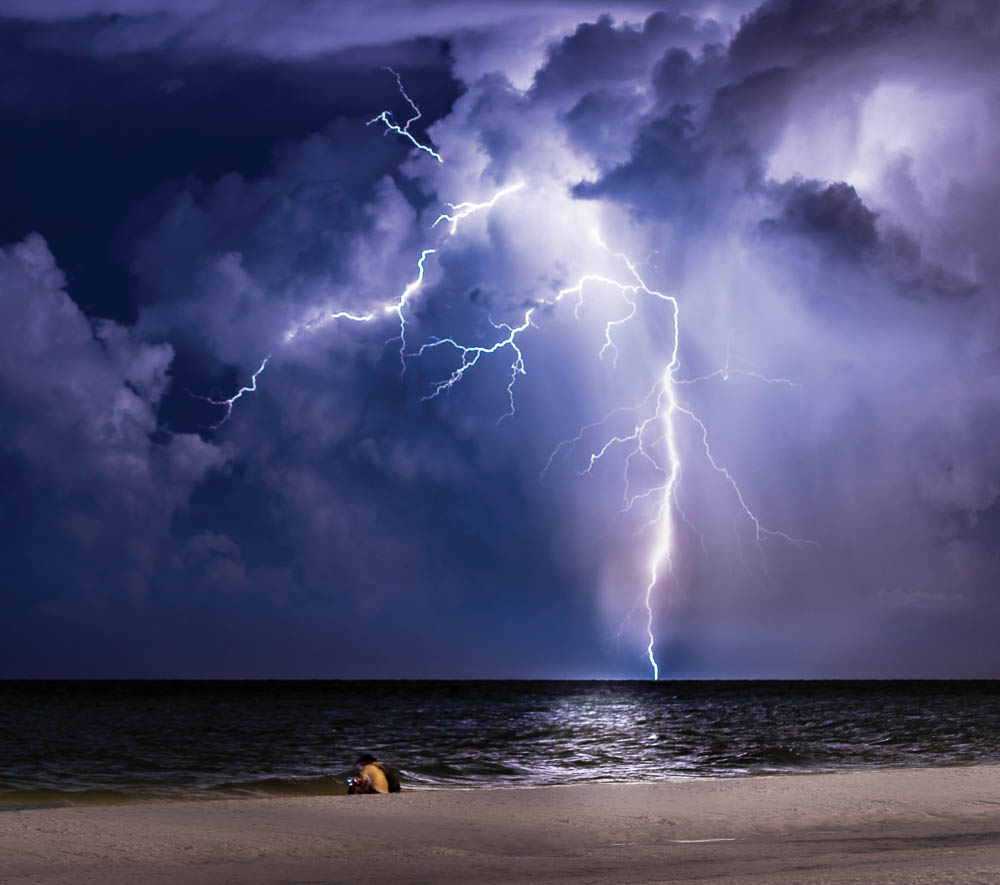
The most scary thing? That little tingle in my chest I referred to. The most impressive thing to me is when the night sky lights up in front of you, revealing whatever scene the darkness hides between strikes. For example, witnessing people going about routine moments like having a bonfire, taking a walk, talking on their phones sitting on the water’s edge, even fishing, all revealed in the white-hot instantaneous light of a massive lightning strike never ceases to amaze me. The incredible storm clouds are also revealed in the glow. Mammatus storm clouds are my favorite to capture, and sometimes the clouds you see lit up look unbelievably ominous, but somehow still beautiful. I love the juxtaposition shown in these still captures of folks just being folks directly in the midst of the powerful chaos that is a lightning storm. I sometimes find myself holding my breath when I know so many people are still on the beach during these storms.
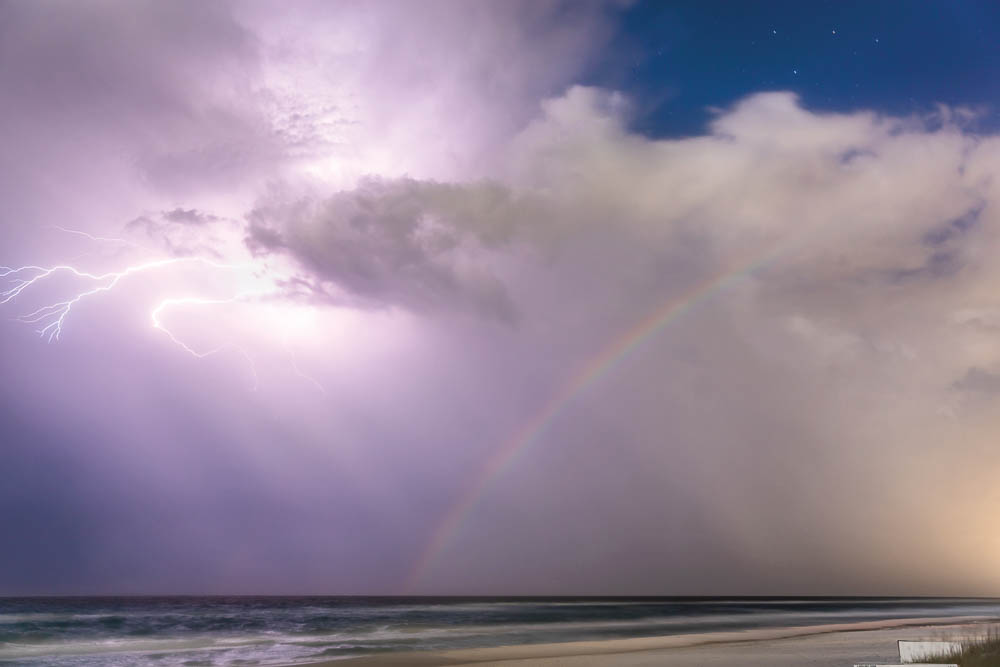
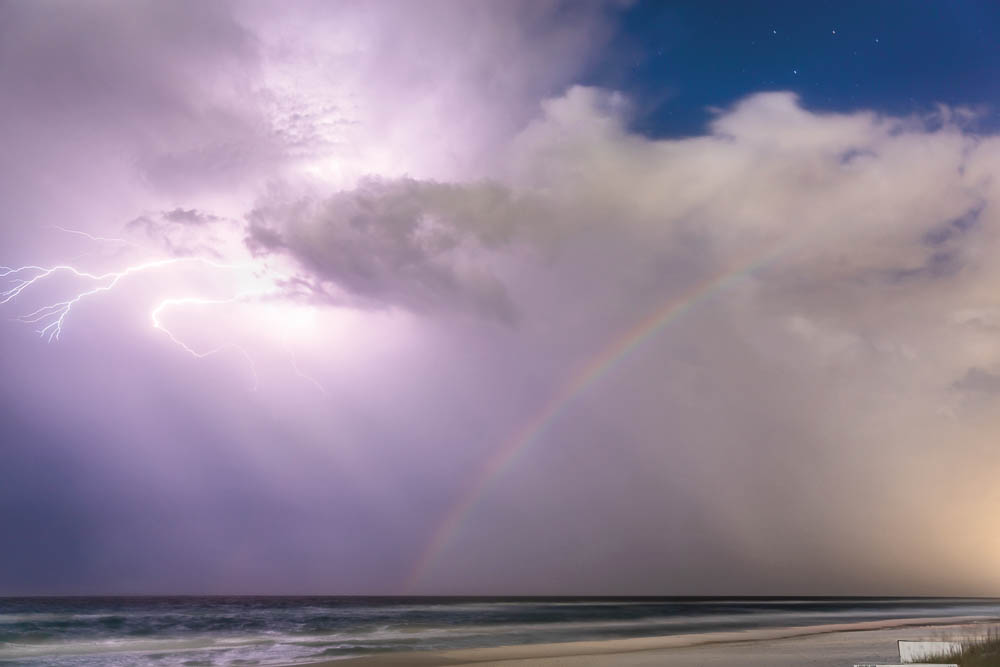
The most thrilling thing was a night in August this year when I was nearing the end of shooting an offshore storm that had been slowly moving from west to east for hours. I noticed what looked like a water spout to the west, but it was strange. Almost like a light. The bolts were dying down, and the stars began to appear in the western sky up against the clouds. The moon was rising to the east, and it was about 11 p.m. Suddenly, it occurred to me that I might be witnessing the rare weather phenomenon of a lunar rainbow. I turned my camera, set my composition, carefully thought about my settings and took the shot. There it was, perfectly glowing in beautiful color on the preview screen of my camera. Not only had I captured the lunar rainbow, but stars, misty rain sheets, and three more bolts of lightning in three separate single-exposure shots! I’m told by the local weatherman that it is something most people don’t even witness once in their lifetime. I feel so lucky to have captured those images, but more importantly, to have seen it with my own eyes. It was one of the most beautiful things I have ever seen.
When thinking of Hurricane Michael and storms in general, what are your thoughts? Can people ever be prepared when a natural disaster strikes?
I used to be afraid of bad storms as a kid. The irony doesn’t escape me. Having been a first responder for so long, and now lightning photographer, witnessing these storms first-hand gives you a healthy respect for the power of nature. Since I have made the Panhandle my home, I have witnessed hurricanes Irma, Nate, Hermine, and now Michael. I had already made the transition from full-time paramedic to photographer when Michael hit. It was so difficult to make the decision to leave. Normally, as a first responder, I would be mandated
to stay. I knew Michael was going to be bad. I knew it wasn’t “if,” but where and when, and I knew that people I cared about would potentially be devastated by the storm. There was that urge to stay and help. I did leave with my spouse and our animals the morning of the day Michael hit, then returned home the day after. On a ride to Port St. Joe to assist friends who lost their home, and I documented damage with my camera along the way. One sight really sticks out in my mind: We came upon the only cotton field in the northern counties that had cotton still clinging to the vine. It was documented that close to 98 percent of cotton farmers in the area lost everything to Michael, and here it was, one small acreage surrounded by a Dr. Seuss-like world of snapped pines and hardwoods with billowy white puffs still intact down in the field. I stood for the longest time by the roadside and stared at that scene. Then I shot it. The images are powerful. They show what an extreme wind event Michael was, and I learned in my travels that while we can be prepared for mother nature, we cannot control her.
 Any other thoughts on Hurricane Michael and the aftermath?
I have strong feelings and opinions about Hurricane Michael. The most important one for me speaks back to that preparedness. We might not always dodge the big bullet, but I think people should be more diligent in listening to weather and disaster agencies and authorities in regards to having a plan, a kit, and by following the mandatory evacuation rules. Don’t wait until the last minute to prepare. Doing all these things can reduce your hardship in the face of a disaster, and possibly save your life. But one thing I think people don’t always consider is that it might also save the life of that first responder who has stayed behind to watch over them, possibly even have to rescue them in the aftermath. If you don’t do it for yourself, do it for them. They all have families, spouses, significant others, children, and parents that love them. By preparing and following the rules, you reduce their risk of harm as well as your own. Lastly, I wish the rest of the country was still “watching” in the aftermath of this historic storm. There is still so much devastation and despair in the hardest-hit areas, and people still need assistance, logistically, physically, and emotionally. There will always be another storm to chase and shoot (or dodge) around the corner, but we all need to be mindful of the recovery efforts still ongoing from the ones past and help how we can. Panama City and the surrounding areas hold an eclectic charm and history. That beauty and history will hopefully be resurrected in time.
Follow Gunn on Instagram at
@susangunnphotography or @girlswhobolt
Copies of her photography are available on her website: susangunnphotography.com