
THE NEW NORMAL – One Year After Hurricane Michael


BY VAL SCHOGER
PHOTOGRAPHY BY MIKE FENDER
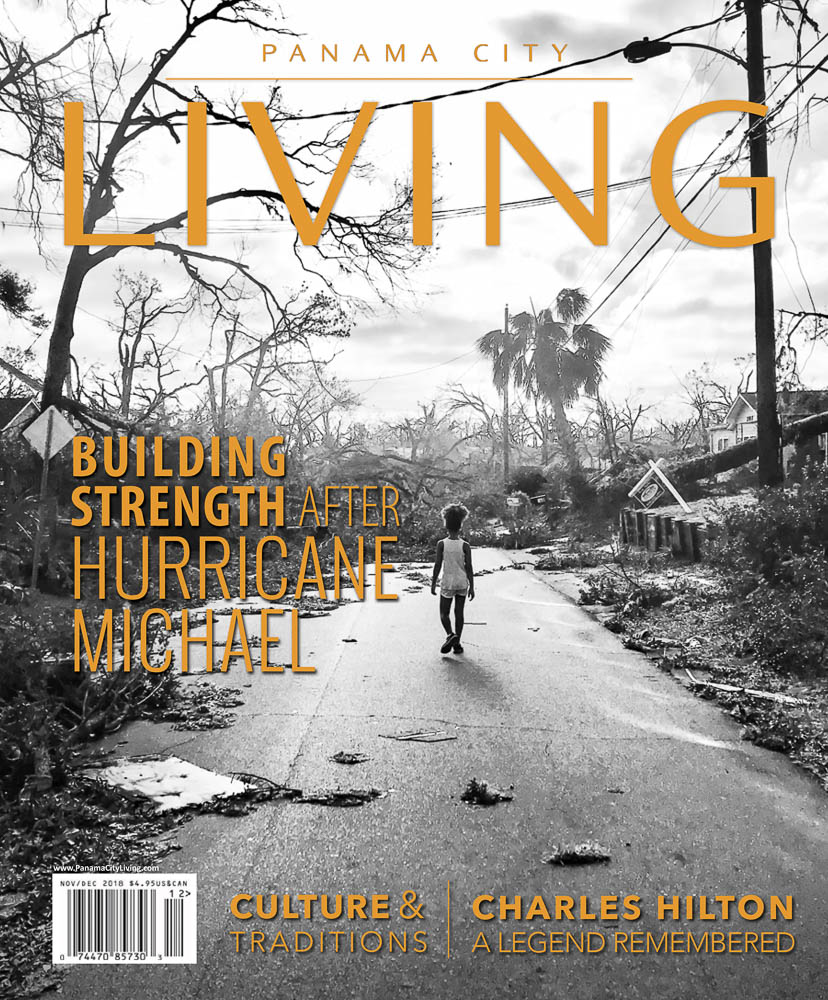 [dropcap]o[/dropcap]ur readers will remember our “Building Strength After Hurricane Michael” issue that we published in November last year. The cover photo by artist Christon Anderson garnered tremendous feedback and compassion. Seen in the photo is his daughter Isabel as she walks down McArthur Avenue in the neighborhood the family lives in, one of the oldest communities in Panama City, the Cove.
Twelve months later, we went back to see how the family has fared and what the neighborhood looks like today.
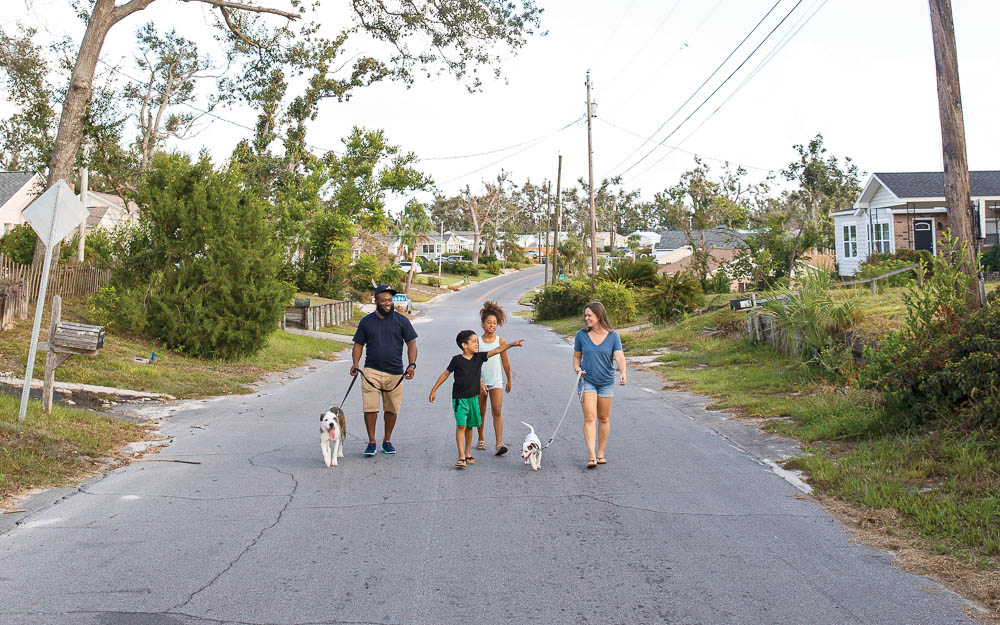
While the fallen trees that once lined the roads have now been cleared away, it is unlikely that, in our lifetime, we will see trees as tall and dense as they were. The family is more fortunate than many others as their house only sustained minimal damage from the storm. Christon, who is a painting contractor, has more work than he can handle. Kristina is the HR director of a local software company and has witnessed the hurricane’s impact on the company’s workforce.
Children Isabel and Coleman are back in school at Bay Haven Charter Academy, but things are not quite back to normal yet. We wanted to know what else has changed after the storm, and what is different. “Nothing’s the same, honestly, people’s attitudes are different. The surroundings are different, the businesses are different, the neighborhood is different, everything’s different,” Christon says. Kristina adds, “It was such a bad thing that happened. It was uplifting in a way, because so many people were out, caring and helpful, and present.
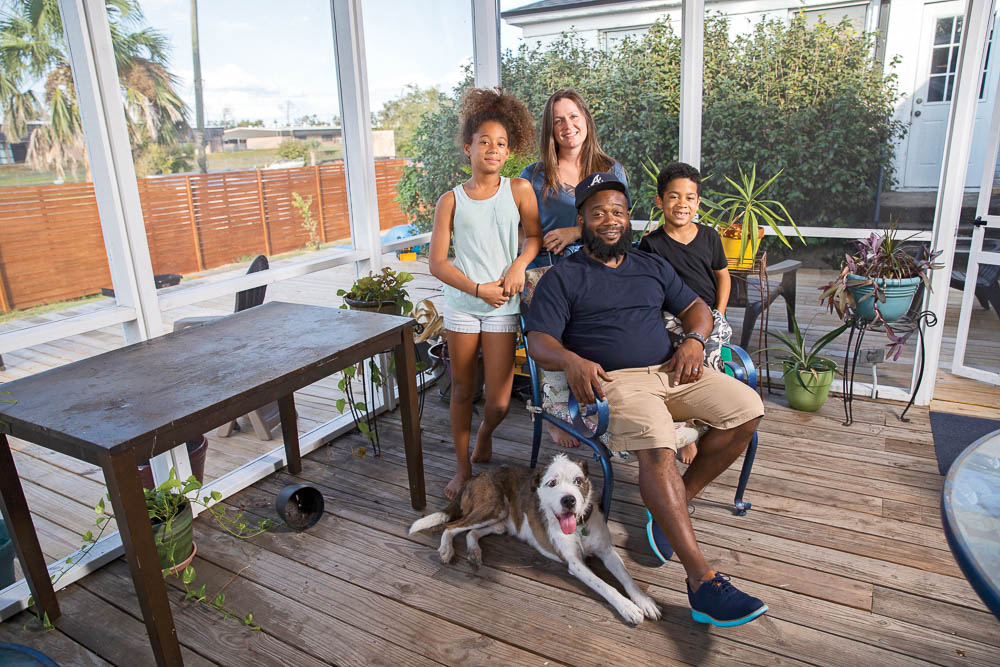
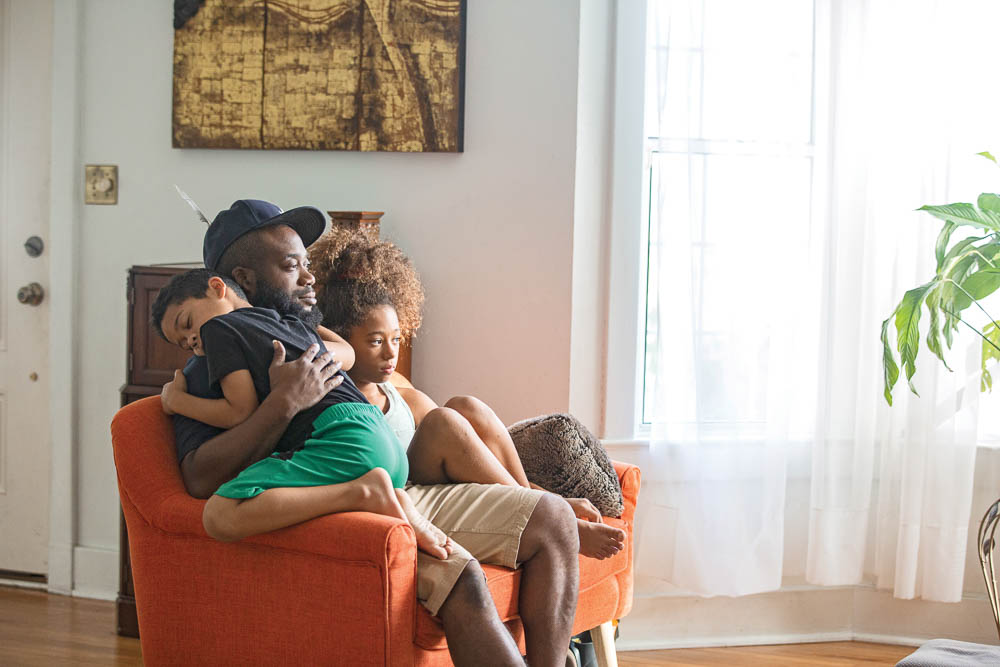 ”The family—dad Christon, mom Kristina, daughter Isabel (11), and son Coleman (6)—invite us into the living room of their home to help us understand the aftermath of the storm.
What has changed after the storm?
Christon: Our neighborhood—there are no stop signs, no street signs, no nothing. We were taking wrong turns and you couldn’t tell nothing from nothing.
No street lights. Everything was just fallen trees. We are still not having the signs back. But we kind of worked it out; people are giving people the benefit. We treat intersections like a four-way stop.
Kristina: What I think is weird is how we’re moving forward, things are getting repaired, some people are back to normal—the new normal—and then you’ll have a building, like we just had a building a few houses over torn down a couple of weeks ago. You get used to the new normal, and then a building gets torn down and you have to adjust again.
Where does it stop? There’s a heightened sense of awareness because there are so many people in town that are not normally in town, coming in and out of your neighbors’ houses. That is a little worrisome. The community came together after the storm but then our neighbors moved out and other neighbors moved out. We don’t know our neighbors right now and we’ve got different people working on several houses.
There was a man looking through the roofing material next door, but it was at night. We did not know if he was a worker.
Christon: Our street lights were out for three weeks to a month and the darkness was eerie.
Kristina: I’m impressed with how much the city did and how quickly they did things. How quickly they got the roads clear; how quickly they got street lights going. For a few weeks or months after the storm the piles of trees that lined the street were so tall….
Isabel: … at least to the roof.
Kristina: When we were driving on our road, we could not see our house until you got to the opening where our driveway is. One thing that really changed for the kids is that they couldn’t ride their bicycles. I wouldn’t let them ride their bicycles around for a long time.
Isabel: There were nails and stuff. And you couldn’t look out the front window.
Kristina: Right, you couldn’t see anything—you couldn’t see around the corners, couldn’t see cars coming.
Christon: The streets were narrower because of these walls of cut-up trees, so you navigate trying not to scratch other cars. We had some great times.
What was the saddest moment during or after the storm?
Kristina: We didn’t know that one of the trees had gone down; this was during the hurricane. This big tree fell down in the backyard and Coleman cried.
Isabel: It was “his” tree. The one that he used to always climb on and play.
Kristina: So, he thinks he doesn’t know how to climb trees anymore because he doesn’t really have trees around to climb.
So Izzy, do you think things are back to normal or do you think things are still different? Isabel: No, I’m not really back to normal because I’m still missing two whole windows.
So what made you the saddest, Isabel?
Isabel: When Coleman cried.
How about other kids at school?
Isabel: My best friend, she lost her whole house.
Kristina: And they’re still not in their own house. When Isabel has friends over, we get to talk to their parents. Everybody is in a different state of repair or disrepair.
“…things are getting repaired, some people are back to normal—the new normal…”
Christon: It’s tough to say ‘We lost a couple of windows’ to a family that had their whole house destroyed. I almost shy away from this type of conversation.
Kristina: I think a lot of people feel that way. In conversations, even conversations I have at work, everything you say is followed up with ‘It could’ve been worse.’
How was your situation at work?
Kristina: It was quite a change. Fortunately, we were able to keep all of our people, pay all of our people, even when we weren’t working. We had to relocate from town over to the beach. But we kept everybody paid and moving forward. So at least that was a constant. The company’s old building was just torn down.
How would you describe the current situation?
Coleman: I’d say it’s like normal-ish.
Do they talk to you in school about the hurricane?
Isabel: Yes. My teacher every now and then will be giving us updates and she was telling us that she is always there if we really want to talk to them about the storm.
Did you have to change any of your plans? Is there anything you couldn’t do because of the hurricane?
Kristina: You feel like you had a handle on your situation, you knew what was going on, and then you would try to do something and you couldn’t because either people weren’t in town, or the restaurant was closed that you thought was going to be open, or the store was closed that you thought was going to be open, or your contractor that you normally work with is not available anymore because they are busy. It’s like you feel like, “Okay, I’m back to normal, I can do this, I’m ready,” and then you keep running into these little dead ends and delays everywhere.
For Isabel, her volleyball season in middle school was shorter than it normally is and they didn’t have a gym to practice in, so they had to go to North Bay Haven and practice at that gym every day.
Isabel: We had to do our homework then, too.
Kristina: Home games were at North Bay Haven, too. Jinks didn’t have a gym at all, so they had to practice at Bay High. Merritt Brown didn’t even put together a team and Everitt was closed.
Isabel: That’s why this season’s short, because we don’t have teams to play.
Kristina: That’s kind of the ripple effect that people don’t realize.
Did you have any friends at school that had to move away?
Coleman: Yes.
Kristina: Coleman had two friends that moved away but one of them is back now. His father is in the military and temporarily relocated to Eglin.
Isabel: I know certain friends left but this school year, I did not see as many people as I used to. There were many people there I don’t know because of the hurricane. There are like eight new kids.
Kristina: At Bay Haven there’s a lottery system. They’ve always had a wait list of kids who want to get into the school, so when some kids left because of the hurricane, they had others right there to fill in the space.
That was maybe another thing that made us all feel more like family because in the first few weeks after the storm, people took their kids everywhere they went. Because they didn’t have school, and that’s the difference. You’re trying to handle your business, whether it’s the house business or your personal business, that you would normally do when the kids are at school and now they’re here with you and it makes you feel that things are okay, that our family is in this together.