The Lost Town of Iola and Remnants of Florida’s Pioneering Railroads


- By Robert Hurst, Photography By Robert Hurst & Ken Thomas
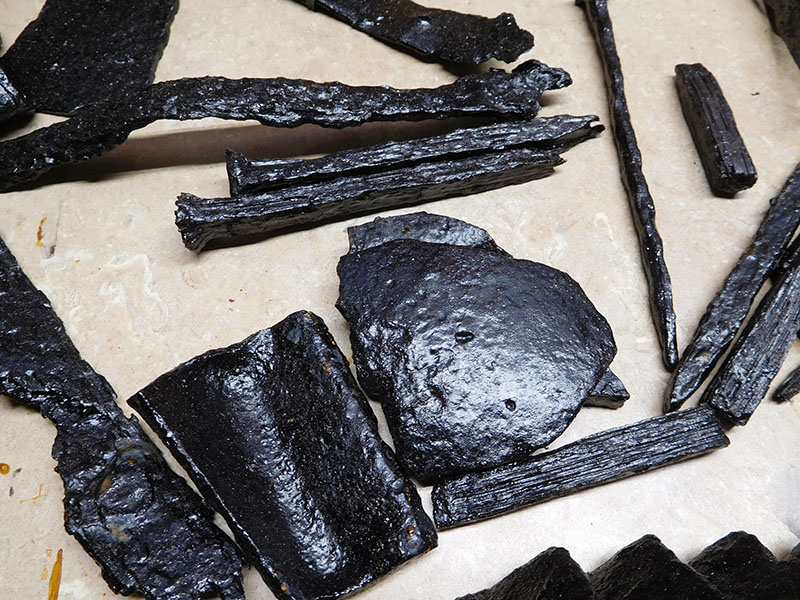 Recent research and discoveries by Tom Godwin and Stuart Resmondo, both of Wewahitchka, Florida, are bringing light to the very early years of Northwest Florida’s settlements and the trade business supported by what is believed to have been Florida’s second operating steam railroad, the St. Joseph & Iola Railroad. To understand the past, it is as important to understand the feelings and perspectives of the people who experienced historic events.
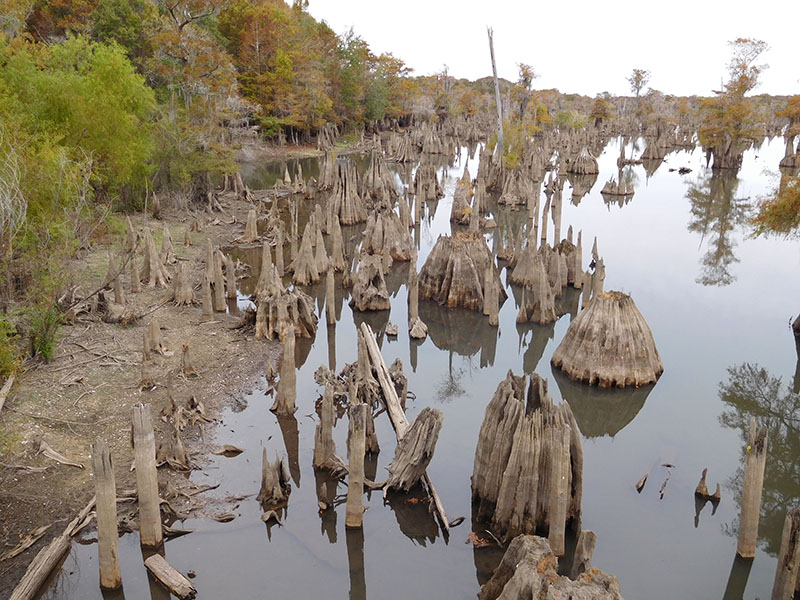
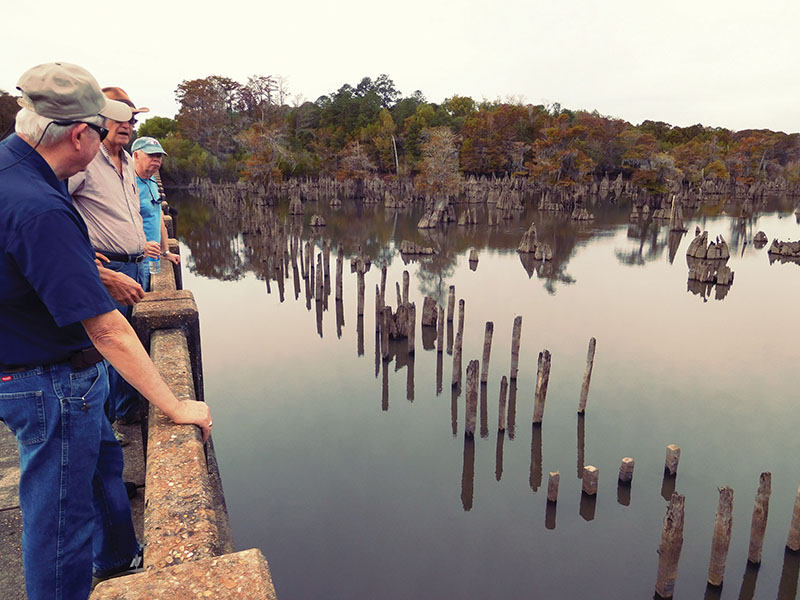
The old town of Iola was located on the west side of the Apalachicola River about 52 miles from the city of that same name. It lay to the east of Dead Lakes, and near the town of Wewahitchka, which, because of its twin lakes, meant in the native Indian language “water eyes.”
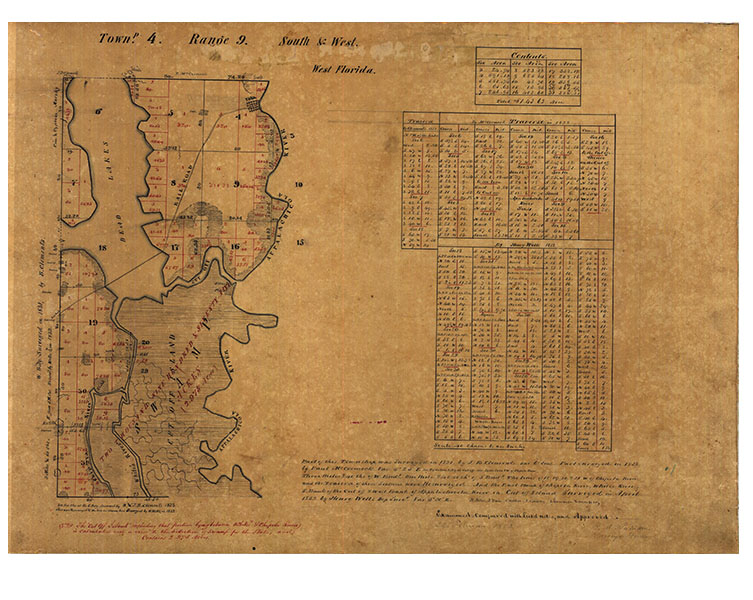
Iola was established because of the need for a terminus of the St. Joseph and Iola Railroad. It parallels the history of the Gulf port town of St. Joseph, which was located in the Oak Grove neighborhood of Port St. Joe and was the main terminus of the railroad. St. Joseph was established in 1835, and virtually ceased to exist in 1845, as did Iola, as a result of the failure of the railroad.
“I am [of the] opinion [that] we shall make something handsome by our own undertaking through time…nothing more than paradise.” Samuel Hamilton Walker, Iola, Calhoun County, West Florida, Feb. 16, 1837
Before becoming a legendary Texas Ranger, 22-year-old Samuel “Sam” Hamilton Walker, settled in the town of Iola. A collection of Sam Walker’s letters, kept at the Texas State Archives, tell much of the fate of Iola.
In letters to his brother Charles, Sam Walker mentioned the construction of a steam sawmill, a gristmill and a hotel in Iola. Walker was the proprietor of the hotel. The sawmill may have been connected to Stone’s Wood Yard up the river and was owned by Col. Henry D. Stone, progenitor of 16 children, whose descendants are to be found in this part of Florida to this day. Along with the railroad, there were two warehouses and a wharf. In 1838 a post office was established. But the growth would soon stagnate and businesses falter.
“…Nathan [Walker’s brother] has had a long spell of it [biluous fever, a general term for malaria, typhoid fever, colic, etc.] and has not been at work more than ten days and my other partners and all my hands have been sick with the Ague [malaria] and fever for several months past so that I have not made out as well as I anticipated. Our new town has proved unhealthy this summer…” S. H Walker, Iola, Oct. 21, 1838.
The above lament is an ominous sign of things to come. Walker speaks of deaths in Iola where the “population is about one hundred.” Do you suppose Walker is becoming disillusioned with his “paradise?”
“…it is impossible for me to come home unless I could sell my property which I can not do at the present without sacrificing it as the currency of the county is in a deplorable situation at present and property will not bring its value…” S. H. Walker, Iola, Dec. 29, 1839.
The above quote is indicative of the banking crisis of the nation that affected Florida, which defaulted on its loans to the Federal government. This only complicated the “very sickly fall” that Walker also mentions. His brother, Nathan, died that year of malaria. S. H. Walker does remain optimistic as he speaks of a busy season with 16 steamboats arriving at port and by roads from Tallahassee, Marianna and Mt. Vernon being constructed but political factors come into play for investors.
“The business at this place and St. Joseph is broken up for the present by the treachery and valiancy of the President and three or four men of the railroad company residing in Columbus, Georgia by selling their interest and influence to the Apalachicola Land Company for the bribe of about $100,000 in cash and about an equal amount in town property in Apalachicola City, and thus the citizens of Iola and St. Joseph are ruined for the present by the valiancy and faithfulness of men who have heretofore been considered among the first men of Georgia. … The last of our property now if sold at auction would not bring 12 1/2 cents on the dollar of the original cost… Florida money is 40% below par and some of it much more. The new bank that was built in St. Joseph has suspended operations…I shall leave here tomorrow. … Please direct the next [letter] to Tallahassee.” S. H. Walker, Iola, Jan. 17, 1840.
It became clear that by 1840, Iola was in decay. The railroad and banks were failing.
“No doubt you have heard of the murder of Harlin’s (sic) wife and two children by Indians”. J. C. Taylor, Iola, Mar. 15, 1840.
[The Indians] have taken Indian Key and murdered a good many families near Monticello in the east and when the soldiers finds (sic) them they were afraid to attack them and rebounded back to camp and left them. The people of Iola is (sic) very much frightened. They hear guns every night over the river. Ann M. Walker (Sam Walker’s sister-in-law), Iola, Sept. 3, 1840.“Unearthing the past is one of the greatest joys of my life.” Samuel Hamilton Walker, Iola, Calhoun County, West Florida, Feb. 16, 1837
As if the citizens of Iola didn’t have enough problems with the economy and disease, the Second Seminole Indian War was underway (1838-42). I do not intend to ignore the sufferings of the Seminoles, but the worst incident in Iola was the massacre of Harmon G. Harlan’s family. On January 29, 1840 Mr. Harlan arrived with 21 armed men and found his settlement on the Apalachicola River burned and his family killed. Probably as a result, Lt. Col. William J. Bailey was ordered to send troops to protect Iola. A rumor was reported to Tallahassee on October 13 that Iola was entirely destroyed by Indians.
The following year, St. Joseph, like most of the South, was seriously hit by a yellow fever epidemic. The city may also have been hit by a series of hurricanes. These tragic events were too much for the settlers to
sustain. By 1842, the railroad was sold and scrapped. In 1845, the Iola Post Office was discontinued. Iola faded from history.
Revisiting the site of the now abandoned town of Iola, I thought it symbolic that even the Apalachicola River has altered its course and left the old place. On my first visit some 56 years ago, all that remained
of the river was a small pond in the ancient bed.
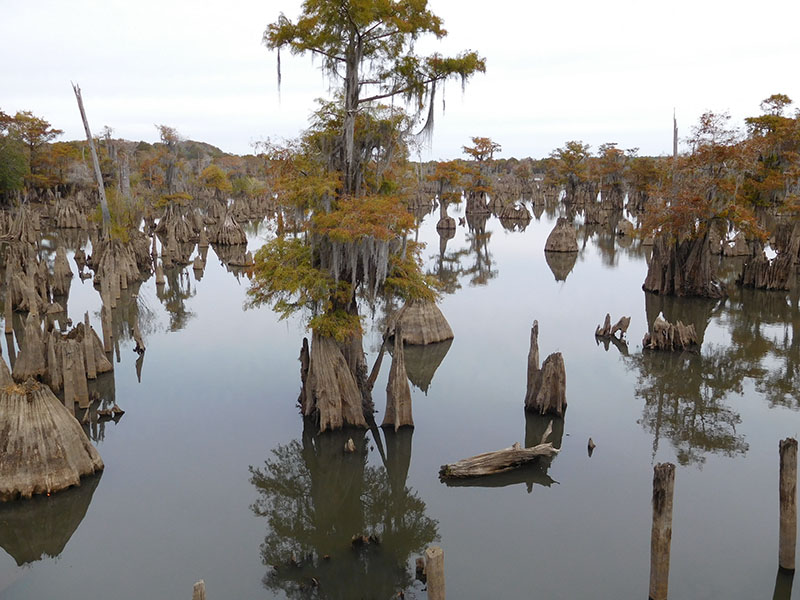
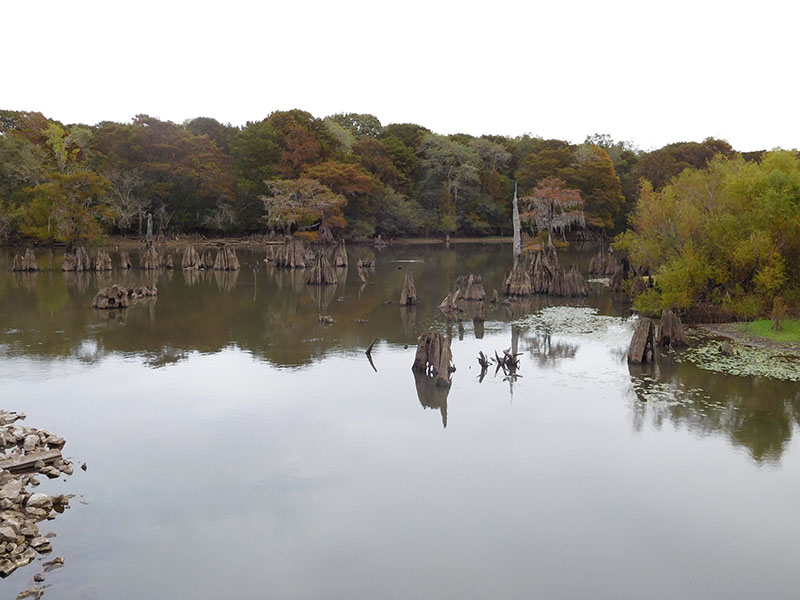
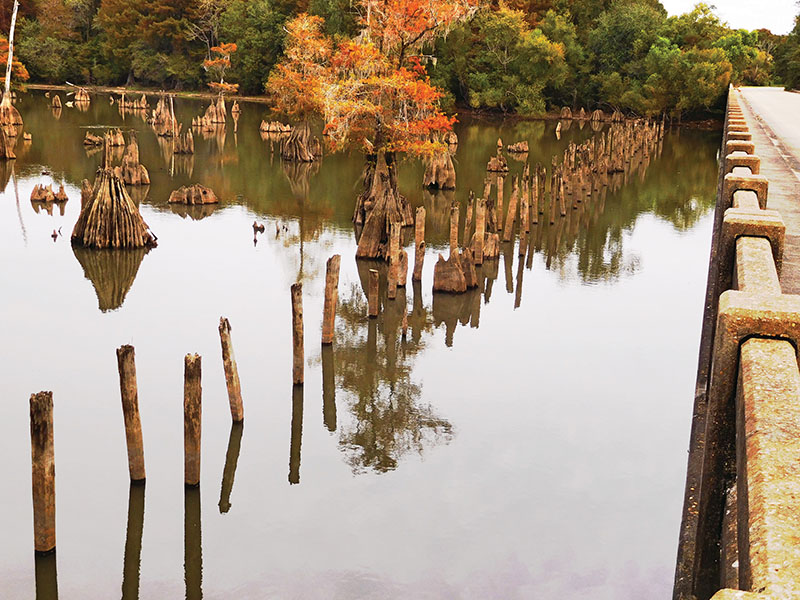
Today it appears that the river may be attempting to retrace its old course and once again flow by the banks of this fateful site, now nothing more than a marshy flood plain inhabited by cypress knees, trees, mosquitos, and water moccasins.
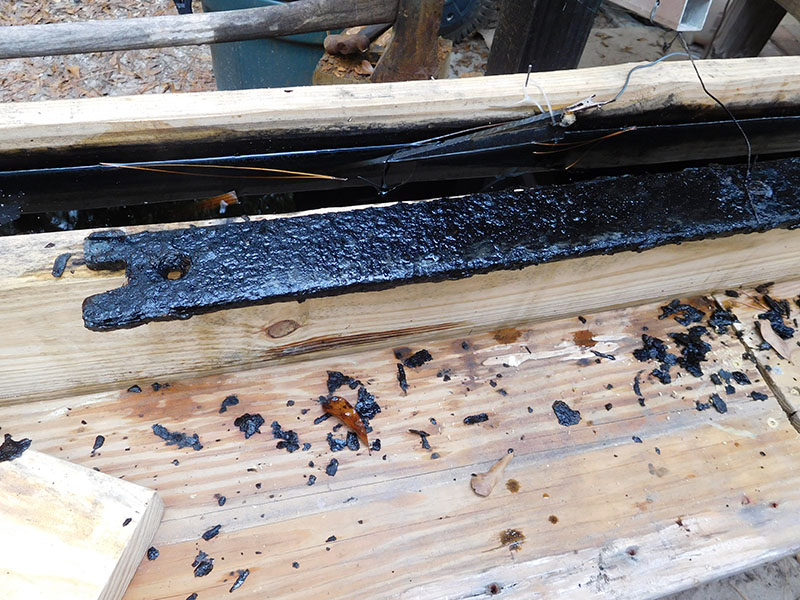
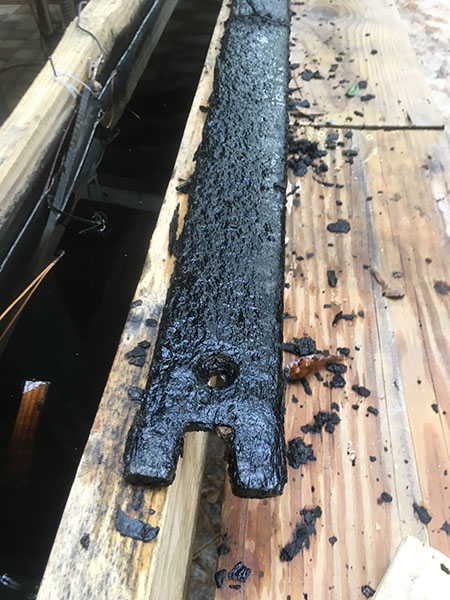
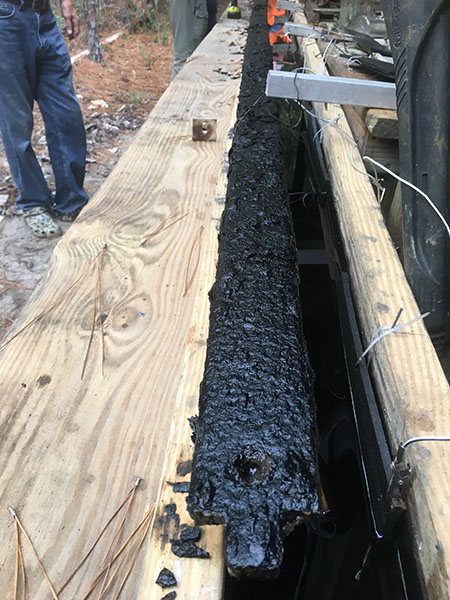
There is only one visible sign that this was once an enterprise of man. Four beds, spurs of the terminus of the St. Joseph and Iola Rail Road, have miraculously survived the numerous floods that must have inundated this site over the past 179 years. The railroad was an attempt by “The Saints,” citizens of old St. Joseph, to siphon off the cotton trade that flowed down to their rival port of Apalachicola. It was the third railroad established in Florida and was a replacement of the failed Lake Wimico and St. Joseph Rail Road (Florida’s first) that didn’t offer direct berthing on the river.
As I stood there looking at an often flooded river plain, Sam Walker’s “paradise,” I wondered what possessed people to settle in such a place. Was it sheer vanity or the desire of disaffected citizens for revenge against the competition in Apalachicola that blinded them to this apparently hopeless venture? Perhaps it was faith or just speculation that this new invention, the most powerful man-made land force yet, the steam locomotive, would surpass all other modes of transport, including river trade. Beyond this silent overgrown jungle land where mother nature reigns supreme, the slow and steady river flowed on its eternal journey, ignoring what man had tried to make.
Robert (Bob) Hurst’s research of the railroads of old St. Joseph culminated in the discovery of a pair of locomotive wheels and axle from those railroads, along with the publication “Mapping Old St. Joseph, Its Railroads, and Environs” published in the April 1961 issue of the Florida Historical Quarterly XXXIX, no. 4.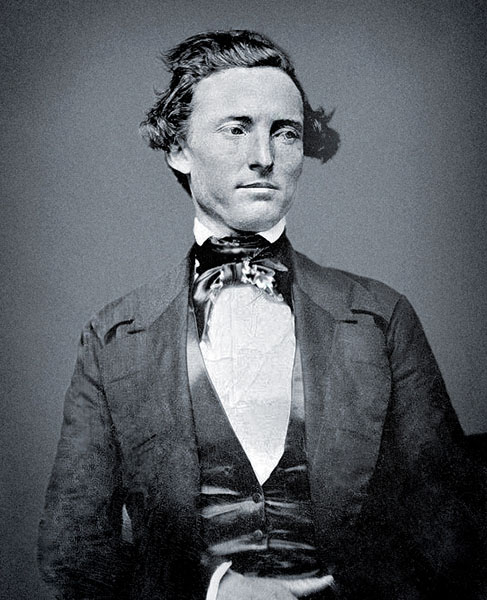
About Samuel Hamilton Walker
Samuel Hamilton Walker was born in Prince George County, Maryland. He enlisted in 1836 in the Washington City Volunteers for the Creek Indian Campaign in Alabama, but was stationed in Florida. In 1837, he apparently remained in Florida after his service, and worked as a scout and possibly became involved with the railroads of St. Joseph. He was hotel proprietor at Iola. After Iola, he distinguished himself as a Texas Ranger, Captain and military officer of the Republic of Texas and U.S. armies, and co-inventor of the Walker Colt revolver along with Samuel Colt. He was killed in 1847 at the young age of 32, while leading a charge into Huamantla, Tlaxcala, Mexico. [Robert Nieman, “Sam Walker,” Texas Ranger Dispatch 9 (Winter 2002): 21-26. (Authors note: Nieman incorrectly associates Walker with the Georgia, Florida & Alabama Railway. This could not be since the GF&A was not chartered until 1895.]