
The Front Lines – Interview with COVID-19 warrior Torie Greer, RN


BY VAL SCHOGER
PHOTOGRAPHY BY MIKE FENDER

Torie Greer, a registered nurse who has worked in the emergency room of Panama City’s Gulf Coast Regional Medical Center since 2016, is one of the first people to examine patients when they visit the hospital with COVID-19 symptoms. With her typical contagious smile and happy attitude, Torie is upbeat and knows how to put a smile on people’s faces. This is how her family, friends, and coworkers know her— spreading good mood wherever she goes, helping everyone along the way.
She has always loved helping others, she explains. She has also never shied away from hard work. When she passed her RN exam at age 26, Torie had already worked successfully as a hostess and server for 13 years, helping her mother and stepfather at their famed restaurant, the Indian Pass Raw Bar in Gulf County.
She found her true calling when she trained to be a nurse. Regardless of how unsurmountable a health problem or emergency might seem, she knows that her work is critical in turning a situation around—every second counts in saving lives. Now more than ever, Torie and her coworkers are facing life-or-death situations. “I adore my work family and am honored to be a part of this team on the frontlines as a COVID-19 warrior,” Torie states during our interview. Her face is fearless and she seems invincible.
The little free time that she had during most of April and May of 2020 was dedicated to her family, her long-time girlfriend who is also an ER/ICU nurse at Gulf Coast Regional Medical Center and Bay Medical Ascension Sacred Heart hospital. Much time is also spent walking her dogs—something that relaxes her the most. She often visits her mother in Sunnyside in Panama City Beach and strolls the aptly named neighborhood with her pups.
While her usual work in the emergency room has not slowed down, in addition to accidents and health emergencies, patients are being brought in or walk in with flu-like symptoms that might be indicative of a COVID-19 infection. This might make many people nervous but when we spoke to Torie in mid-May, she calmly answered our questions and explained the routines and protocols that have been put in place since COVID-19’s outbreak in the U.S.
When did you first hear about COVID-19? Can you remember what went through your mind?
I first heard of the virus while at work and was slightly skeptical of the situation and severity of the issue. I felt panic for our country in general because it was only a matter of time for this virus to travel its way here. On top of that, the virus was still so new so there was a lot of what-ifs about the severity, the symptoms, how to treat, and how to prepare.
When the media started communicating the pandemic, what were the most-asked questions by your family and friends?
My family and friends asked whether the virus was truly that dangerous, what they should expect, and how to prevent contracting it. When the first case of COVID-19 made its way into our country, my family and friends wanted to know what symptoms to expect and how they can get tested.
“Whether it be the store clerk, pharmacy employees, delivery personnel, healthcare workers, waste management, contractors, military personnel… we are truly all needed to keep this nation alive and for that I’m thankful to be a part of such an incredible team that is making history.”
Describe the measures and routines to protect yourself from infection.
I have measures and routines planned for both when I am at the hospital and when I am at home. The hospital has created their own procedures and protocols. I get my temperature checked prior to walking into the hospital along with being asked if I have experienced any symptoms such as a cough, fever, or shortness of breath. As long as I have not experienced any of those symptoms and my temperature is less than 100.5 degrees F, I am handed a mask and a bag of hospital scrubs to change into. The hospital has also created the same screening procedure for patients prior to walking into the hospital. If a patient screens positive, we place them in an isolated room with a cart outside of their room so we can wear the proper PPE while caring for the patient.
When I am at home, I change out of my scrubs, place them in an antimicrobial wash bag, and jump in the shower. I minimize contact with my friends and family as much as possible because I don’t want anyone to be exposed. One of my family members started sewing masks. I ensure to wear a mask when having to get groceries or any other essentials. I have hand sanitizer with me at all times and will wash my hands for at least 20 seconds when returning home.
How has COVID-19 changed your everyday life at home and at the workplace?
I’m more cautious when I go out in public. I have developed a strict routine to ensure that I do everything I can to protect my friends and family along with everyone I come in contact with. I also educate as many people as possible to decrease the transmission of the virus to our community.
 Can you share what your work/life balance looked like before and during the pandemic? How do you deal with the challenges?
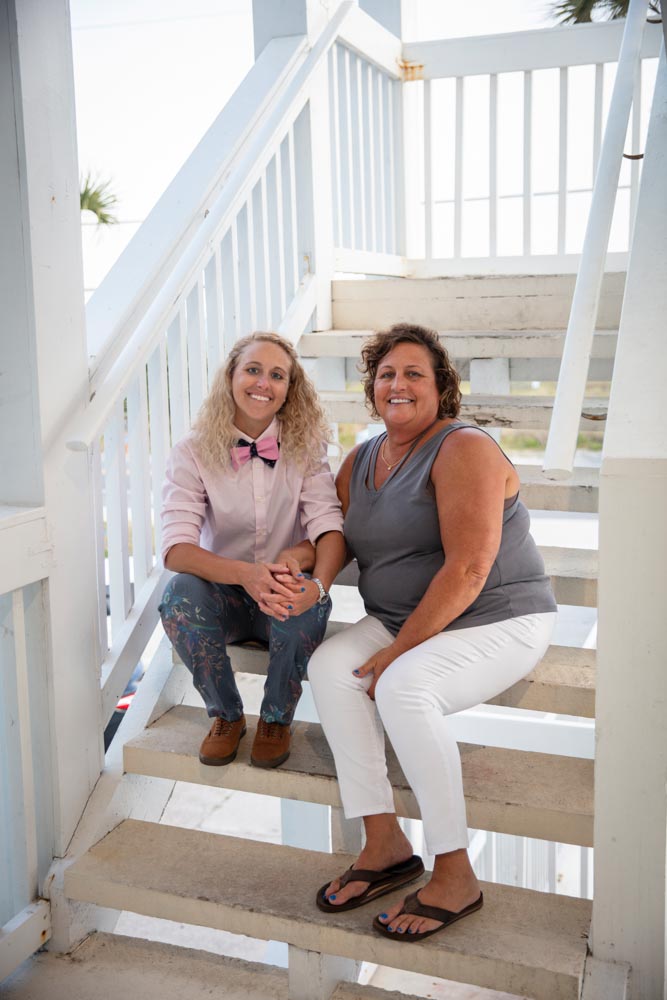
Well, it is very difficult being away from my friends and family. My partner Stephanie and I are very family- and friends-oriented, but the thought of possibly giving them the virus stays in the back of my mind. The best part of today’s society is the internet and all the ways to stay connected with a plethora of different apps, which in turn makes secluding yourself from the world a little bit easier. My mom and I are very close but she has lung issues, so being able to see her and talk to her online allows us to stay close but apart at the same time.
Can you describe the worst conditions/state of COVID-19 patients that you have experienced?
Several patients that have presented in the ER had complaints of difficulty breathing that had been ongoing for days and progressively worsened. They have required a higher amount of oxygen to meet their exacerbated respiratory state. Some patients have required more aggressive treatments during their hospital stay such as being placed on a ventilator.
What are the special care needs and requirements a COVID-19 patient might have?
When caring for a patient with COVID-19, the patient needs to be placed in a negative pressure room with a surgical mask placed on the patient. Any healthcare staff that enters the room must wear the proper PPE, N95 mask, bouffant, face shield, gloves, gown, and shoe covers. The patient will likely require a higher amount of oxygen and close monitoring with their health status as well as close temperature monitoring. Even though these patients are contagious and quarantined from the rest of society, we, as healthcare providers, continue to care for them as a human being and make them feel welcome.
“As healthcare providers, we try to be the best part of someone’s worst day.”
Describe the teamwork at your workplace… how do coworkers help each other and their patients?
Teamwork equals the dream work on my unit. I truly consider my colleagues as my family. We all try our best to help others out whenever possible. Especially when one of us has an extremely ill patient. If we are talking specifically to COVID-19 patients, once you step in that room it is of highest and safest importance that cluster care is done. Having a helping hand on the outside of that room that gathers supplies, calls the respiratory therapist, informs the doctor of results, handing you the newly ordered medications, sending your blood work, taking the patient’s critical lab results, and just monitoring your other patients while you are in the room caring for the COVID-19 patients.

The COVID-19 pandemic is devastating and many have a hard time dealing and coping with the circumstances. What keeps nurses and other healthcare professionals motivated and strong? Are there any positive aspects that you can share with us?
As healthcare providers we try to be the best part of someone’s worst day. Yes, it does take a toll on us mentally, physically, spiritually, and emotionally, but when you make a difference in someone’s life, it makes those long, hard days worth it. As healthcare professionals, we all cope in many different ways, but being able to share the good and bad that occurred throughout our day with a colleague is freeing. I will also say that this pandemic has brought everyone closer because it has shown us how much we need each and every single person that is an essential personnel. Whether it be the store clerk, pharmacy employees, delivery personnel, healthcare workers, waste management, contractors, military personnel… we are truly all needed to keep this nation alive and for that I’m thankful to be a part of such an incredible team that is making history.
Do you have a particular message or something our readers in Northwest Florida should know or consider in sight of dealing with COVID-19?
Protect yourself and your family. Maintain correct hand hygiene. Stay away from sick people. Don’t touch your face. Cover your coughs and sneezes. Stay home if you are sick. Please continue to be very cautious. And thank the community for continuing to be precautious and protecting themselves as well as all essential personnel for continuing to risk their lives every day to help others.
For updates and current statistics about COVID-19, visit FloridaHealthCOVID19.gov