

The City of CALLAWAY MAYOR PAMN HENDERSON


BY VAL SCHOGER
PHOTOGRAPHY BY MIKE FENDER
The origins of the City of Callaway can be traced back to the 19th century when the people in the area made their living with fishing, or worked in timber and turpentine production mills. The community grew in tandem with Tyndall Air Force Base, which had started out as a gunnery range in 1941. Within mere minutes of driving time to Tyndall’s main gate, Callaway offered a convenient location and the city, becoming incorporated in 1953, grew exponentially in the 1960s and 1970s. The population within the city limits of Callaway was estimated at 14,500 before Hurricane Michael made landfall.
Pamn Henderson, mayor of Callaway, estimates that 25 percent of the population has moved away after the storm. Blue tarps are still seen on many roofs in the city, and many residents are living in campers and RVs in their front yards while their homes are rebuilt or repaired. This includes the
mayor and her family. “We think that around 90 percent of the residences in Callaway were in some way affected by the storm,” she speculates.
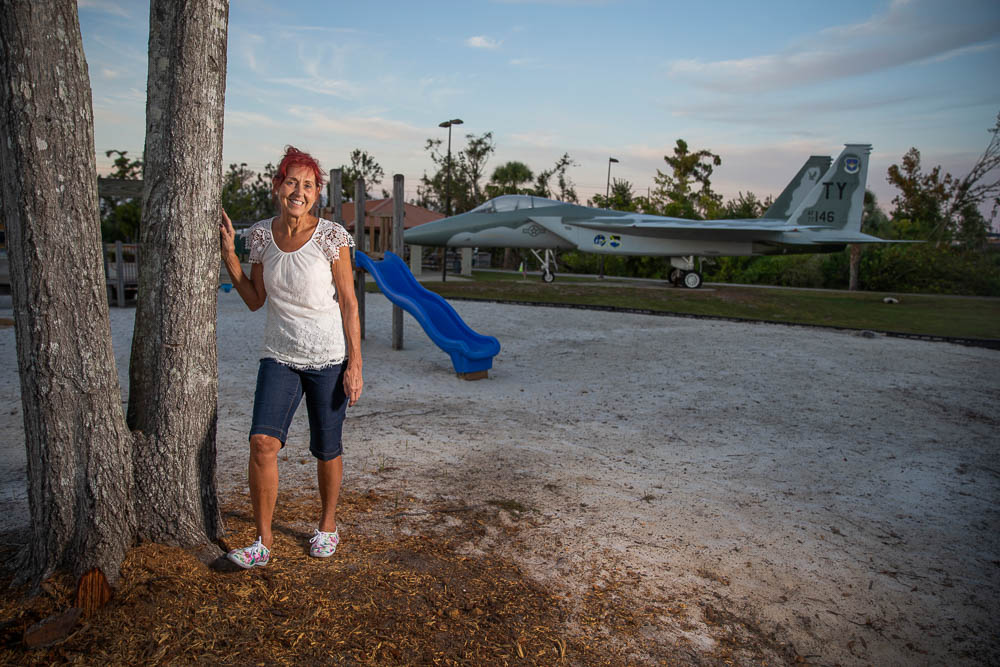 Her own family came to this area in 1973. Henderson was 19 years old at the time. “My father had just come back from Vietnam and he decided to retire from the Air Force. We had never been stationed here, but we had friends in this area, and this is where my parents decided to buy a house. Back then, Callaway seemed like it was a hundred miles away from the Panama City area. You just drove and drove; it seemed like you drove forever.” Henderson’s late husband also served in the Air Force and after moving from base to base with him for 20 years, when he retired, they decided to move back to Callaway, to the same neighborhood her parents and sister lived in.
With a background as a certified public accountant (CPA), Henderson worked as the financial director of the Panama City Airport for 16 years; her role included the administration of the construction finances when the airport was relocated. It is now operating as Northwest Florida Beaches International Airport.
With a passion for her community, Henderson became a city commissioner in 2012 and has been the mayor of Callaway since 2017. “I was heartbroken to see the destruction after the storm,” she says with concern clearly written on her face. The numbers are staggering for a small community. “So far, we have moved over a million cubic yards of debris at a cost of over $19 million. We have 60 properties that we are waiting for approval for demolition. The city will have to pay at least $10,000 per demolished property. Callaway, just like everybody, had to borrow money to pay for all of these and wait for reimbursement from FEMA, which is still in progress.”
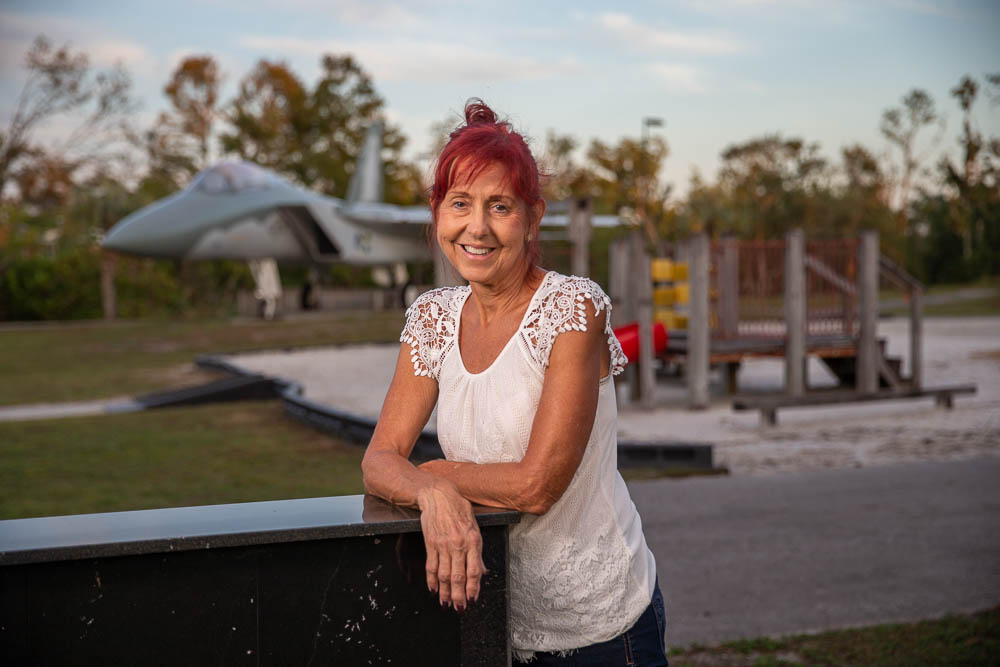 Like city officials in other municipalities, she is concerned with the interest for the loan. “With the amount that we borrowed, and although we have a very low-interest rate, we are still looking at a considerable amount that has to be paid out of city funds, as it is not reimbursable by FEMA. So, you don’t want to increase taxes, but we also have to be able to maintain our level of service.”
The positive aspects after the storm include the fact that several residential developments within the city limits are getting started or have been expedited. “One 150-house development will be completed this year, instead of extending over several years. We should have about 900 new houses, 600 new apartments, and about 85 new townhomes completed in coming years,” Henderson states. Construction of a new 159-room hotel is also slated to begin this year.
 The city has made investments in the past that are now paying off, she explains. “What has caused controversy in the past, the city’s costly investment in new infrastructure by upgrading and installing new water lines during the construction boom several years ago now gives the city an advantage. The waterlines ended up not being used after the economic downturn but our investment is now coming back into play. We are in a really good position for new development. Callaway is one of the few cities that has room for growth and the infrastructure in place to do so.”
 When at the beginning of 2019 the Bay County Schoolboard had discussed temporarily closing Callaway Elementary School as less than 400 students attended it in the hurricane aftermath, Mayor Henderson successfully appealed for the community school to remain open. She is now happy to see that the student count is increasing, with currently 365 students in attendance. As the city sees new and remodeled homes coming online every day, this number should soon increase.
In many ways, the elementary school is part of Callaway’s history and future. A place for education has been part of the community since its early years of existence when a one room schoolhouse opened in Callaway in 1911. The building remained in service until 1936, until children started attending school in a larger building. The historic one-room schoolhouse can still be seen to this day at Gore Park, where it has been moved and is maintained by the Callaway Historical Society. While the building sustained damage during the hurricane, reconstruction with authentic historical building materials will begin next year. Reconstruction of the school will be closely monitored so that the building can retain its status as a historical monument.
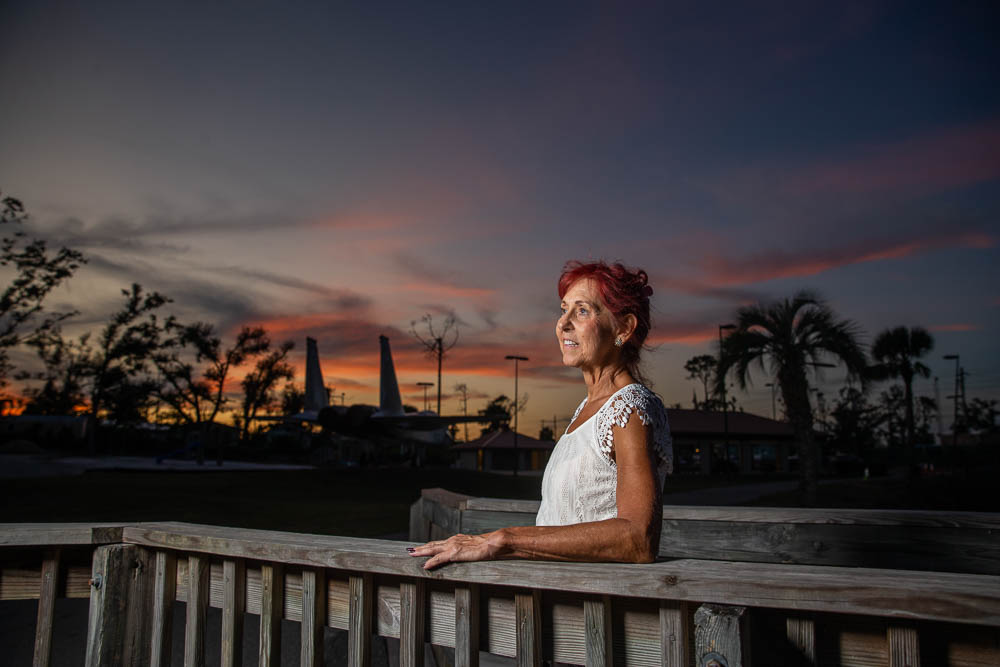 With the ongoing reconstruction efforts at Tyndall Air Force base, Mayor Henderson’s city is well on its way to recovery. She is looking back with pride on a year of exceptional efforts from city employees in all departments despite the fact that many of them lost their homes in the storm. In addition, an unprecedented common effort with neighboring communities was established and there is a new sense of community. “After the storm, you saw neighbors helping neighbors. All our employees at city hall came together and helped each other. This storm has really brought us all together. The county set up a task force for a long-term recovery plan; cities worked with cities more than we ever did before.”