
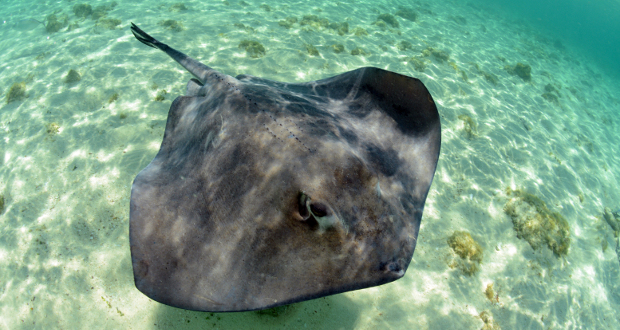
Stingray Shuffle


The Gulf water of Northwest Florida is home to a number of species of stingrays. Large schools of rays can be observed close to shore during their most active time, the summer months from May to September/October. It is quite a sight when hundreds of rays congregate. Smaller groups of rays might even break the water surface with flapping wings and fast movements.
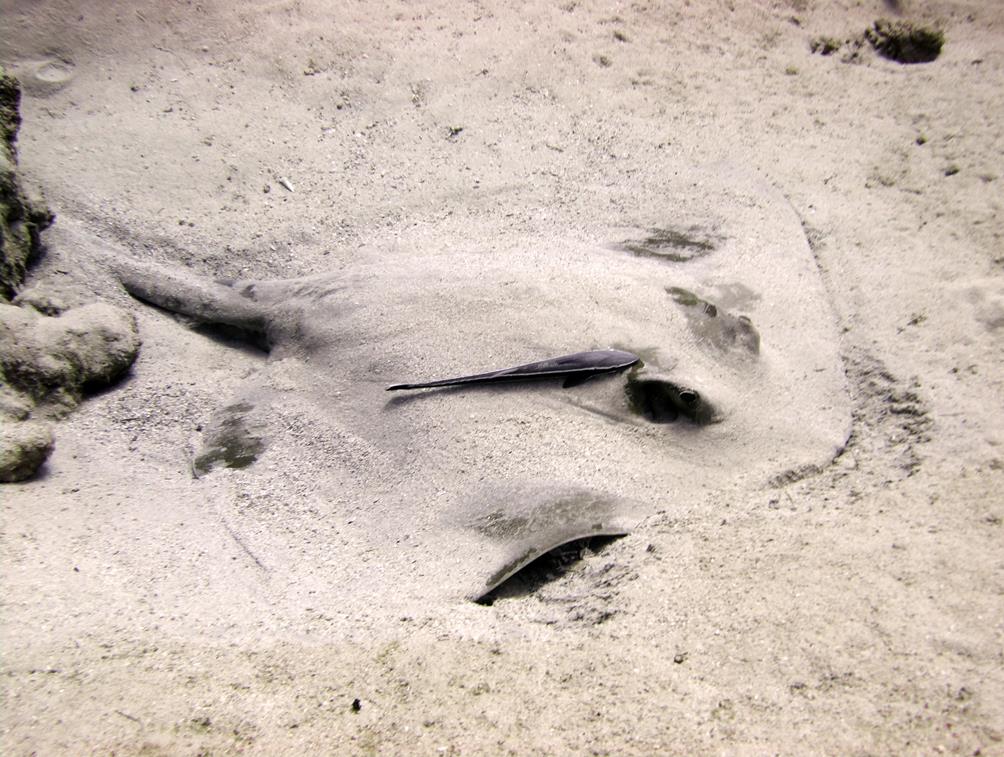
Ashley Englehart, lead trainer at Gulf World Marine Park in Panama City Beach, lists different species of stingrays that can be found in our local waters: cownose ray, southern ray, devil ray, spotted eagle ray, bluntnose ray, giant manta ray and roughtail ray. She explains that their natural behavior varies from species to species.Some spend their time on the seafloor while others will be actively swimming in the water column. “Southern, roughtail, and bluntnose rays migrate in small groups and like to bury themselves in sand.Migrating in large schools of sometimes up to a thousand individuals, are eagle rays, cownose rays, devil rays, and spotted eagle rays.”
Rays are beautiful to watch when they glide through the water.However, they are impossible to see of they follow their other characteristic behavioral trait and bury themselves in the sand where they feed on small fish, small crustaceans and mollusks or lay still for an extended time in shallow water.
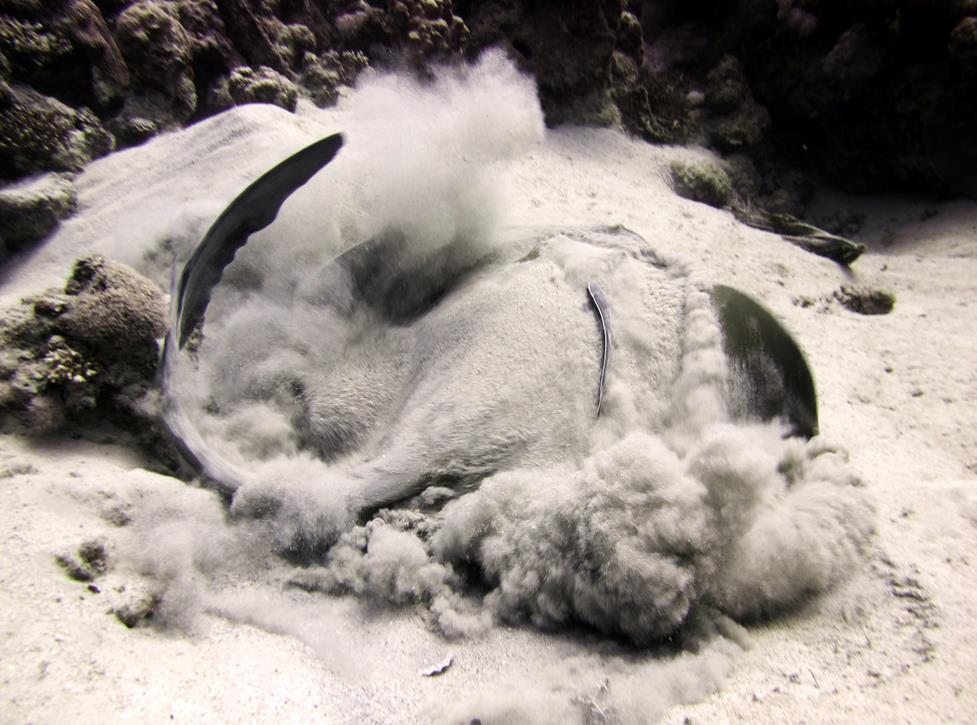
“The specific danger is injuring the animal and possibly getting barbed,” Ashley explains, “You are more at risk of being barbed if they perceive you as a threat.If you encounter a stingray in its natural habitat, admire it from a safe distance. Being barbed can be incredibly painful. Some people have allergic reactions to it. To avoid stepping on stingrays and harming them, always walk in the water with a shuffle, known as the ’Stingray Shuffle.’ Don’t chase or harass them.”
How to do the Stingray Shuffle:
When stepping into the water, instead of taking steps, slide your feet forward over the sand in a shuffle.The idea is to disturb the sand and, instead of stepping on a buried stingray, the movement of the sand will have the ray come out of hiding and leave before it is stepped on.