
REGROWING MEXICO BEACH


BY BRITTANY HAWES AND VAL SCHOGER
PHOTOGRAPHY BY MIKE FENDER AND COURTESY OF MEXICO BEACH DEVELOPMENT COUNCIL

Mexico Beach, a small coastal town extending 5 miles along Northwest Florida’s Gulf Coast, was a quaint seaside destination with a crescent-shaped beach and small shops and restaurants. Approximately 1,200 residents called it home. Lovingly dubbed “Mayberry by the Sea,” with palm trees, white sand beaches, cobalt-blue water, and color-streaked sunsets, Mexico Beach was the poster child for Florida. Beautiful homes were just steps away from the beach; shopping or eating out at charming momand- pop businesses felt like stepping back in time. Mexico Beach’s pier before Hurricane Michael Correction: In our November/December 2018 article “Ground Zero: Mexico Beach,” Panama City Living incorrectly quoted Mayor Al Cathey as having stated that there were 21 deaths in Mexico Beach. The current death toll in Mexico Beach caused by Hurricane Michael is four. With unhindered views of the Gulf, Mexico Beach had the charm and feel of Old Florida. Determined to preserve and protect their piece of paradise, city government scrutinized each new development plan and carefully evaluated any changes that might affect the town’s charm. But nothing could protect the town from the devastating force of Hurricane Michael on a Wednesday afternoon in October 2018. Barreling down on Northwest Florida and impacting thousands of square miles inland, this storm left an unprecedented path of destruction in its wake.
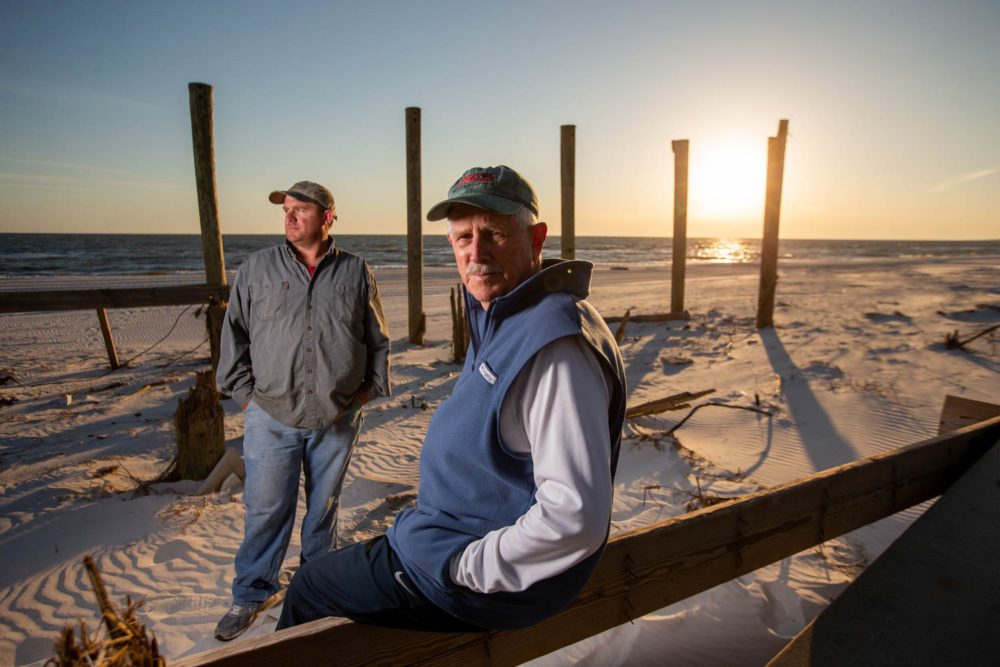
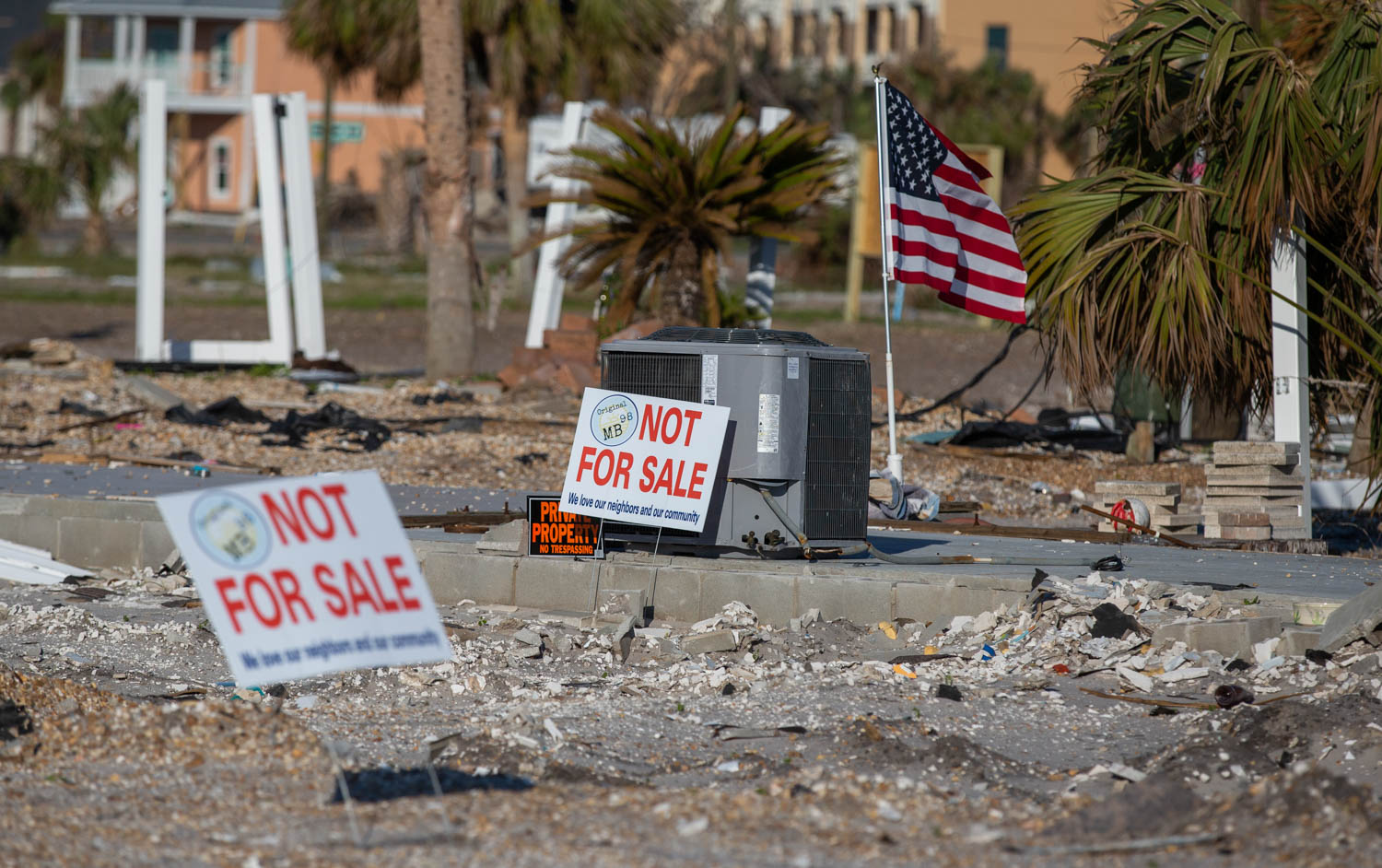
Not-for-sale signs stick out of the rubble. The City Pier has vanished, swept away by the forceful water and winds of Hurricane Michael.
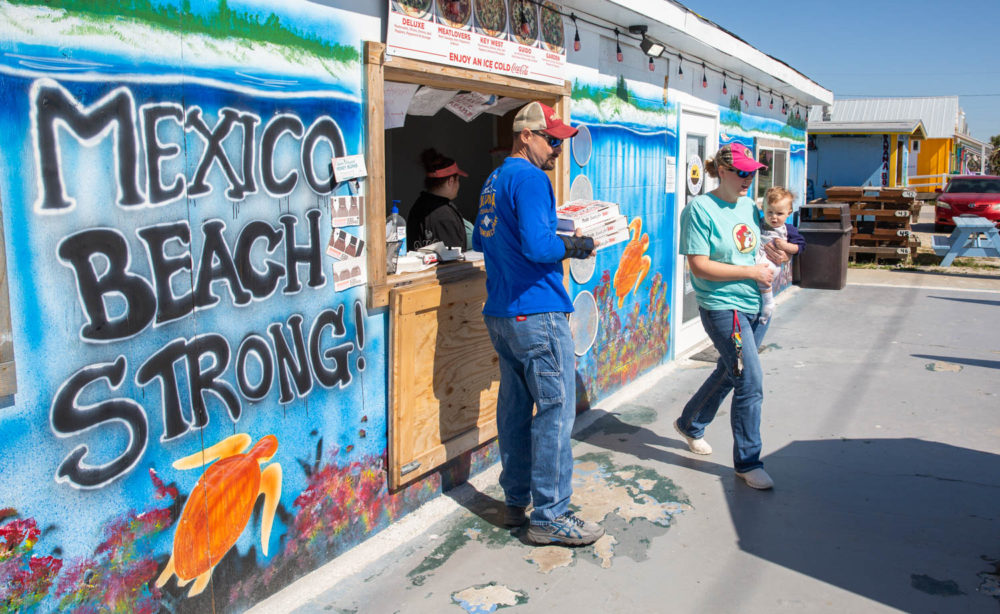
Though it was left a shadow of its former self, Mexico Beach offers visible signs of revival and regrowth. Construction workers and contractors are everywhere. The aroma of food sizzling on grills drifts down the streets; some restaurant owners quickly adapted to the challenges. Of the 13 food establishments in town, four— Mango Marley’s, Crazy Beach Pizza, Rustic Sands Tiki Grill, and Caribbean Coffee—are open as of early March 2019.
The owners of Mango Marley’s were among the first to resume business, serving food from a trailer and setting up a tent for guests. Other restaurants continue reconstruction.
Mexico Beach’s mayor, Al Cathey, owned and operated the local ACE Hardware store for 45 years until his youngest son Lee bought it in 2016. It is one of the few businesses that reopened within a few weeks after the storm despite losing 75 percent of its inventory.
After months of cleanup and salvaging his son’s business added to weeks of planning and standing strong for his community, the mayor remains personable, kind, and optimistic. The magnitude of the storm’s aftermath is something he has never before experienced, he explains. “We were in the mandatory evacuation zone,” he recounts. “The police went down every street with a bullhorn. Anyone that said they were not leaving, they would take their names and their phone numbers, making a list. On Wednesday night, when the storm escalated, many of those people left, but we didn’t know that. We found out after the fact that it ended up being around 100, maybe 125, people that actually stayed through the storm.”
Mayor Cathey, his wife Carol, and their son Lee were among those who remained in the city, committing themselves to riding out the storm in their home near the east end of town. Lee’s wife had evacuated to her hometown in Georgia with their son.
When the house began to shake around them, the family prayed. “The first thought I had—and I didn’t say it to Carol or Lee—but it was if we had made the right decision,” Mayor Cathey says.
During the rough parts of the storm the family felt safest in the interior bathrooms, speaking little about their fears and finding comfort in prayer. Three hours after the storm passed, the family experienced a real sense of a release of tension. Mayor Cathey, who had lived in Mexico Beach nearly his entire life, looks weary when thinking back to the moment when the full impact of the storm’s wrath became clear.
“On Thursday morning, I’ll be honest—I didn’t know what to do,” he admits. “Walking down that highway, so many things ran through my mind. I’m used to dealing with somebody not getting their trash picked up, or someone telling me that their water bill’s not right, and they need my help to figure out what’s going on. Now, all of a sudden, people’s lives, memories, physical possessions, and their homes are gone or forever changed. And they’re wondering, ‘What do we do?’”


At the time, communication with the outside world was nonexistent. Law enforcement officers from the Bay County Sheriff’s Office were the first ones to arrive to check on Mexico Beach and its residents. Media correspondents filed in a day after the storm. Mayor Cathey can now laugh when he remembers the first phone call that he was able to make on Friday, the day after the storm. “Omar Villafranca, one of the CBS newscasters, was sitting down here on the road.” Cathey points out a tent towards the west. “He asked me some questions and I told him, ‘I’m going to answer all of those questions if you let me use your satellite phone.’ With a big grin on his face he said, ‘That’s all?’ We made three phone calls: I called my sister, Carol’s sister, and my son Lee called his wife. My sister… that’s better than any newscast you can make,” the mayor says with a smile.
Mayor Cathey has seen Mexico Beach grow and change through the decades. He was a 5-year-old boy when he moved to the Gulf Coast town with his parents in 1953. Mexico Beach only had around 200 residents at the time, most of them fishermen and their families.
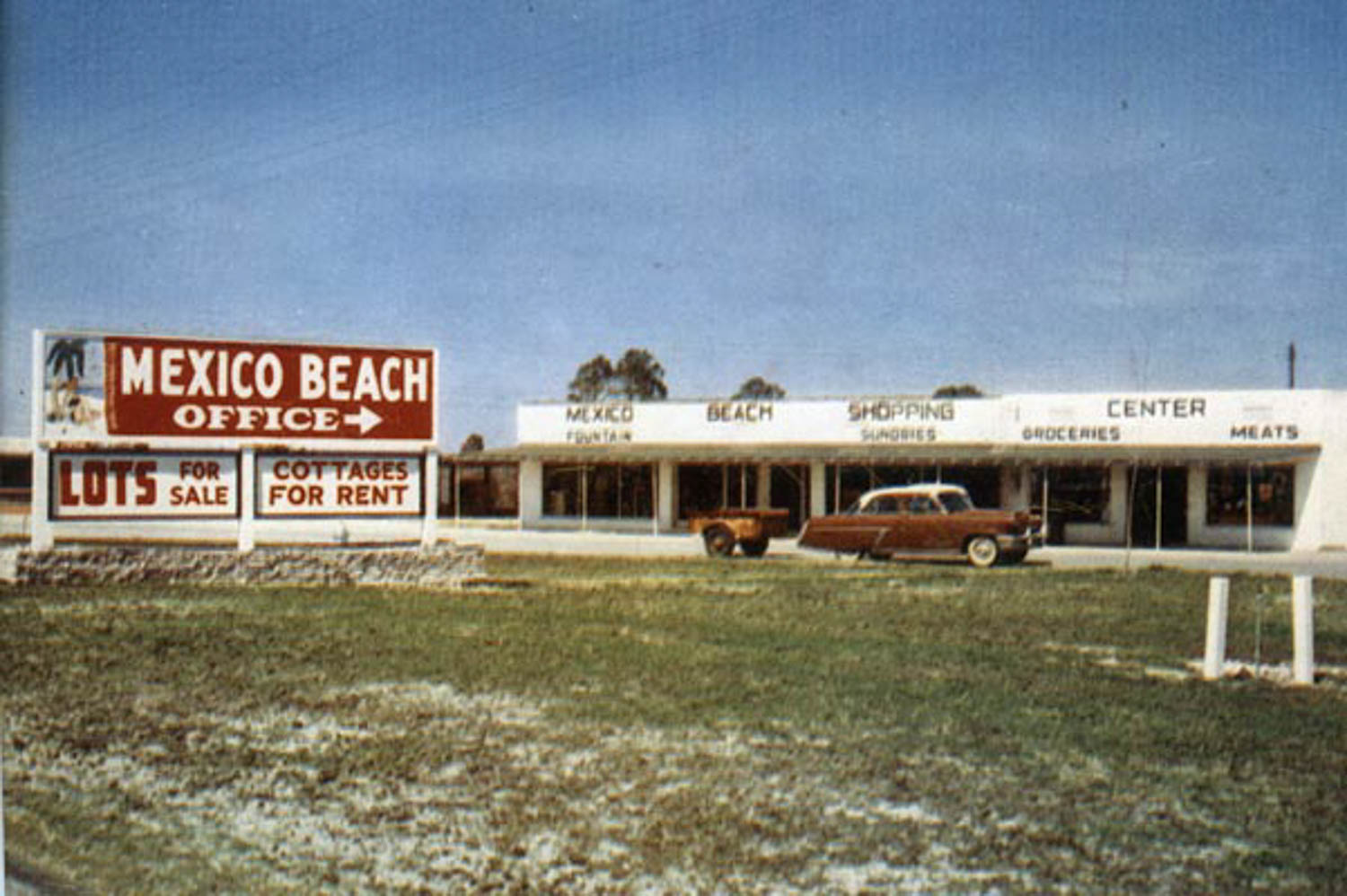
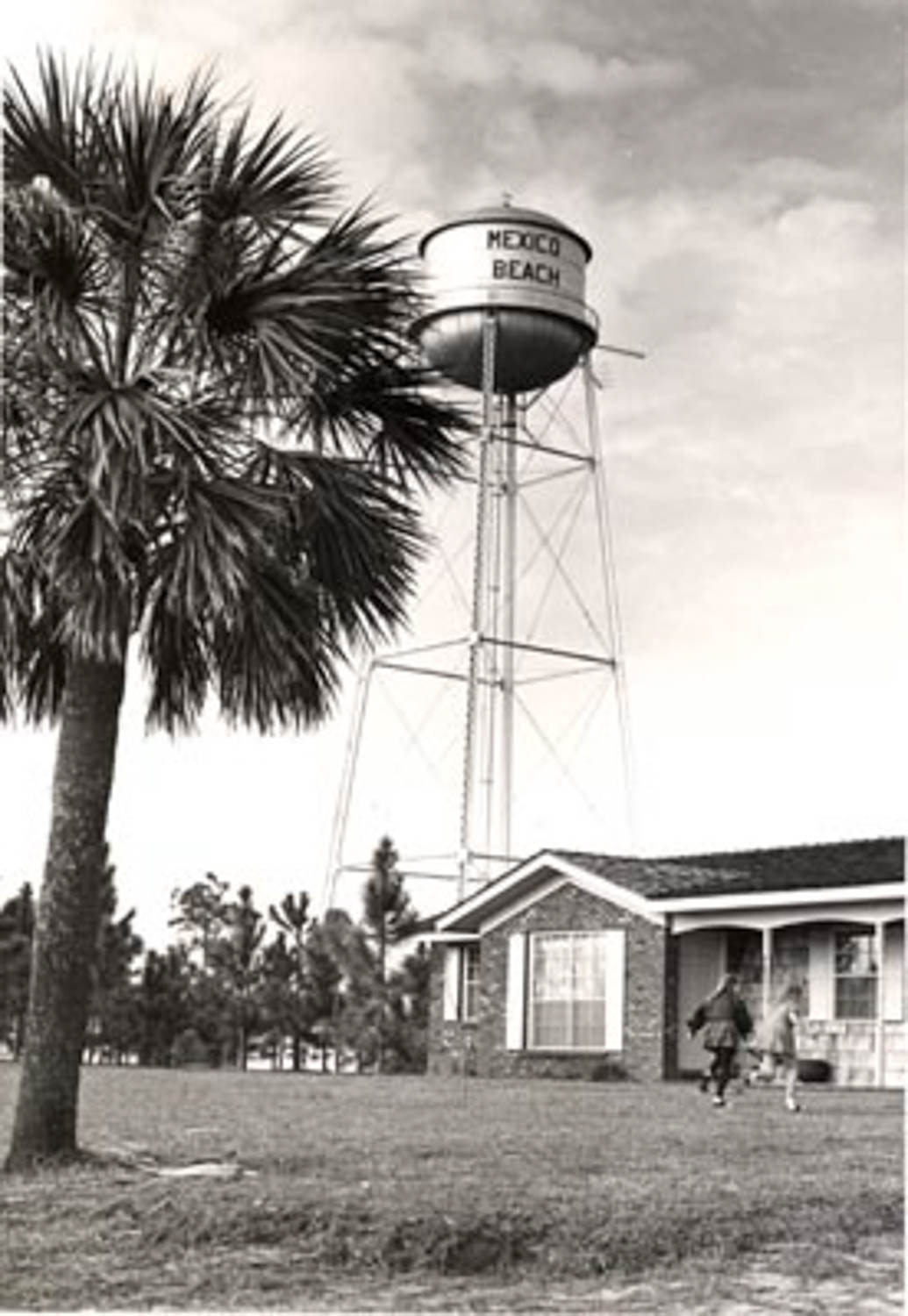
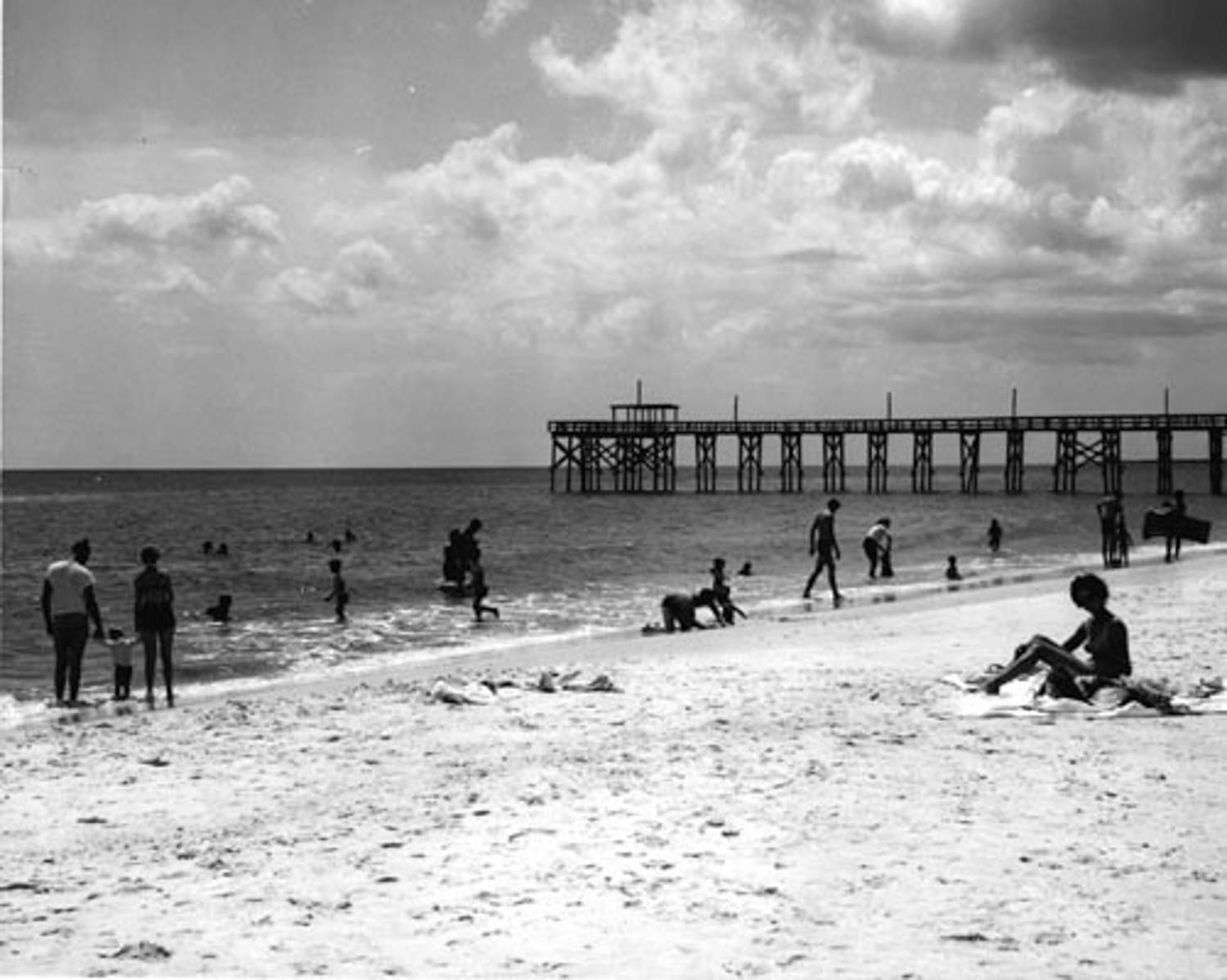
The town got its initial start in the 1940s. When the nearby Tyndall Field gunnery range, later renamed Tyndall Air Force Base, was completed in 1941, thousands of Army Air Corps personnel flooded into the area. Businessmen Gordon Parker, W.T. McGowan, and J.W. Wainwright, seeing the prospect of growth, bought 1,850 acres of land for $65,000 in 1946 and formed the Mexico Beach Corporation. That same year, the first subdivision of Mexico Beach was platted and recorded in Bay County. The new town became a popular place for sportfishing, thanks to its prime location on the Gulf and its canal that could shelter large boats and offer quick access to the open waters.
Cathey’s family has lived in the city for generations. His uncle, Charles “Charlie” Parker, settled in Mexico Beach in the late ‘40s with wife Frances Cathey “Inky” Parker, and continued his father’s work of developing the city. Charlie became the first mayor of Mexico Beach.
One day, Charlie Parker called his brother-in-law, “Bubba” Cathey, and told him that the fledgling city needed a grocery store and somebody to run it. Not long after, Bubba Cathey and his wife, Marion Cathey, opened Mexico Beach Grocery and settled into their new home with their 5-year-old son, Al Cathey.
The family devoted themselves to their new community. As the years passed, shops, churches, start-up businesses, and family residences cropped up, and the city flourished but retained a relatively unknown presence in the Florida panhandle. The town’s residents have never been concerned with increasing tourism. Instead, Mexico Beach is known for being simple yet gorgeous, and it is loved for being just that.
With most of the homes washed away, leaving mere slabs of flat concrete surrounded by tattered furniture, splintered wood, and debris, the community was upended by the hurricane and made national headlines. Never in any of the townspeople’s lives had their home been so heavily impacted by a storm. The ravaged city was flanked by media and nationwide support. FEMA has continuously aided the area, and volunteers have made it their mission to help the city and its people recover.
But most of the homes belong to people who do not reside in the coastal town year-round, which brings its own challenges for the rebuilding process. To put things in perspective, Mayor Cathey explains, “It’s rather eye-opening: 75 percent of our residential properties are non-homesteaded … which tells me that they’re most likely in the rental program … they are what supports our economy. So, the rebuilding process with that many second homeowners, I think it’s going to get drawn out because it’s not their primary address. And the other side of that is that over 82 percent of our city budget is made up of ad valorem taxes. So, when your tax base takes a hit, which obviously it will, we’re going to have some real dilemmas to try to find a workable budget. We only have 38 employees.”

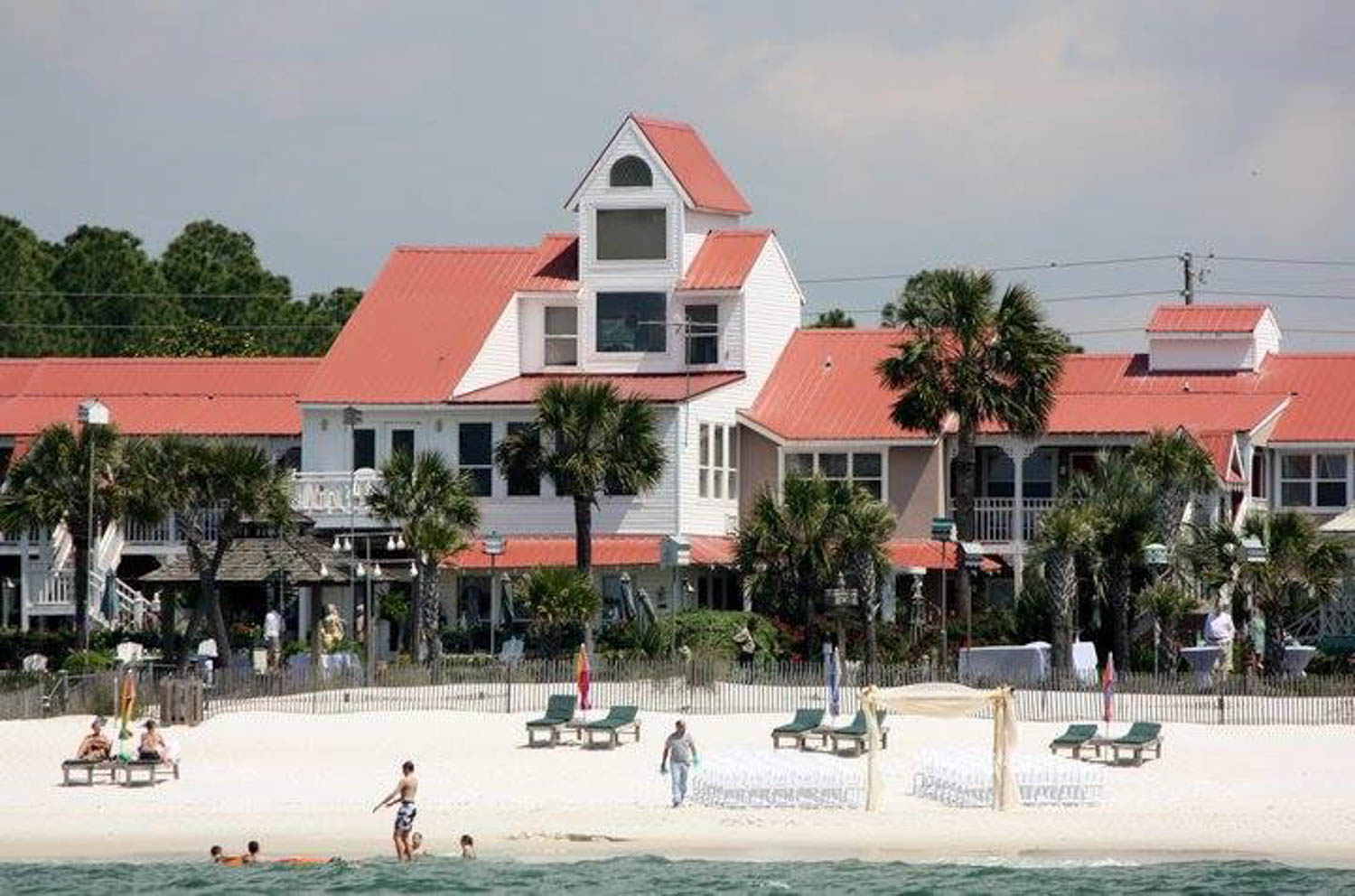
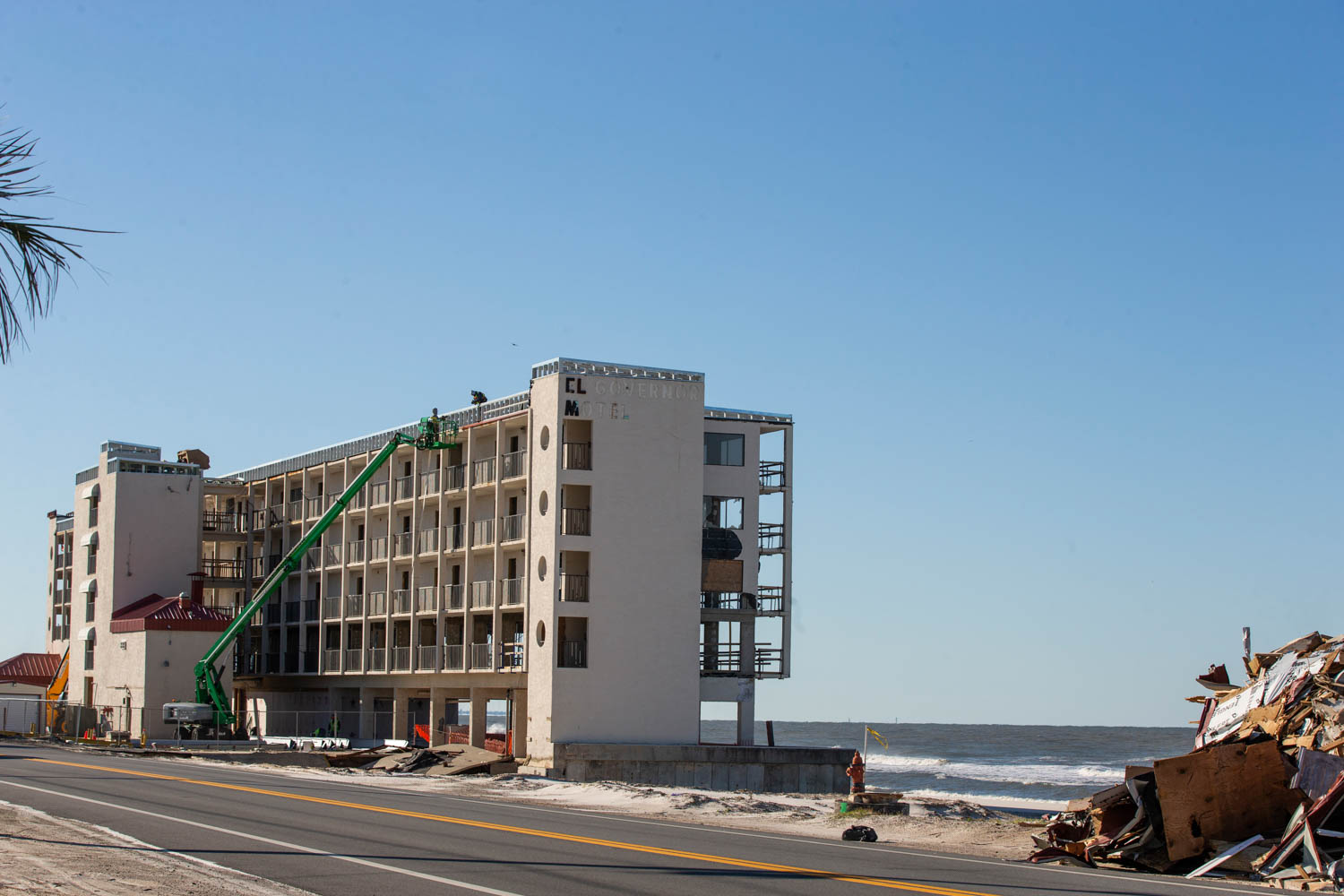
Much has changed since the day Mayor Cathey made those phone calls on Villafranca’s satellite phone. Well-known and beloved businesses like Toucan’s Bar and Grill, and the Driftwood Inn, were destroyed in the storm, but have announced that they will rebuild, alongside several others. The El Governor Motel, a Mexico Beach landmark, is undergoing reconstruction.
Power, water, and sewage have been restored to most homes on the north side of US Highway 98. But the homes closest to the Gulf do not yet have utilities as of March 2019. Water and sewer restoration are currently underway.
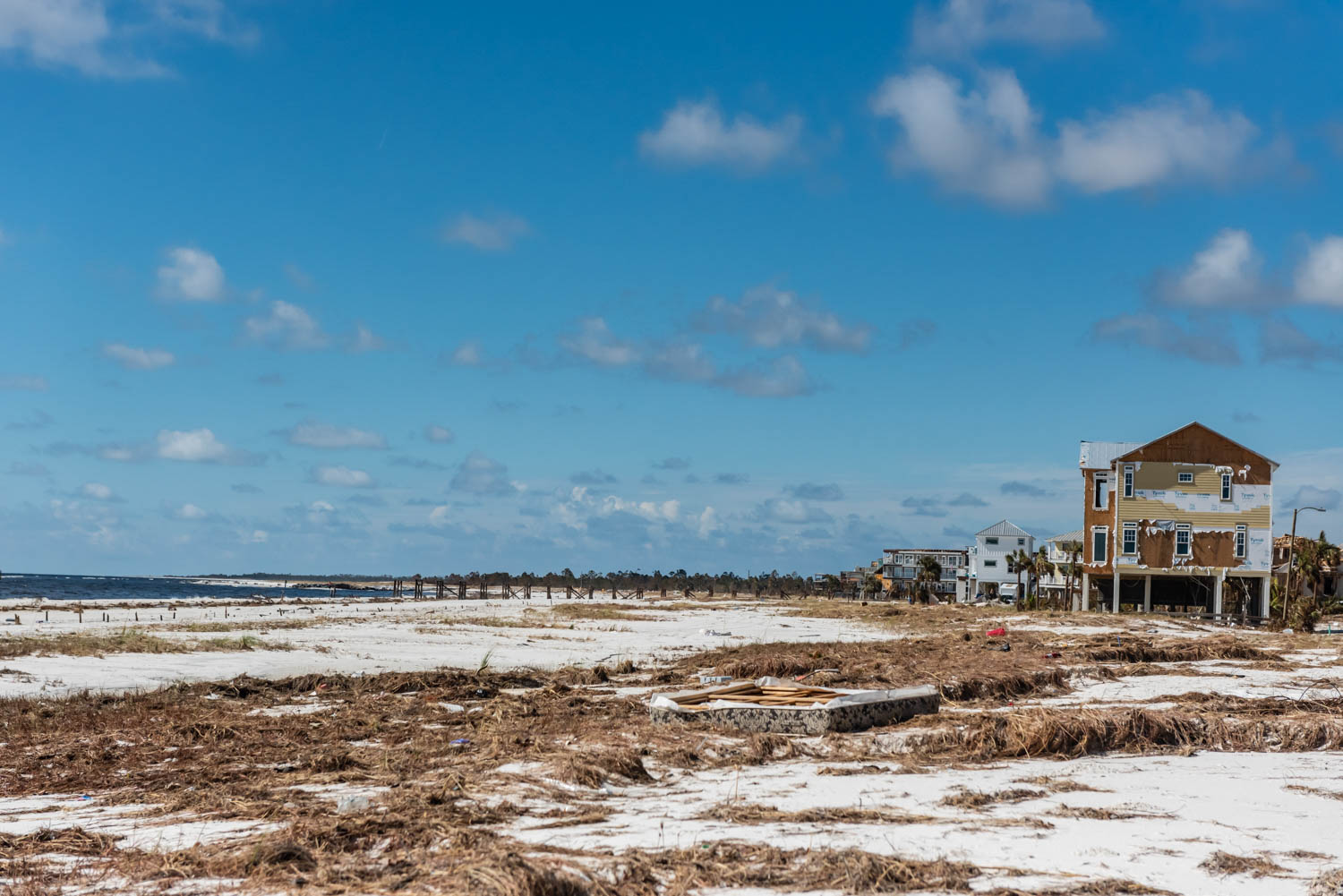
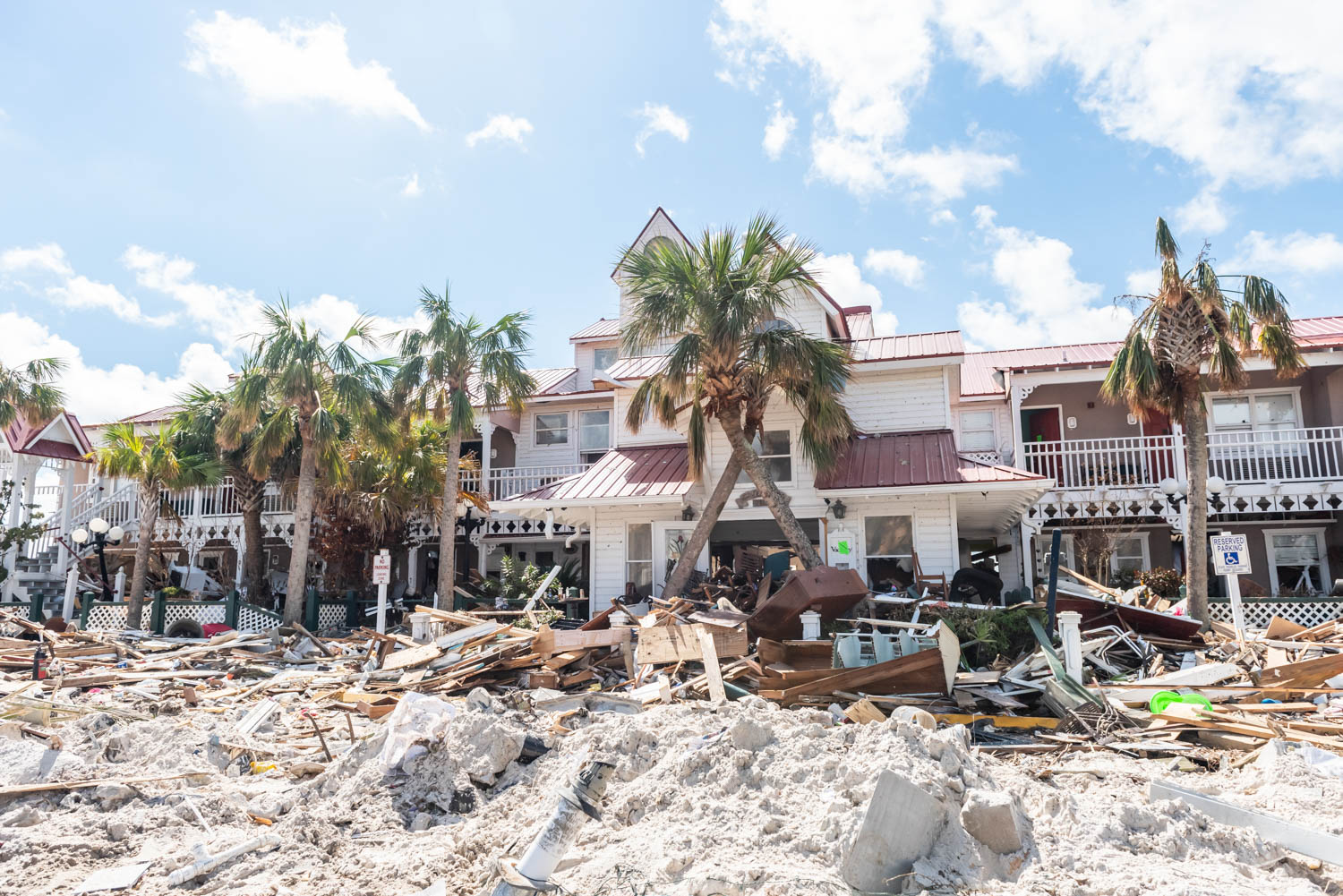
The desolate pictures and videos of Mexico Beach flashing during TV newscasts and online are becoming a distant memory as cleanup has drastically changed the landscape of the city.
The St. Joe Company, Northwest Florida’s biggest land-and-development company, has announced plans for the development of a village community by the end of 2019 and intends to have residences completed in 2020. The corporation held two open houses in March 2019, sharing preliminary plans and gathering feedback from locals.
“The Mexico Beach Village community is planned as a mixed-use neighborhood village with different types of modestly sized homes and smaller-scale retail shops consistent with the mom-and-pop businesses Mexico Beach is known for,” explains Mike Kerrigan, spokesperson for the St. Joe Company. “Our vision includes single-family homes, townhomes, and garden apartments at market prices and rents that are achievable for the workers and residents of Mexico Beach and the airmen and families of Tyndall Air Force Base.”
Mexico Beach’s tourism department reports that at least a dozen shops and boutiques were open in Mexico Beach before the storm. In March, four of them were operational.
Business owners like Kathy and David Sloan, who operate the family-owned El Governor Motel, are pushing onwards and have started the rebuilding process. Kathy is the daughter of the original owners of the motel, Dorothy and Don Baxter, and has been a pioneer in the development of the El Governor Motel since 1997, when she stepped in. The motel was constructed in 1989 and remained the only five-story building on Mexico Beach, providing hospitality to generations of visitors. It was heavily damaged by the hurricane but deemed salvageable.
“We are still working with the insurance companies,” Kathy Sloan says during a phone interview. “We have received some of the proceeds from them, not everything. We’re working with a contractor and architect on rebuilding the high-rise and bringing back the RV park, with the RV park being rebuilt sooner than the high-rise. We pray that our money holds out so that we can keep things going.”
Mexico Beach’s land development regulations were amended in February 2019. With new building codes in place, structures that were more than 50 percent destroyed will have to follow new guidelines.
The destruction to the El Governor’s high-rise was deemed less than 50 percent. Kathy reports that the hotel is undergoing construction. “We’re able to bring it back as it was,” she says. “The annex is a different story. We won’t be able to do that again because it was ground-level. The new codes will affect us over at the RV park. We lost everything there. However, we are planning to rebuild it. Our bath house will have to be built up higher than it was before, as well as any other buildings that we have there.”
Kathy and David also operate Baxter’s Asphalt & Concrete, a family-owned commercial and industrial asphalt paving company in Marianna, Florida, approximately 75 miles north of Mexico Beach. The city of Marianna, where their main office is located, was catastrophically affected by Hurricane Michael’s torrential rains and intense wind speeds. While the Sloans had substantial damage to their Mexico Beach residence, it was not lost to the storm.
“Many of our employees had to leave because their homes were destroyed. While our contractor has his own team of workers, we are also supplementing his team with a few employees from the El Governor. We’re trying to help by keeping jobs available,” Kathy says.
The show of support from loyal customers has been inspirational to the owners. They are confident that customers will be back once the motel reopens, which is estimated to be in the summer of 2020, with the RV park opening a little before then. “Our Facebook page has blown up with our guests wanting to know when they’ll be able to come back and how things are going in the Mexico Beach community. We are so blessed to have such wonderful long-term guests.” With a cheerful laugh, Kathy Sloan says, “They want to make reservations—they’re ready before we’re ready.”
Another landmark, the Driftwood Inn, had to be torn down on March 11, 2019, as a result of the severe storm damage. It has been rebuilt before, after catching fire in 1994, according to Shawna Wood, who has helped to run the hotel for years. She promises the Driftwood Inn will make another triumphant return.

Her parents, Tom and Peggy Wood, bought the Driftwood Inn in 1975 and raised Shawna and her siblings, Bart and Brandy, in the peaceful town. In 1999, Shawna moved back to Mexico Beach to help manage the hotel’s affairs. She conveys that her personal home sustained damages from Hurricane Michael, but she was able to move back in and resume handling concerns for the hotel. “I turned my downstairs garage into a little mother-in-law suite for my mother because she actually lived at the hotel,” she says.
“We want the Driftwood Inn to come back just like it was,” she confirms. “With the new building codes in place, it may affect how we look, and we may have to go up, but we’ll strive to keep things the way they were. We want to make sure we get the important structures back—the gazebos, the chapel, the fountain, the garden area. I want it to feel like once we come back, we’re coming back for good.”
Shawna calls the support she’s received after Hurricane Michael amazing. “Everybody’s been so positive. I get 10 or 15 messages from supportive people every day, through email and our Facebook page. 80 percent of our guests are repeat customers. They’ve become like family to us; some have even come to visit me at home. A lot of them have had us hold their deposits for the rooms they booked, so they’ll be ready when we rebuild.”
With a tangible appreciativeness in her voice, she adds, “The connection that you make here in Mexico Beach is so important. The whole town … Everybody has really pulled together.”
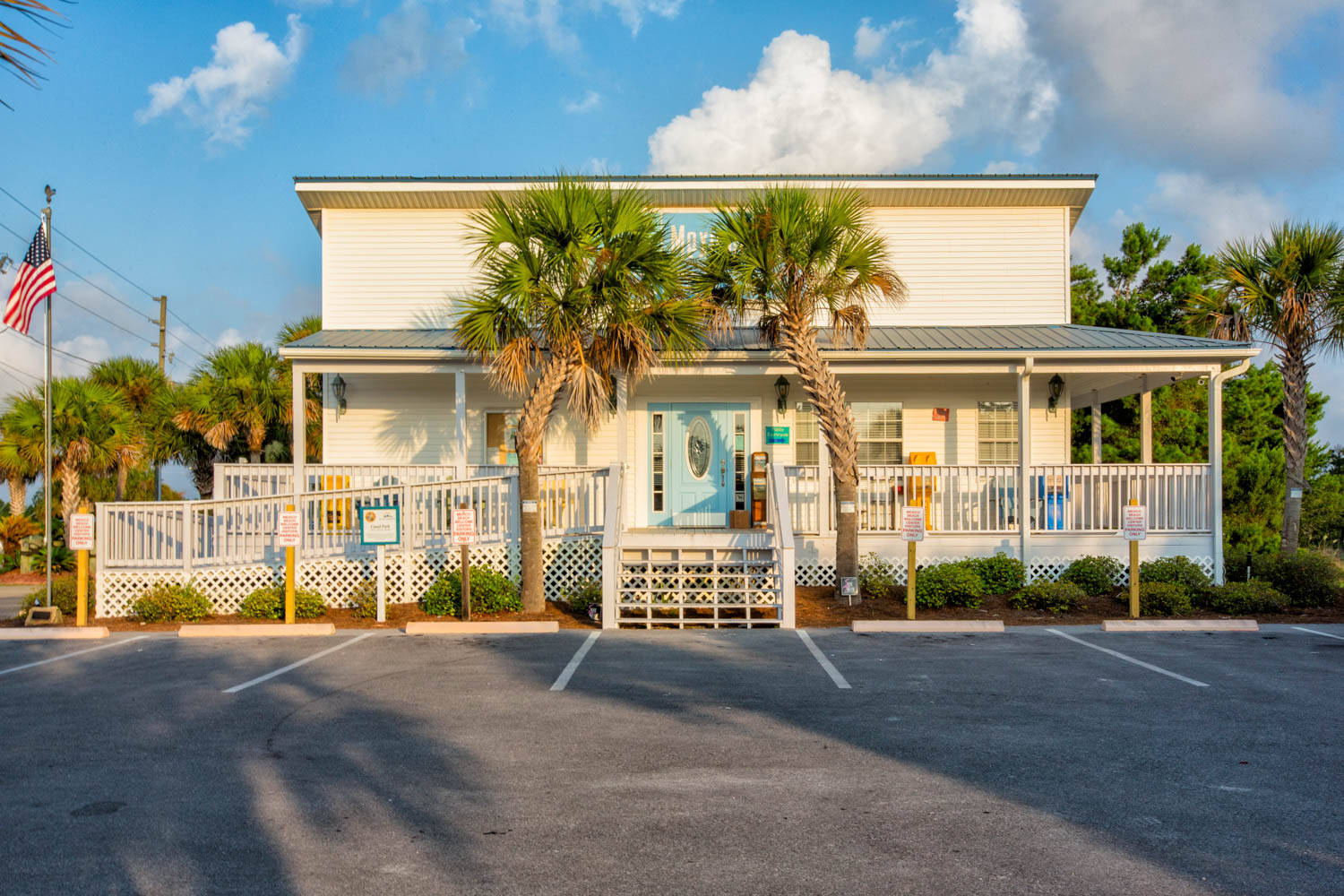
While City Hall survived Hurricane Michael, Mexico Beach’s Welcome Center lost its original building and is now located in a temporary mobile office trailer where the old building once stood. Every day, visitors stop in to check on Mexico Beach and get updates.
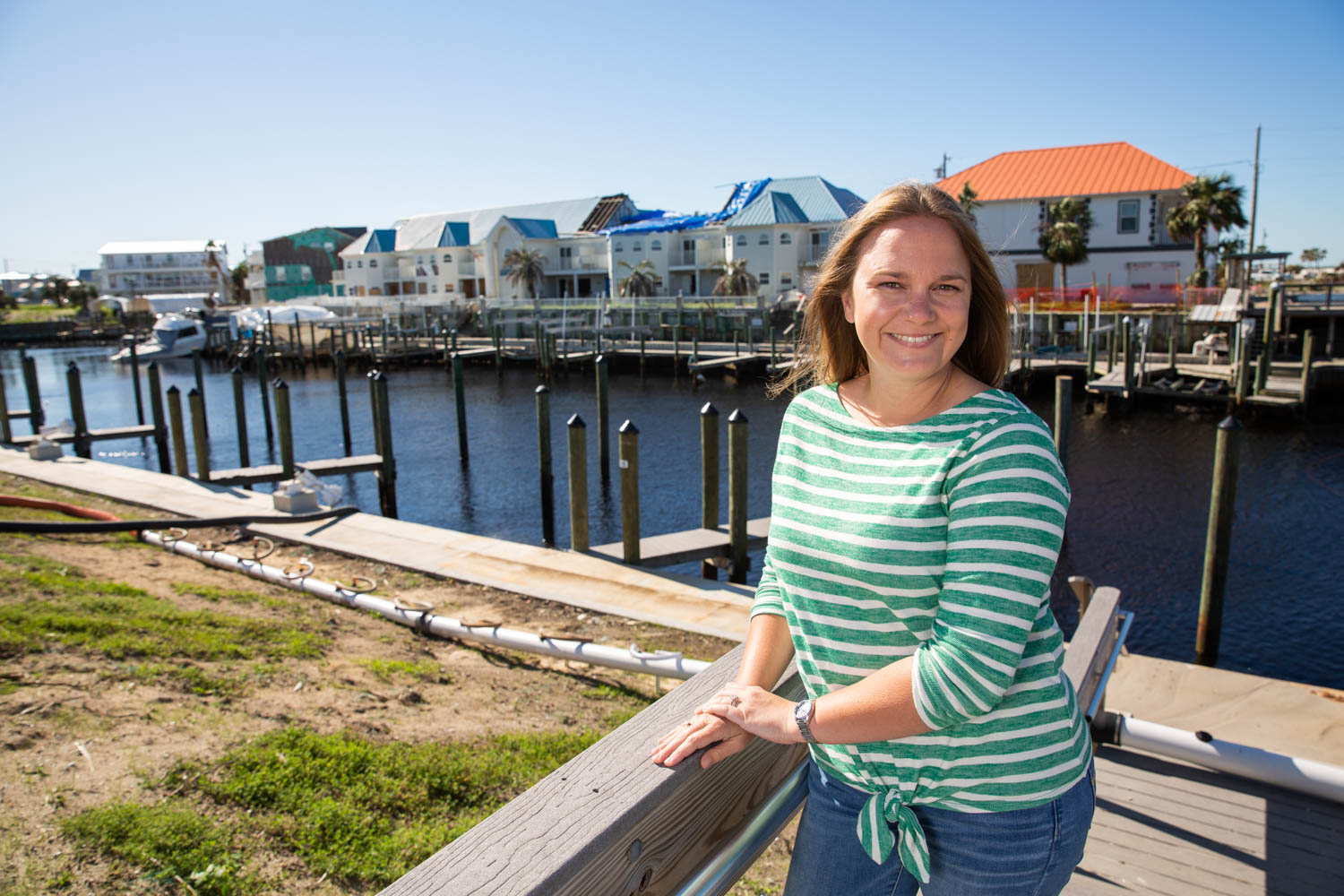
Kimberly Shoaf, president of the Mexico Beach Community Development Council, tackles her duties as president with a positivity that shines. Her home in Port St. Joe was destroyed by the storm, forcing her and her family to relocate north to the town of Wewahitchka, yet she stays bright and dedicated. “Right now, we are staying in contact with all of our business and vacation rental partners to assist them with any messaging that we could help get out for them, such as an approximate timeframe on when they will have their doors open again. Their longstanding customers have been coming to them for many, many years,” she says.
Welcoming those who want to come back to Mexico Beach, Shoaf keeps a current list of all the places to eat and places to shop, and a few places to stay. “We have a couple of VRBOs that are available to rent. The council is trying to be a friendly face for people who have been coming here for so many years,” she explains.
With the budget wiped out—a budget that depends on vacation rental taxes—Kimberly is currently the council’s only employee. There are plans to bring back employees once the rebuilding is further along and the budget is replenished.
Shoaf calls the restoration process a slow domino effect. “From what we’ve heard from some of our lodging partners, they hope to have some of their properties coming back online by the summer and then the fall. Some of the restaurants have said early 2020. But things are moving forward in the right direction every day. As far as the welcome center, there are plans to rebuild. We’re working with the city on that. We have an architect working on new plans. Hopefully we’ll break ground sometime before the end of the year.”
The City Pier is also on the list of structures being brought back to life. A beacon of Mexico Beach and every angler’s dream, the pier was originally constructed in the 1960s, thanks to funding secured by Charlie Parker’s dear friend, Ira Hills, who was a Bay County commissioner at the time.
“It will be put back,” Shoaf says with confidence. “The biggest hurdle is the financial aspect. Once funding is secured, hopefully it will fall into place.” The Courtney Knight Gaines Foundation, a nonprofit organization based in Georgia that has invested in the city’s marine development for years, awarded $25,000 to the Mexico Beach Artificial Reef Association; of this, $2,000 will go towards the City Pier’s replacement.
When asked what she appreciates most about Mexico Beach, Shoaf’s voice is awash with emotion and pride. “I can’t really nail it down to one specific thing,” she begins. “I grew up in this town, so this is the only home I’ve ever really known, except when I went off to college. After college, I moved back here and have been in the area ever since. The great thing about Mexico Beach is that its residents are, without a doubt, the friendliest people you will ever come across. Even a catastrophe like Hurricane Michael does not diminish their spirit because they know that being positive through this is how we will all move forward together.”
There are still many trials ahead. “There is a process to go through at this level of devastation,” says Mayor Cathey, adding with determination rather than discouragement, “You know, to this day, we have no gas station. We have no grocery store. We have no bank. To get gas, you’ve got to drive your car somewhere out of town to buy it. It’s 10 miles to get to Port St. Joe.” He smiles and adds, “We’ve learned to be a little more organized. As my wife would say, ‘make a list.’”
It may be years until it’s back to its former quiet glory, but Mexico Beach is recovering and is committed to preserving the charisma and appeal that has so many individuals fighting to bring the city back. Staying true to its new concept and trademark name of “The Unforgettable Coast,” Mexico Beach is a place that will not be lost to time. Those who call it their city have rolled up their sleeves and are ready to work hand in hand, no matter how long it takes.