
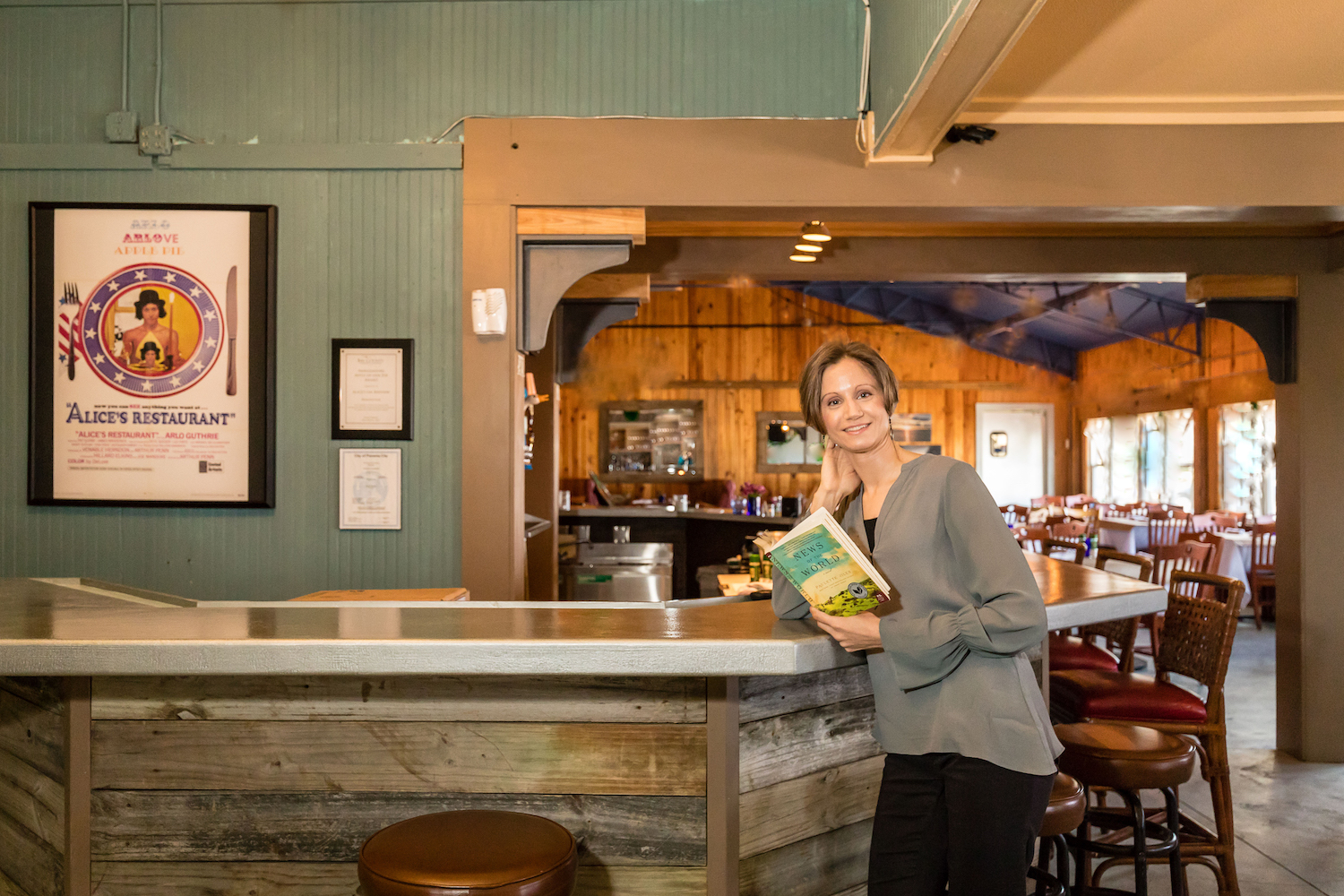
NEWS OF THE WORLD


Reviewed by Jennifer A. Sheffield
In News of the World (2016), a work of historical fiction set in Texas in the 1870s after the Civil War, novelist and poet Paulette Jiles uses the word “flux” as “a soldering aid that promotes fusion of two surfaces” or, the “process by which metals join together by melting.” In this book, that process is a 400-mile journey from one end of Texas to the other during its wildest days when Indian Territory was alive with conflict.
Travelers had to assume loyalty and take charity if they were to dodge threats by rogue U.S. Army patrols and lawless cowboys. The metals are the two main characters – Captain Jefferson Kidd who reads newspaper news aloud to paying audiences, and Johanna, a 10-year-old German girl who has been rescued after seven years in captivity with the Kiowa tribe.
Both are haunted by memories of war but must work together to survive; they smooth each other’s sharp edges, just as Kidd soothes the temperaments of his audiences by selecting readings relevant to the time such as fairytales, science discoveries, survivors of sinking ships, and the progress of the Franco-Prussian War. He believes, “if people had true knowledge of the world … they would not take up arms.”
The belief that there is a graceful ending to our grizzly rides in life is the rope Jiles uses to tug us through the mud of News of the World. Ironically, when Kidd returns to San Antonio, he is met with news from his world in the form of letters from his daughters that ultimately prompt him to intervene when Johanna’s family will not adopt her.
Jiles’ story arc is, “Maybe … we have just one message,” and that, “…it must be carried by hand through life – all the way – and at the end, handed over, sealed.” To this I would add, it is the journey on which we meet people who move our messages so that the world benefits from them.