
New Artificial Reefs for Bay County: Two Retired USAF Voodoo Jets


BY L. Scott Jackson UF/IFAS Florida Sea Grant Agent UF/IFAS Extension Bay County
Since the first ships and sailors, mariners have observed large fish populations and other marine life inhabiting shipwrecks. From these early observations, some of the first artificial reefs were retired vessels no longer useful as ships but purposefully placed underwater to enrich marine life.
In the 1830s, artificial reef pioneers in South Carolina experimented with logs huts, which they discovered deteriorated within a few short years. Locally, as early as the 1950s and 60s, fishermen began to use railroad cars, school buses, car bodies, white goods (stoves, refrigerator, washer, etc .), tires, and porcelain fixtures.
Today’s artificial reef materials have transformed from being underwater junkyards to marine resources that will last at least 20 years and will not harm wildlife or the environment. Decommissioned steel hulled ships, tanks, aircraft, and other durable “materials of opportunity” are still utilized. Additionally, new engineered concrete artificial reef modules that support specific species and various life stages of fish have been developed. Current fisheries research seeks to refine materials, design, and placement of artificial reefs to maximize conservation.
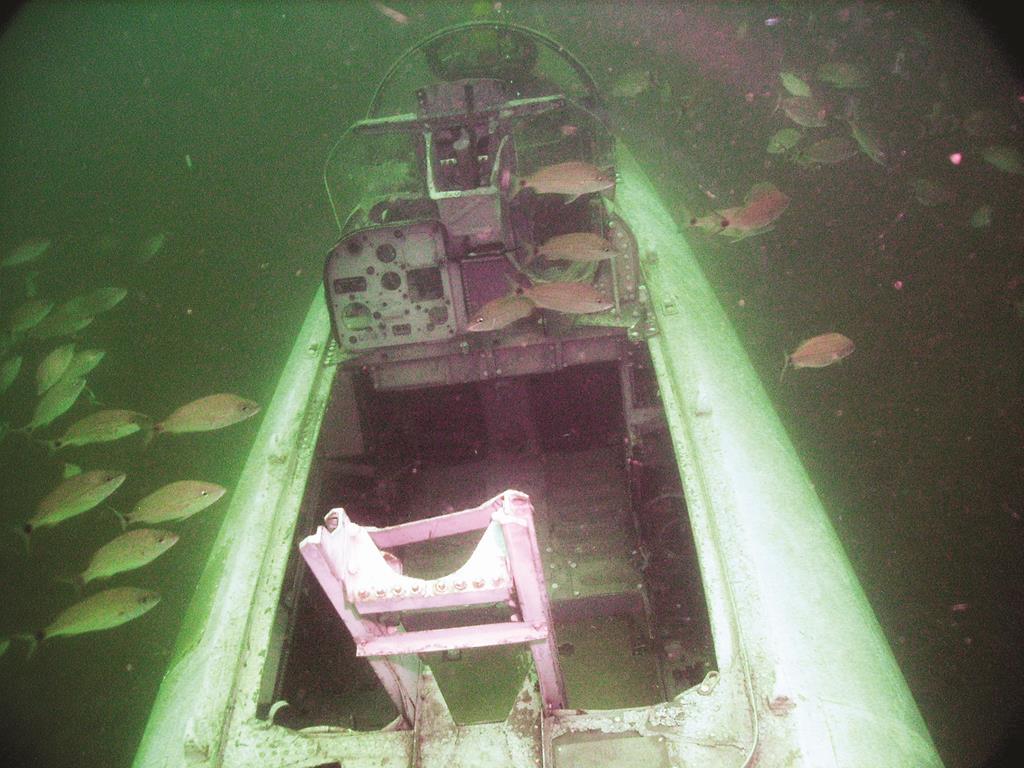
Within hours of sinking a vessel or artificial reef, baitfish move into their new home. This initiates a “parade” of marine life over several months. The hard structure of an artificial reef is slowly colonized by soft corals, plants, and barnacles. Baitfish will soon have new neighbors, as snapper and grouper take residence. Nearby sand sediments come to life with sea stars, sand dollars, and other invertebrate species. In total, it takes about three to five years for reefs to reach a level of maximum production for both fish and invertebrate species.
Artificial reefs are best used as a fisheries conservation tool that disperses fishing pressure and promotes healthy fish stocks. The ultimate goal when using artificial reefs is for fish production to exceed any fishing or natural mortality. Artificial reef managers or charter captains deploy a variety of reef materials that attract and support fish at various sizes and ages. Reefs are deployed so that the exposure to fishing pressure is limited by time or by geographic location.
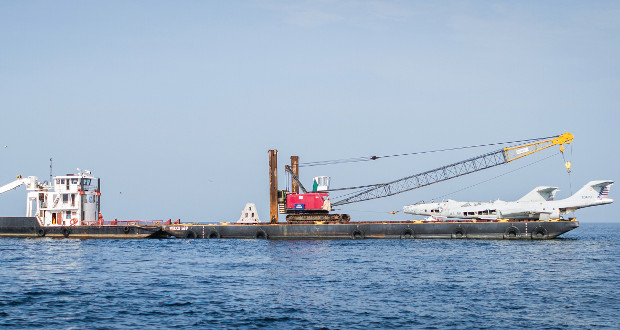
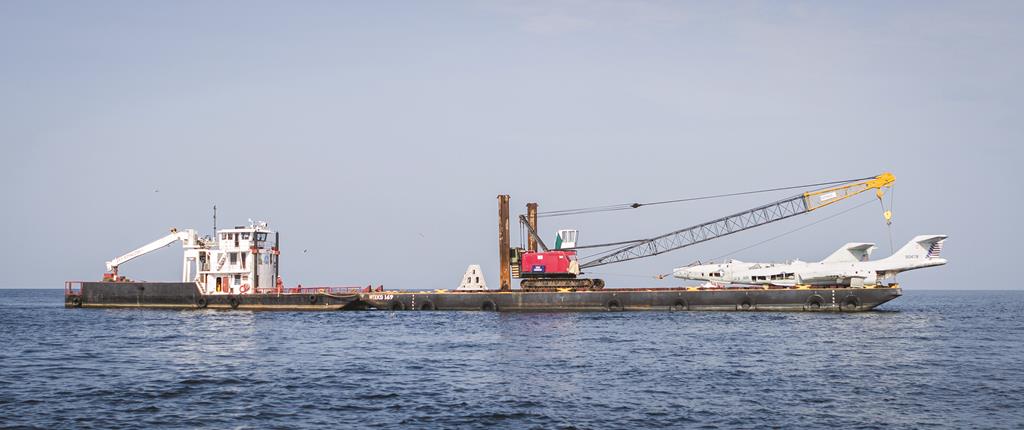
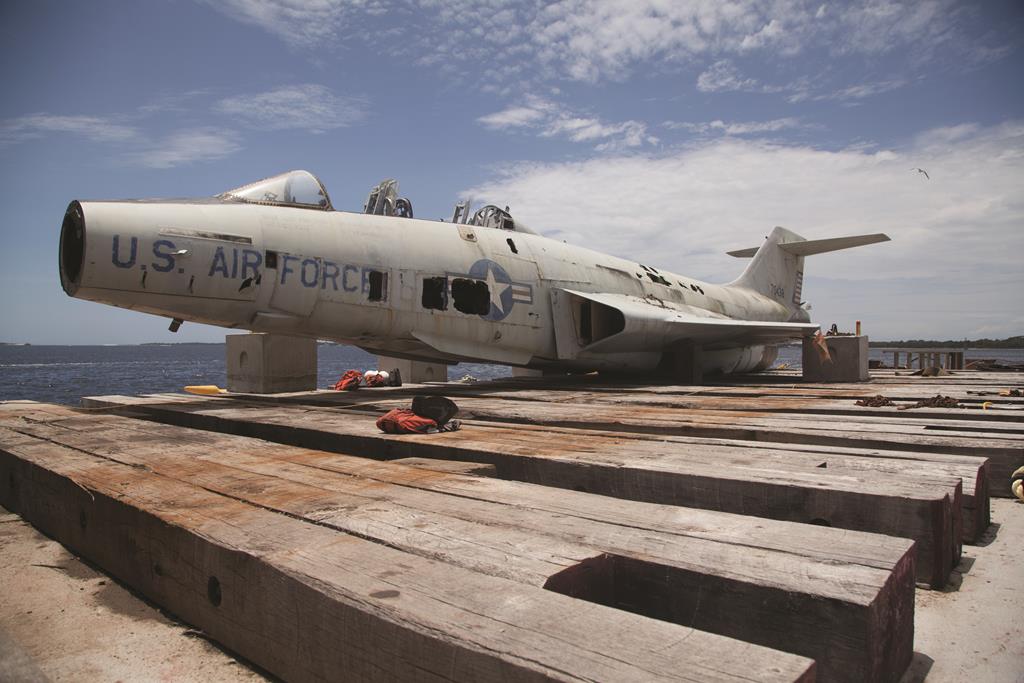
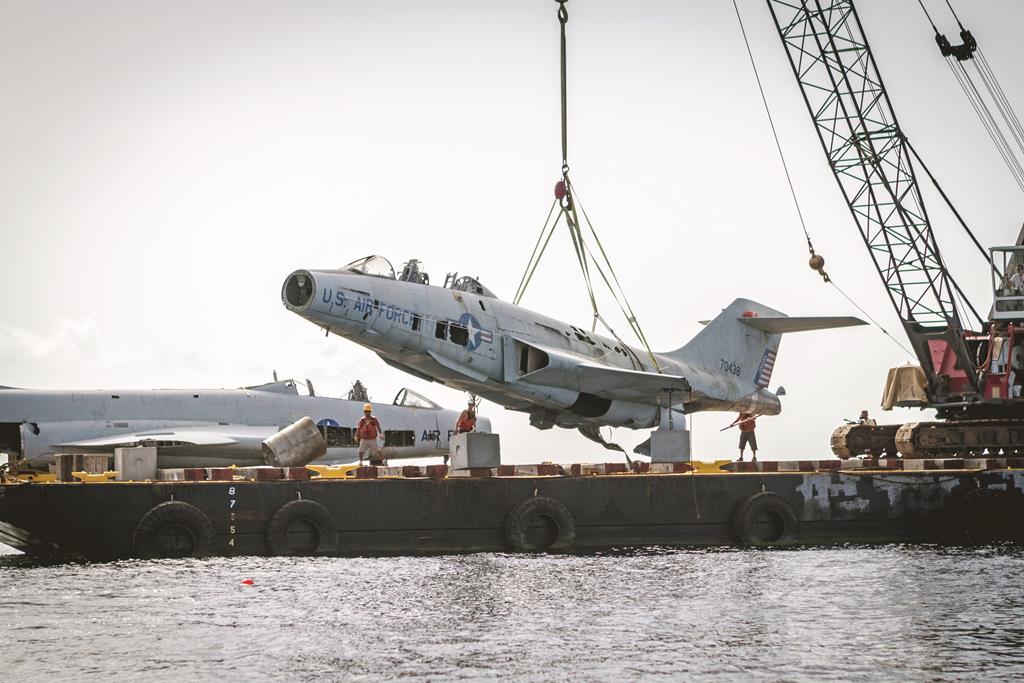
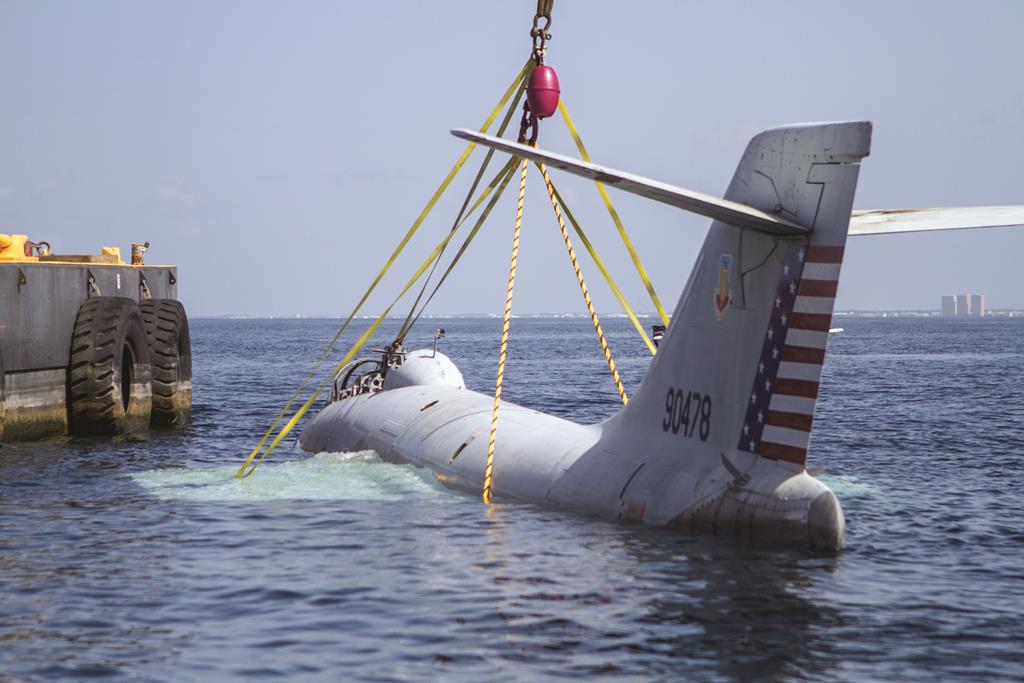
Bay County recently deployed two retired F101 Voodoo Air Force fighter jets as artificial reefs. The Voodoos were once piloted by former Bay County Commissioner Rick Seltzer and Carleton “Sonny” Vail and are now sunk just three nautical miles south of the M.B. Miller County Pier in waters that are governed by the State of Florida. Divers observed amberjacks during a recent trip to the new reef site.
“It’s very exciting to have a piece of Bay County history available to the public in perpetuity,” Bay County Commissioner Bill Dozier said. “Residents and tourists from all over the world will be able to come to Bay County to enjoy fishing and diving on the reef created by the aircraft.”
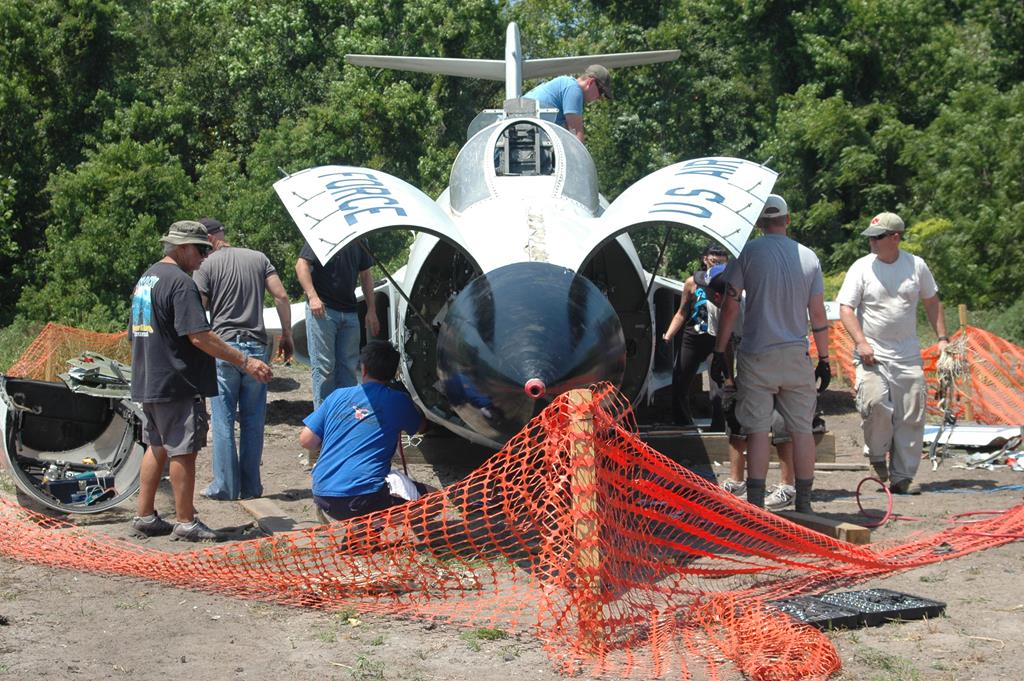
The Bay County Board of County Commissioners’ Planning and Zoning Department oversaw the effort to create the new reefs, along with assistance from several area government and private organizations. Tyndall Air Force Base volunteers with the Dive Club and Aircraft Maintenance Instructors provided over 600 man hours in preparing the jets for deployment. Dive club members also assisted with site surveys and logistical support during pre- and post-deployment monitoring activities.
The Bay County Tourist Development Council provided $30,000 toward the deployment cost. In addition to the two aircraft, a series of artificial reefs consisting of 34 pre-fabricated concrete reef modules were placed over two permit locations at a cost of $60,000 funded by the Florida Fish and Wildlife Conservation Commission – Marine Fisheries Artificial Reef Program (FWC). A total of 18 modules complete the reef project where the jets are located. An additional 16 artificial reef modules were deployed three nautical miles south of the city pier at Pier Park. This permitted area will receive additional reef material in the future.
Bay County also received a $12,000 grant from FWC to locate and monitor 35 reefs previously deployed under the LORAN coordinate system. Completion of this project helps residents and visitors easily locate existing reefs using GPS technology. Florida State University – Panama City (FSU-PC) provided technical expertise and equipment to complete this project. The FSU-PC Sea Nole also provided support for essential pre-deployment and reefing activities.
University of Florida/IFAS Extension Bay County Florida Sea Grant Program, City of Panama City, Bay County Artificial Reef Association, and the local fishing/diving community have also provided volunteer hours, expertise, resources, and support to complete these artificial reef projects.
Artificial reefs support more than just fish, they support people and jobs. A recent study estimates, for every $1 spent on artificial reefs in the Florida Panhandle, the economic benefit of artificial reef expenditures returns $131.00 to the local economy over the life of the reef. The economic impact of fishing and diving activities extends far beyond the charter fleet, marinas, tackle and dive shops; area shopping, lodging, and restaurant businesses also benefit from increased water based activities. For more information visit the UF/IFAS Florida Sea Grant article at http://edis.ifas.ufl.edu/pdffiles/FE/FE64900.pdf
Ready to go fishing? A list of reefs can be found on Bay County’s artificial reef page (http://bay.ifas.ufl.edu/seagrant/reefs/) . This page has an interactive map with web-links to individual reef sites where we are collecting submitted pictures and video (http://bay.ifas.ufl.edu/seagrant/artificial-reefs/) .
Additional Reefs will be deployed in 2014 – 2015 using construction funds from the Bay County Board of County Commissioners . Bay County and other neighboring municipalities have requested over two million dollars in funding as a part of early projects for National Resource Damage Assessment (NRDA) .
[box type=”shadow” align=”aligncenter” ]For reef coordinates for the Jets, deployment maps, and video visit:
http://bay.ifas.ufl.edu/seagrant/2014/06/27/bay-county-reefs-two-f101-fighter-jets or short-link: http://x.co/bayjets [/box]
[author image=”https://www.panamacityliving.com/media/2014/09/Jackson_S.jpg” ]As Bay County’s Sea Grant Extension Agent, Scott Jackson provides educational programs that are constructed to support the creation of thriving, resilient coastal communities . These programs support stewardship and sustainable use of fisheries, including use of artificial reefs . He also provides environmental education programs for adults and youth . He has been with Sea Grant and the University of Florida IFAS Extension Program for the past 14 years . He has an additional 15 years of experience of aquaculture experience, working in private industry and with fish nutrition research at Mississippi State University . Scott received his Masters Degree in Marine Aquaculture from Texas A&M – Corpus Christi and has a Bachelors Degree in Wildlife and Fisheries Science from Texas A&M University . Scott’s family includes his wife Angela, daughter, Brenna and son, Zach .[/author]