
MK-105: A Legacy of Excellence in Mine Countermeasures


The Naval Surface Warfare Center Panama City Division (NSWC PCD) is the technical center of excellence for littoral warfare and coastal defense, with almost 70 years of Mine Warfare experience. The MK-105 Airborne Magnetic Influence Mine¬sweeping System is the epitome of that legacy of excellence.
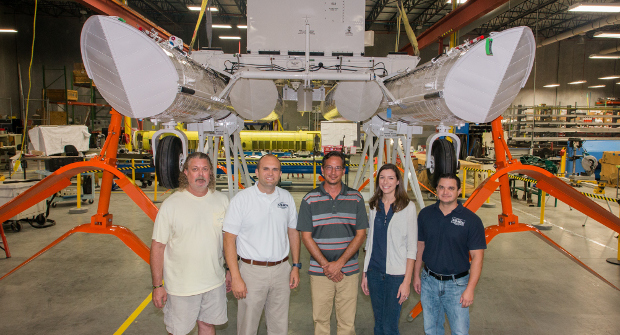
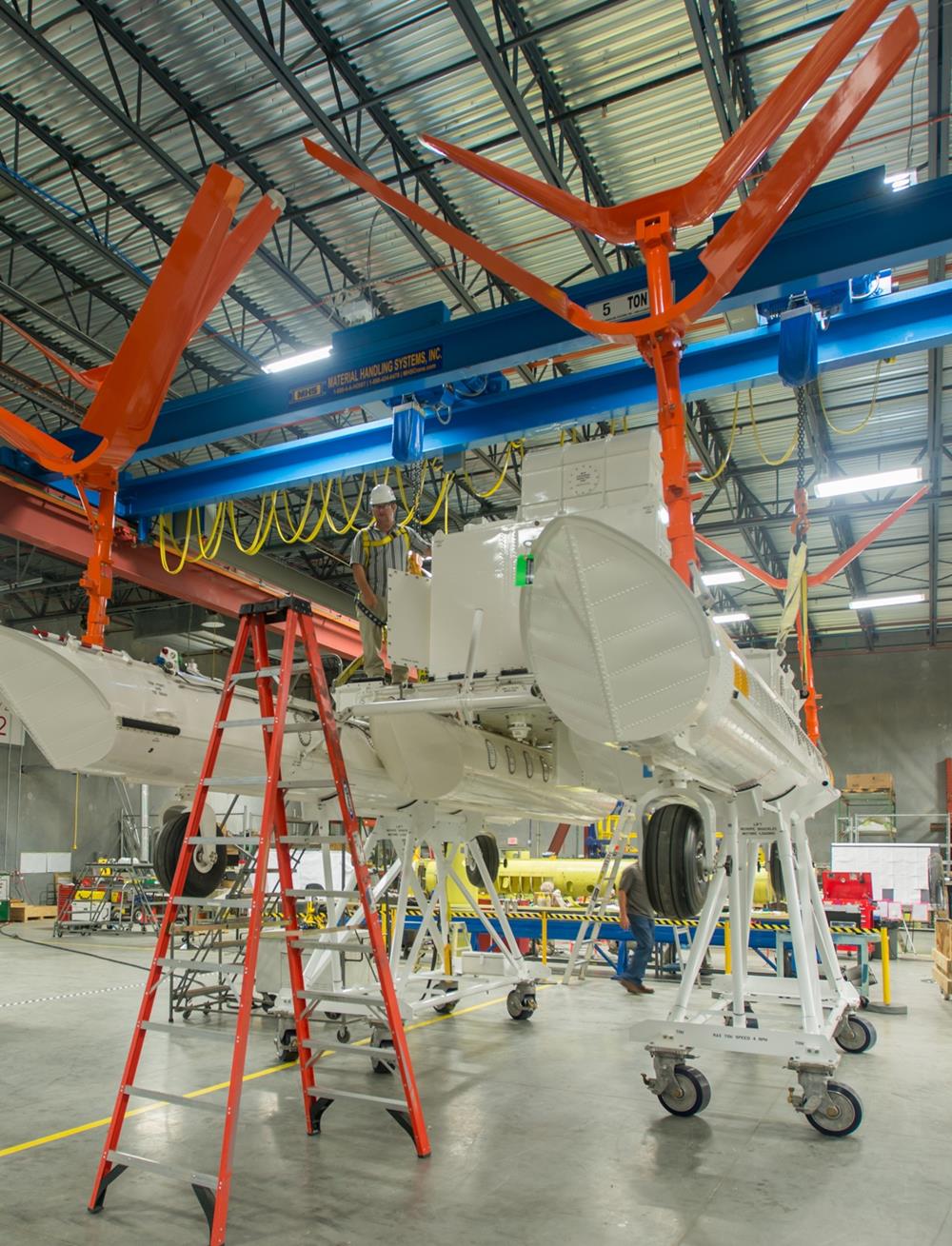
The Mk-105, or sled as it is known, is an airborne mine clearance system, which is towed through the water by a U.S. Navy MH-53E Sea Dragon helicopter. The twin magnetic tails, consisting of open-electrode magnetic sweeps, are towed behind the sled, detonating mines to clear the water for safe shipping.
In the 1960’s, Airborne Mine Countermeasures became a Fleet ca¬pability when Helicopter Squadron Six (HC-6) in Norfolk, Va. became the recipient of Panama City’s first operational sweep systems. These included: the MK-101 Mechanical Minesweeping Gear (1964), the MK-17 Mod 0 Cutter Assembly (1966), the MK-104 Acoustic Sweep (1967), and the MK-103 Mechanical Minesweeping Gear (1969). Working with HC-6, NSWC PCD focused on the refinement of these systems’ usage and upon the development of the associated tactical procedures.
In that same time period, research at NSWC PCD focused on the development of magnetic sweep systems and upon the development of towed minehunting systems which were based upon early sonar technology. In early 1972, the MK-105 Magnetic Minesweeping Sys¬tem was introduced into the Fleet, and from February to June 1973, the MK-105 system was called into action to sweep the minefields in the principal ports and harbors, associated waters, and some shipping channels in North Vietnam, during Operation End Sweep. Approxi¬mately 11,000 destructor series mines were swept by the U.S. forces and the MK-105 magnetic sweep system was a big part of that effort.
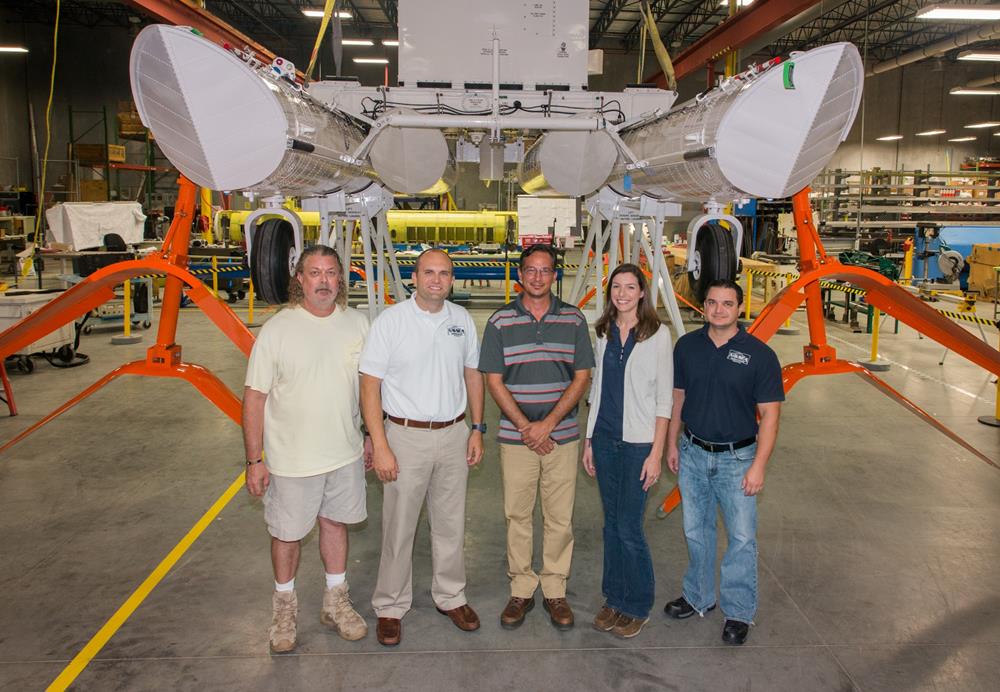
Through the decades, Panama City Division personnel have been supporting the Fleet’s Airborne Mine Countermeasures (AMCM) ca¬pability. Today, NSWC PCD continues as the In-Service Engineer¬ing Agent (ISEA) for the MK-105 Mod 4 Airborne Magnetic Influ¬ence Minesweeping System. The Lead Project Engineer and ISEA at NSWC PCD is Steven Gilbert, who recently received the Meyer Award in Systems Engineering (Distance Learning), as selected by the Naval Postgraduate School’s (NPS) core faculty. The award, which is selected by the NPS capstone advisors, recognizes outstanding stu¬dents in systems engineering. Members of his cohort praised him for his efforts and noted “we were lucky to have him as Capstone leader.” So, it is not surprising that Gilbert has assembled an extremely tal¬ented team to manage the MK-105.
NSWC PCD Lead Technician Joe Lowry is a retired Aviation Maintenance Administrationman who previously served with Heli¬copter Mine Countermeasures Squadron Fifteen (HM-15) in Corpus Christi, Texas. During his career, Lowry served in all of the positions on the active duty MK-105 team from Sled Captain, Launch Direc¬tor, Launch and Recovery Officer, Boat Coxswain to Small Boat Petty Officer. Lowry received the Bill Emshwiller Award in 1998, which is named after Colonel William M Emshwiller, who is considered the “Grandfather” of AMCM. “There isn’t a day that goes by that Joe doesn’t receive a phone call or an email from the Fleet, supporting the sailors of HM-14 and HM-15,” said Gilbert.
Todd Lloyd serves as the NSWC PCD Integrated Logistics Manag¬er. Lloyd retired as an Aviation Electronics Technician supporting HM-15 as the AMCM Maintenance Control Chief. Loyd was responsible for the maintenance and upkeep of all AMCM systems including the MK-105. Now, Loyd ensures that the MK-105 Interactive Electronic Technical Publications are accurate and up-to-date and provisioning is current. Additionally, Loyd recently utilized Reliability Centered Maintenance to optimize preventative maintenance and championed the integration of program data, engineering data, contract data and logistics data into the CMPro configuration management tool. These actions will result in a savings to the Navy of approximately $3.5M over the next decade. “The bottom-line is that Todd makes sure all of our logistics prod¬ucts are clear, concise and valid,” said Gilbert.
Angel Sarraga is the son of a retired Army Colonel and hails from Puerto Rico. Sarraga worked his way from a logistics intern program position into his current position as the Lead Mechanical Engineer by leveraging his logistics experience and his engineering education. “Angel recently joined the MK-105 team and is already making positive contributions,” said Gilbert. Gilbert considers himself blessed to have such an outstanding team. “Each person brings a tremendous amount of education and experience and they are dedicated to the Fleet and keep that in mind, each and every day,” he said.
“The really exciting effort underway is the first ever new build of a Mod 4 sled,” said Gilbert. The MK-105 Mod 4 was an upgrade which was initialized in 1998 and reached full operational capability in 2003. Under the direction and leader¬ship of NSWC PCD, Exelis Mine Defense Systems (MDS) has provided continued sustainment of the system and the first overhauls of Mod 4 sleds began in 2011. Exelis MDS provides overhaul and heavy repair capabil¬ity to the U.S. Navy. In 2012, Exelis MDS opened the doors on a brand new facility to bring better support to the MK-105. This was also the first business at the brand new industrial site at the Northwest Florida Beaches International Airport known as Venture Crossings. Exelis MDS is currently finishing the second overhaul of a MK-105 Mod 4 where the sled is torn down and evaluated and then refurbished to like new condition.
As the main floats and boom were originally modified from a Mod 2, this effort has never before been accomplished. Exelis MDS has basically taken raw material and is building a brand new MK-105 that will be added to the current fleet. This comes as a result of repeated demand signals for utilization of the MK-105 in minesweeping operations in the Fleet. HM-14 and HM-15 have requested additional assets to continue to provide mine¬sweeping capability in forward deployed areas. “The MK-105 provides a capability that few Navies in the world can provide, and additionally, the MK-105 is a show of force,” Gilbert said.
With a scheduled remaining life of more than a decade, there is no fore¬seeable reduction in demand for the MK-105. “The story here is that this production capability has never been in-place before and, if not utilized, may never be in-place again. This is exciting for the Navy and for the local community. This contract has provided high-wage jobs for highly skilled workers and these workers are almost all li¬censed aircraft and maintenance technicians, many of whom are also veterans,” said Gilbert.
“The MK-105 Airborne Magnetic Influence Minesweeping System Team is an exceptional team doing exceptional work to support a legacy system that brings an important capability to the U.S. Navy and positively influences our local community,” said Allen Hawkins, the head of the Air¬borne ISEA Branch. “Hawkins started work in this branch in 1983 and, after working on oth¬er systems, came back as the branch head in 1996 where he has remained. If William M. Emshwiller is the grandfather, Hawkins is the Godfather,” said Gilbert.
While other teams are working on the future, this team will con¬tinue to stand the watch to ensure the MK-105 is ready for tasking anytime the U.S. Navy needs it. It is the epitome of a legacy of excel¬lence.