
Lobster Fest – This Year the Ultimate Challenge for Divers at Schooners


The divers who geared up Sept. 21 and 22 for Schooners Lobster Festival and Tournament answered a lot of questions with shrugs and stares.
“So, what happens if the weather turns bad like it’s supposed to?” was the question.
Stare. Shrug.
“Go get lobsters,” the diver said.
Schooners Lobster Festival and Tournament is a community event to benefit two organizations. Dive shops in the area donate thousands of dollars worth of goods as door prizes and the money raised through an auction, entry fees and money spent at the event support Florida Aquatic Marine Institute and Toys for Kids Foundation.
The festival also features live music, multiple food booths and incredible sand sculptures. But the draw is lobster. The weigh-ins draw crowds and the lobsters are placed so spectators can touch them and have their pictures taken. It is a unique event in every way, from the competition to the food.
The strategy for divers is simple: boat out to a spot, drop down to the bottom, look for lobsters, catch what’s there, return, rinse and repeat. Sounds simple, but the challenges are huge.
Lobsters don’t show up on fi shfi nding radar. Their habitat does: rock piles, artifi cial reefs, junk strewn on the bottom. Local divers have their “honey holes,” places where they’ve had success fi nding lobsters, but there’s no guarantee that they’ll be there.
Then there’s the depth. In the northern Gulf of Mexico, lobsters are found in deep water, 95 feet or more. Diving for them is dangerous. Air is consumed faster at deeper depths and divers have to make allowances for a slow ascent. Rising too quickly from deep water is how “the bends” happens.
The bad weather that was forecast for the tournament weekend meant additional complications.
And that’s just going out to get the lobsters. The real strategy happens back on shore.
DAY 1, SAFETY MEETING
Defending Lobster Tournament Champion Doug Wiggins of Panama City sat on a foldout wood chair with legs buried deep in the sand behind Schooners Restaurant Friday night and sipped beer from a can. Last year, he’d won the tournament with a 10.4 pound spiny lobster.
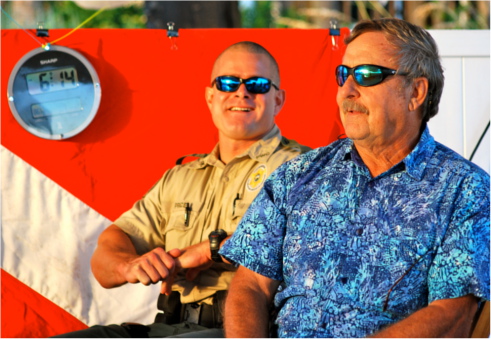
How did he catch such a monster?
“I went to where he was,” Wiggins said. “Then I swam around with my eyes open.”
Tournament director Mark Anderson called the safety meeting to order. With the first order of safety everyone had to pour out their beers.
Coast Guard, Florida Fish and Wildlife Conservation Commission, dive professionals and tournament director all delivered the same general message “be safe.”
These were men who’d been boating and diving most of their lives. They were told to be aware of other, less experienced boaters in their area, keep watch of their air and leave someone on board the boat during a dive.
“Know where you’re going to go for medical treatment if something happens,” dive specialist Danny Grizzard told them. For those who had never participated in the tournament before, “don’t let peer pressure make you do something you shouldn’t be doing.”
Depth limit, he said, was 130 feet, no exceptions. Divers would be subjected to a liedetector test to make sure they followed all the rules.
Wiggins and former champions Al Johnson and Mark Elliott, who have all participated in nearly every one of the 24 Schooners Lobster Tournaments, sat side by side and listened closely. Everyone was respectful.
DAY 2, ROUGH WATERS
Saturday morning started as expected: rainy, grey and windy. As the sun rose over the gulf, the waves churned up to 5 to 6 feet.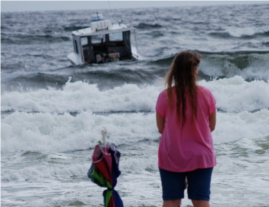
Johnson and Paul Fournier, both of Panama City, left Pirates Cove on a 27foot boat with two other divers. They turned into the swells as they left the pass and made it to their first spot 12 miles out in a little more than an hour. The divers dropped into the water, got to the floor 95 feet down and started combing the rock bottom for lobsters.
Fournier grabbed a shovelnose, but the rest had no luck. Unfortunately, that was the highlight of their day. Rising out of the calm and quiet of the seafloor, they surfaced into the chaos of rough seas and the challenge of getting back on board their boat, loaded with gear and being slammed by waves.
“Two guys got sick. It was rough,” Johnson, who won the tournament in 1996, said. “They just didn’t care for the conditions and decided to call it a day.”
Troy Branham and John Pipkin, both of Panama City, were faring better. They were on a 43foot cruiser, which was handling the waves better. And they were finding lobsters. Pipkin would be the first to weigh in a full bag of six lobsters in one category of the tournament, and all six were spiny lobsters.
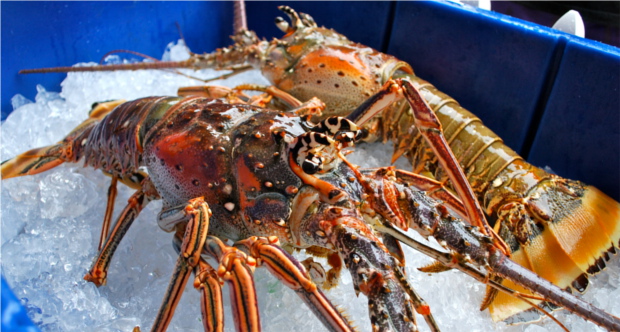
The two types of lobsters are very different. Spinys are large, colorful crustaceans with long legs and a huge muscular tail. They have long antenna and horns that curve out over their eyes.
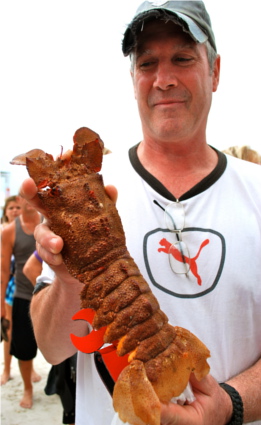
Shovelnose are stunted and brown, looking very much like moving rocks with red eyes. They are much smaller than spinys, but the meat contained within that ugly little body is delicious.
Branham said he too had gotten sick out on the choppy water, but it wasn’t going to stop him.
“What are you gonna do?” he said. “Puke, get back in the water, dive. Come back up, puke, get back in the water, dive.”
Back on land with the diving behind them, Branham, Fournier and Pipkin now had decisions to make as to whether they should enter their lobsters and in what categories.
Prizes were awarded in three areas: biggest spiny, biggest shovelnose and heaviest bag of six. The top prize, biggest spiny, pays out $1,000. Prizes also are awarded for best lobster on a given day and Fournier was watching as other shovelnose were being weighed. The one he’d brought up was 1.2 pounds and the ones ahead of him were coming up slightly lighter.
His dilemma was whether to risk the lobster at all. He had a slight chance of winning a prize, but he could just put the lobster back in his cooler. If he entered the shovelnose for consideration, he couldn’t take it back, it then belonged to the tournament. If he entered it and it lost, he would walk away emptyhanded.
While this was going on, Wiggins, Elliott and their boat were still out on the waves. They’d decided to skip Saturday’s weighing and keep diving.
After the first day of competition, Levi Sirmon of Panama City Beach was in the lead with a 6.7pound spiny. He acknowledged that the conditions that day had taken their toll. “It was exhausting,” he said.
DAY 3 HEAVYWEIGHTS
Elliott was surprised the minute he submerged. The water, while dark, was clear with visibility extending out 50 feet. As he plunged down into the briny water he was able to spot the debris field on the bottom and selected the area he would search first.
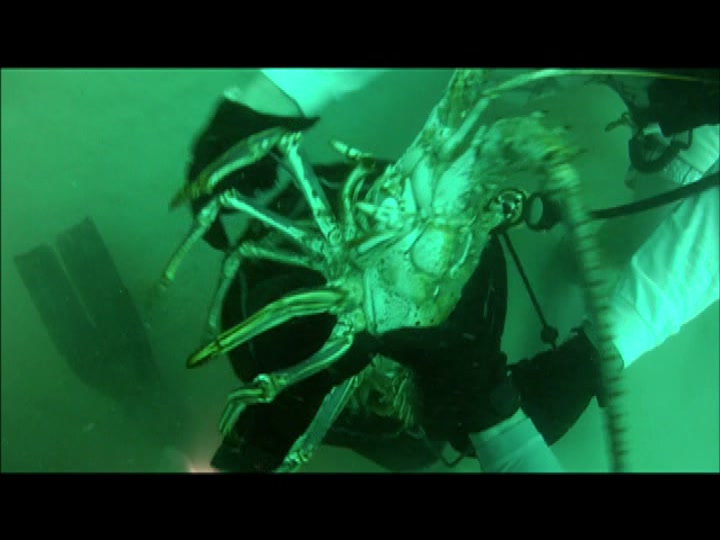
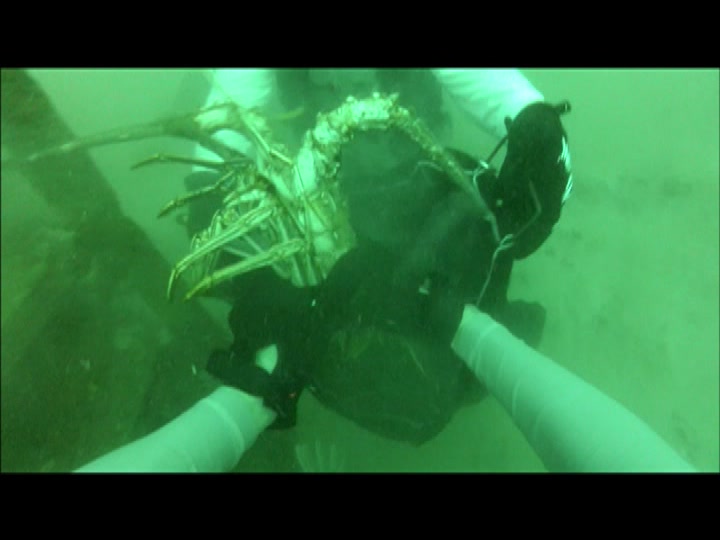
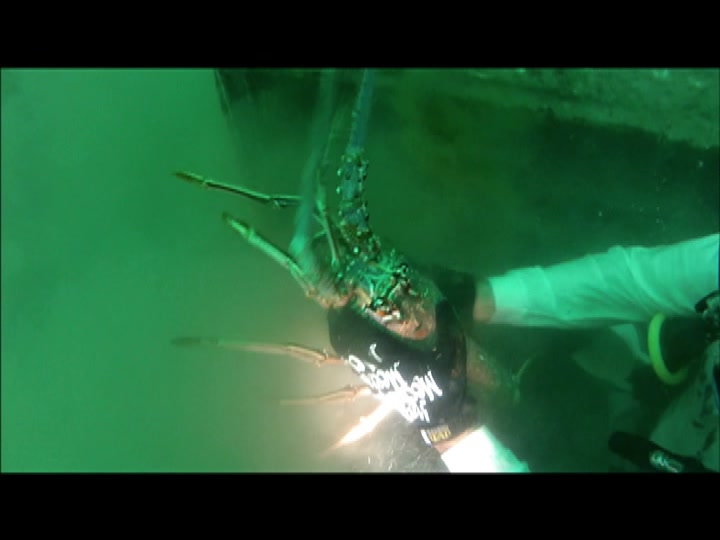
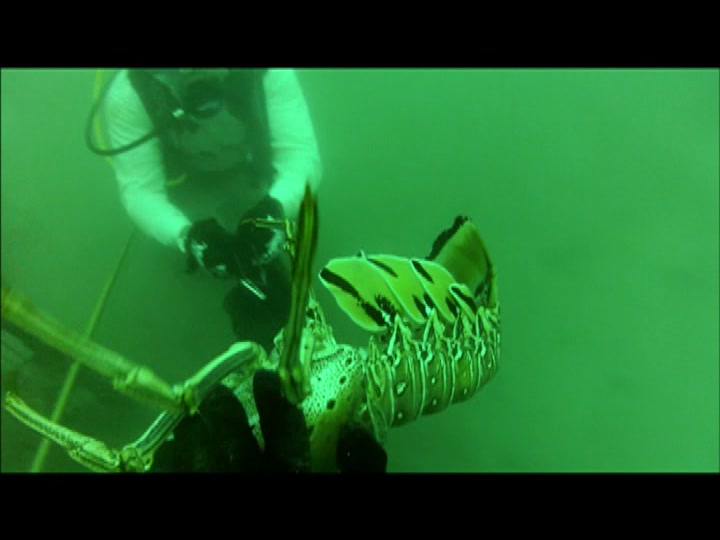
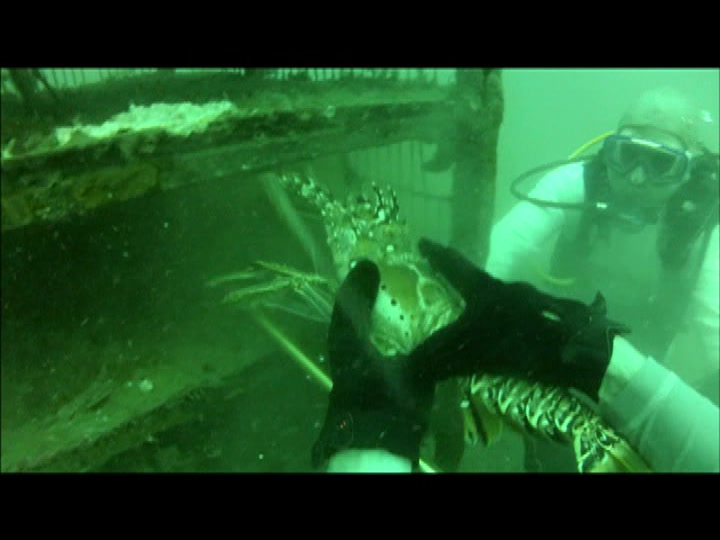
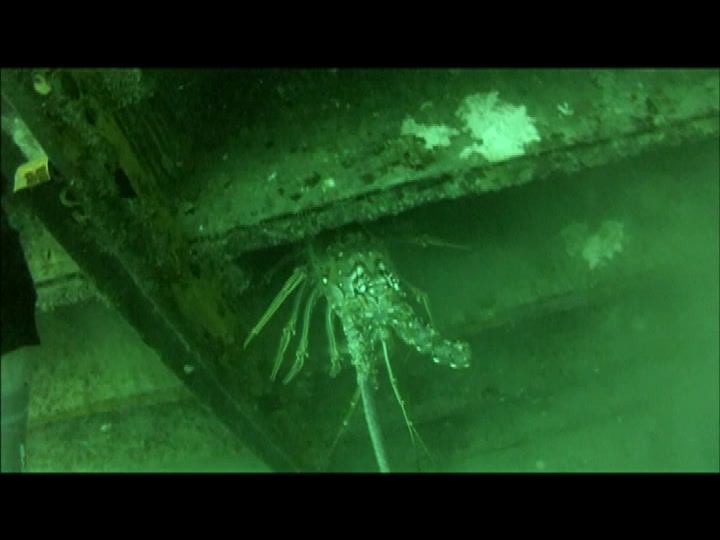
He swam up to the side of what appeared to be a section of boat that was resting on some other junk on the seafloor. He peered under the hull and spotted the waving antenna of a goodsized spiny.
In his hand was a “tickle stick,” a long pole that is used to move a lobster out of an entrenched hole.
“You basically irritate him out,” Wiggins explained.
Elliott went from one end of the submerged boat to the other, poking at the lobster to move him closer to an edge. Finally, Elliott was able to reach under and grab the spiny by the tail.
“I got him in a death grip,” Elliott said. “If you let up just a little, he’s gone.”
Lobsters jerk violently when grabbed. Their tails are all muscle and they fight to get away. Once Elliott had hold, the fight was on. He dragged the lobster from under the wreckage and cradled him to his chest before finally stuffing the spiny into a mesh bag.
Then he kept looking. That was his first dive Saturday. They dove the rest of the day, and all morning Sunday, bringing up four more spinys and more than 20 shovelnose.
Back on land Sunday, Elliott and the other divers now had decisions to make. Anderson gathered them in a circle and had each diver draw a playing card from a deck. The divers were hoping for a bad card, a low card that would allow them to go last and see what was being weighed in ahead of them.
When it came to Elliott’s turn, he brought out his first spiny, the one he’d taken from under the boat wreckage: 8.4 pounds. That topped Sirmon’s spiny by almost two pounds and Elliott had every reason to be optimistic that he would be taking home the $1,000 grand prize.
The very next diver, Clay Galbreath, brought his spiny to the scale: 8.5 pounds.
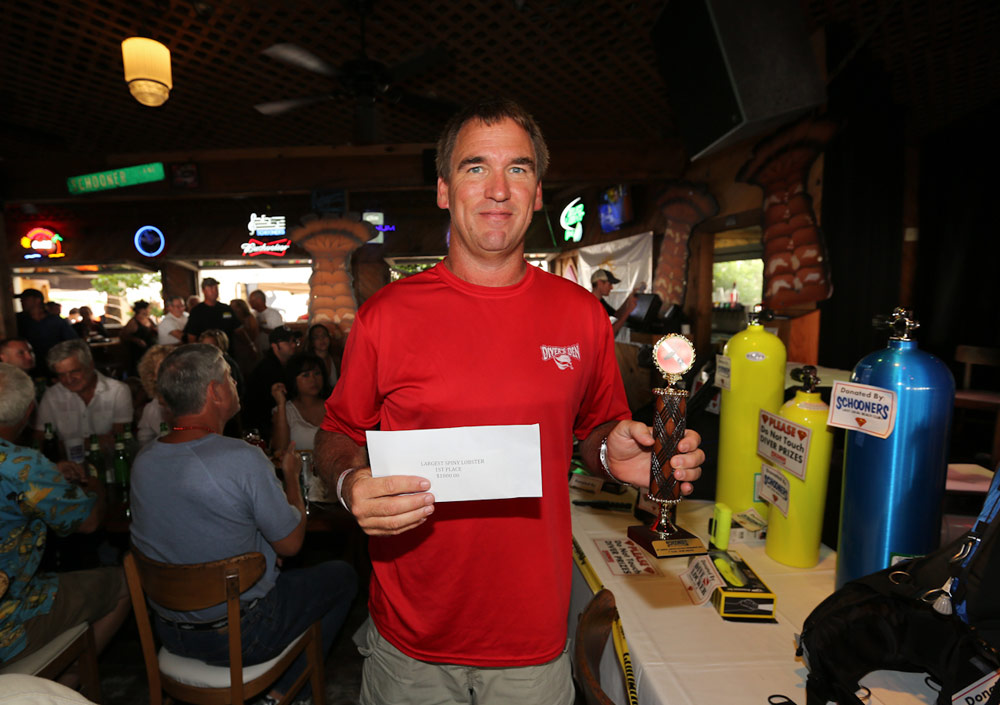
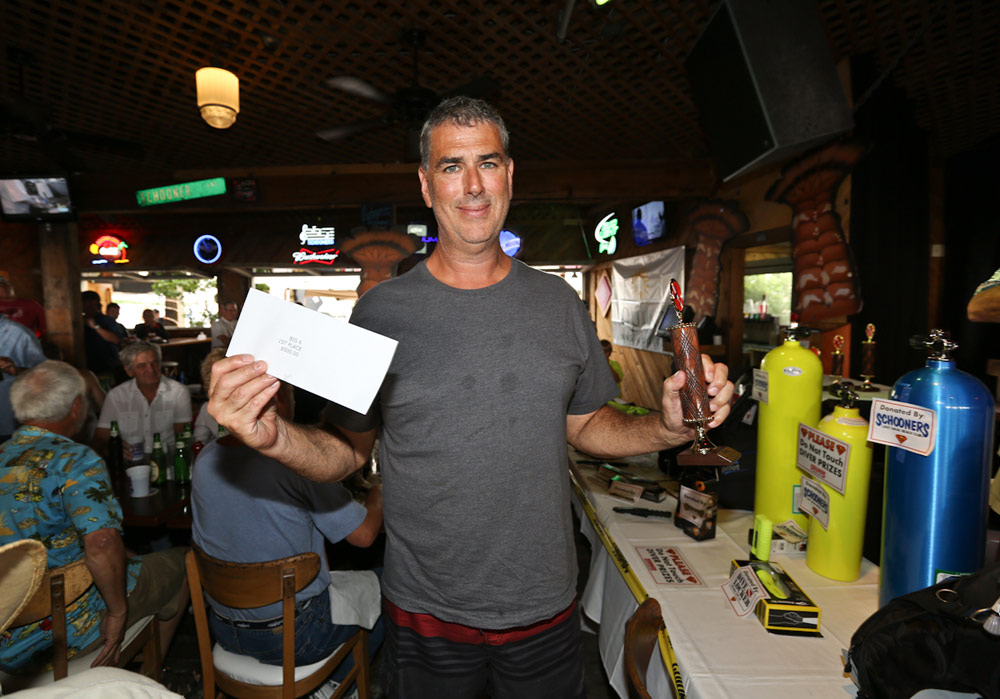
Elliott smiled but was clearly disappointed. Second prize paid him $600. Sirmon ended up third.
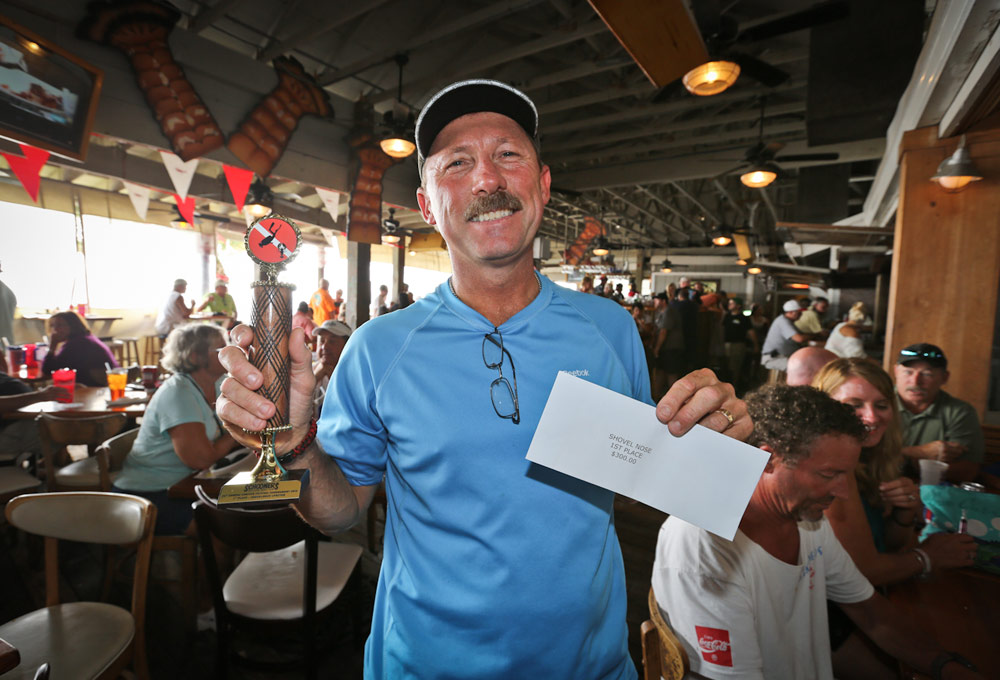
Branham took first place in the shovelnose category with a 1.7pounder. Tracy Sanders and Drew Williams were second/ third with 1.6 pound lobsters. Big 6 went to Bert Floyd with a bag of six lobsters that weighed 41.4 pounds. Tommy Hallman was second with 30.8 pounds and John Pipkin took third at 30.7 pounds.
Wiggins, however, had little luck that weekend. He hadn’t entered anything in the contest, but said he had a good weekend just the same.
“It was a great excuse to go diving,” Wiggins said.
Story and Photographs by David Angier
Underwater Photos: Tim Hair, Diver’s Den