
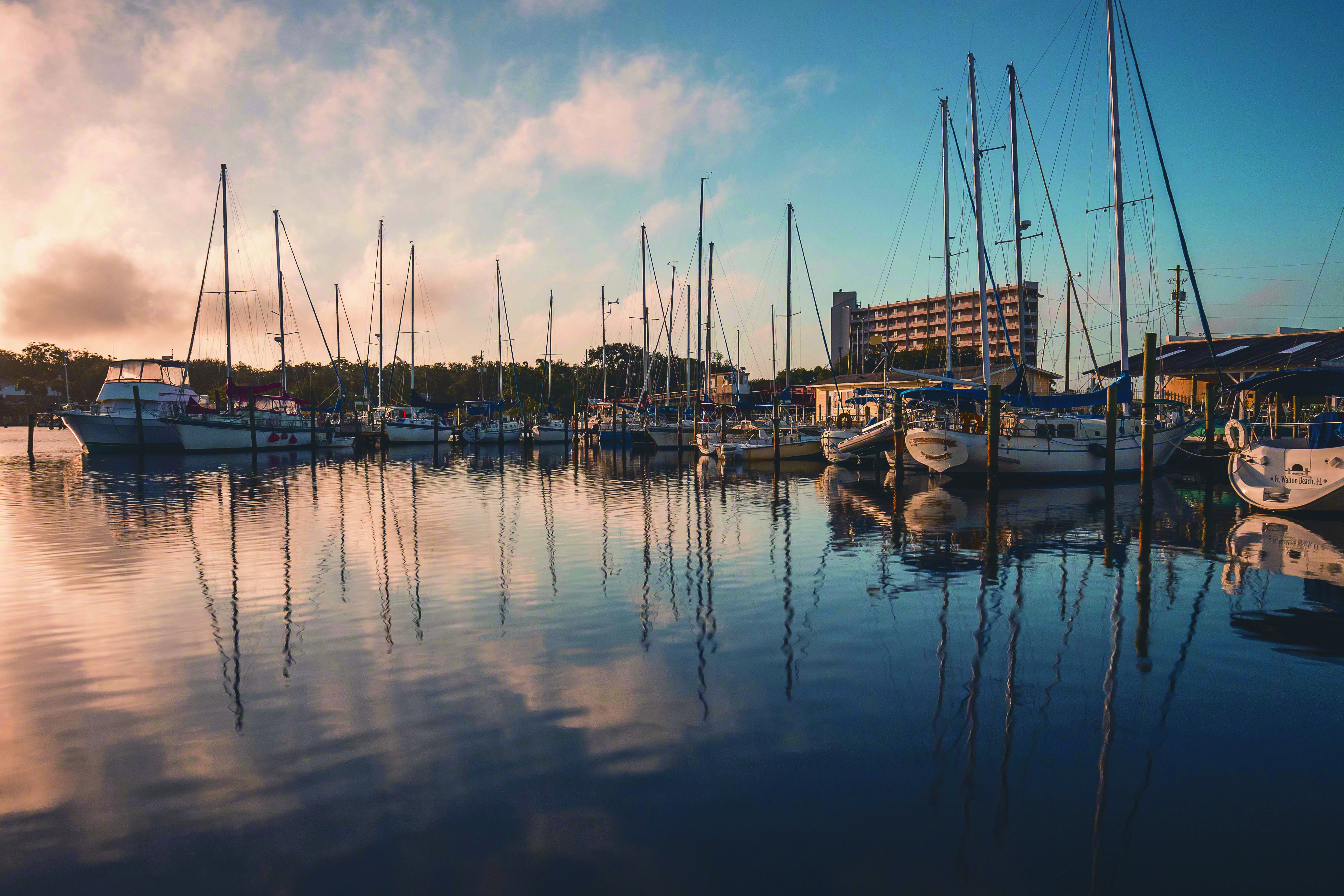
Living on Massalina Bayou


BY ROBERT HURST; PHOTOGRAPHY BY MATT KOEHNEMANN
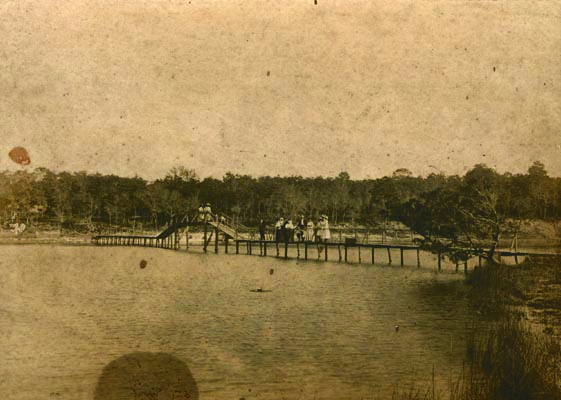
We can only imagine what life must have been like on Massalina Bayou 100 years ago. Most of the bayou had high bluffs with beautiful oaks and magnolias along its shores. There was a commercial district at its mouth consisting of marine-related businesses on fill and pilings attributed to having been built by the Tarpon Steamship Company. Businesses included one restaurant, two groceries, a fish and produce market, a lumber yard, and a carpentry shop. Later there were a barber shop and a shop that sold shells. Across the mouth of the bayou were other marine related businesses. Two turpentine distilleries were on the bayou. One was at the end of a canal that ran north from the end of the bayou.

While it may sound like a lot of commercial activity, most of the shore was undeveloped with the exception of the occasional home site. There were only a few houses on the east side of the bayou. The 1910 Census lists “along
the eastern shore of Massalena (sic) Bayou” Joel and Ruth Wells, Otis F. and Nora R. Hartsfield, and George and Adalie Gainer. We know a little about this side of the bayou from Susie Kelly Dean and Ann Williams Warwick who were school girls in the 1910s. Dean writes that Mrs. Hartsfield, a former college teacher, transformed the second-story of her home into classrooms; several students must have traveled across the bayou as described by Ann Warwick in her book Tides.
Ann describes the beauty along the bluff and gives a short description of the Wells’ home. Perhaps the best description of the homes on the eastern shore is of the Jeannette Bowen place lying to the north of the Wells’ home, and probably built between 1910 and 1917.
Excerpts from Tides, Growing Up on St. Andrew Bay by Anne Williams Warwick
“At Home On the Bayou”
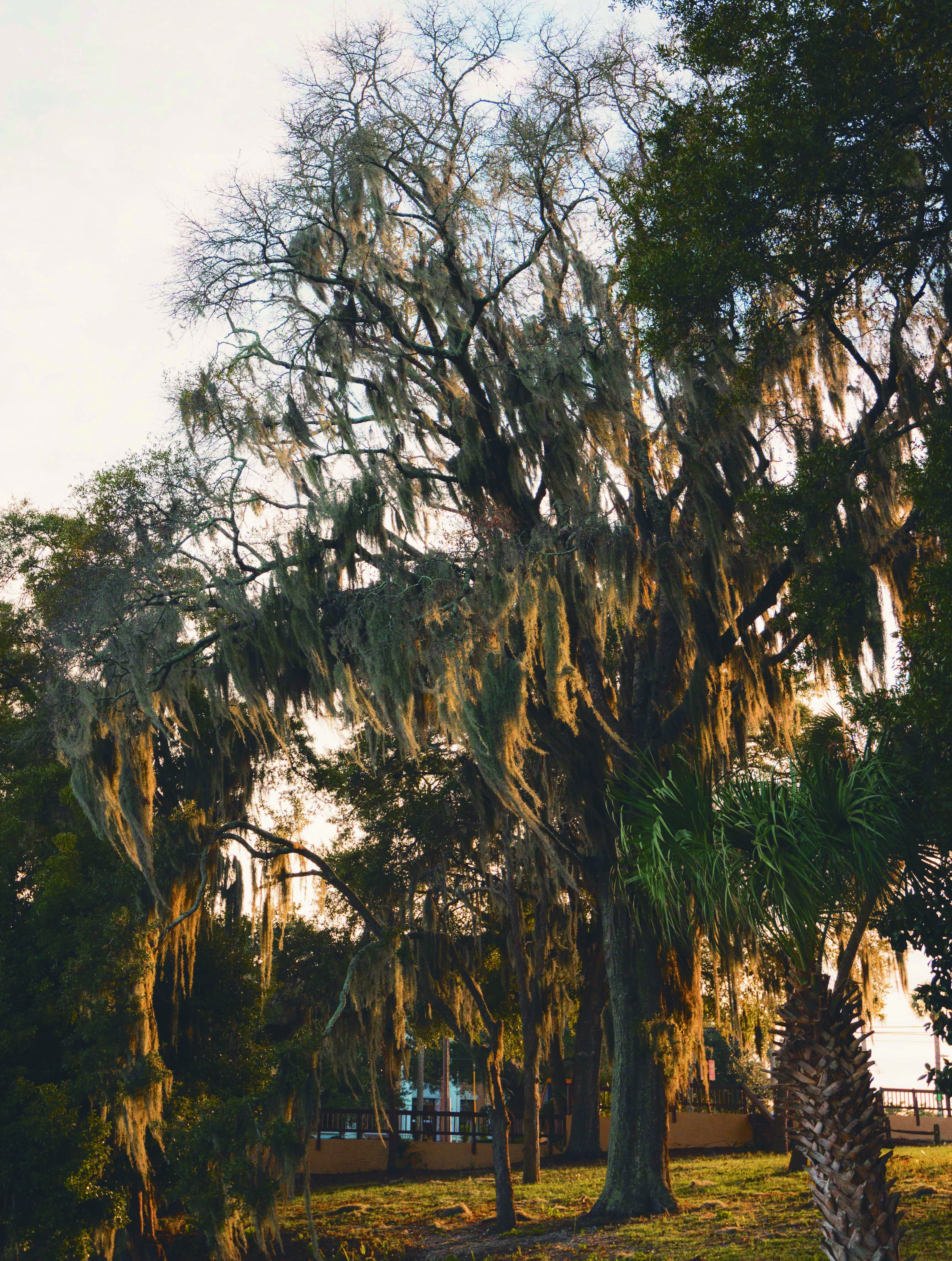
Papa came home from work telling Mama about the Bowen place on the high bluff on Massalina Bayou. It was a large, old, rambling L-shaped house built on the point directly across the bayou from the Court House. Tall brick chimneys at either end of the house and another over the kitchen stood like sentinels guarding the place. The bluff was ten or twelve feet above water and the area was covered with live oak, magnolias, sweet-bay and hickory trees. The deep, dark water circled the point. Looking to the left, one could see the fishing boats and the Tarpon Bridge leading into the cove on Beach Drive. On our right was the Court House and Fourth Street Bridge going to Millville. The weathered cyprus (sic) clapboard house with its shingled roof blended in with the landscape, giving one the feeling it had just grown there along with the trees, youpon (sic) bushes, and palmettos (sic)..
We did not have city water or plumbing. There was a good pump on the back porch and a nice, sanitary privy down the path back of the house. There were stalls and a shelter for Gracie and Pete out back with a shed room.
Our friends, the Judge Wells family, lived just a little way down the bayou in a beautiful home. There were two small summer cottages between the Bowen place and the Wells’ home. There was a good pier in front of the house…
June and I enjoyed the deep woods in the back of the house, and fishing was better because of the deep water.
We used the boat going to school each day. There were four of us, Maggie, Mozelle (Zella), June and I. June usually rowed the boat. Maggie, as the oldest, claimed captain’s rights. Mama packed our lunches together in a white oak split basket. Maggie made us take turns carrying the lunch basket from the boat to the school house.
Some way a large alligator got into the bayou. He was only one we ever saw, and we never knew where he came from. He began following our boat and would be there waiting to follow us home. June would punch at him with the oar, but he insisted on following us. We played on the bayou a lot, and the presence of the alligator worried Mama. She insisted that Papa shoot him and threatened to do it herself if he would not.
One day when we came from school with the ‘gator right behind us, Papa was at the pier with his shotgun.
Please don’t shoot him, Papa,’ I yelled, running up the bluff with my hands over my ears. Hands or not, I heard the loud bang when the gun fired and came back to watch as Papa and June dragged him up on the bank.
“My New World of Books”
I loved the front trail along the bluff of the bayou (Massalina Drive) leading past the two summer cottages and on to Mrs. Wells’ house. The trail was well worn, overhung with trees, taking the natural twists and turns around trees, shrubs and palmetto bushes
The breeze was just enough to bring the dank , early smell of the bayou up to the bluff level to mix with the aroma of sweet bay and magnolia blossoms….The damp sand of the trail felt good to my bare feet.
I walked past the Wells’ house down the picket fence and entered the back gate near the kitchen.
I crossed the beautiful dining room, marveling at the crystal chandelier over the large, mahogany table. Then I entered a dream world to me, the large book-lined library with a bay window and window seat facing the bayou and down the other end, a large fireplace. A massive desk with a typewriter, filing cabinet and a man-sized chair faced the fireplace. Over the mantle were some gold-framed family portraits. I had never seen anything like it. The thing that impressed me most was the sea of books everywhere. Law books, reference books, leather bound, beautiful books. How could any family own so many wonderful books? I had not imagined that many in the whole world.
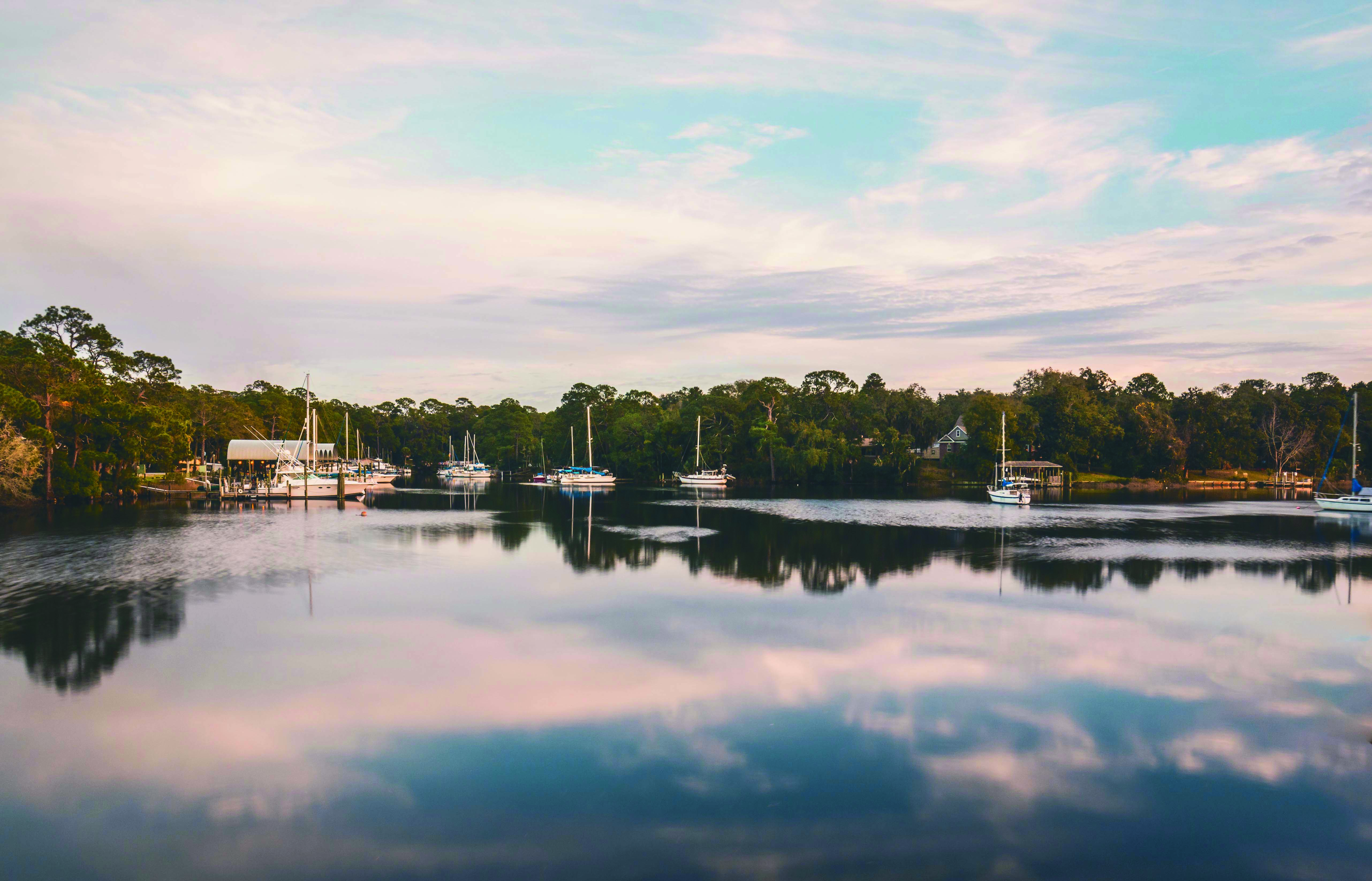
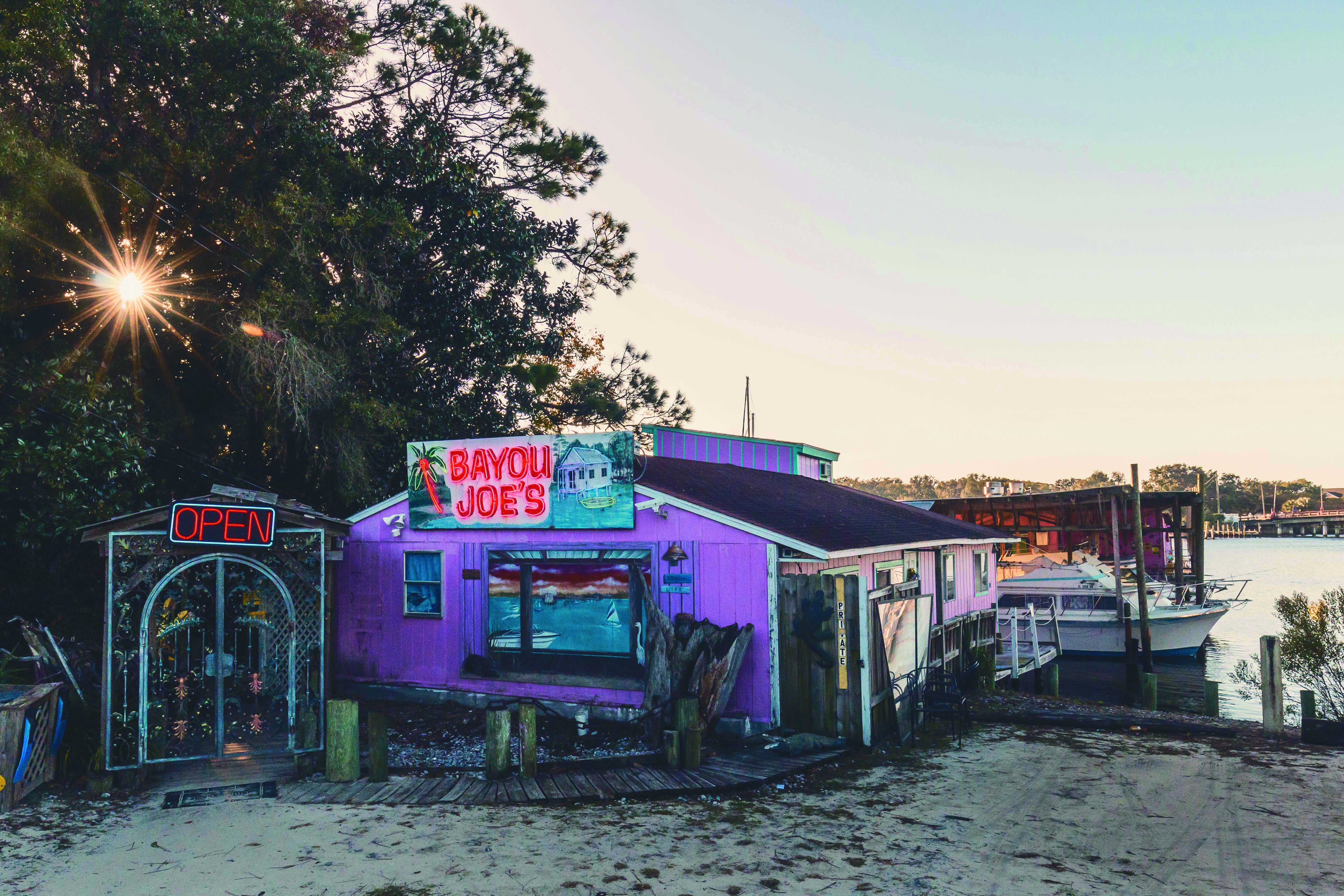
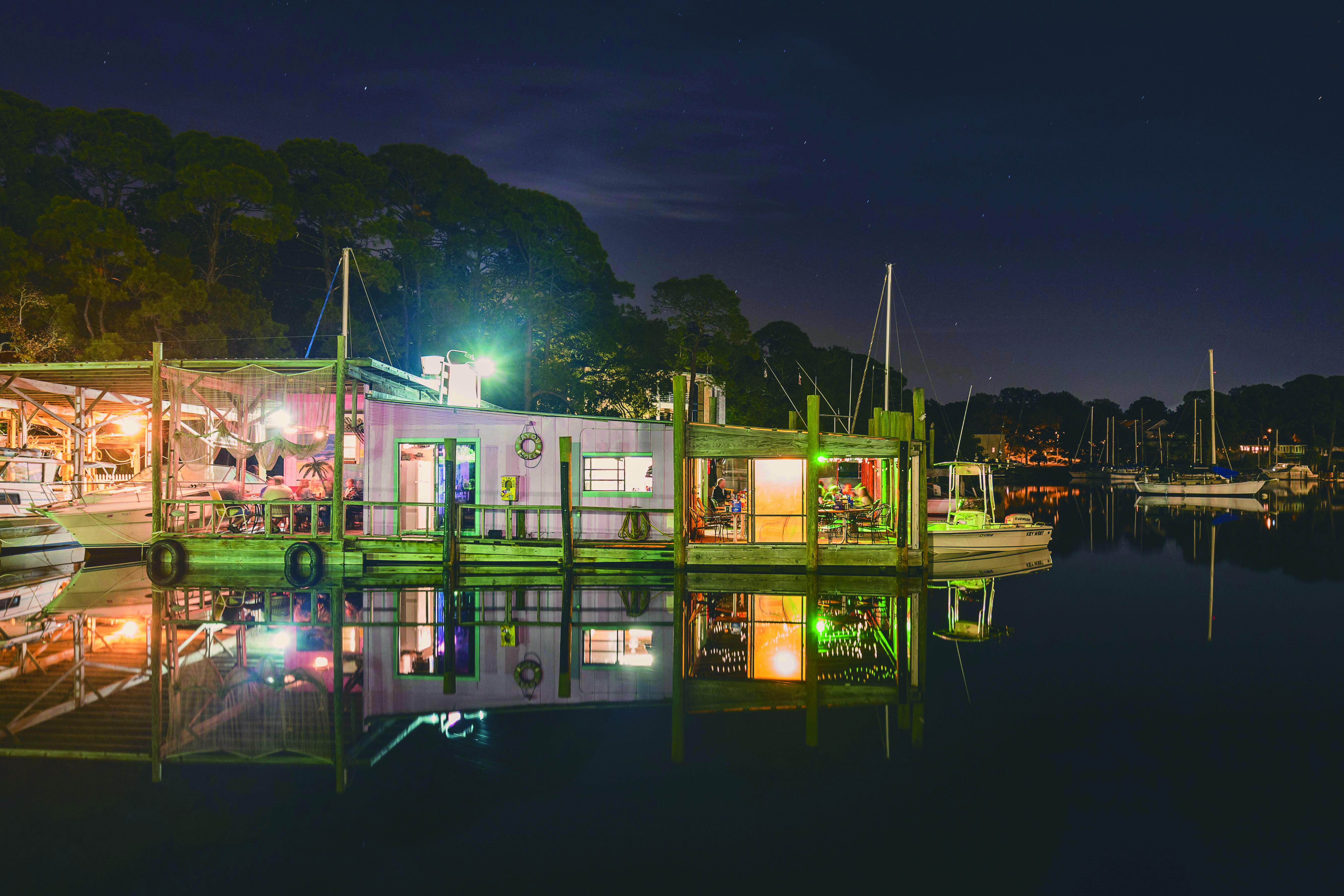
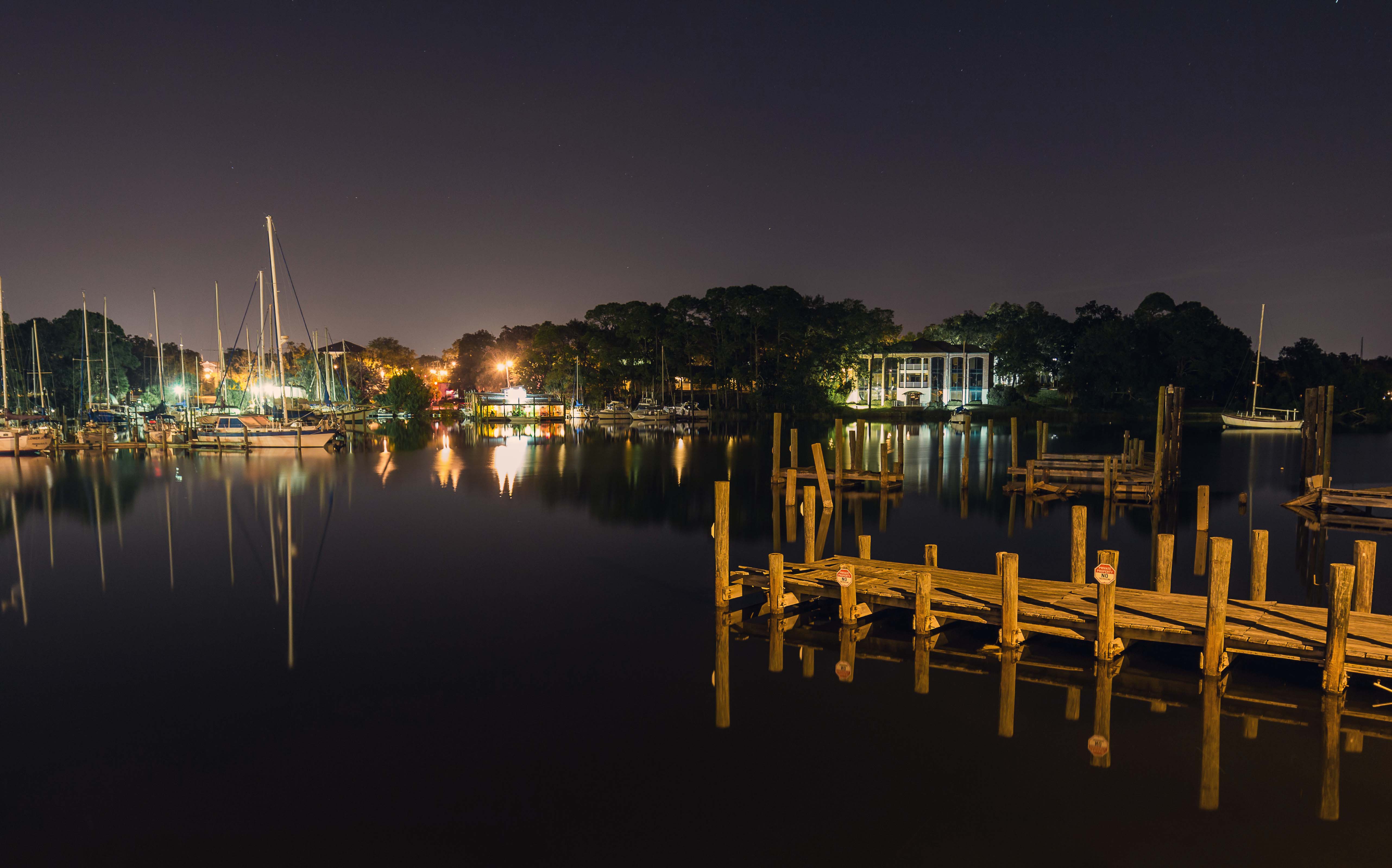
Today, the most prominent structure on the north shore of Massalina Bayou is Bayou Joe’s Marina and Grill. It exemplifies Old Florida. Not much has changed throughout the years. The building sits on stilts and patrons can arrive by boat. It is one of the few remaining old Florida-style restaurants and docks. The establishment was once known as Ethridge Marina, named for owner Max Ethridge. Present owners, Kevin and Jennifer Shea, were told that in the 1940s mules were used to pull boats out on the ways. Circa 1995 Jim Ramsey and wife Patricia Bell bought the marina, renaming it Dock at JR’s – Eat at Joe’s. At the present, one can dine in the open air during pleasant times or behind a panoramic picture glass window in the winter. During the day guests are entertained with catfish feedings and, at night from March to Thanksgiving, with Deep Glow Lights, which are not only beautiful, but also attract all sorts of fish and other underwater life. It’s like sitting on top of an aquarium. There is even the legend of the ghost of a person who drowned in the bayou that still walks the docks in his yellow nor’easter coat. All of the staff have seen him.
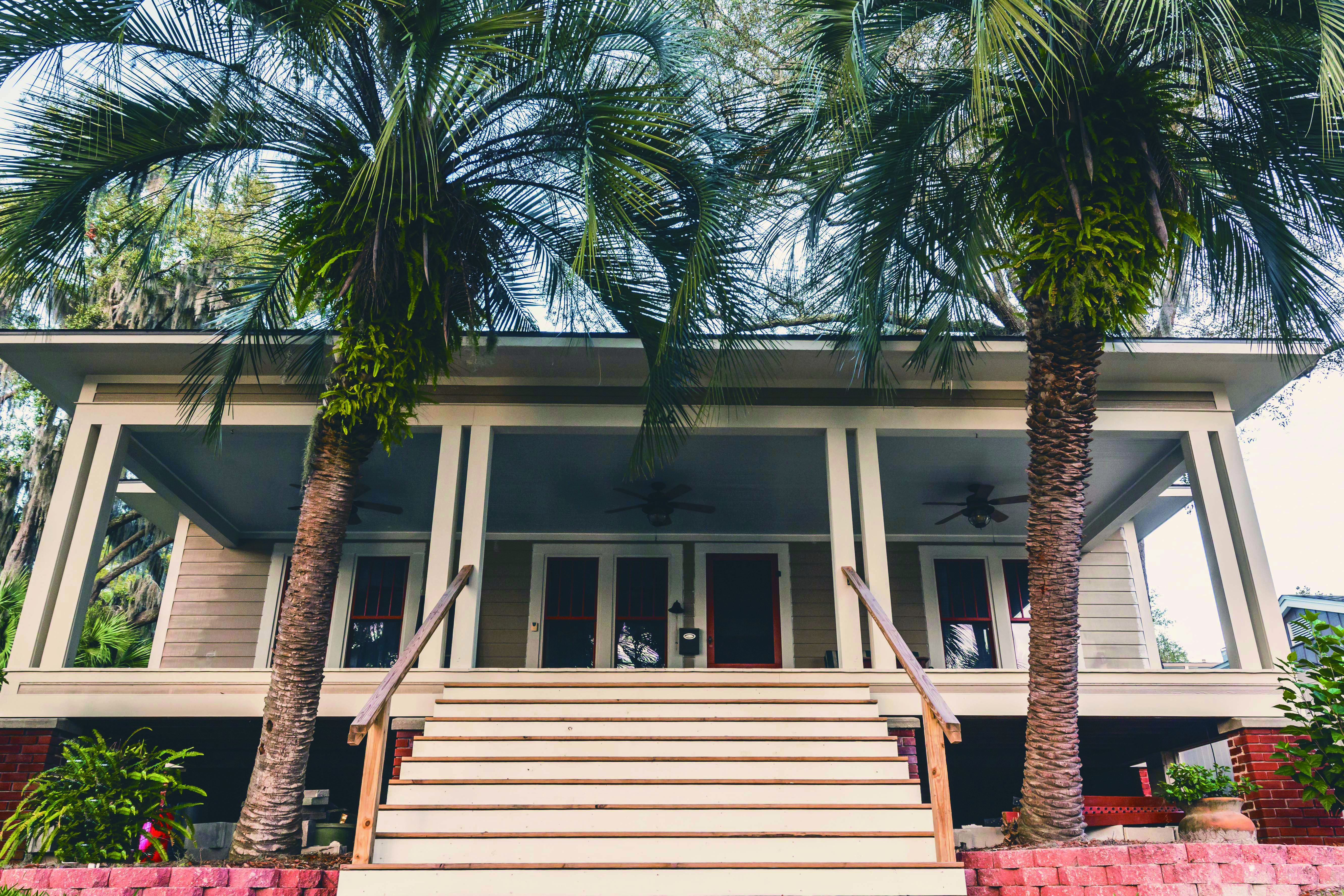
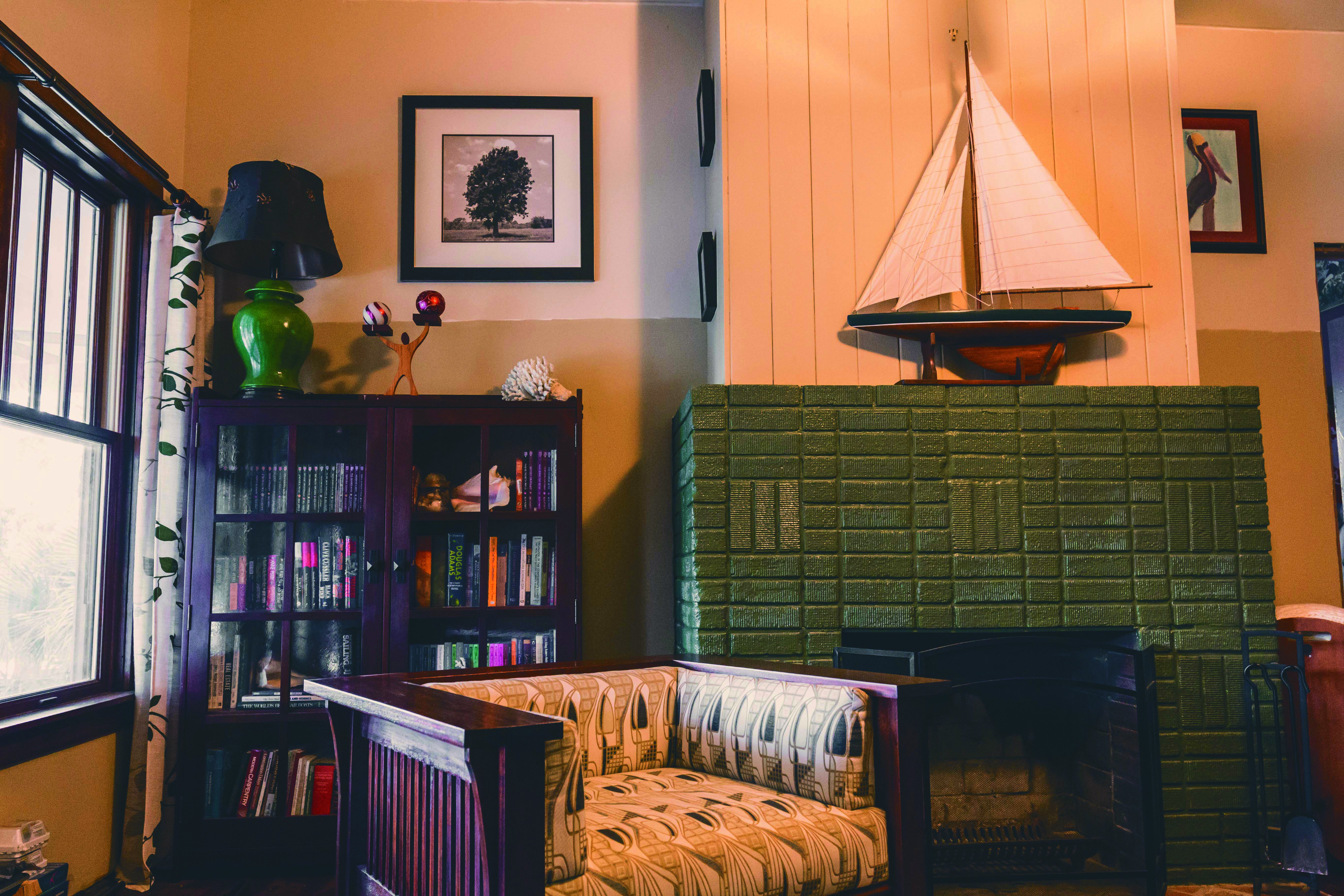
The beautiful home of Harvey and Laura Ann Casey at 366 Massalina Drive still stands among the shade oaks. Although built at a later date (1928) by Grover and Ada Rodgers, I can’t help but feel that it typifies some of the nicer homes, such as the Wells’ place, minus the second story. This beautiful four square Georgian-style home with a pyramidal-shaped roof has a broad central breezeway with two rooms on each side. Back-to-back fireplaces with a common chimney share a wall between the breezeway and one front room.
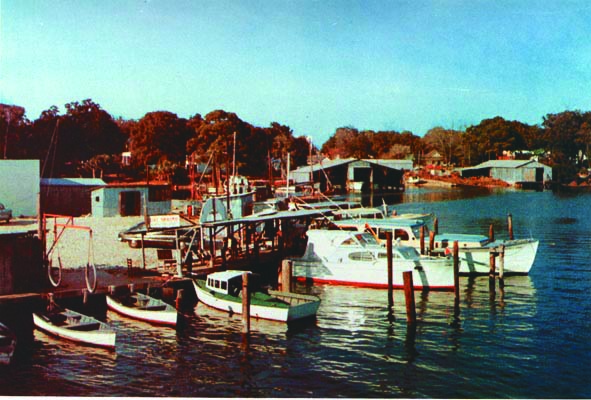
Panama City residents such as Carl Bennett, Bill Cook, Grover Davis, Robert Padgett, Alice Crawford Robinson, and Richard Stone can recall some of the memories from the 1940s and 1950s. They all remember fewer boats. Most of the boats were commercial and moored at Tarpon Dock. Today the bayou is filled with pleasure boats. Stone remembers the vessels Seabreeze and Estelle, owned by Bert Raffield, and the Sea Baby, owned by Rusty Stone. He remembers trying to retrieve an electric light that had fallen from his hands into the Estelle’s bilge. Captain Raffield had to knock it out of his hands as he was being electrocuted. Bill Cook, whose father owned Jessie Cook’s Seafood Grill, recalls two seine boats owned by Coy and Charlie Raffield. Alvin Cook later bought them out and ran snapper and shrimp boats out of Tarpon Dock.
Further up the bayou, Robert Padgett recalls the commercial boats of Vester Knowles and George W. Davis, all moored in front of their homes during stormy weather and for maintenance. The Davis fleet included Miss Panama, Queen Mary, and Queen of Queens. Padgett also recalls the Southwind, a Chris Craft pleasure boat owned by a Mr. Patterson.
Only small boats could get under the stationary Fourth Street Bridge. Alice Robinson recalls a number of these docked at Holmes Fish Market, located on Sixth Street at the head of the bayou. Jimmy Lark had one small pleasure boat up at this end.
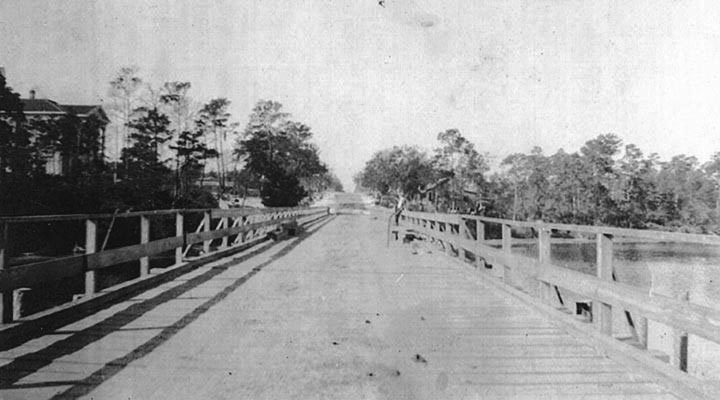
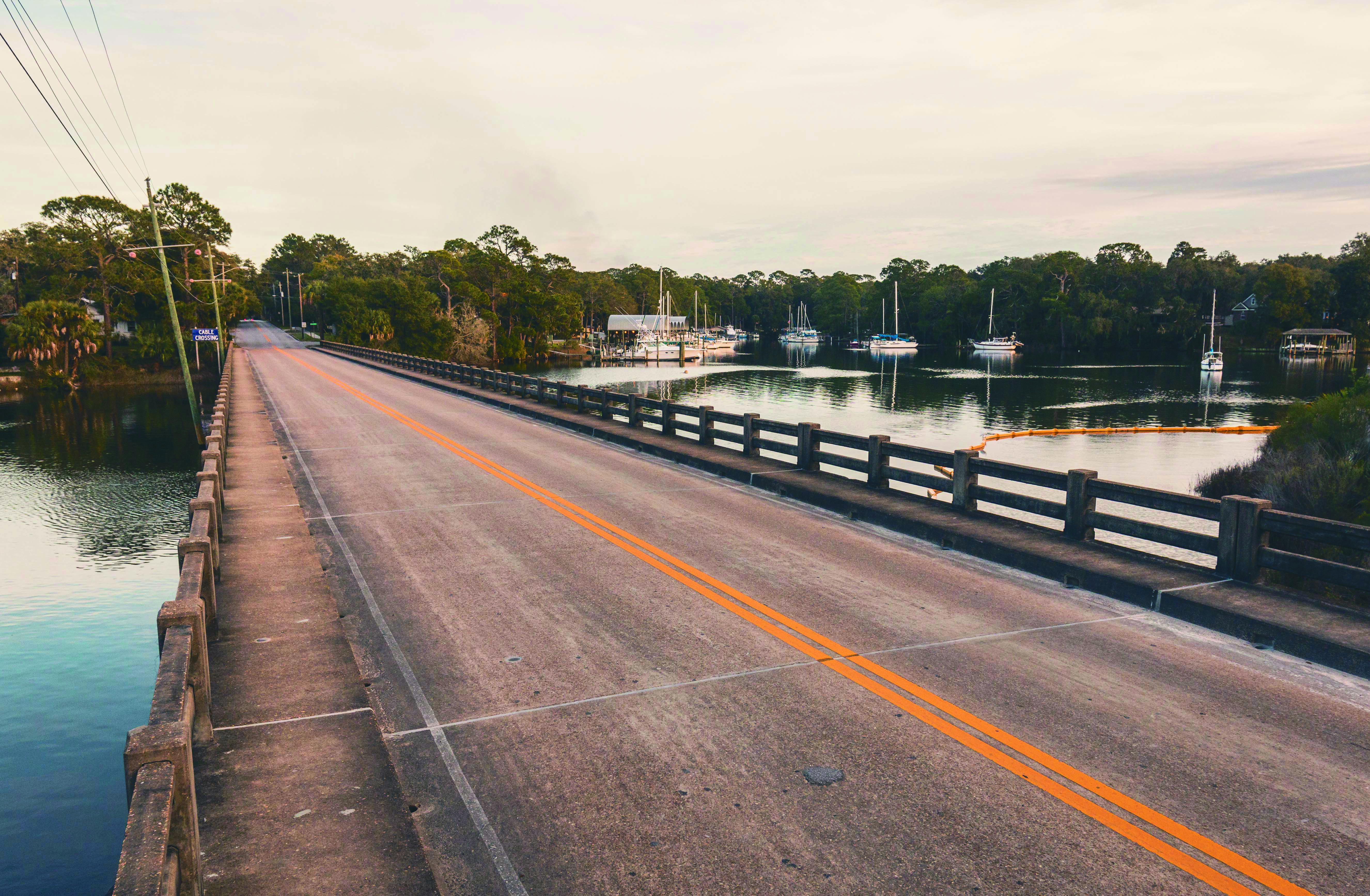
Carl Bennett, Grover Davis, and Robert Padgett remember using the Fourth Street Bridge. Padgett used to run across the side rails of the old wooden bridge and Davis remembers doing the same on the concrete one. Bennett remembers a temporary “walking bridge” when the old wooden one was being replaced with a concrete bridge.
The men remember having their small boats on the bayou. Bennett bought gas from Mr. Mack (Max Ethridge), where Bayou Joe’s is now located. Joe Knowles and Grover Davis had row boats. Around 1950 when the bayou froze over, Padgett went out with Knowles in his rowboat. They enjoyed breaking up the ice until Joe fell overboard. Robert had to dive into the frigid water to pull Joe to shore. Surprisingly, Captain Joe Knowles could not swim!
On another occasion, Grover Davis remembers a hurricane that filled the bayou with sargassum weed. All kinds of sea life including sunfish were entangled in the stuff. He also remembers fishing for silver trout. Robert Padgett recalls large schools of mullet feeding on the surface, and catching many with a snatch hook.
Origin of the Name
Massalina Bayou is truly Panama City’s bayou. Historically it was the town’s only bayou in the late 1800s and early 1900s, being on the town’s eastern boundary. The early editions of the Panama City Pilot newspaper sometime only refer to it as “the bayou.” The earliest reference to its name that the writer has found is the corrupted “Massaliner’s Bayou” on an 1886 nautical chart. The first definitive map showing the bayou with no name is an 1855 chart of the bay. In some deeds and a Floriopolis plat map of 1888 and 1889 the names “Slade Lake” and “Harmon Lake”, no doubt named for two early developers along the bayou, Clark P. Slade and Turner H. Harmon, have appeared. These names seem to have had no lasting effect on the bayou for it appears later as “Massalena,””Masselena,” and finally by 1913 “Massalina.”
Many readers may mistakenly believe the bayou was named for the famous resident, Hawk Massalina, but in actual fact it was named for his father Jose (Joe). In the late 1800s, Jose had a home on the bayou’s eastern shore, probably not far from the Tarpon or Frank Nelson Sr. Bridge. Here he fished and built boats. However, he wasn’t the first settler on the bayou according to an interview with J. P. Folkes published in the September 30, 1915 issue of the Pilot. A boat builder named William Augustus Farley and his family lived at the bayou’s entrance until he was drowned on April 18, 1870 in a fierce gale in the old pass of the bay. He had an orange grove later in the Harmon development and it may be the plot shown on the 1855 nautical chart.
I can’t help but feel that these early dwellers of the bayou immensely enjoyed the amenities that these waters afforded them. There was the leaf-covered floor and trees to play on in these woods that could rival a national park’s forest. I know because as a kid growing up in the Cove in the 1950s, I, too, experienced what Ann describes. There were fishing parties of young people on its waters, despite the occasional appearance of an alligator! There was a City Dock at the end of Second Street (Oak Avenue). Our founding fathers and developers envisioned shoreline roads along its banks. These no longer exist except for a segment of Massalina Drive. A county jail turned county offices, law offices, town houses and apartments are situated where once stood forests, yards and gardens of its early occupants.

The Bayou Bridges
Massalina Bayou has seen four sites where bridges spanned its waters. First there was a need to connect the town with the adjacent town of Millville to the east. Surprisingly the “Millville Road” was in fact at Seventh Street, not at Sixth Street. Today few people realize that Massalina Bayou actually extended much farther north than it does today, and that from above Seventh Street to below Sixth Street there has been a gradual filling of the shallow upper portion of the bayou; however before the fill, the newly built Millville Road had to span the bayou and in 1908 some sort of rudimentary “crossing of Massalina Bayou” was achieved. This was replaced in 1913 by a 300-foot-long and 17-foot-wide wooden bridge.
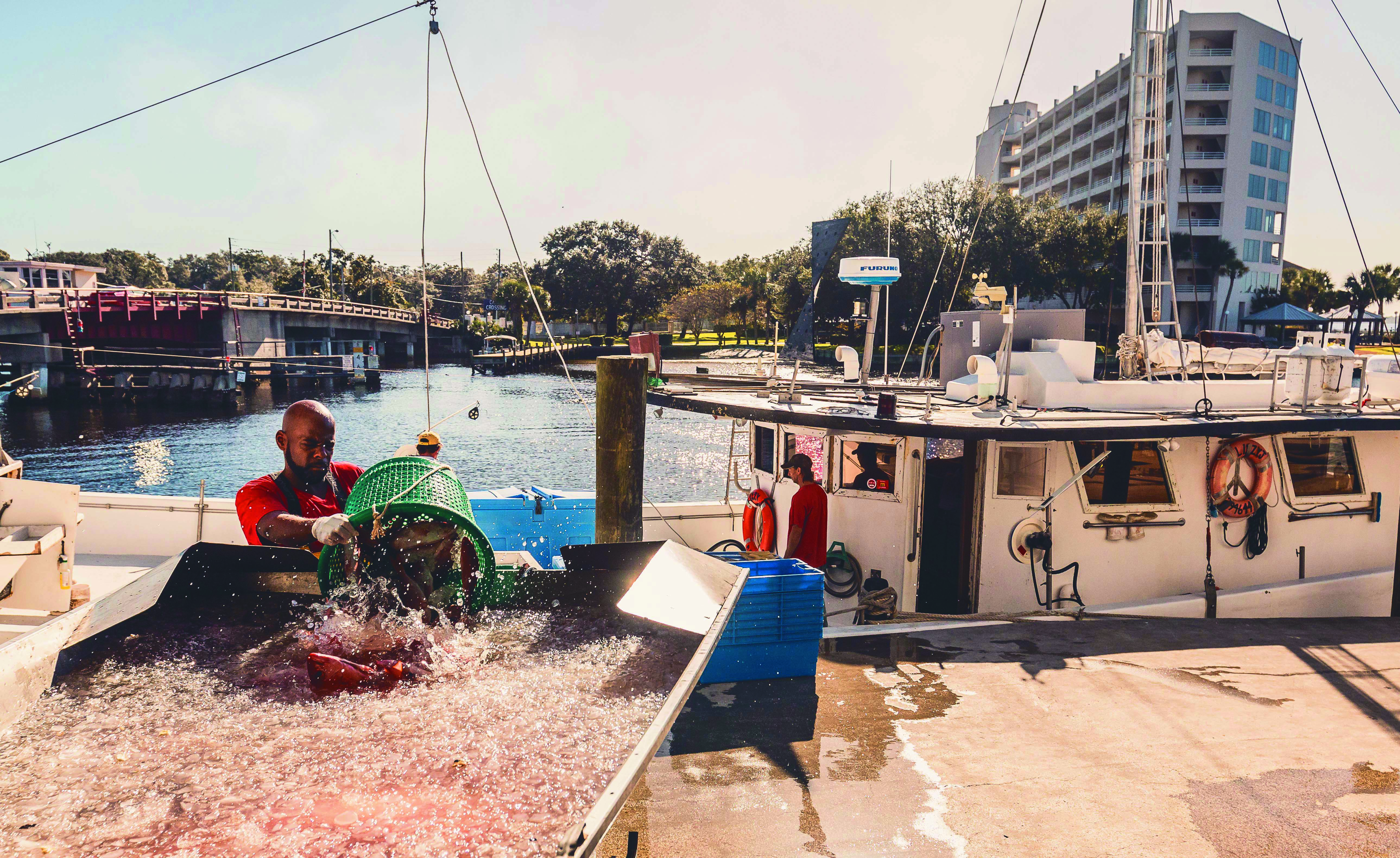
As the city expanded across the bayou into the Cove, property owners petitioned for a First Street (Beach Drive) bridge, which was built in 1910. Sometime in 1928 a new 35-foot-wide concrete bridge replaced the old one. These early bridges were “lift bridges,” where the whole midsection was raised. In 1951 the present Frank Nelson Sr. Bridge was completed. This was a “drawbridge,” where the midsection is hinged at one end and the other end was raised. It is reputed to be the last remaining drawbridge in Northwest Florida.
There was another site that saw a bridge in the early years. A footbridge was built in 1915 or not soon thereafter. It extended from Sallie Davis’ home on the west side near the point at the end of McKenzie Avenue to the Wells’ and Hartsfield’s home on the east. It must have been short-lived as it is not mentioned in later documents of the 1920s.
The last site to be spanned was at Fourth Street. It was resolved by the city to build a bridge here in 1918. The present concrete bridge has a date of 1945.
