
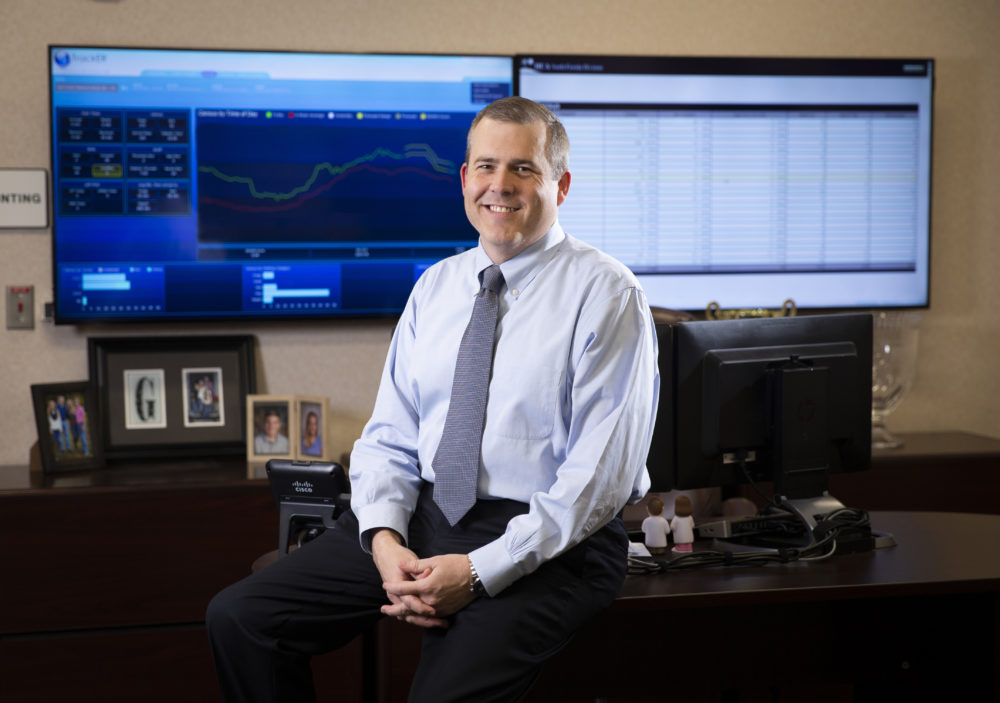
LESSONS LEARNED FROM HURRICANE MICHAEL: Brad Griffin, CEO of Gulf Coast Regional Medical Center


BY VAL SCHOGER
PHOTOGRAPHY BY MIKE FENDER / PHOTODOCUMENTATION BY MARSHA BUCHANAN
Bay County is one of Northwest Florida’s most populated areas, with an estimated 180,000 residents. When Hurricane Michael made landfall in October 2018, the county’s only two acute care hospitals were severely impacted. Both hospitals’ inpatient services were temporarily closed, with only their emergency rooms remaining operational. The questions, “When are you reopening? When will you accept patients? When can we come back to work?” remained unanswered for weeks. The hospitals are two of Bay County’s largest employers, and their operation is vital not only to residents, but also the community’s economic success.
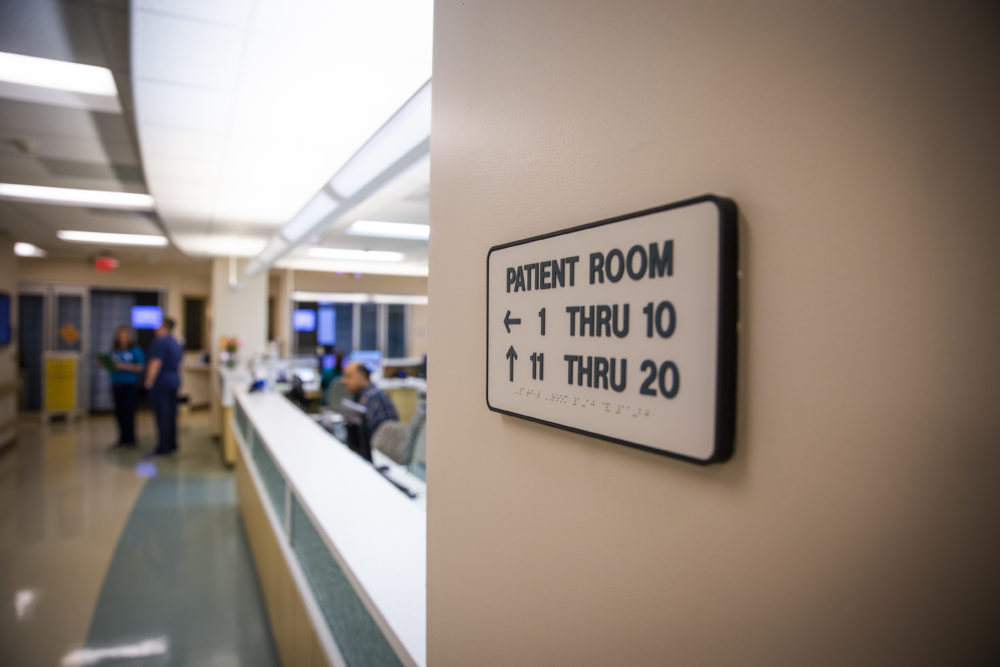
If there is anything good about catastrophes, it is the fact that they can bring people together. There is an atmosphere of “we did it, we are back, we have made it through the worst” when walking the hallways of Gulf Coast Regional Medical Center. The team spirit is palpable and reflects good leadership. While physicians and medical support staff face life-or-death situations regularly, during the storm’s landfall, the hospital leadership ensured the well-being of every person on the premises of Gulf Coast Regional. On the day Hurricane Michael blew through, the hallways of Gulf Coast Regional looked like a war zone. “We had 150 patients in the hospital during the storm. But we had another 400 people who sheltered here. They were physicians, staff, and their family members and pets. We had almost 600 people in the hospital at the time,” Brad Griffin remembers.
Today, walking through the hospital’s executive offices, the aroma of freshly brewed coffee fills the air and adds to the corporate-office flair. Brad Griffin’s office wall décor features digital screens that display data and graphs with the hospital’s staff and patient turnover in real-time. He assumed leadership at Gulf Coast Regional in 2017, transferring from Colleton Medical Center in Waterboro, South Carolina. Both hospitals are owned by Nashville, Tennessee-based HCA Healthcare, Inc., a company that, according to its website, operates 185 hospitals and 119 freestanding surgery centers located in 21 states in the U.S. and in the United Kingdom.
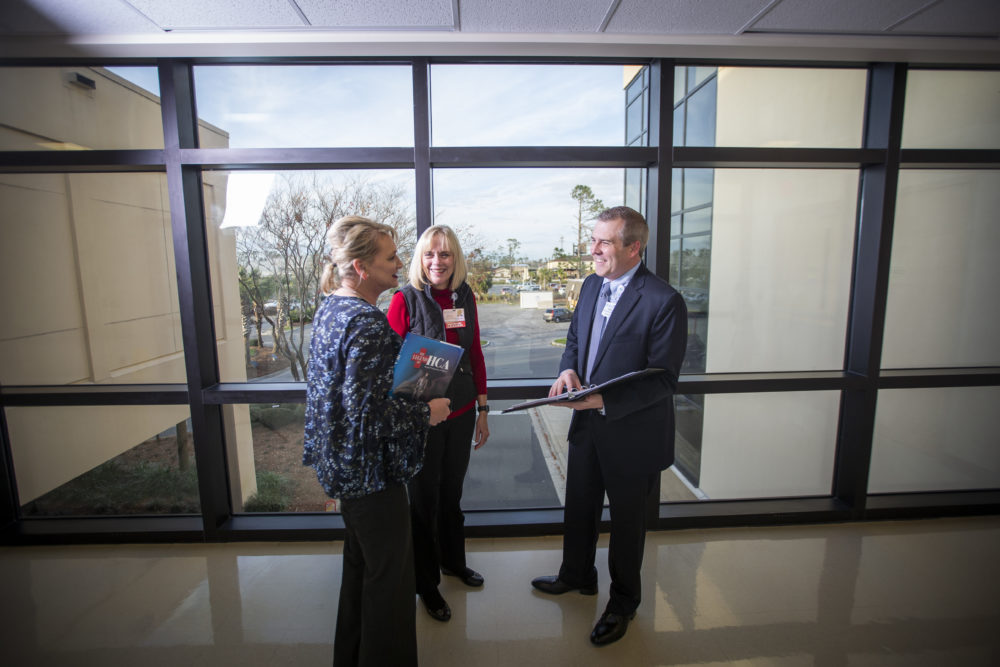 In the days preceding the storm, with his wife and kids safely evacuating to Birmingham, Alabama, Brad Griffin and the executive team prepared for the worst-case scenario. “HCA’s emergency planning and available resources in case of catastrophes are extensive and we lost no time,” he says, summarizing the immense logistical efforts. An emergency team of physicians and executive staff was selected to ride out the storm at the hospital with plans to be on-site for three to four days after the storm. “With the hurricane approaching, we anticipated the loss of utilities. HCA sent generators, fuel, and water tankers. We had them hooked up and tested as the storm approached.”
Hurricane Michael was unprecedented for Northwest Florida in its destruction, and the team took quick, decisive action. “The building took on a lot of damage. We had problems with the roof. We had shattered windows.” Brad Griffin’s face takes on a wary expression.
“As the storm battered down on us, we had to move patients away from the windows into the corridors. With the windows gone on the third floor, the relentless wind was pushing walls in. We had about 65 patients on our third floor that we had to move downstairs, very quickly. During all this, three babies were delivered while the hurricane raged outside.” He pauses. “But here’s the good thing. We spent Tuesday night and Wednesday morning leading up to the storm with contingency planning. We communicated an action plan to each of the directors in their departments. So, they knew what to do and where to go.”
Once the hospital lost utilities, the generators kicked in, Brad Griffin explains. When the worst was over, everyone emerged unscathed.
But this was just the beginning of several long days of hard work and little sleep. Damages were assessed, and non-operational systems had to be repaired. “We had massive damage to the building and the grounds. Our next step was to evacuate all the patients. Wednesday afternoon, right after the storm, we had only a little bit of time before it got dark. So, we did what we could to clean up outside. All night Wednesday night, we were planning our evacuation for the next day. As soon as the sun came up, we needed to start clearing the parking lot to create landing zones for helicopters and figured out the routes that trucks could come in and out of town. We needed to prioritize the patients and secure the building. It was a massive logistical effort.”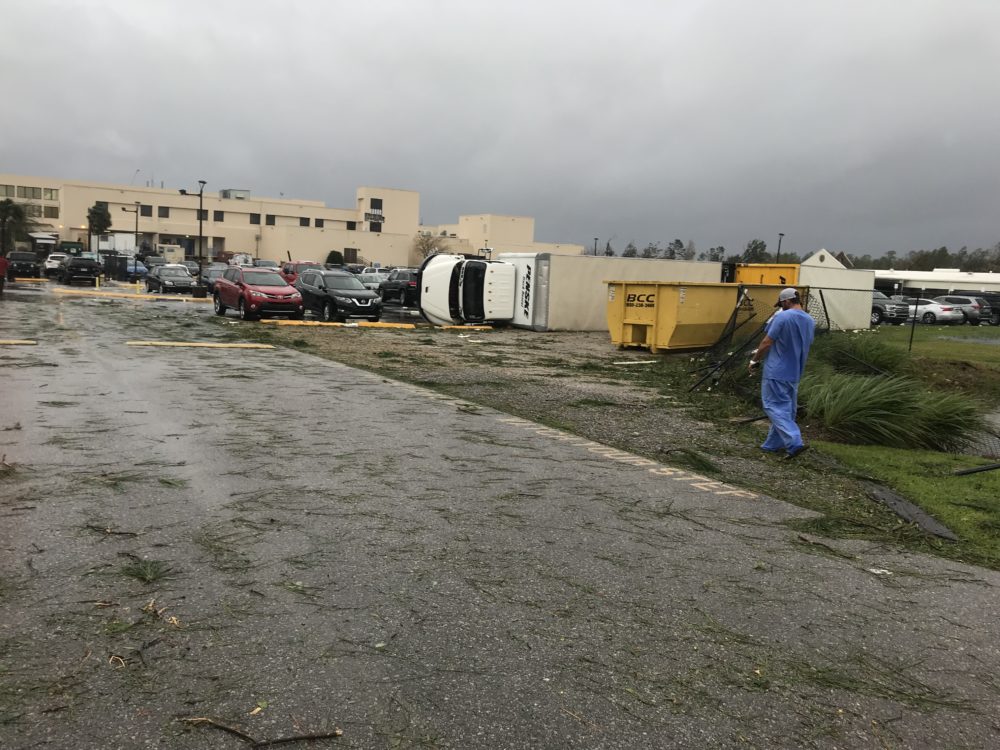
He describes the afternoon after the storm as the most challenging. It was very hot and humid. The generators provided electricity, but the air-conditioning system needed water to operate. The water tankers were hooked up to faucets and showers, and it was planned to use the on-site water well for the air conditioner. But the wind had damaged the well. Once the well was repaired the next day, it probably rendered the hospital the only air-conditioned building in town at the time. Everyone had to contend with setbacks. “And, of course, we couldn’t call anybody,” Brad Griffin remembers. “Just like everyone else, our internet was down. The Verizon network was down. Only AT&T and T-Mobile phones, or phones that worked on these networks, could make calls. But very few people had that. We couldn’t contact local authorities, the water department, the incident command center, none of that.”
The post-storm cityscape was eerie, he remembers. “When we walked out onto the roof of the building at night, everywhere we looked, it was dark, except for those places that had generators. This was not like any storm that I’ve ever been through. The level of desperation became clear the very next day after the storm. Not only were residents without power, they did not have roofs over their heads. They were wet, and it was hot. Most could not call anybody and get help.”
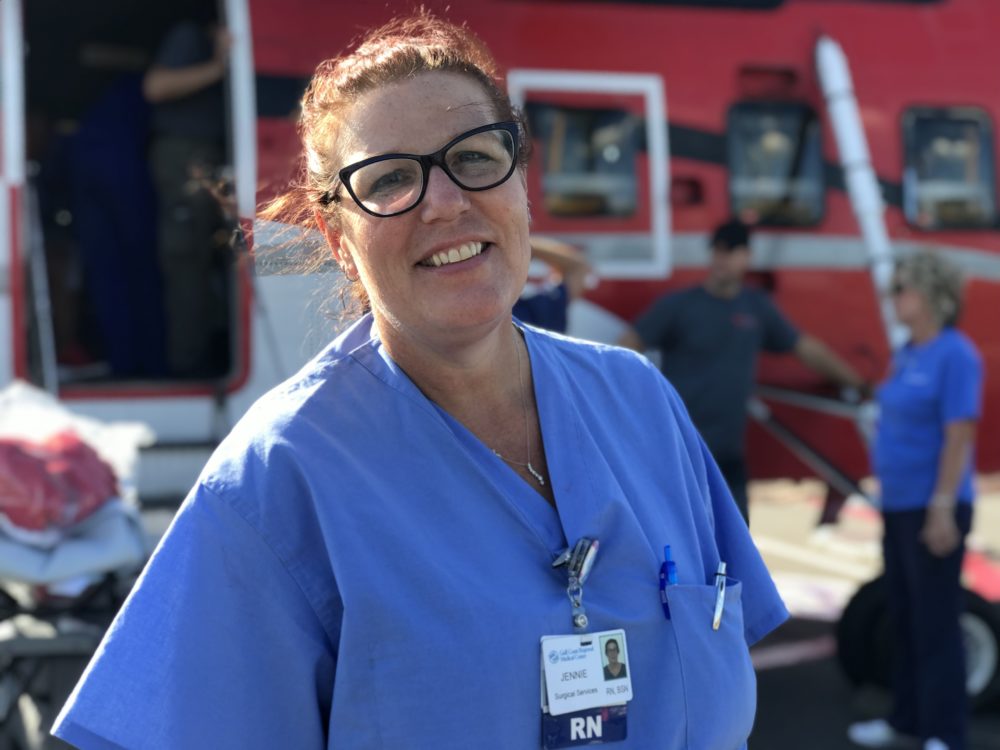
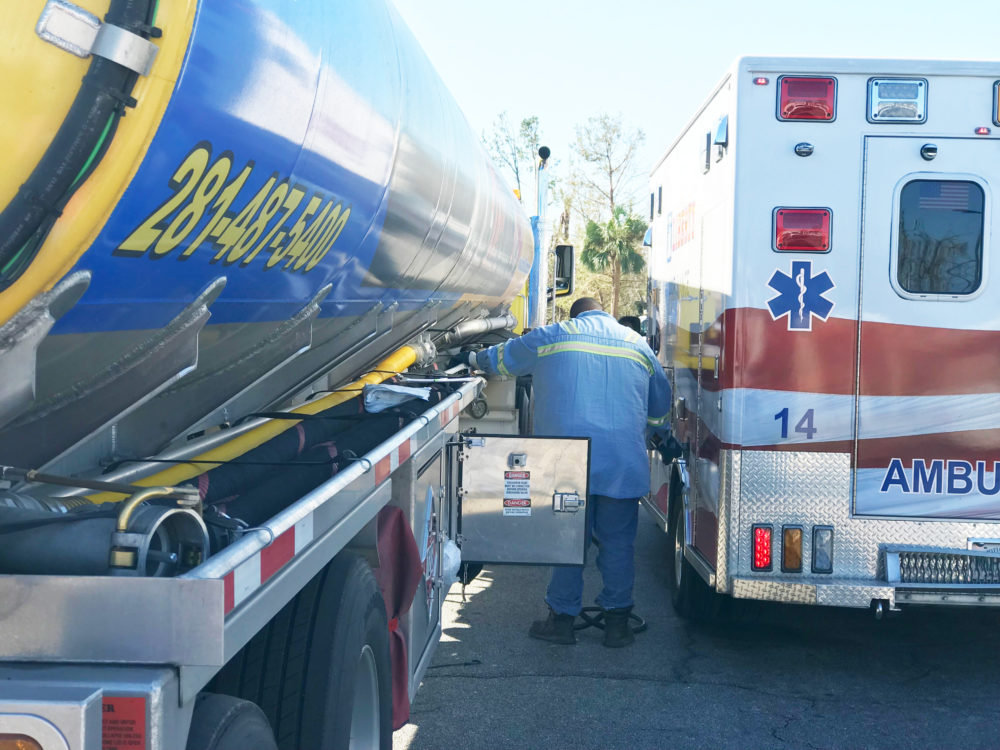
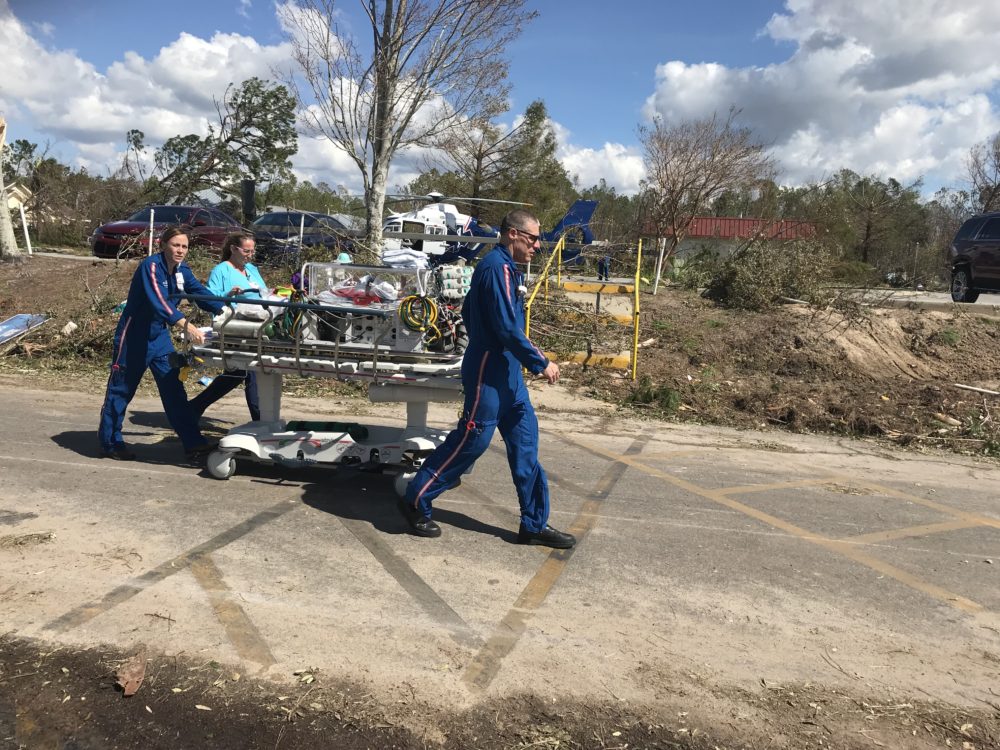
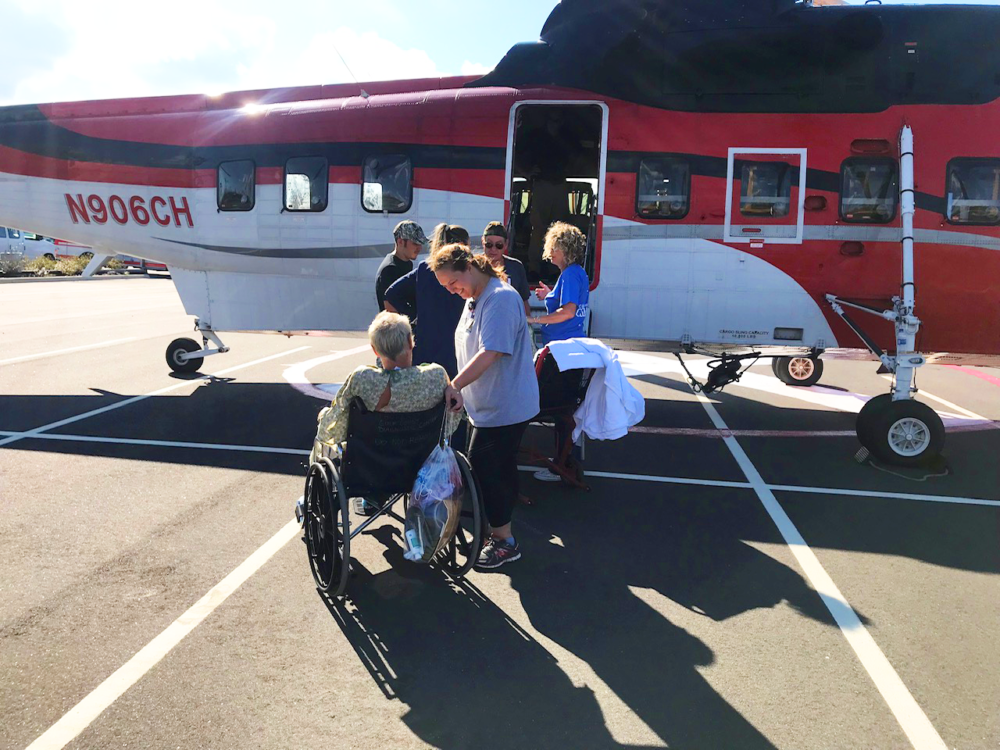
On Thursday morning, enough debris had been cleared from the parking lot to be able to land helicopters to evacuate patients. Working efficiently through Thursday night into Friday morning, the hospital staff had successfully transferred all of its patients to hospitals in Tallahassee, Fort Walton, and Pensacola. “By Friday morning, we had finished the evacuation and could start releasing the staff. We made the decision to keep the emergency room open and needed to make sure we had enough staff to support it. We knew we would see a surge in patients after the storm.” This was the first time many of the staff members could go home after the storm to deal with their homes, damages, power outages, and many other hurdles.
But there were many bright spots that lifted everyone’s spirits, Brad Griffin remembers. “The power company, they were amazing. They were our heroes. They showed up and said, ‘We’re not leaving until you have your power back on.’ I think that was Friday or Saturday after the storm. We had power from the massive, 18-wheeler-mounted generators that are very loud, and they are also very expensive to maintain. We had two of them. So, when the power company restored power, it was a relief. Gulf Power really had their act together.”
While repairs were underway—at some point more than 100 contractors worked in the building—getting in touch with employees continued to be a challenge. “We have over 1,000 employees at Gulf Coast, and it took us a couple of weeks to reach everybody. Which I still think was really fast. We asked them how they were, their family was okay, their house, and if they had a place to live. Thirty percent of the people we contacted said their houses were not livable. That number probably increased some over time. People may have thought that their house was okay but if they didn’t have power for several days with everything being wet, mold became a problem for them.” Gulf Coast Regional and HCA helped employees with food, clothing, and supplies, and washing machines were brought in for their use. FEMA set up a camp in the parking lot where first responders could stay and receive all necessities.
Until November 8, all emergency room patients who needed continued care had to be admitted to out-of-town hospitals. For the months of November and December, the hospital was able to open 50 beds for patients. On average, more than 20 patients per day were transferred out of town in this timeframe, with patient transport creating yet more challenges. “It became a real critical situation, especially if you had a very serious, sick, or injured patient. Traffic was horrendous. It took hours to get from Panama City to Fort Walton Beach. The ambulance drivers who transported those patients were heroes,” he says with a nod. “We flew out the most critical patients by helicopter as there were no other operating hospitals nearby. Bay Medical was in the same boat as we were.”
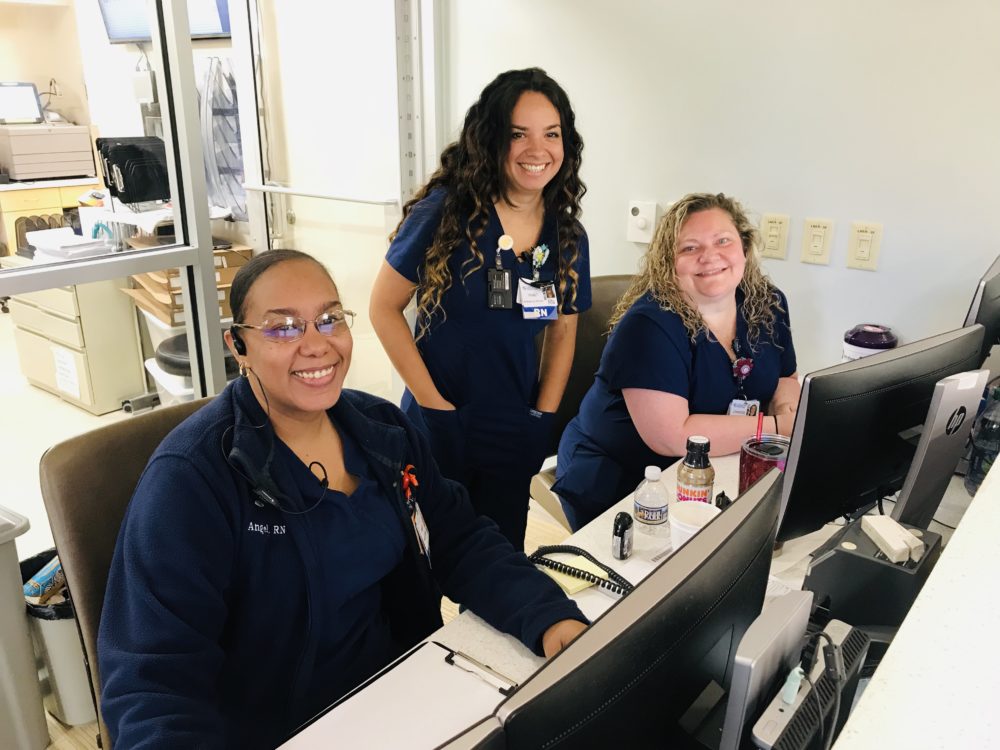 The closure of the hospital drew very large circles. While the contracted staff and physicians continued to receive wages during the restoration process, many physicians who worked out of their own offices, with privileges at the hospital, had no means to care for patients. Many had damaged offices of their own. “The doctors came together, helping each other out, sharing space so that they could begin seeing patients as soon as possible.” Brad Griffin and the team did everything they could to expedite the processes.
“When we opened the 50 beds in November, they were filled up with patients in two days. We gradually reopened more services, and as soon as we were able to determine a full reopening date, we notified the physicians so that they could communicate it to their patients. For several weeks, we were the only hospital that was able to admit patients. When we partially opened the hospital on November 8, even those physicians who were employed at Bay Medical, or practiced exclusively at the other hospital before the storm, were given hospital privileges to practice here as well.” On January 7, 2019, after weeks of repairs, the Florida Agency for Health Care Administration approved reopening the last of their 227 licensed beds impacted by Hurricane Michael.
“We worked tirelessly to open our doors again. In all that’s going on, our community will appreciate positive news and developments.” Brad Griffin recognizes his team’s hard work, especially while dealing with the tremendous hardships of the storm’s aftermath. While some employees had to leave the area, in part because their families had to leave, most came back on the day of reopening. “Overwhelmingly, many of our employees say, ‘We don’t want to leave. We don’t want to be anywhere else. We love Panama City and we want to be here.’”
He has seen many encouraging signs that offer a positive outlook. “I can say with confidence, the spirit is there to rebuild. I think the community will ultimately be better and stronger. How long it will take is the real question,” he points out.
“For our team, the experience was challenging but brought us together. We stood side by side, ensuring our patients received the very best care and attention during the storm and everyone rolled up their sleeves when it came to dealing with the aftermath. I cannot thank the Gulf Coast Regional Medical team enough.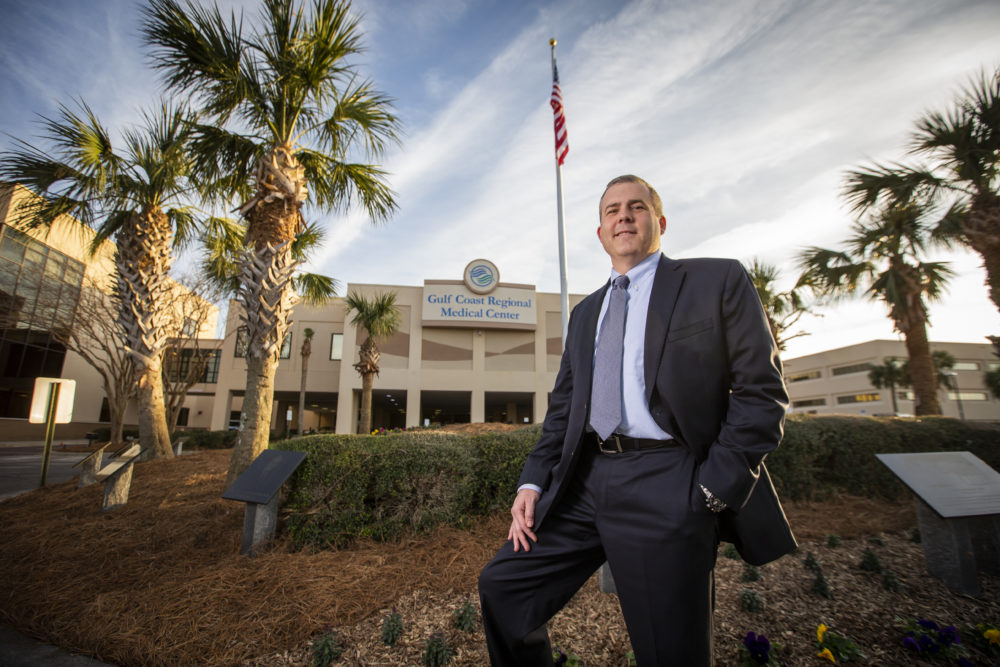
There are many good signs, not just the reopening of Gulf Coast Regional Medical Center. We see the development plans the St. Joe Corporation is presenting; we see state and federal legislative support for rebuilding of the area, especially of Tyndall Air Force Base. We see other large employers’ commitment to the community. We hear from the Economic Development Alliance that companies that have committed to Panama City remain committed to Panama City. Those are positive signs. We are extremely optimistic in the long-term growth and development of the community. I hope that was demonstrated by our quickness in rebuilding and reopening. There are businesses that are rebuilding and accelerating their development plans, and we want to be part of that to say, ‘We’re rebuilding. We’re hiring. We are here for the community.’”