
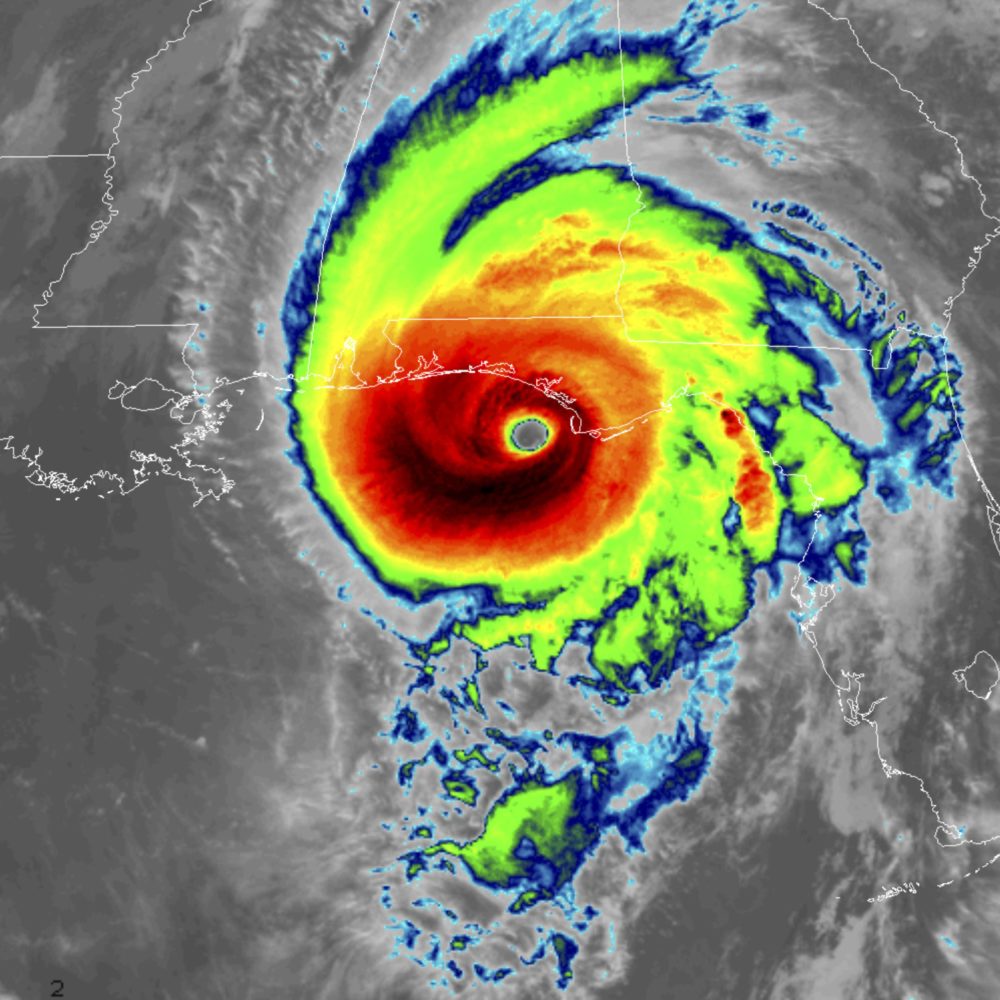
HURRICANE MICHAEL: Anatomy of a Storm


According to a Time Magazine article published on the day of landfall, the hurricane continued to intensify even as it reached the mainland on Wednesday, October 10, 2018.
“This is an unusual phenomenon that surprised some experts. Hurricanes typically lose power as they move inland away from the warm waters that fuel them and encounter less favorable wind conditions,” author Gina Martinez writes.
Just one day before landfall, according to the Saffir-Simpson Hurricane Wind Scale, Michael was a Category 3 storm, at first dismissed by many Northwest Florida locals, assuming that it would lose intensity once it came on shore. By the next day, the storm had increased to Category 4. It made landfall with sustained winds of 155 miles per hour, just 2 miles per hour less than Category 5 classification calls for.
Michael is one of the strongest storms to ever strike the U.S. mainland. With its low pressure of 919 mb, only Hurricane Camille in 1969 (173 mph landfall winds and 900 mb pressure) and the Labor Day Hurricane in 1935 (184 mph landfall winds and 892 mb pressure) had lower pressure.
Failing to recognize the alarming buildup of pressure that made this storm so dangerous, many Northwest Florida residents chose not to evacuate.