HOMEPORT AND DESTINATIONS | Brian D’Isernia’s Schooner Columbia


BY VAL SCHOGER
PHOTOGRAPHY BY DYLAN CARNEY AND MICHAEL BOOINI
RACING PHOTOS BY JAN HEIN
These were the fastest, leanest, and most challenging working boats ever built. They carried enormous canvas, were designed with the fine lines and long overhangs of racing yachts, but were expected to race off to the Grand Banks and back, their holds crammed with fish. The schooners were built for speed, not safety, and if their payout was large, so was the loss of life … these everlastingly romantic vessels and … the intrepid captains and crews who worked them from the early eighteenth until well into the first quarter of this century… men, a town, and an industry … swiftly became the stuff of American legend. – (Introduction to “Down to the Sea: The Fishing Schooners of Gloucester” by Joseph E. Garland 1983/2000)

HISTORIC AND NEW COLUMBIA
The Columbia was one of the last legendary fishing schooners, with only her sails and able-bodied fishermen to carry her out to sea and bring her back to port with her catch. Designed for speed by famed aviator and naval architect W. Starling Burgess, the Columbia was launched in Essex, Massachusetts, at A.D. Story shipyard in 1923. In the same year, she fished her first season and participated in the International Fishermen’s Trophy Races, a competition that only vetted Grand Banks fishing schooners and their crews could enter
The Columbia made American sailing history when it looked as if she could defeat the presumed winner, the 143-ft. Canadian schooner Bluenose, in the competition for the fishermen’s trophy. But the races ended in a dispute, with Bluenose’s captain refusing to complete the last out of three determining races. Following the Bluenose’s departure, the captain of the Columbia declined to accept the trophy, reminding the committee that his boat was commissioned to race and defeat the Bluenose, not be just declared the winner.
The International Fishermen’s Trophy Races were halted for several following years and the Canadian Bluenose defended the trophy against American challengers in years to come.
But with the winner never clearly determined in 1923, the question remains: Which was the fastest boat?
More than 95 years later, there could have almost been a rematch if it had not been for government regulations. In a show of elegance and grace, the new Columbia sailed alongside the Bluenose II at the 2018 Gloucester Schooner Festival in Massachusetts. It was a spectacle to see the ships sail in tandem—both replicas closely resemble the originals. The crowd could not have cheered more if it had been a race.
For onlookers, it was like witnessing the re-creation of history. For the proud builder and owner of the Columbia, Brian D’Isernia, founder and CEO of Eastern Shipbuilding Group, a dream had come true. Originally from New York, he grew up with the stories of Gloucester fishermen’s bravery, endurance, and perseverance. He studied the life and feats of such outstanding men as Howard Blackburn, a Gloucester fisherman who rowed to land for five days following a winter storm; Angus Walters, the legendary captain of the Bluenose; Ben Pine, the revered captain of the Columbia; and many others who lived by the dangers and the promise of reward fishing the sea.
“Obviously, the Columbia is the spirit of Gloucester.” With these words, Brian D’Isernia began his speech to the cheering crowd at the Gloucester Schooner Festival. Spectators showed much appreciation when he paid tribute to his great team in Columbia’s homeport, reminding everyone; “The Columbia is a product of Panama City.”
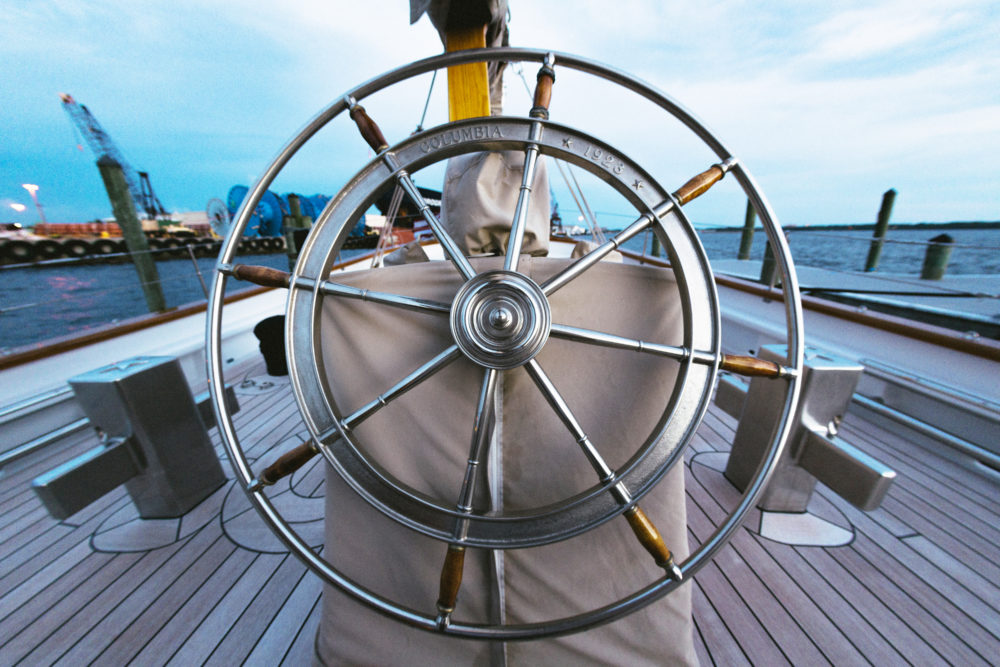
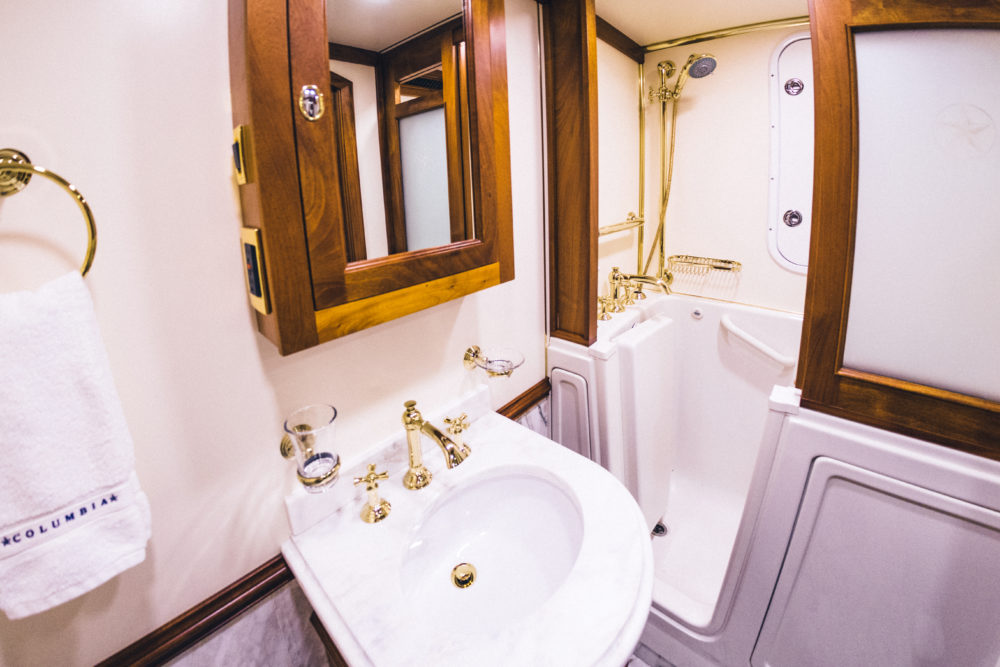
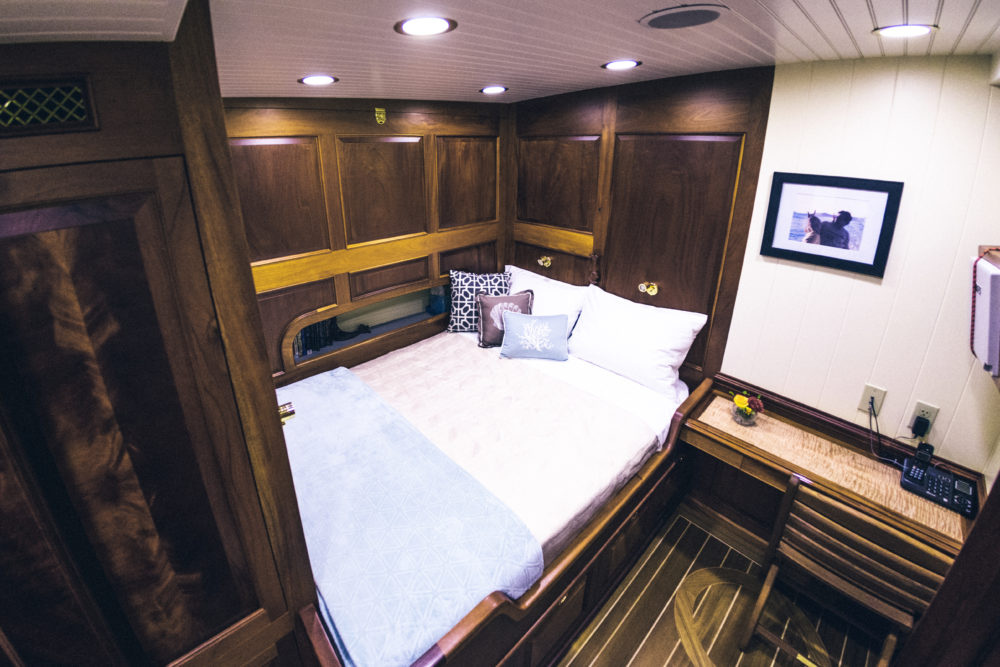
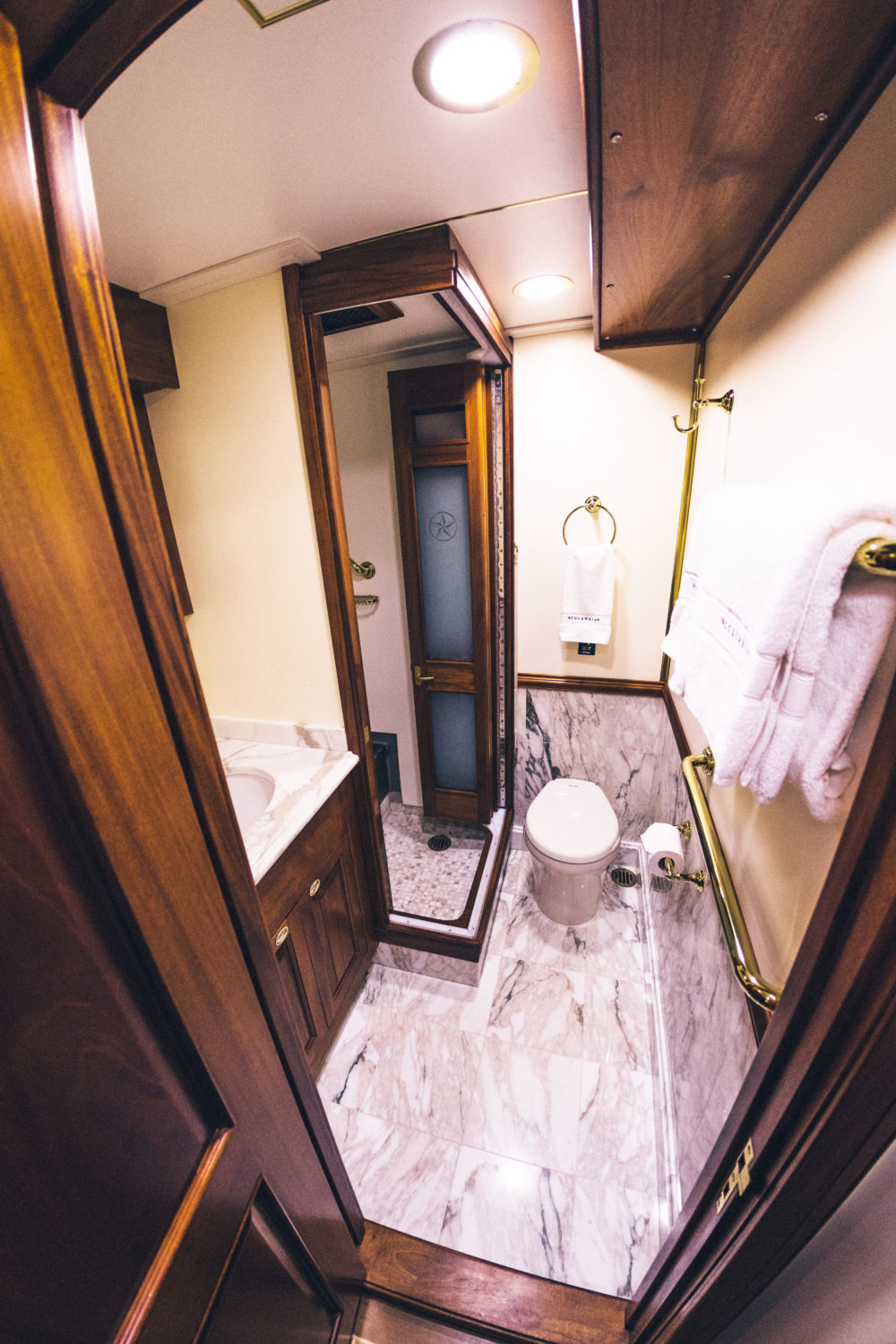
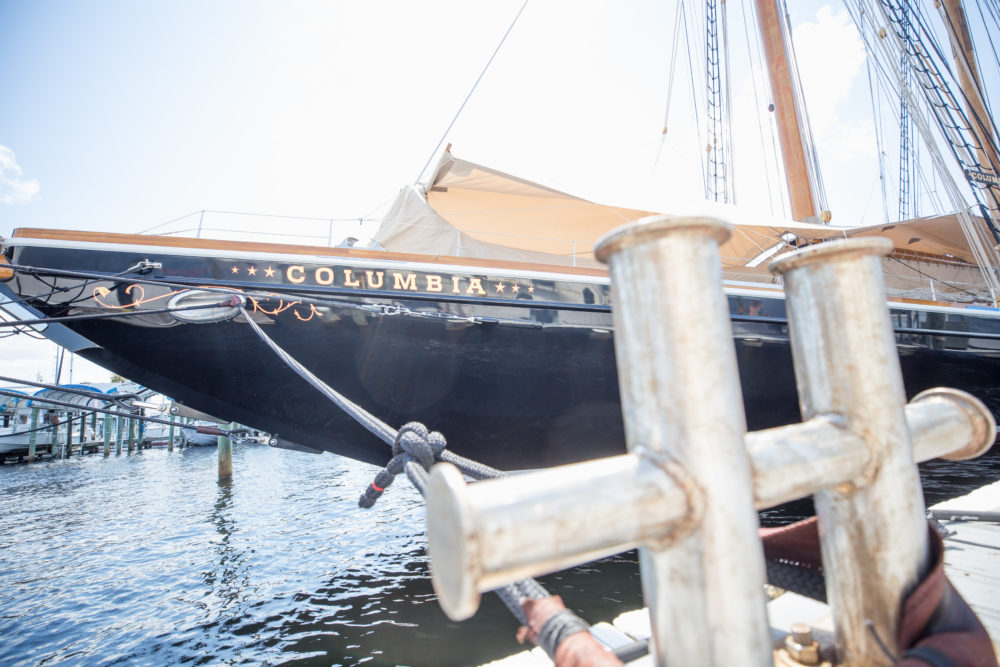
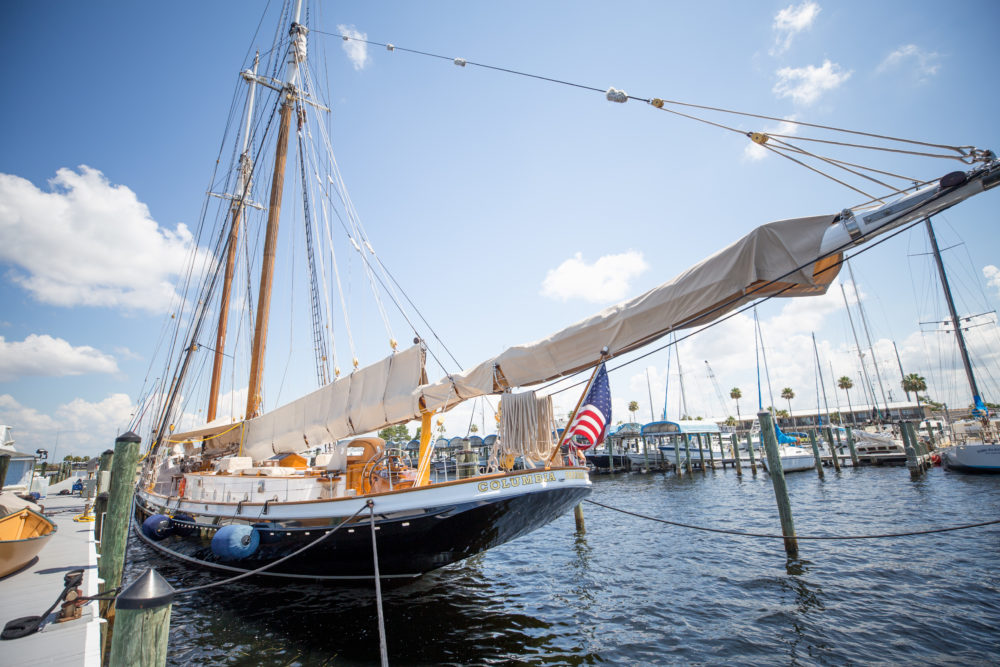
Drawing on Eastern Shipbuilding’s decades of experience in the production of large commercial workboats, the Columbia features all the modern amenities of a superyacht that complement her true-to-original sleek lines. The number of suppliers and craftsmen who put their best work forward in the Columbia is yet another significant aspect that makes the ship such an accomplishment.
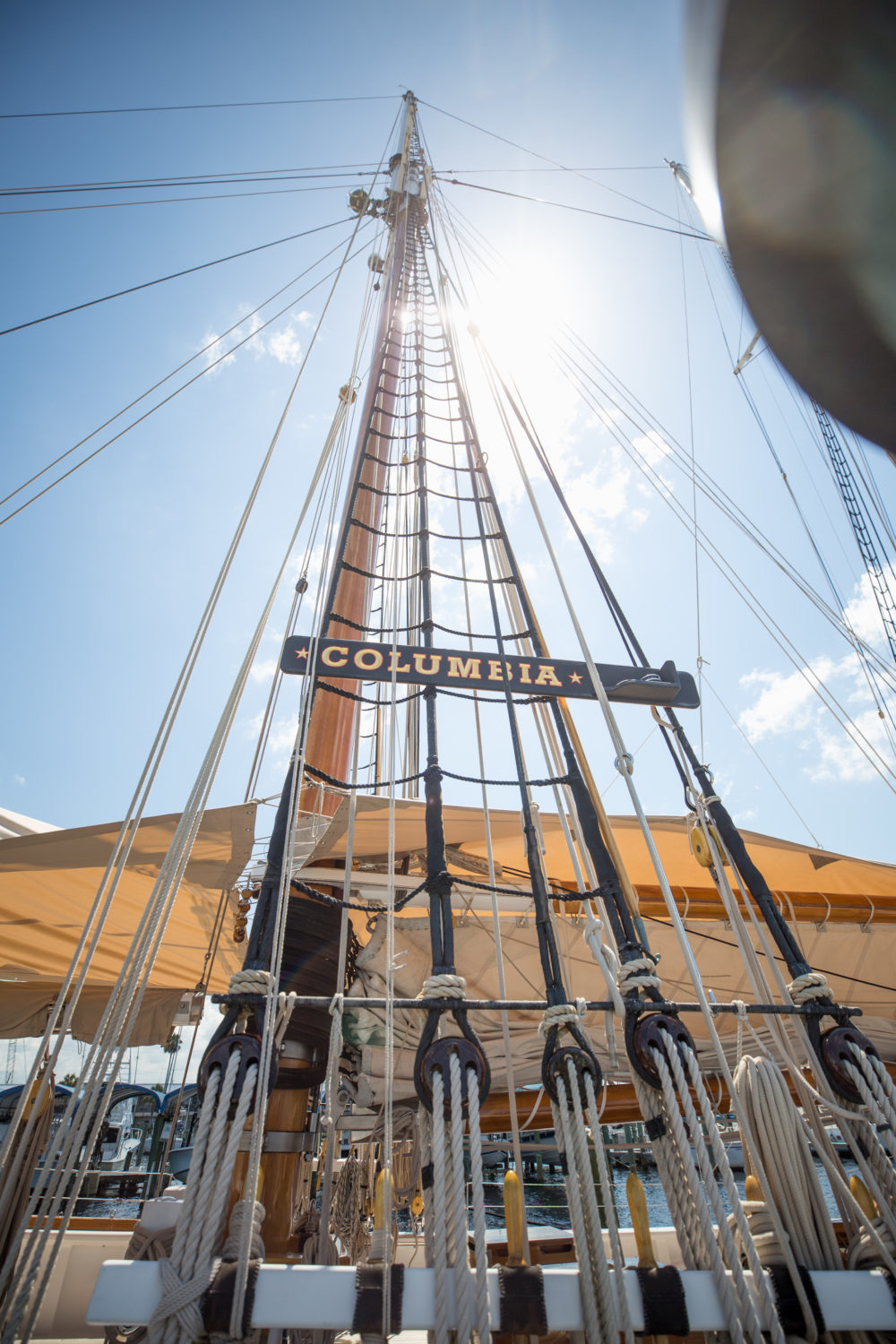
When Brian D’Isernia found W. S. Burgess’ original Columbia blueprints in the archives of the Essex Shipbuilding Museum, which is situated on the property of the still-active Story Shipyard, he commissioned John W. Gilbert and Associates in Boston to adapt the original drawings for steel construction. Outfitters based in Lunenburg, Nova Scotia, once Canada’s center for building and manning fishing schooners for the Grand Banks fishery, delivered superior craftsmanship for the Columbia’s traditional rigging. Concessions were made for added safety and comfort, Brian D’Isernia explains. “The hull is identical; the sail plan is identical. But most importantly, we put an engine in the boat. When these boats were built as late as the 1930s, they were beautiful, but they were already obsolete and replaced by fishing boats that had engines. Where the original schooner had nothing but its fish hold, we added living quarters.”

He is clearly in his element when he remembers the men who showed courage and perseverance, often risking their lives at sea. “The original Columbia’s hull could hold 300,000 pounds of fish and its innovative sail design helped the crew make speed returning to homeport with their catch. They had 18 dories on board. They would keep them on deck and put them overboard with one or two men in each dory who would jig by hand, fill up the dory, then go back to the ship to fill the fish holds.
THE CREW
During the International Fishermen’s Trophy races in 1923, the Columbia was captained by Ben Pine with a crew of 24 men. Two guests, often a pilot, and a representative of the opposing schooner, were also on board, according to an article in a 1931 issue of Popular Mechanics that explained the racing rules.

Today, captained by Seth Salzmann, the Columbia is sailing with nine full-time crew members, six of which are deck crew. For races, the crew is increased to 30 to handle the sails and hardware.
The job of public relations and marketing is assigned to Kiernan “Daisy” D’Isernia, who divides her time between the Panama City shipyard and the schooner’s sailing destinations. “The Grand Banks fishermen are always remembered aboard Columbia,” Daisy D’Isernia says with a smile. Her love for the history and seeing her father’s dream come to reality makes for great morale-boosting speeches before the races when she reminds the modern-day crew to live up to the humanity, spirit, fortitude, and gumption of the brave Grand Banks fishermen.
“I remember my father talking about the Columbia. It was his dream since high school. But when I finally saw the boat with my own eyes, then seeing her effect on others, I completely understand his vision now.” Daisy D’Isernia has since found her sea legs and accompanied the Columbia and her crew to several races and regattas, where seeing people’s enthusiasm is always an eye-opening experience. “The Columbia is beautiful but she is not just a pretty face. Columbia is the flagship for Eastern Shipbuilding. She is showcasing Eastern Shipbuilding’s capabilities and workmanship. But the one truly amazing thing to witness is how she brings people together. People are really invested in her history and share my father’s appreciation for the fighting spirit of the rugged sailors.”
Making waves in any sense of the word, the Columbia also offers new perspectives and business opportunities. As Eastern Shipbuilding Group is planning the construction of Columbia’s sister ship, there will be many future opportunities to showcase their shipbuilding expertise. “With Columbia’s presence alone, Eastern Shipbuilding Group is getting interest from people who are considering having their own superyacht built. It is something that we are exploring as a revenue stream,” says Daisy D’Isernia.
“The first thing when someone comes aboard, they usually comment, ‘Wow, that’s steel?’” says Seth Salzmann, who has captained the Columbia for a year and started sailing on historic schooners as a teenager. “The hull has the perfect sheer, perfect lines, with no ripples, nothing that indicates that it’s a steel hull.”
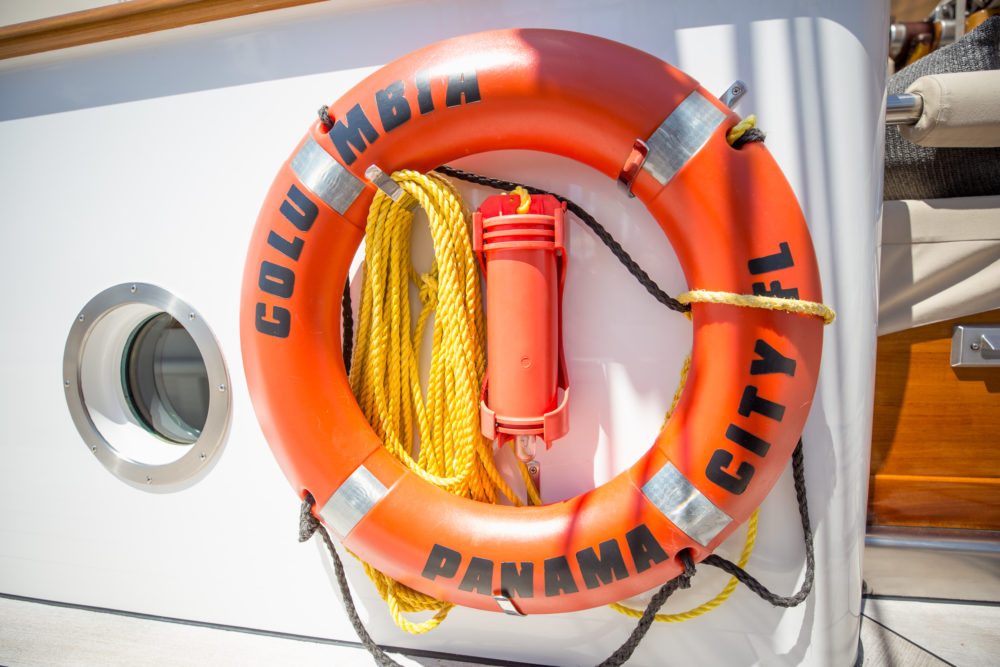
Garnering attention and turning heads everywhere she goes, the Columbia has participated twice in the Gloucester Schooner Festival, sailed the Connecticut Maritime Heritage Festival, traveled to Nova Scotia, New England, and the Virgin Islands, visited Bermuda for the America’s Cup Superyacht Regatta, and sailed in the Antigua Classic Regatta twice, so far. Her adventures have all been well-documented in the boating community around the world, with “Panama City, FL” clearly and proudly displayed on the Columbia’s transom.


DESTINATIONS AND EXPERIENCE
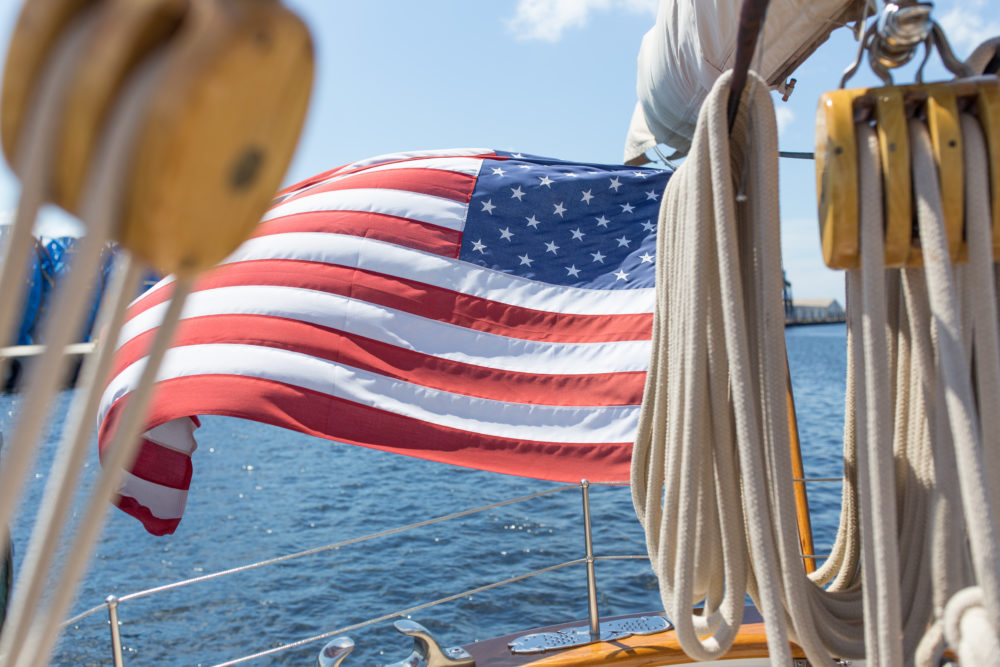
For 2019, the Columbia plans on sailing to the Caribbean to be chartered and compete in Regattas. Columbia has been invited to the Monaco Classic Yacht Week in 2019 as it will have an American theme with focus on William Starling Burgess. “This is a huge deal. We are excited to go to the Mediterranean this summer and show Europe what an American Industrial Yard can do,” says Daisy D’Isernia. “We will proudly fly the American flag and have Panama City, Florida on our stern.”
With a large ship like the Columbia, any journey, whether it’s a daytrip or an Atlantic crossing, has to be planned a considerable time in advance. Even the ship’s maneuvers have long effects. Captain Seth Salzmann speaks with a lifetime of experience. “As a captain of this boat, or any sailboat of this size, you have to have lots of patience. Things take a lot longer to set up. You have to plan your maneuverability very far in advance because you don’t get many second chances. The main boom measures 75 feet. Most people’s boats are not that long.”
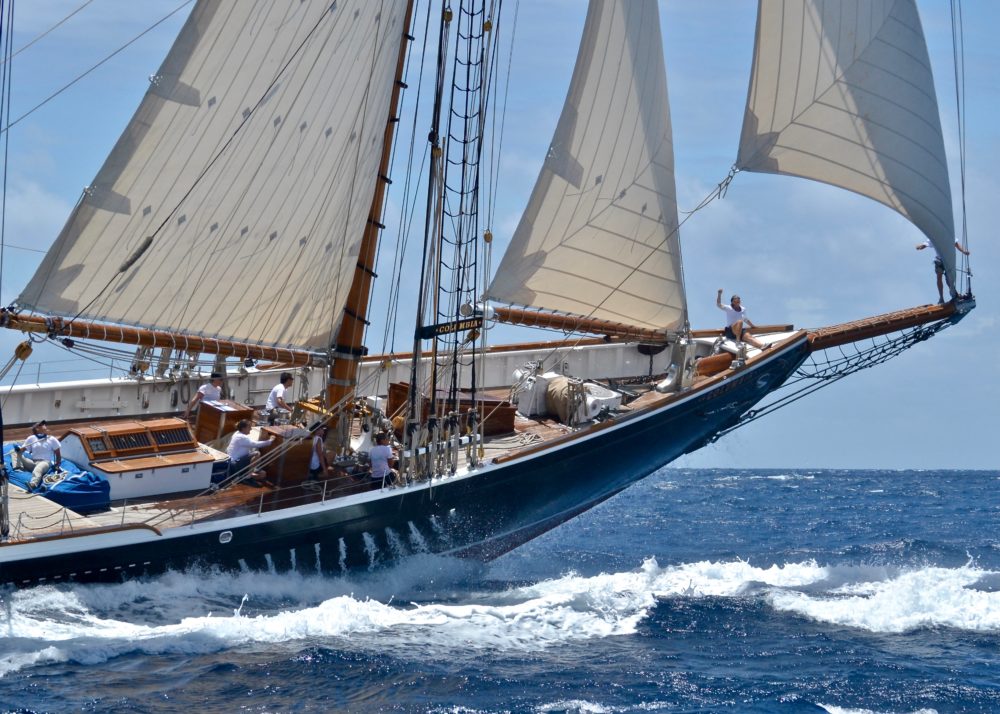
Once she is underway there is nothing that compares to the thrill. “The Columbia is very quick under power. She is a very stable boat. But under sail she is exhilarating. We can set a few sails for a nice, relaxing, gentle, and more leisurely sail, or we can set all the sails and have an adrenaline rush.” Captain Salzmann is in his element. “We set the main sail first and depending on the conditions, we start setting the stay sail and jib. We will usually set as many sails as the weather allows, and it gets exciting when we untie more sails in the topmast.”
For 2019, the Columbia will be available for private charter with day, threeday, week-long, or multiple week charters. Daisy D’Isernia has met with several interested buyers who contemplate buying their own boat. “Many people hear the calls of the sea and the sirens of the waves,” she says. “Selling everything and moving on a boat, cruising the world, it’s a dream for many. Chartering a boat like the Columbia would be a great introduction. The crew are wonderful ambassadors for sailing.”
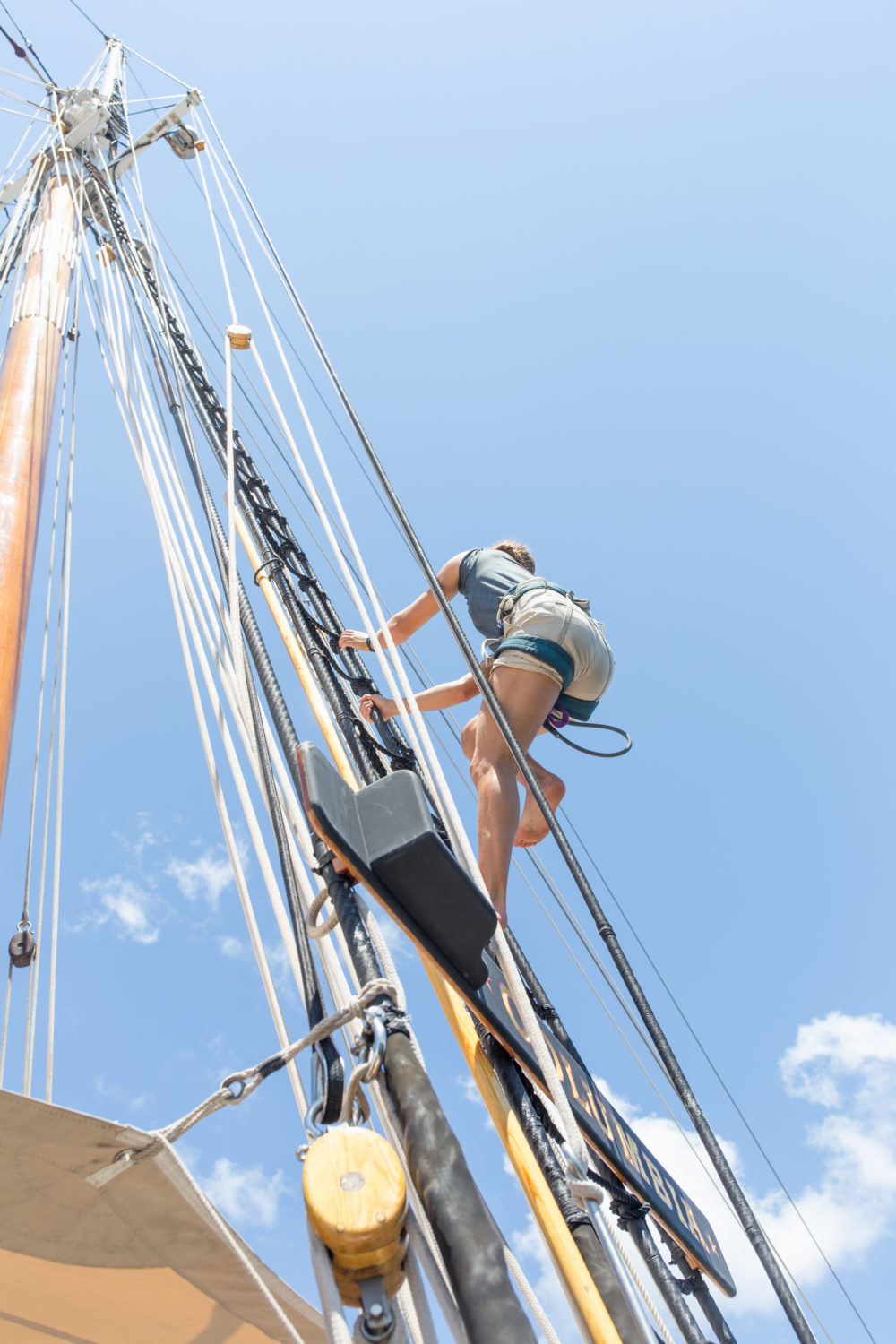
Like her historic predecessor, the Columbia is made for speed. “What’s really exciting when you are all out, full speed, you are heeling over, and crew members have to go up into the rigging to manage the topsails.”
 WHAT LEGENDS ARE MADE OF
Brian D’Isernia, the founder of one of Northwest Florida’s largest privately-owned manufacturing companies, is a self-made man. In his early career, after earning law and economics degrees in New York, he decided fishing was a better way to make a living. He came to Northwest Florida in the early 1970s with wife Miriam “Mimi,” the love of his life.
He was here for the good fishing grounds and ideal conditions for long-lining in the Gulf Stream and started building his own boats to meet higher construction standards for his growing fleet. His quality workmanship and superior boats received attention from other fishing fleet owners and by the early 1980s, he had delivered more than 30 fishing vessels, among them the Hannah Boden and her sister ship, the Miss Penny. The Miss Penny would later be purchased, modified, and renamed to Andrea Gail.
Departing Gloucester Harbor, Massachusetts, on September 20, 1991, Andrea Gail was never to return. She and all crew disappeared in an area around 162 miles east of Sable Island. The weather produced wave heights that reached a recorded 61 feet with 80-knot winds. It was described as the “perfect storm” of 1991. The book “The Perfect Storm” by Sebastian Junger (1997) tells the story of the boat and crew, and was adapted into a star-studded movie in 2000. The Hannah Boden is still in active service, fishing for swordfish.
Today, Eastern Shipbuilding Group (ESG) is a family-owned-and-operated company that employs 1,800 people and launches new ships and workboats every two to six months at one of its two shipyards in Panama City. Eastern’s portfolio includes more than 350 vessels, according to the company website, and is renowned for quality workmanship. In recent years, the company made headlines with its win of a multibillion-dollar shipbuilding contract for constructing 25 U.S. Coast Guard offshore patrol cutters, each 360 feet in length, securing jobs at Eastern Shipbuilding and in its Northwest Florida hometown for the next 10 to 15 years.

In his private life, Brian D’Isernia and wife Mimi are loving parents to 10 children. “Both of my parents are caring and very loyal people. They are like two pieces of a puzzle, very harmonious,” daughter Daisy says. “Mom wanted to have a big family, and Dad was onboard for that. Dad can’t help but pursue his business ventures, and Mom wholeheartedly supports him. Both had their dreams, and their dreams aligned. Without each other, they could not have accomplished so much.”
There is a lot of symbolism in a sailboat. Remarkably, this sailboat truly captures the philosophy of a man who worked hard his entire life. “It is amazing that we get to be the custodians of the rebirth of this historic schooner,” Daisy D’Isernia says with a nod. “Building the Columbia took more than money.
Usually you look at superyachts and they are an example of wealth, but this boat is the materialization of a dream, my father’s dream. It’s also about American maritime history. Eastern can build just about any boat, and my Dad chose to build Columbia. People come up to us, thanking us for building her. The tie-in with the history is truly amazing. My father always goes back to the type of men who sailed these vessels; he recounts their hardships and successes. ‘Those were the type of men this country was built on,’ you will hear him say. He is this type of man. Not everyone could do this. You have to overcome a lot. Not just outside, but inside yourself to achieve a dream. Ultimately, she is about remembering the history, remembering what America is, what it takes to make it. Columbia is an expression of who my father is, and yes, he is very American.”
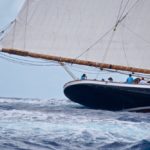
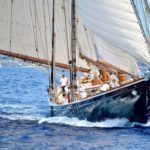
SCHOONER COLUMBIA IN DETAIL
Length on Deck: 141′-2″
Length, Waterline: 110′-0″
Beam: 25′-6″
US Gross Tonnage: 174 TONS
Hull & Superstructure Construction: Steel, ABS Grade A-36
Main Mast: 124 ft.
Foremast: 115 ft.
Mast and booms are laminated and manufactured of select Douglas fir. Topmasts are manufactured of Sitka spruce by Covey Island Boatworks in Lunenburg, Nova Scotia.
Sail Area: 10,010 sq. ft.
All the sails were constructed by Michelle Stevens, Sailloft, LTD, in Lunenburg, Nova Scotia.
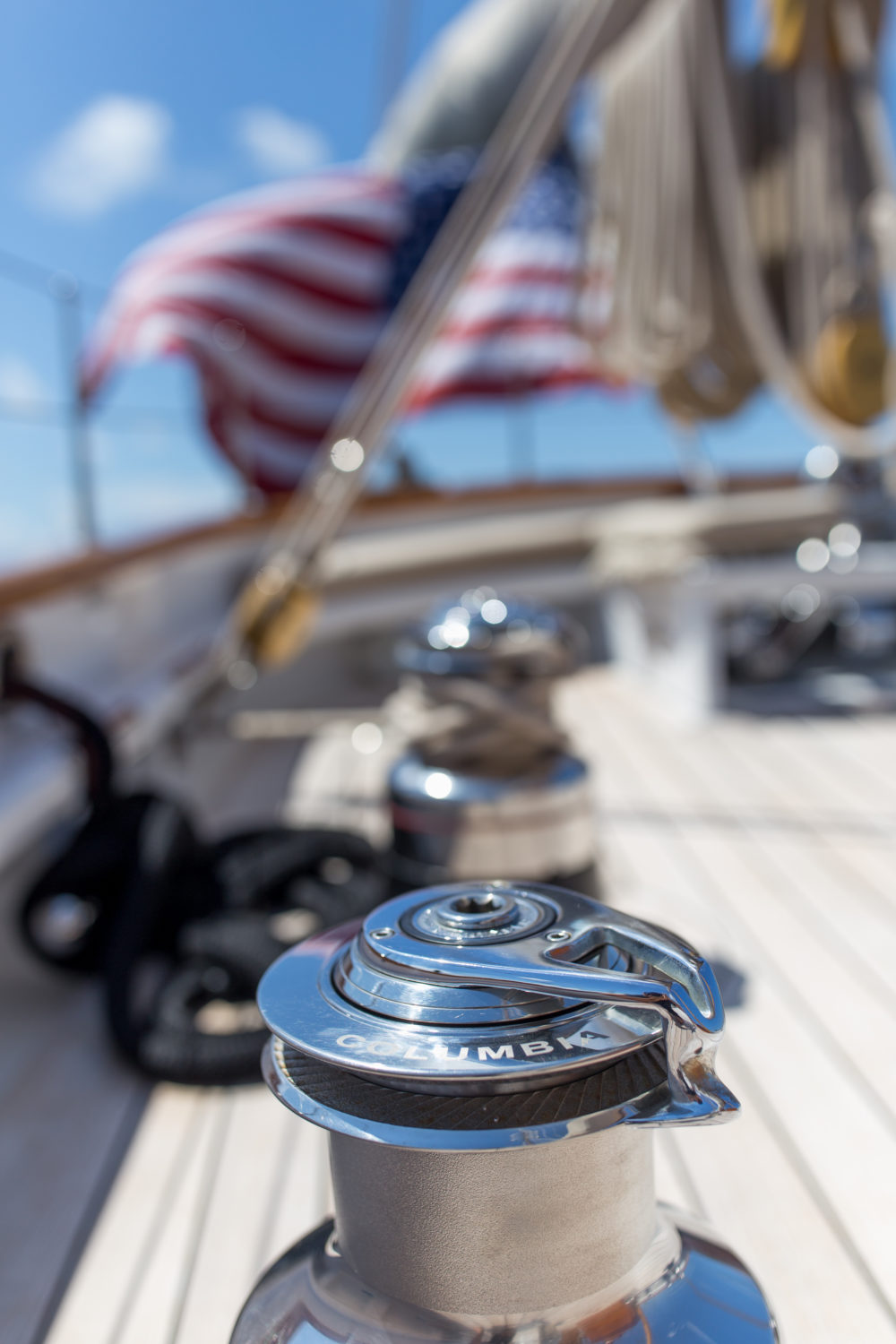
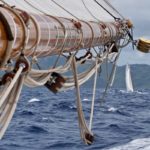
Rigging: Attention to historic detail is seen throughout and combined with modern equipment. Third-generation builder Arthur Dauphinee in Lunenburg produced more than 100 custom-built blocks with hand-stitched leather covers along with hoops, chafe spots and gaff clappers. The lines on the Columbia are made of Dacron. Historic schooners used manila ropes.
Columbia is equipped with a 587 HP Caterpillar Diesel engine. Twin electrical power generation plants feed the interior and exterior lighting, underwater lighting system, and the air-conditioning and heating system. A bow thruster provides ease of docking and undocking.
The onboard electronics, communication, and navigational equipment are state-of-the art with two 36 nautical mile radars, wind sensor, navigational LED lighting, electronic charting, electronic compass, and autopilot. The entertainment systems are interfaced with a VSAT broadband Satellite system with phone, entertainment and internet service.
Two dories are built to authentic specifications of the originals that the fishermen once used for their catch. The vessel’s hull, superstructure, and underwater gear are designed, constructed and classed in accordance with the Lloyd’s Register’s Rules for Building and Classing Steel Vessels.
Registry/Flag/Certificate of Documentation: United States of America
Contact information: columbia @ easternshipbuilding.com