HERBS AND THEIR BENEFITS – Interview with Chandra Hartman, Herbalist


BY VAL SCHOGER
PHOTOGRAPHY BY MIKE FENDER
More people are finding their way back to nature when facing ailments and challenges in life. The phenomenal hype surrounding CBD has conquered common conscious minds, and, as a side effect, is opening paths and awareness for other alternative medicines that might offer cures and solutions for a healthy and balanced lifestyle.
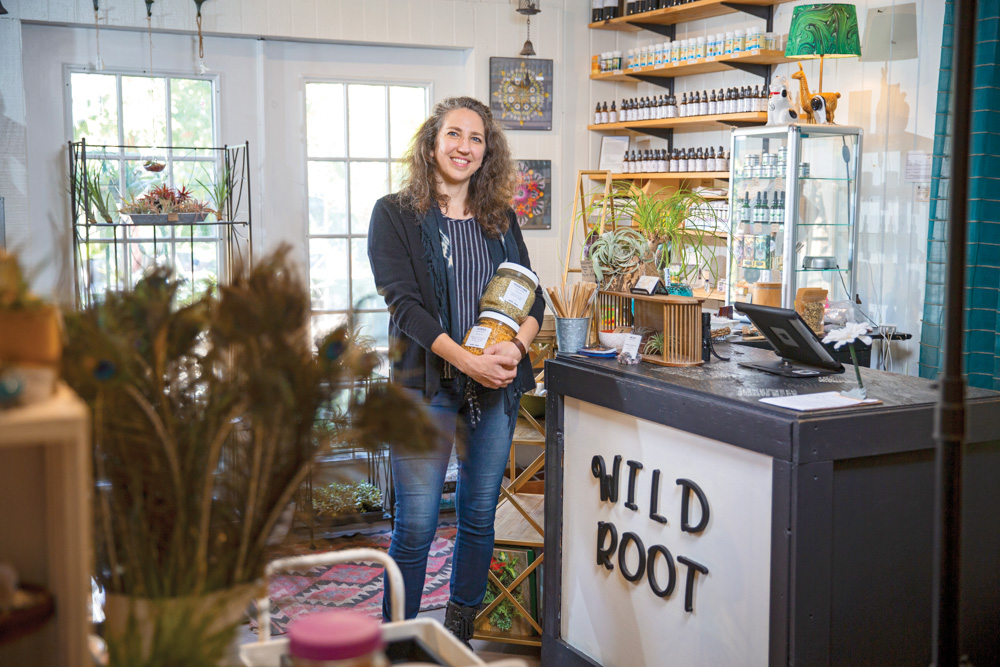
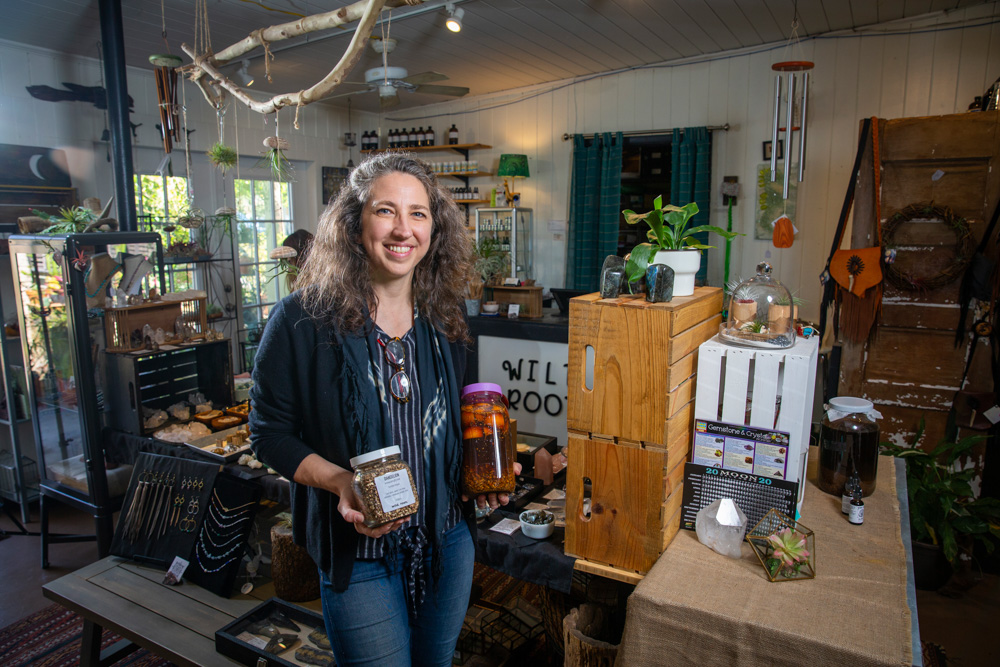
Long before the hype, Panama City Beach resident Chandra Hartman pioneered the idea of growing and offering herbal remedies in Panama City Beach. In 2013, together with husband Eric Marcus, Chandra opened Wild. Root. Coffee and Apothecary, a storefront that corresponds with her lifelong interest in natural medicines.
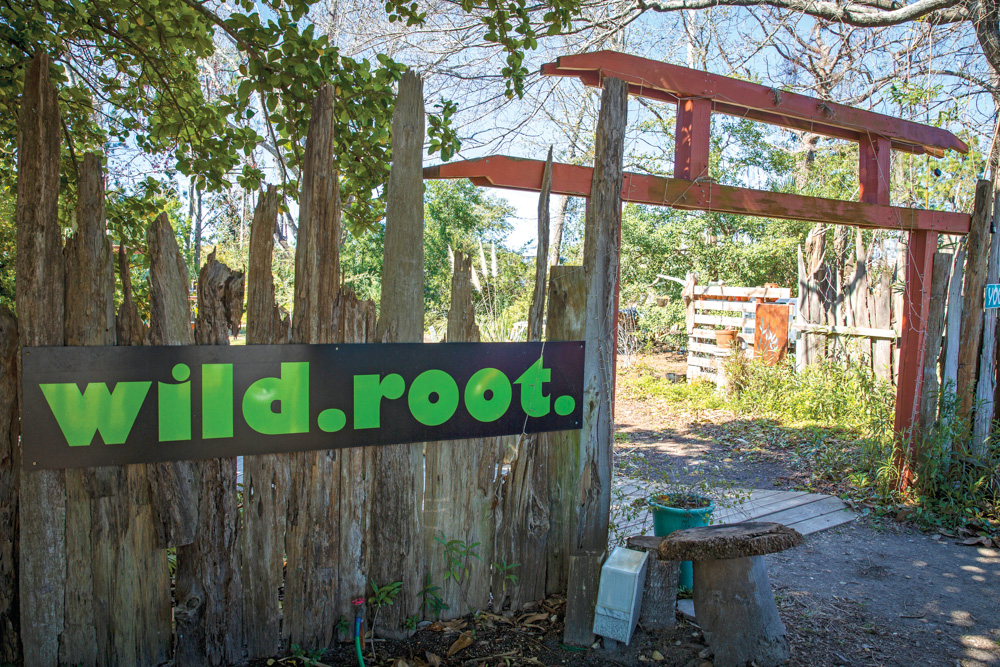
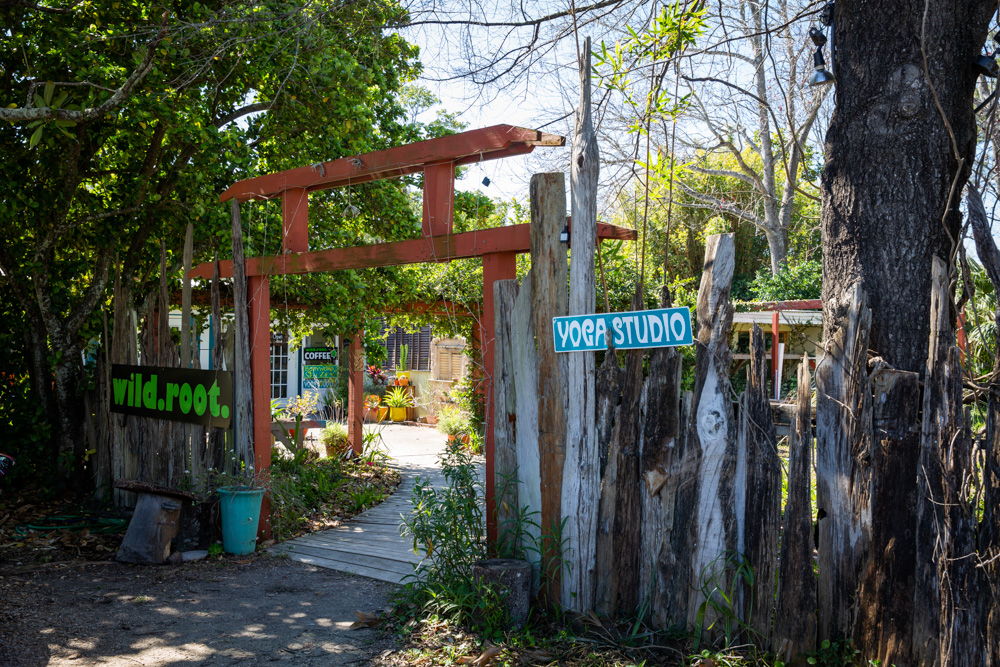
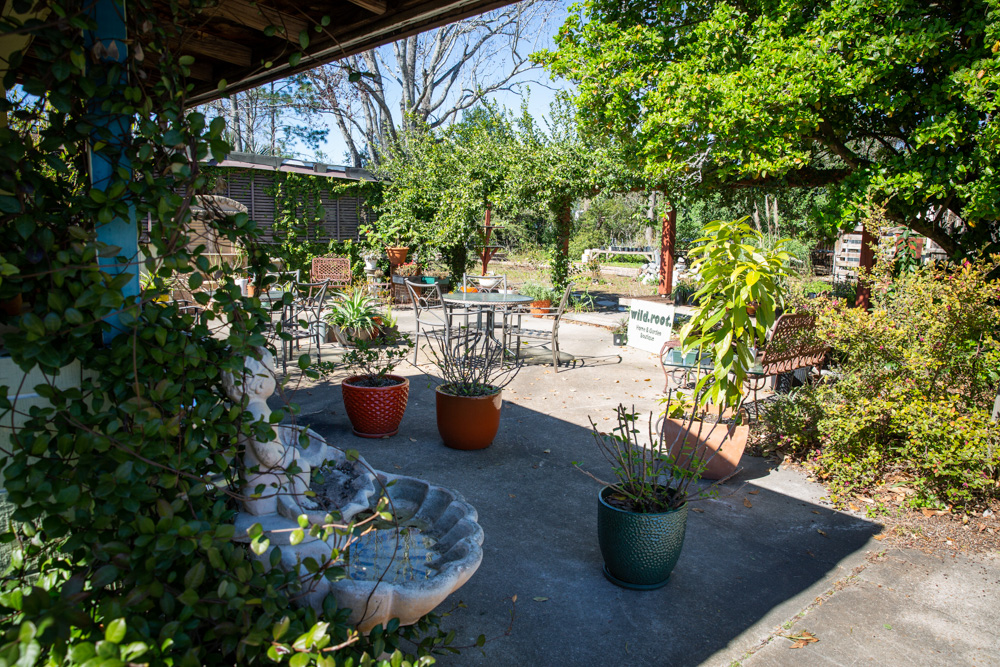
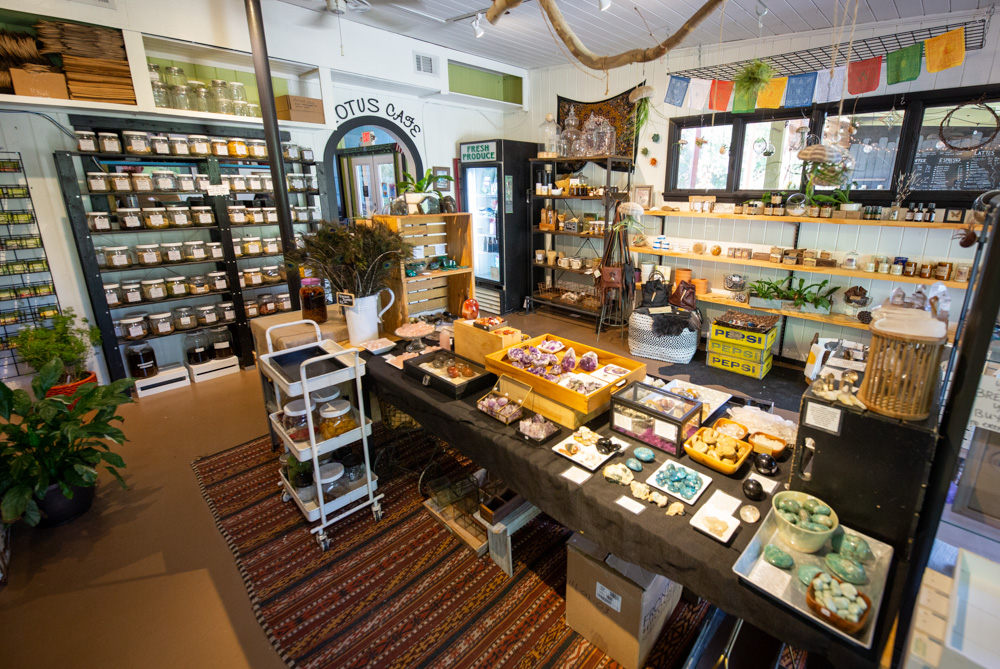
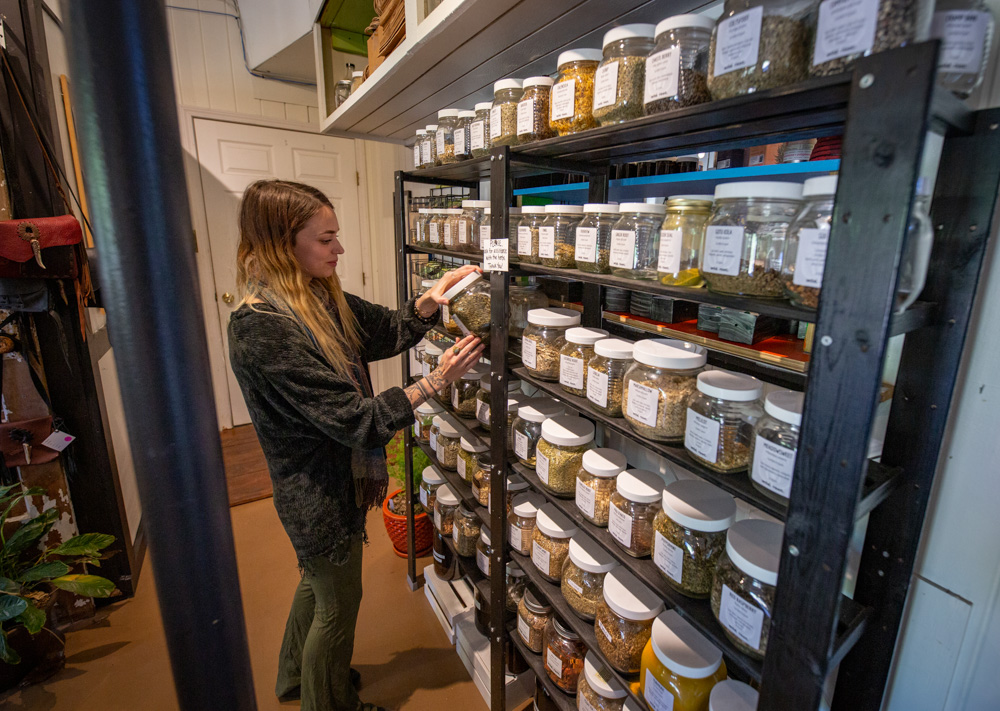
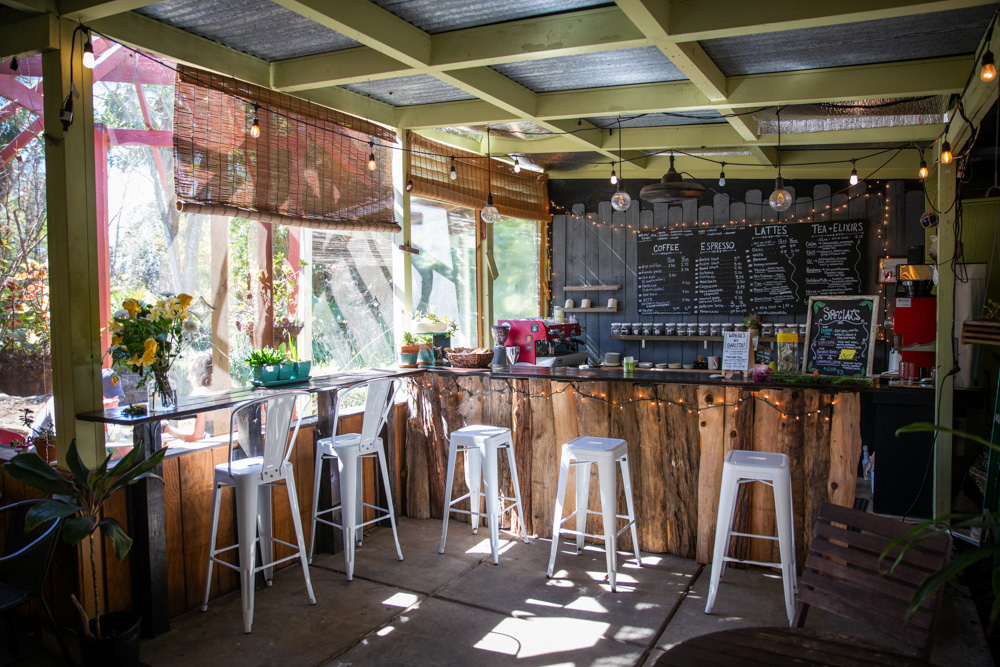
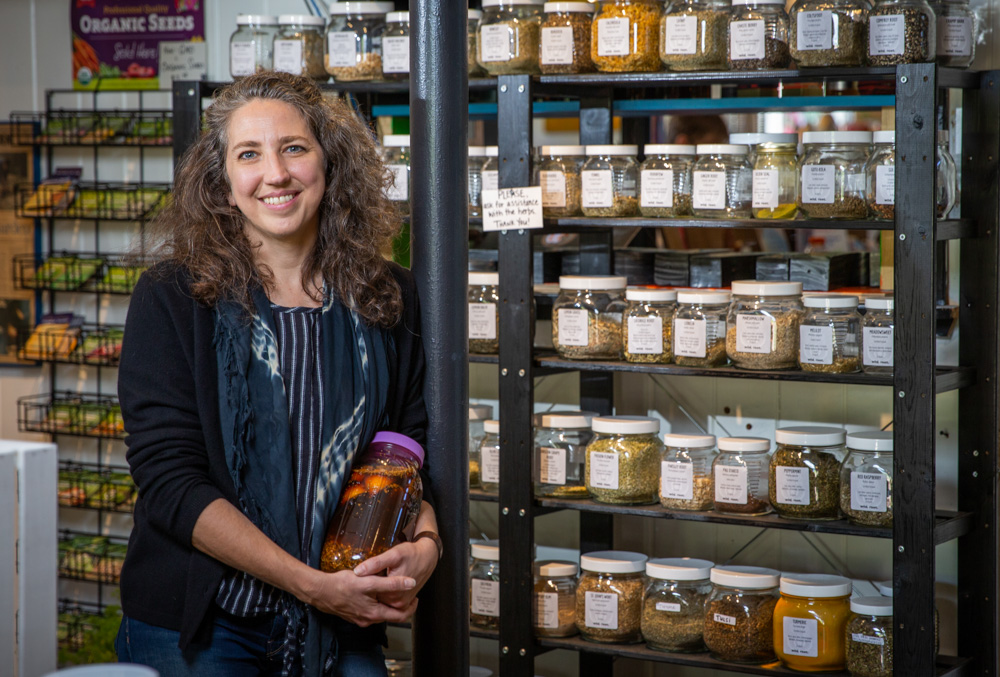
Visitors to Wild. Root. can learn about herbs and their benefits and buy remedies and other homegrown or handcrafted products while indulging in aromatic specialty coffees. Proprietor Chandra’s authentic and fundamental knowledge speaks of her lifelong passion for and interest in plants and their benefits to us humans.
Chandra’s career started out in a much different field and brought her to Northwest Florida when she accepted a position as an architectural designer in Walton County after completing her studies in Arizona.
“We have the power to take control of our own health and
we have the ability to make our own natural remedies. This
knowledge has been passed down for thousands of years.”
Asked about how she made the leap from the corporate world, she simply confirms that it is truly her personal experience and passion that drives her to learn and share as much as possible about natural remedies. “I’ve always had the spirit of a Renaissance woman,” Chandra says. “In my early 20s, I went to a local Traditional Chinese Medicine (TCM) practitioner for a lifelong illness. I had profound results and that fueled my interest in natural health even more.” She explains that she started “playing around” with growing her own food, permaculture, wildcrafting, foraging, making fermented food, and making plant medicine.
In 2007, she went back to school, earning her second bachelor’s degree in sustainable community development in an effort to combine her passion with her chosen career as architectural designer. “I felt a strong pull to help bring the natural and built environment together,” she explains. But the downturn in the market and the oil spill altered her and husband Eric’s lives. She decided to open Wild. Root. and share her passion.
“There isn’t any nationally recognized certification to become an herbalist, but there are several really good schools that provide training to help someone go from being a family herbalist, to a community herbalist, to a clinical herbalist,” she says. After studying at the East West School of Planetary Herbology in Santa Cruz, CA, a school that, according to Chandra, covers a broad range of herbal topics with focus on using herbs from all over the world in a Traditional Chinese Medicine framework, she enrolled in an advanced program, the Hsin Fa School of Herbal and Energetic Medicine.
 Chandra is in the process of finalizing her advanced studies and is looking back on six years of successfully operating two Wild. Root. store locations. We caught up with her and asked her to share her experiences.
 What was it about Traditional Chinese Medicine that attracted you? Do you think it’s better than other natural approaches to health?
Initially, I wasn’t drawn to TCM at all, even though I had a deep appreciation for it. Because of my design background in livable and walkable communities, I was hyper-focused on only using plant medicine that came from the Gulf Coast Plains region. East-West School of Planetary Herbology opened me up to the idea that studying these ancient systems—Chinese herbalism and Ayurveda—would help form a deeper understanding of how the energetics of herbs from around the world work. Both of these systems are built on thousands of years of empirical evidence. Once you understand how the system works and you understand the energy and actions of herbs, you can begin to make substitutions and create different formulas from a broad range of plant material from all over the world, including locally. This is what forms a strong distinction between someone who is beginning their herbal study and someone who is well-versed in many herbs and herbal traditions. I always tell my clients and customers that herbs are just another tool in their toolbox for cultivating health and wellness. There are many complementary healing modalities that are valid and useful, especially in conjunction with other treatments. Sometimes I see people who are so disheartened by their allopathic care that they careen right into natural remedies and eschew all Western medicine. A trained herbalist can work with other practitioners including Western doctors and they are trained to know about herb and drug interactions.
What are the most common questions or misconceptions that people have about herbs?
The biggest misconception about herbs is that there is one herb that can replace their medication. Naturally, people start a conversation by asking, “What can I take for my XYZ?” Most people believe there is a one-to-one substitution and they want to take that one herb, preferably in a pill, and be all better. This just isn’t true in most cases. This is the craze that CBD is going through right now. People think this one constituent is going to cure everything. I’m grateful that CBD has become a gateway for people to try other herbs and it does help many people, but there are hundreds of plants that are very effective for healing. A good herbalist is going to ask a lot of questions about the person and their concerns and make individually tailored suggestions that may include herbs, other alternative therapies, and lifestyle and dietary changes.
 Tell us more about Traditional Chinese Medicine.
I think TCM and herbalism, in particular, is still sometimes viewed as very woo-woo, unorthodox, and a folk form of medicine. Most of the world still uses some form of herbal medicine in their primary care. More people are turning to natural remedies in the industrial world as allopathic medicine sometimes falls short. This is actually a really exciting time to be working with herbs because more research is being done in the fields of ethnobotany and pharmacognosy. In ancient cultures, they learned through trial and error and observation. They may not have had the scientific reason or the modern language to describe why certain herbs did certain things, they just knew that they did. This knowledge was passed down over thousands of years. We are living in an age now where we are discovering the exact active constituents of plants that give them healing properties. This knowledge has always been there; it’s just being given a name and validation.
What is the most-asked-for natural remedy or the most common symptom that your customer might have or is looking to treat?
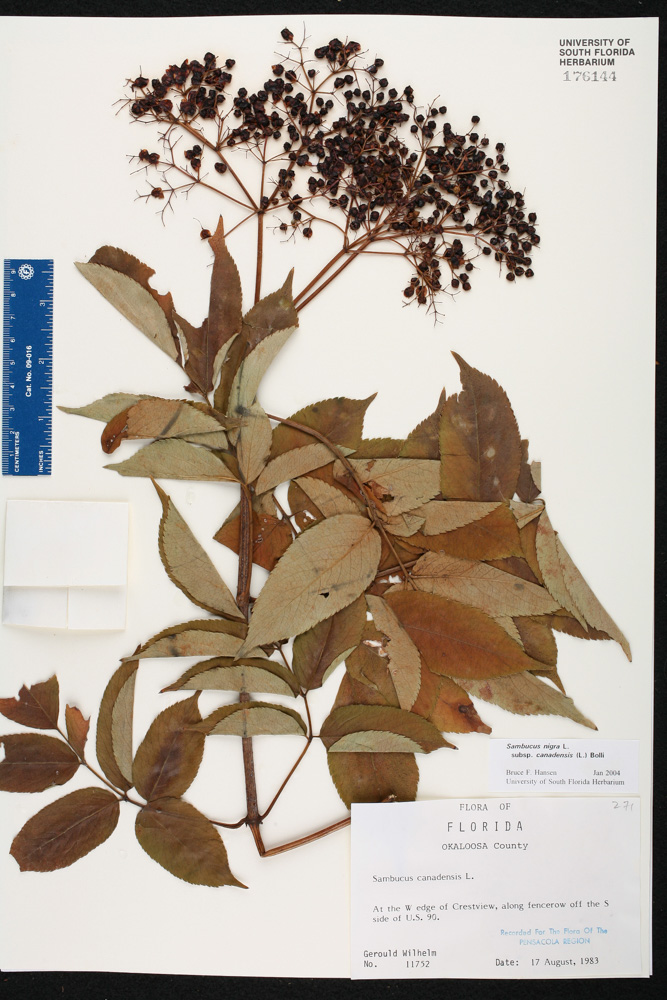
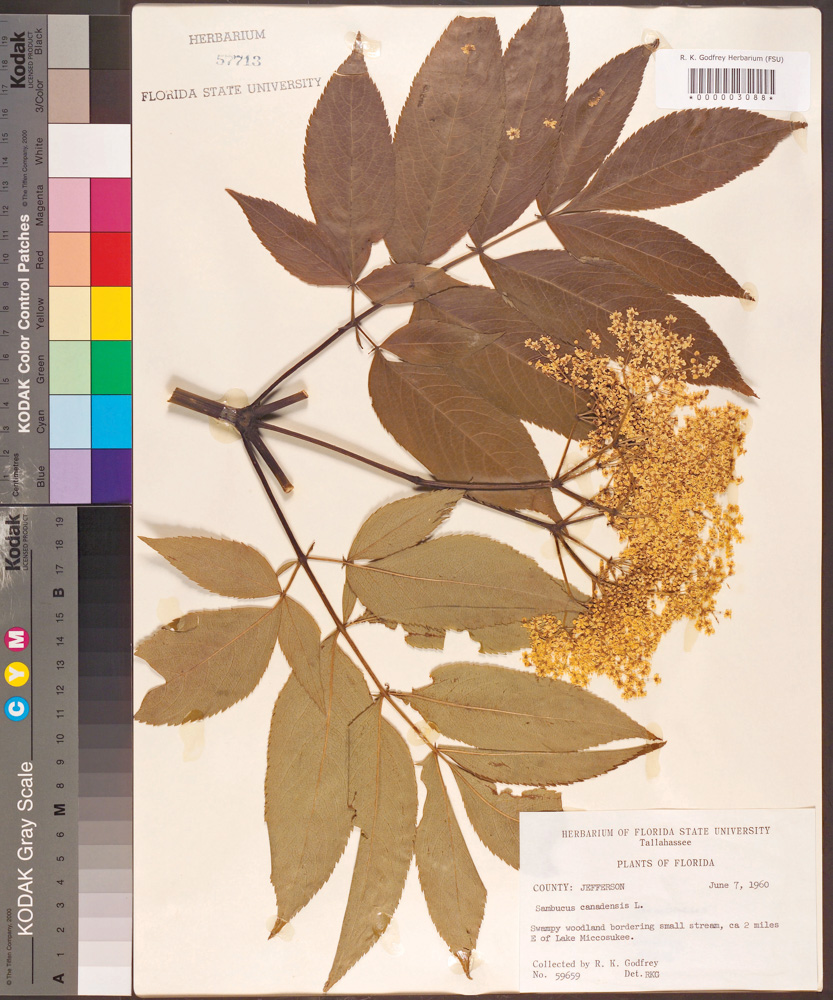
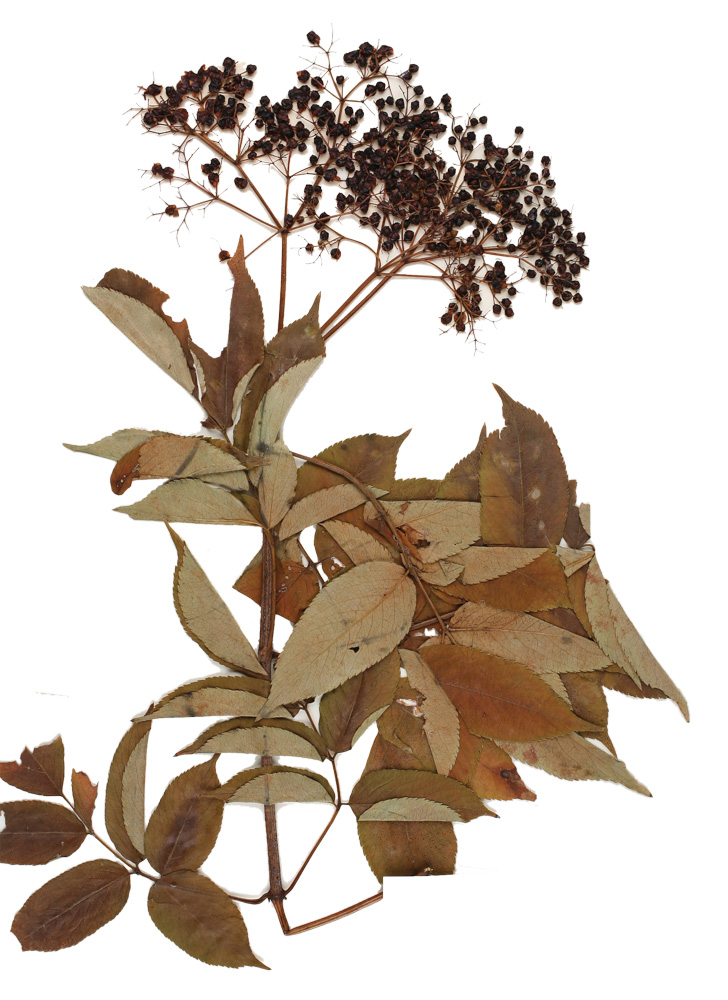
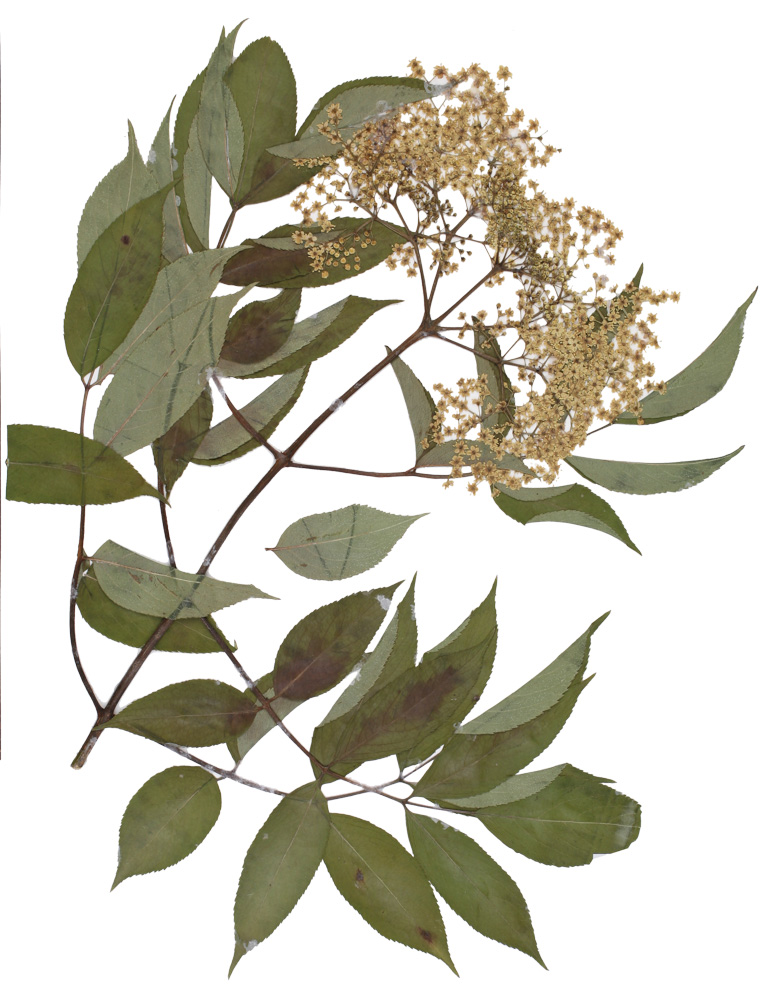
I have to start by saying that herbalists don’t treat, diagnose, or cure. We work with people holistically to bring about better health and wellness. One of the most common natural remedies that people ask for that I make is elderberry syrup. People are always seeking relief for a flu or cold or looking to not get sick in the first place. Our syrup is handmade using organic elderberries and local honey. I also add other herbs to help ease common symptoms. The elderberry is one example of a powerhouse herb that is readily available and it’s been shown to shorten the duration of a flu or cold. One of the most common things that people ask for help with is detoxing. I don’t recommend that people detox in general and I don’t like to use that word. It implies that we’re toxic. The body is designed to naturally purge or get rid of unwanted toxins. I think wanting to detox comes with our fear of death. It’s like eating bad food your whole life, then wanting to take a pill or potion to undo a lifetime of bad food choices. Life is a journey to be traversed and good health and longevity are a cumulative effort of better choices all along the journey. Good sleep, exercise, and good food are the best medicine of all. When someone asks me about detoxing, I try to find out what it is they want to get rid of in their life. If appropriate, I may suggest herbs to help support one of the organs like the liver to function better.
“We have the power to take control of our own health and we have the ability to make our own natural remedies. This knowledge has been passed down for thousands of years.”
Name a few of the must-haves and staples in your apothecary with a brief description.
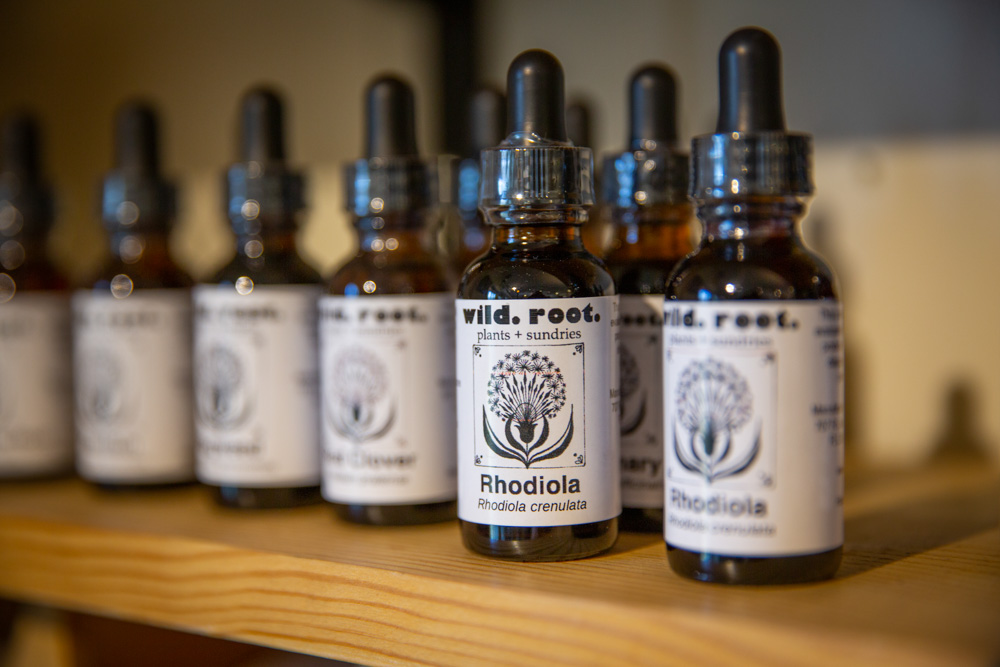
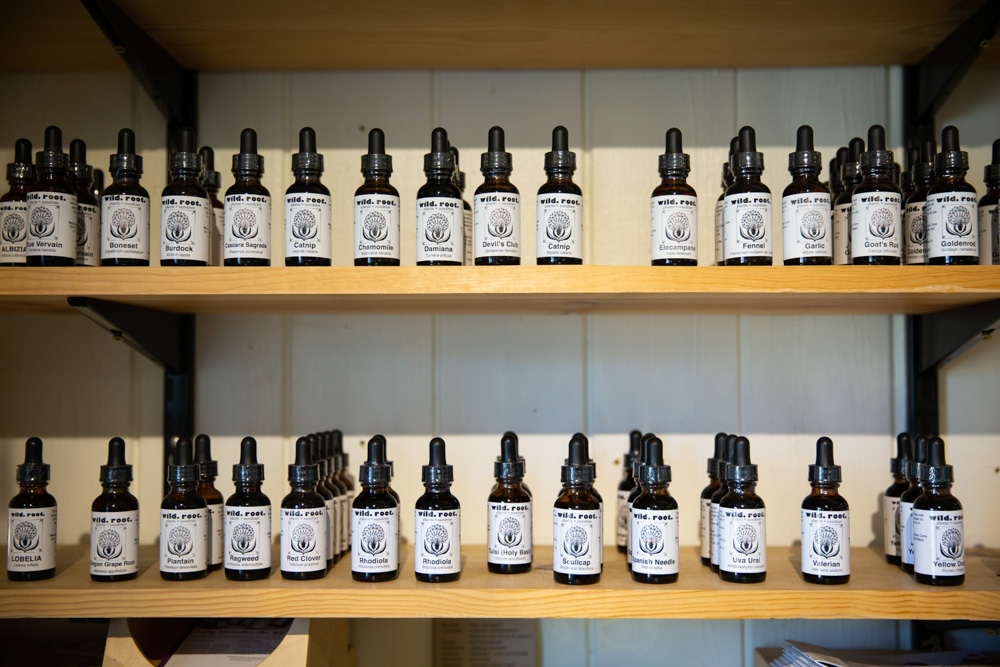
There are a few Chinese traditional patent formulas and simple Western herbs I always keep on hand. These herbs are for digestion, trauma, and anxiety, things we all experience. For basic overindulgent digestion issues, my go-to is Bao He Pian. This is a simple formula that contains an herb called hawthorn. Western herbalists traditionally use this herb for heart-related issues, but it is also used for digestive issues in TCM. In a pinch, fennel seed or a piece of citrus peel can help ease an upset stomach. These are simple herbs that anyone can use and easily get. For trauma, I keep two things in stock and I’ve given these to many customers, as well as to my own family. One formula is called The Great Mender and it is typically used for physical trauma. It could also be given to someone in shock. I’ve used this formula multiple times and it has proven to be indispensable in my clinic. The other formula is for external use and I make this myself. It’s called Dit Da Jow. I have a couple of different varieties that I make with a variety of herbs soaked in alcohol and these are applied directly to an injury to assist in recovery. I make a general formula to help some people who may suffer from anxiety or overactive minds. I wouldn’t give these to everyone, only when appropriate because this formula can also act as a sedative. We make this as a tea in the coffee bar and also as an herbal extract. It contains scullcap, wood betony, chamomile, catnip, and peppermint. I’ve used a small dose of this formula to also help with minor stomach upset. Lastly, I wouldn’t go without Albizia julibrissin, also known as mimosa or Persian silk tree. This is considered an invasive plant in Florida, but its healing properties are incredible. I make my own herbal extracts from the flower and the bark every spring. This is called the Happiness Tree in Chinese herbalism and it can assist in relieving anxiety, depression, and stress.
What does your work consist
of? How do you work with your clients?
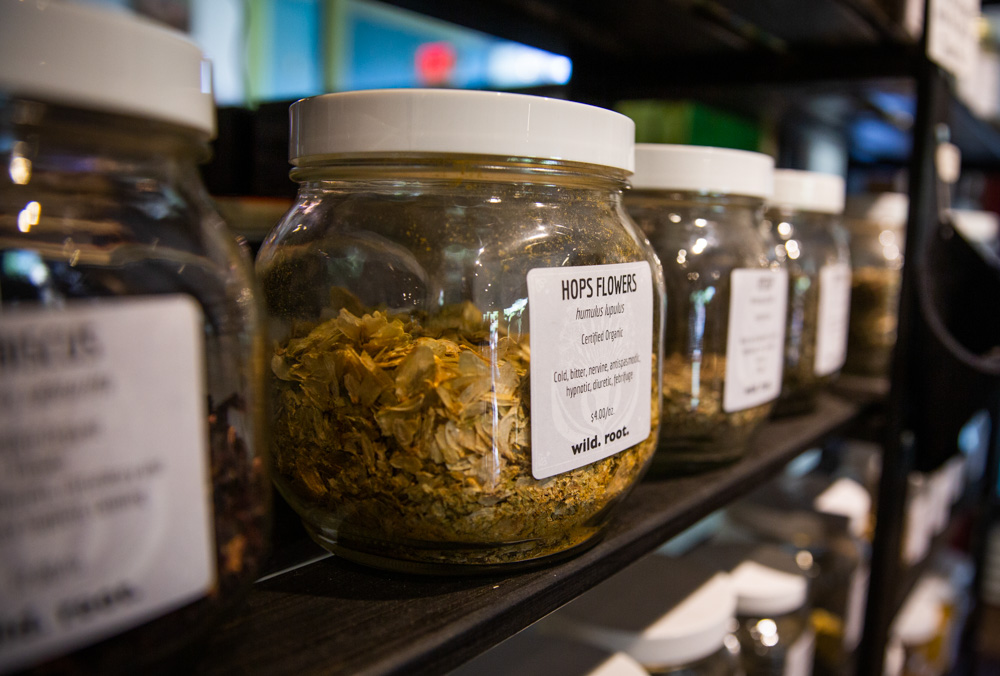
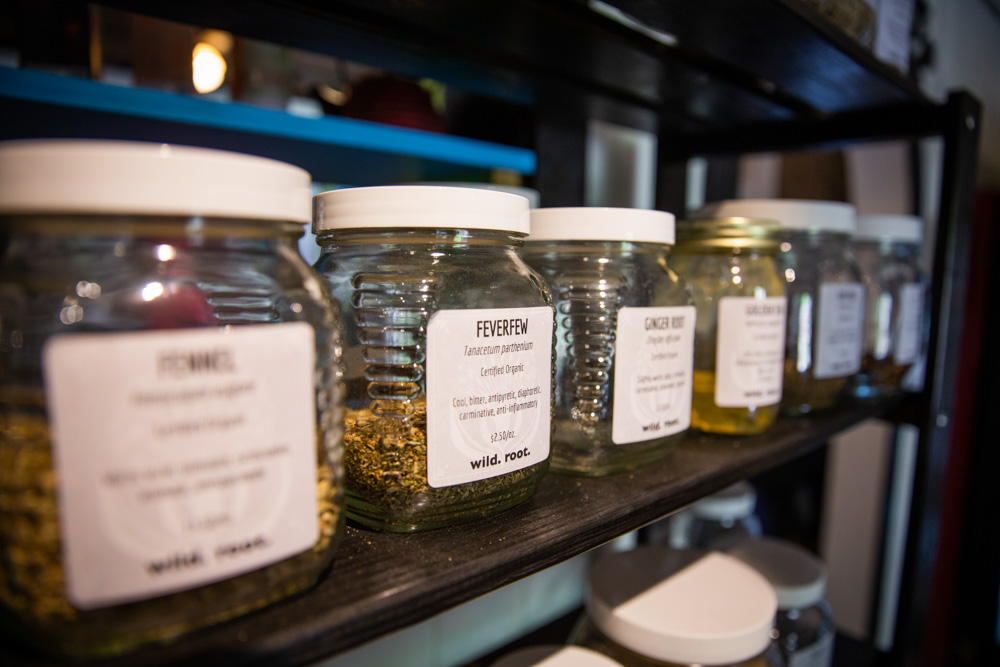
I use a variety of Chinese, Ayurvedic, and Western herbs in my practice. I make suggestions for herbal formulas that I think are the best for the condition presenting itself. I often see suspicion from customers about taking Chinese herbs. I understand people’s concerns about safety, though we research and stand behind what we carry. When you see a skilled herbalist, they are usually going to suggest a combination of herbs. These can be in the form of whole herbs to make a tea, patent Chinese formulas where the herbs have been ground and compressed into tablets or teapills, powders or granules to be taken in water, or tinctures which are herbal extracts. The herbalist will try to give the herbal formula in the form that will yield the best compliance from the client, whether it’s a tincture or tea, or in other form. I think there is also a misconception that all Chinese herbs are somehow dangerous and Chinese herbalism is a mysterious practice. In a very basic context, it is simply a way to energetically define an illness and give herbs with the appropriate energetics. Chinese herbalism has a long history behind it and a very diverse and expansive herbal library. You’ll see a lot of things like bark, roots, seeds, berries, flowers, and minerals.
Are there any disadvantages to trying natural remedies?
They obviously also have side effects….
One disadvantage of trying natural remedies is that if the person doesn’t take into consideration the energy of the herbs and the constitution of the person and their illness, the herbs may not work or they could potentiate a problem. A trained herbalist can help with choosing appropriate herbs and dosing. Sometimes, it takes a few tries to get the appropriate formula. There are some herbs that can cause adverse effects when taken with medication. This is not something to fear, but caution and knowledge of these interactions is crucial and important when taking an integrative approach with Western medicine.
 How time-intense is the growing of your plants and which plants do you grow?
I have a tough-love policy around my yard. My plants thrive on neglect. I have some perennials I’ve planted over the years like rosemary, bananas, Meyer lemon, bay, and vitex, but I also keep a small bed of a few veggies and culinary herbs. I love to see what comes up in my yard that’s wild and discover what I could potentially use it for.
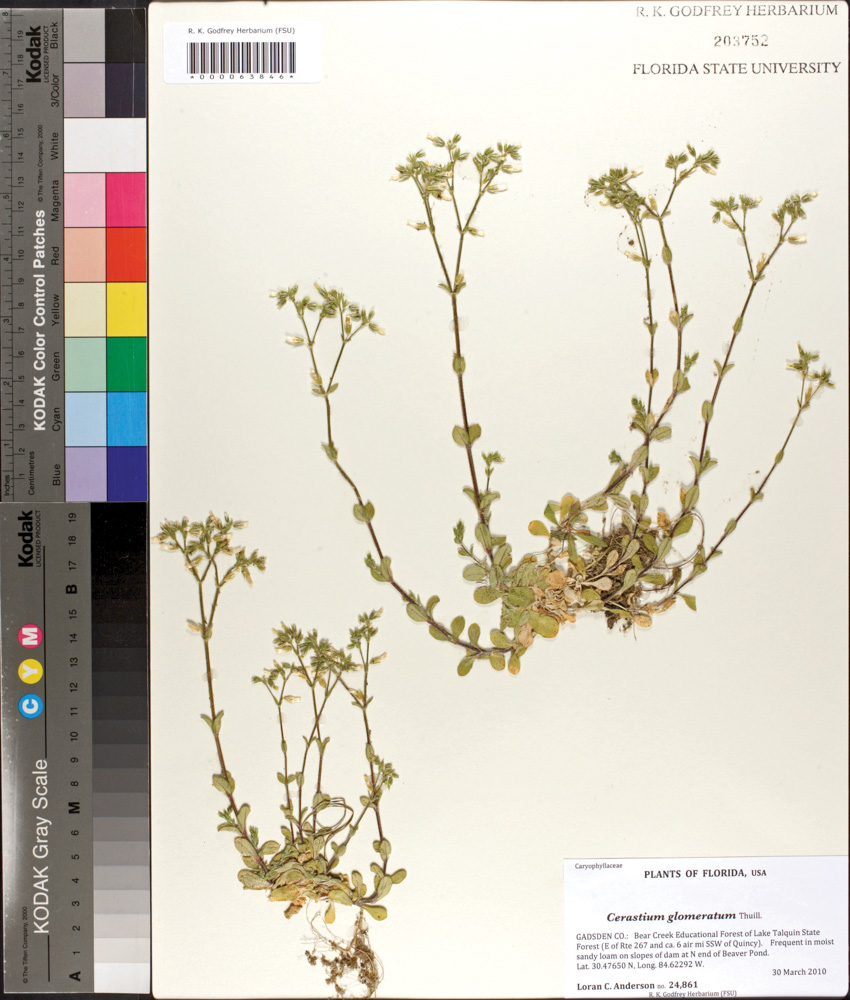
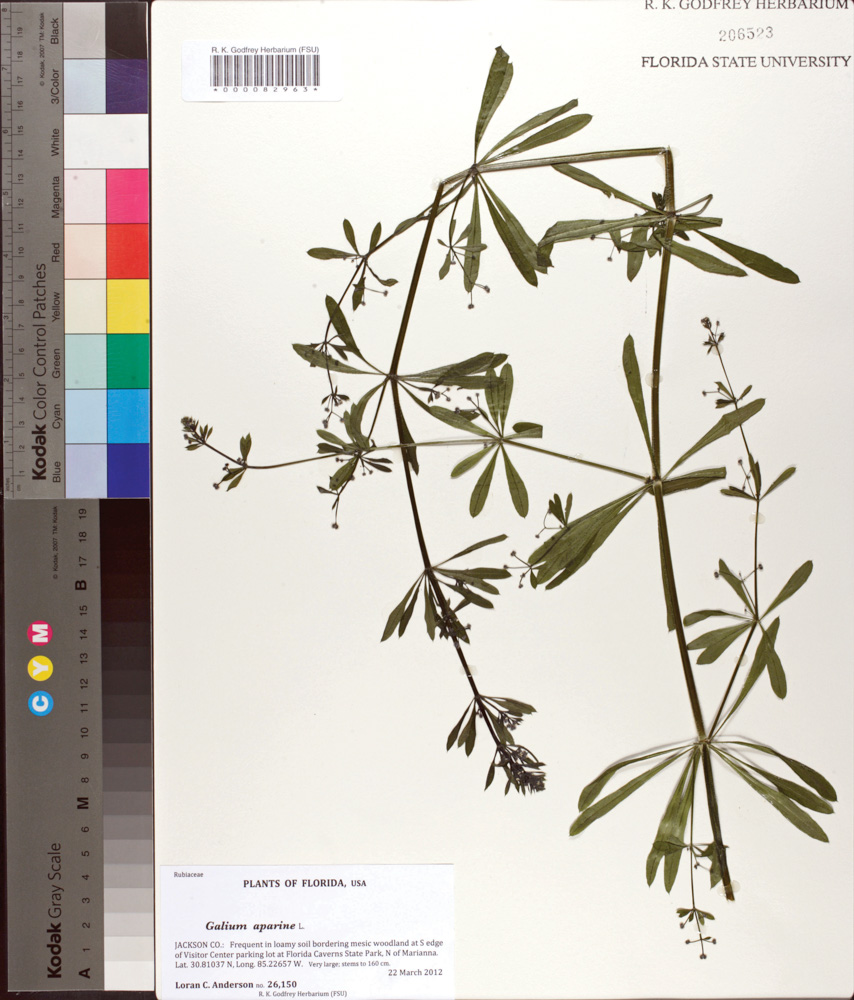
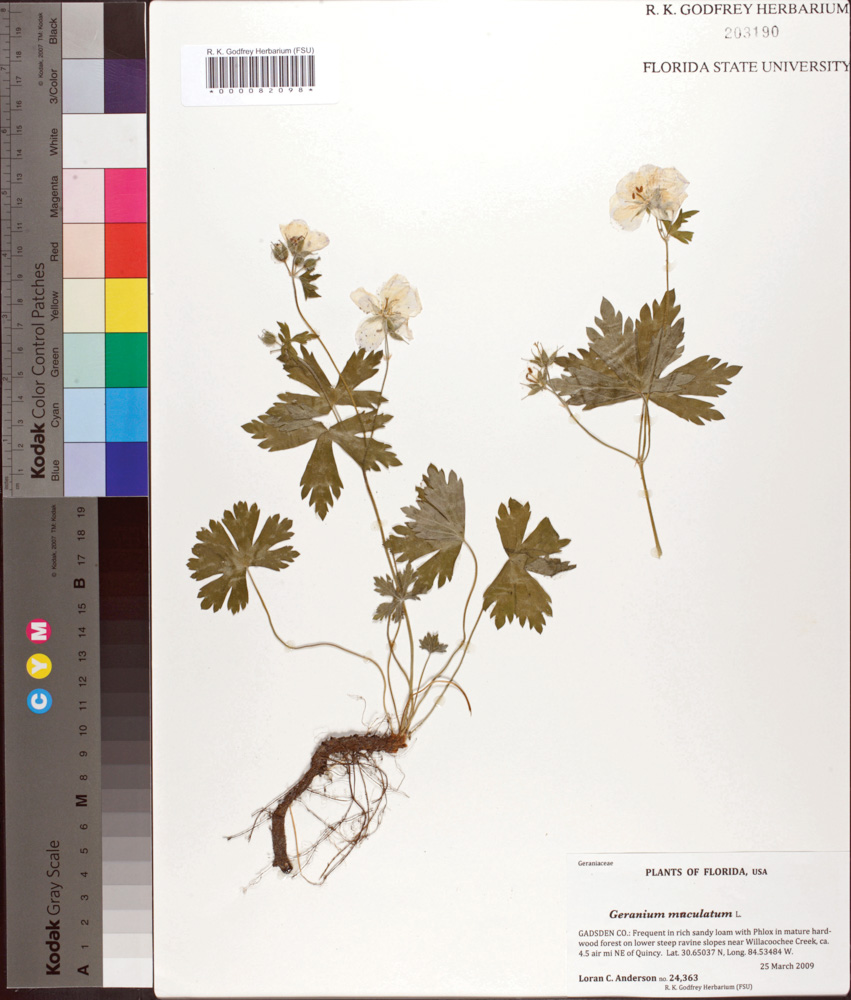
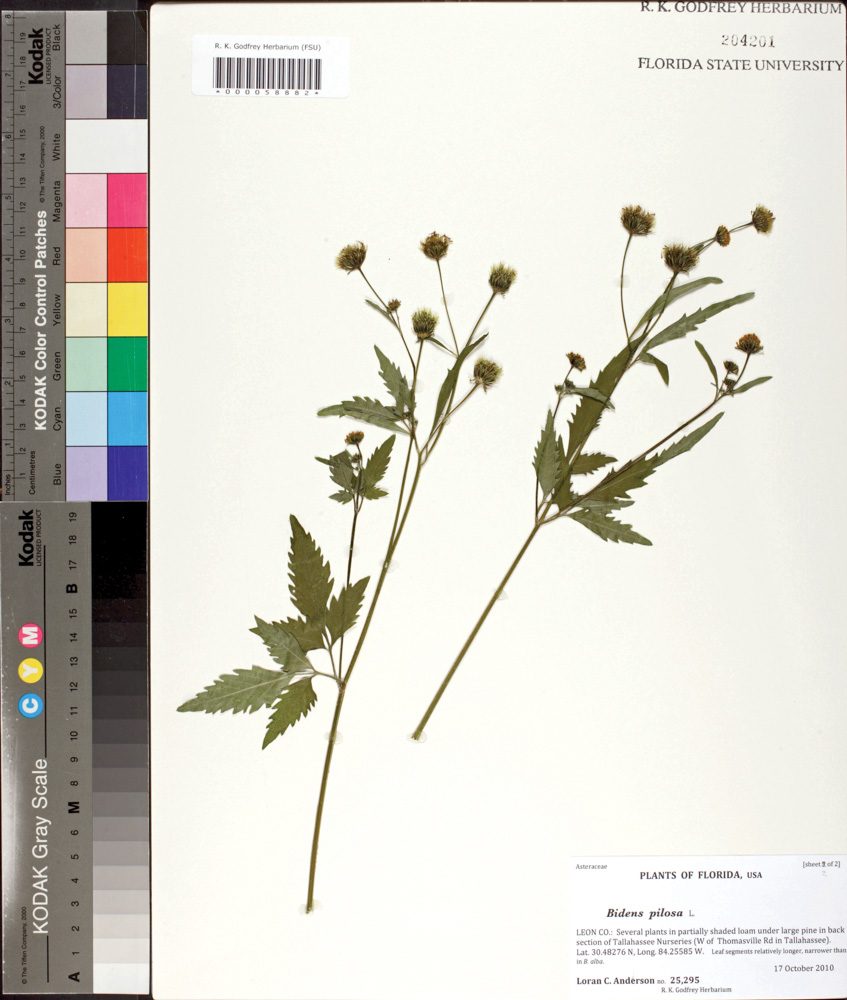
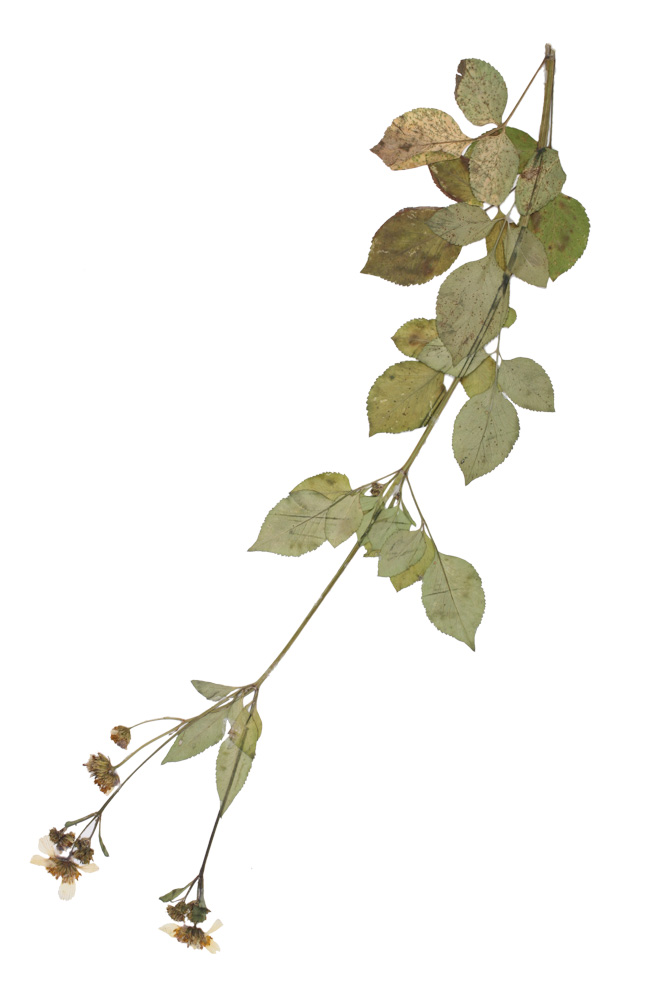
Here in Northwest Florida, there are plants that come up in spring that are great medicinals, like plantain, chickweed, cleavers, wild geranium, and Spanish needle. Some might consider them as weeds.
What are your thoughts on store-bought supplements vs. home-grown remedies?
We all want convenience now. We want that one thing that’s going to cure what ails us and not have to do any of the work of changing our diet or lifestyle. Chronic illnesses usually take years to develop and they can’t be undone in a single day. I think supplements have a place if you have a specific deficiency that you can’t get from food, but ideally, we should be getting our nourishment for healing in a whole form like food or herbs. Herbalism is the people’s medicine. I like to remind people that they need to be their own health advocate. We have the power to take control of our own health and we have the ability to make our own natural remedies. This knowledge has been passed down for thousands of years. I believe there is added value and benefit to making your own herbal remedies or using remedies that are made with intention by an herbalist. Healing comes with the mindfulness and intention of what one creates and consumes.
What are your thoughts on vitamins and supplements in general?
I think they have their place if for some reason a person isn’t able to get the nutrients they need from foods and herbs. I think this just depends on the specifics of each vitamin and supplement and the manufacturer. In general, I think the quality is questionable for a lot of products. Certain things like herbs ground up into capsules that have been sitting on a shelf have probably lost a lot of their properties over time. Even with dry bulk herbs, they need to be rotated regularly and protected from heat and light. Once most herbs are ground up, they are more exposed to oxygen and their potency starts to decline.
Everyone talks about CBD nowadays. What are your thoughts?
CBD is really taking off now and there is a lot of hype surrounding its benefits. Some people have great results with CBD. I think the popularity of CBD has been beneficial for the herb world because it has opened people’s minds to the healing power of herbs. I see the same thing with essential oils. This is all plant medicine. Cannabis is just one plant. It has its benefits and limitations. I hope that people continue to learn and be open to exploring all the plants and herbs we have available to us. Two comments or concerns I have with CBD is the cost relative to all the other plants we have available for healing. Also, the perpetuating idea that it is a cure-all.
What do you think about the legalization of marijuana?
I don’t have any problems with it except for the two things I mentioned above. I personally never felt like the plant spoke to me. Yes, plants pick people. It’s not something I use, but I want to have access to it, if I need it. There are other herbs that are very useful that have become illegal or are in danger of being illegal and that’s unfortunate for the herbal community. In Traditional Chinese Medicine, marijuana is considered heating to the Liver (TCM organs) and can cause derangement of the Shen (spirit of the heart). Heating to the Liver sounds unusual, but it is a way of describing in TCM the condition of our individual bodies. Ideally, we want to be in homeostasis or balance. TCM uses words like dry, hot, and cold to describe a condition or someone’s constitution. A simple way to understand this concept is to think of a burn. If you’ve burned yourself, it’s hot, so you want to cool the burn down with cooling herbs. The same is true for the Chinese system of organs like the Liver. The TCM concept of the Liver incorporates all the functions of the Liver as we know it and more. We use capital letters to distinguish between talking about the concept of organs’ fiction according to TCM. In my practice, marijuana is not something I would recommend on a regular basis, unless it seemed like the only option.
What health tips or small, simple changes could our readers make at home to live a healthier life?
Get good sleep, seven to eight hours a night. The body goes through cellular repair when it’s resting. Drink plenty of water. Water can reduce pain, help digestion, and clear the skin, among other things. Get 15–20 minutes of sunshine a day. Spend time in nature. This has been shown to reduce feelings of depression and anxiety. Eat the best quality, whole food, you can afford. It’s a worthwhile investment. Eat lots of vegetables, some fruit, good-quality protein, and a variety of different kinds of foods. Stay away from sugar, fried foods, and processed foods. Incorporate simple herbal teas into your diet. Herbs that help reduce stress—aka adaptogens—are a good start, for example, reishi, ashwagandha, tulsi, and rhodiola.
What herbs do you personally take?
I believe herbs should be thought of as food. There are also the herbs we take for more serious healing. The herbs I take on a daily basis change over time and through the seasons. During flu and cold season, I take a traditional Chinese formula called Jade Screen. It’s three simple herbs that help boost the body’s natural immune response. I practice martial arts. I’m older than my teacher, so I need all the help I can get. For this I take specific herbs to help with flexibility, breathing, and joint health. I’m also a big fan of adaptogens. These are herbs that help the body deal with stress and aging. Some of my favorites are Reishi, Cordyceps, Rhodiola, Tulsi, and Ashwagandha. Most of the herbs I take are in the form of decoctions (teas) or tinctures that I’ve made myself. I really enjoy the process of medicine-making and find that there are benefits in the process of creating. It’s about slowing down and finding time to help the body repair. One of my herb teachers says the ultimate Yin (all the parasympathetic functions) restorative is sleep. Dr. Peter Attia, M.D. says the best medicine he has found is good sleep, good food, and good exercise. Herbs help people live better lives, and they can work like magic, though good health takes work.