
HEALTH HACKS


L I V E A H A P P I E R , H E A L T H I E R , B A L A N C E D L I F E
Turning your back on fast food, exercising, getting enough sleep, … it all sounds great. If you nod enthusiastically but your reality looks different, you are not alone. Only a few of us can follow healthy lifestyle rules consistently and there certainly does not seem to be a one-fits-all solution for a healthy lifestyle.
How can you keep up good habits? First of all, don’t feel bad every time you eat sweets instead of lettuce, or if you drink the cocktail instead of the green tea, or if you sleep-in instead of doing exercises. It’s okay to skip the health routine every now and then.
But if at the end of the day you find yourself sitting in front of the TV with a take-out or warmed up meal in one hand, scrolling down your
timeline with the other hand while watching your favorite show with one eye, then you should change a few things. Can you really taste your food this way? The following day, will you remember what you had to eat? And clearly, the eating in this situation should have been your main happening, something that you enjoy and savor.
On the following pages, we have compiled a few health hacks for getting your life on the health track. They are easy, they are fast, and they all aim to promote health and mindfulness. What do you do for a healthier, happier life? We would love to hear about your health tips and experiences. Write an email to healthy@panamacitylivng.com
STRESS AND ITS FACTORS
Certain situations can make you nervous, cause your blood pressure to rise, make you uncomfortable, and set free stress hormones. Your body goes into “need to flee” mode. Some people work well under pressure. But for how long? The first step to fight anxiety and stress is to find the cause and recognize the stress triggers in your life. We have all heard about the Wall Street broker who be- came a happy farmer… removing yourself from a stressful job or life is one way to in- crease your life span and add quality to your life. The alternatives; learn to deal with stress or try to diminish it at is happens. Certainly, some of us have jobs or situations at home that put them on edge all the time–think of the mom with four small kids and a barking dog, think of the Realtor who faces a market downturn while going through a divorce. When do your shoulders start cramping? When and why does your body get tense and what can you do about it? Being aware of the stress triggers might help you find a solution.
STEPS TO A BALANCED LIFE
Removing yourself from a situation might be the best advice to avoid stress and anxiety. Why deal with a stressful situation unless you absolutely have to?
GET ORGANIZED
Put yourself on declutter-mode and toss out all the items you have not used or worn in a year. How does this help stress? It gives you a sense of order and inflates your mindset. When your life is organized and free of unnecessary ballast, you will feel in charge and less vulnerable to outside stress factors.
FIND PEACE, JOY… OR OUTRAGEOUS LAUGHTER
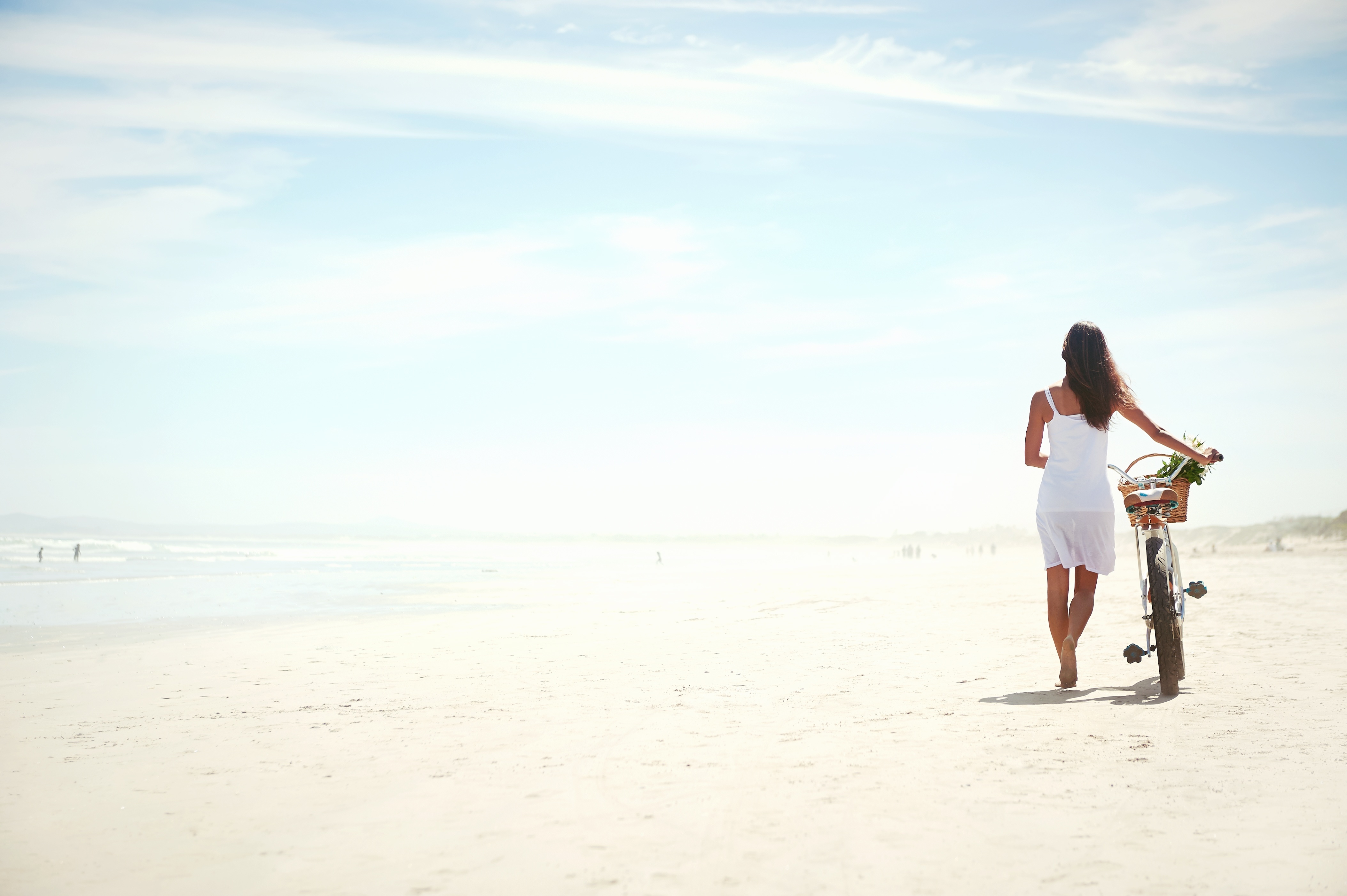
Whether you tend to your garden, take a walk on the beautiful Northwest Florida beaches, or watch your favorite comedy–all these activities are healthy. The Mayo Clinic explains the health benefits of laughter:
“A good laugh has great short-term eff s. When you start to laugh, it doesn’t just lighten your load mentally, it actually induces physical changes in your body. Laughter can: Stimulate many organs. Laughter enhances your intake of oxygen-rich air, stimulates your heart, lungs and muscles, and increases the endorphins that are released by your brain. Activate and relieve your stress response. A rollicking laugh fires up and then cools down your stress response, and it can increase your heart rate and blood pressure. The result? A good, re-laxed feeling. Soothe tension. Laughter can also stimulate circulation and aid muscle relaxation, both of which can help reduce some of the physical symptoms of stress. Laughter isn’t just a quick pick-me-up, though. It’s also good for you over the long term. Laughter may:
Improve your immune system. Negative thoughts manifest into chemical reactions that can affect your body by bringing more stress into your system and decreasing your immunity. In contrast, positive thoughts can actually release neuropeptides that help fight stress and potentially more-serious illnesses.
Laughter may ease pain by causing the body to produce its own natural painkillers. Increase personal satisfaction. Laughter can also make it easier to cope with difficult situations. It also helps you connect with other people. Improve your mood. Many people experience depression, sometimes due to chronic illnesses. Laughter can help lessen your depression and anxiety and may make you feel happier.”
UNPLUG
We are conditioned to instantly look and react when our technology peeps and beeps. Email, text messages, news, weather, and price alerts, and your ever-present social media updates, timelines, and friends’ reality feeds… have you ever considered how much time you spend listening to, reading, or watching meaningless information? Here a few tips to help you unplug from technology:
- Do not keep your cell phone by your bedside. Your sleeping area should be free of all technology. If you use your phone as an alarm clock, purchase a battery operated alarm clock instead.
- Mind your manners and put technology away every time you meet one person or several
- Whether it’s the family, work, or friends. When you are around real people whatever is going on in the virtual reality can wait.
- Put your phone away during lunch, enjoy your meal, and don’t multitask. Just simply don’t.
- Filter your messages and use your common sense when looking at social media and other feeds. Ask yourself what is important. Surely the latest Hollywood news is only half true anyway and do you really need to watch the latest crime feed five times?
If you need inspiration and motivation to unplug, there is a series of TED talks that will do the trick. Go to www.ted.com and look for “Talks that’ll inspire you to unplug.”
RUN OR JUST WALK
It’s a misconception that you need to break out in sweat to exercise effectively. A fast-paced or leisure walk or swim will get your metabolism going, will help you digest your food better, and will increase your body’s intake of oxygen. Just take the time and do it frequently. Here are the latest findings on walking vs. running:
“While walking can provide many of the same health benefits associated with running, a growing body of research suggests running may be best for weight loss.
Perhaps unsurprisingly, people expend 2.5 times more energy running than walking, whether that’s on the track or treadmill. Translation: For a 160-pound person, running 8 mph would burn over 800 calories per hour compared to about 300 calories walking at 3.5 mph.
Plus, running may regulate appetite hormones better than walking. In another study, after running or walking, participants were invited to a buffet, where walkers consumed about 50 calories more than they had burned and runners ate almost 200 calories fewer than they’d burned. Researchers think this may have to do with runners’ increased levels of the hormone peptide YY, which may suppress appetite.
But aside from weight loss, walking has definite pros. Researchers looked at data from the National Runners’ Health Study and the National Walkers’ Health Study and found that people who expended the same amount of calories saw many of the same health benefits. Regardless of whether they were walking or running, individuals saw a reduced risk of hypertension, high cholesterol, diabetes, and improved better cardiovascular health.
And running does have downsides: It puts more stress on the body and increases the risk for injuries like runner’s knee, hamstring strains, and shin splits (which plague even the most consistent runners).”
(Source: https://greatist.com/fiss/walking-good-workout-running retrieved on February 12, 2018)
TAKE A MOMENT
Sort your thoughts, schedule your day, and just take a moment to breathe deeply and think about something that makes you happy. Also, importart is to preserve beautiful moments… the latest research shows that taking a photo will do the opposite. Read this article online to keep your moments memorable: www.ideas.ted.com
TAKE A COLD SHOWER
A shower is cleansing and relaxing and often the first thing to wake all senses in the morning before your coffee. But think beyond the hot shower.
Taking a cold shower is the thing to do to get invigorated as it instantly improves circulation, boosts metabolism and immunity, and really opens your eyes and mind… immediately.
In Europe, hydrotherapy was popularized by a Bavarian priest, father Sebastian Kneipp (1821– 1897).
“Sebastian Kneipp was born to a poor family in Stephansreid, Bavaria, on May 17, 1821. He initially took up his father’s trade of weaving, but longed to become a priest. With help from a sympathetic clergyman, he was admitted to high school as a mature student, but after five years of intensive studies, Kneipp became seriously ill with pulmonary tuberculosis . At that time, the disease was usually fatal, but Kneipp came across an eighteenth-century book about hydrotherapy that inspired him during the winter of 1849 to immerse himself several times a week in the icy Danube River. These brief exposures to cold water seemed to bolster his immune system because Kneipp’s tuberculosis went into remission and he was able to continue his theological studies in Munich. There, he convinced some of his fellow students to join his experiments with hydrotherapy. Kneipp was ordained as a priest in 1852. In that capacity, he began using hydrotherapy to help some of his poorer parishioners. He broadened his approach to include herbalism, exercise, and other elements, and toned down his initial enthusiasm for shocking the body with cold water. “I warn all against too-frequent application of cold water,” he later wrote. “Three times I concluded to remodel my system and relax the treatment from severity to mildness and thence to greater mildness still.”
Kneipp’s reputation grew after a number of dying patients recovered when he was called to administer last rites and managed instead to restore them to health. In 1855 he was assigned to Worishofen, a village in the foothills of the Bavarian Alps that soon developed an international reputation as a place of healing. Kneipp summarized his teachings in two popular books, “My Water Cure” in 1886 and “So SolltIhr Leben” (Thus Thou Shalt Live) in 1889. Supporters of his techniques formed Kneipp Societies in Germany and the United States.”