
Hand Cattle Farm


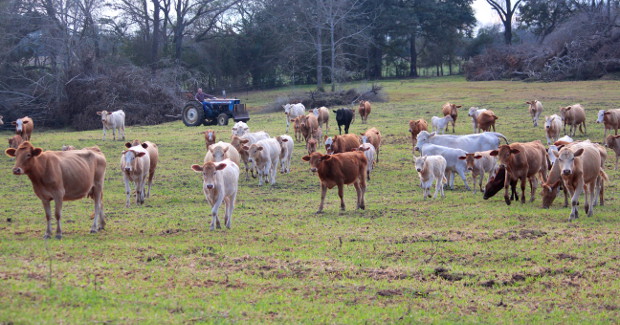
Nestled just outside the sleepy village of Westville, Florida, between DeFuniak Springs and Bonifay, sits 210 acres of prime rolling hill farmland. The property, owned by Joe Hand and his wife of 48 years, Jeanne, operates under the name Nature’s Hand Cattle Company. It has been in his family going on five generations.
Unlike most cattle operations today, the Hand’s herd of about 110 cattle, including two bulls, are completely grass fed. When there isn’t enough grass, they are fed a combination of hay grown on the farm and grass, which creates less fatty and uniquely flavored beef. The Hands use no antibiotics or hormones on their animals either. “Not only did we want cows to sell but we wanted to eat the beef ourselves,” he said. “We sample every animal we slaughter for quality. If it’s not good enough for us to eat, we are not going to sell it to someone else. We feel good about that.”
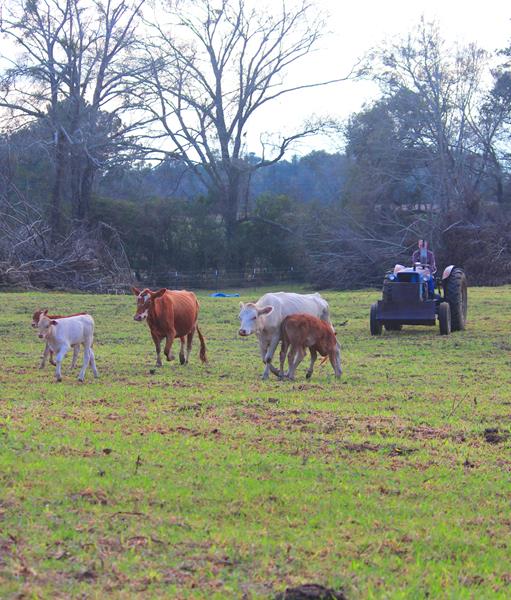 The Hands raise only cattle that are born on the farm and have been doing that for more than 15 years. They don’t want to introduce any cattle that might contaminate their healthy herd. The practice has also helped them create a rather unique breed. “We have our own breed that we’ve been developing through the years,” Joe said.
The herd was started long ago with a mixture of Black Angus, Beefmaster (a cross of Brahman, Hereford and Shorthorn), Simbrah (a cross of Simmental with Brahman) and Charolais cattle.
“We’re aiming for the length of a Beefmaster with the height of a Charolais,” he said. “We’ll get more beef that way.”
“And it seems to be working,” Carolyn said. Little by little many of the cows have the red heads typical of a Beefmaster and the cream colored body of a Charolais.
The cattle are not kept in feed lots, but instead allowed to graze in the pastures. Bulls are free roaming which means there are always young calves and steers in the herd. Pristine spring water pumped from a 150-foot well provides all the water for human and animal consumption. “The cows will die of old age on our farm before anything else,” Carolyn said.
Mainly the steers are sent to slaughter, but sometimes a heifer is, too. Eventually the Hands would like to be able to slaughter 35-40 cattle annually. “Last year we only managed to slaughter about half that amount,” Carolyn said. “Some of the meat is kept for the family, while the rest goes to market.”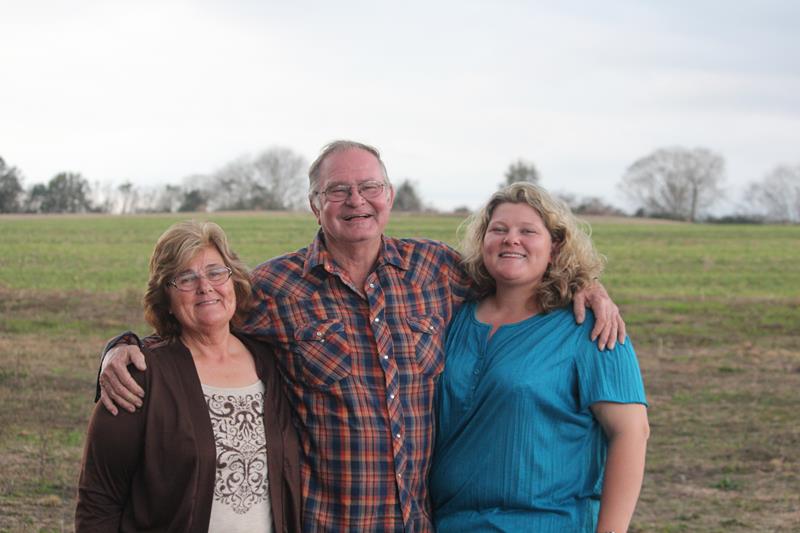
“Our family practices natural cattle management thus creating a low-stress environment for our animals,” Carolyn said. “These values are shared by our USDA processor where our beef is carefully packaged using preservative-free methods.”
Trained as a nuclear medicine technician, Carolyn joined her parents’ operation about three years ago from Central Florida where she was living and working full time. When she lost her job at the hospital where she worked due to downsizing in January 2013, she moved back home. “When I was let go, I figured it’s now or never,” Carolyn said. “I may not always agree with my brother and sister, but we share the same desire to keep this land in our family forever.”
While cattle have been raised on the land on a small scale over the years, it was mainly used for row crops and cotton farming until 30 years ago when Joe started building his existing herd.
Over the past year, Joe’s daughter, Carolyn Hand, has been gradually learning to take over management of the operation with her parents at her side. They hope to retire at some point and plan on supporting Carolyn in any way they can until that happens.
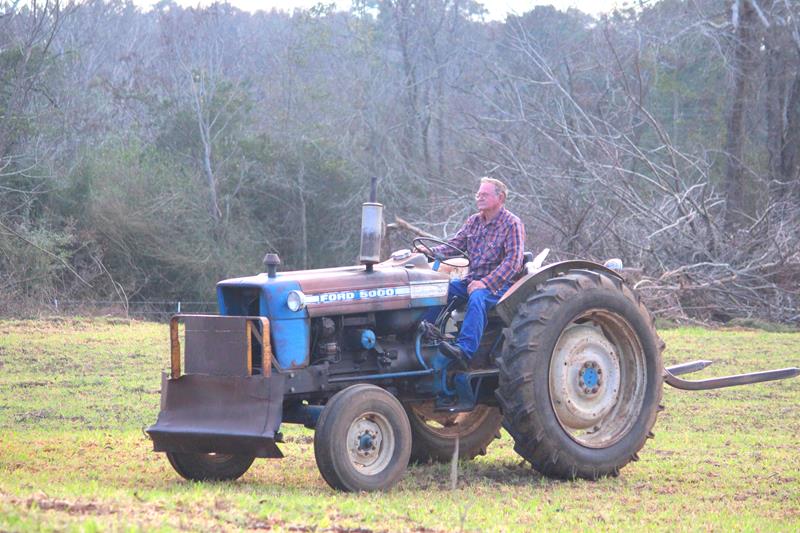 “We didn’t think any of our kids would come back to work the farm,” Joe said. “All three of them were raised here on the farm but eventually moved away and went to work in various medical professions.”
Through the years the Hands have become convinced that their ranching philosophy and practices of keeping the herd pure, using no hormones or antibiotics, is the best for human consumption. They point to recent beef recalls due to contamination and the trend toward eating more non GMO and organic foods as proof.
“I started eating organic a few years ago and have been teaching my parents about the benefits of a healthy diet,” Carolyn said.” Part of that comes from having seen so many people with cancer and heart disease through my job.”
Having grown up on the farm, Carolyn was somewhat familiar with the inner workings of the farm. However, she has had to learn much more of the specifics related to raising and selling cattle. Now she pretty much manages all the business aspects of the ranch and shares the hands-on responsibilities with her father. Jeanne helps out at the markets.
Carolyn’s older sister, Laurie, and younger brother, Ronald, continue to work in their chosen professions. Ron and Laurie have been supportive of the farm. Ron came up with the Nature’s Hand brand name and Laurie and her husband help with promotional and marketing materials from their printing business. Joe and Jeanne have fully supported their daughter and believe in her ability to make the ranch profitable. “She has educated me in the health benefits of what we are doing,” Jeanne said. “I think everyone should know what they’re eating and I think it’s sad that so many people don’t have a choice.”
By Carolyn’s estimates, making a profit probably won’t happen for another four to five years, making the operation pay for itself in possibly three years. “People think we’re making all this money, but we’re really not,” she said. “You don’t walk into this business and make money overnight. It takes years. You have to love it.”
By Diane Mercado[box type=”shadow” align=”aligncenter” ]Nature’s Hand Cattle Company Web site: www.natureshandcattle.com
Email: carolyn@natureshandcattle.com
Products are sold at:
• St. Andrews Waterfront Farmers Market, every other Saturday 8 a.m. to 1 p.m.
• Grand Lagoon Waterfront Farmers Market, every other Sunday 9 a.m. to 1 p.m.
• Destin’s Main Street Market (March-Dec.) 9 a.m. to 1 p.m. [/box]