
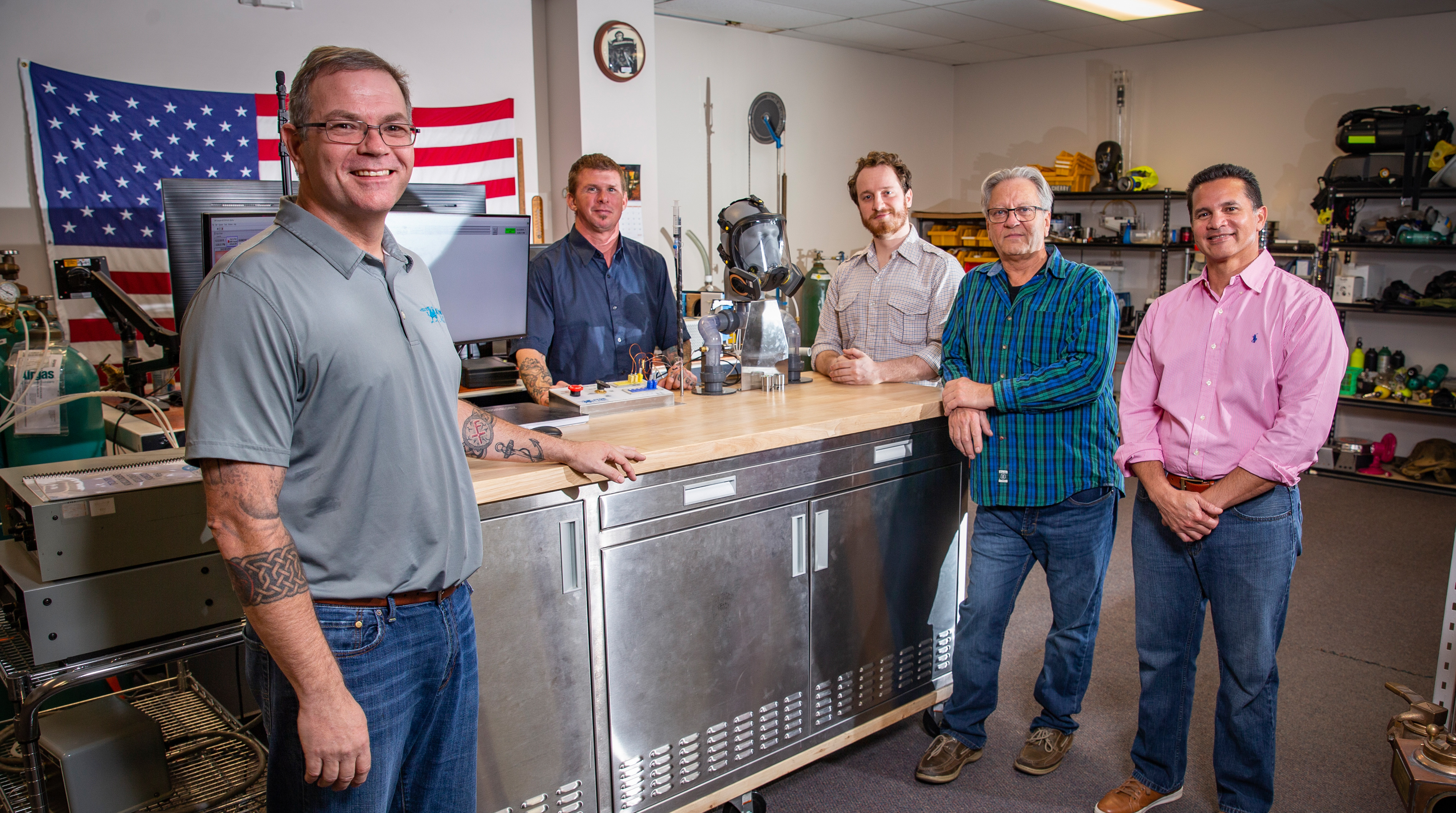
From Survival to Setting New Standards: The Founders of Mine Survival Inc. and ATOR Labs Talk Shop

BY VAL SCHOGER
PHOTOGRAPHY BY MIKE FENDER
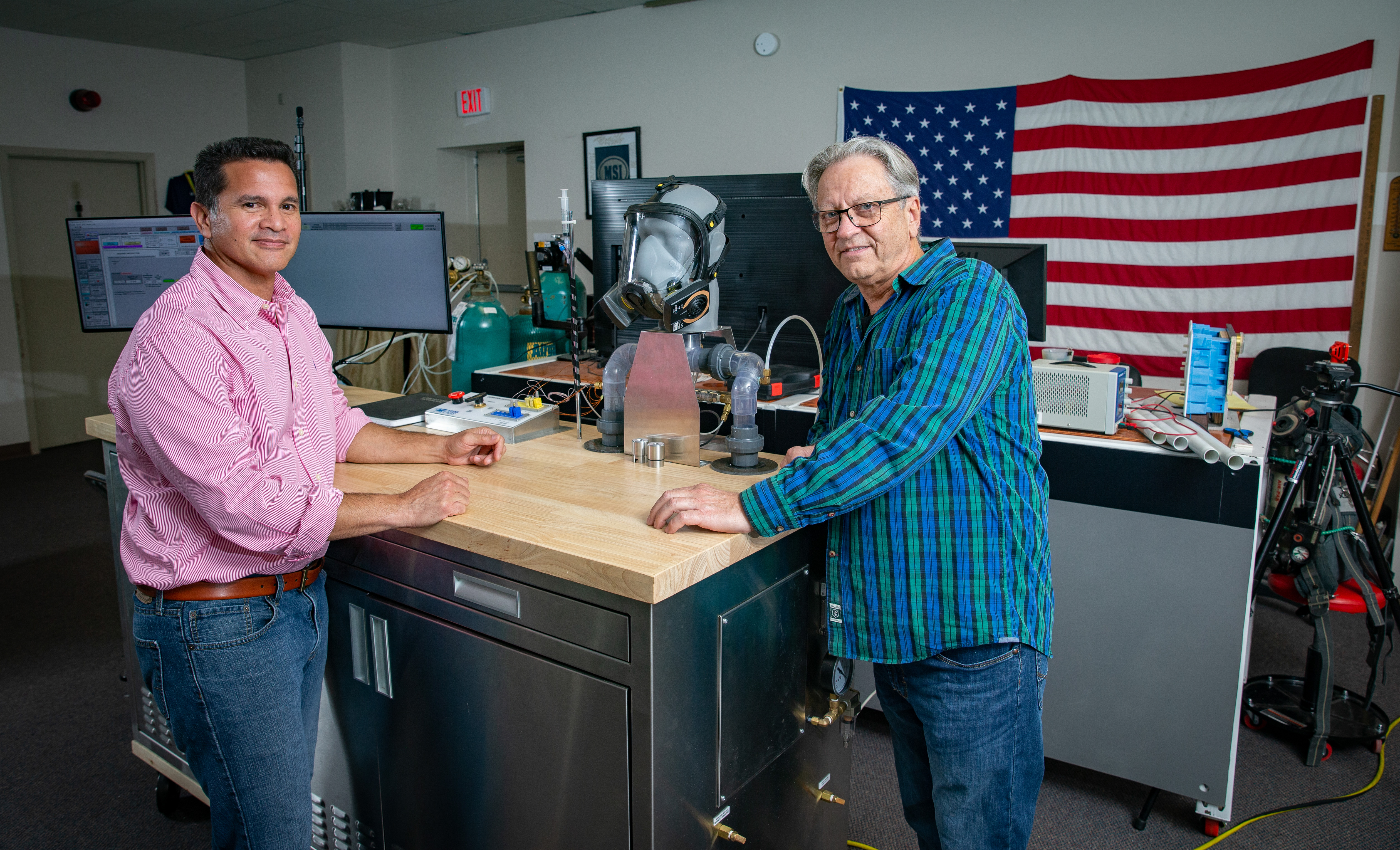
David Cowgill looks at his business partner, Rob Moran, as he speaks about the fundamental thoughts that defined their business ventures: “We wanted to make a better product,” he says about their development of a rebreather vest that helps save lives.
Moran adds, “The concept for it was that it would be comfortable and ergonomic to wear.”
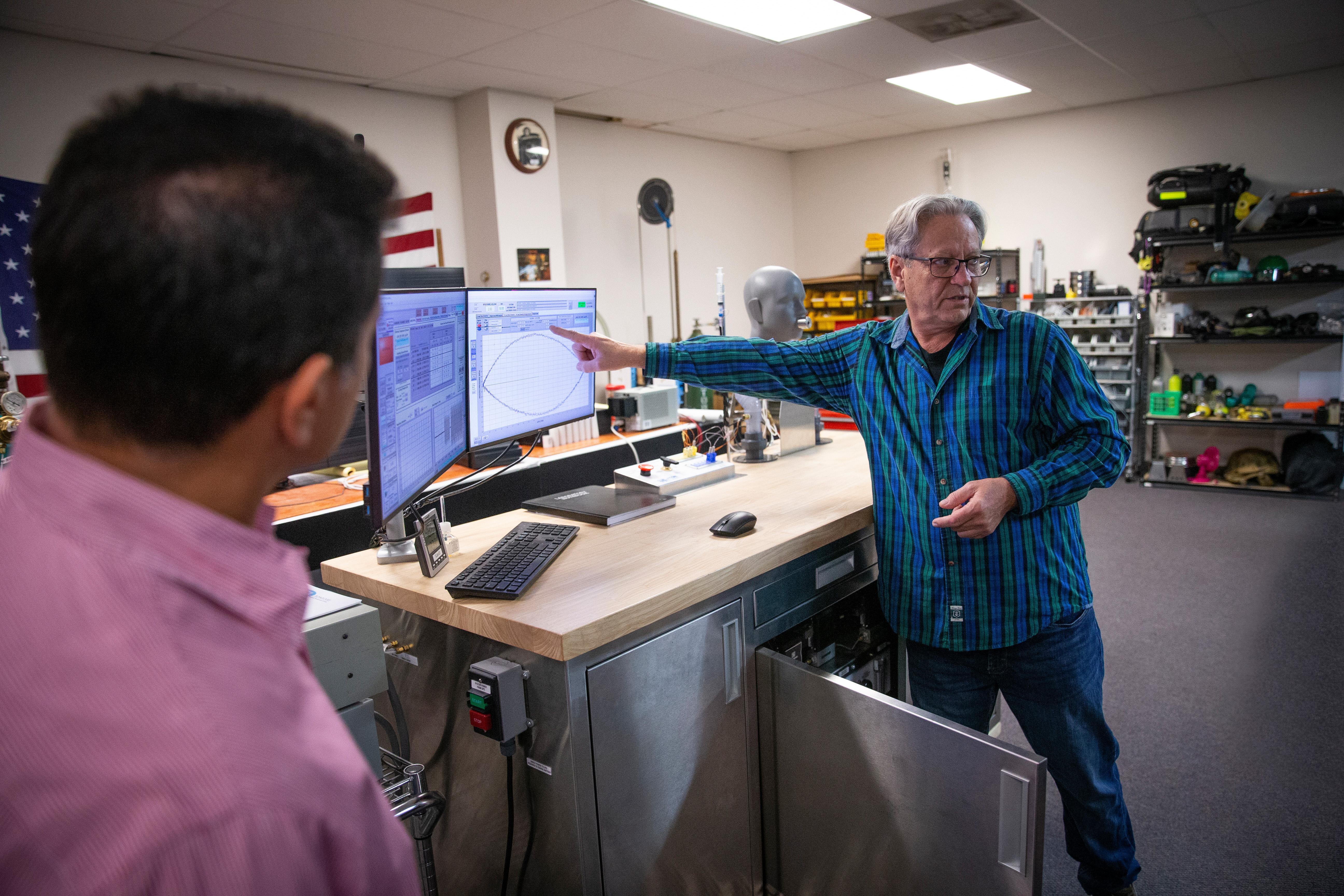
After years of working successfully together at the Navy base in Panama City Beach where Cowgill worked for the Navy Experimental Diving Unit and Moran’s duties included testing and evaluation on the military side, the men co-founded Panama City Beach-based company Mine Survival, Inc. (MSI) in 2014.
“At the Navy lab, we tested a lot of different gear and different pieces of equipment to ensure that it would support life and measured whether we could use it in certain applications, certain temperatures, or certain pressures to guarantee a human’s safety in situations where there is low oxygen or to prevent carbon dioxide poisoning. We tested the equipment to the limits and I knew I could make something better than the existing gas masks and survival gear that were on the market,” Cowgill says. With 33 years of work experience in the field, Cowgill had invested several years into developing a rebreather vest on his own. With Moran now in charge of business development, the team’s next steps included finding a place of business and capital.
The entrepreneurs were introduced to Steve Millaway, who had just launched TechFarms, a startup incubator. Millaway remembers the initial meeting with Moran very well, remarking on how what he thought would be an elevator speech took more than one and a half hours.
Mine Survival became one of the first tenants at TechFarms—and one of their incubator success stories. The end-product was a wearable rebreather vest that would provide oxygen for a minimum of two and a half hours and would be highly marketable once it received National Institute for Health and Occupational Safety (NIOSH) certification. Other approved equipment on the market only provides oxygen for one hour, according to the MSI team.
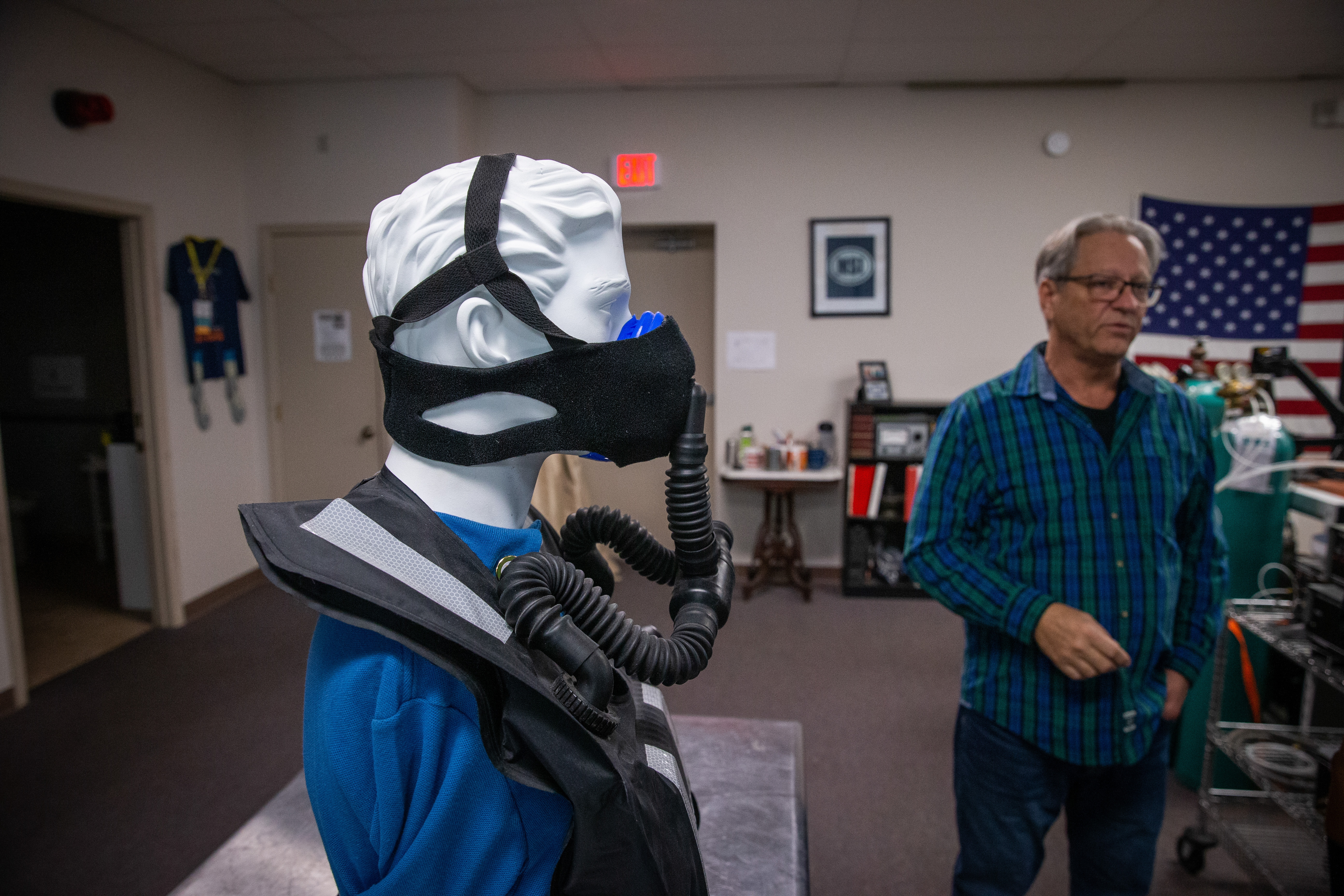
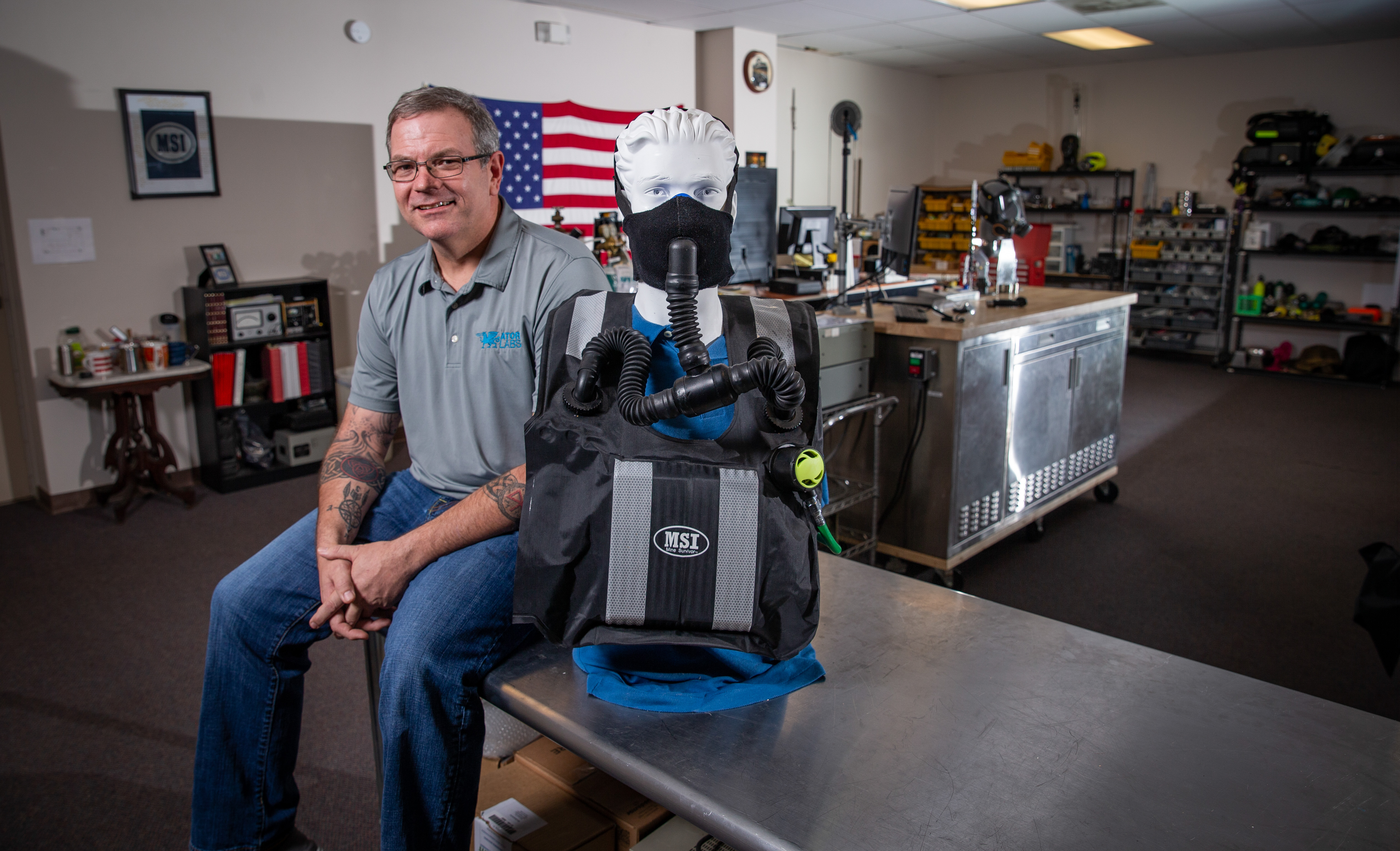
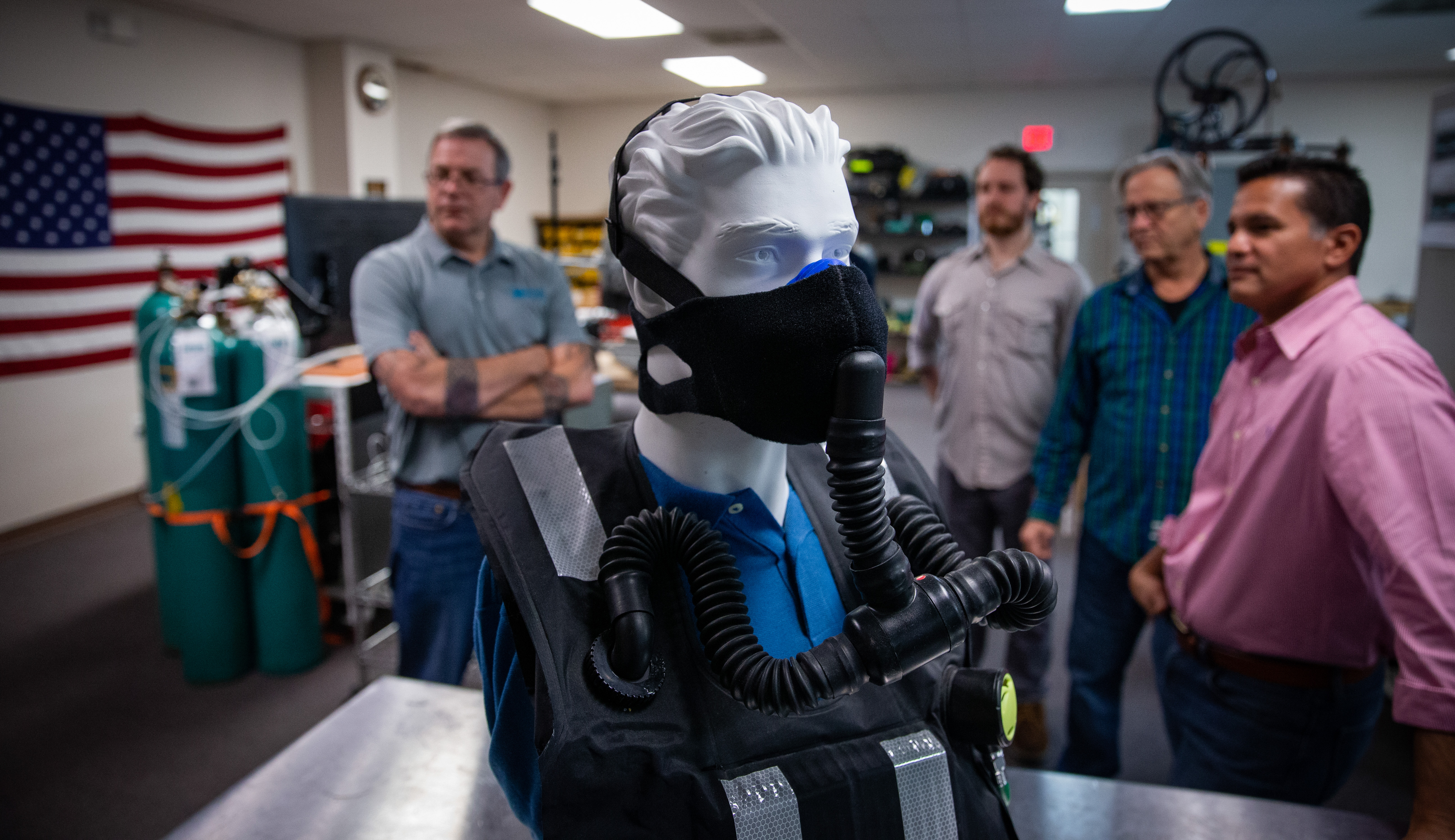
Cowgill and Moran realized that their product could revolutionize several areas. Moran explains, “Our initial market fell in our lap because rebreathers are needed in coal mines as part of the safety regulations. Although coal mines globally are slowly closing, they still have a need for respiratory safety equipment. So do other mining operations. Another market that nobody has ever thought of before are high-rises. Most people die of smoke inhalation when they are trapped by a fire. If a fire breaks out in a high-rise, using the stairway as an escape will take several minutes, perhaps one minute per flight of stairs. Our equipment could also be optimized for firefighters, or for different military applications.”
Today, the MSI rebreather is a patented product and will be submitted for NIOSH certification. Their work at MSI Inc. formed the foundation for another innovation and new startup, Cowgill and Moran’s latest venture, ATOR Labs.
“This is a true case of necessity is the mother of invention,” Frank Hernandez remarks. He joined the team as product development director in 2015.
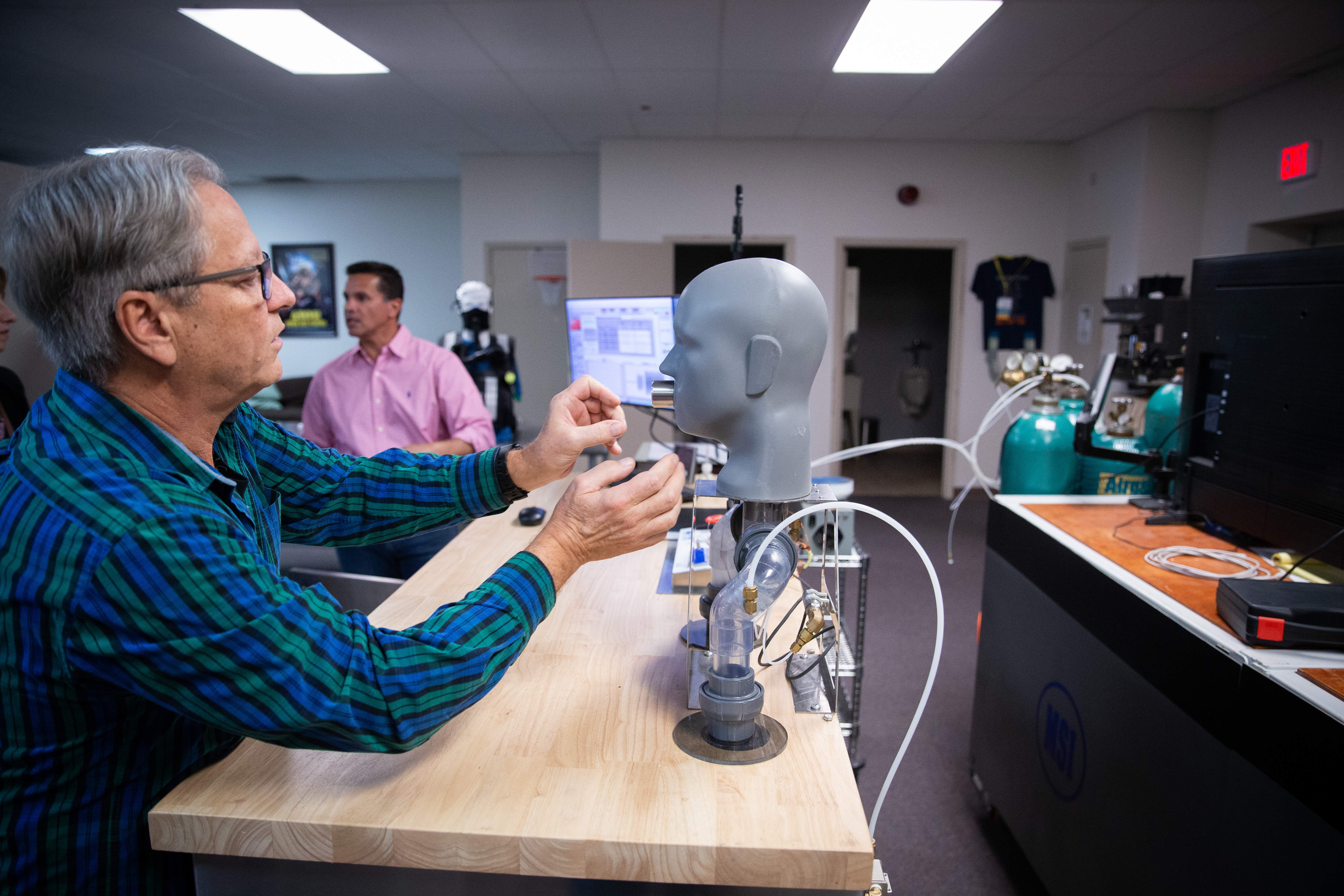
“The vest that we developed needed to have prequalification test data submitted to NIOSH, the National Institute for Occupational Safety and Health. So in order to collect that data, we built our own testing machine,” Cowgill summarizes. The machine he refers to is an automated breathing metabolic simulator (ABMS).
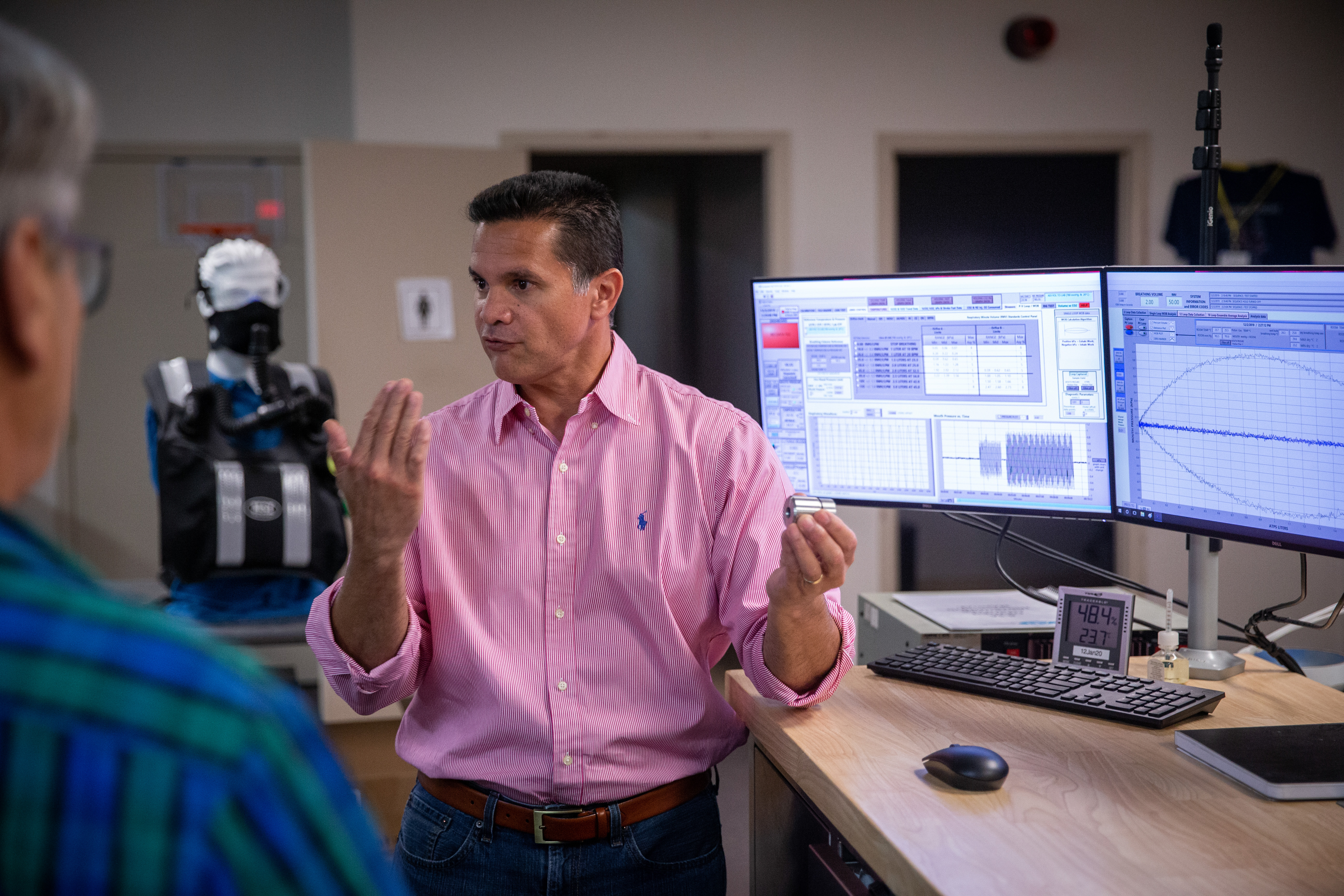
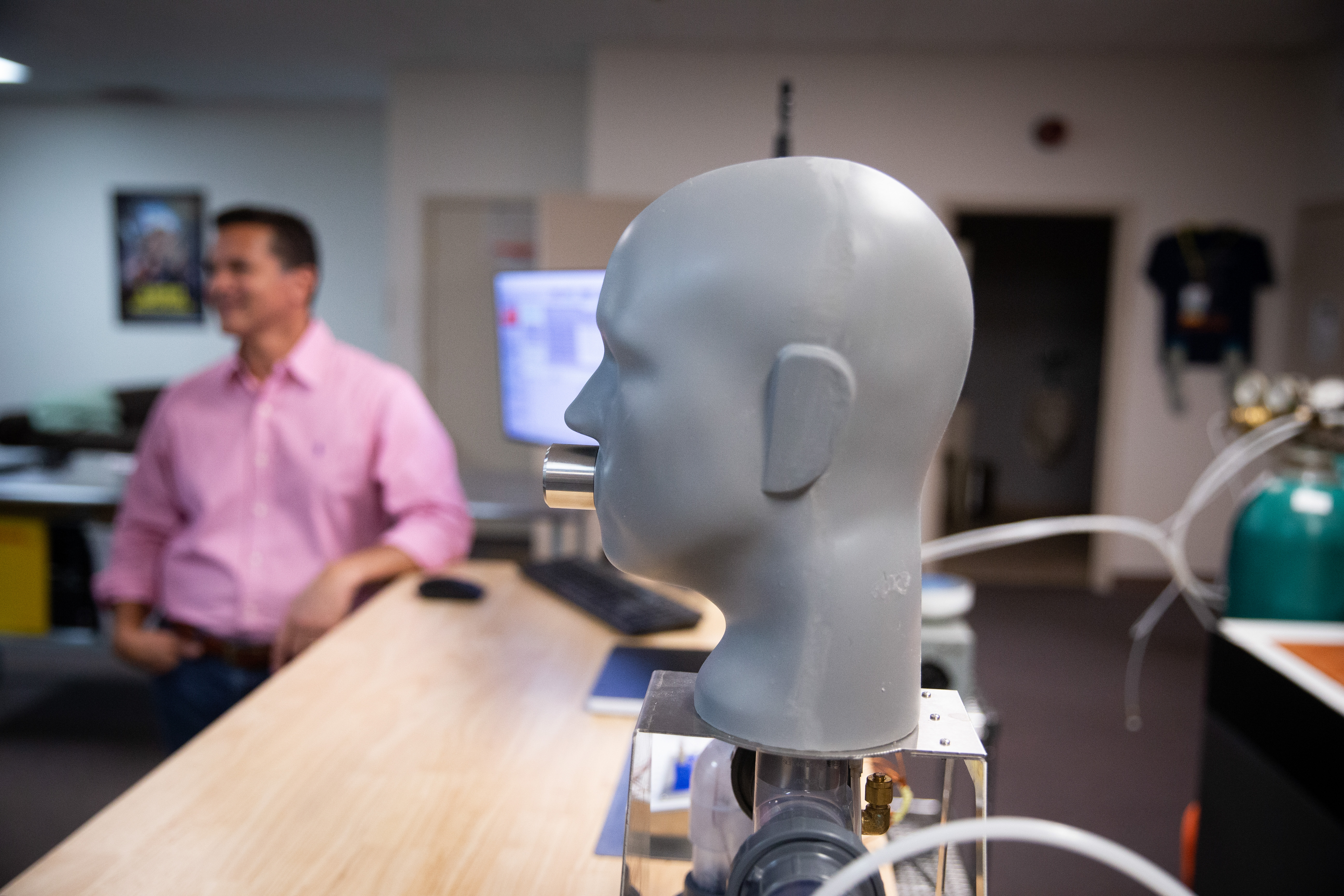
As a United States federal agency, NIOSH is responsible for conducting research and making recommendations for the prevention of work-related injury and illness. Among dozens of other safety aspects in different industries, they govern the sales and distribution of rebreathers for the coal mining industry, or for anything that will affect breathing in the workplace. While NIOSH conducts their own testing, the technology of their simulators had not changed for decades. ATOR Lab’s ABMS, on the other hand, is equipped with the latest software, electronics, monitors, and sensors, as well as an “anthropomorphic testing head” that measures and records inhaled oxygen and carbon dioxide levels, as well as inhalation, ambient temperature, and breathing frequency and volume, among other variables.
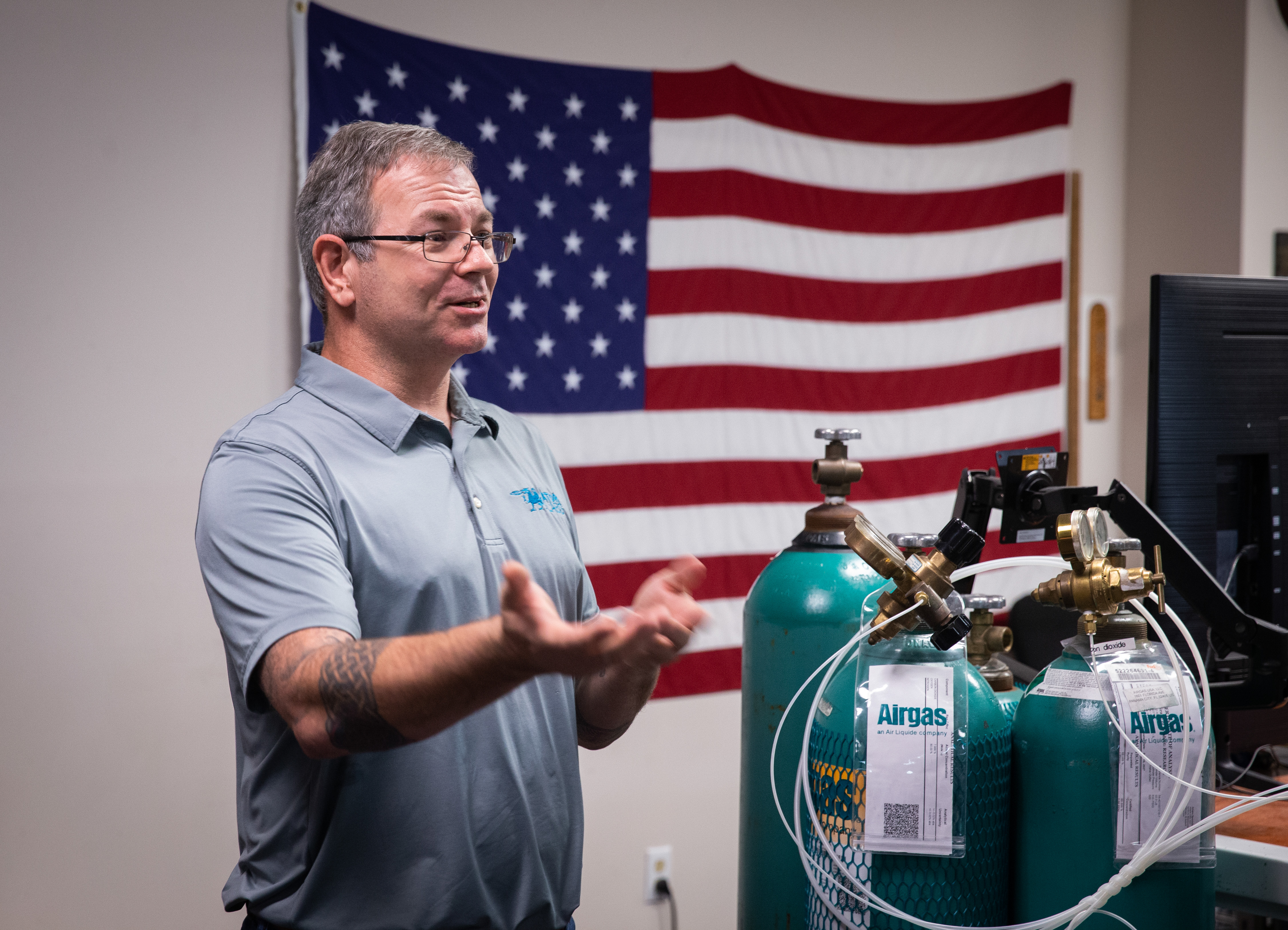
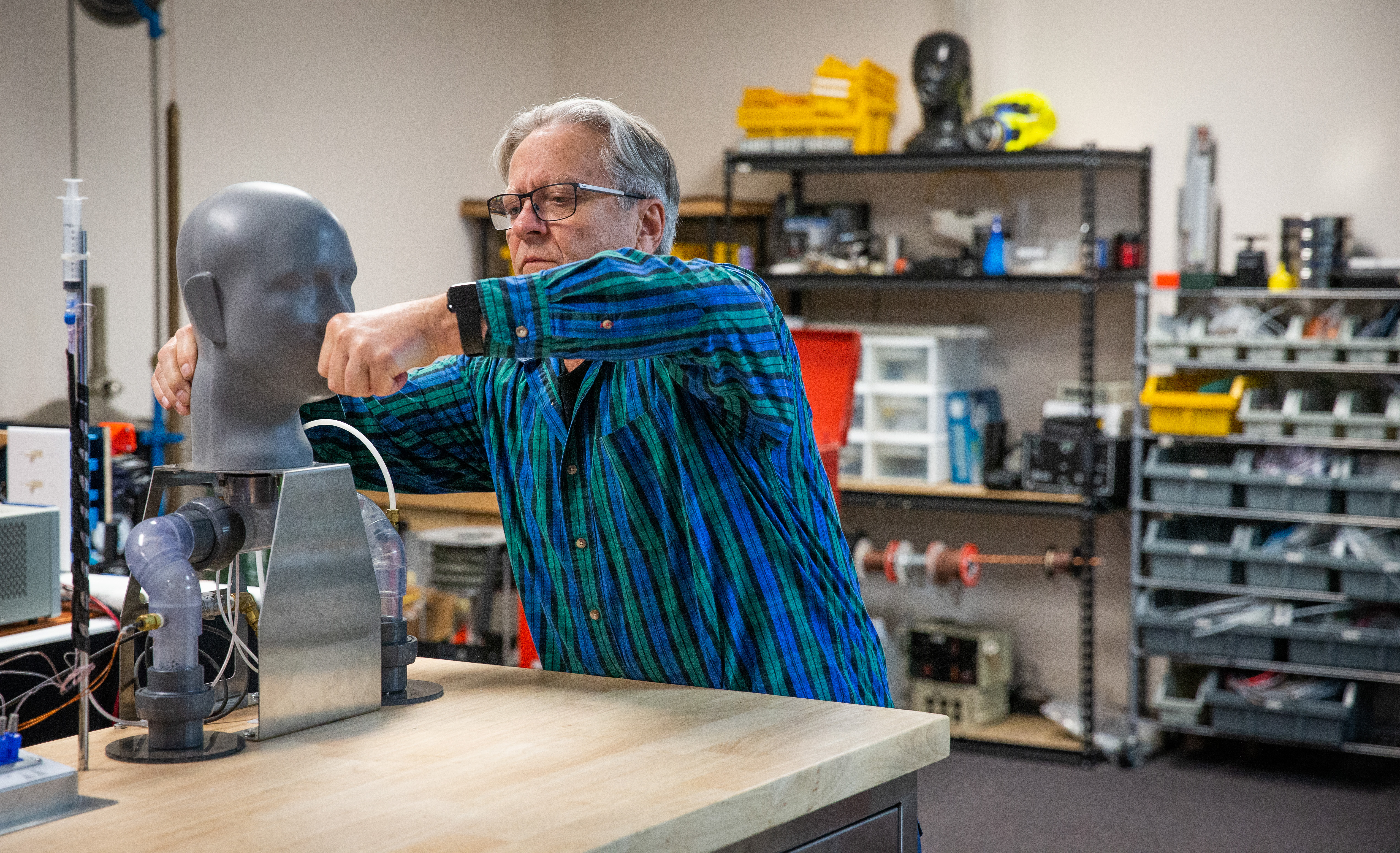
David Cowgill holds his hand against the simulated mouth. “The air is warm and moist, just as it would be for a human,” he explains. Two computer screens show the changes in the breathing pressure measurements as his hand moves across the test-head’s mouth opening.
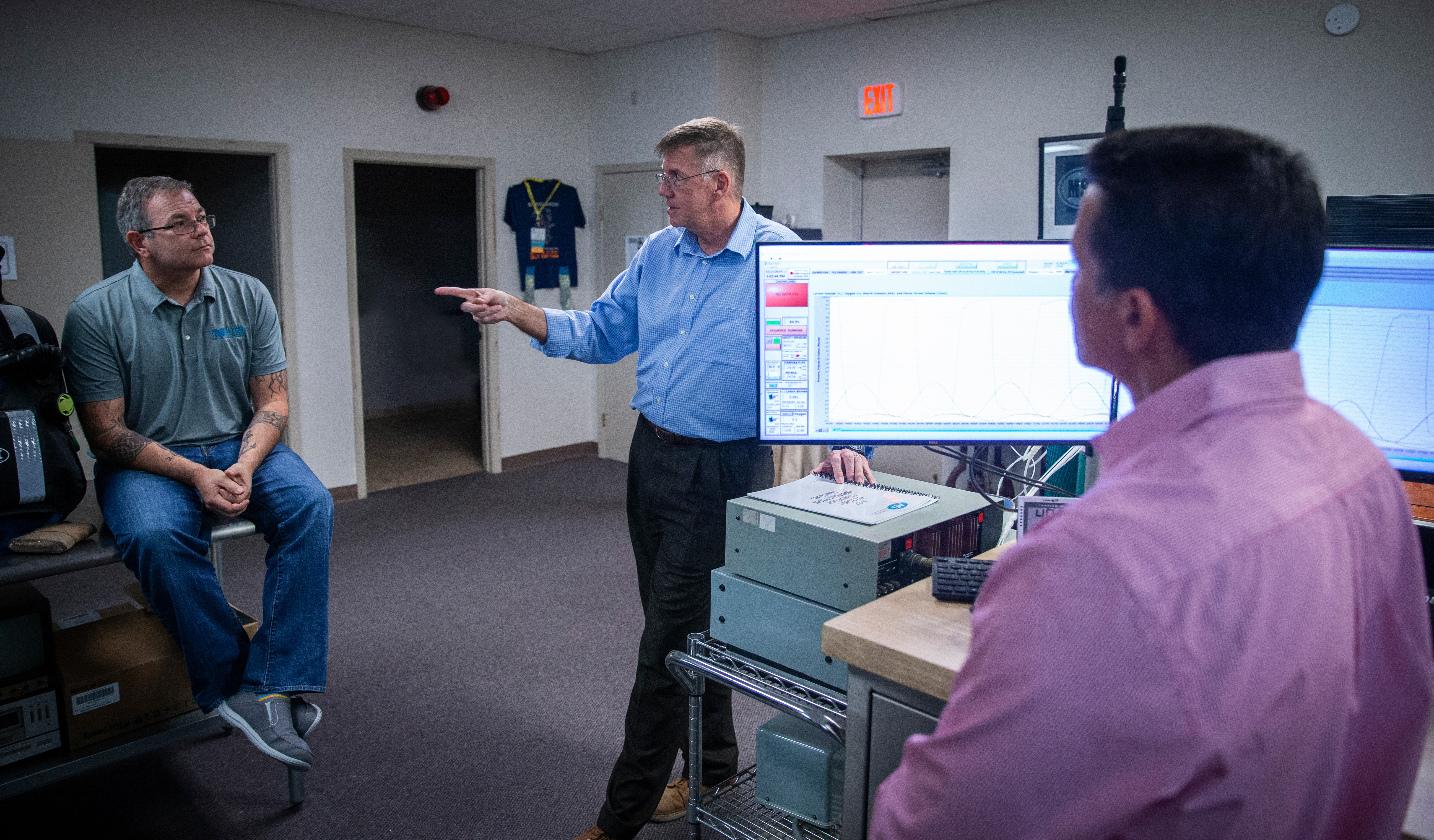
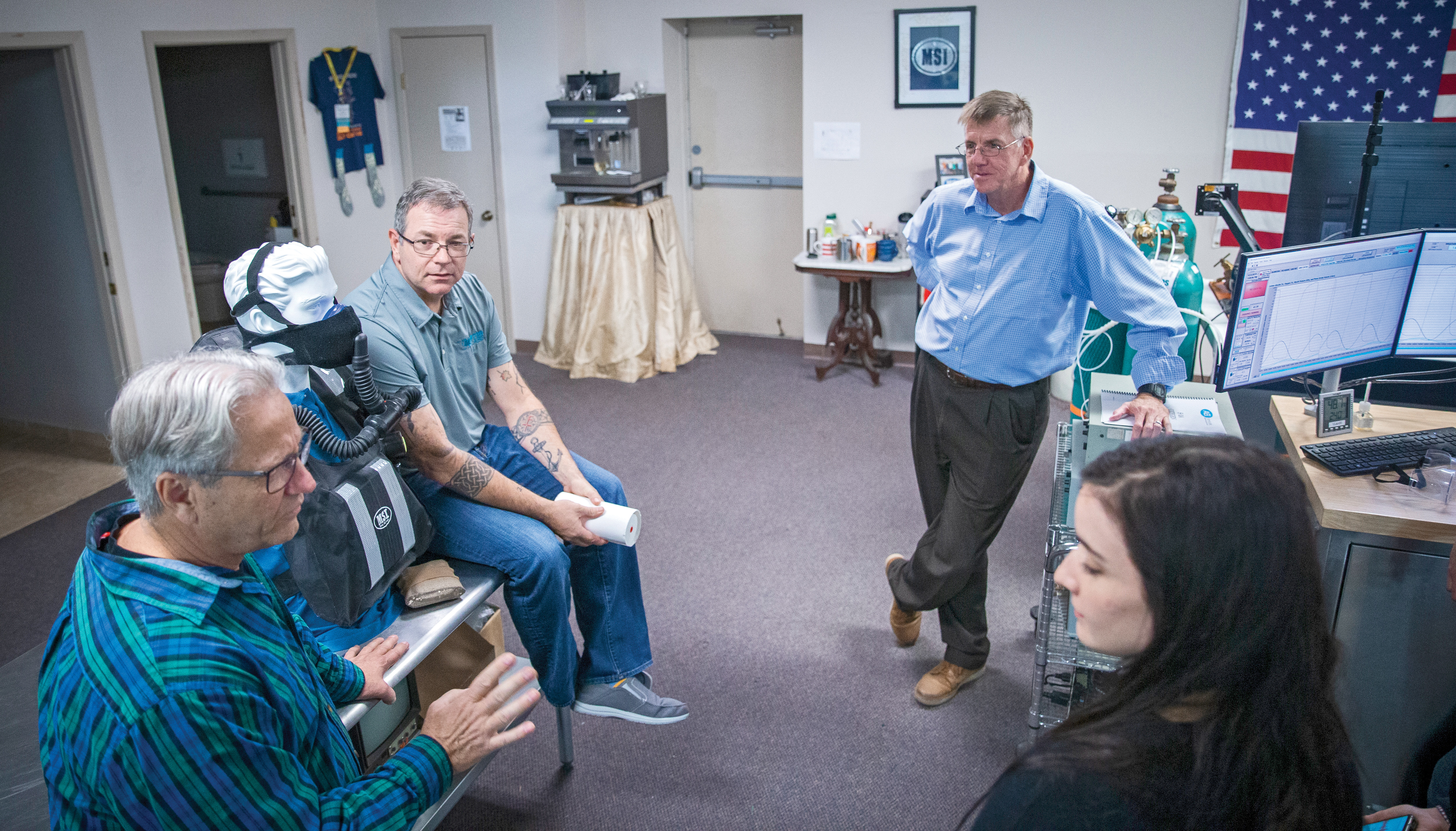
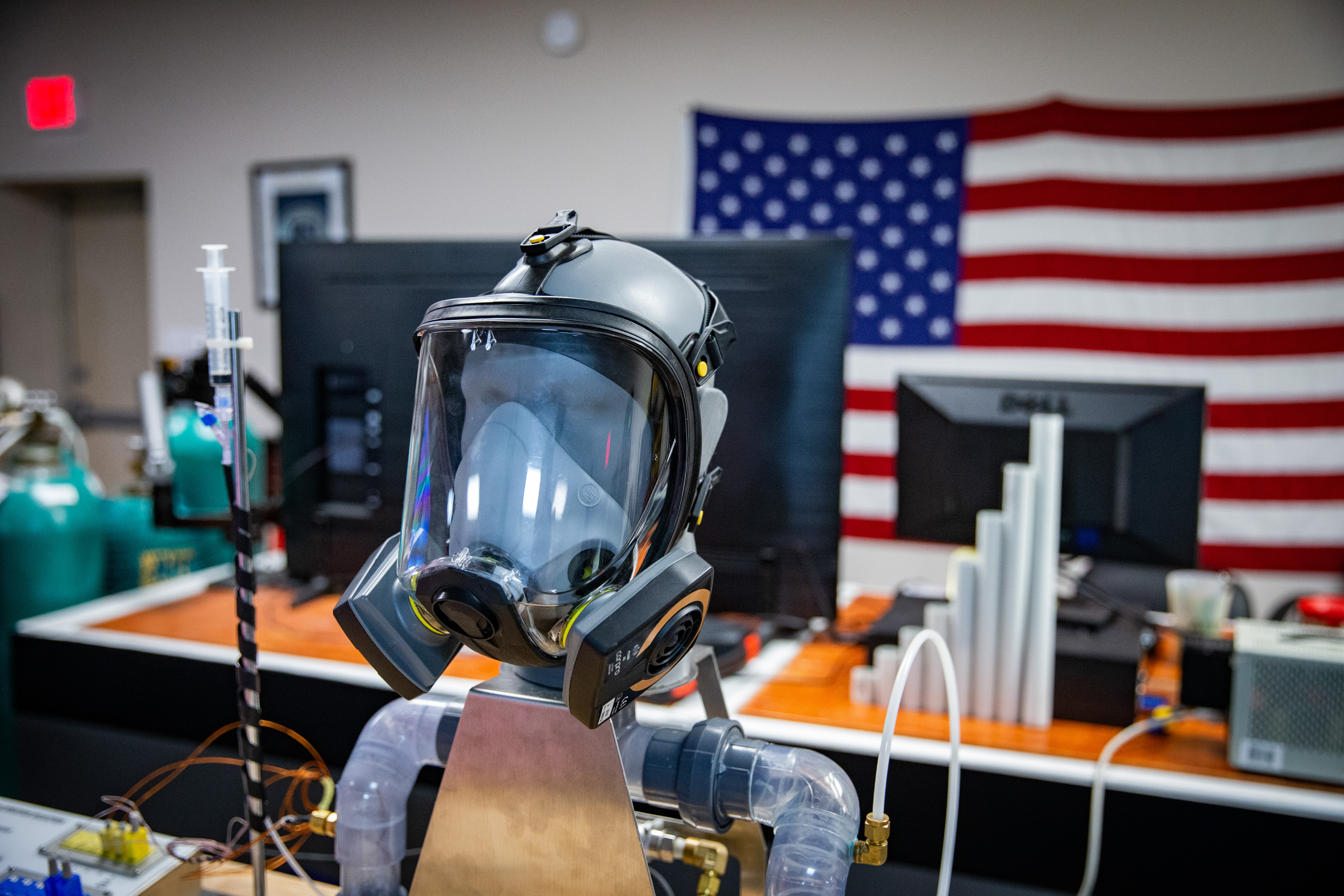 “Rather than letting a human try breathing through a mask or rebreather first, or whatever device you want to test, and telling us, ‘Well, it’s too hot’ or ‘I’m having difficulty breathing,’ the machine is giving us that feedback. Whatever respiratory protective devices that you want to test, the machine measures all the parameters and gives us the data. It measures how much effort is required to breathe through the device, the amount of carbon dioxide you are breathing, and we can also vary the rate at which the simulated person would consume oxygen,” Hernandez explains.
“The machine simulates the amount of stress or workload a person is under, or different constitution of a person, and how that affects the breathing. The device that is being tested must maintain the inhaled oxygen content above 13 percent; below that, and a human stops functioning well,” Cowgill adds and explains that ATOR Lab’s ABMS will test devices to NIOSH standards but will also test in accordance with global standards, as well as complying with the requirements of ISO, the International Organization for Standardization.
ATOR Labs has sold their automated breathing metabolic simulator to governmental institutions and research facilities and the manufacturers of escape devices for aircraft. ATOR Labs provides setup and training for the units as well as calibration. The team sees a very large potential for business growth as the level of sophistication and capabilities of their ABMS is unsurpassed in the marketplace.
“Beyond that, we have big ideas and we hope to put them into play someday,” Frank Hernandez remarks.
“That way, we can dominate the world,” Rob Moran adds with a grin.