
FEED THE KITTIES


BY KURT COX
PHOTOGRAPHY BY MIKE FENDER
After a day of hunting, I notice the whiteboard message at a Bay County hunter check station that reads, “Got heart? Or kidney, liver, or shot-up meat? Call this number. Feed the kitties!” I am intrigued. Feed the kitties? They can’t mean housecats. Who would want the parts of deer that most hunters leave in the woods for coyotes and buzzards?
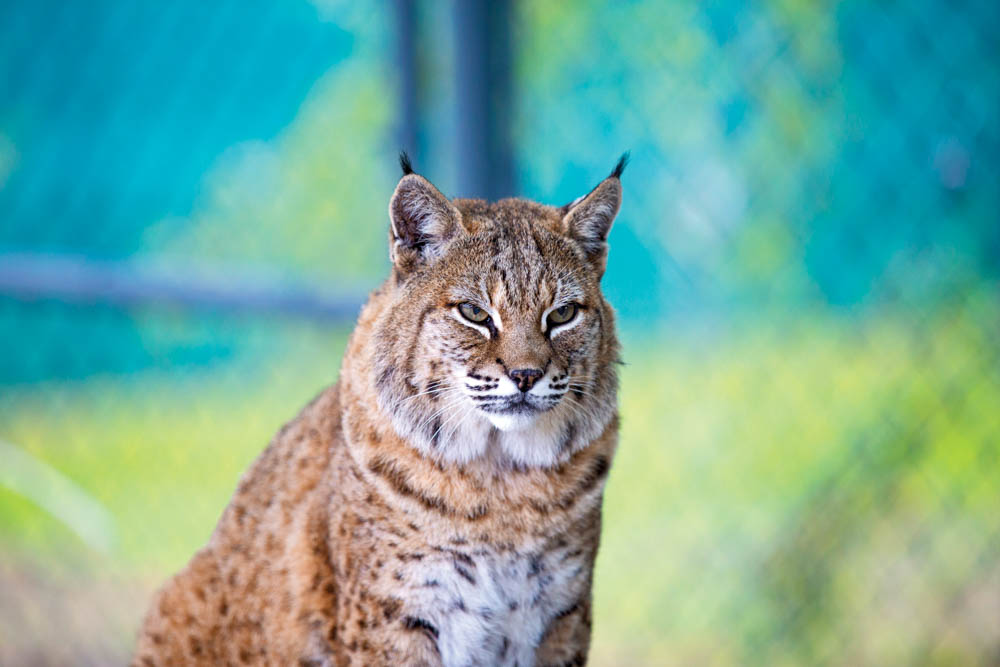
I call the number. “I heard you’re interested in meat scraps from wild game.” They are. “They” turns out to be the Bear Creek Feline Center and the “kitties” are the panthers, bobcats, jaguarundis, and other exotic felines rescued from bad situations. We make an appointment. Then I empty the bait freezer in the garage where meat scraps from previous hunting adventures waited to be ground into fish chum. I feel an obligation to the game animals I take to utilize as much of them as possible. Those deer scraps were once grilled alongside my own dinner for Maggie, my yellow lab. Between the two of us, very few parts of my deer went uneaten. Maggie lived five years longer than her breed is supposed to and I credit it to her diet. Lately, I’d been tossing the scraps left over from trimming my steaks to the crabs.
Gallon bags of deer, elk, wild hog, and alligator trimmings fill two ice chests. I pack them into my car and drive 14 miles north of the Panama City Mall and into the rural community of Bear Creek.
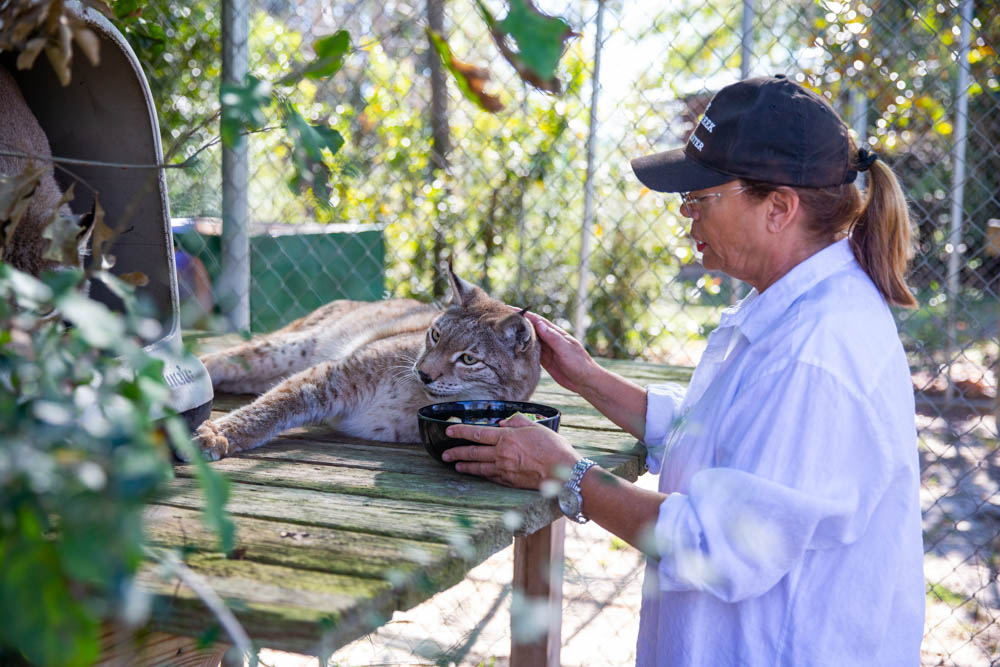
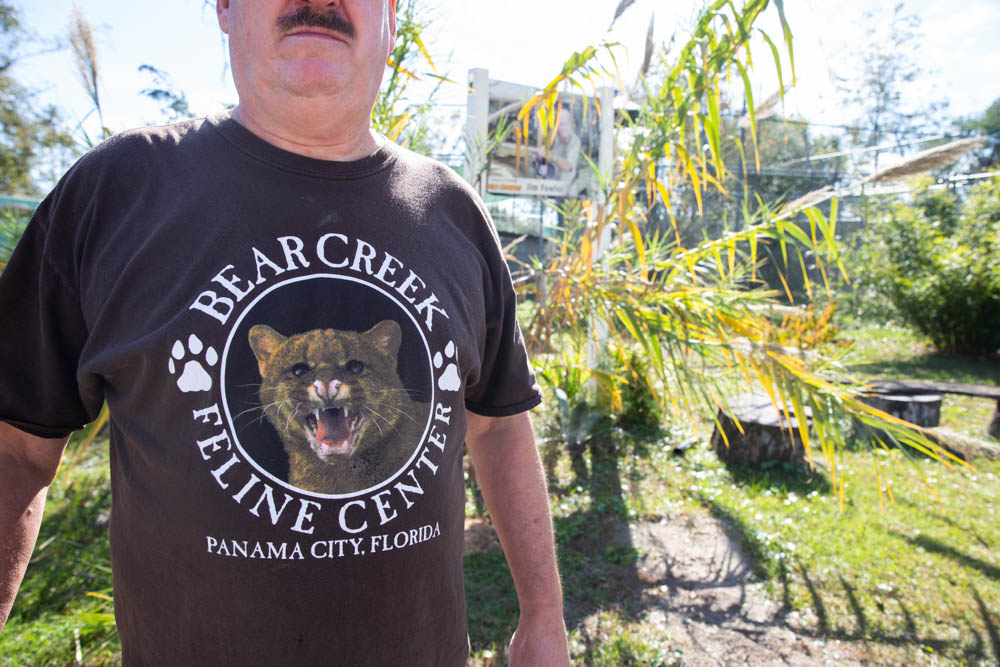
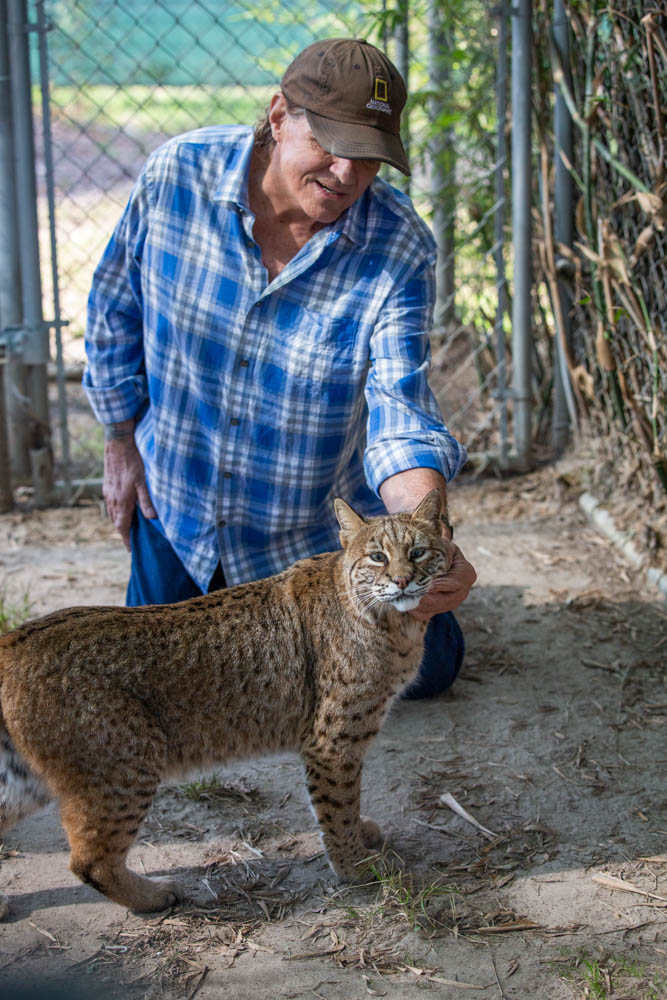
A tall privacy fence surrounds a wooded lot that sits amid country homes with mowed lawns and sand driveways. A slim man with a graying ponytail removes a locked chain from the gate that he then swings open. He introduces himself as Jim Broaddus and greets me with the affability of a lifelong friend. A bobcat strides inside a large enclosure. Wow. You can spend a lot of time in the woods and never glimpse a bobcat. Inside another enclosure in the wooded compound is a Siberian Lynx. Right here in Panama City! I better focus on my driving before I hit a tree.
Large tropical birds caged near a carport insist upon enlivening the sanctuary. Jim puts my meat donation into the freezer, then invites me to sit in one of the dozen chairs ringing a fire pit. The one in the shade looks best; the day is already getting hot.
An oversized portrait is mounted on posts behind me like the icon of a patron saint. It’s a signed photo of Jim Fowler, host of the popular 1960s TV show “Wild Kingdom,” which ran from the 1960s through the 1980s—a childhood favorite of mine. The two Jims—Broaddus and Fowler—were friends right up to the day Fowler passed away in May of 2019. “He inspired me to do this,” Broaddus tells me and adds that Fowler’s ranch near Albany, Georgia, has zebras, ostriches, and eland, and they rent out a tree house. That rental just went on my bucket list.
Jim Broaddus has layers that will take the better part of a slothful summer afternoon under a shade tree to reveal. He founded the Bear Creek Feline Center in 2000. Before that, he owned and then sold three local radio stations. Before that, he was “deep into the whole rock ‘n’ roll scene.” He says softly, “This is my redemption.” Certainly.
But one link to those past lives remains: He currently broadcasts a mix of Southern rock and pop country music he calls “Headbanger Country” from a radio tower that rises above the shade trees. When driving near Youngstown, dial 107.5, WYDD, “Wide Open Radio.”
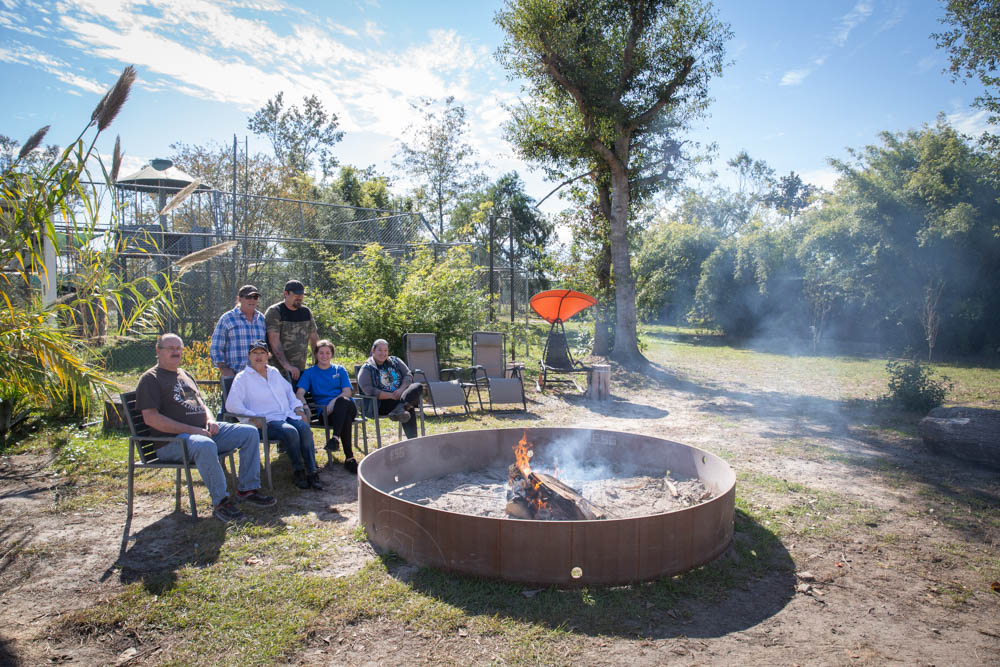
Jim was also accepted into the Lower Muskogee Creek Tribe, and in 2018 the tribe’s Bear Creek Clan made the Feline Center its Tribal Council Headquarters. The tribe wanted to share the property in some constructive way, to have a place where the elders can powwow. There is this inviting fire ring…
Jim’s remarkable past and dedication to cat rescue has resulted in remarkable accomplishments and it does not stop there. He once did a documentary film on traditional Seminole dances. “It took a long time to get permission. My Muskogee friends helped,” he reveals and adds, “Later, when I was discussing doing a joint panther management project with the tribe and the USDA, Chief Billy flew his G5 jet up here. His Seminole bodyguards were big dudes, former jai alai players, they wore the dark sunglasses and everything. They wanted to check me out before they let me on their reservation.”
Jim found an opportunity to discuss environmental issues with the Seminole tribespeople, who use wide stretches of their land to raise cattle. “They didn’t used to tolerate Puma concolor,” Jim explains. He often calls panthers by their scientific name. “One thing they now do to reduce cat and cattle interactions is they put dogs and mules in with the cattle herd.” Guard dogs, sure. But it’s news to me that mules are territorial, and instinctively aggressive toward certain predators.

As sweat starts to slip between my shoulder blades, a female panther named Dani appears in her enclosure behind me, patrolling the perimeter. Jim gestures toward her and instructs, “Never turn your back on a panther. One like that, named Cleo, once attacked me. I was loving on her, hugging her, but I made the mistake of turning my back on her. It just triggered something. They know when you’re defenseless. You know how they say panthers have the strength of six men? It’s more like eight. She swatted my head, and the blow caused a brain bleed. I couldn’t speak for three days.” He takes off his black ball cap that is embroidered with the leaping puma logo of a sportswear company. He takes my wrist and rubs my hand across his head. I feel a deep groove running across most of his crown, which he says resulted from the surgeon opening his skull. “That’s why I wear my hair long and wear a ball cap,” he says with a grin. Cleo remained with Jim until infirmities took her at age 18. “I keep her ashes by my bed. We’ll be back together someday,” he adds.
For Dani, Jim has a special way of getting her attention. A sharp “Woo!” followed by “Come here, girl.” She was friendly until a male panther tore her up during mating here at Bear Creek. It made her afraid of people but she is slowly re-assimilating. “It didn’t help when I went in while she was birthing to help with one stuck in the birth canal. She didn’t like it at all,” Jim says. No amount of pleading gets Dani to leave the shade today, so I appeal to her instincts and croak like a baby alligator. She hears. Her expression changes. Eyes stare with intent, ears come up, and she stiffens. Then she comes. Jim warns, “She’s like a cat on a hot tin roof. I can see it in her eyes. She’s different today.” He thinks it’s all the activity: fussy parrots, extra staff, the smell of meat, and a tour of visitors. Jim isn’t comfortable going inside Dani’s enclosure today. “If they can’t get what they want (a baby alligator), they’ll take what they can get (me),” Jim says. He’s concerned about “misassigned aggression.” Dani retires to the tall, shaded grass, but her eyes never leave us.
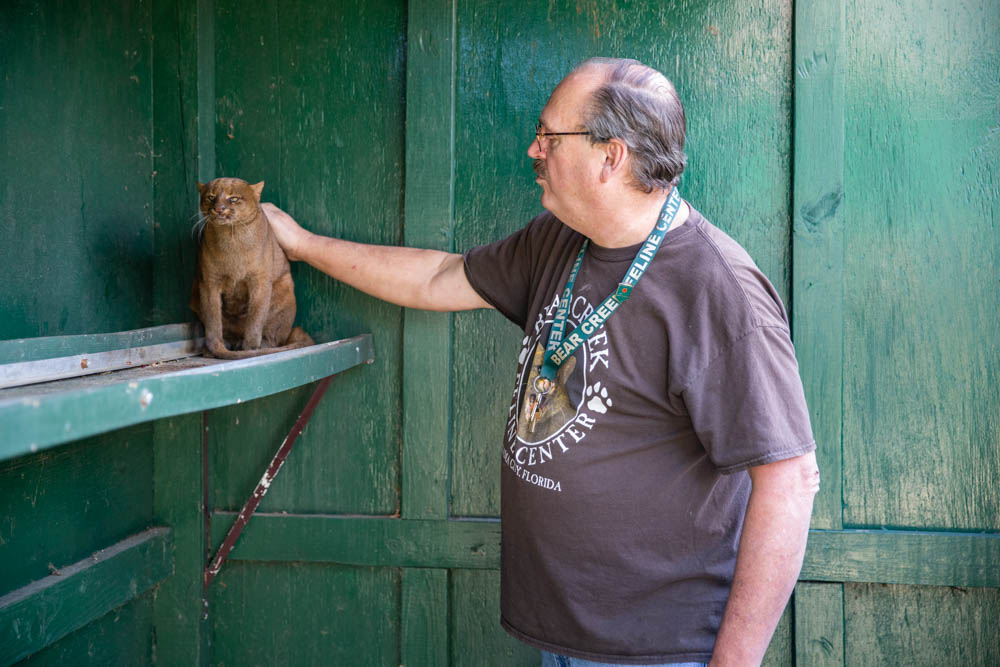
According to Jim, there are many credible big cat sightings in North Florida. He saw the tracks of a panther in western Bay County one day while hiking a sand road. He and his wife Bertie, who also works at the Feline Center, once saw a black panther along Highway 267 in Wakulla County north of Newport. When he told his friend Jim Fowler about it, the famous man replied, “Don’t tell anyone you saw that. They’re not supposed to be there. It’s like saying you saw an alien. Folks will say you need more water in your liquor.” Claims of large black cats being seen in the Florida Panhandle are evergreen. Franklin County has many sightings of the mysterious “Carrabelle Cat.” Jim reports that he is getting emails all the time from people who claim to have seen a black panther and I tell him that while at the archery range last week, an Air Force contractor told me he was riding his motorcycle near Port St. Joe when a black panther ran into the road. It was in broad daylight and it startled him. “In the shadows a tan one can look black,” he concedes. There are plenty of anecdotal stories out there, from Milton to Bainbridge and down to Tampa.
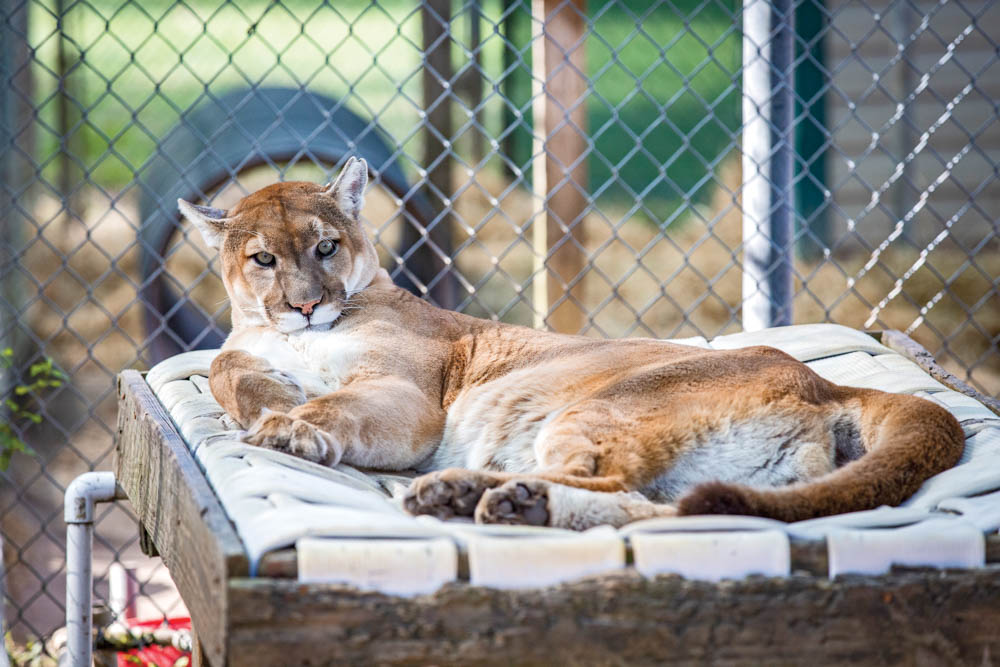
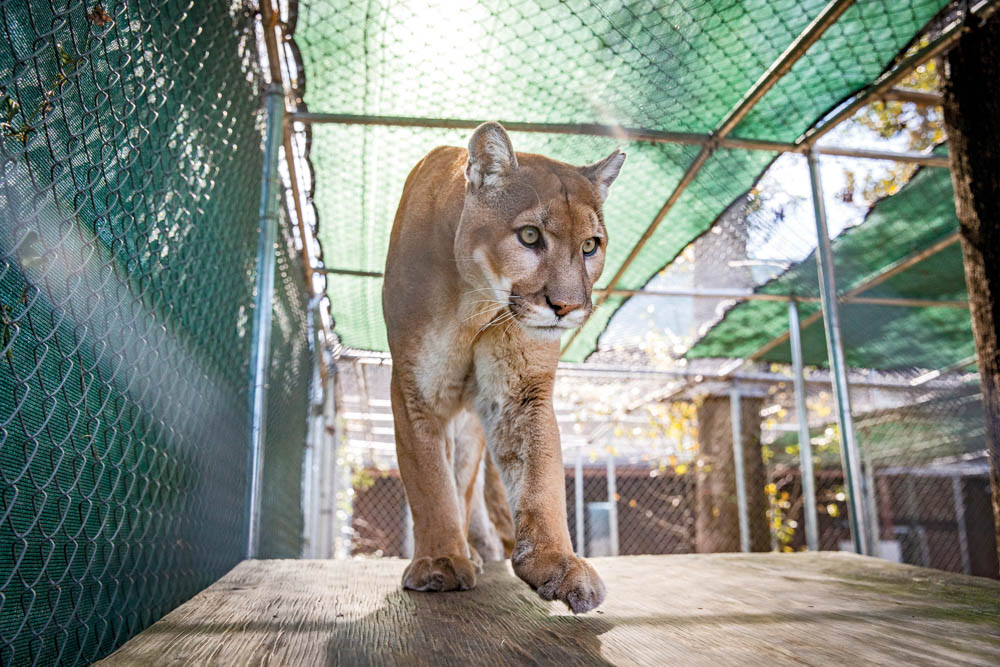
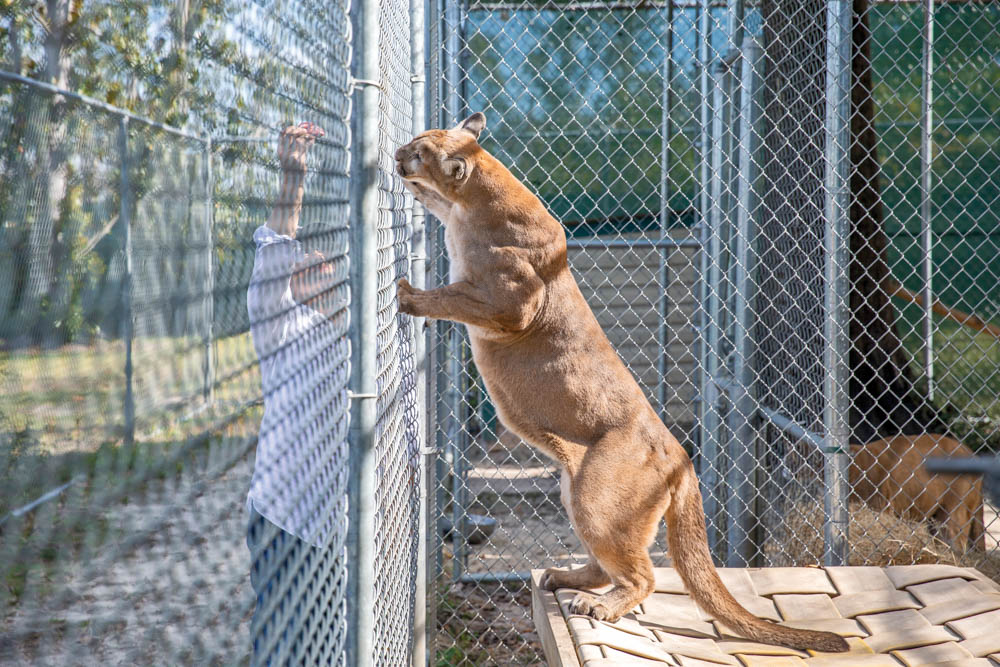
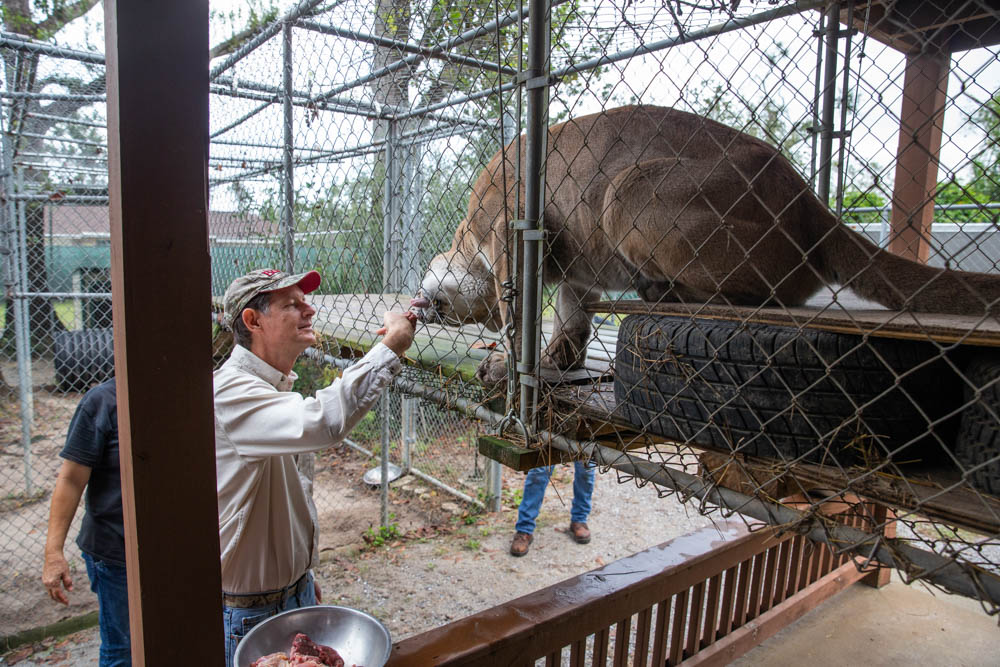
The panther in the enclosure behind Jim, Saint, begins pacing. He is a mature male and the largest mountain lion on site. Saint worked in TV and had toured schools and senior centers until he reached the USDA’s highly suggested retirement weight of 60 pounds at the age of six months. Which is when big cats are often sold to roadside attractions or sent to rescue centers. Saint came to the Bear Creek Feline Center then. The center sometimes acts much like a witness protection program. When Jim accepts a big cat in need of a home, he does it anonymously through a middleman. He changes the cat’s name because former owners have been known to try to steal cats back. He fixes me with mischievous eyes and asks, “Do you want to feed Saint?”
Do I want to feed Saint? Heck yeah!
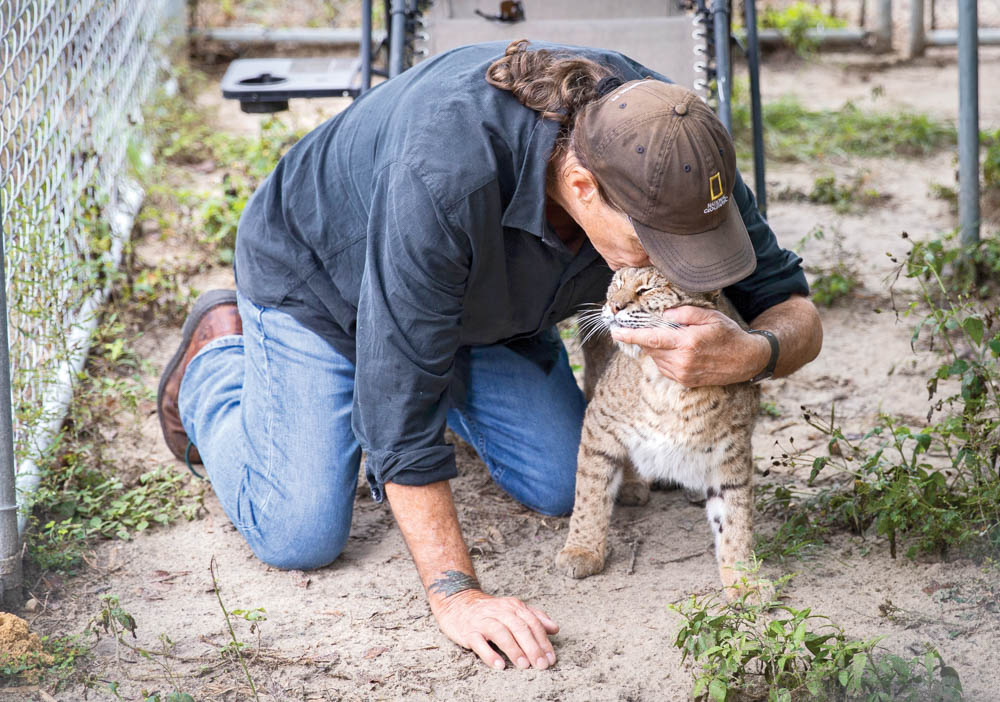
The meat from home is still frozen, so Jim gives me a chicken wing from a refrigerator. He then coaxes Saint to stand on his hind legs and place his paws spread apart on the chain-link door like he’s going to get a pat-down for hidden weapons. “Don’t put your hands anywhere near the gap between the fence gate and the fence. And don’t put even a finger inside,” he instructs. Feeding a cougar that stands six feet tall by hand is not for the meek. His teeth and tongue fumble with the chicken. To keep it from dropping in the dirt, I probably hold onto the chicken wing too long. But Saint treats me with what might be professional courtesy, hunter to hunter. Saint crunches the bone loudly three times, then swallows. I’m glad that wasn’t my hand.
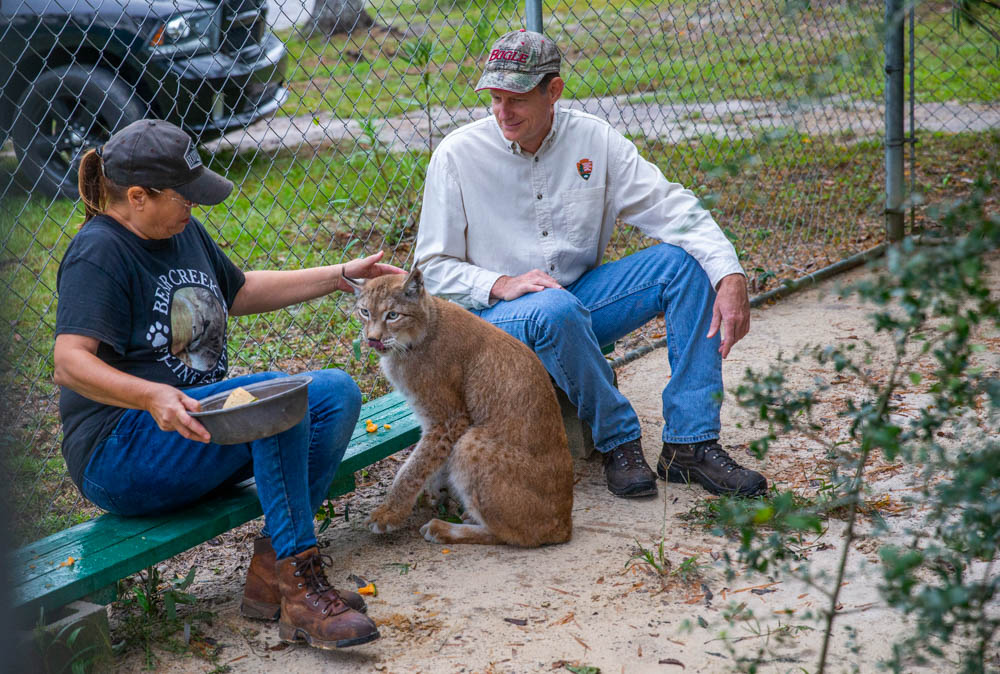
On one return trip to Bear Creek I bring 25 pounds of alligator trimmings for the kitties. Jim, Bertie, and the staff inspect the cooler full of meat to see what other species it might contain. The scene has a Christmas morning feel to it. Jim sets aside one quart-sized bag of scraps for the bobcats. He likes seeing how the cats react to different meats, he explains, and adds that they’ve never had alligator before. His Florida panthers might have some genetic memory of eating it. Panthers are known to kill and eat alligators in the Everglades.
I’ve started logging my time at the Feline Center as part of their intern training program. Today’s class is an overview of the meat storage and preparation facility. Jim tells me the USDA inspects all animal rescue centers to make sure facilities are sanitary and the meat is stored at proper temperatures. The USDA also inspects what the cats eat to ensure they are getting a balanced diet. Jim says he has to pay 49 cents a pound for chicken, and $2.49 a pound for red meat. He’s tried many ways to bring the price down, including once buying a steer at auction and paying a butcher to process it.
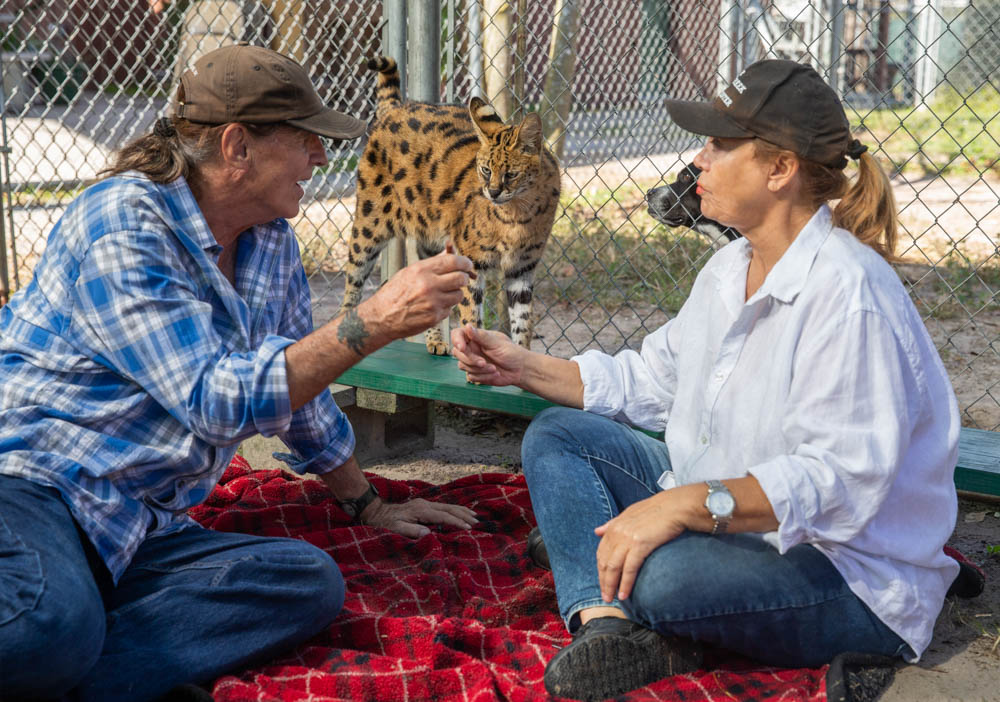
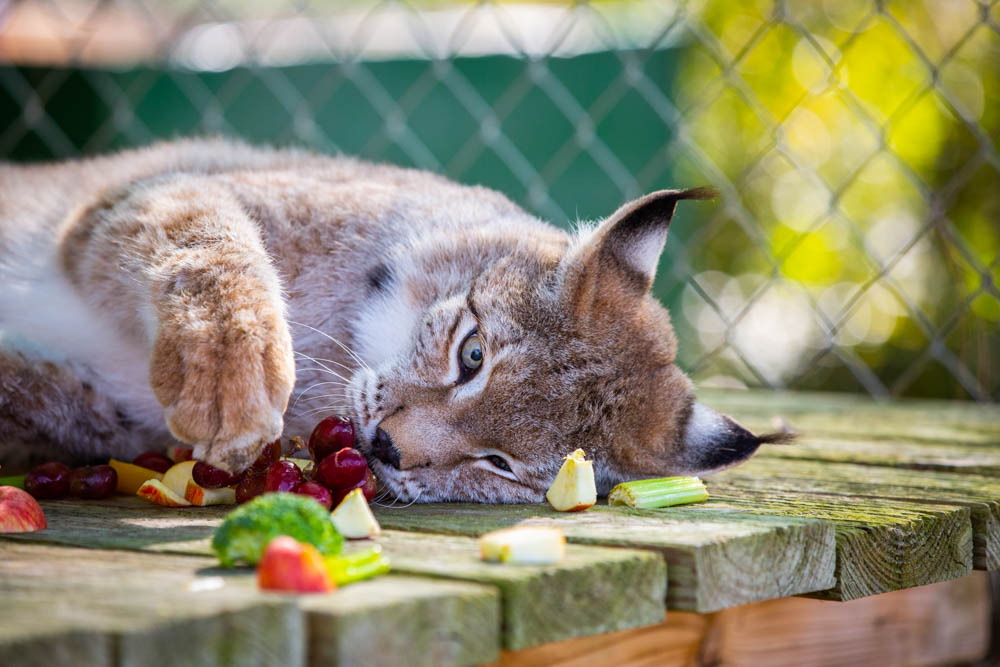
We retire to sit at the fire ring. Jim informs me that the kitties liked the last batch of meat I brought them. “The only thing about the hog meat is that it goes bad quicker, and the cats are gentle eaters,” he says. “They will pick at it, then leave some for later. They prefer organ meats.” Acccording to Jim, cougars eat 2 to 5 percent of their body weight daily. His meat bill is $250 a week in the summer, and $450–$500 in the winter.
Bertie’s guided group—two women from Maryland—have arrived at Dani’s enclosure, a 10-foot-tall chain-link fence within an outer chain link fence. Jim stands and motions me to follow him there. The women feed Dani snacks through the fence of the innermost enclosure. Jim brings me in through the gate of the outer enclosure. Then he opens the door to the inner enclosure and motions for me to follow him in.
Wait. Dani… is this the panther that hit him in the head and bruised his brain? Or is Dani the panther that attacked and scarred a male panther that was placed inside in an attempt to breed her? But there is no waiting. There’s just enough time to decide, do I trust Jim? Or not? I follow him into the cage. We are now just 20 feet from a large, live panther, with no fence between us. I pull the door shut behind me. I’m about to latch it when Jim says, “Don’t latch it.” I don’t. He places his right hand on my left shoulder and says, If I push you—” He gives me a firm shove toward the gate as an example. “—get out of here. Fast. Like a scared rabbit.”
What?
Jim starts talking nice to Dani the panther, using soothing words that I imagine the big kitty has heard before. Words that let her know who entered her home. “Nice kitty, pretty kitty,” Jim says over and over. “Kitty” seems content, sitting upright on her haunches on top of a stout wooden bench, slurping chicken livers through the fence. But her eyes are as high off the ground as my own, and I can see the muscles of her front legs and shoulders bulging underneath her hide. B-i-i-i-g kitty. When the visitors have fed Dani the last chicken liver, Jim says, “Let’s go!” and gives me the push. He doesn’t have to push twice.
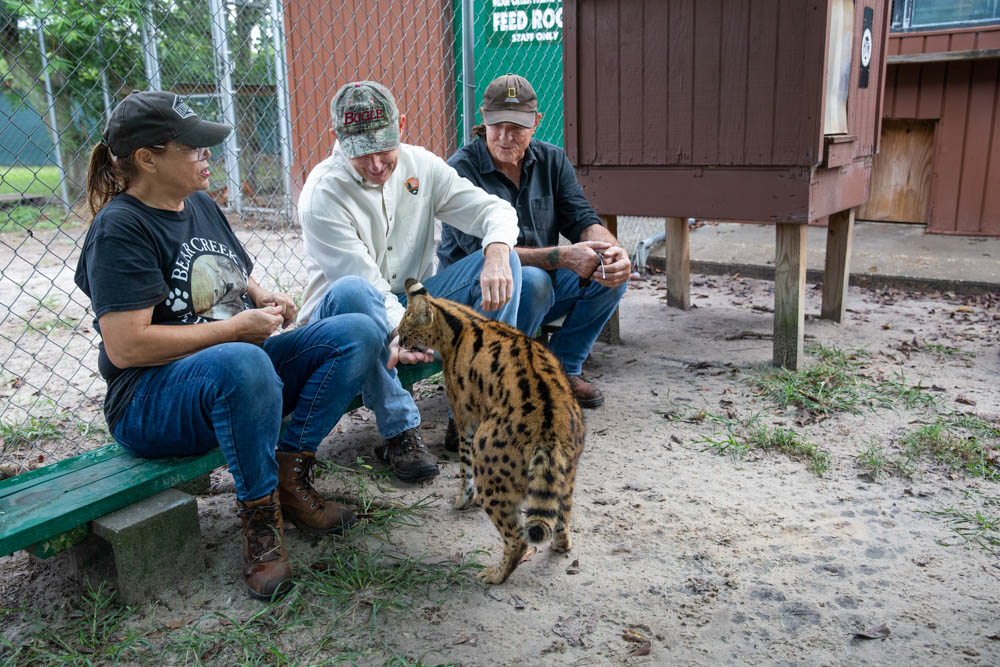
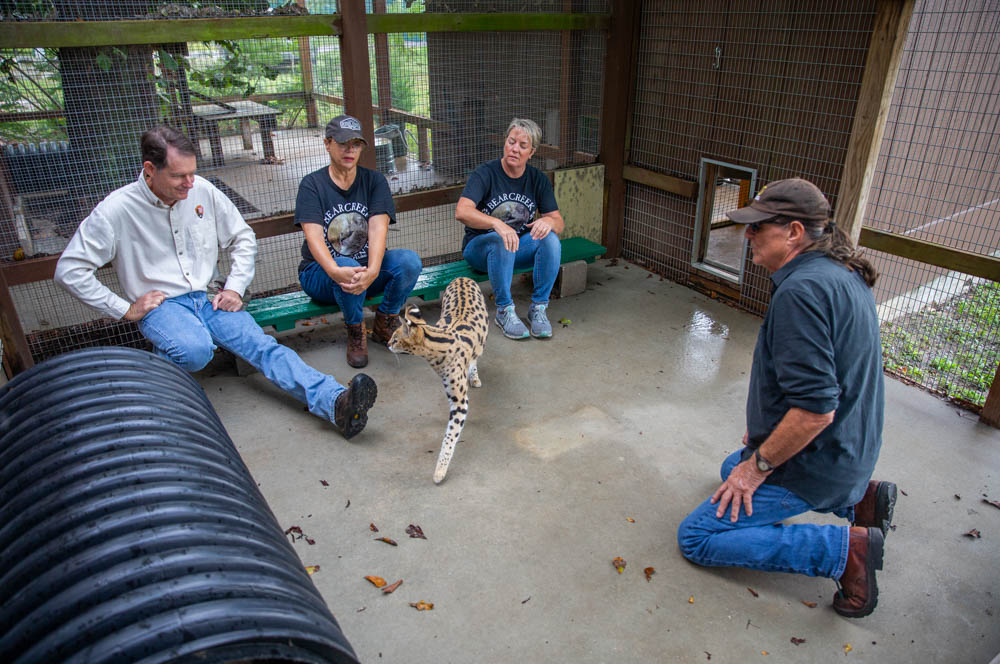
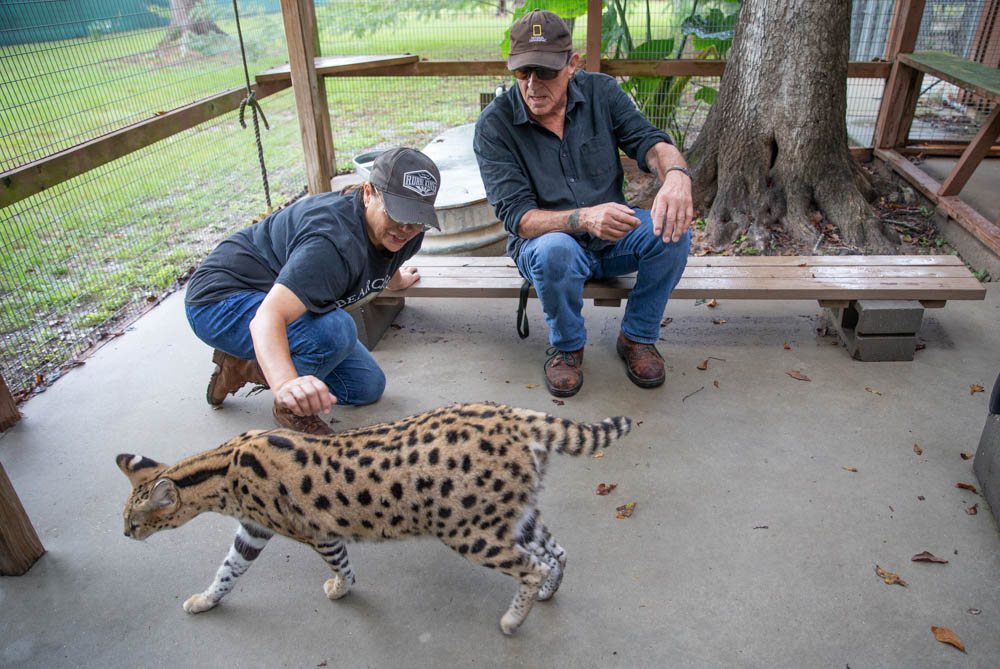
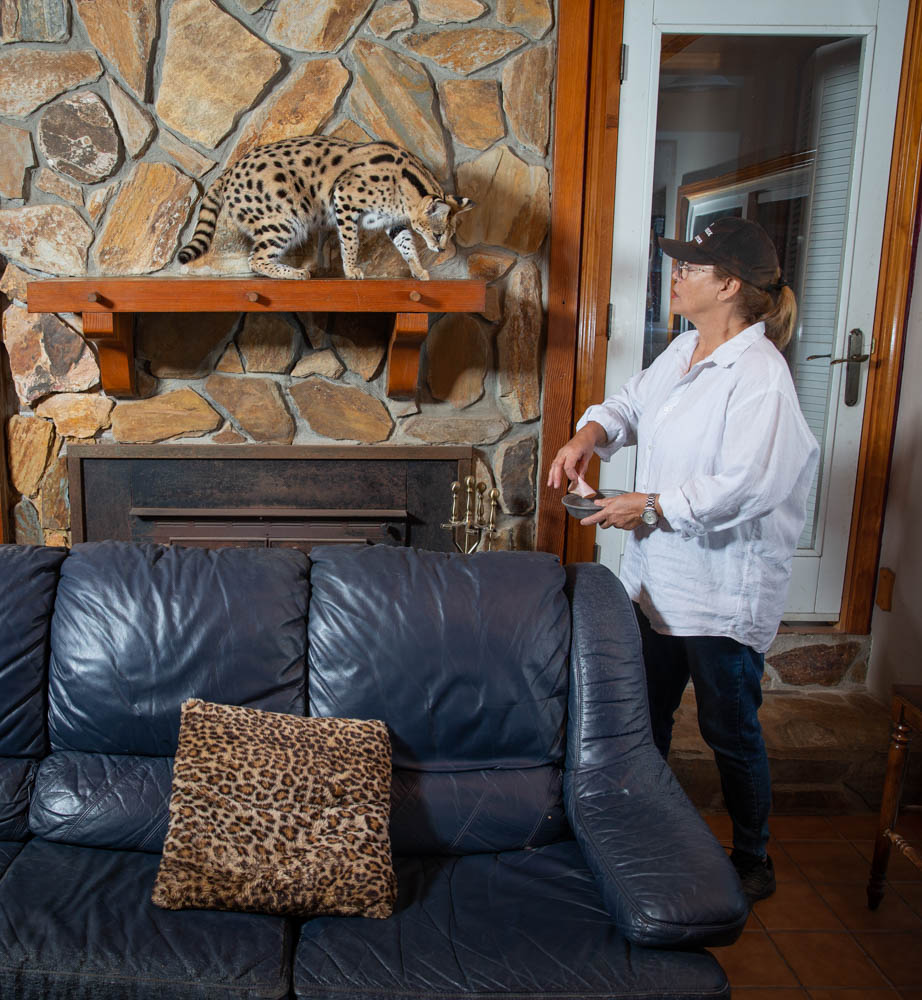
Jim stays behind, sits down in a lawn chair and coos to Dani. The cat saunters over to him as if she owns the place. Just feet from him she casually turns, saunters back to the far side of the enclosure, and flops onto a sunny patch of sand. After a year of interning and donating meat, the Feline Center staff and kitties now feel like family. While shadowing a small tour, “Sheena,” an African serval cat, selects me to spray—twice. Bertie says it’s a mark of affection. Even Jim is impressed by the honor thus bestowed. Sheena takes aim again, and Bertie says, “Hold her tail down!” I do—just in time to prevent a third spraying. The “marking” makes me popular in the next serval enclosure, where Athena sniffs my jeans, then lays across my ankle and nuzzles my boot for minutes. Athena was purchased online by the previous owner for $6,000. She lived in Baton Rouge until the owner’s home flooded and the cat was not welcome at her new living arrangements. When the owner dropped off Athena to Jim, she said she would bring food and money, but hasn’t been seen since. Jim says that’s typical.
The tour group gets a glimpse of one of the center’s jaguarundis. These are the only ones in captivity in the U.S., which is why National Geographic magazine came to photograph them for their February 2017 issue.
As Jim wonders what the future holds, he admits thinking about retiring from his cat rescue mission. He’d like to do more field research, but it’s hard for him to take time off from the cats. He has trips planned to the Rio Grande Valley of Texas and to Belize, and he is a veteran of field work in the Darien Province of Panama—one of the least visited and most dangerous parts of the world. “The trick is to hire bodyguards taller than you are, so when the shooting starts you don’t have to duck,” Jim says. But he also thinks about expanding the Feline Center. “I would love to have more acreage for a lion enclosure,” he says and adds, “I want to raise one more lion before I cross over.”
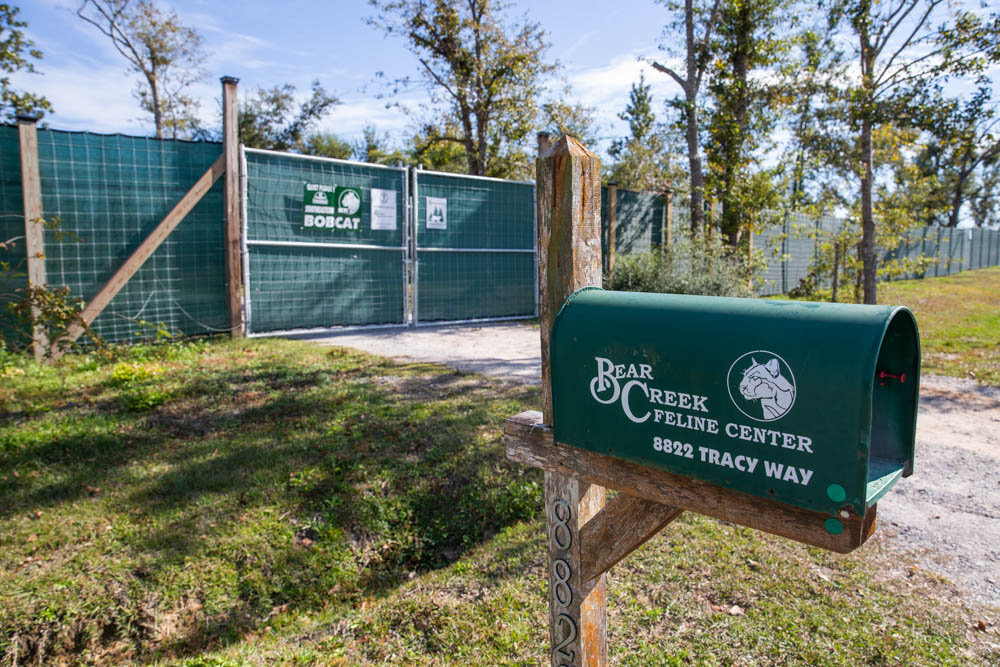
Out of the 52 things to do in Panama City that are listed on the popular website TripAdvisor, the Bear Creek Feline Center is rated number one. It is located at 8822 Tracy Way, Panama City, Florida. Tours are on Tuesday or Thursday, and Saturday or Sunday mornings, and require an appointment. Small children are not allowed, as the big cats tend to stare at them in a non-benevolent way. Call (850) 722-9927 to book a visit. BCFC is a non-profit 501(c) public charity. If you happen to be out of hog livers, they also accept donations of cash. Find out more at bearcreekfelinecenter.org/