FACTS ABOUT FACE MASKS


BY VAL SCHOGER
PHOTOGRAPHY BY MIKE FENDER
Local test facility and manufacturer ATOR Labs offers insights on mask safety and the development of a new respiratory protective device.
Protective face masks are the most discussed accessory and a mandated requisite for many of our daily activities. Wearing a protective face mask, in combination with maintaining social distance, frequent handwashing, and using disinfectant, is one of the recommended measures for warding off the spread of the COVID-19 virus.
But has there ever been an item that has outraged the nation and world, and been politicized as much as the protective face mask? While critics are professing that the imposed face mask mandates are impairing our freedom and breathing, in this time of fear, most of us have recognized that it is simply considerate to wear a protective mask when in proximity to other human beings.
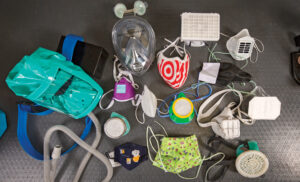
As quickly as the pandemic spread around the globe, we learned that not all protective face masks are the same. The N95 designation by The National Institute for Occupational Safety and Health (NIOSH) is a classification for verified filtration of 95 percent of dust or droplets. But these masks could not be produced as fast as they were needed. In an attempt to preserve the N95 mask supply for health and emergency workers, the Centers for Disease Control and Prevention (CDC) recommended that N95 masks should not be worn by the general public. Meanwhile, for those who look for the 95 percent filtration rate, China-manufactured masks, labeled as KN95, are available. Both facemask designations have come under suspicion as counterfeit NIOSH certificates have been uncovered.
U.S. manufacturers have increased their production of NIOSH-rated masks, but there is still a discrepancy of demand and supply. This opens opportunities for savvy entrepreneurs. Northwest Florida is home to several companies that have diversified their manufacturing portfolio. 850Medical, an offshoot of boating accessory manufacturer JetBoatPilot, has added face shields to their production line. Another local company, A Converting Inc., has fulfilled a government contract for the production of 100,000 face shields this year.
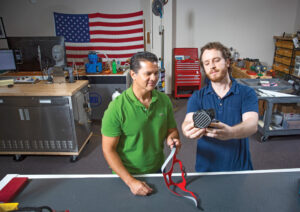
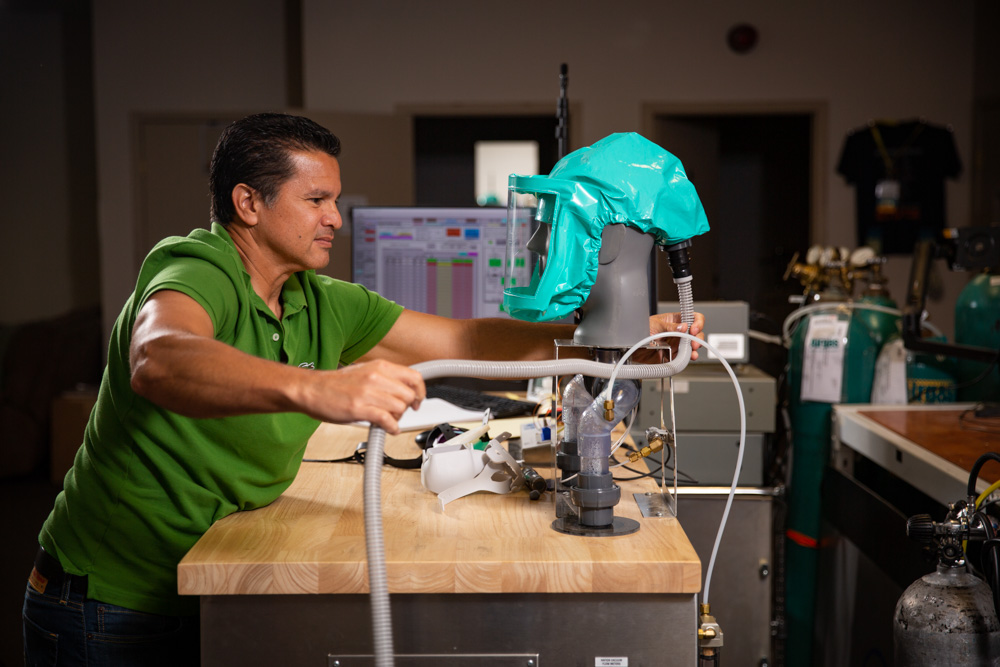
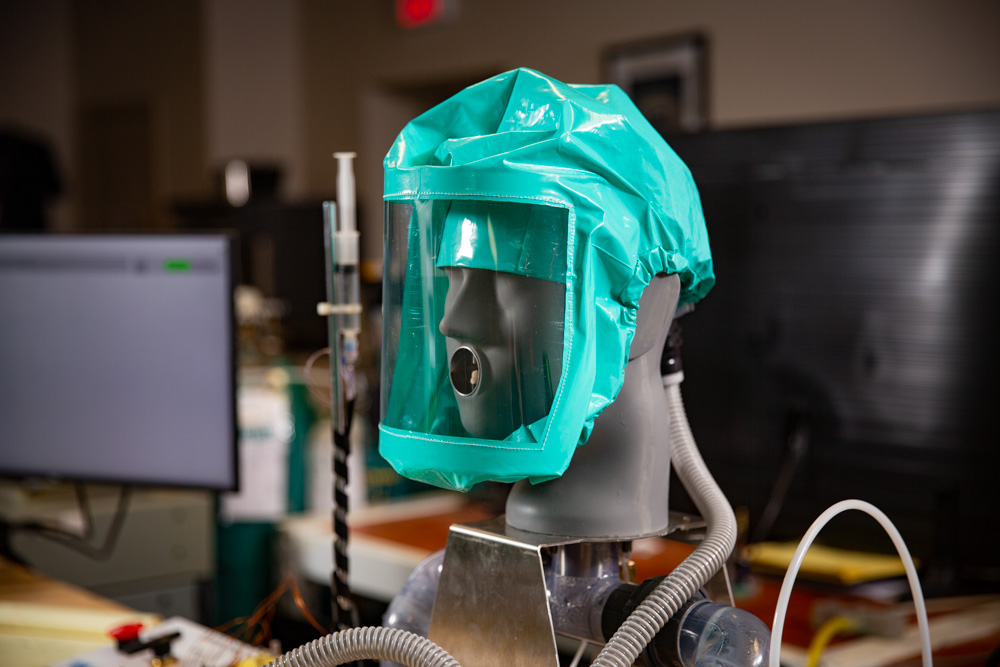
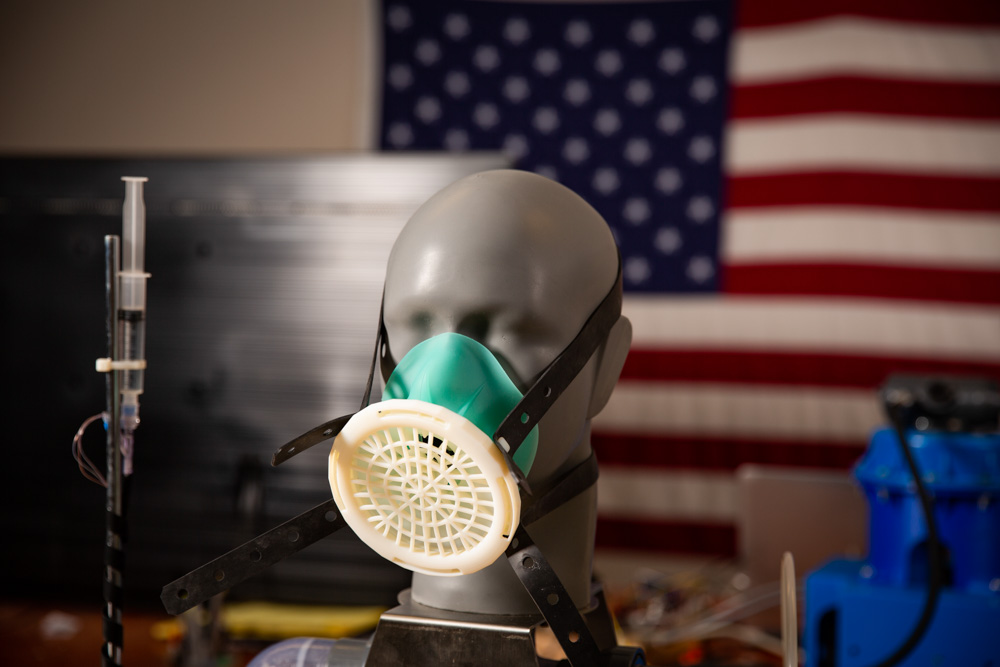
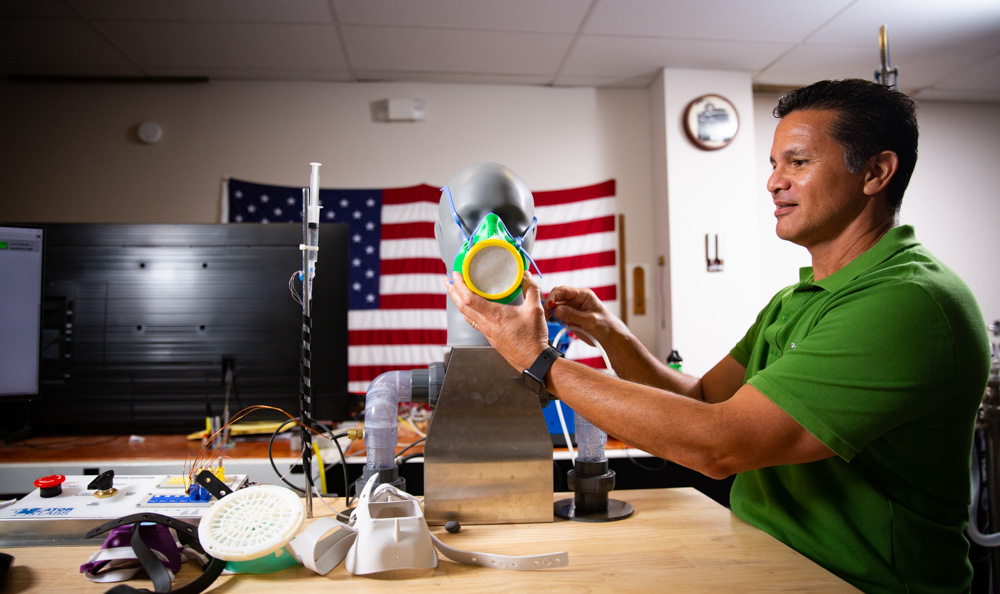
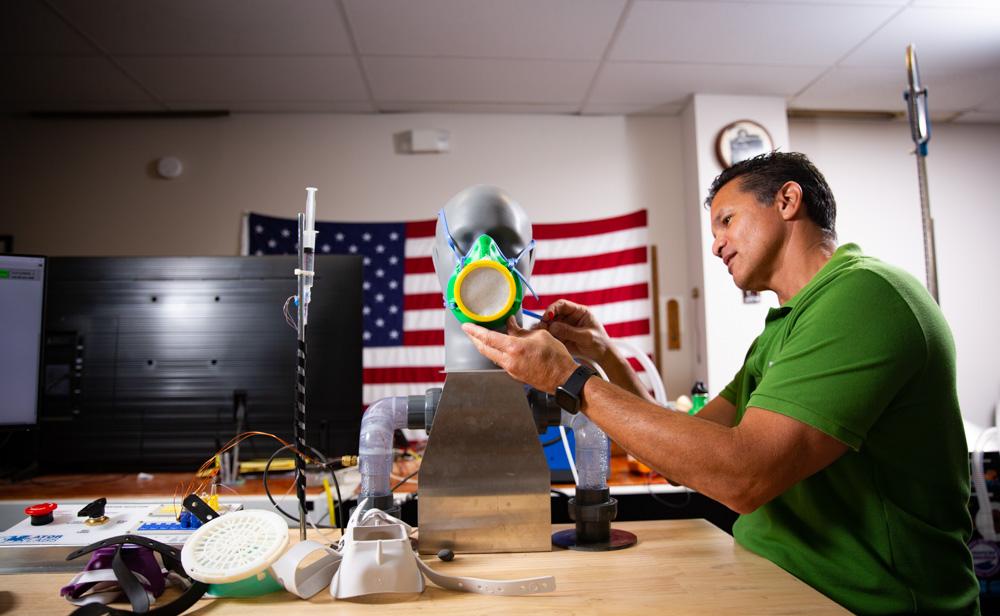
At the very source of face-mask evaluation and testing is Panama City Beach-based ATOR Labs. The company has worked for and with The National Institute for Occupational Safety and Health since 2016 and has set new standards in developing automated breathing metabolic simulators (ABMS), machines of the size of a small car that simulate human breathing and test the safety of respiratory protective devices, enabling prototype development and evaluation for their production. Panama City Living Magazine’s March/April 2020 issue introduced ATOR Labs’ team, leadership, and innovative approach.
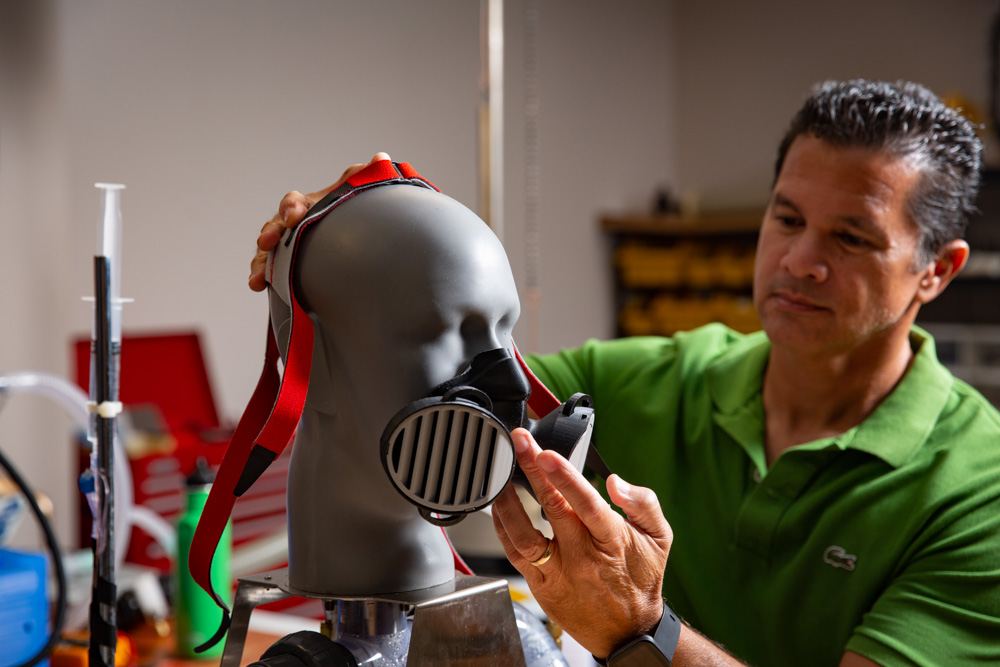
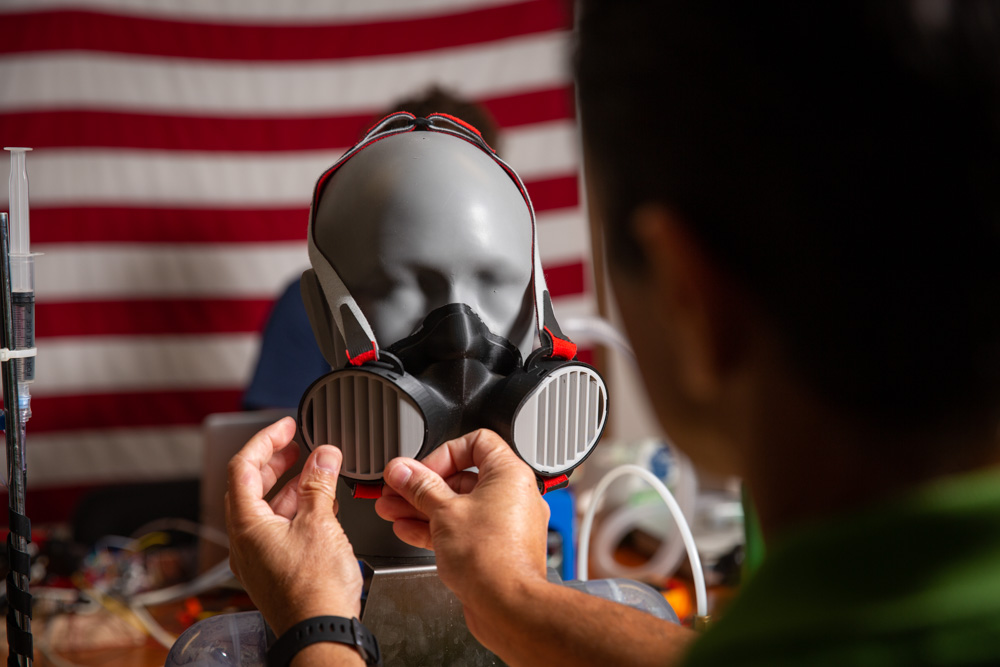
With the outbreak of the COVID-19 pandemic, face masks from dozens of manufacturers have undergone testing at ATOR Labs. The company is currently also developing a prototype for a state-of-the-art protective respirator with a 99 percent filtration rate. We interviewed company president Rob Moran to learn more.
How many manufacturers fabricate the N95 face masks in the U.S.? Can you also give an overview about the worldwide production of similar products such as KN95 and the current need for masks in the U.S.?
Well, the real question is who makes N95-capable non-woven polypropylene. There are a ton of companies—only a couple of them are in the U.S.—that make the NWPP, but not that many that make the N95-capable variant. Korea, Japan, and China produce the most of both. This is the raw material.
From here, it moves to the manufacturer and is assembled with the other components like the elastic, etc. Currently, most of the manufacturing of N95s and KN95s happens overseas, but that is changing.
3M has increased its American factory output to 600 million masks per year, unfortunately, the projected need (in the U.S.) is almost 3,5 billion. That should give you an idea of what the demand is.
When did ATOR Labs start manufacturing masks?
We make the machines that help test and validate respiratory devices—we’ve been helping groups from all over the nation develop their respiratory protective devices. It was only natural for us to have one of our own.
We are in the final phases of tooling and will start manufacturing in a couple of months. We’ve got a couple of steps left, like certification— and this takes a couple of months. Because it’s so long of a timeline, we will have our testing results posted on the website. We are going to start selling as soon as we are done with tooling and decided to concentrate on Bay County before moving on to other areas. We want to help take care of our home before moving on.
Give us some insight about the requirements to meet the NIOSH standards for N95 masks and your production process and how many masks you manufacture per day/week/month.
Our initial manufacturing has begun. We currently make 200 masks a day and are growing rapidly from here. Our filter suppliers can support over one million units over the next six months. That’s more than enough filters to take care of the 175,000 residents of Bay County. The certification process mainly focuses on two distinct things; how well your filter works, and how difficult it is to breathe in. We have tested the fit on multiple face shapes and in various environmental conditioning protocols.
The CDC has published a statement after initially recommending not to wear cloth masks where they recommend that the general public should not wear N95 respirators to protect themselves in an effort to preserve the N95 mask supply for healthcare workers and other medical first responders. Is the supply at such a shortage?
Initially yes, there was. There are enough N95s in production to support healthcare during the pandemic and they are rapidly expanding their manufacturing capability—but that takes time. So, for the foreseeable future, unless another supplier, like ATOR, comes along…
Can you make statements about the best production method, fit, ear fit, materials, and filtration capabilities of your masks?
We have two types of filters available: CNB-N95 and CNB-N99. These two designations tell how much particulate the filter will remove. N95 masks filter out at least 95 percent of the particulate down to .03 micron. The N99 masks filter out 99 percent or more of the particulate down to .03 micron. Our N95 removes over 96 percent of the airborne particles and has independent test data demonstrating over 99.999 percent viral and bacterial efficiency. Our N99 filter does even better and we have designed them specifically for our medical providers and the “at-risk” population.
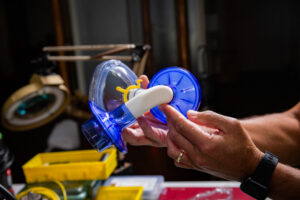
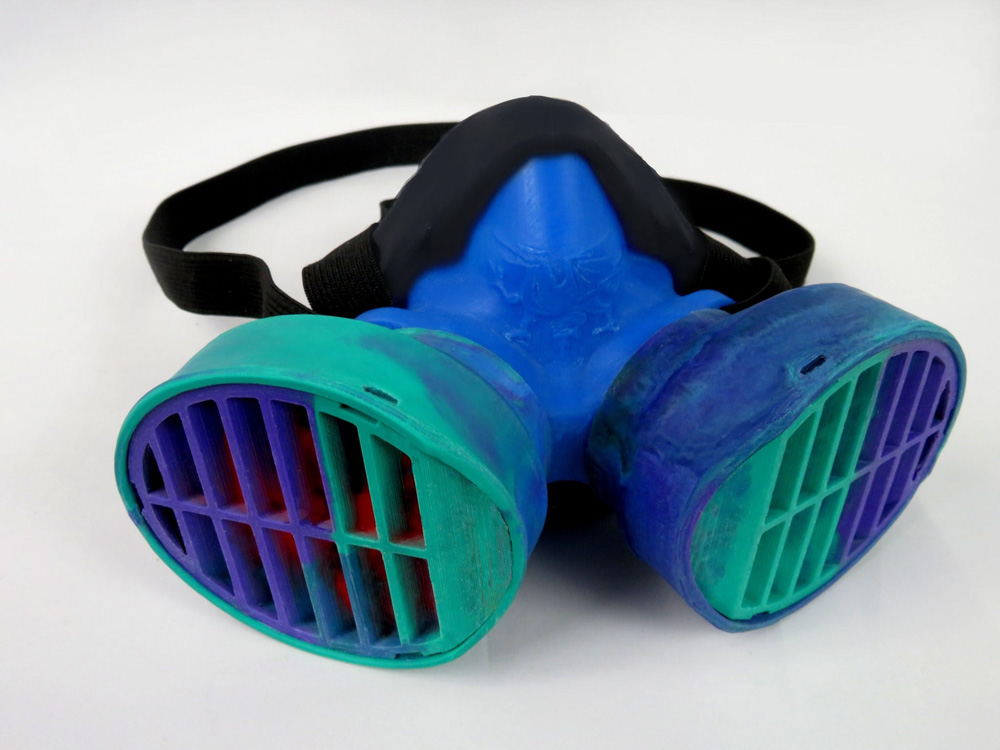
The CNB masks are called elastomeric filtering face pieces, meaning that our mask is made of plastic and it’s reusable. We have designed the mask to be machine- or hand-washable and our filters are reusable.
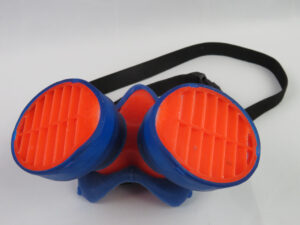
The head band fits securely and won’t let the mask slide down your nose. We use silicone for the face seal—you won’t have that rashy redness from wearing an N95 all day. It’s super comfortable and really easy to breathe through.
You know that really warm air that you breathe in an N95 that makes you feel like you’ve got to take it off? We’ve solved that—when you use our mask, it’s almost like being in fresh air, just without all the particles.
We have seen contradicting information and many people have voices their doubts and concerns about wearing a mask, its effectiveness in preventing viral infection, and in general, the air and breathing quality. Have you conducted your own research and can you let our readers know about the results and possible recommendations?
Purchase products that you can trace. It takes five minutes to check a mask manufacturer’s website for information. If they are certified, they will have a NIOSH number—it’ll be stamped on the mask: TN-XXXXX, with the NIOSH logo on it. You can look that number up on the NIOSH website—the information should match.
If they aren’t certified, go to their website and look for testing data. You’ll know it when you see it. It will show all kinds of information about the filters, the fit, with instructions for use, as well as where they are in the certification process.
Unfortunately, there are a number of fake or counterfeit masks that are out there. Be wary. Just because something looks cute, doesn’t necessarily mean that it will work.
Find out more about ATOR Labs:
atorlabs.com
Sources and further reading:
https://www.cdc.gov/niosh/npptl/topics/respirators/disp_part/
https://www.cdc.gov/niosh/index.htm
https://www.fda.gov/medical-devices/personal-protective-equipment-infectioncontrol/
n95-respirators-surgical-masks-and-face-masks