
Engineers in the Making


BY MIKE FENDER
PHOTOGRAPHY BY MIKE FENDER AND GULF COAST STATE COLLEGE FACULTY
[dropcap]A[/dropcap]t Gulf Coast State College and Florida State University Panama City students are building robotic boats and submarines to master engineering skills that make them desirable employees for top companies worldwide.
“The Navy wants engineers, the air force wants engineers and the jobs are out there. That is what we are trying to get everyone excited about,” says Jose Lopez-Baquero, Instructional Coordinator, Unmanned Vehicle Systems at Gulf Coast State College. “We are trying to create a pathway in the science, technology, engineering and mathematics (STEM) field,” he adds. The program and pathway is also open to high school students, giving them early exposure to STEM programs and an inside look at the curriculum of Gulf Coast State College as well as Florida State University’s Panama City Campus.
SUB CLUB
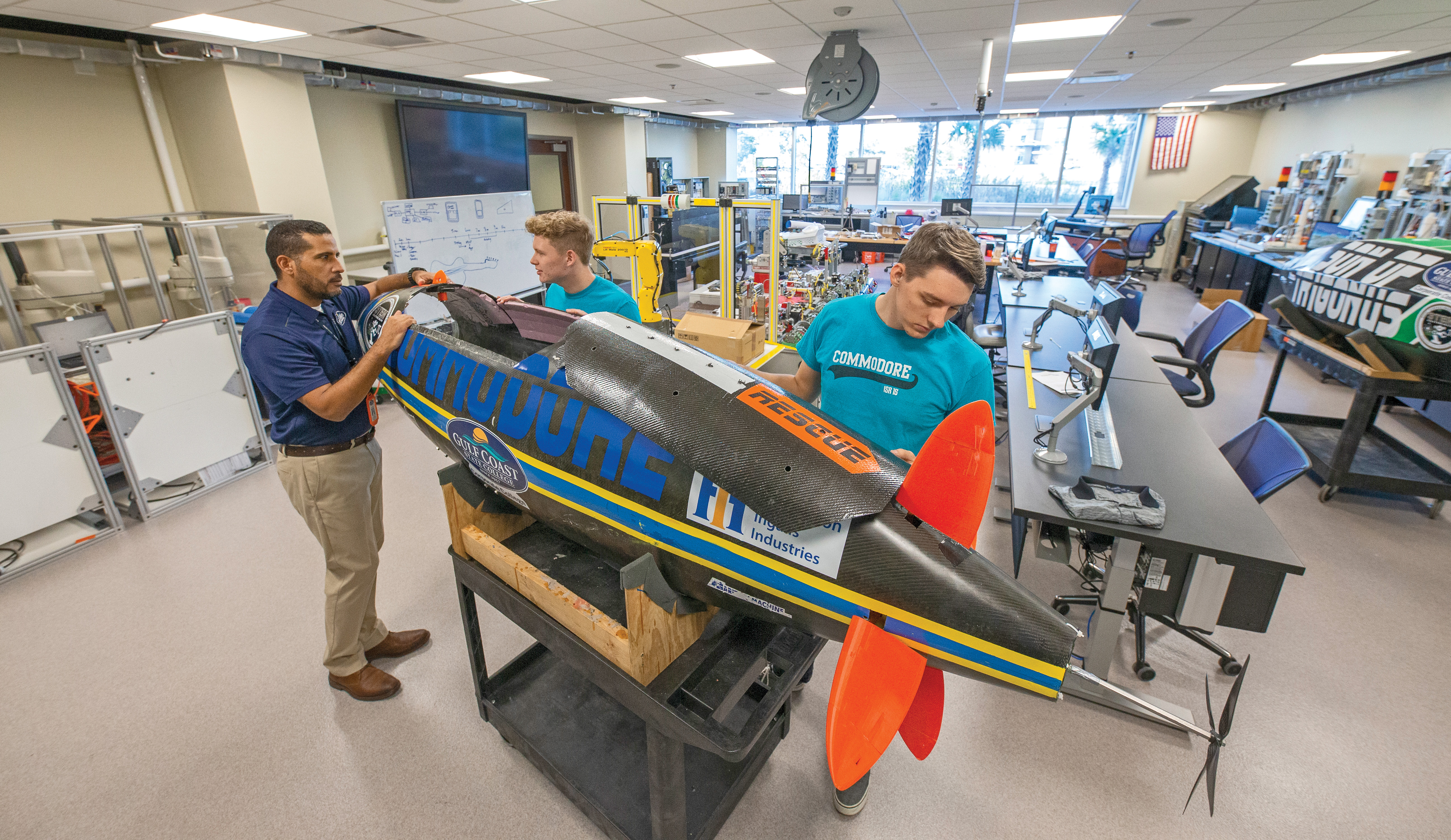
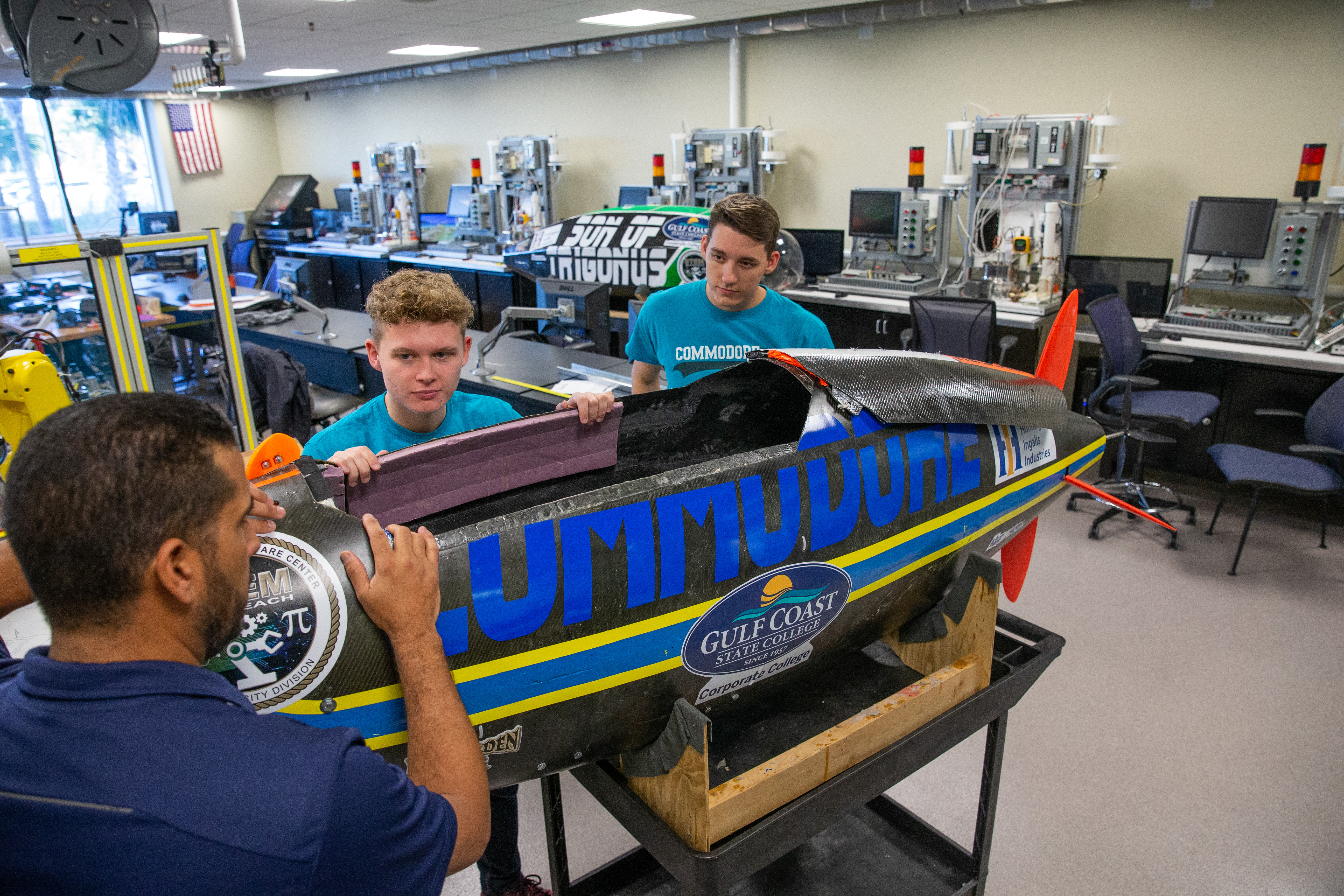
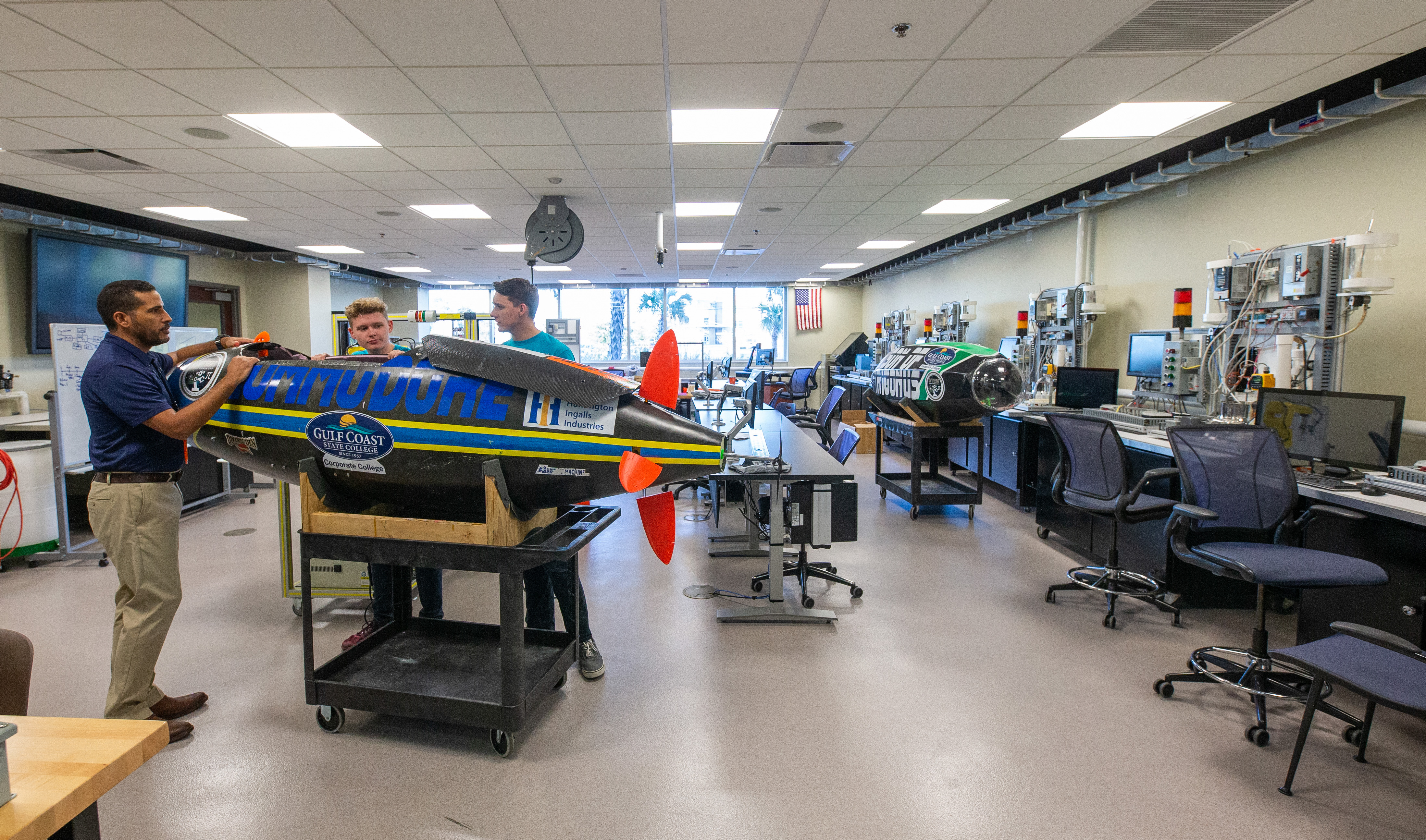
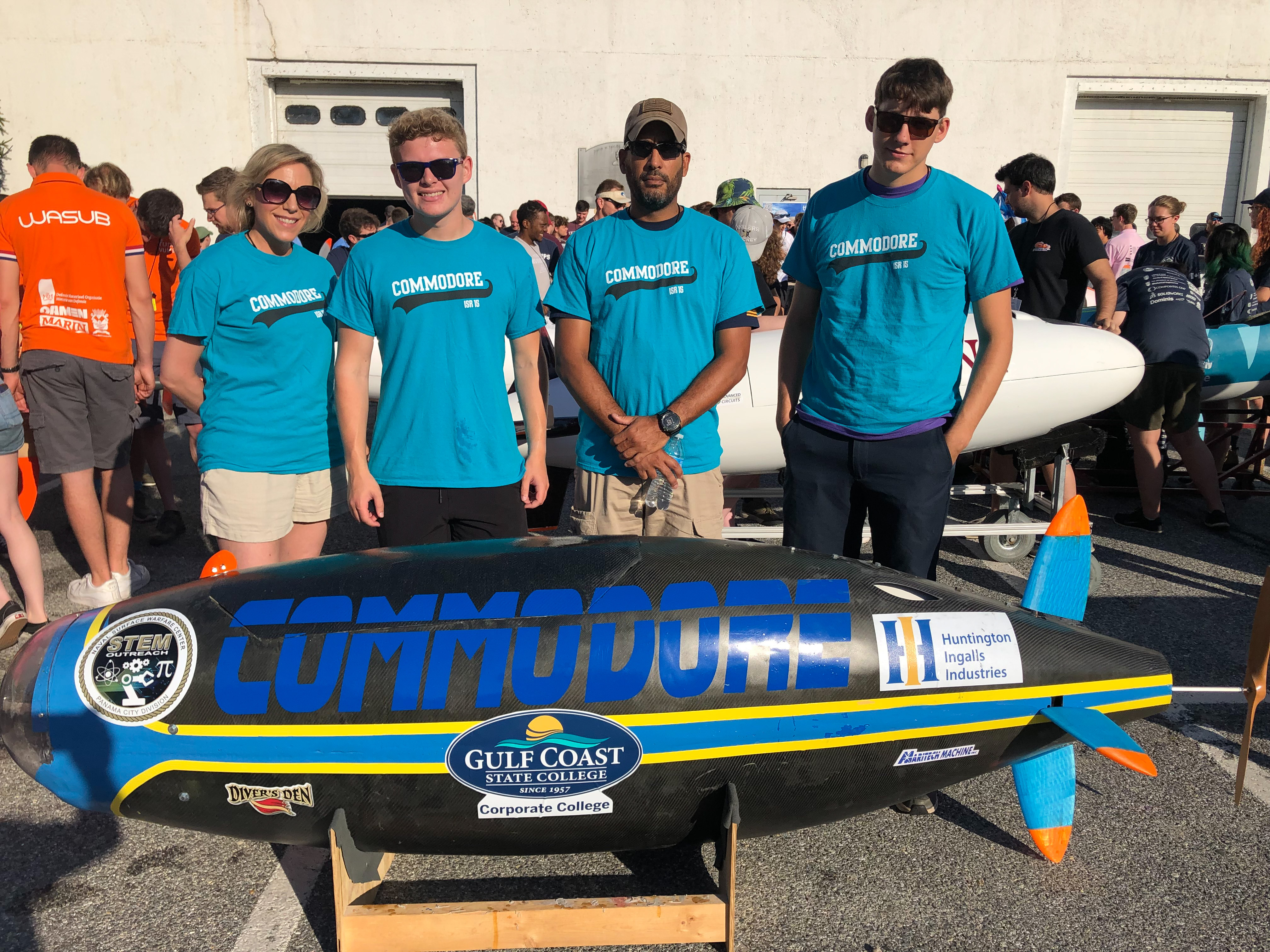
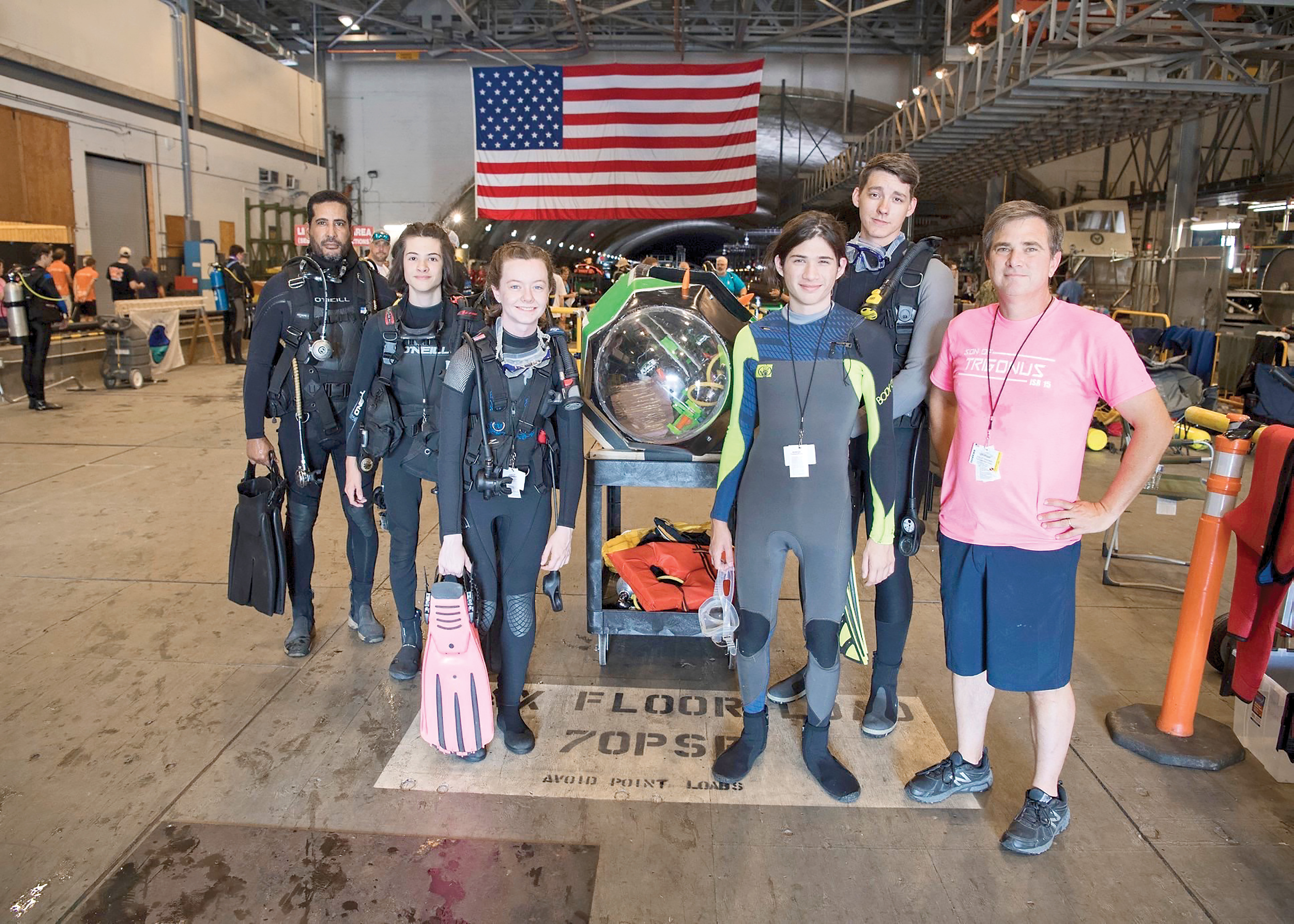
Robert Copsey and Landon McCoy are both GCSC students in the Submarine Club on campus and worked last year to build a pair of submarines, one for the college and a second for high school students in the club. Together with other members and faculty, the club competed in the 15th International Submarine Races held last June at the Naval Surface Warfare Center in West Bethesda, Maryland, a competition that takes place every two years. Gulf Coast State College was one of two Florida colleges that competed. Florida Atlantic was the other. Twenty-four teams represented their schools, of which five were international.
Race organizers say the event was created “in response to the recognized challenge that a shortfall in the ocean and marine engineering fields and scientists was looming in the near future.” It provided an end goal for the club to develop a one-person “wet” submarine. Crew members wear scuba gear and breathe from an air supply carried aboard the vessel as they propel the sub over an underwater course. Each submarine is designed from the ground up and club members find solutions to propel and navigate it.
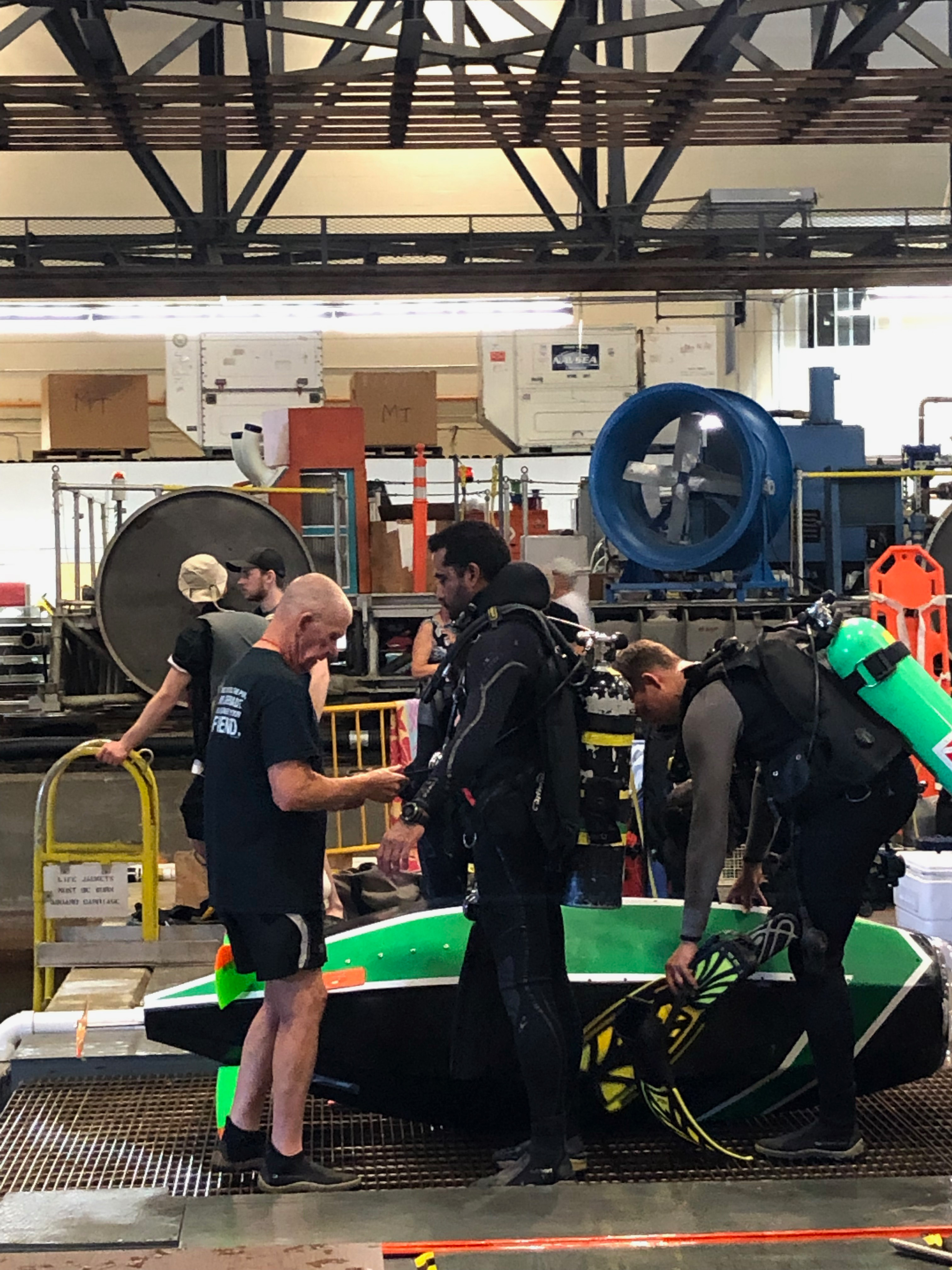
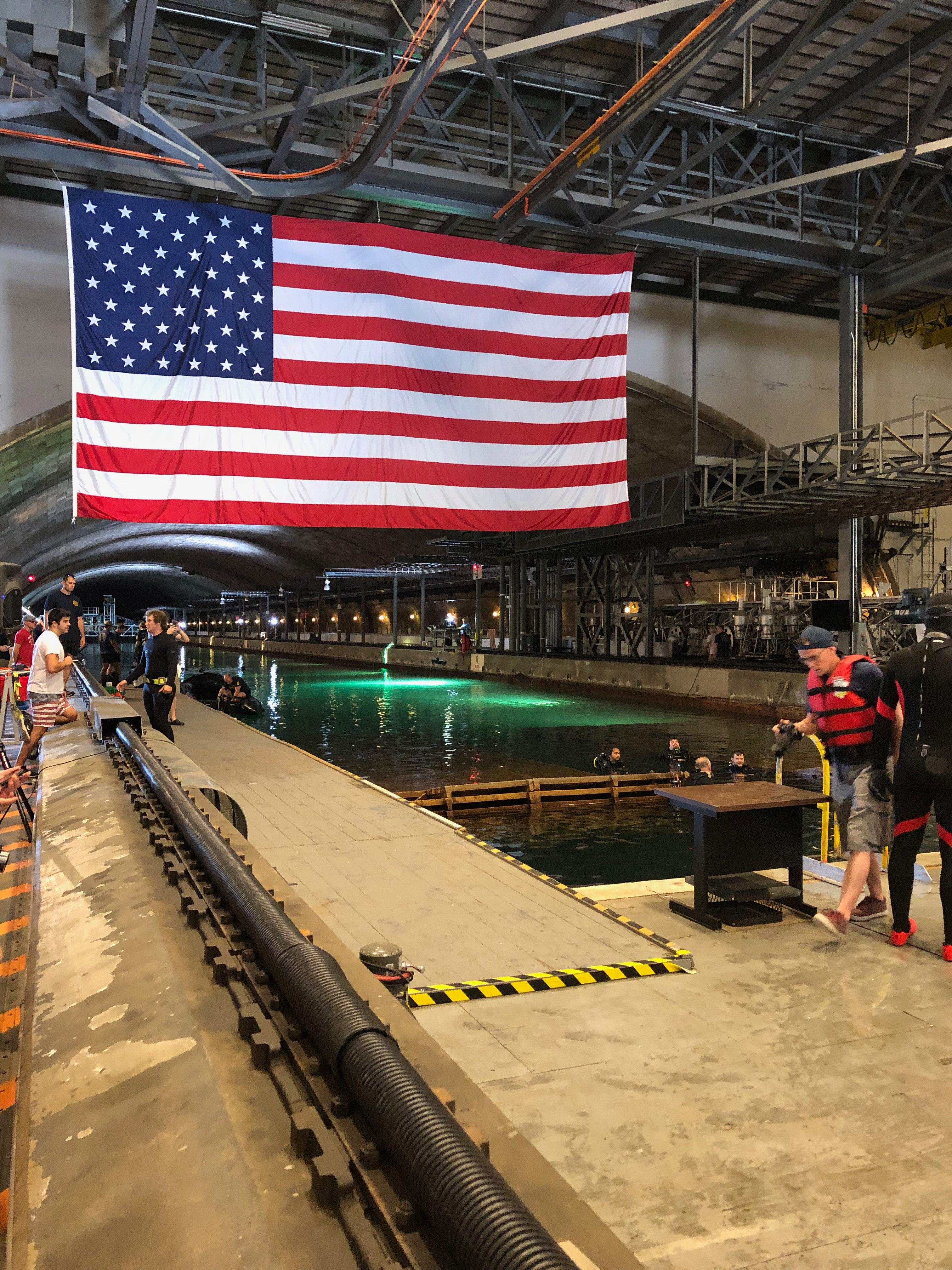
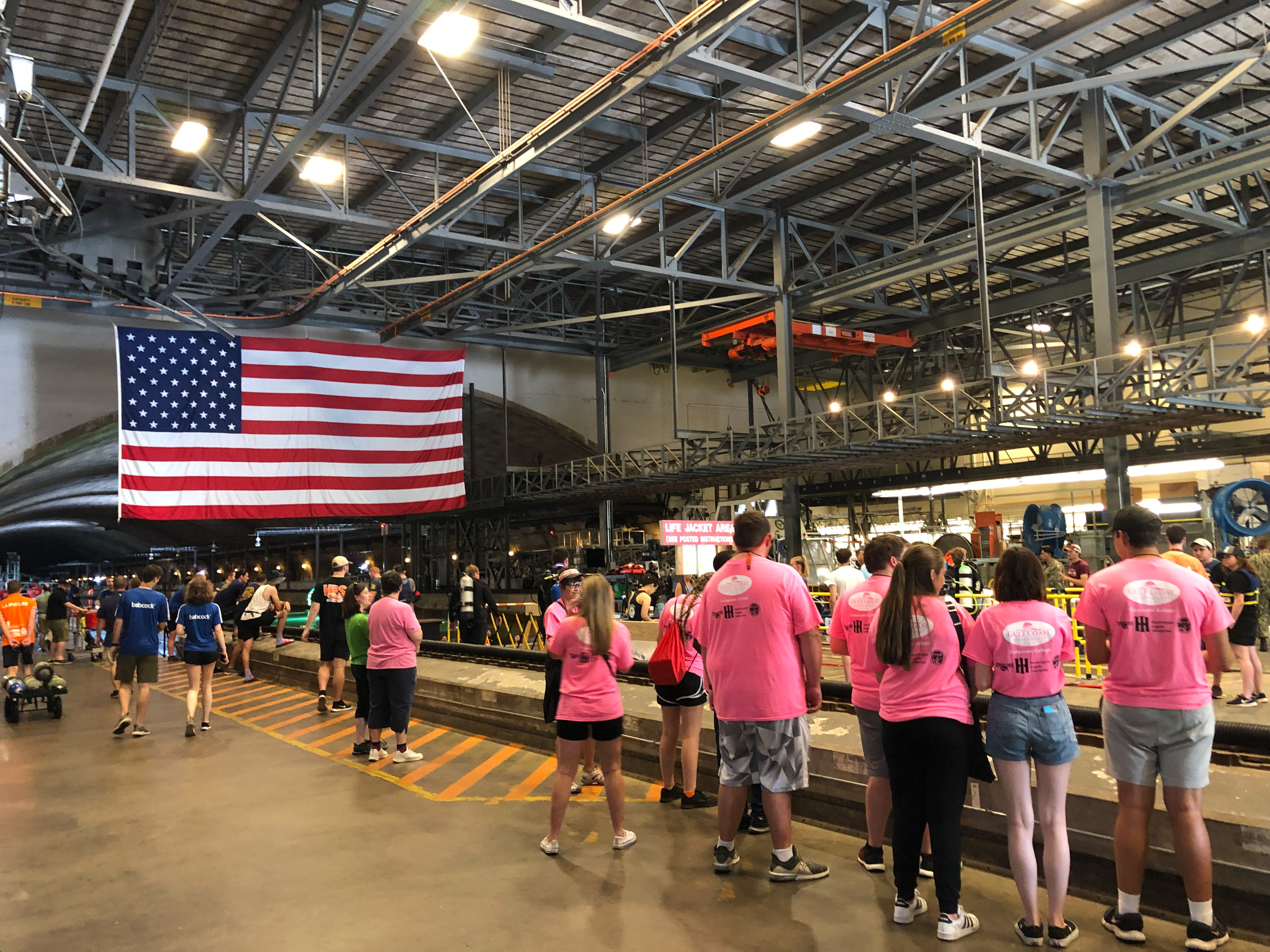
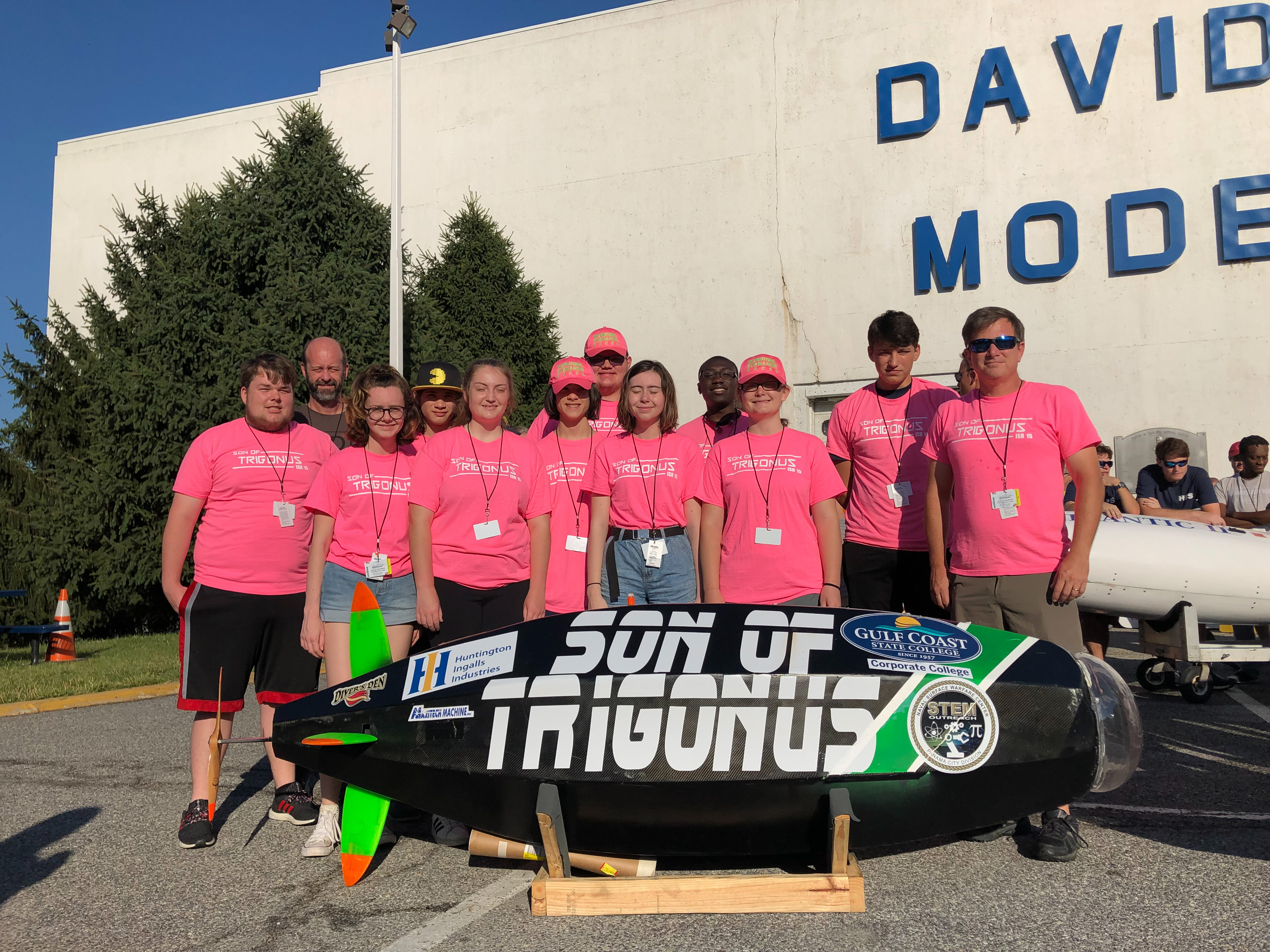
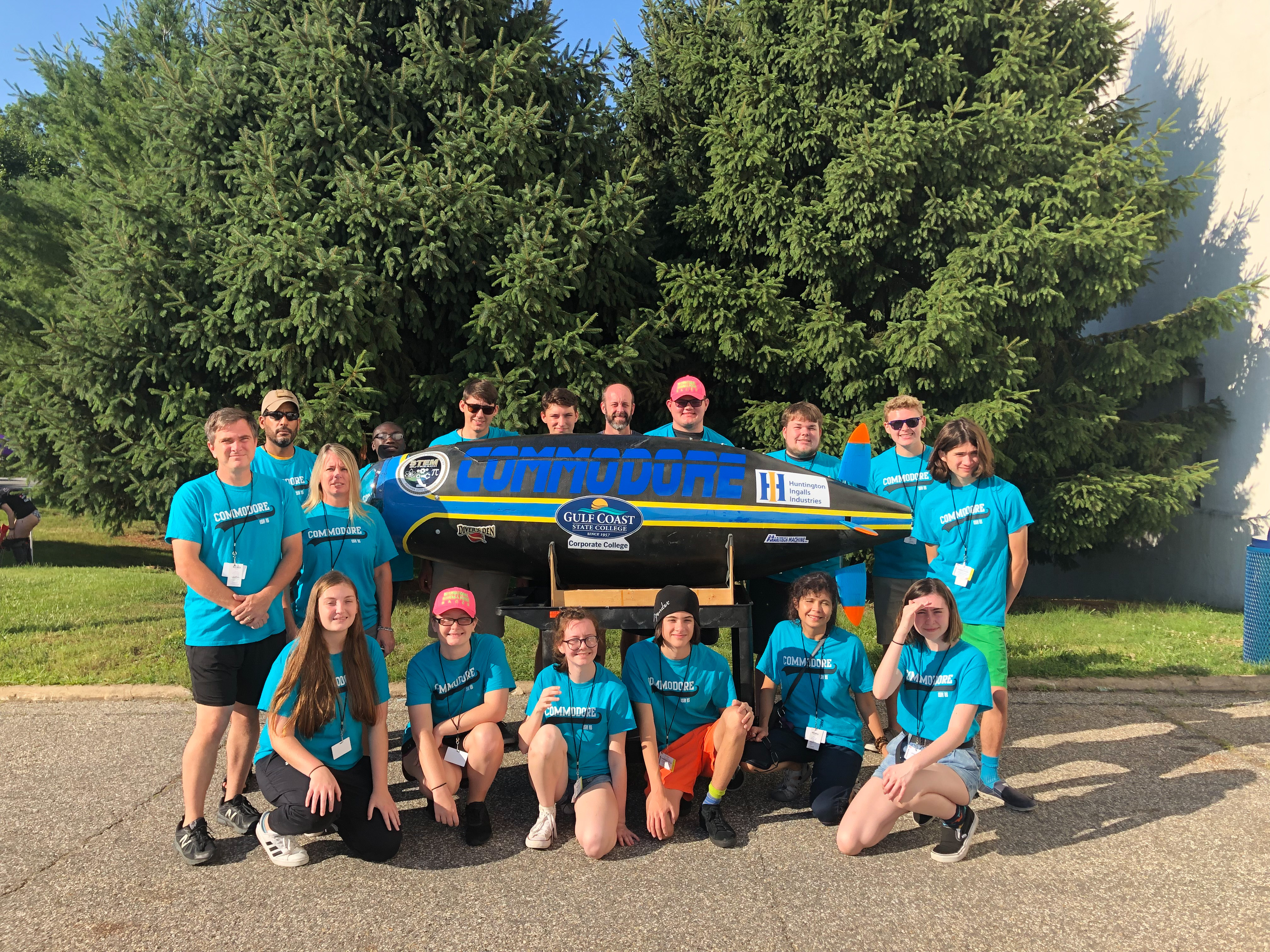
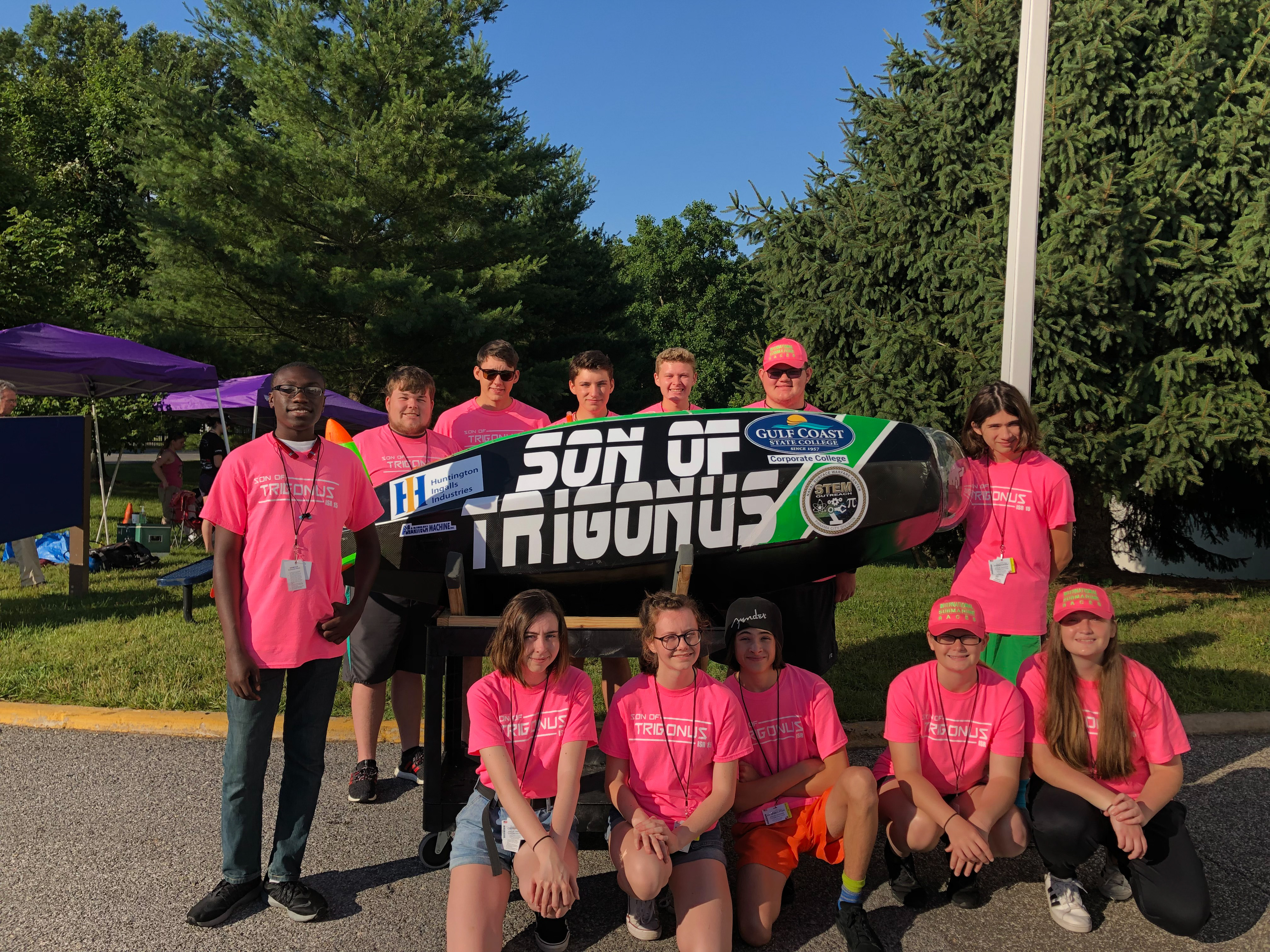
Both Copsey and McCoy say friends and family members were shocked when they first came home from school and told them they were building a submarine. “It really throws people off,” says Copsey. “It’s really something people think is unachievable for a college student to do.”
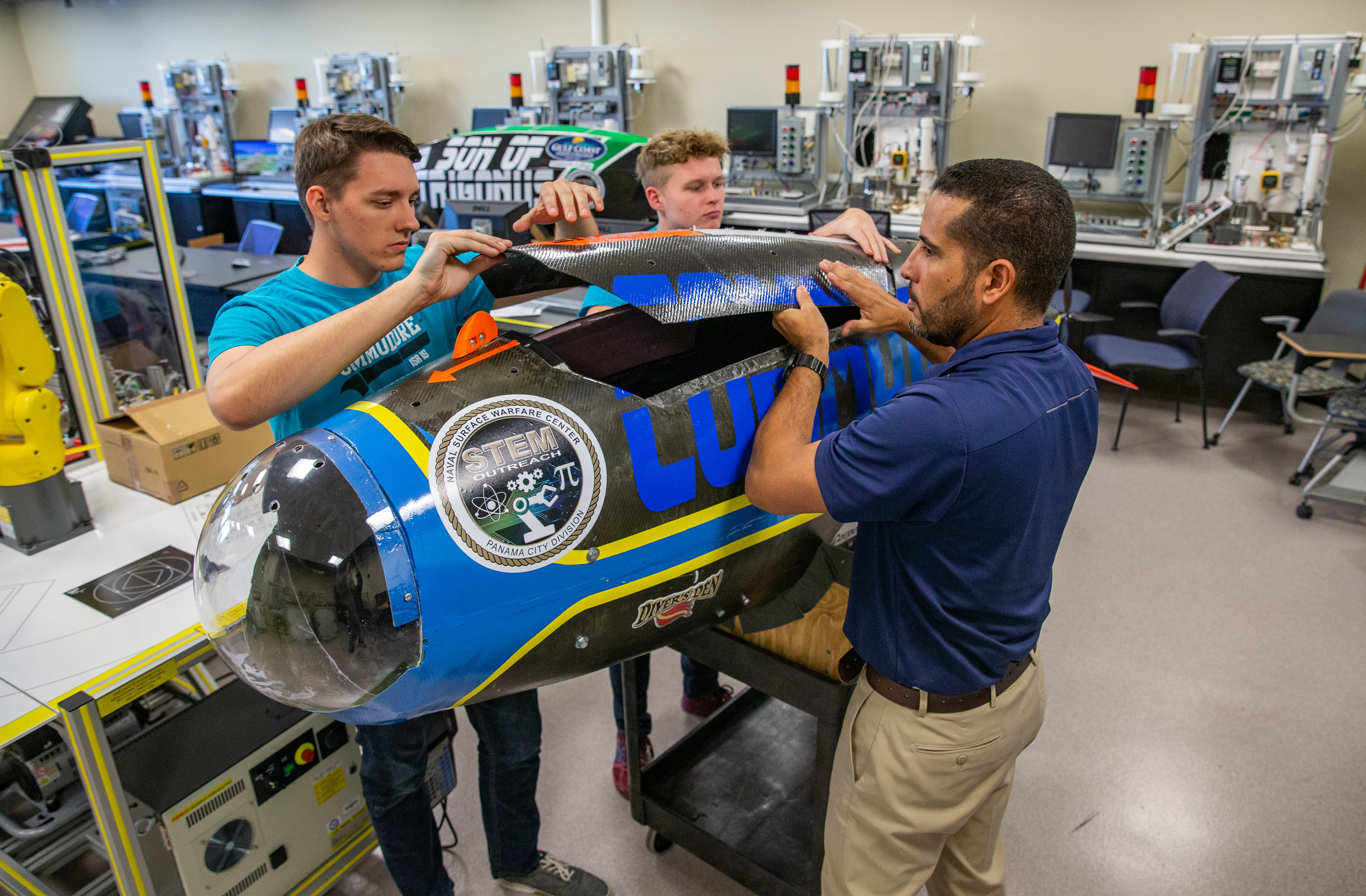
The students received quite a bit of help from the Panama City community. Lara Herter, program coordinator, business and community education at GCSC, serves as the coordinator for the submarine club. She says the Naval Surface Warfare Center, PC Division, provided the materials to build the submarines. Technical Solutions, a division of Huntington Ingalls Industries (HII), in Panama City Beach, provided team shirts. Local companies such as The Diver’s Den provided the training and scuba certification for students and Maritech Machine helped the students with resources to produce some of the parts for the sub’s transmission.
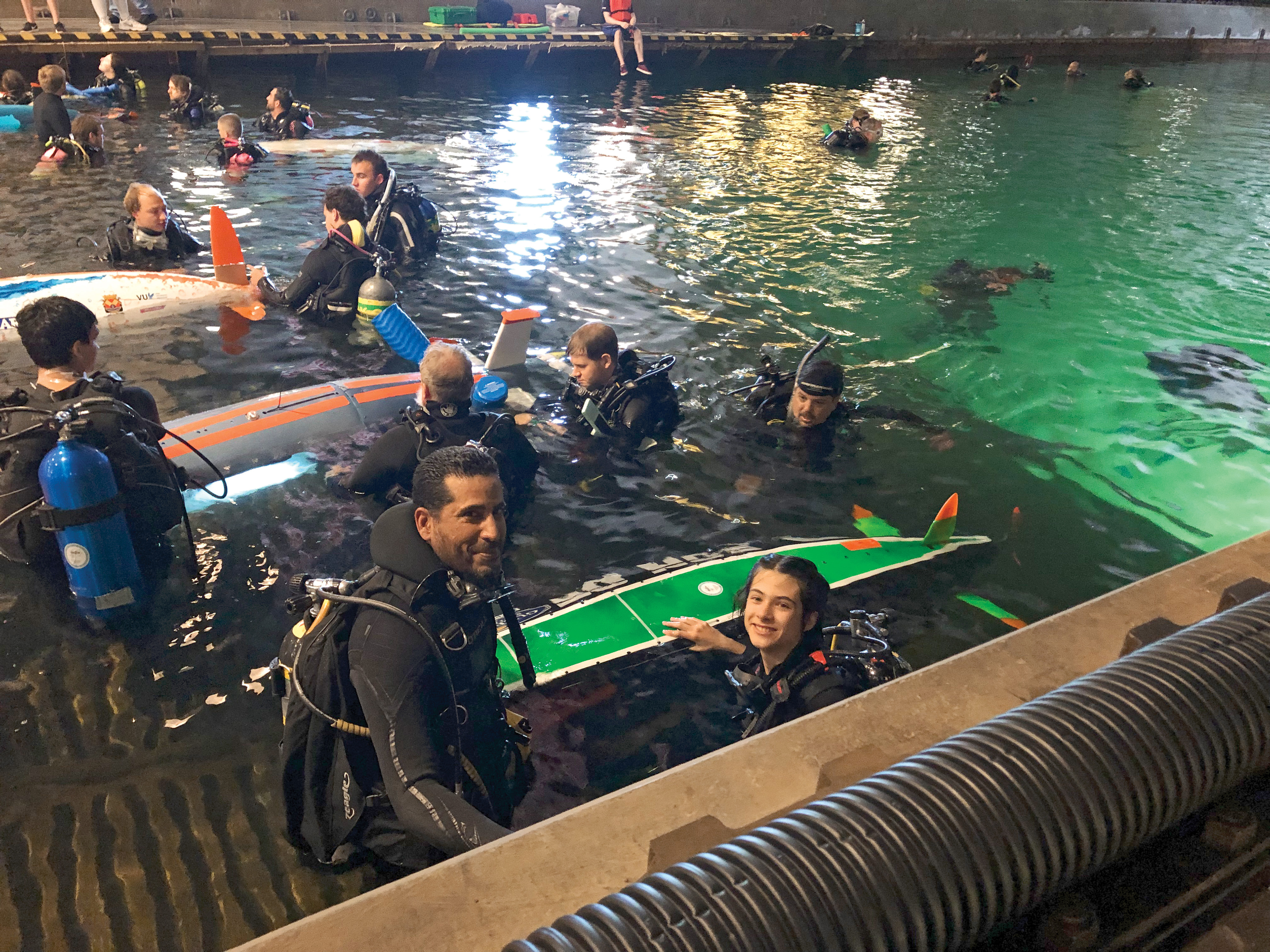
In the aftermath of Hurricane Michael, the club only had eight months to design, build, and test their subs before the competition. Most schools have two years. Baquero says their goal was to just pass the starting line with the sub. “At that point we were seeing problems with stability and control, so next time we want to have that piece solved so that we can get further along the course. Our next goal is to cross the start line and the finish line. And then, maybe with the next one, we can go for speed,” he says with a large smile. Still, Baquero feels that for a first-year competitor they did really well.
Lara Herter feels very confident about preparing for the next competition. “They will have more time to put thought into the parts, more time in practicing and getting into the pool. We were probably only in the pool with scuba gear four times before we went up there. We are looking at a year of building and perfecting the parts and then six months of testing.”
The Sub Club will gear up again in the spring semester, recruiting members to start preparing for the next international race held in 2021. They have applied for grants to help with some of the costs but may have to rely on local support again, Herter says.
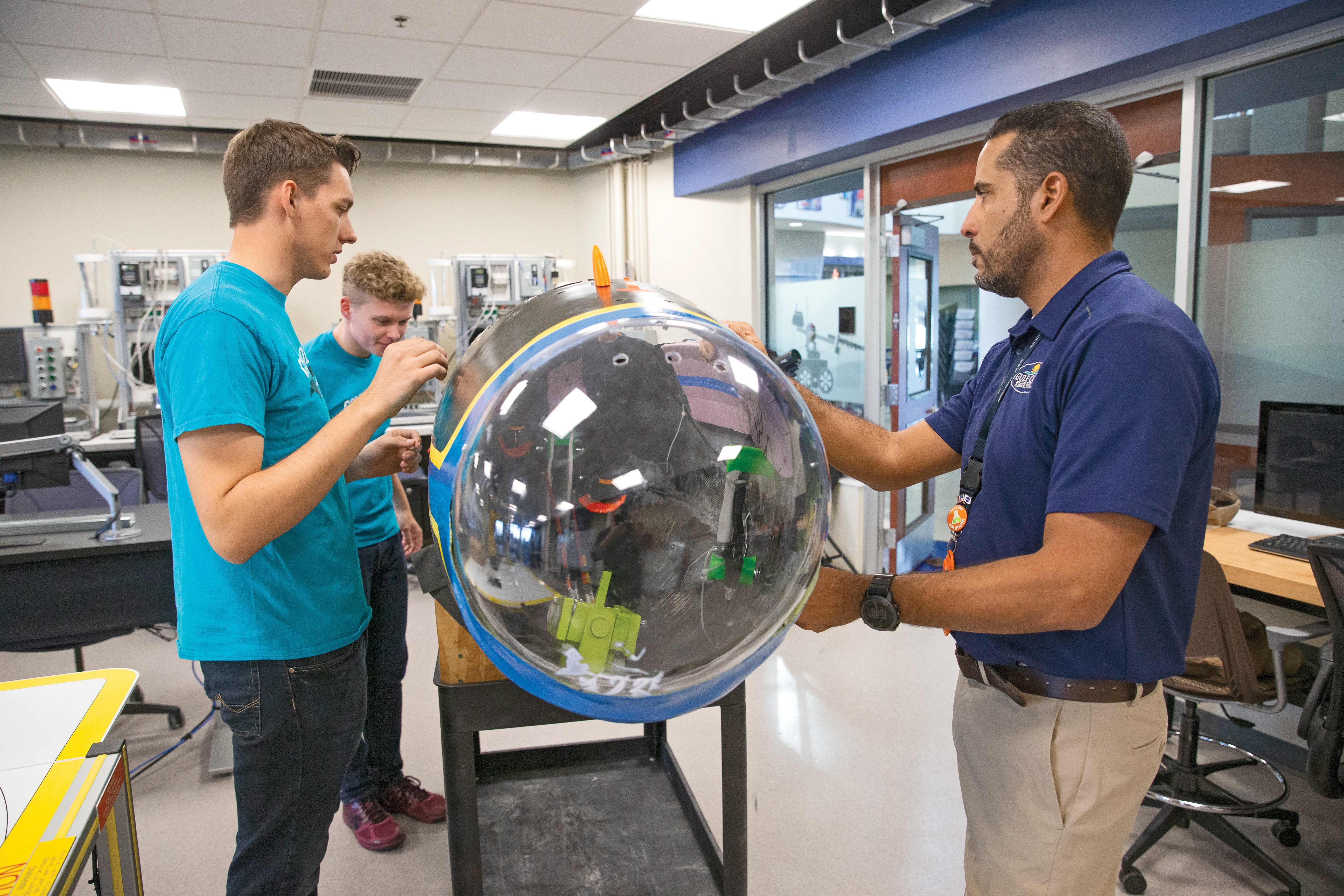
Each sub is unique. Students build their vessel from the ground up and it is designed to be large enough for a student pilot, along with scuba gear for breathing. The students use carbon fiber material to construct the hull and 3D printers to build many of the parts. “We had a lot of modifications to make,” Copsey remembers. “When we first did it, because we were using 3D printing, it was a lot of trial and error.” With the next one he says they will get into the math for the parts design. McCoy says they were having some problems with the tolerances on the 3D printed parts that were prone to sticking more than they would like. He says they hope to mill out those parts in metal using a new stainless steel 3D printer that Gulf Coast State College has purchased. “That would make it a lot smoother,” he says. “It would make it easier to get the blades going through the water, and we can hit a higher speed.”
Baquero says adding electronic components to the transmission systems will be a big goal for the next sub. It will help with depth and heading, problems they encountered last time. “Incorporating and waterproofing the electronics is a big challenge,” he adds. “Electricity and water don’t really mix. The systems we use here for the unmanned vehicles are very expensive and usually that is because of the electronics.”
“These types of clubs and competitions can create a spark in a student that can help them get to the next level…”
Both McCoy and Copsey plan on continuing their education as engineering majors at FSU next year and want to continue with the club. At that point Gulf Coast State College plans to make the club a joint effort and will open participation to students on both campuses. McCoy says while in his future he may not end up working with real submarines, the club and competition are a good chance to get involved with what they are interested in, like manufacturing components, the math behind how the hydrodynamics works on the hull, and the electronics that are going to be in our next sub. “It’s just a good chance to work with all that while we are still in college, and get that hands-on experience. In my opinion, you can learn a lot more actually working on something, working on projects that you are passionate about, than you can by sitting in a classroom.”
Herter says one of the added bonuses to the international competition is it is also a big recruiting event for large companies. Students will be able to interact with potential employers.
For the next competition Baquero says Bay District Schools and the college will have separate teams. If they can get the grants they have applied for, part of the grants will provide scholarships for students. “I am thinking once that happens we are going to have a waiting list of people wanting to join the club. You get free dive training, a stipend, a chance to travel, and you get to learn new things,” he summarizes.
Baquero, who is also a retired Navy instructor, says besides donating building materials, the Navy base in Panama City is a big supporter of the club. They also helped by providing a Navy engineer for mentoring. “The Navy is really big on STEM projects and we are trying to integrate all of them here. We are trying to get our area a little bit more involved in things that are outside of the box.”
The box of STEM-related clubs and programs that are available for students keeps growing, according to Baquero. Middle school and high school students in the area have a SeaPerch program available to them that involves piloting an underwater ROV, a remotely operated vehicle, that students modify to perform tasks like grabbing rings. He says a new program coming this summer called SeaGlide has students designing wings for an autonomous vehicle that glides in the water, dives, and then comes up again while performing tasks along the way. Both SeaPerch and SeaGlide are part of youth summer camps offered at GCSC.
“All of these programs are about exposure,” says Alan Jeffries, engineering technology program coordinator at Gulf Coast State College and one of the faculty advisors for the RoboBoat Club. “These types of clubs and competitions can create a spark in a student that can help them get to the next level. The more we can expose high school and college students to these hands-on programs, the more they learn.” He adds that most of his students have so much fun with these activities, they do not perceive it as teaching and learning.
ROBOBOAT
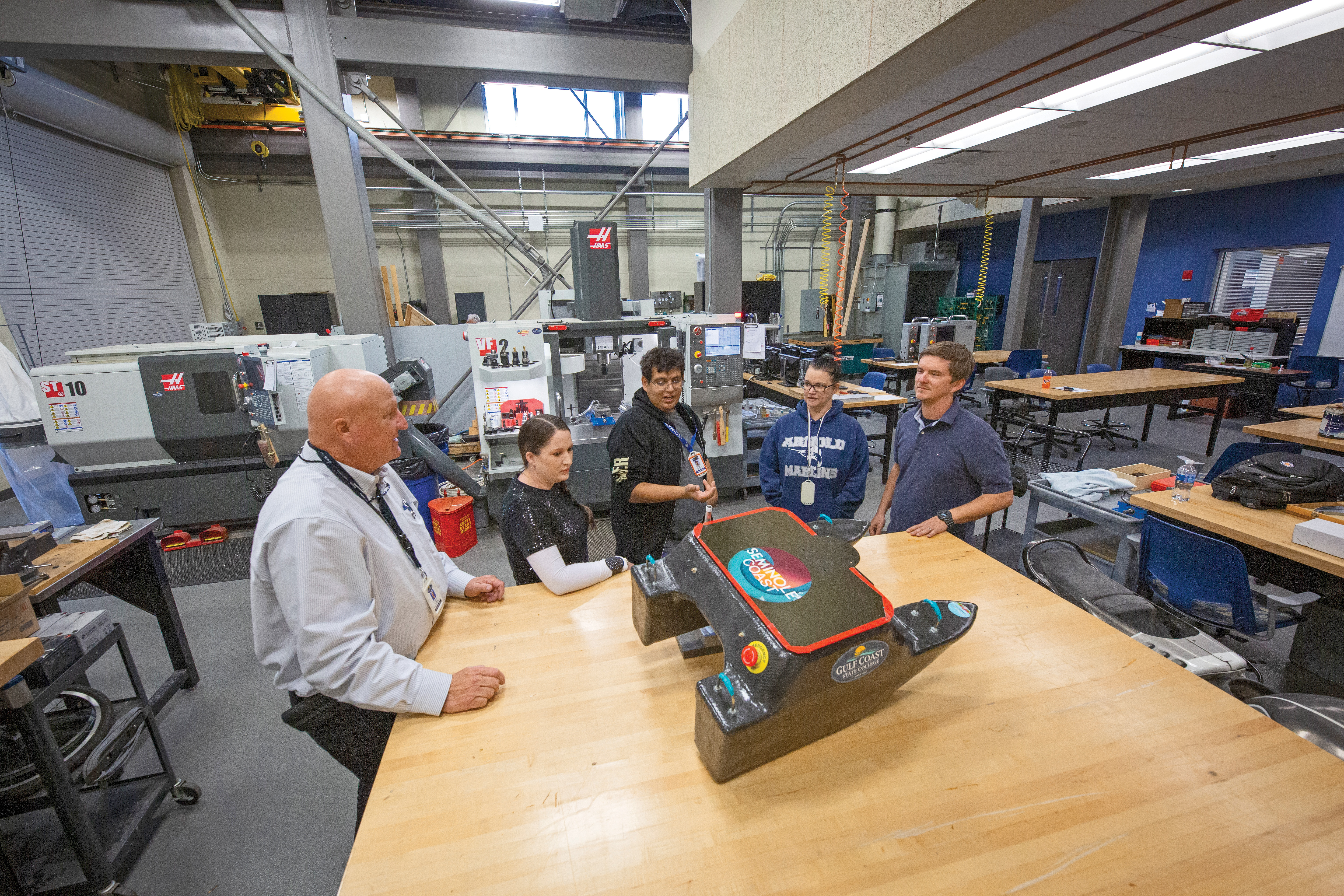
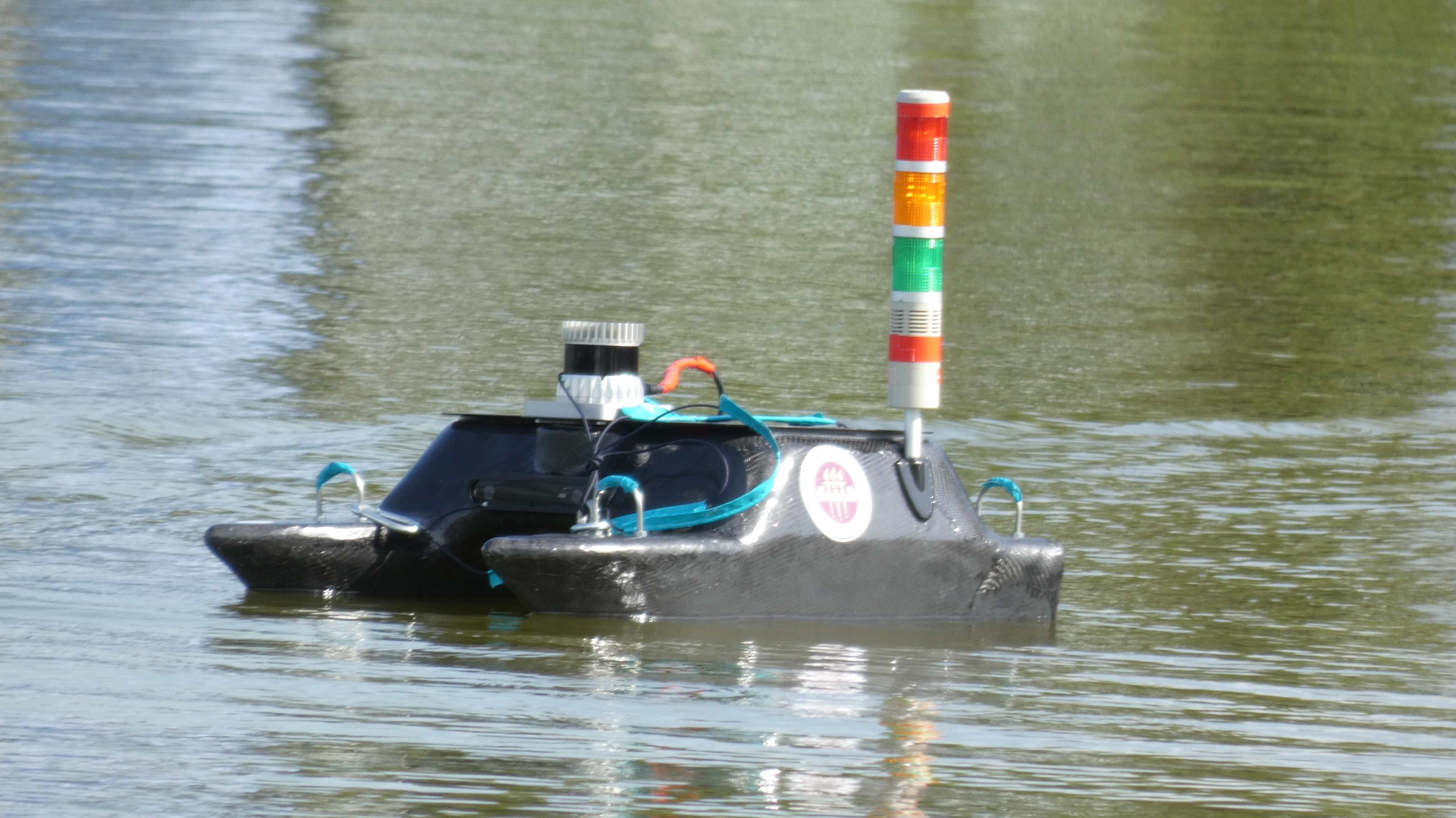
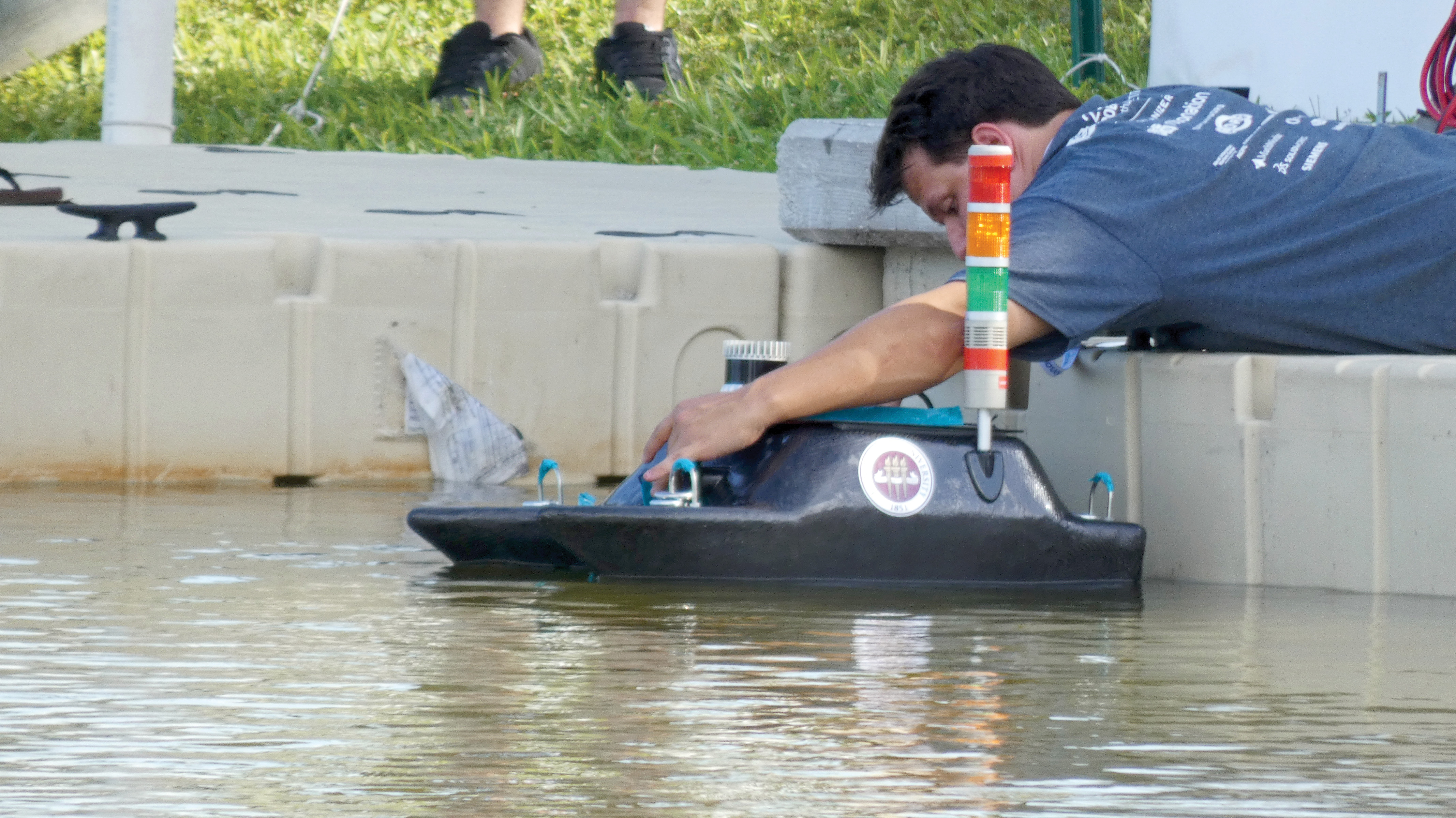
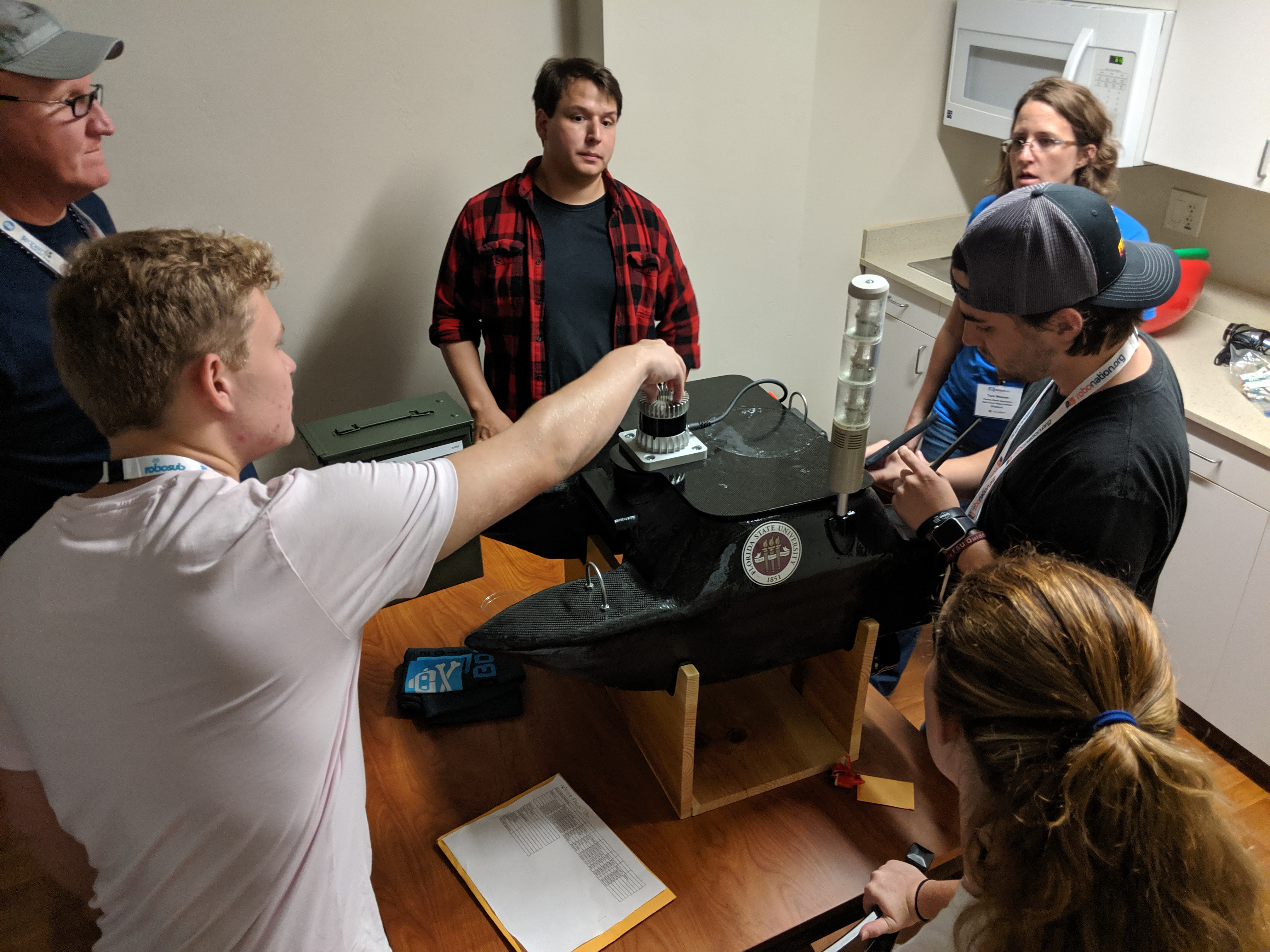
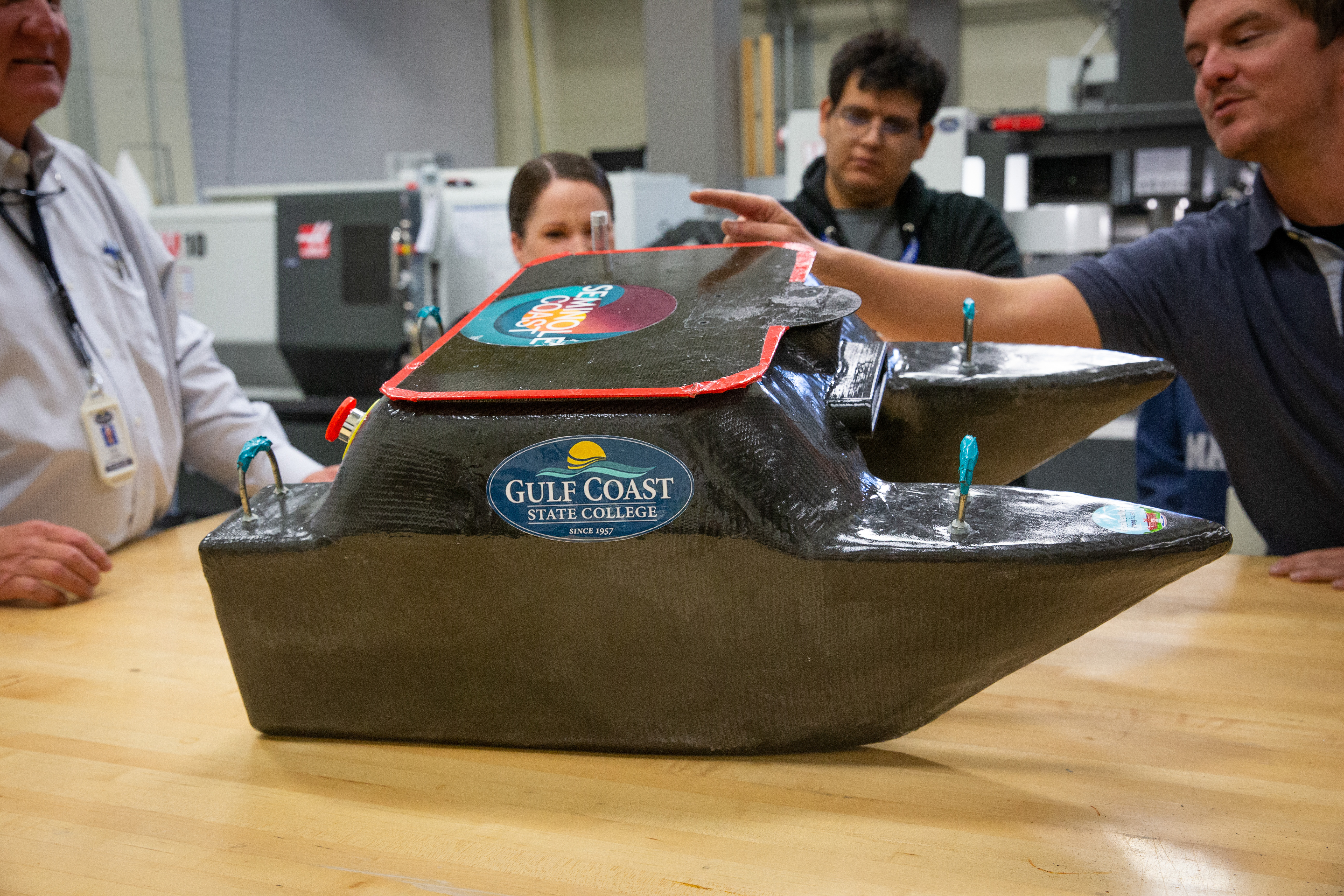
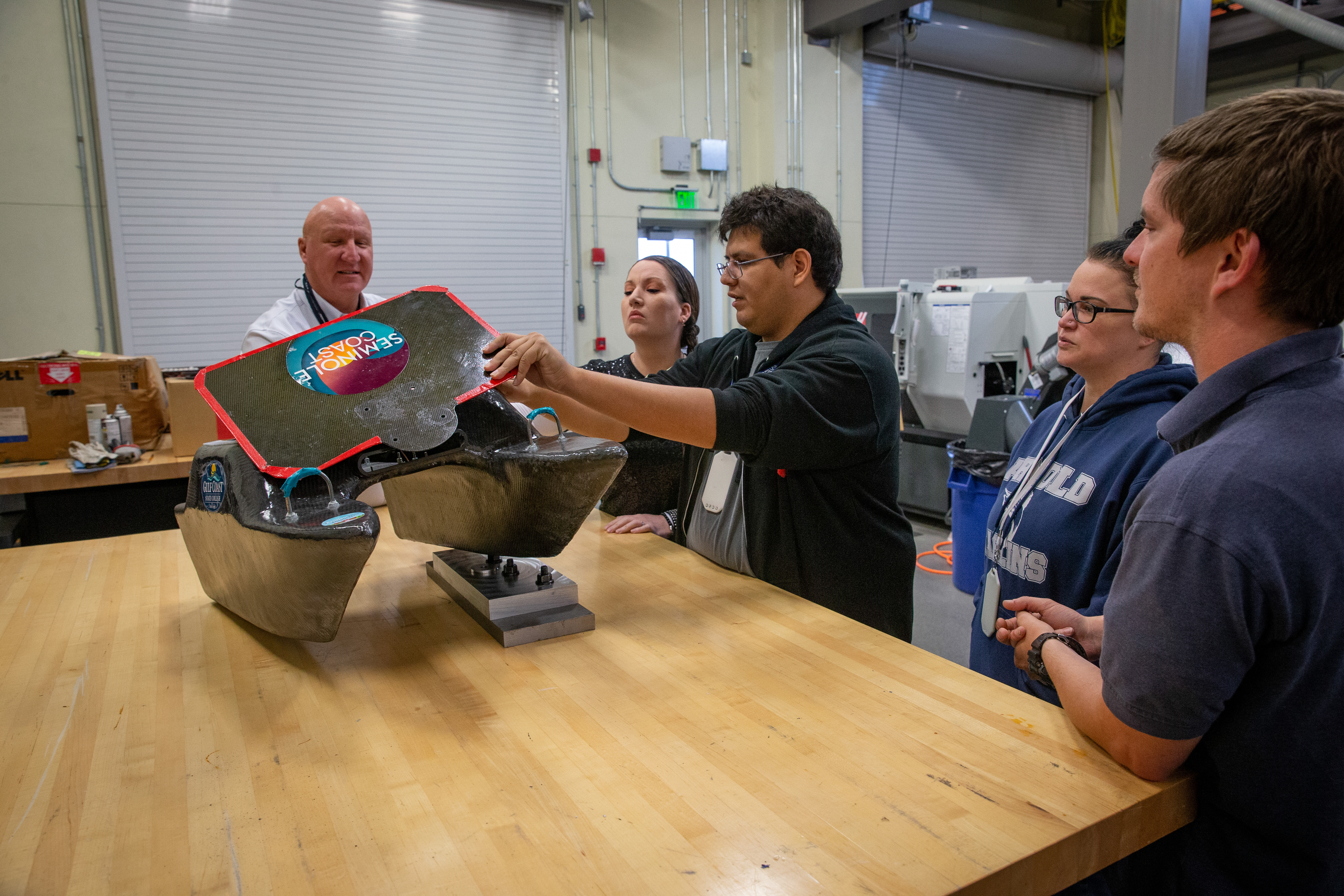
Jeffries works with students at Gulf Coast State College on a joint club with FSU Panama City engineering students. They formed the RoboBoat Club just before Hurricane Michael in 2018. He describes a RoboBoat as looking like a giant radio-controlled boat that students program to autonomously navigate a GPS-controlled course through and around buoys. “It’s a capture-the-flag kind of thing,” he says and adds that you have to hand over your remote to a judge and then the boat is on its own using sensors you have programmed to recognize obstacles and perform tasks.
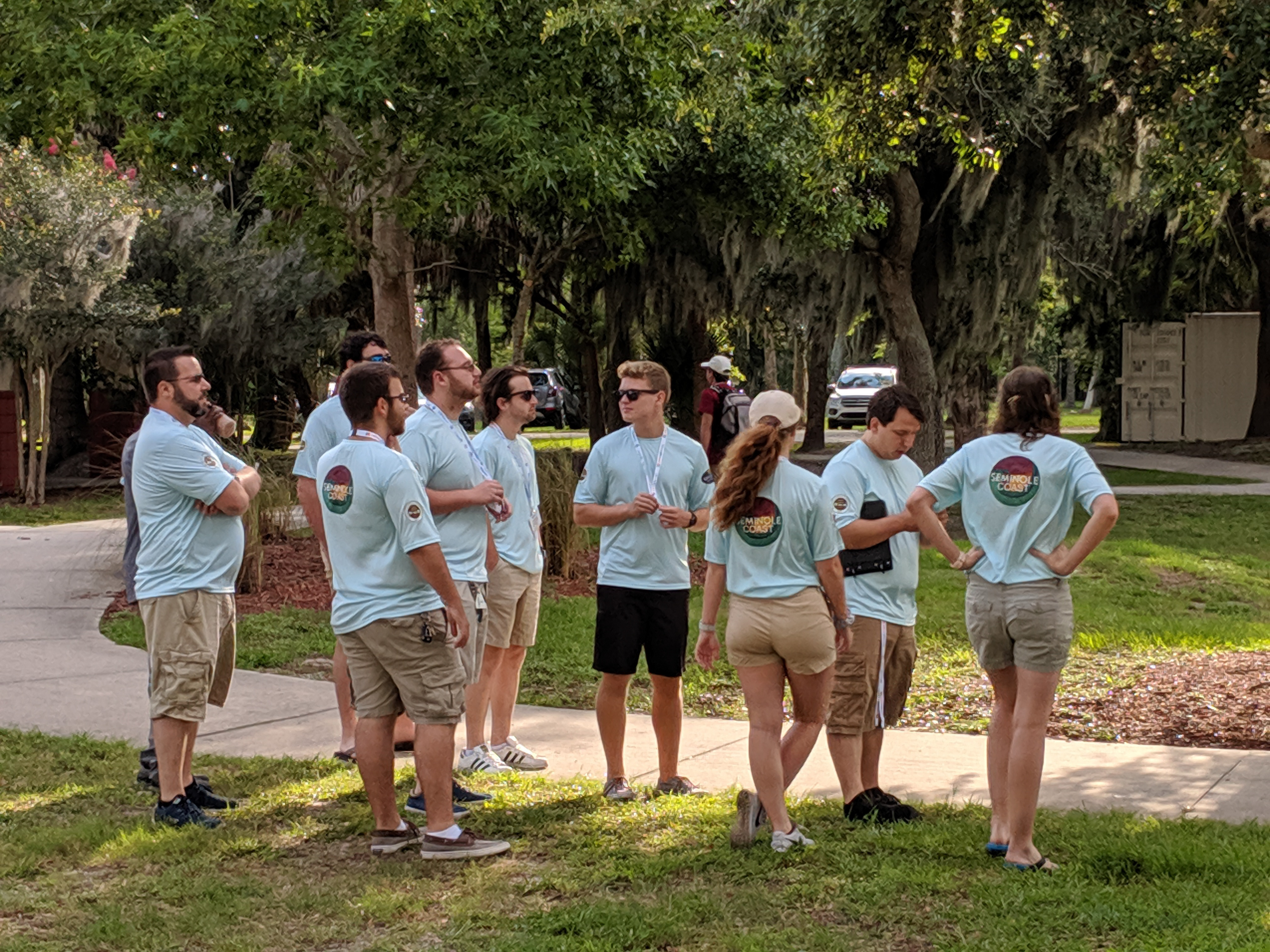
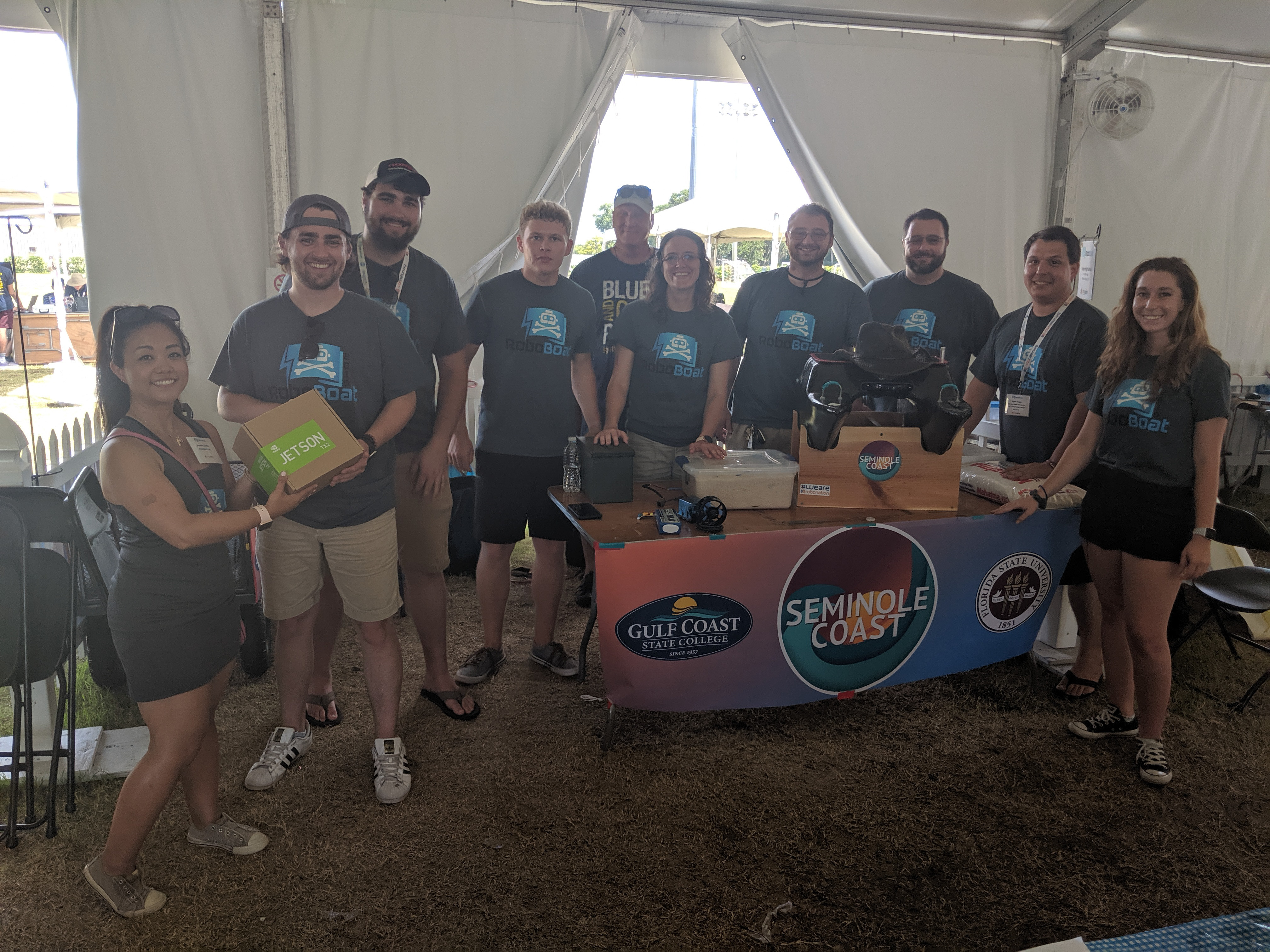
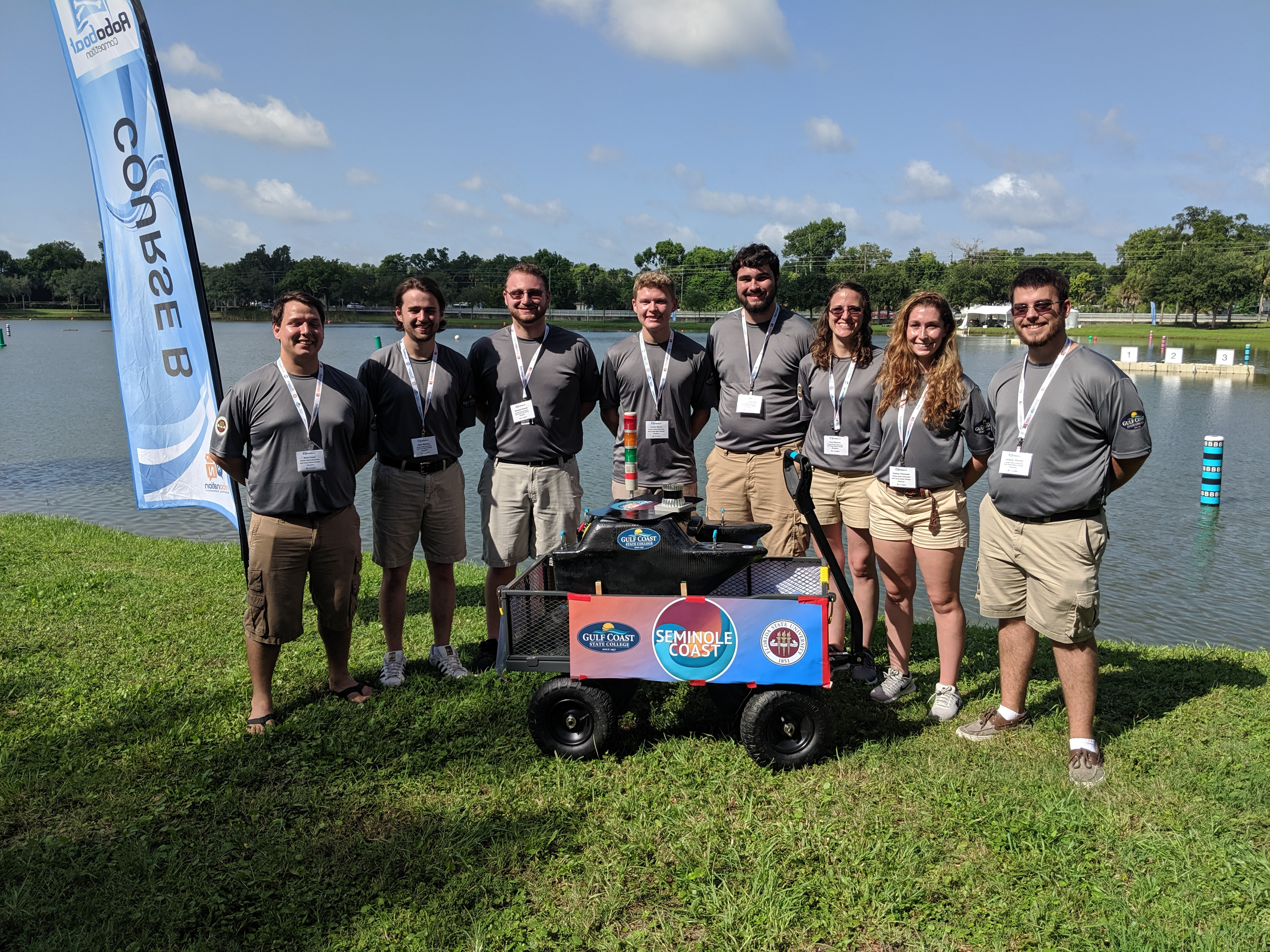
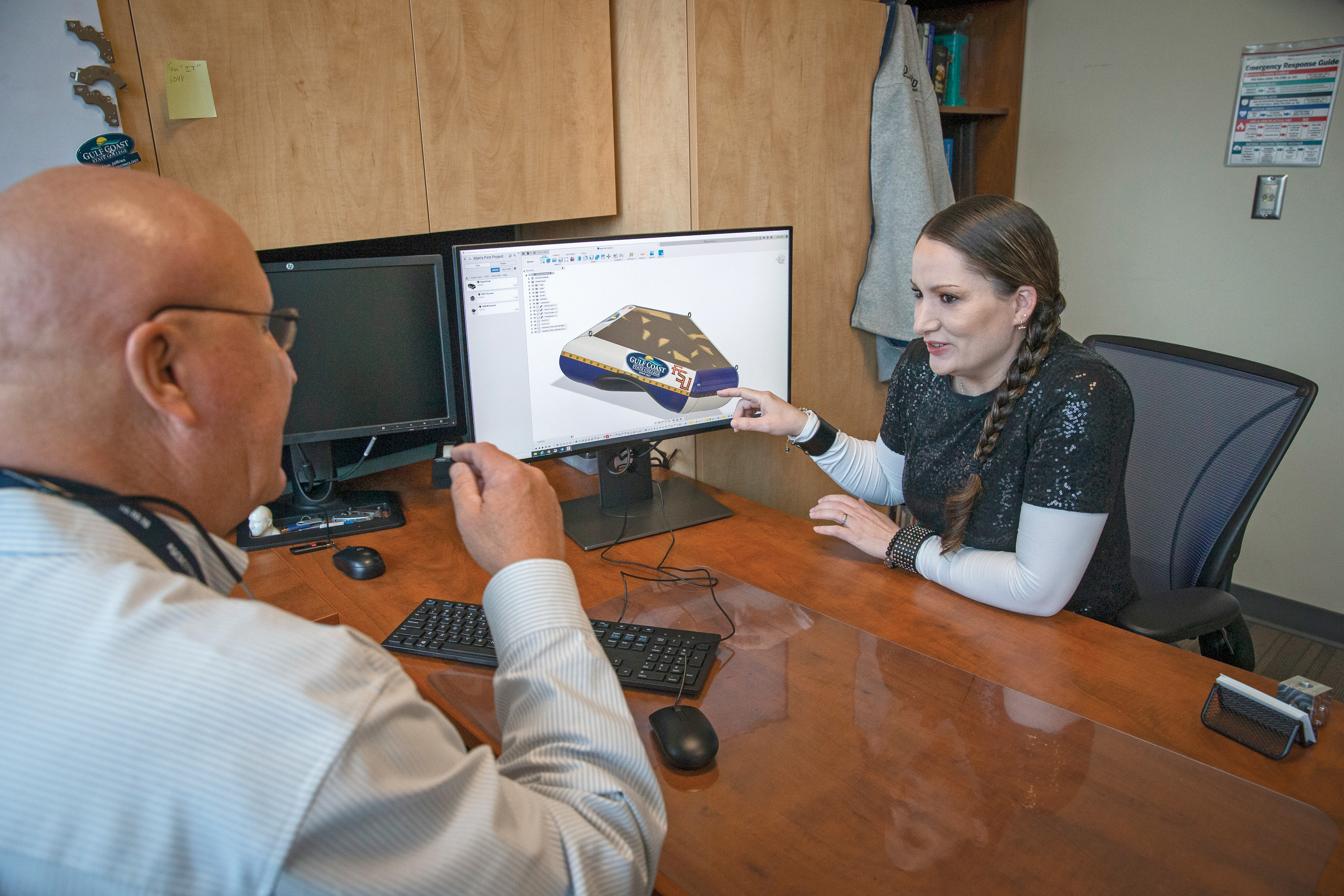
Students at Gulf Coast State College were responsible for designing and building the RoboBoat, while at FSU Panama City, they took care of the electronics and automation. Together, the two schools took the boat and 12 students to RoboNation in Daytona Beach last June to compete with schools like the University of Michigan and Georgia Tech.
Even with being a first-year club, Jeffries is proud of the fact they came back with three awards from the competition. The boat was constructed out of carbon fiber, which Jeffries says is one of the strengths of the program at Gulf Coast State College. The team won the award for the lightest boat in the competition, coming in at 26 pounds. It was also the lightest boat ever entered.
Jeffries says the club “fell on its face” in the automation aspect but attributes this to the time constraints after Hurricane Michael and says they did not have time to test everything the way they should.
Jeffries wants to open the RoboBoat Club up to more high school students. “The more I can expose high school students to our programs, the more I can hopefully get them to come our way,” he remarks. He also thinks the club is good exposure to engineering. “You can do all you want in the classroom. But until you do a club project or a big competition project, you really don’t learn everything. You have to make something,” he adds.
A GOOD EXAMPLE
McCoy is a good example of how “making something” with GCSC students and faculty can create a pathway. As a junior at Panama City Beach’s Arnold High School, McCoy and his engineering club received help from Gulf Coast State College to build a weather balloon. They launched it from the roof of the Advanced Technology Center on the college campus and it climbed 90,000 feet before it burst. A video McCoy posted on YouTube called “We Sent a GoPro to SPACE” has almost 4.8 million views and over 33,000 comments.
Robert Copsey
While still in high school, McCoy spent his free time as a member of both the Sub Club and RoboBoat Club at Gulf Coast State College. Before starting college he was working with carbon fiber building hulls for both boats. Last June, after graduating high school, he traveled with the RoboBoat crew to Daytona Beach for RoboNation. On the way back from that competition the crew dropped him off at the Jacksonville airport so he could fly to Maryland to help with the International Submarine Race entry. “It was intense and stressful but I really wanted to be a part of both,” he said.
The exposure to high-tech equipment the college has to offer was the big draw for McCoy. “Where else can a high school student get to use a 3D printer, a laser printer, a CNC router, and the latest CAD design software,” he remarks and adds, “Even though Gulf Coast is a small school they have all the state of the art technology the big schools have. I knew I wanted to play in that sandbox.”
McCoy will graduate from Gulf Coast State College this spring after just one year and plans to start his engineering degree at FSU Panama City in the summer. After he graduates from there, he would love to land a dream job in the aerospace industry. But before that happens, he has one big goal. He wants to go back with his club to the submarine races in 2021 and get across that finish line.