
All Your Eggs in One Basket – A guide to raising chickens and producing eggs


Have you ever considered chickens for pets? Even a small-scale operation can supply your family with plenty of fresh, organic eggs! Three to six hens can provide two to four eggs daily on average. Our family has kept backyard chickens for over 30 years. However, this endeavor will be a daily commitment, with care devoted to the chickens as with any other animal. Before beginning, check the zoning laws in your area. Although roosters may not be allowed due to their crowing, more places are becoming tolerant of a few hens in residential areas. Also be sure to check with the neighbors. The promise of fresh eggs now and then might help to sweeten their response.
[box type=”shadow” align=”aligncenter” ]Raising chickens and producing eggs has been a trend among people who want to live a healthy and grounded lifestyle. In fact, more and more young people will not find their high demands on healthy and organic food met without taking full control of the food they eat by raising and growing the food they eat. Chicken supplies, accessories and chicken feed are very easy to come by. Even supermarkets carry a wide array of chicken houses in all shapes, sizes and forms and modern science is confirming that the good attributes of eating eggs outweigh many previous assumed concerns:
- Recent research published in Current Opinion in Clinical Nutrition and Metabolic Care indicates that egg consumption has no apparent impact on blood cholesterol levels in 70% of the population.
- Eggs are one of the most nutritious foods available. One egg provides 13 essential nutrients in the yolk.
- Eggs are an excellent source of B vitamins, and also provide good quantities of vitamins A, E and D and they are rich in iodine.[/box]
Bringing baby chicks home
Day-old “laying-hen” chicks, as well as supplies, can be bought from a farm and garden supply store. A list of starter items for up to six chicks includes a large cardboard box (about 4 cubic feet) with a top (or a piece of cloth, large enough to cover, for warmth), a watering jar, a feeder, a trouble light and lots of old newspapers. The box should be placed in a safe, sheltered area away from hot or cold drafts and other pets such as dogs or cats. Place newspapers on the bottom of the box to absorb the chicks’ droppings, replacing them with clean papers once a day to prevent the chicks from getting diseases. Over the top of the box, place a light bulb to shine down on them for warmth. As soon as they are brought home, the chicks are placed in the box with the light turned on.
As chicks grow
At first chicks need “starter/ grower” feed containing all the nutrients needed to help them grow properly. In about two weeks the chicks will need more room – either a larger box or an additional box. The light is turned off during the day if the weather is warm and the tops or cloth removed to allow them fresh air and natural light. Place a screen on top of the boxes to keep the chicks from flying out.
 Chicken house and yard
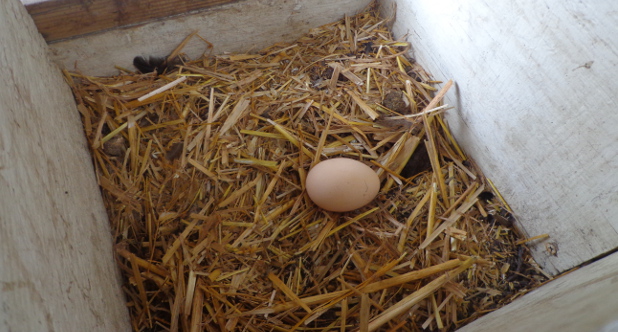
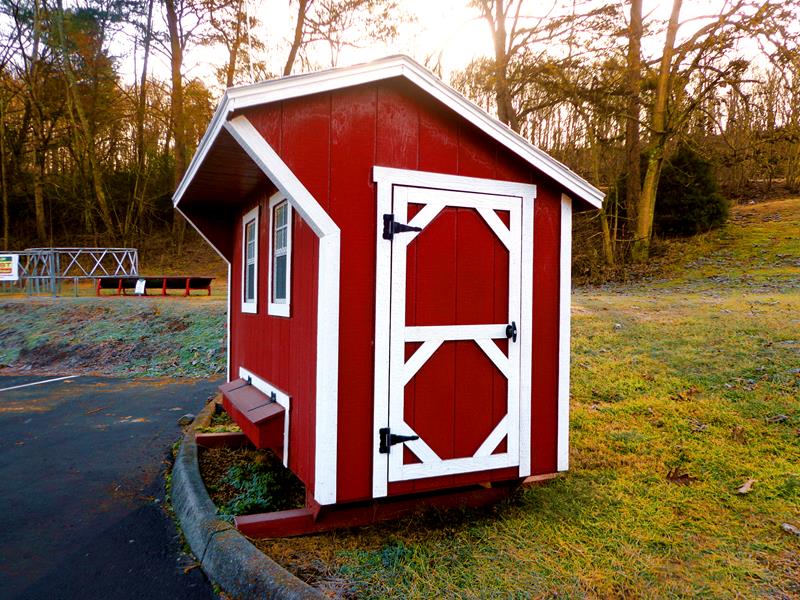
When the chicks are fully feathered (6-8 weeks old), move them to a chicken house with a little fenced outdoor yard. Each hen needs about 2 square feet of floor space inside and 3 square feet outside. For example, the outdoor pen, or “run,” can be square (5’ x 5’) or rectangular (3’ x 8’), but 3 feet in height is adequate. A secure fence over the top may be needed to keep out other predators, such as raccoons and hawks, if they are in the area. If the weather is cool, a light may be needed in the chicken house. It should be kept on for warmth, until the chicks are full-grown. The chicken house needs to be kept clean and free of pests. Spread straw or hay on the floor to help absorb the droppings and the odor. Ideally, the chicken coop should have a window which opens to allow fresh air and sunshine in during the summer and when closed will help keep it warm in the winter. Since chickens like privacy for laying eggs, several nesting boxes lined with straw should be provided, each one only big enough for one chicken (about 1’ x 1’ x 1’). For sleeping at night, chickens prefer roosts which are bars placed up off the ground. If they were in the wild they would fly up into the trees at night to feel safe from predators.
Feeding chickens
When the chickens are four months old, their chicken feed needs to be gradually changed to “layer” feed which helps them lay eggs with strong shells. In order for them to lay eggs, chickens eat almost constantly. Water and feed must be available for them during all daylight hours. In addition to their feed, they scratch on the ground and eat seeds and anything green, such as grass clippings and weeds from the yard and flower beds. Some of their favorite treats are insects and worms. They can also turn table scraps into delicious eggs. Now that’s a great recycling program!
Once chickens eat all the green in their yard, they see the greener grass on the other side of the fence and try to get to it. They will usually find any little holes in the fence to go through. To prevent their flying over the fence (if there is no fencing on top), the outer wing feathers should be clipped. It doesn’t hurt; it’s like getting a haircut.
Egg-laying stage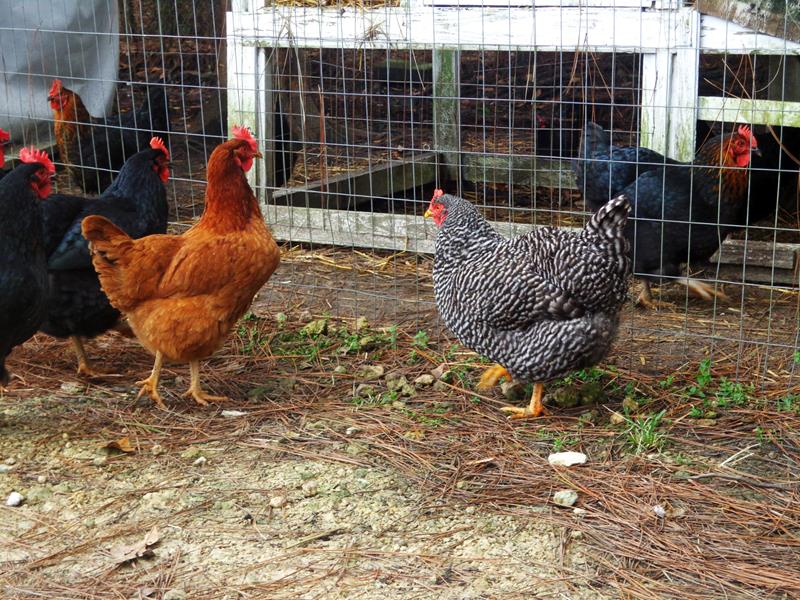
Chickens begin laying eggs at five to six months of age. After laying an egg, they will cackle as if they are saying, “Look what I did!” Collect the eggs each afternoon, clean off any dirt, and place them in cartons. Place eggs in the refrigerator as soon as possible to keep them fresh. For the first few months, the eggs will be small but soon the chickens will lay larger eggs. Weighing the eggs on a special egg scale will show whether they are small, medium, large, extra-large or jumbo.
 Housekeeping
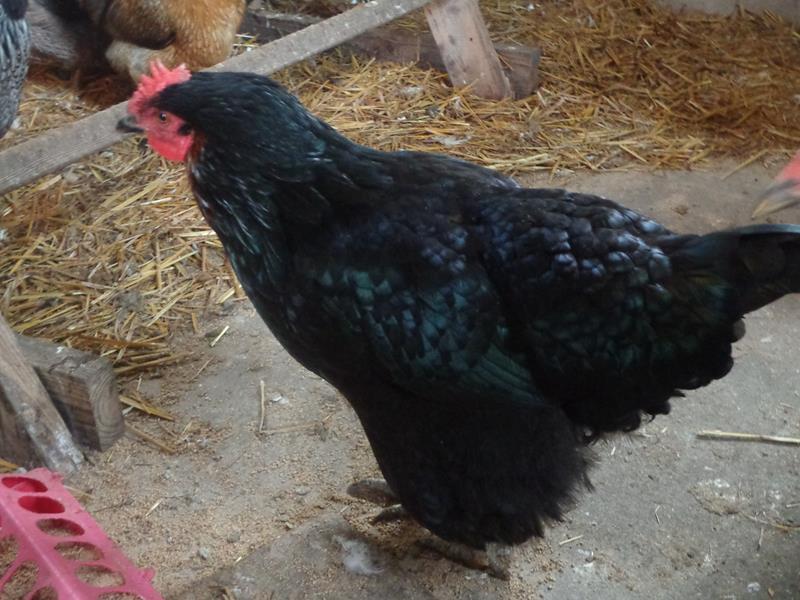
Every few weeks, the manure (droppings) needs to be scooped from the chicken house floor. The manure makes good fertilizer for vegetables and flowers. However, since it is so high in nitrogen, the manure should be allowed to “age” (or sit undisturbed) for several weeks and then used sparingly on flower beds and vegetables, or mixed in with other compost. After about three or four years, the hens’ egg laying will slow down or stop and, for the practical farmer, if the chickens have not become pets they now would make a great- tasting soup!
Thus, chickens provide several things in return for all your hard work and care – they provide healthy eggs, organic meat, tasty vegetables and pretty flowers!
[box type=”shadow” align=”aligncenter” ] SOURCES:Damerow, Gail (ed.). Barn In Your Backyard. Storey Publishing, Pownal, Vt. 2002
Damerow,Gail. Storey’s Guide to Raising Chickens. Storey Books, Pownal, Vt. 1995
NCAT – Appropriate Technology Transfer Rural Areas. (www.attar.ncat.org/attra-pub/ PDF/chicken.pdf)
Willis, Kimberley. Raising Chickens for Dummies. Wiley Publishing, Inc., Hoboken, N.J., 2009, www.backyardchickens.com [/box]
by: Linda Mix, Author of Herbs For Life! Understand, Use and Grow Your Own Medicinal Herbs
Contact info: Linda@MedicinalHerbsForLife.com or www.MedicinalHerbsForLife.com