
The Cougar MRAP – Details About A Warfighter


By Val Schoger
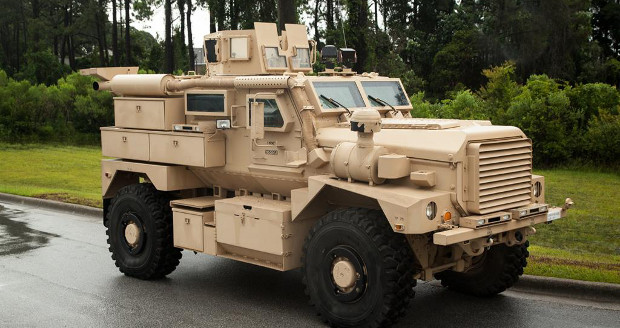
Rolling into hostile, deadly territory is what Mine-Resistant Ambush Protected vehicles (MRAPs) are made for. The MRAPs are armored fighting vehicles that are used for transportation and reconnaissance and are saving the lives of our troops during times of war. They are constructed to withstand attacks and ambushes by improvised explosive devices (IEDs) or small arms. The V-shaped plating underneath the vehicle is designed to deflect the force of exploding landmines.
The U.S. Army, Navy, Marine Corps, Air Force, and Blackwater USA have all used the Cougar MRAP and similar vehicles during the wars in Iraq and Afghanistan. In 2007, the U.S. military ordered the production of about 10,000 MRAPs at a cost of over $500,000 each and the Cougar is only one variant. The Cougar MRAP was built in two configurations, with either a 4×4 or 6×6 suspension. Over 4,000 vehicles were produced in two generations. The operational range is around 600 miles and the top speed is 65 mph. An optional remote weapon station can be mounted on top and each vehicle is approximately 20 ft . long and 9 ft. wide and stands approximately 9 ft. off the ground.
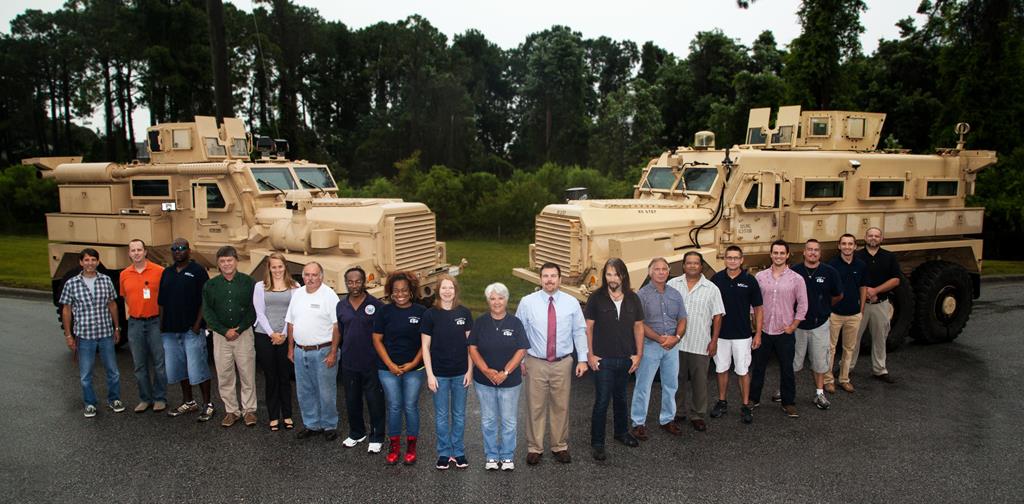
More than 27,000 MRAPs have been put into service with U .S . military forces. With the end of the war in Iraq and the drawdown in Afghanistan, MRAP vehicle fleets are being sold or placed in storage. The Marine Corps will keep 2,500 MRAPs, according to information on MarineCorpstimes.com on 1 May 2014. One of the current projects at the Naval Surface Warfare Center in Panama City involves a complete dissection of the Cougar MRAP where every part is taken off the vehicle and mapped with a 3D laser scanner to establish a 3D model. Cougar 3D Project Engineer Randy Whitehead has been working on the project since its planning stages in October 2012 and on May 15, 2014, revealed the results to the U .S . Marine Corps’ Program Executive Office.
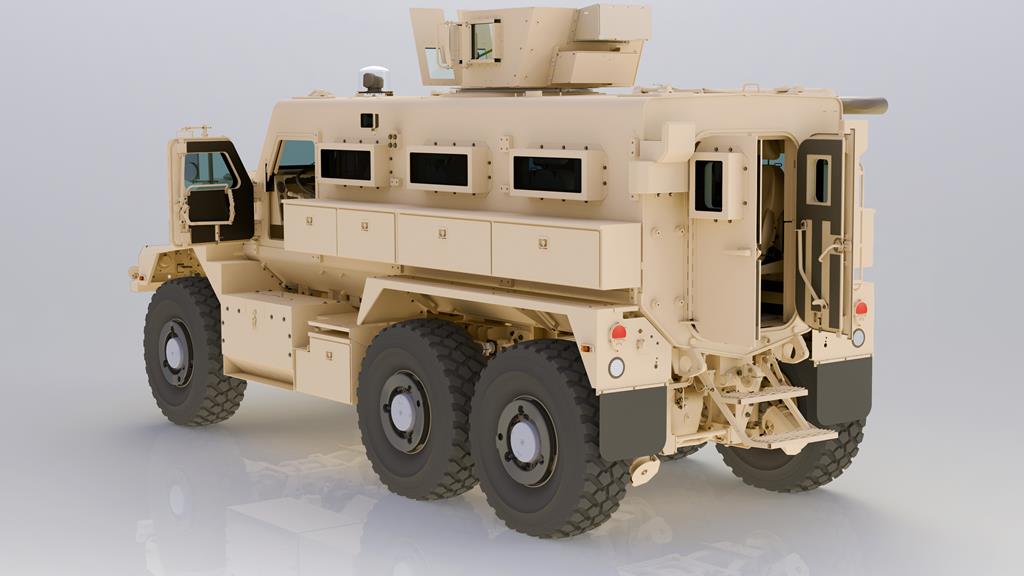
The project sets the groundwork for the ability to employ mobile 3D modeling and laser scanning. “The Cougar 3D Modeling Project uses the latest in metrology technology to develop baseline 3D parametric models,” said Whitehead.
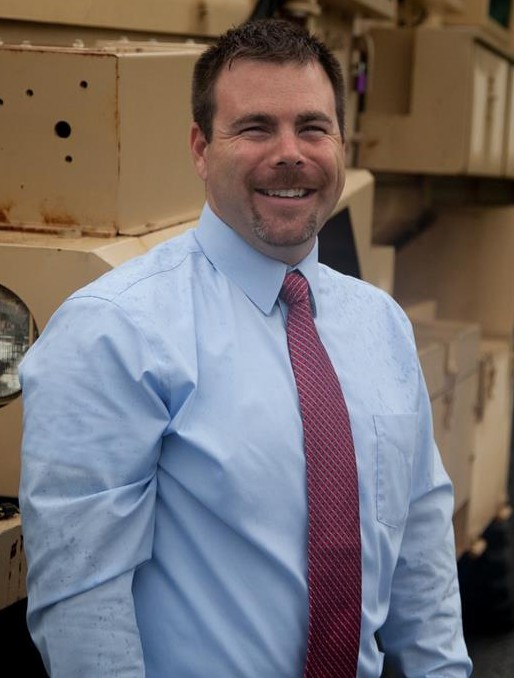
According to Whitehead, the controlled 3D model baseline configuration of each Cougar reduces the time required to incorporate engineering changes and verification of interfaces with Integrated Logistics Support replacement parts. These added capabilities will also result in a reduction in the total ownership cost for the Cougar’s lifecycle.
“Each of the two vehicles had to be torn down part by part; then the 3D laser scanner was used to scan each part and save all data in a 3D file format. Laser 3D scanning is more advanced and provides more accurate data than any other measuring tool. A 1:1 mapping of the vehicles is being accomplished. This has never been done before,” states Whitehead. “The Cougar MRAP has over 4,000 unique parts. The laser scanners measure millions of points on an object; even curvatures are being accurately mapped. The mapping will help us find new ways to reduce total ownership costs and operation of these types of vehicles, and the precision and the technical rigor that goes into mapping every single part translates into saving lives.” Having a complete and accurate measurement of all parts and elements of a vehicle can be used for better handling of parts and attachments, like the Mine Roller that was built in Panama City, which attaches to the front end of the MRAP vehicles.
Dan Broadstreet, Public Affairs Media Liaison/Editor with the Naval Surface Warfare Center Panama City Division explains: “When our Marines are out there on a mission, under fire, they are relying on their equipment from guns to trucks. In a combat situation, that equipment must work correctly the first time, in fact every time! And, every second counts. If they need to attach a Panama City Mine Roller to an MRAP, the more accurately, precisely and reliably this equipment is being put together, the quicker and more safely they can accomplish their mission. This is how our technical rigor here at home, at the Warfare Center, contributes to saving lives out on the battlefield.”