
BUILDING STRENGTH AFTER HURRICANE MICHAEL: City of Parker


BY BRITTANY HAWES AND VAL SCHOGER
PHOTOGRAPHY BY HAROLD BRAMTON
The City of Parker, located 5 miles east of Panama City, with its southern limits bordering Tyndall Air Force Base, has approximately 4,500 residents and was founded in the early 1800s. On the city website, Parker is characterized as a quiet neighborhood community with large waterfront areas.
Following the Bay County emergency advisories, Mayor Richard Musgrave and his wife evacuated to Pensacola before the storm, taking their 90-year-old neighbor with them to safety. “When we returned, we were pretty blessed with the limited damage that we had, which allowed me at that point to spend more time to take care of all the needs of our
community and that includes a number of different points of address: setting up feeding stations, supply stations, working with non-profits around the area who were interested in coming in, trying to link them up into locations within the city so that supplies were there and available to citizens who needed them. Just the response and the coordination with the nonprofits that were here helped our
citizens.”
With electricity services restored to most of the affected residents in the last week of October, the city of Parker, like other communities, is making strides toward recovery. Mayor Musgrave has directed and monitored the progress in early November. “We still don’t have Internet, landline phones, or cable,” he says and tries to stay optimistic. “Our target is to have Parker wired up and operational by next Monday.”
Cell phone service is spotty, he explains. “Of course, when the hurricane hit, and directly afterwards, literally nobody in the county had any communication capability whatsoever. AT&T had some cell service, but our city cell phones all operated on the Verizon network. Of course, everybody knows, Verizon customers had no service after the storm. Verizon came and set up a hotspot here at City Hall, so that we at least had cell phone capability here.”
No one could have anticipated the loss of phone communications to this extent, he says. “It was difficult to even talk to somebody at EOC for at least a couple days after the event and they could not communicate among each other.” Unable to contact any of his department heads and track them down in the first few days, Mayor Musgrave and city employees resorted to getting information to their citizens by having their police cars drive around the neighborhoods with loudspeakers, giving various instructions and announcements.
“It almost took us back to the days of the horse and buggy,” he smiles. “Learning to have alternate communications, it’s difficult when everything is geared and set up for wireless technology.” They tried to communicate with the citizens as best as they could. “You can’t over-communicate in a situation like this,” he says. “You need to communicate as much as you can, as best as you can, in every way you can. And that was probably one thing that we could have done better. It’s just one of those things you learn as you go.”
While incidents like these bring a lot of stress and trauma, Parker residents had no significant medical emergencies, he reports. “In the first week we had to provide medical help to one of our employees’ spouses who needed insulin. It was a challenge to find sources, when there were only, I think, a couple in the whole county. We were able to source a 30-or 45-day supply locally. But beyond that, I’m not aware of any specific medical needs that had not already been addressed.”
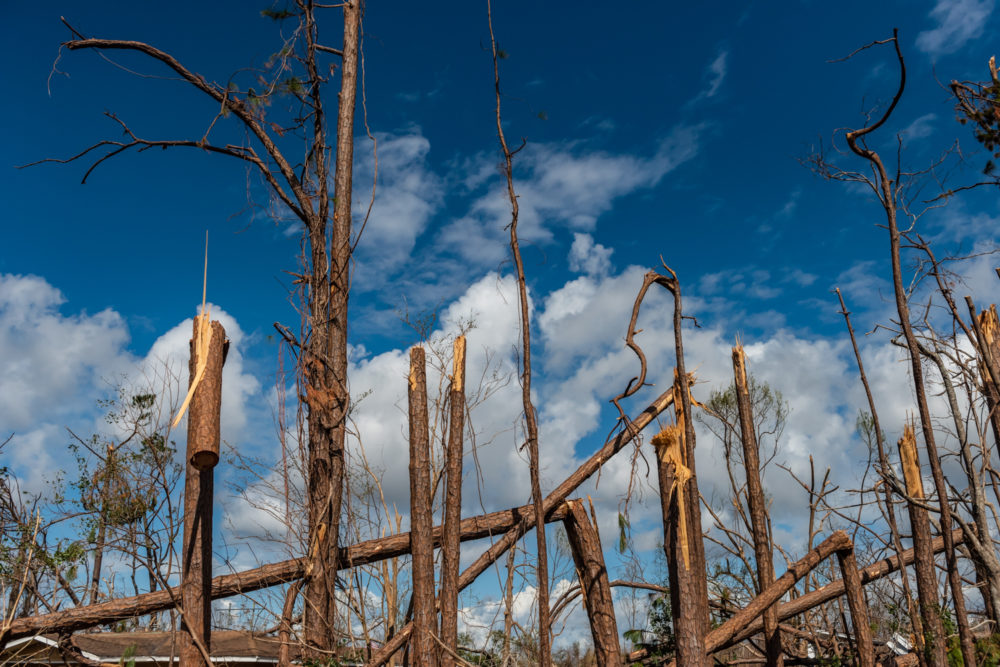
With ongoing cleanup efforts, the mayor received a report of the progress in mid-November. “It looks like through yesterday, we’ve had about 75,000 cubic yards of debris that has been picked up and removed and taken to our spot where we tally everything. They put us about 60% through what they call “first pass” and going along and getting the first piles of debris that people had put in front of their houses. Now, the challenge is to have residents bring the remainder of debris that might be in their backyard to the front as soon as they get the pile of debris removed. If you’ve got stuff in the backyard, move it right away out front so the next time they come by, they can pick that up.”
With a great team of city employees, Mayor Richard Musgrave is giving credit where it is deserved. “I’m just so proud of our employees and how they have responded. I know that there are several that had their own personal tragedies and losses, and yet … they were here, on the job, working to support our citizens and you just can’t appreciate them enough for serving the citizens. Of course, it is our responsibility, and yet, it takes a special dedication to put your duties first and before your own personal situation.”