
A Railroad History


BY JAMES T. COOK, III, M.D.
PHOTOGRAPHY BY MIKE FENDER
Marianna, my hometown, is located in Northern Florida, with its economy primarily driven by agriculture in the last two centuries. Because the red clay substrate of the region retains water better than the sandy soils that predominate in adjacent areas, it made cotton king until the boll weevil came in the 1920s. We had sturdy, self-sufficient farmers who came to town on Saturdays for supplies and used the hospital, educational facilities, and government offices in Marianna. It was an idyllic place to grow up for me and my classmates in the 1940s and 1950s—so long ago. The east-west rail connection started in 1883 and traveled to Louisville and Nashville initially, then the Atlantic Coast Line, and later Seaboard Railroad, with its large train station that has since been removed. In Marianna, the whistles of trains could be heard day and night, hooting at each railroad crossing. Indeed, you got where you didn’t notice them when you lived there, but returning home to my parents’ house after years away in the 1990s, I would awaken for the midnight, 2 a.m., and 4 a.m. trains as they went through. I got little sleep that night, but I never heard them when I was growing up.
 Marianna’s main thoroughfare, U.S. Highway Route 90, was close to “The Old Spanish Trail” and was the same as our Lafayette Street in Marianna, so named after Marquis de Lafayette, who was given land above Tallahassee by our nation in gratitude for his assistance in the Revolutionary War. Our home was on the north side of the highway, but if you went past the houses on the south side, you found the red clay gully where the railroad tracks were located among the banks of kudzu, which was everywhere. In the early 1950s, we still had steam locomotives huffing their way through town, but they quickly changed to the less spectacular but more efficient diesels, including the passenger train The Gulf Wind, which ended in New Orleans. We children would play on the tracks, listening to the rails for an oncoming train like they did in the cowboy movies that governed the codes of our lives in those innocent times. I personally believe the loss of the Saturday western movie is a direct contributor to modern problems of morality.
Keeping in mind that Marianna had a population of about 5,000 in 1940, and Blountstown had a population of about 2,000, the Mari- anna and Blountstown (M&B) Railroad was not a great deal, but it was our local railroad as distinct from the mainline and we were proud of it. It was formed in 1909, prior to the development of paved roads, and carried lumber, mail, supplies, marine stores, and passengers, with two trips a day over its 29 total miles. It was Florida’s shortest railroad and changed everything for many, even bringing access to ice, which could be kept in icehouses. The M&B was also used for logging, and short spurs were utilized from the main tracks in the early years to facilitate the clear-cutting of the North Florida pine forests.
In 1929, the passenger service was discontinued, and after that, the railroad transported only materials, usually lumber and other forest products. The stops included Blountstown Manufacturing, Durham Station, Leonard Siding, Chipola, Altha, Alliance Switch, and Simsville, each a comment in time.
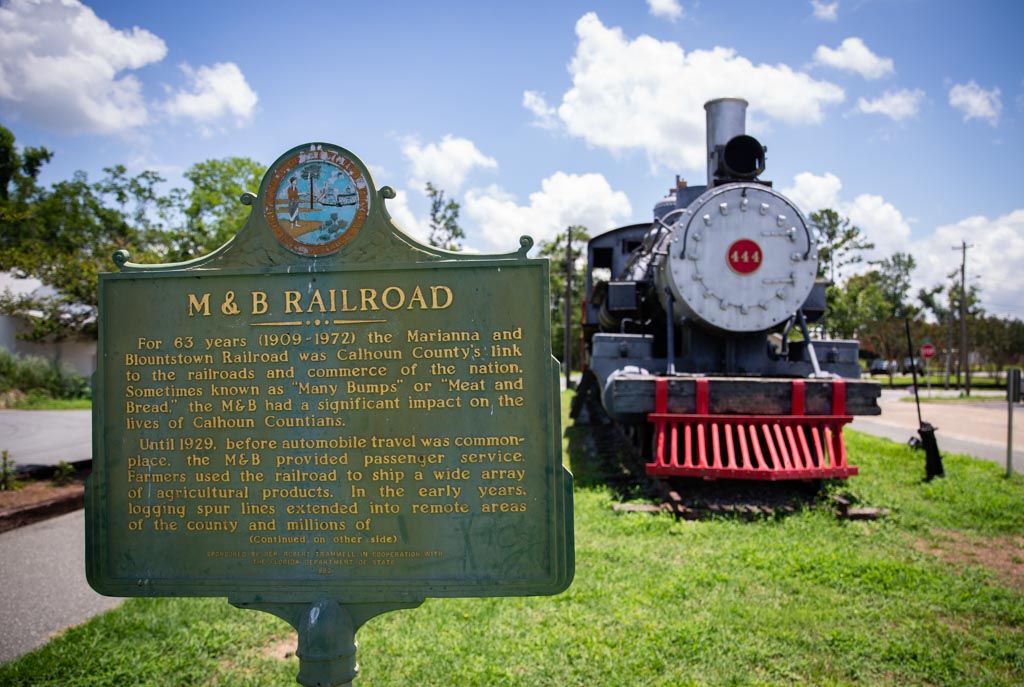
The last steam engine, a 1911 Baldwin 4-6-0 number 444, is preserved in Blountstown after it served at the home of Dr. Albert Folds in Greenwood, Florida, and migrated to somewhere in Texas before being reclaimed in the name of history. The 444 ran until 1947 when a diesel engine finally took over, a 70-ton GE with 660 horsepower to its credit, representative of the many engines that served over the years.
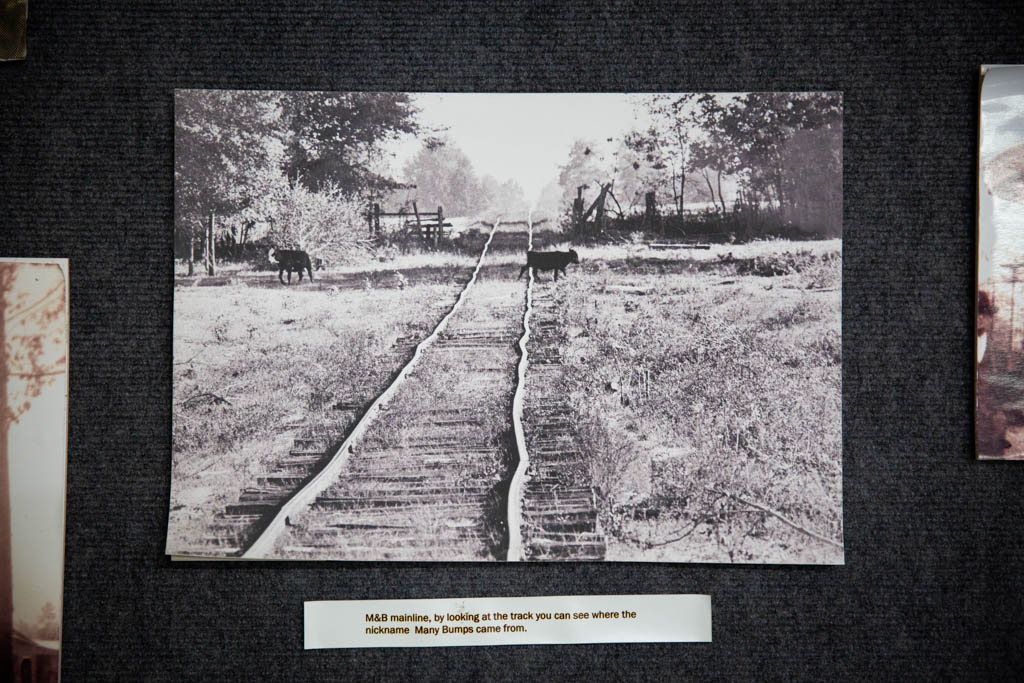
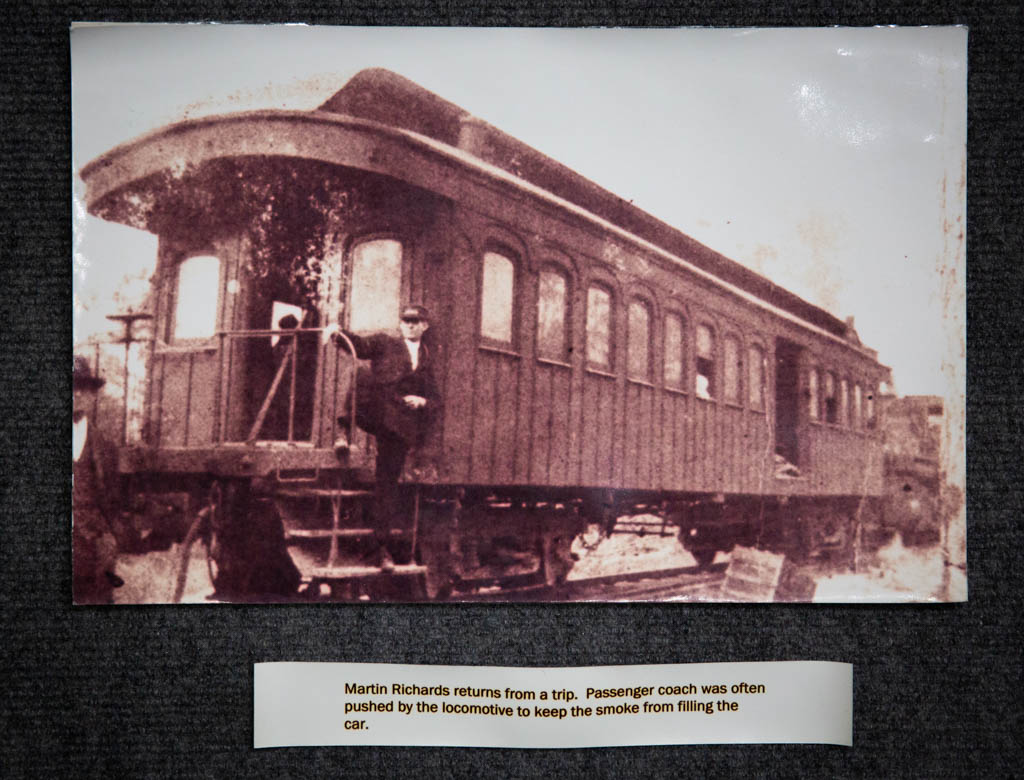
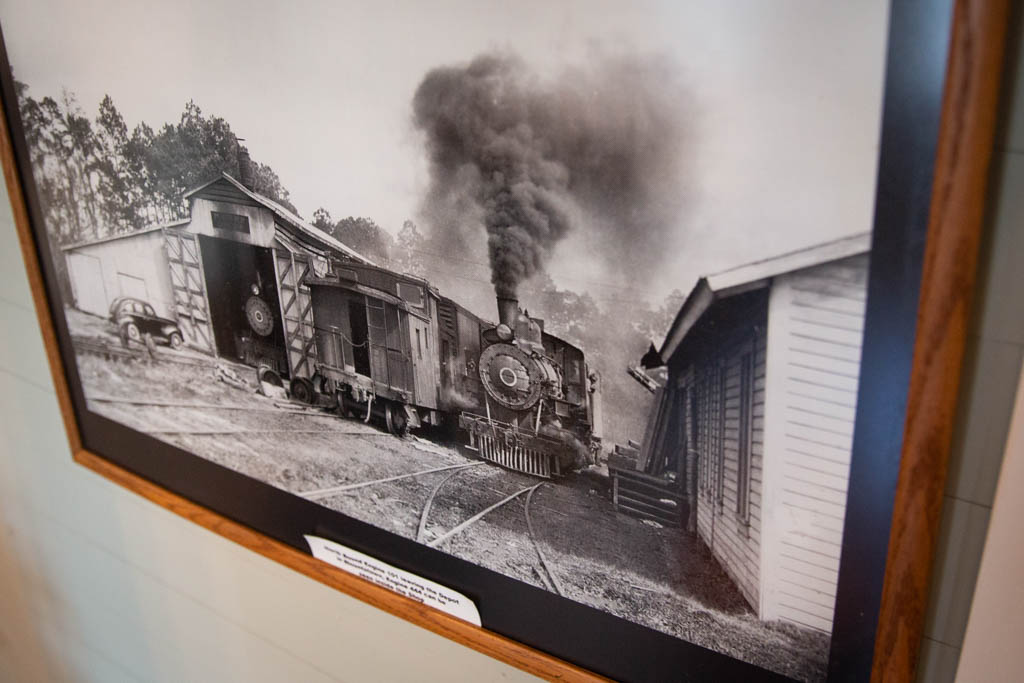 During its busy years, the M&B (nicknamed Mighty Bumpy) had trouble with the Florida “open range” law where cattle were free to roam
onto roads and railroad tracks. Any cow hit by a train or automobile suddenly achieved a value triple that of the usual cow at the hands of a competent lawyer, but Governor Fuller Warren from Blountstown passed the fence law during his tenure in the early 1950s, which helped the automobile drivers and railroad engineers alike, not to mention the cows.
I remember a neighbor, Travis Edwards, in Panama City who worked as a mechanic with our Bay Line Railroad. He described going up to change out a cylinder on the M&B diesel one day, years ago. It turned out to be an all-day affair, pulling the engine parts in and out with a pulley in a tree overhead, but they got it done.
The M&B even had an extension south of Blountstown to Scott’s Ferry on the Chipola River, and writer Milton Smith of Southport described in his memoirs how fishermen would put their boats on a flatbed car for two dollars (round trip) and unload to camp and fish the Chipola and Dead Lakes for a week at a time, and then return to Marianna.
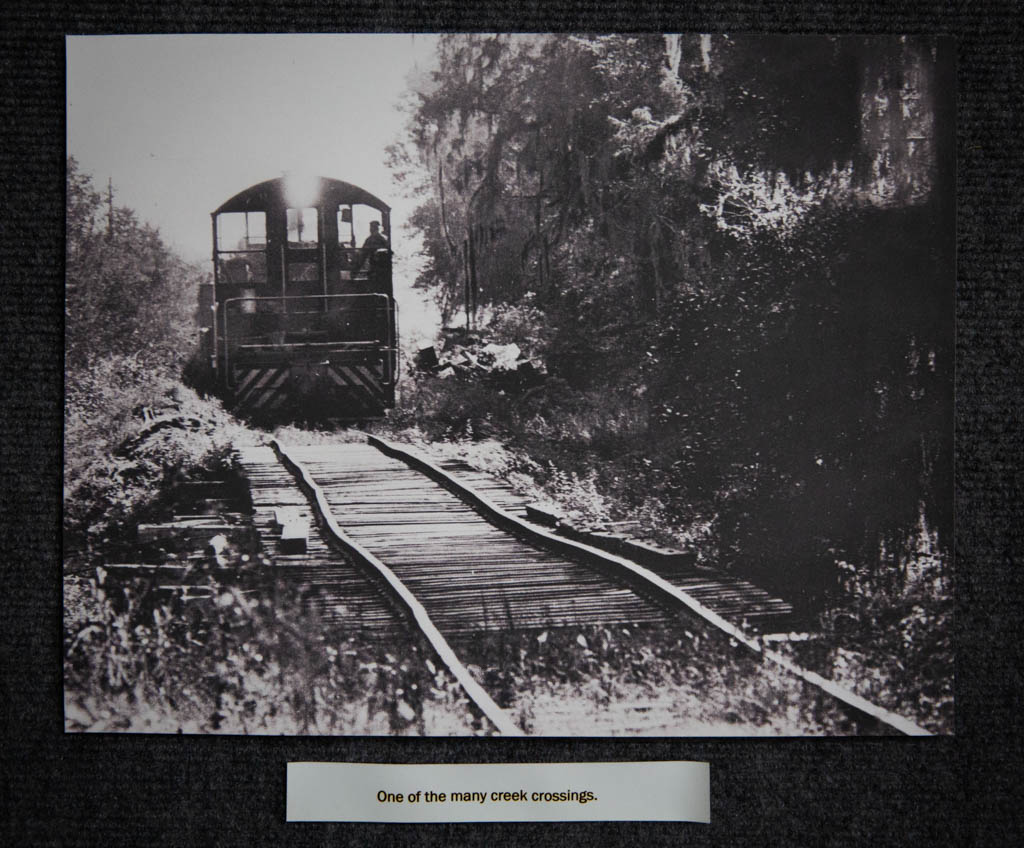
By the 1950s, the M&B was owned by some little lady of a previous generation, and the line fell on hard times in the 1960s due to a federal requirement that stipulated that a railroad must keep running if it has a license. It was purchased by George Tapper and Earl Durden, who similarly had trouble making a profit with the limited boxcar inter-change with the L&N Railroad while the roadbed deteriorated. It got so bad that, once a week, the diesel would ease down the tracks to Blountstown, averaging about 15 miles per hour and two derailments per trip. The trestle over the Chipola River was especially perilous, with the whole thing leaning toward one side and large cables attached to trees reinforcing the beams of creosote-covered wood. The engineer typically would get out at the river and have the train set to go dead slow, while he scurried across ahead of it to remount on the other side. Fortunately, it always made the trip across the Chipola successfully.
 Then, in the 1970s, a miracle happened—the M&B, with its single diesel engine, was sold to a man from New Jersey, Joe Bonanno. Joe came down and gave a memorable speech to the Rotary Club in Marianna. My father, present at the meeting, listened to Bonanno’s grandiose plans for the M&B to establish a national center to refurbish railroad cars in Blountstown, adding a new industry to the chronically depressed area of Calhoun County. He hastened to add that he was not THE Joe Bonanno of national ill repute for his Mafia ties, just a hardworking gentleman who was helping us out in the Panhandle of Florida, who happened to have the same name as the mobster. Salvation was at hand and our chamber of commerce rolled out the red carpet while the local newspaper, the Jackson County Floridan, blew the horn and beat the drum for happy days.
Soon the boxcar operation was in full swing with the refurbishing and repainting of railroad boxcars in Blountstown, the deserted sid- ings loaded with long miles of hundreds of railroad cars glistening in new paint. The payroll boosted the economy of Calhoun County and everyone was proud of the new glamourous status of the M&B Railroad, with the old diesel chugging proudly once again on the decrepit tracks. But then it all came unwound. The ownership of the rail cars turned out to be very much in question, while the issue of the M&B operating was put to the side. Popular local consensus was that our savior really was allegedly THE Joe Bonanno and that they were stealing boxcars from up east, moving them to remote North Florida, repainting them in Blountstown, and then selling them all over the United States. My father told me that Mr. Bonanno was indicted and went to prison, while the railroad was involuntarily dissolved. Our railroad became defunct, the engine sold, and all the tracks were taken up and gone. We lost our little railroad, and its former designator, MBRY, is a historical afterthought.
I never got to ride on the M&B, although a classmate’s father was one of the engineers. But it makes a fun story in its telling and is now part of our local heritage.
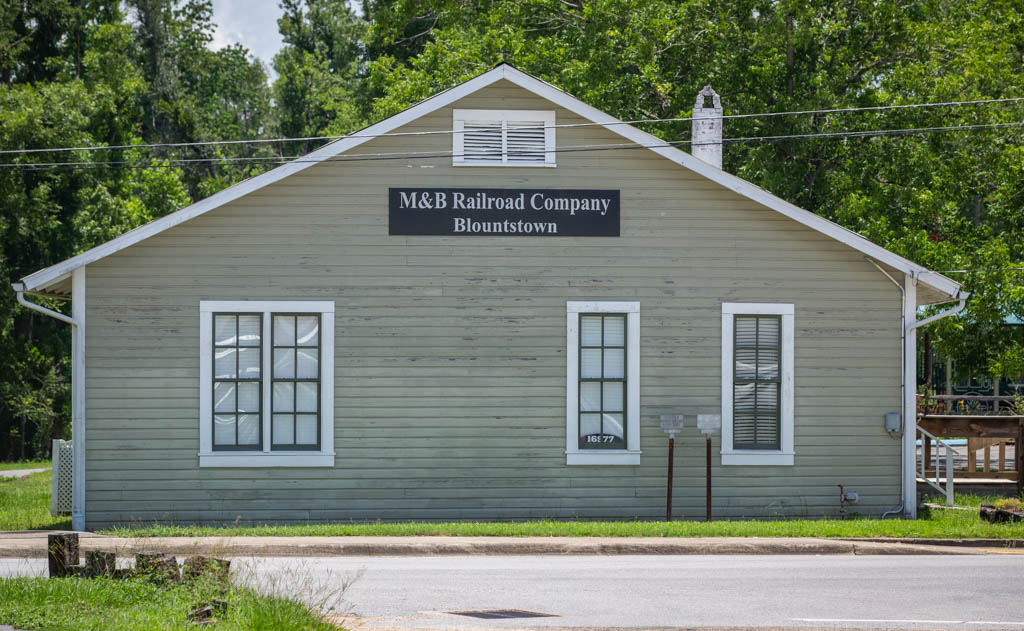
Today, railroad enthusiasts can visit the M&B Railroad Depot Museum in Blountstown, Florida, at the corner of Railroad Avenue and North Pear Street. Call ahead to ensure the opening times: (850) 674-5040
[box type=”info” ]Note from the editor: A New York Times article on January 28, 1972, describes how Joseph C. Bonanno was not related to the Mafia leader Joseph Bonnano (Joe Bananas). Joseph C. Bonanno was under Grand Jury investigation. He was ordered to pay $150,000 in rent for the boxcars in his possession without criminal charges. On November 7, 2019 the Jackson County Times published an article by Shelia Mader that states: “Over the course of its lifetime, the railroad had a series of owners – beginning with the Pennington and Evans Company (Blountstown), the DuPont Trust (Wilmington, Delaware, J. C. Packard (Marianna), Oros and Verna Miller (Blountstown), George Tapper (Port St. Joe) and Joseph C. Bonanno (Essex Fells, New Jersey).”[/box]