
A Once-in-a-Decade Opportunity for Cave Exploration


STORY AND PHOTOGRAPHY BY JOHN STARRETT WITH SPECIAL THANKS TO RETT DANIELS, JACKSON COUNTY PUBLIC WORKS DIRECTOR
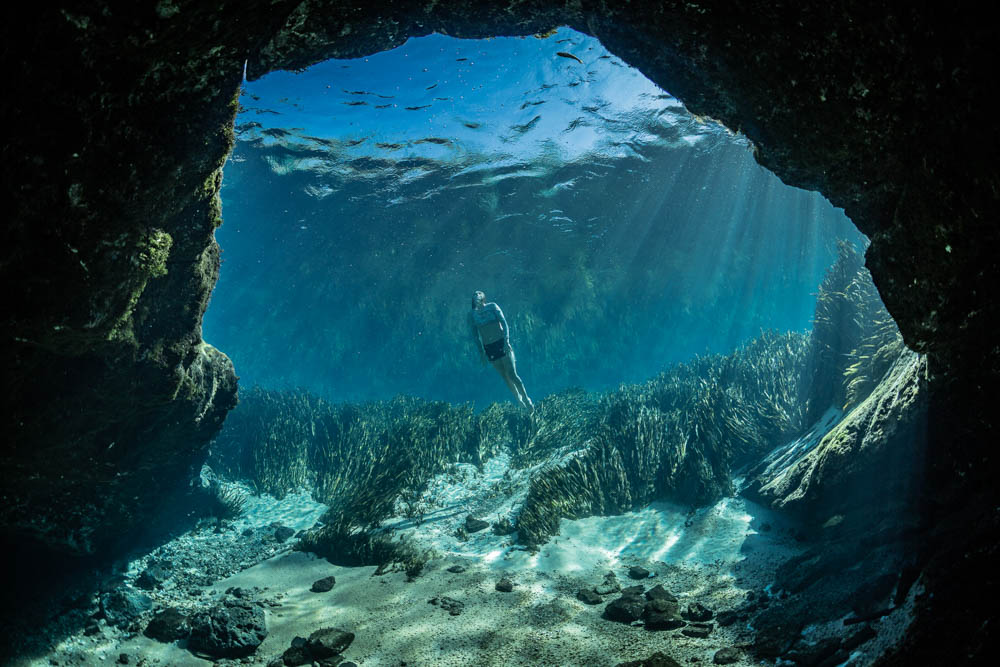
As an avid freediver and advocate for the preservation of our natural springs, I have spent a lot of time suspended in the gravity of fresh water, watching fish swim in the cool, calming currents of our natural springs that are fed by our majestic Floridian aquifers.
Aquamarine colors, along with the sun reflecting light and playing with shadow along the pebble-lined bottom, add up to a picture of paradise—a paradise that attracts thousands of adventure-seekers each year. The beautiful blue holes bubble with cool spring water from deep limestone caves that make up the Floridian aquifer system and provide drinking water to 10 million people.
Underwater caves pushing out millions of gallons of crystal-clear water can be found in almost every region of the Sunshine State, from Northwest Florida to the Everglades. These deep caves are tethered to a vast underground river system for miles and miles on end.
I frequent these beautiful springs as often as my schedule allows. I had always wondered what it would be like to ditch the wetsuit and dive gear and wander through these caves without the nagging need for air. Who knew that a construction project would make this a reality?
Within Jackson County lies one of these beautiful springs. Measured by the volume of fresh water it produces daily, Jackson Blue Hole is categorized as a Magnitude One spring, bellowing a staggering 65–70 million gallons of spring water a day. Along with several other smaller springs adding to the flow, they create the 202-acre lake known as Merritt’s Mill Pond. Jackson Blue sits at the head of the pond like a crown jewel. The smaller springs have illustrious names such as Shangri- La Springs, Twin Caves, Indian Washtub, and Hole in the Wall.
Visitors are invited to enjoy the spring waters at the Jackson Blue Springs Recreational Area, a popular swimming and world-renowned cave-diving destination open annually from Memorial Day to Labor Day. Staffed and maintained by Jackson County, the site had a new phased restoration project planned and set in motion to divert storm water and runoff from entering the pond’s fragile ecosystem.
The renovations for Jackson Blue Springs Recreational Area are designed with conservation in mind. State-of-the-art engineering prevents erosion as rainwater and road runoff is diverted from entering the lake and, instead, flows to recently installed retention ponds. Phase two will begin later in 2021 with allocated grant funding to provide new septic systems for the homes along Merritt’s Mill Pond. Phase one was completed by draining Merritt’s Mill Pond so that construction could begin. The draining usually takes place every 10 years, and this year’s draw-down was the lowest in Jackson County’s history, offering the opportunity of a lifetime to explore where fish roam without the need for dive gear and wetsuit.
I wasted no time. I packed my head lamp, underwater lights, tripod, and camera, and headed to Marianna. I rented a kayak from a local outfitter (Cave Adventures) and set out to the widest and highest cave accessible within the pond: Hole in the Wall Spring.
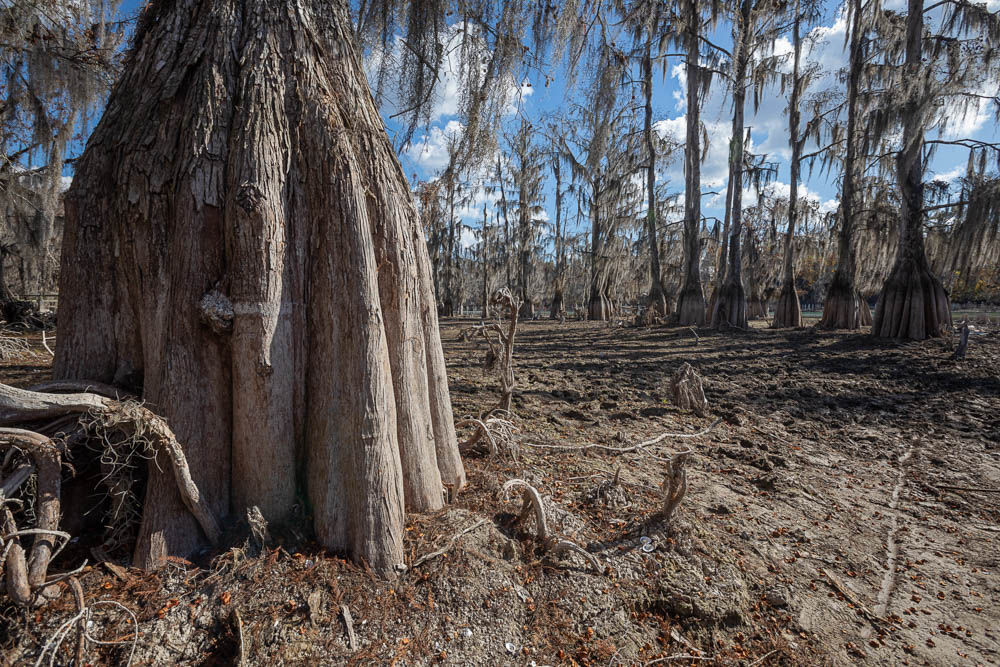
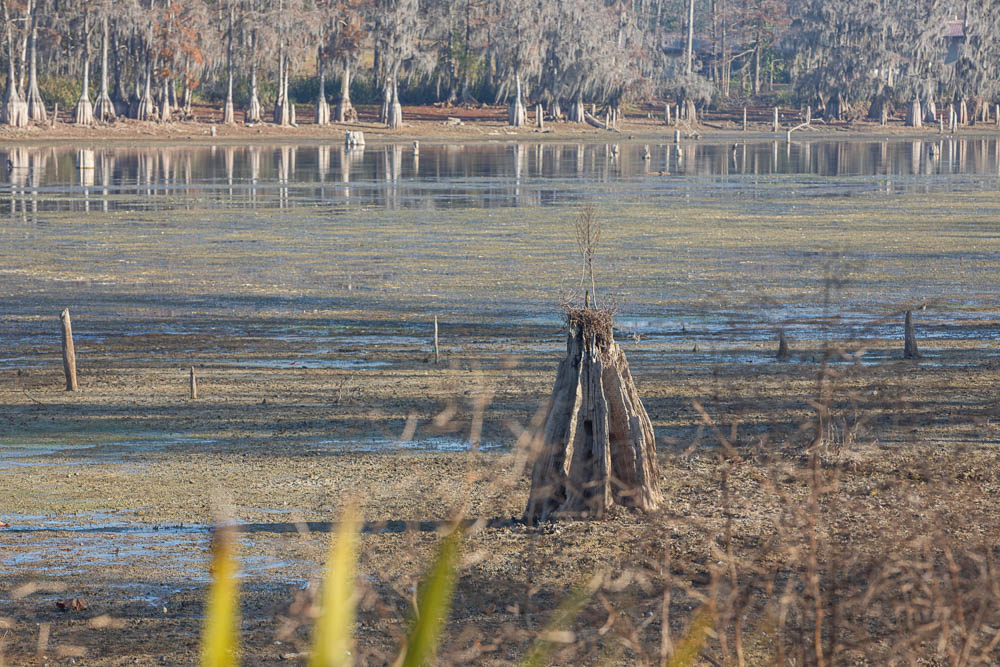
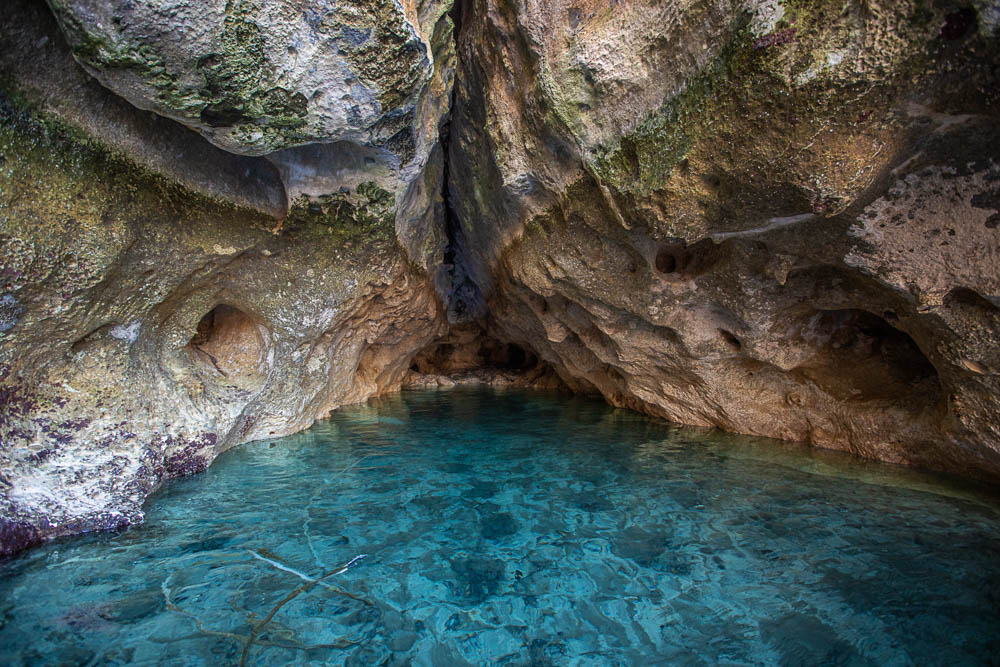
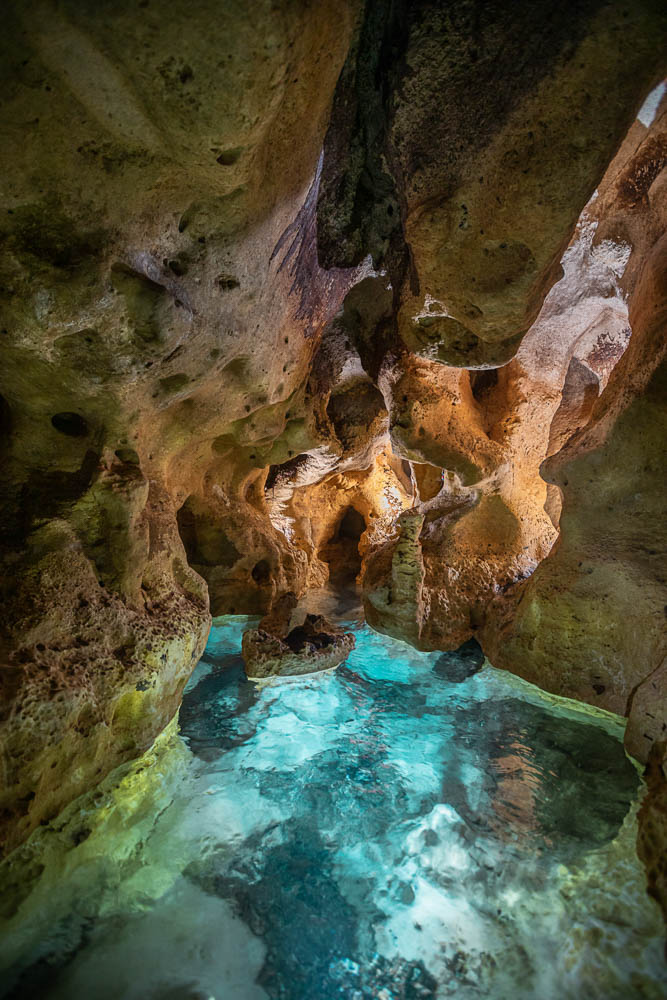
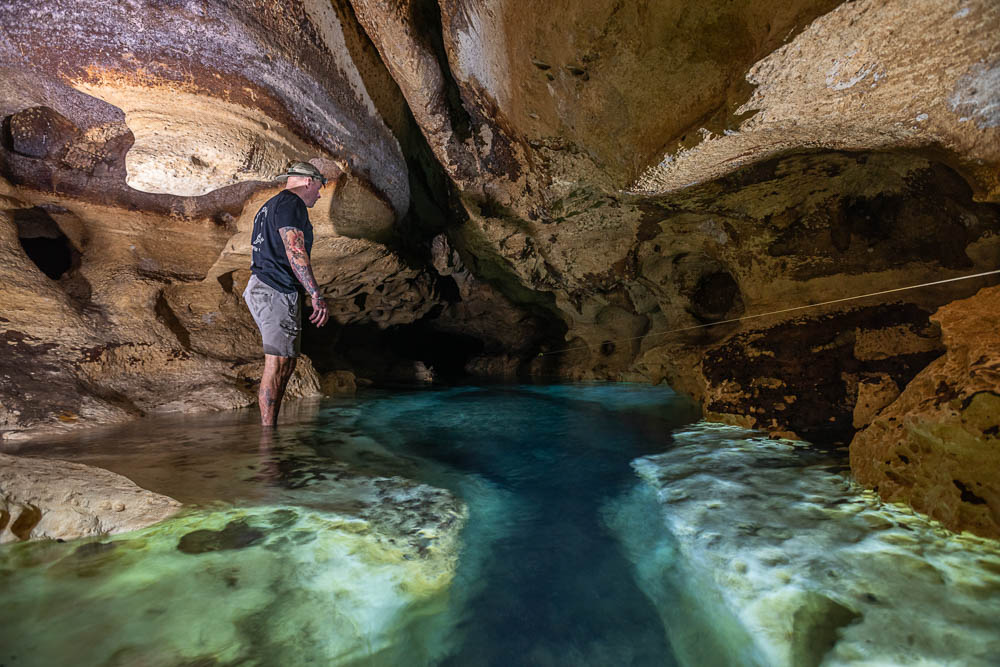
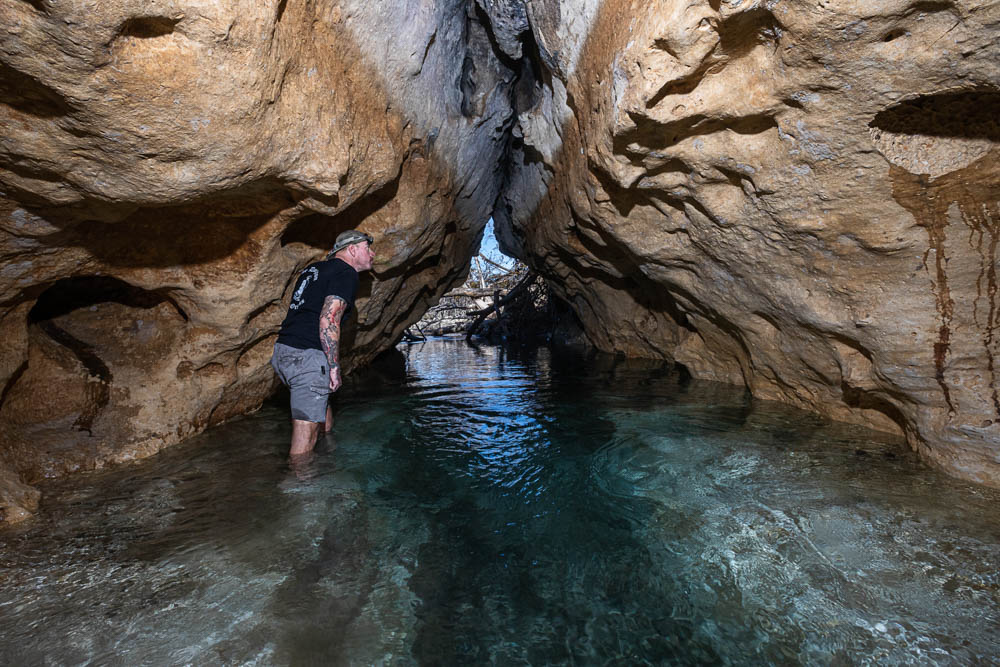
The layout of Hole in the Wall Spring allowed me to paddle straight into the cave. I had been in this cave numerous times before with dive gear, but seeing the cave dry and exposed was mind-blowing. All the nooks and crannies were revealed to unfiltered daylight while the smooth surfaces glistened with moisture. Like something out of a dream, a low flow of spring water seeped from the limestone cave and collected in aquamarine pools that teemed with various species of fish.
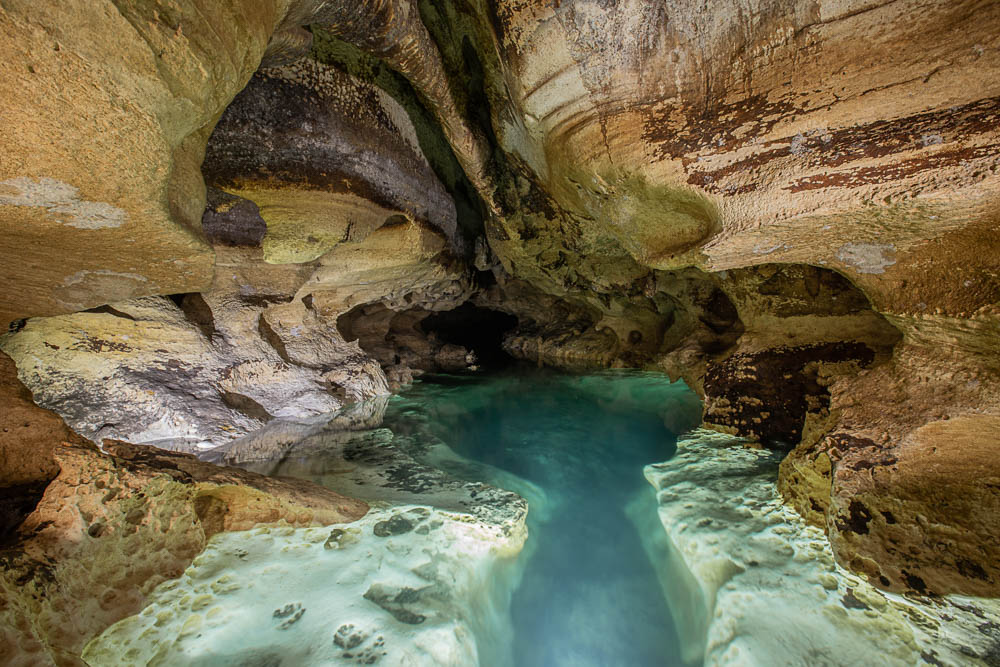 Time seemed to stand still as I explored every pool, crag, crack, and nook. I left humbled with a sense of wonder and accomplishment, knowing that I was able to experience a subterranean world that, on any other day in the next 10 years, will require more skill, effort, and preparation.