
A Helping Hand for Nature: TURTLE WATCH IN PANAMA CITY BEACH

BY VAL SCHOGER
PHOTOGRAPHY BY MIKE FENDER
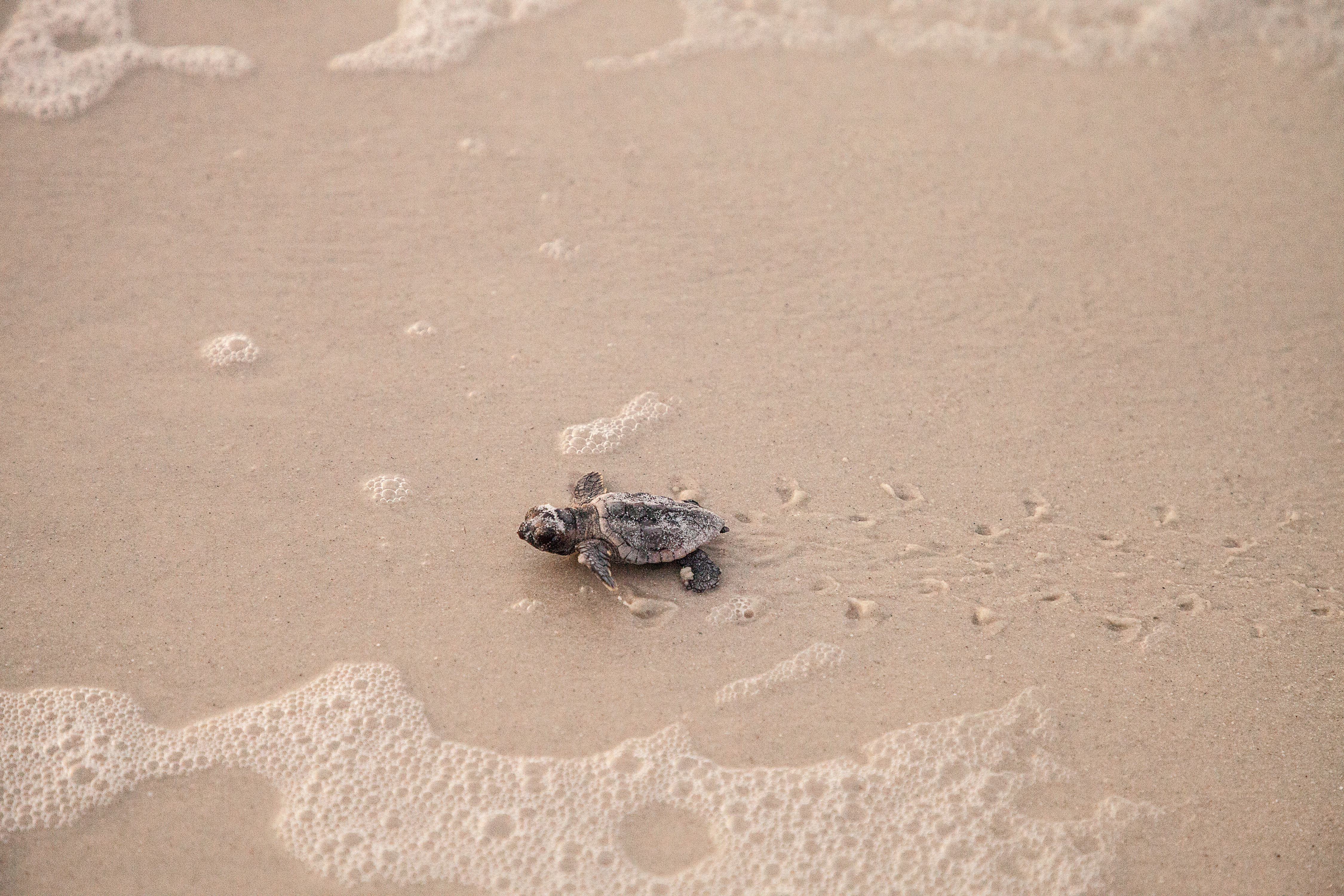
Summertime is the busiest time for Northwest Florida’s beaches. Hundreds of thousands of visitors enjoy sun, warm water, and the white sandy shorelines of Panama City Beach, providing a boost to local businesses and the economy. The high chance of encountering wildlife up-close during a stay on Panama City Beach is especially exciting and adds to the allure of our area. But summertime is also nesting season for sea turtles that, in addition to being exposed to their natural predators, are easily disturbed or even harmed by lights, litter, and abandoned recreational equipment (tents, chairs, umbrellas) left on the beach at night.
The Sea Turtle Conservancy advises that an estimated 90 percent of all sea turtle nesting in the United States takes place on Florida’s beaches, stressing how critical it is that residents and visitors alike do their part to ensure that sea turtles have a safe and successful nesting season. The majority of sea turtle nesting in Florida occurs between May 1 and October 31.
Four sea turtle species are known to nest on Northwest Florida’s beaches—the most common are loggerhead turtles. Green, leatherback, and Kemp’s ridley turtles nest on our local beaches as well, but very rarely. Crawling ashore, mostly at night, a turtle’s body and flipper size will often determine the size and depth of the nest it makes, a process that can take several hours. Leatherbacks can measure up to 6 feet and loggerhead and green turtles can measure up to 4 feet. Kemp’s ridleys, the most endangered sea turtle, are also the smallest, measuring around 2 feet.
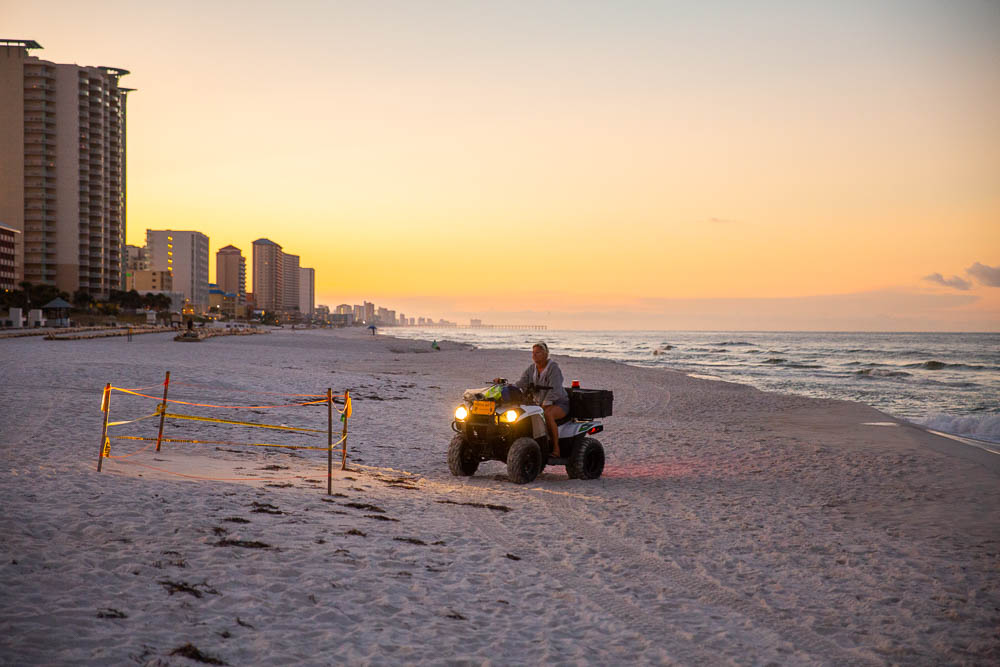
 A local non-profit organization that has been actively protecting and surveying sea turtles for the last 30 years is the Panama City Beach Turtle Watch. A big part of their work consists of training, collecting data in accordance with strict guidelines by the Florida Fish and Wildlife Conservation Commission. The public mostly gets to see the group during their field work, early in the mornings and during emergency response or nest excavations. A day in the life of a Turtle Watch surveyor often begins at sunrise, patrolling the 18-mile stretch of beach that falls under their jurisdiction in Bay County, between St Andrews State Park and Camp Helen State Park.
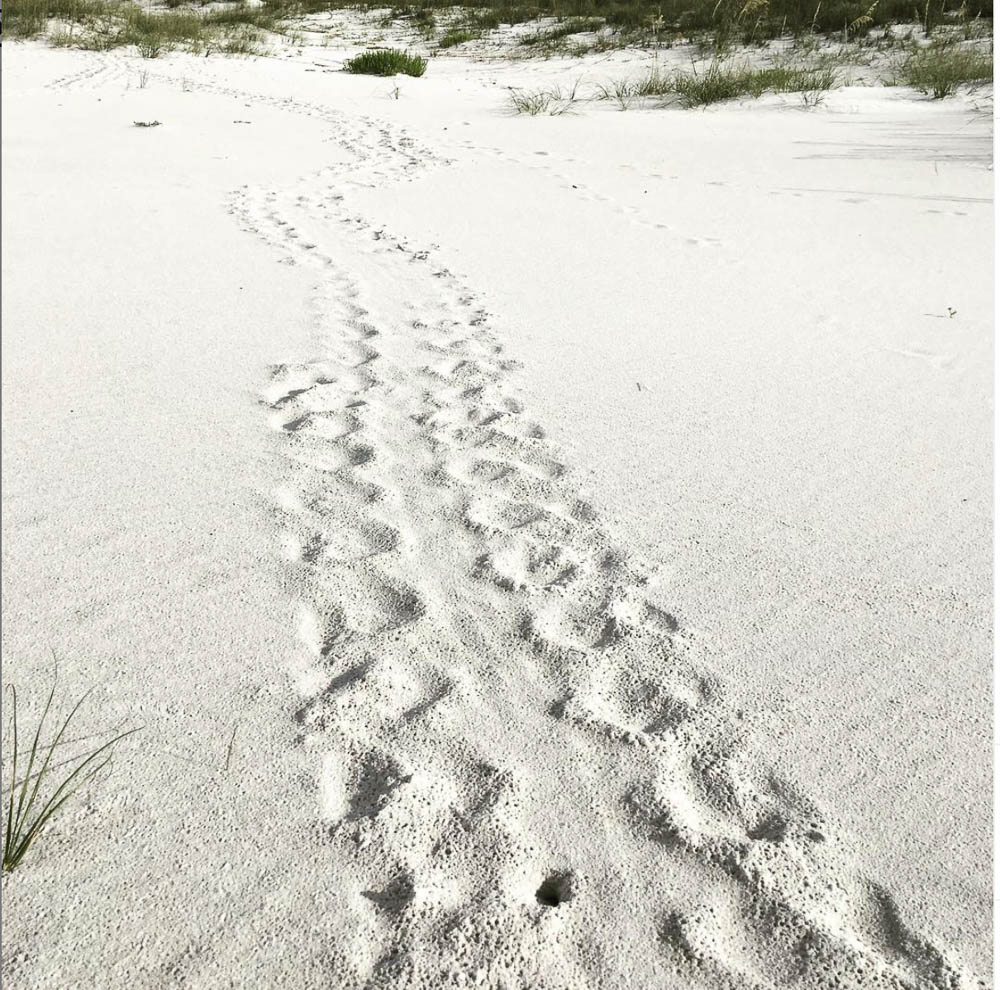
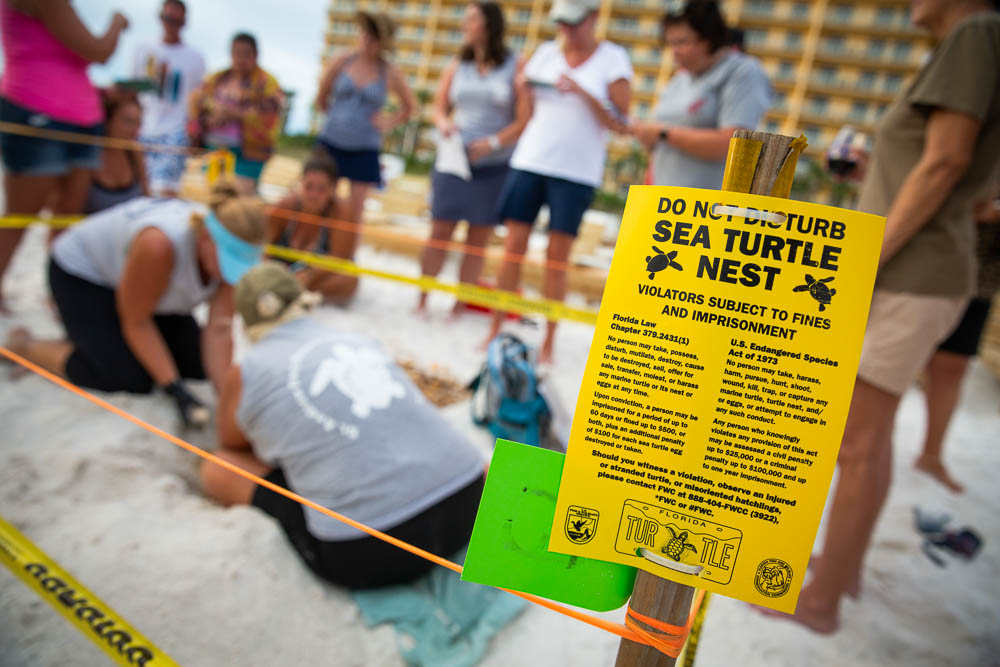
When the tracks of a crawling turtle are found in the sand, the next step is to locate the nest and rope it off with signs advising passers-by to give the area a wide berth. Turtle Watch surveyors carefully map and monitor each nest that they have marked. The size and pattern of the tracks in the sand are used to identify species. Female loggerhead turtles reach maturity and lay eggs when they reach an age of about 30 years, and it is believed that all sea turtle species come back to the same general area of the beach they were born on to make their own nest. Turtle hatchlings are believed to imprint on the beach via the earth’s magnetic field. When they reach maturity, they will be able to locate the area again, but any type of interference during hatching might disturb the turtle’s imprinting. Just like Panama City Beach, many beaches around the world have drastically changed in the past 30 years. This, combined with the estimate that only one in 10,000 hatchlings will reach maturity, is not a good outlook for the future survival of the species.
In Panama City Beach, research is ongoing. All data from current nests is collected and forwarded to the FWC.
Panama City Beach, with its busy visitor season, has seen 40 to 60 sea turtle nests per year for the past seven years. So far, this season, 45 nests have been located, numbered, and marked, but tropical storm Barry’s storm surge in mid-July caused the flooding of many of these nests. Several nests were washed away entirely and in most cases the flooding impaired the development of the turtle embryos. FWC does not allow nests to be moved in anticipation of storms, in part due to the difficulty in predicting when and where high water will occur. According to the FWC, turtles have adapted over the centuries to deal with storms. Sea turtles have a nesting strategy that accommodates for natural events such as Barry.
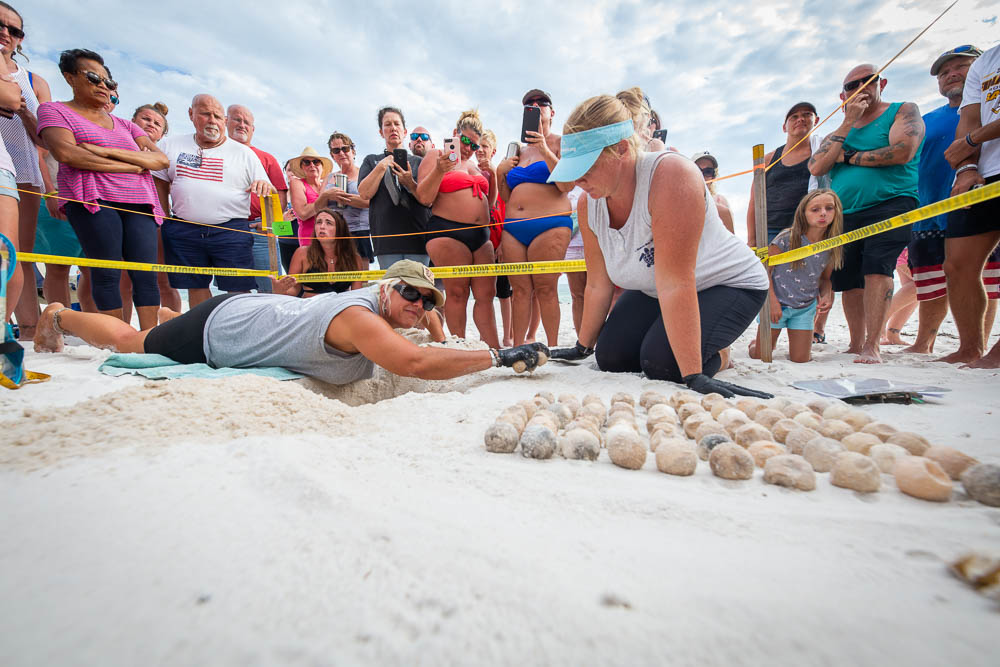
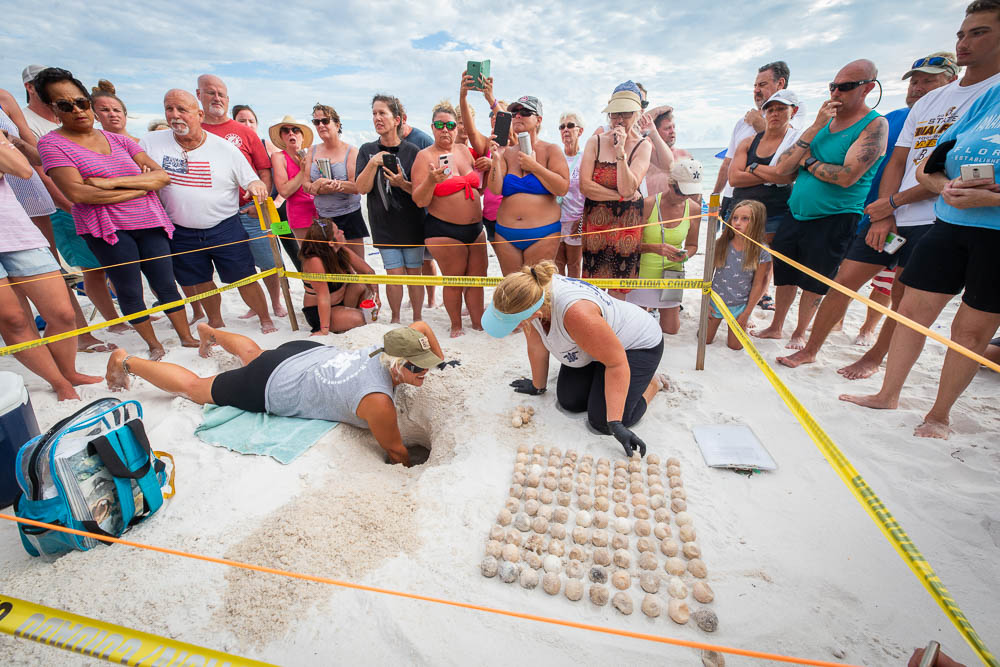
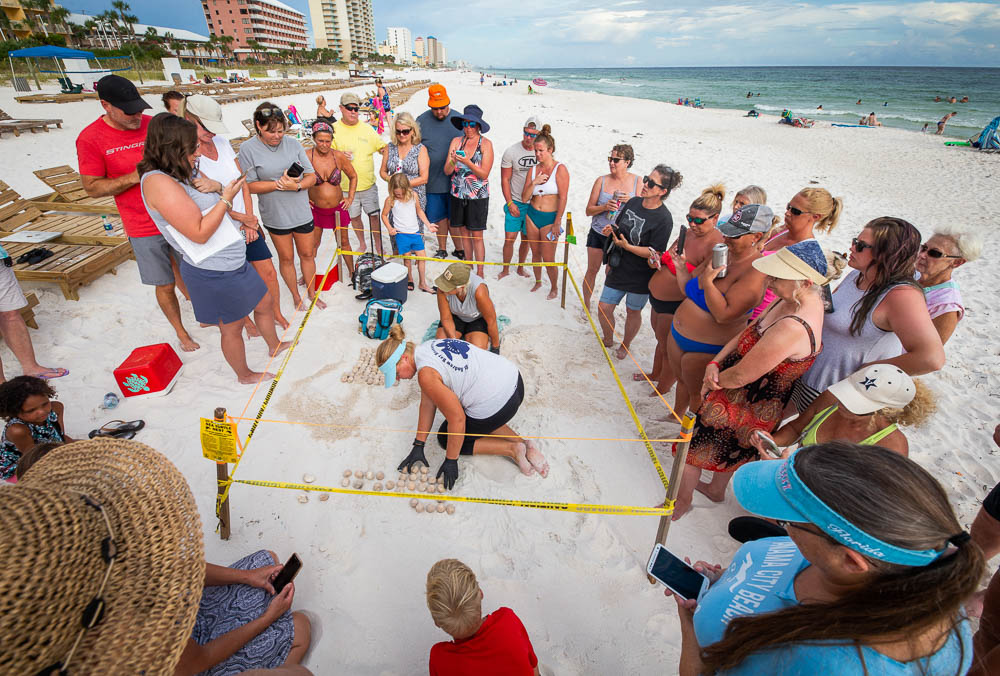
If the nest develops normally, the eggs take about 60 days to hatch, but incubation times can vary considerably due to fluctuating sand temperature which determines the speed of embryonic development and the gender of the developing embryos, warmer temperatures producing more females.
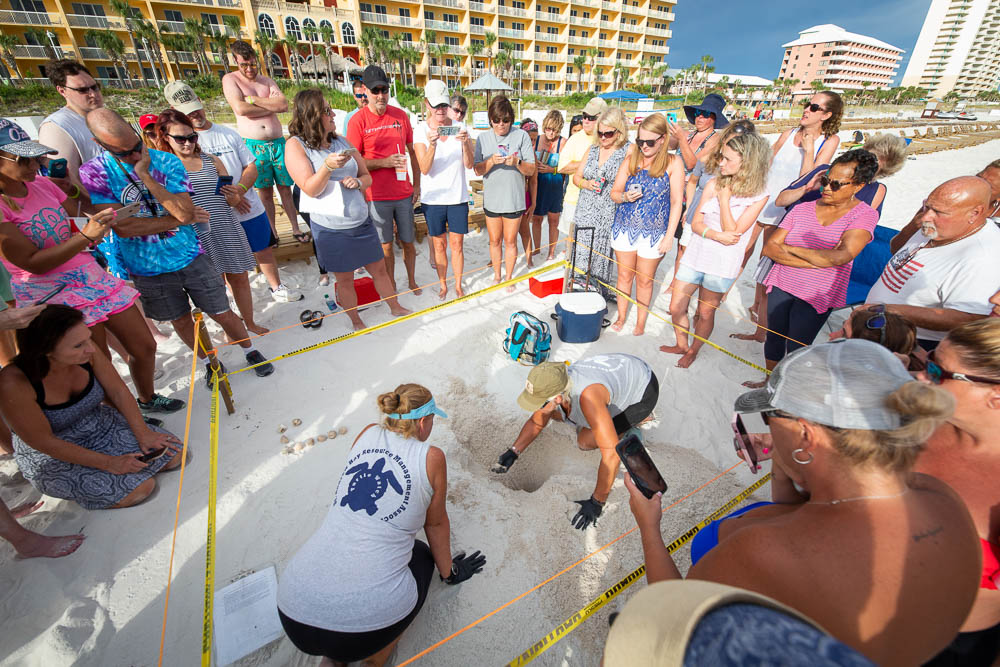
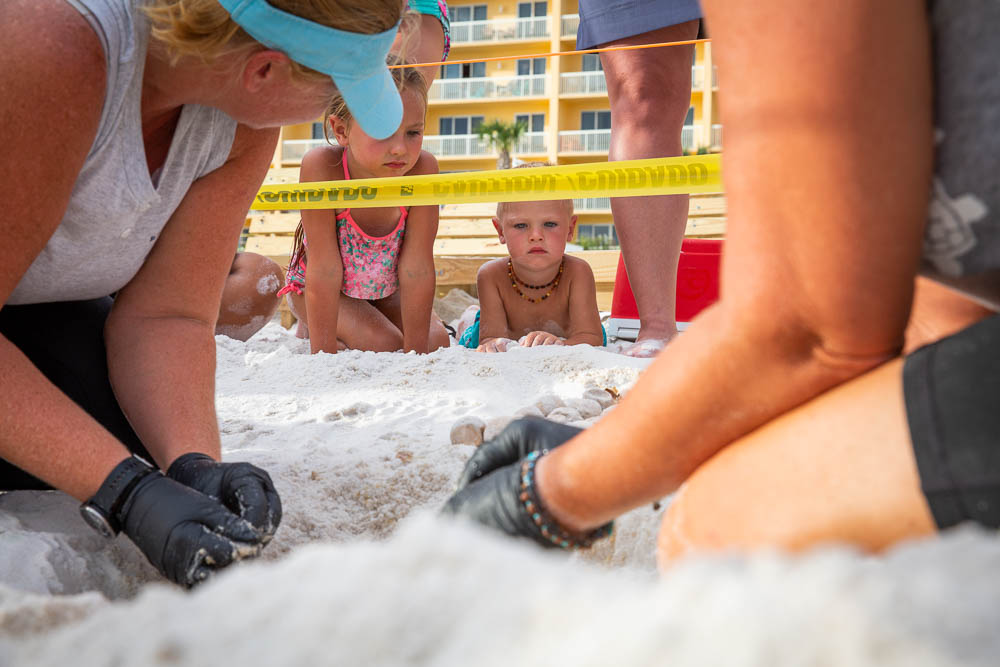
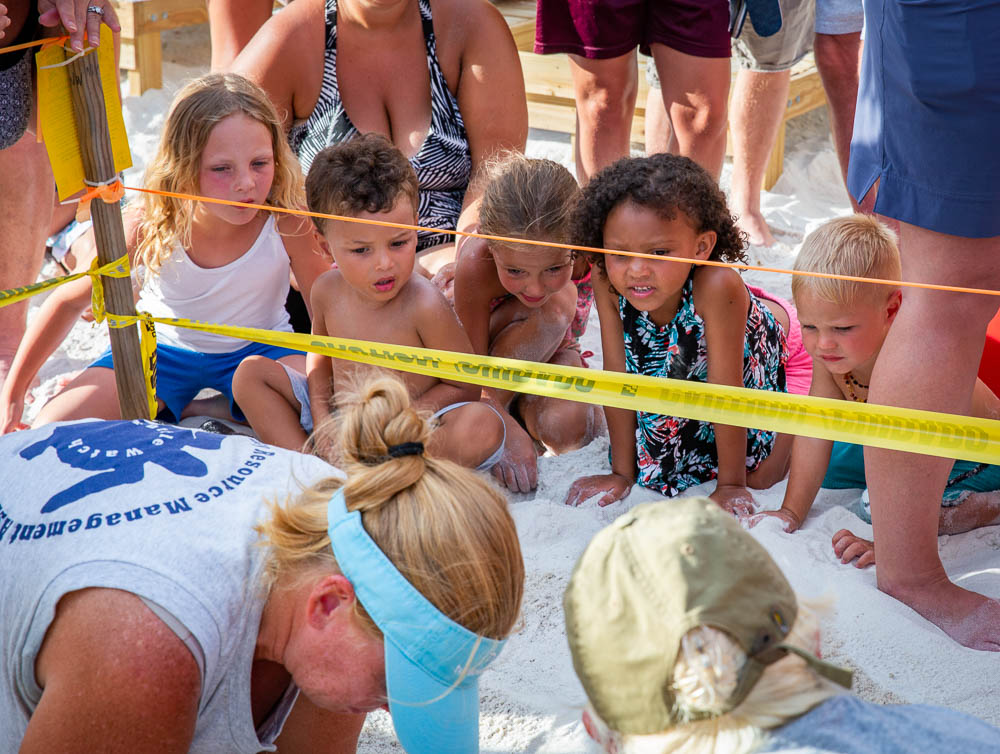
Whether a nest has hatched or not, Turtle Watch volunteers will carefully excavate several feet of the area a few days after it hatched or should have hatched. In late August, close to a dozen volunteers were on-site to excavate nest number 3, a leatherback nest. Leatherbacks are the largest sea turtle species and their nests can be three feet deep. After two hours of hand-digging, the dedicated group finally had to give up as it could not locate the egg chamber, indicating that the nest was likely washed out by tropical storm Barry.
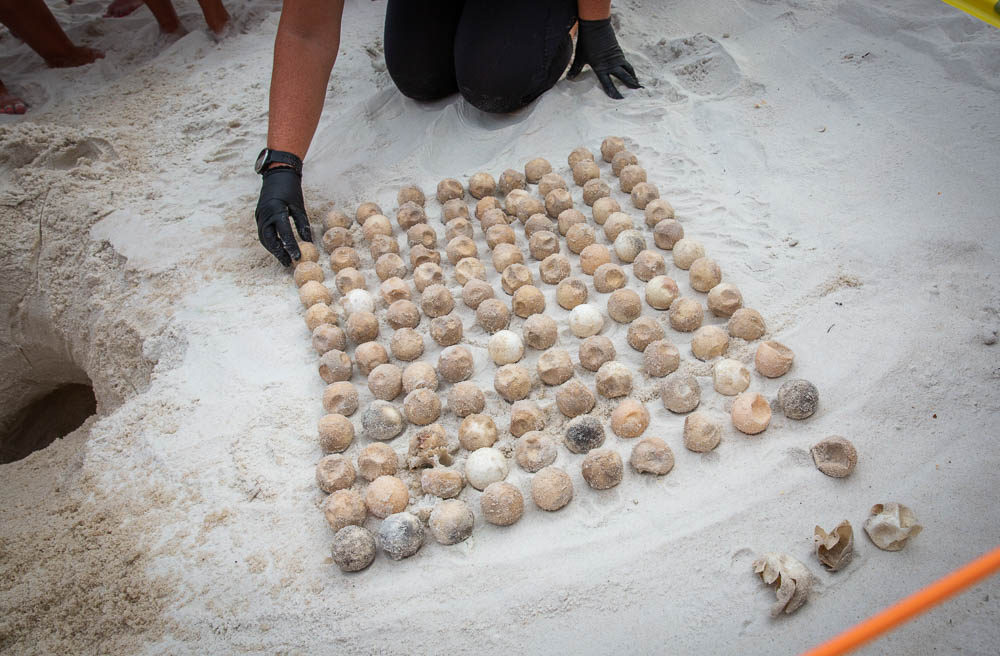
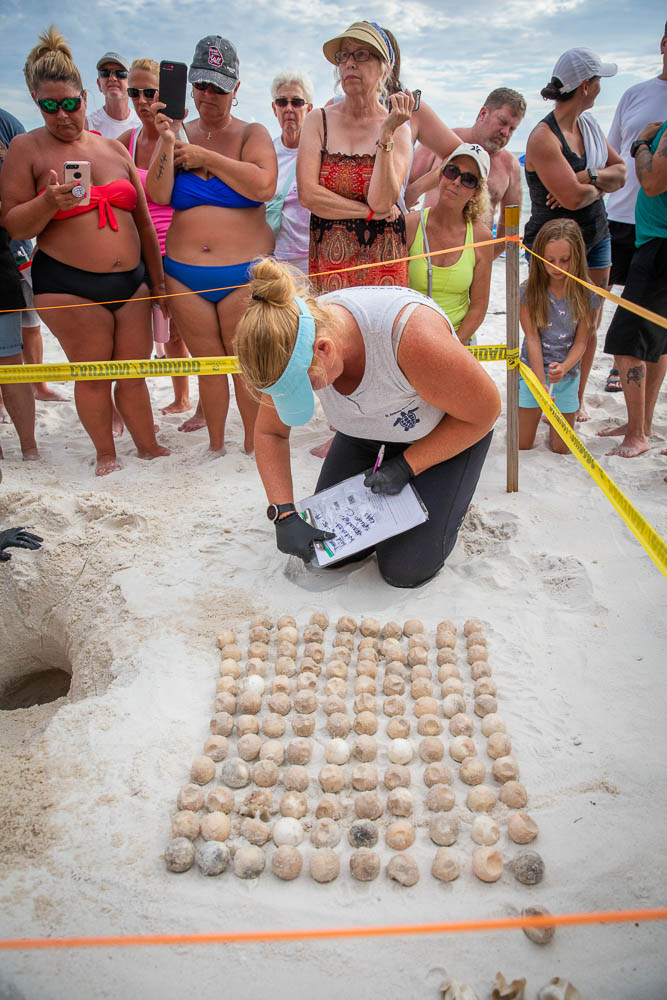
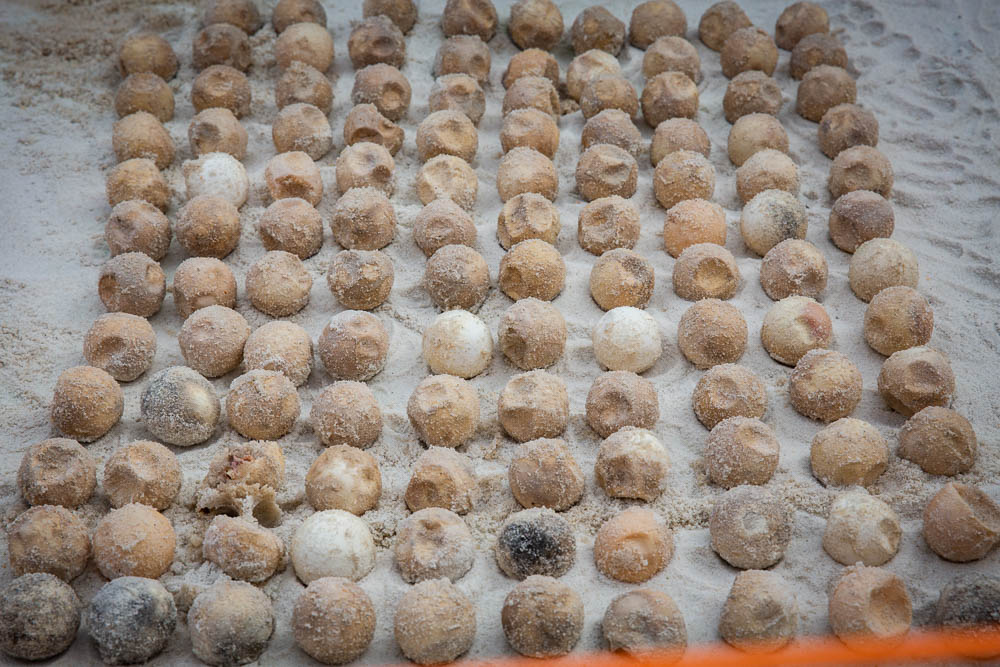
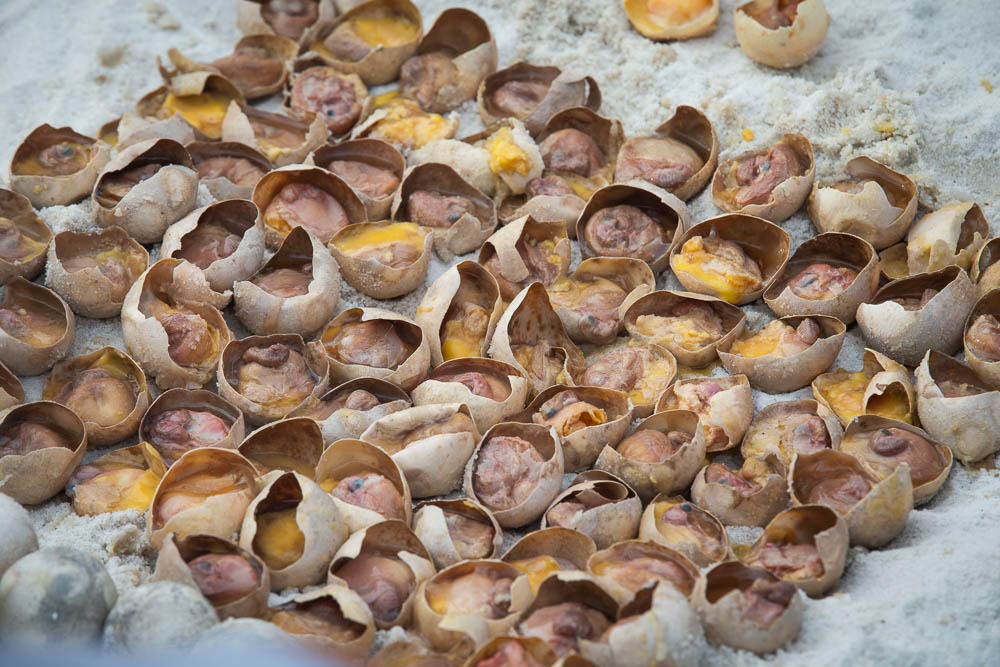
On the next day, at nest number 15, 123 eggs were excavated by volunteers Nancy Evou and Angela Barros. It produced 120 unhatched eggs and evidence of only three hatched eggs was found.
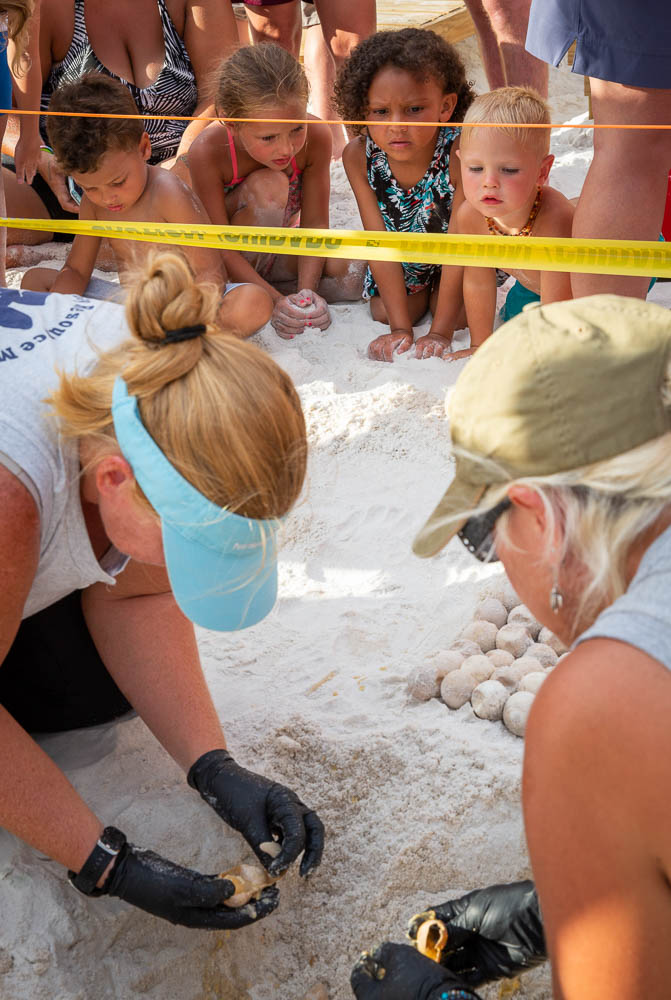
Nest number 17 was closely monitored and when the time came and the hatchlings emerged, a team of volunteers was on-site to witness 31 tiny turtles crawl from their nest, only to take off into the opposite direction of the Gulf, disoriented by the lights on the beach and adjacent roadways. All 31 hatchlings were carefully collected and released on a darker beach.
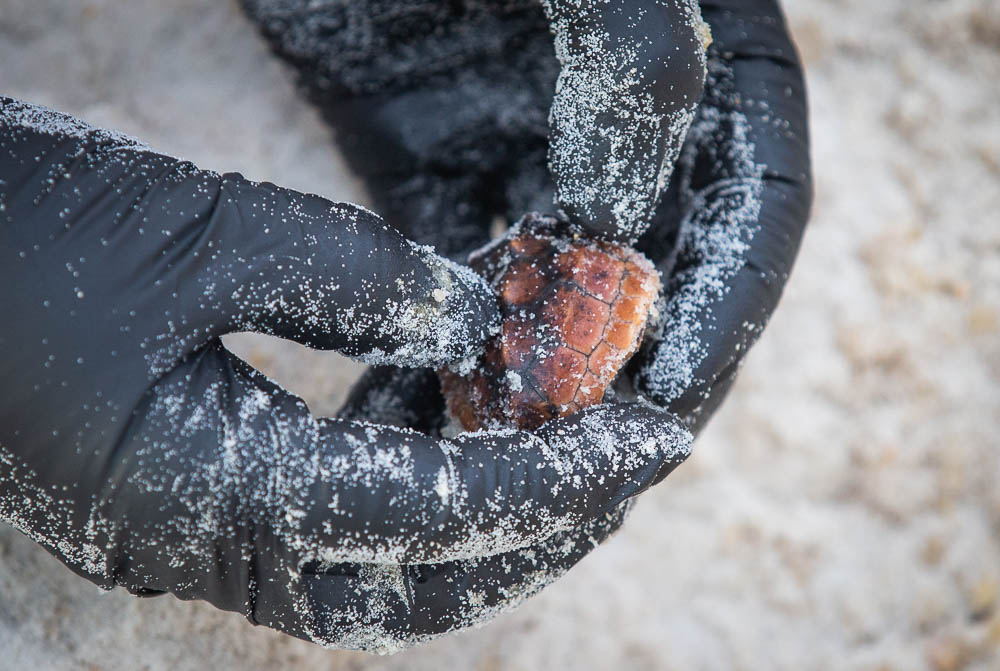
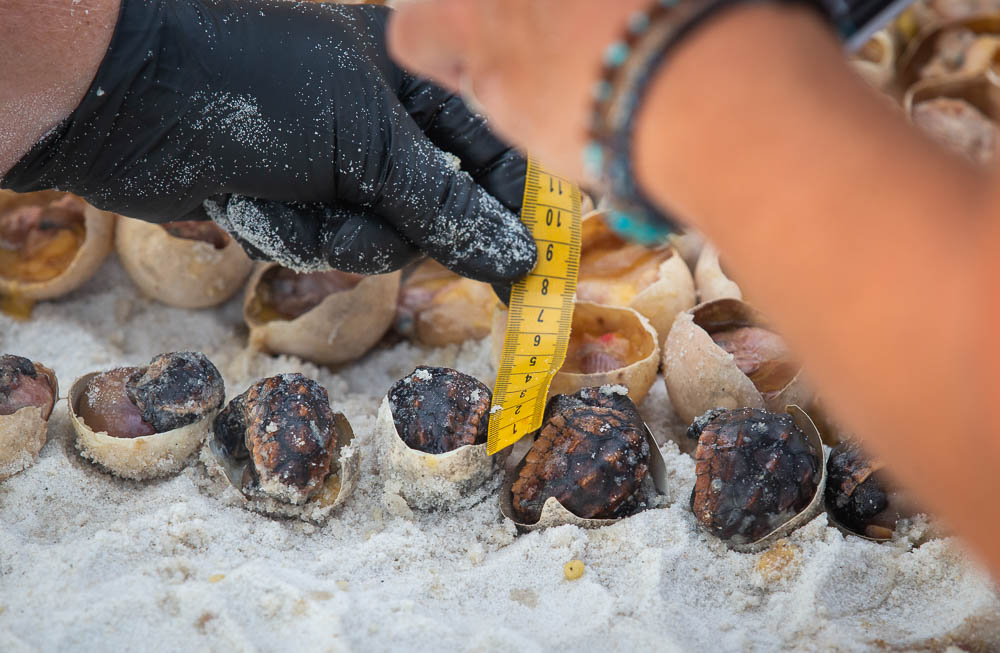
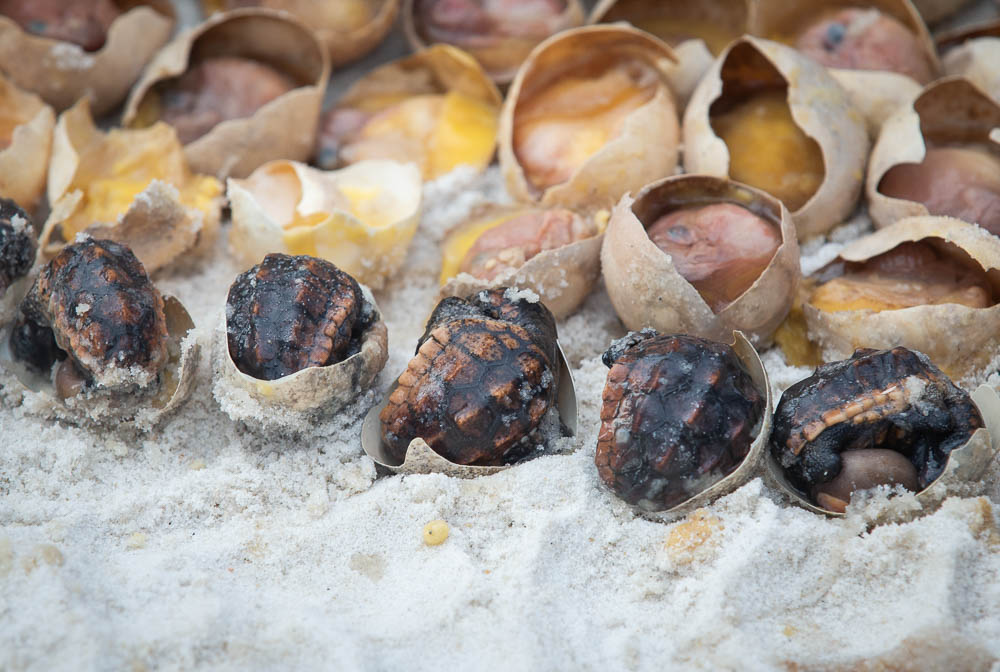
Four days later, on August 25, the same nest was excavated by volunteers, who confirmed that 31 eggs had hatched out of the 102 eggs that were in the nest. And to everyone’s delight, there were two eggs that, after being lifted out of the nest, had two hatchlings starting to emerge from their shells. These two would most likely not have survived and been able to crawl from the nest on their own as the majority of their siblings had already taken off. Turtle watch surveyor Nancy Evou and volunteer JoAnn Weatherford placed the partially emerged hatchlings carefully in a container for a later release into the Gulf.
The sea turtle nest excavations attract large numbers of spectators. Questions are asked, and the Turtle Watch volunteers take the opportunity to educate the public on important details about nesting season. All eggs are carefully inspected and catalogued. Unhatched eggs will be counted, some examined for embryonic development, and a number of the eggs along with the collected information are sent off for research to the FWC. All this is done under strict guidance and permitting by the FWC, the governing body that also provides training and permitting to the surveyors and volunteers of Turtle Watch and dozens of similar organizations in Florida. Strict rules and guidelines are in place that ensure proper surveying, handling, and documenting of all turtle nests, eggs, and hatchlings, and is based on the latest research.
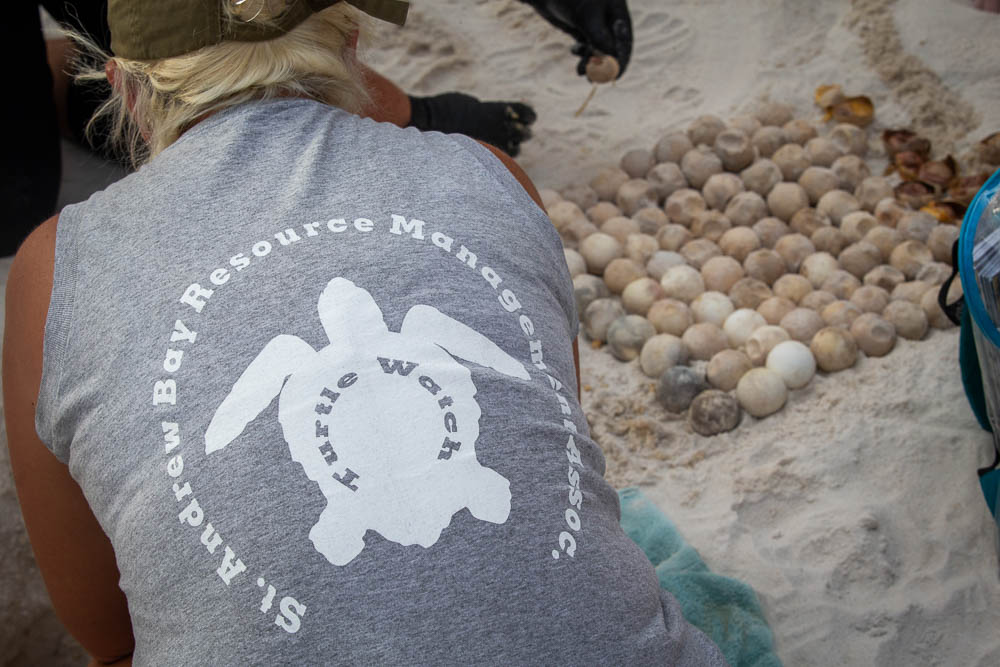
Panama City Beach Turtle Watch was founded in 1991 by local environmental organization St. Andrew Bay Resource Management Association, which is still its parent organization. Turtle Watch director, Kennard Watson, was there from the beginning. What started out as a hobby is now a full-time job for him after retiring from the research laboratory of the Naval Surface Warfare Center, Panama City Division a few years ago.
Throughout the years, PCB Turtle Watch has raised awareness and implemented new ordinances that help turtles survive. “It has been a big effort to reduce the main threat to turtles, the lighting on the beach that is affecting both nesting and hatchling sea turtles,” he says. We started out trying to encourage voluntary compliance for reducing the adverse effects of beachfront lighting. The turtles basically rely on dark beaches. So, when they emerge at night, trying to find their way toward the water, lights from homes and condos can lead them in the wrong direction.”
The efforts started in the early 1990s and culminated in local ordinances that were passed beginning in 2002 and fully implemented in 2009, he summarizes. “We had an extensive grace period that allowed the older motels and homes to come into compliance. It’s a work in progress. I think we need improvements to the ordinances, but at least we have something in place now that we can work with.”
Why are new nests that are on busy, bright beaches not relocated? Kennard Watson says that interfering with nests is a tough decision. “We don’t want to be in a position where we have to move nests away from lighted areas into dark areas, because that essentially takes away important nesting habitat from these animals. And frankly, we’ve learned through our education program, especially with the public nest excavations, that people really enjoy the experience of seeing the Turtle Watch volunteers doing their job out on the beach and learning about sea turtles in their environment. So, there is an important educational value having these nests on an urban beach and we’re just trying to make sure that we can all get along together.”
The organization is funded by the Bay County Tourist Development Council, he explains. “They provide the funding to allow us to hire surveyors who then work under our permit. Most of our work takes place at nighttime, the monitoring of nests is done by volunteers. We receive donations and in the past, we’ve received grants from the sea turtle license plate committee. Florida residents can buy a sea turtle license plate and a portion of the funds from those plate purchases go to support groups like Panama City Beach Turtle Watch. We’ve received money to do things like improve our educational program, to print literature that we distribute to visitors on the beach and similar things.”
To buy your sea turtle license plate, go to: helpingseaturtles.org/
PCB Turtle Watch advises: If you see a turtle or turtle hatchlings on the beach locally in Bay County, Florida, call the Panama City Beach Police at 850-233-5000 with the information and they will notify Turtle Watch. When visiting the beach, please follow “Clean, Dark, and Flat” principles by not littering and taking your personal gear off the beach at sunset (umbrellas, tents, chairs). Avoid the use of lights on the beach at night or use red light sparingly, and fill in holes and flatten sand castles when you leave.
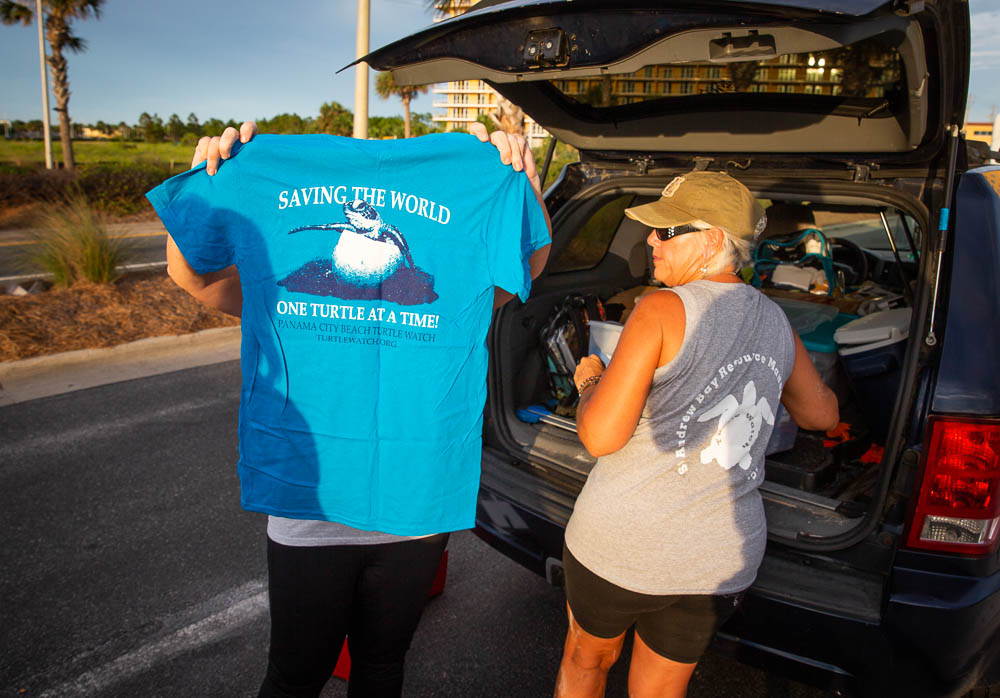 FOR MORE INFORMATION Panama City Beach Turtle Watch announces the excavation of the 2019 nests on their Facebook page. Go to their Facebook page to see the latest updates and live footage of nest excavations and for the location of time of the next excavation that you can participate in. To donate and find out more about our local Turtle Watch Organization, visit their website turtlewatch.org Turtle enthusiasts can also follow several sea turtles that were tagged and equipped with satellite tracking devices by other organizations. Go to the Turtle conservancy website to track the path of Loggerhead turtles Amie, Bortie and Eliza Ann at conserveturtles.org/sea-turtletracking- tracking-turtles-floridas-gulf-coast/ or follow Leatherbacks Jujube, Eve, Frankie, and Shelly and thirteen other Green and Loggerhead turtles at tourdeturtles.org/