
AMBITIONS, GOALS, AND LIMITS


BY VAL SCHOGER
PHOTOGRAPHY BY MIKE FENDER
IRONMAN COMPETITION PHOTOGRAPHS COURTESY OF ALEX BURGANS
Triathlete Alex Burgans Talks About Athletic Success and How to Learn From Failure
What gives a person the motivation to work harder than anyone around them? How does this ambitious individual deal with failure? Is there an easy path to achieving goals? And how can one best prioritize personal and career goals? Panama City native Alex Burgans has never asked himself these questions. He explains that he simply lives his life with purpose.
 “I consider myself among the lucky ones. I have been extremely goal-oriented since an early age. In the second grade, I had set a goal for myself to graduate from high school with straight As. While pursuing the most rigorous coursework available through honors, dual-enrolled, and advanced placement courses, I completed high school with only one B in dual-enrolled biology.”
Pressing forward determined where Alex is today. He explains that his career path always took precedence over his athletic goals, which resulted in his decision to give up team sports and take up and excel in triathlon.
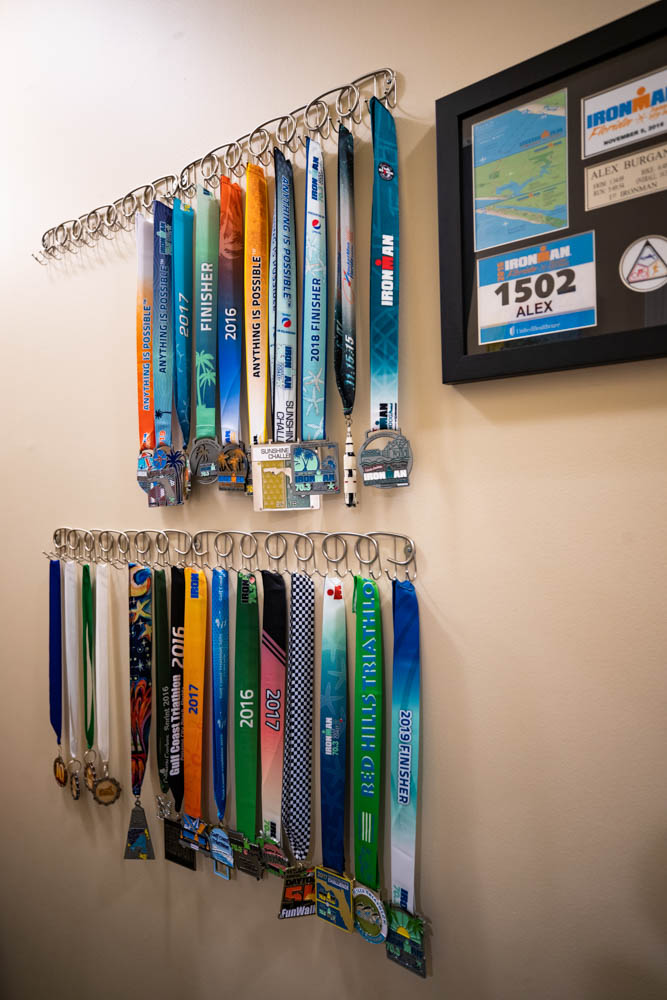
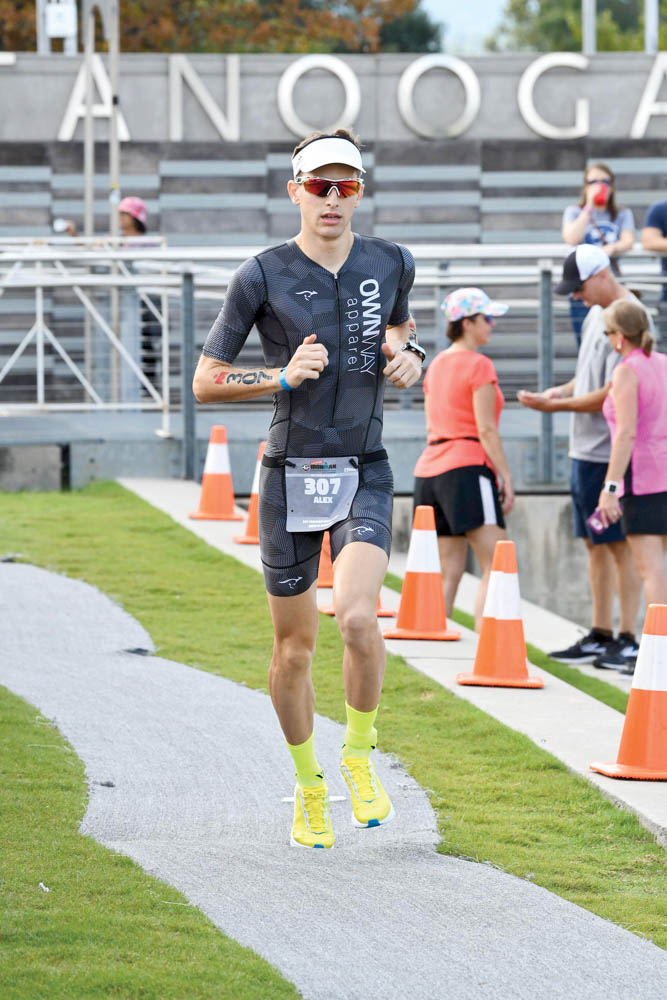
Alex graduated Mosley High School in 2014 and competed in his first full Ironman event in November 2016. In 2018, he graduated with honors from the University of Alabama with a bachelor’s degree in aerospace engineering, and in 2020, he graduated from Florida State University, Panama City Campus, with a master’s degree in systems engineering. He is currently employed as an engineer at the Naval Surface Warfare Center Panama City and has completed six full Ironman events. His best overall finishes are fourth in his age group at Ironman Chattanooga in 2018 and fifth at the 2019 Ironman Florida competition.
Is a strong will all it takes? Is failure in Alex’s vocabulary? Alex answers our questions humbly and with a true desire to share his positive outlook on any challenge. No, it did not all come that easy, we learn. But it’s all a matter of how you choose to proceed.
You are very ambitious. Is this in your nature, or how do you explain your goal-oriented mindset?
I have always been fortunate to have outstanding role models in my life, from teachers, coaches, and administrators, to parents, grandparents, and friends.
One of my teachers, Ray Wishart, had quite an impact on me. He lost his life in a cycling accident very soon after his retirement. I remember his words like it was yesterday. We were sitting next to each other in the high school gymnasium filming yet another “motivational” speaker who had come to share his story with over 1,500 impressionable young adults. As all the others before him had done, he talked about making poor decisions, getting addicted to illegal drugs, and serving time in prison. He now understood the error of his ways and he was there to make sure none of us made the same mistakes. I so vividly remember Wish looking over at me and saying, “Just once, I’d like to hear from someone who got it right. I want to hear from the kid who stood strong in the face of adversity, didn’t give in to peer pressure, and is the better because of it. I want to hear from that kid.”
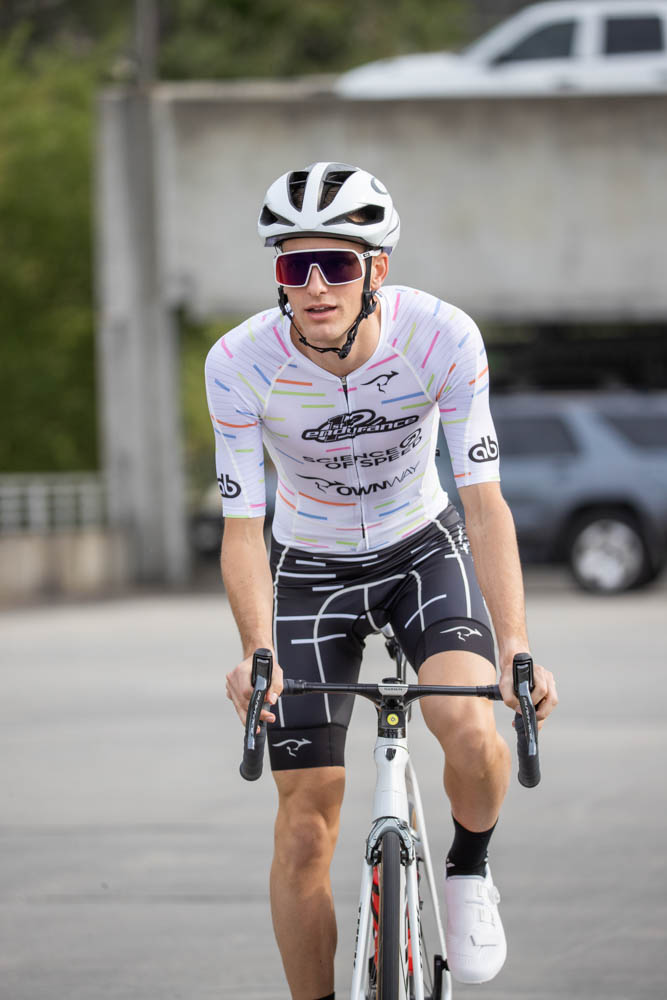
“I have always been fortunate to have outstanding role models in my life, from teachers, coaches and administrators, to parents, grandparents, and friends.”
What was going on in your life at that time?
I was working diligently to hone my skills on the soccer field by playing on school, travel, and recreational teams. I completed my high school career as the highest goal-scorer on both my school and travel squads.
At the same time, I spent many late, caffeine-fueled nights buried in biology notes, a subject I couldn’t possibly have been less interested in and with a teacher who wore her reputation to crush the best students and their grades like a crown. I learned a lot about myself that semester. I learned that I could hunker down when the going got tough and, as my soccer coach used to say, grind out a result.
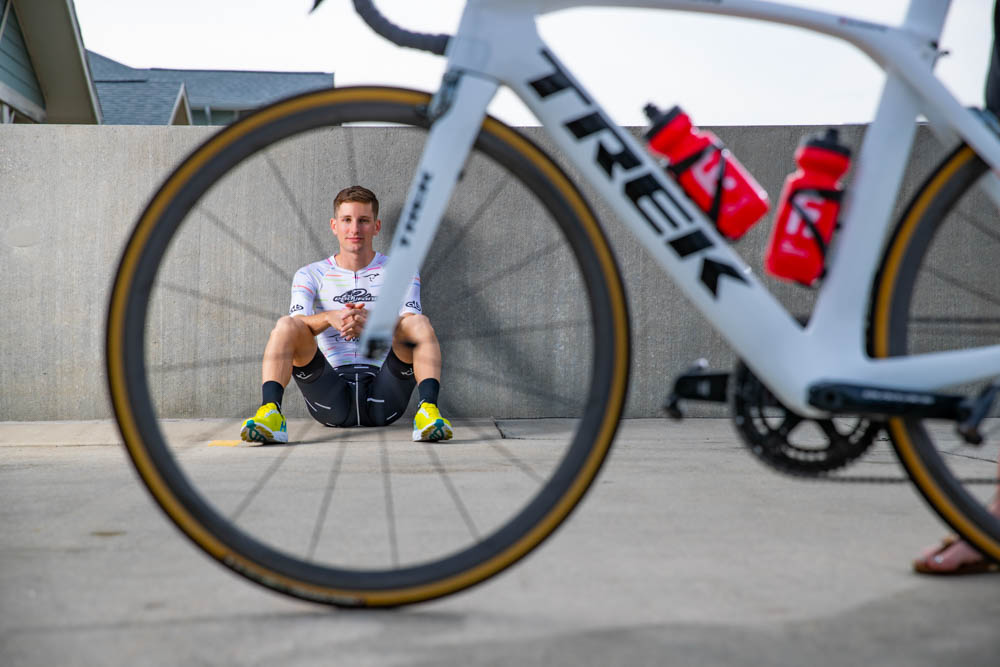
My achievements did not come without mental setbacks. While playing soccer at my high school, I also played on a travel squad based out of Gulf Breeze and was one of two players who were not local. The coach, David McCarthy, was a huge role model for me. He had scouted me over a number of tournaments and extended an invitation to join the squad. He was the coach at Gulf Breeze High School where, you guessed it, the rest of the travel team played their school soccer.
In what turned out to be the final game of my high school career, we came up against Gulf Breeze in a regional semifinal. The winner would advance; the loser’s season would be over. For reasons I still don’t know, my high school coach pulled me out of the game only 10 minutes in. I sat on the bench, helpless, as I watched us go one, then two, and eventually, five-nil down.
But you replaced soccer with triathlon?
Yes. As I began making the decision about where to attend college, I knew my first priority had to be to choose a university that could offer me the very best academically. Whether the college had a soccer program was important to me, but it was secondary in my decision-making process. Shortly after arriving at the University of Alabama, I realized that the hours of practice with the soccer team would hinder my performance in the classroom. It was about this same time that a family friend introduced me to triathlon.
What fascinated you about triathlon?
Initially, I had the same attitude toward the sport as anyone else who has never competed: Why would you want to swim some long-distance, then get on a bike and ride another huge distance, then get off your bike and run? I had been a recreational cyclist for quite a while and I really enjoyed being on the bike. I had started out training with a couple who taught me all they knew. In their words, I left them in the dust.
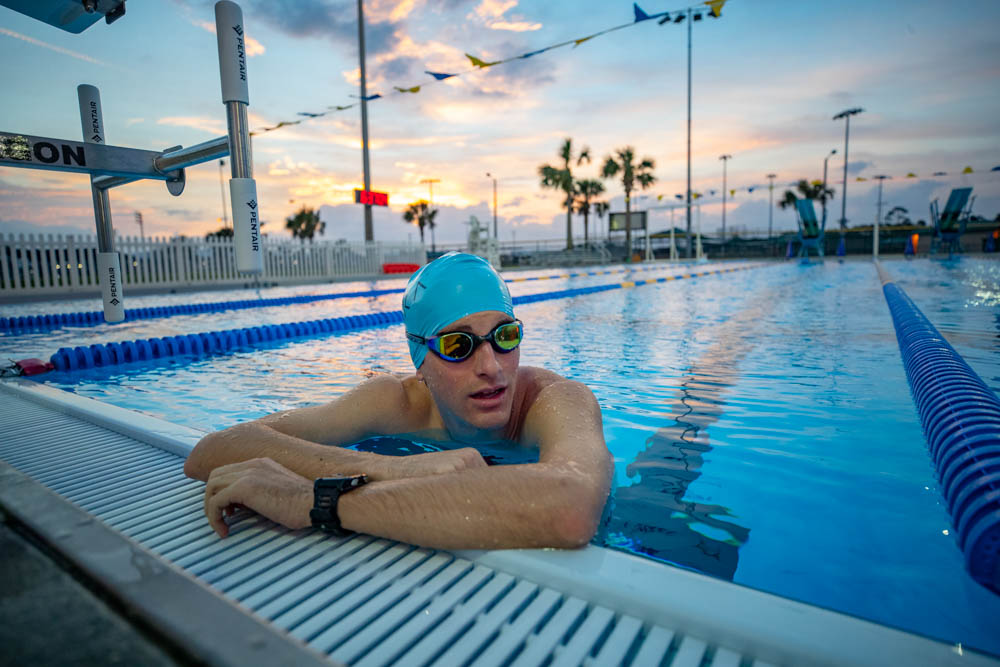
I was desperate to learn more, do more, and accomplish more. I went out in search of a challenge, and boy, did I find it. I signed up to compete in my first triathlon in the spring of my freshman year. Without the slightest idea of what I was doing, I set out on a training regimen. I grabbed a pair of goggles and headed to the pool. I could barely swim 50 yards without stopping for a breather, but I certainly saw a time in the future when I could. When it came to running, I felt I was in a great position. After all, I had been a competitive soccer player nearly all my life. I thought to myself, how hard could it be to throw on a pair of running shoes and go for a jog? As it turned out, that two-hour race was the hardest physical challenge I had ever faced.
I found out that when you combine these sports on race day, they are completely different animals. That day, triathlon had shown who the boss was, and it certainly wasn’t me. I was as exhausted as I had ever been, my legs felt like pure Jell-O, and all I wanted to do was throw up, but I was hooked. I had found the challenge I’d gone in search of. It had shaken me to my core, mentally and physically.
In the fall of my sophomore year, I took the plunge and signed up for the 2016 Ironman Florida competition in my hometown of Panama City. Known for starting at dawn and seeing the majority of competitors finish well after sunset, an Ironman consists of 2.4 miles in the water, 112 miles on the bike, and finally, a 26.2-mile marathon. It is known as the hardest one-day sport in the world.
“I have always been fortunate to have outstanding role models in my life, from teachers, coaches and administrators, to parents, grandparents, and friends.”
How does one prepare for an Ironman competition?
There is no magic recipe for training for an Ironman. It is a unique beast that requires the utmost attention to detail and a personalized approach for each athlete. While challenging, Ironman is inherently fair. You will get out what you put in. The hard yards and long hours on a weekly basis are a given for anyone preparing to compete, but it’s very important to always understand and respect the challenge at hand.
I have always believed in embracing my weaknesses and absorbing as much information as possible. I am always willing to listen. Certainly, it takes humility to embrace your naivety and look to those around you to grow your knowledge base.
My advice to anyone looking to take on an Ironman, or any challenge for that matter, is to develop and rely on your support system. After finding my feet in the sport, I’ve been extremely blessed to have the support of some exceptional coaches, top-level sponsors, and of course the unwavering support of my friends and family.
Once I decided to compete, a good friend put me in contact with his coach, who agreed to accept me as an athlete. This was a really big step for me. Honestly and naively, I took pride in knowing that I had achieved what I had without any help. But I realized that everyone needs help. Everyone has a weakness or falls short in some area.
In many of my races, I had been falling apart on the back half of the run. No matter what I tried, I just couldn’t seem to crack the code. Like a Dr. Seuss book, I had tried running more, running less, running faster, and running slower. I soon found that there was another key element to triathlon that I had been missing out on; The willingness to listen and learn. For the first few weeks with my coach, he was doing his best to get to know me as an athlete and a person. Obviously, this wasn’t his first rodeo, but it was mine.
I came to him for help, and now I was prepared to listen and learn. In my first race under my coach, I had a personal best day, clocked a 10th best run split for the entire field and won in my age group. It was extremely humbling to experience what I had worked so hard for, and all it took was asking for a little help and being willing to listen and learn.
BY ALEX BURGANS
PHOTOGRAPHY BY MIKE FENDER
IRONMAN COMPETITION PHOTOGRAPHS COURTESY OF ALEX BURGANS
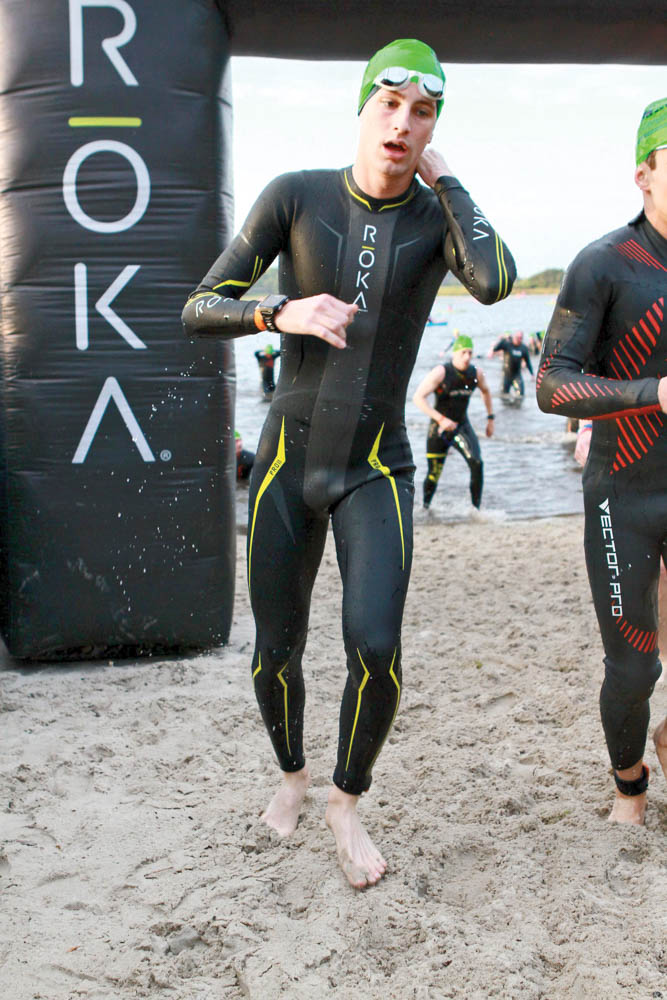
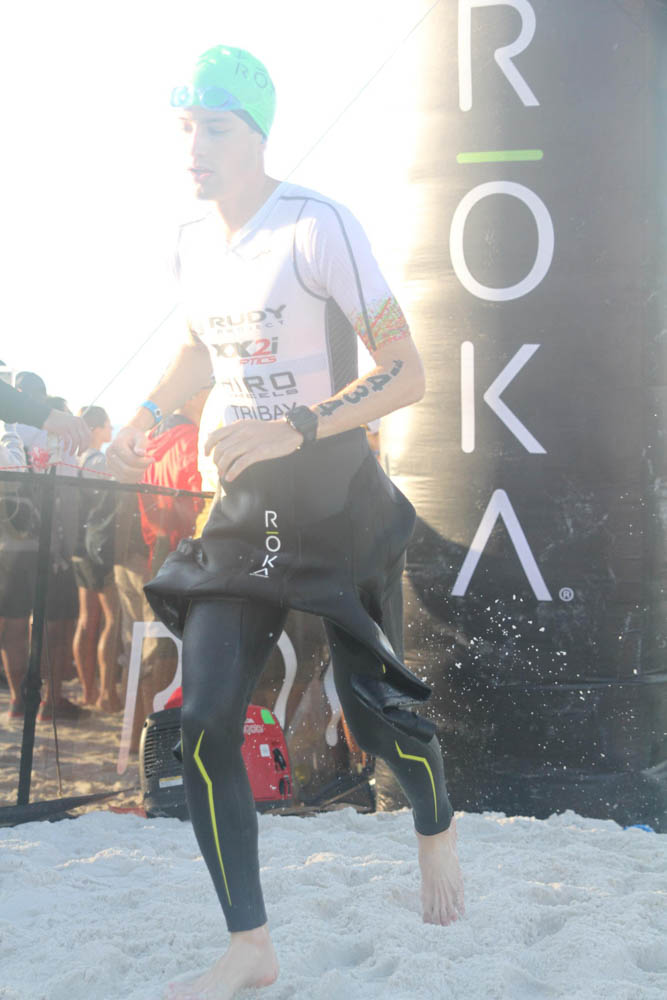
After months of training, finally, Ironman race week came. The moment I had worked so diligently for. I woke around 3:30 a.m. that day, had breakfast, and had a video chat with my coach for a last bit of encouragement and assurance that my training had me ready. The whole morning flew by and, suddenly, I was on the beach, pulling on my wetsuit and swim cap.
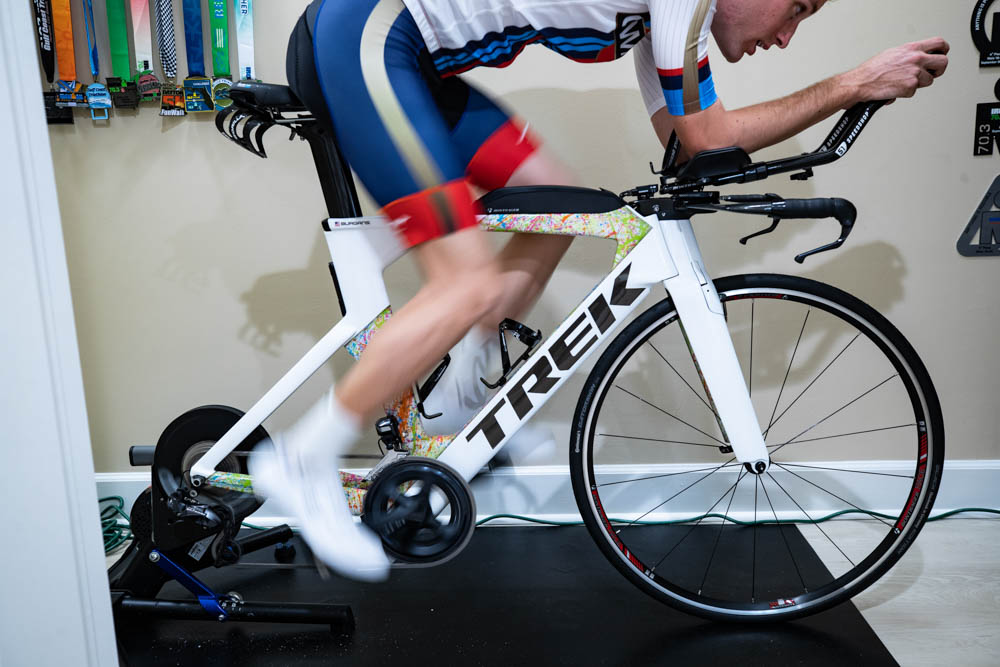 Surrounded by nearly 3,000 other athletes in the swim corral, I felt a peace come over me. My body was ready, my bike was ready, and my run gear was ready. From this point forward, it was all a mental battle to stay the course. I had situated myself in the middle of the pack, and when the gun went, we slowly began to inch forward. With one last deep breath, I crossed the timing mat, hit the water, and my day was underway.
For me, the swim was all about finding a rhythm I knew I could sustain. I crossed the last sandbar, dove in head-first, and immediately set out to find a good tempo. Because the swim course is made up of two 1.2-mile loops, we had a short run-out halfway through. I managed to pick out my family and friends in the crowd for a wave, which was a big mental boost. It helped that they held up a massive cutout of my head on a pole overlooking the crowd.
At the end of the second loop, I began to strip my wetsuit and head for the transition. I was happy to get a cheer from my support crew when I was heading out on the bike, as I knew it would be the last time I got to see them for quite a while. The bike is typically my favorite leg.
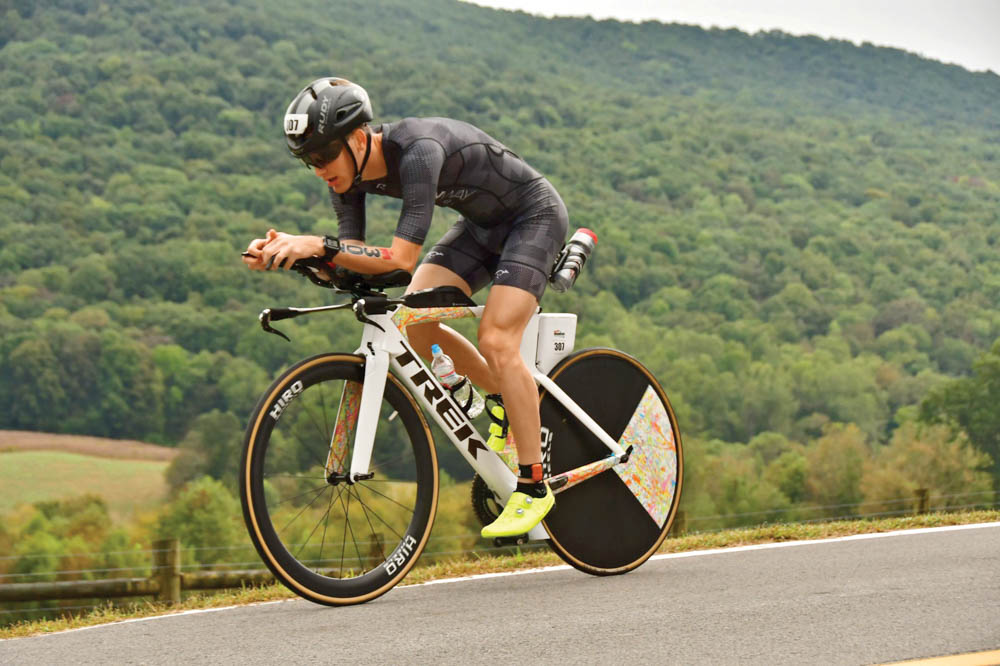
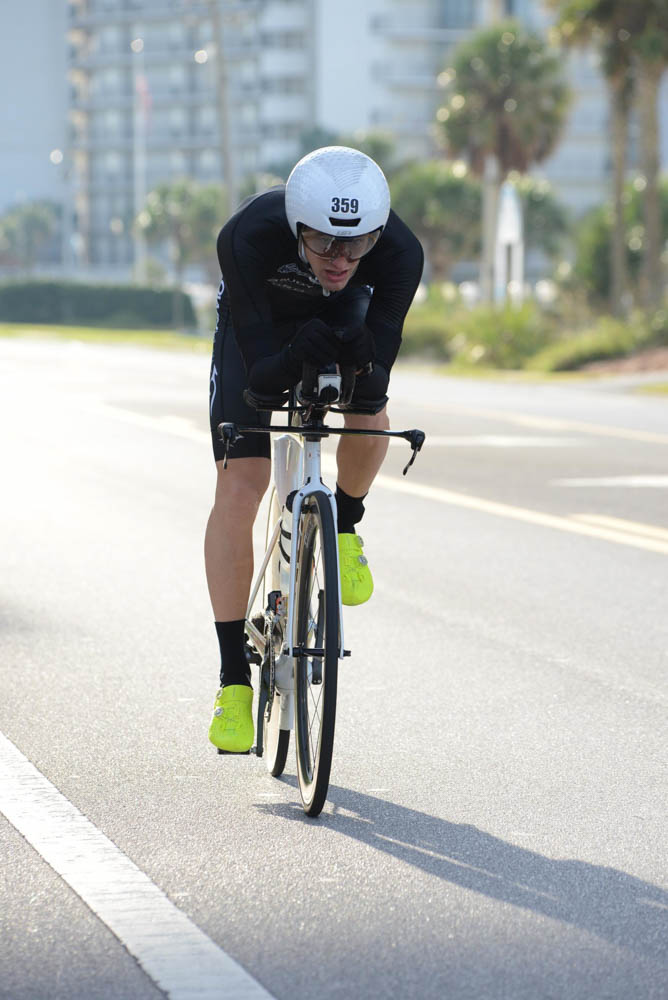
There had been talk all morning that the winds could pick up substantially by mid-morning. After one right turn about 18 miles in, we were met with a brutal headwind that would remain with us for most of the day. It was something I hadn’t mentally prepared myself for and I let it get the best of me. I backed off a bit and understood that this was going to be about survival.
This race wasn’t about competition for me. It was about fulfilling a dream of crossing the finish line and becoming an Ironman. Yes, I was having a tough time on the bike, but I also realized that I was on the bike in an Ironman event. I was doing it! Regardless of how long it took, I would get there.
At the special needs location during the bike race, placed at the halfway point, athletes have the chance to get any nutrition they may need from bags that were pre-packed before the race. The volunteers were incredible, as they had been all day long. Volunteering at special needs were members of the University of Alabama Triathlon Club, many of whom are friends of mine. I was ecstatic to see some familiar faces and receive some great words of encouragement. From that point on, the winds continued to batter us, but I was once again in good spirits.
The final seven miles heading back toward the transition were full of spectators cheering and yelling, and I headed into the change tent with a big grin on my face. I was about to start the run in an Ironman. I was still doing it!
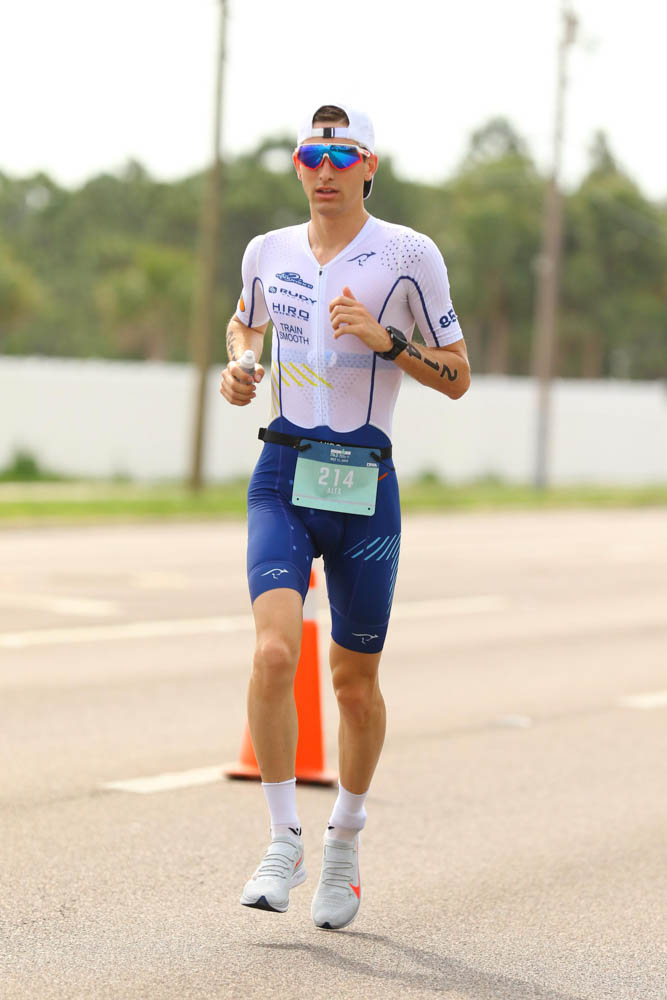
Heading out onto the run course, I was prepared for the mental battle of my life. I knew the second half-marathon would be an absolute war. Like the swim course, the run was a two-loop affair. This allowed me to split it up and view it as four separate 10-kilometer efforts, a distance I’d been very strong at in the past. The first 13.1 miles flew by. I stopped at special needs to exchange my gel flasks and I was off. I was only a half-marathon away from achieving a dream. As I neared my final turnaround of the day, the sun began to set. The temperature dropped and so did my spirits.
I slipped on my arm warmers but could tell my body temperature was dropping. Soon after, I passed the sign that marked mile 18—only two miles to the turnaround. For the first time all day, I had a sense that the wheels were starting to wobble. When I reached mile 19, they came off altogether. I still haven’t quite thought of a term to describe what happened in the pitch-black darkness of St. Andrews State Park that night.
It was cold and lonely, with athletes cracking and walking all around me. I knew my friends and family were waiting to see me at the entrance to the park and I thought that if I could get there to see them, I could make it to the finish. I walked and shuffled for the next three miles and I finally saw them standing on the side of the road. I stopped for countless hugs and pats on the back. The words that really stuck with me came from my dad: “Five more, buddy, just five more!”
I knew just how close I was. I knew I had to dig deep. I had spent so many weekends away from my family on long training rides and runs. This wasn’t just about me; this was to repay everyone for all of the sacrifices they had made just to get me to the starting line. I had accepted the fact that my body just couldn’t go anymore, but I wouldn’t let my mind accept defeat. I knew there would be a lot of walking in those final five miles, but I embraced that. At 20 years old and only about a year into the sport, I was in the midst of the hardest one-day event there is and I would not let it beat me.
I was fortunate enough to meet some incredible athletes in that last hour and a half. They had been in the same situation I was in. Stories and jokes were shared with numerous people along the way, but two men stood out. One was in his second Ironman, the other in his fifth. I learned a lot from them as we all fought to get through the closing miles.
I was exhausted and spent, but once again willing to listen. I learned what I was going through wasn’t a failure in any way; it was a stepping stone on a much longer journey.
That was a message I needed to hear, and one that would resonate with me for years to come. As we passed mile 25, we could hear the crowd at the finish line. Soon, there was only one turn left and we would be in the finishing chute. One of the men turned to me and said, “Young man, you’ve worked hard for this. We’re gonna walk a few seconds longer. You go up there and you have your moment.”
I knew my legs had nothing left, but at the insistence of my two newfound friends, I knew I had to run the final two-tenths of a mile to the finish. I left them with a handshake, a pat on the back, and admittedly a tear in my eye, and I turned the corner.
Oftentimes a dream is defined as something you’ve wanted all your life. For me, this was different. Becoming an Ironman was something I’ve admired all my life, but thought was far beyond the realms of my reality. The fulfillment of a lifelong dream isn’t something many people get to accomplish in life. I had learned more about myself in the last 14 hours, 32 minutes, and 49 seconds than most people will ever get to learn about themselves.
The moment I had worked for came in the form of a single sentence. “Alex Burgans from Panama City, a first-timer, YOU are an Ironman, Alex!” I had done it. I had become, in the words of my late teacher, the one who got it right, the one who stood strong in the face of adversity. I was that kid. My body had finished 135.6 miles of racing that day, but my heart had finished the most important five. It had carried me when I was at my weakest. It had been the only thing dragging me through those final steps.
So, that is what Ironman is to me: a collection of exceptionally driven men and women all across the world who, through a combination of inexpressibly different circumstances and events, find themselves wrapped in Lycra with thousands of likeminded individuals around them, all chasing their dreams. We may not all be where we want to be, but we’re a hell of a long way from where we started.