
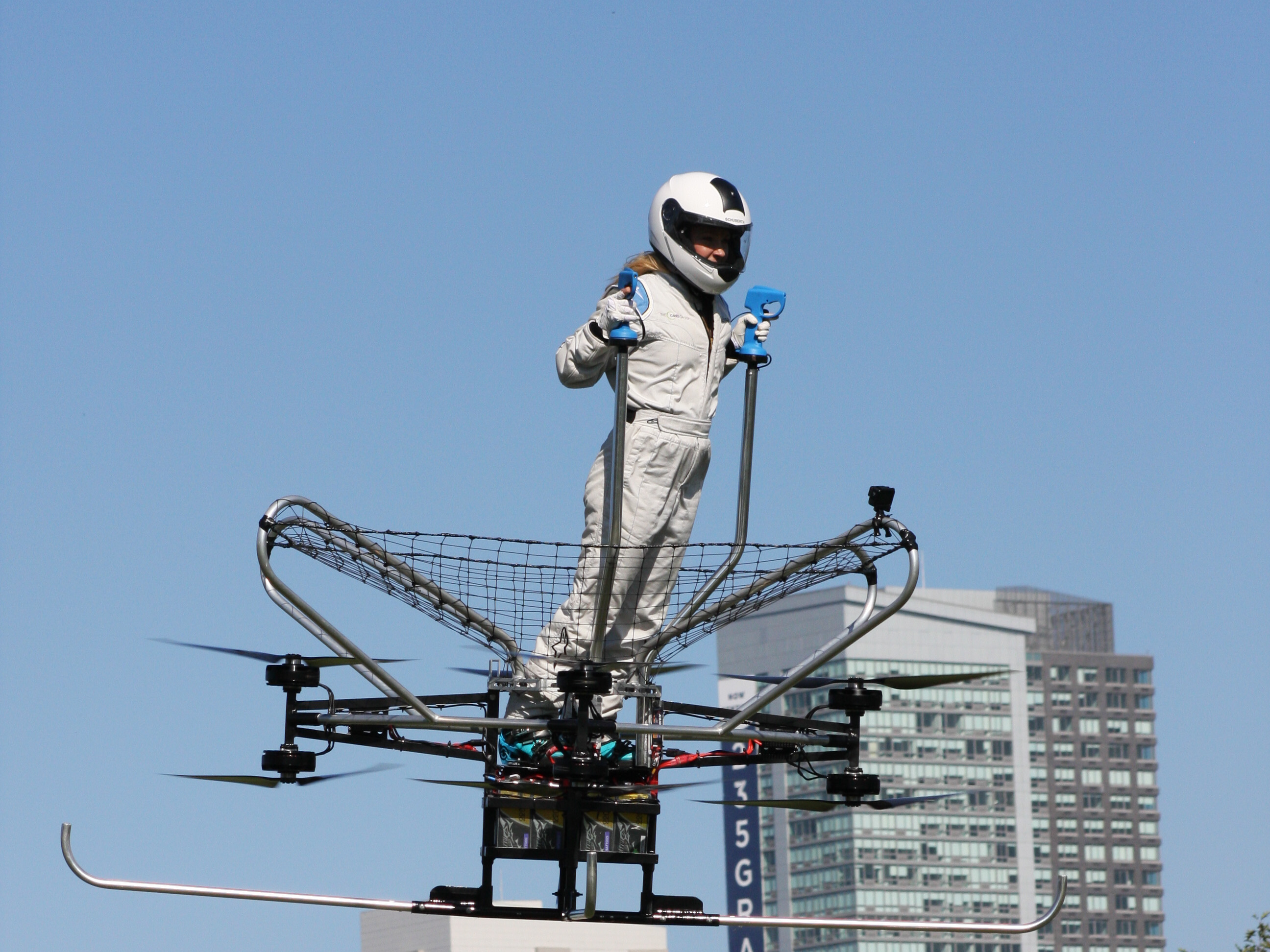
AIRBOARD 2.0 by Dragon Air

BY VAL SCHOGER
PHOTOGRAPHY BY DRAGON AIR MEDIA AND MIKE FENDER
[dropcap]W[/dropcap]ith a triumphant “Whooo!” Mariah Cain’s arms shoot up in the air in a victory pose. Grinning from ear to ear, the petite blonde stands upright on something that looks like a giant drone. She has just brought it down to safe ground after soaring dozens of feet in the air for a few heart-racing minutes.
Mariah is the test pilot of Panama City Beach-based DragonAir Aviation, a company that is one of five final contestants in Boeing’s “Go Fly Prize” competition. With the prototype of their Airboard, DragonAir qualified to compete in the finals and has been constructing the Airboard 2.0.
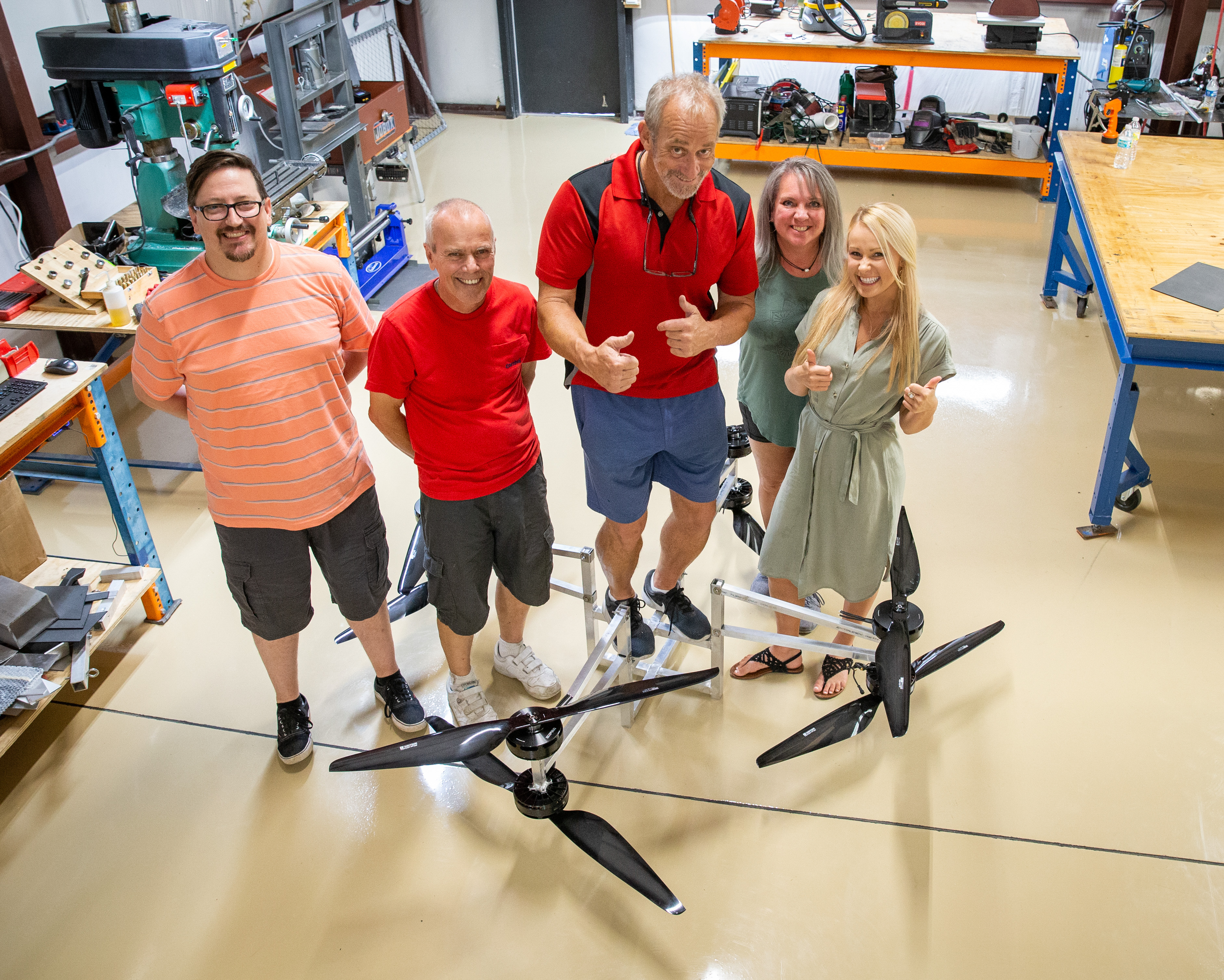
The Go Fly Prize creators express on their website: “Our participants have been tasked with designing a personal flying device capable of safely transporting a person for 20 miles without refueling or recharging with vertical, or near vertical take-off and landing capability in Phase I, building the aircraft in Phase II, and participating in a Final Fly-off showcase at the end of Phase III.”
On the last weekend in February 2020 the final “Fly-off” will take place in Mountain View, California, where DragonAir and the other teams will be vying for the $1 million grand prize awarded to the contestant with the best overall Fly-off score. Another $250,000 will go to the smallest compliant entry and also the quietest compliant entry. The winner of the “disruptive advancement of the state of the art” category will be awarded $100,000.
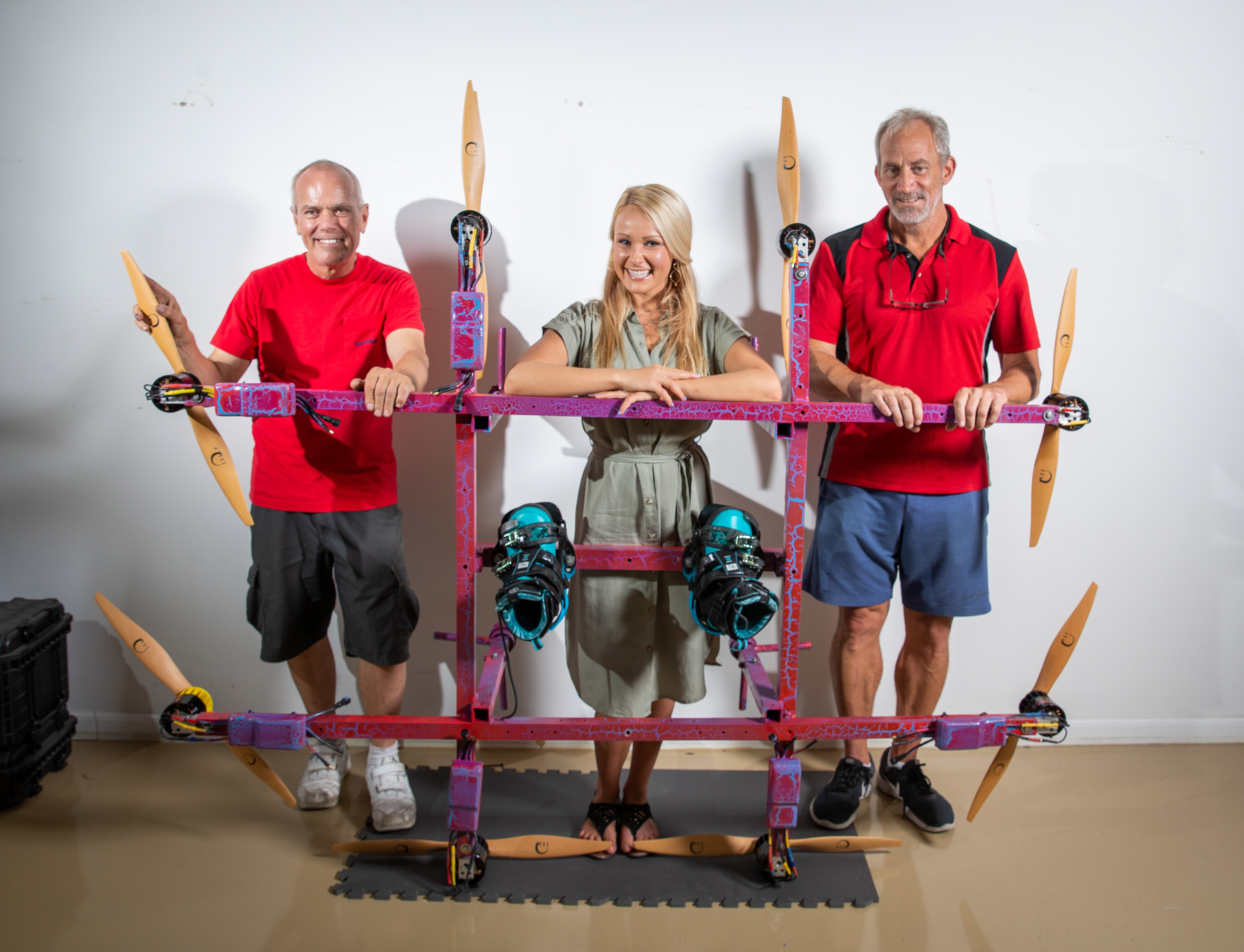
DragonAir’s answer to the challenge is an experimental ultralight aircraft with fully electric vertical take-off and landing—the Airboard 2.0.
Since the beginning of the contest, DragonAir has had a pilot who could fully (and fearlessly) demonstrate their flying device. Pilot Mariah Cain is a natural talent when it comes to maneuvering the Airboard. It is something she has been doing for years, flying a waterjet board in the hydroflight industry.
Mariah grew up in Arizona where she studied global health at Arizona State University. Flying hydroflight waterjet boards was her passion and she began flying the boards at shows. Her next goal was to show off her waterjet skills in hydroflight shows at nighttime, with an LED light suit.
That was how she met Jeff Elkins, the owner of Liquid Motion Lights, a business in Panama City Beach that builds those light suits. With clients all over the world, including SeaWorld San Diego’s Cirque Electrique, Jeff and his business partner and wife Dawn have been very successful in the tight-knit hydroboard industry. Jeff, who is an avid water fly-board enthusiast himself, started building the LED suits for nighttime flights and shows, eventually meeting the man who invented the fly board, Franky Zapata, and touring the world with his team. With a passion for flight, Elkins had always been on the lookout for other ways to get up in the air, detached from the waterjet hose. When one of his clients, a helicopter pilot, called and asked whether he could build a “human lifting drone,” his immediate answer was, “I’ve been wanting to do that. Yes, I can.”
When the prototype was built, he realized that flying it would be a challenge. It would be pioneer’s work. “I tried to fly it. I was too heavy. The client tried to fly it, but he felt it didn’t have enough stabilization. We exchanged the computers, and we had a female jet boarder try to fly it. She did better. And then Mariah came along and just kicked its butt,“ Elkins remembers.
Mariah Cain was immediately confident about handling the Airboard. “I think it’s very easy to learn. It has a lot to do with your mind. If you’re
“I think it’s very easy to learn. It has a lot to do with your mind.”
– Mariah Cain, Airboard pilot
The Airboard is steered by Mariah’s body movements. When she leans forward, the Airboard goes forward. When she leans to the side, it goes sideways. Small changes in posture have big effects on the flight.
“I like to compare it to a hang glider. You move the bar back and forth and you push it forward and pull it back and move it left and right for steering. This is like a hang glider turned upside down,” Jeff Elkins explains. “Mariah holds those bars, and wherever she moves the bars, that’s where she goes. And then she can control the throttle to make herself go higher or lower. And that’s all you really need. It makes it really intuitive. We call it a body position flight control system. It’s part of our intellectual property that we’re submitting.”
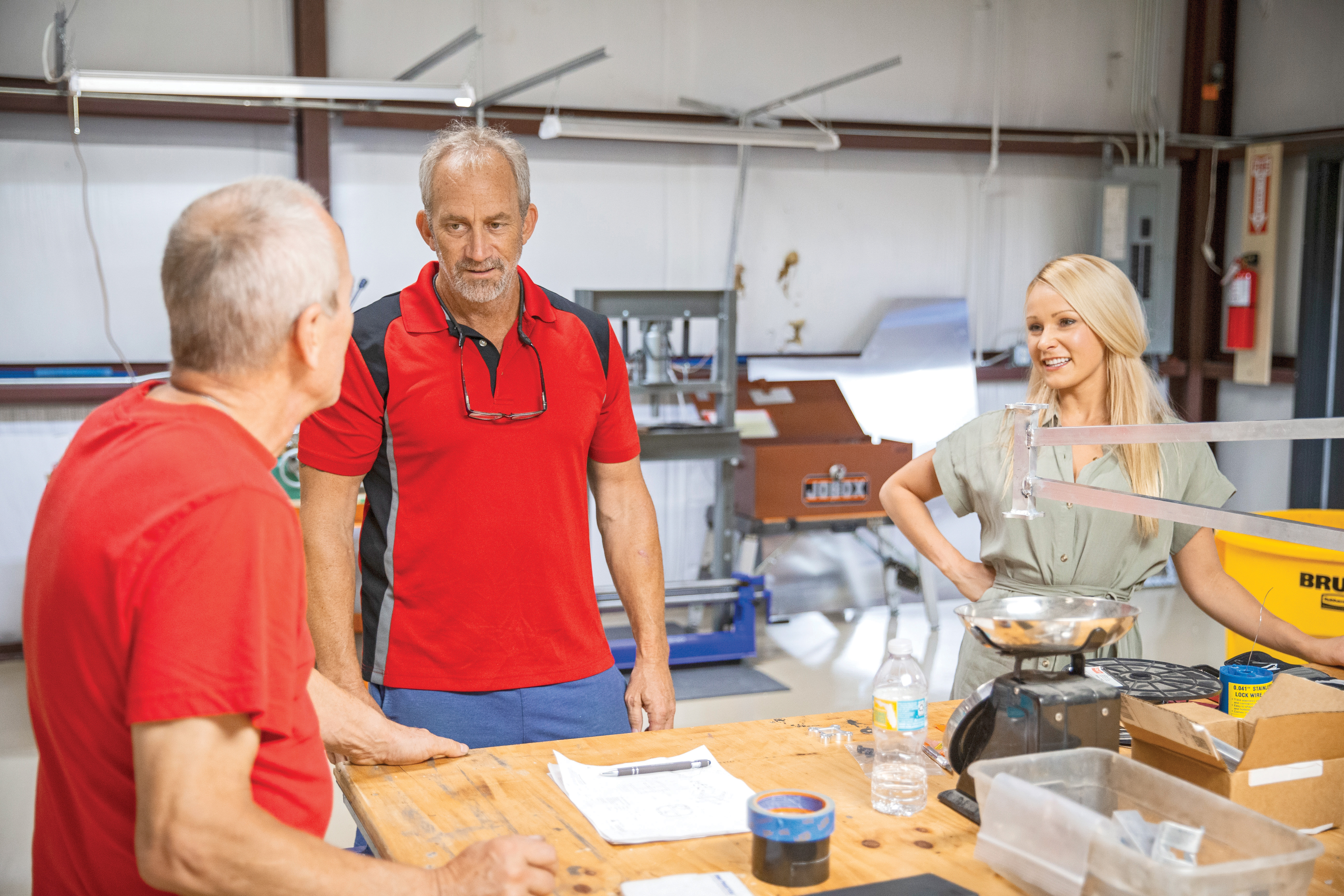
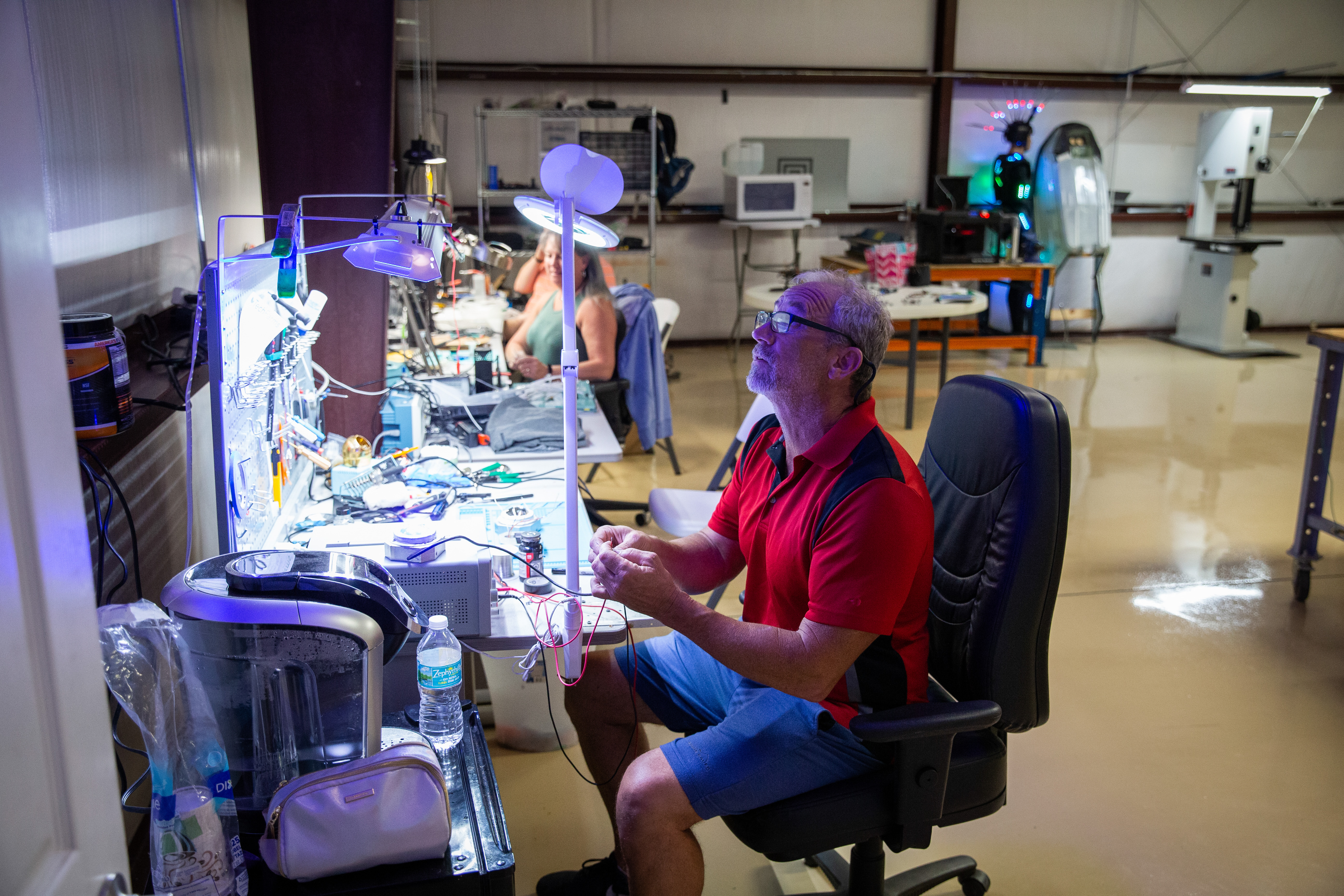
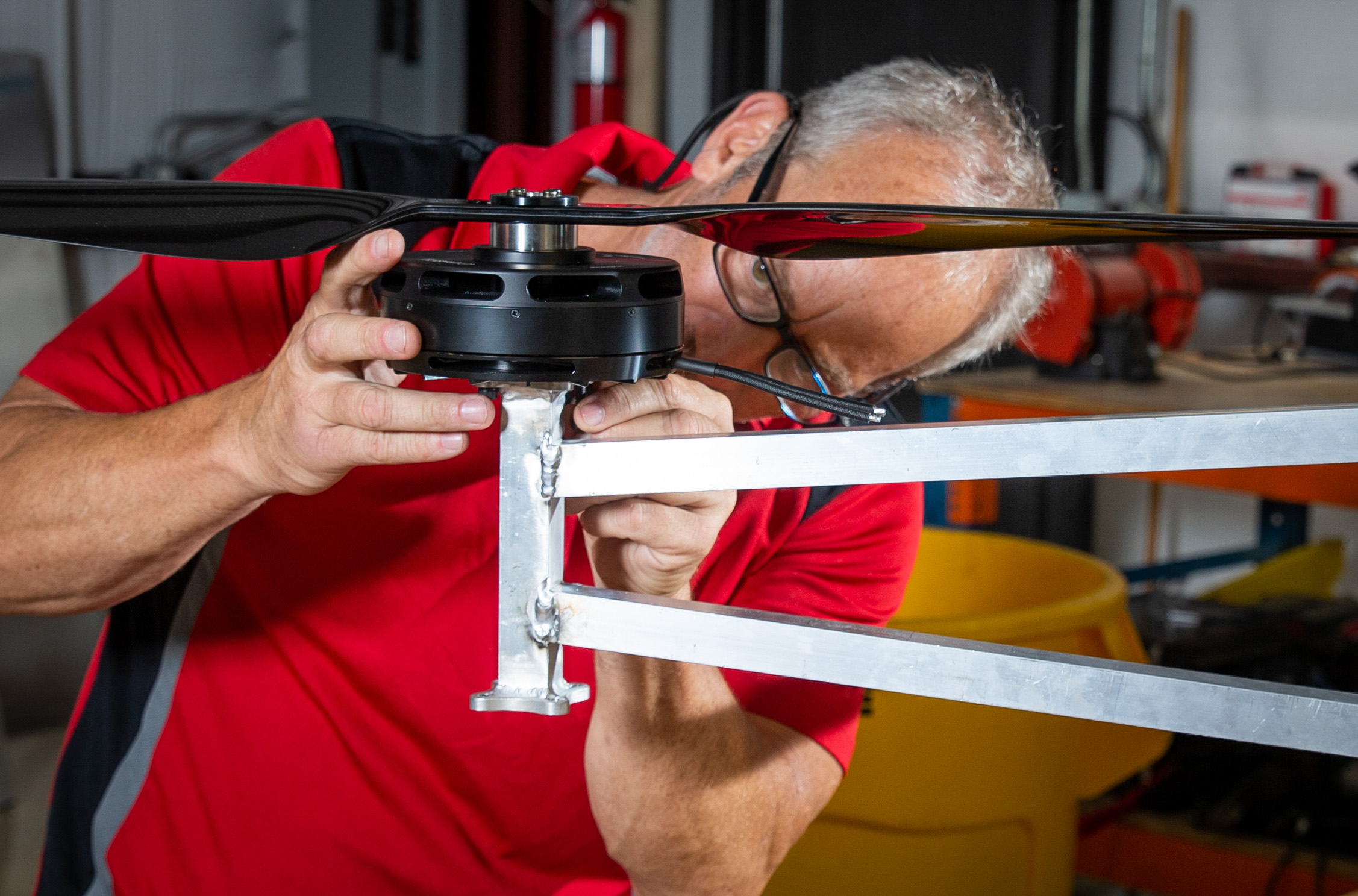
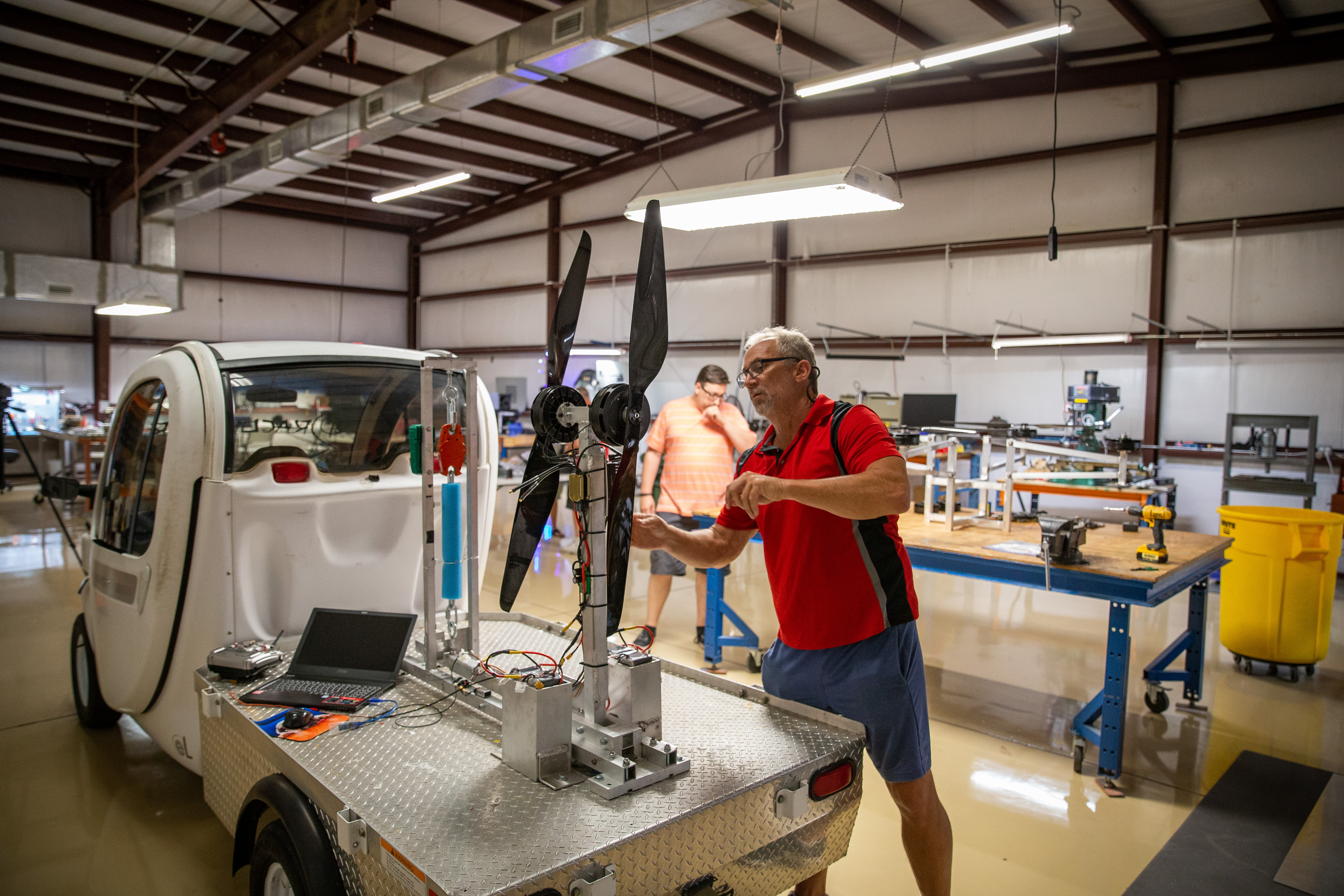
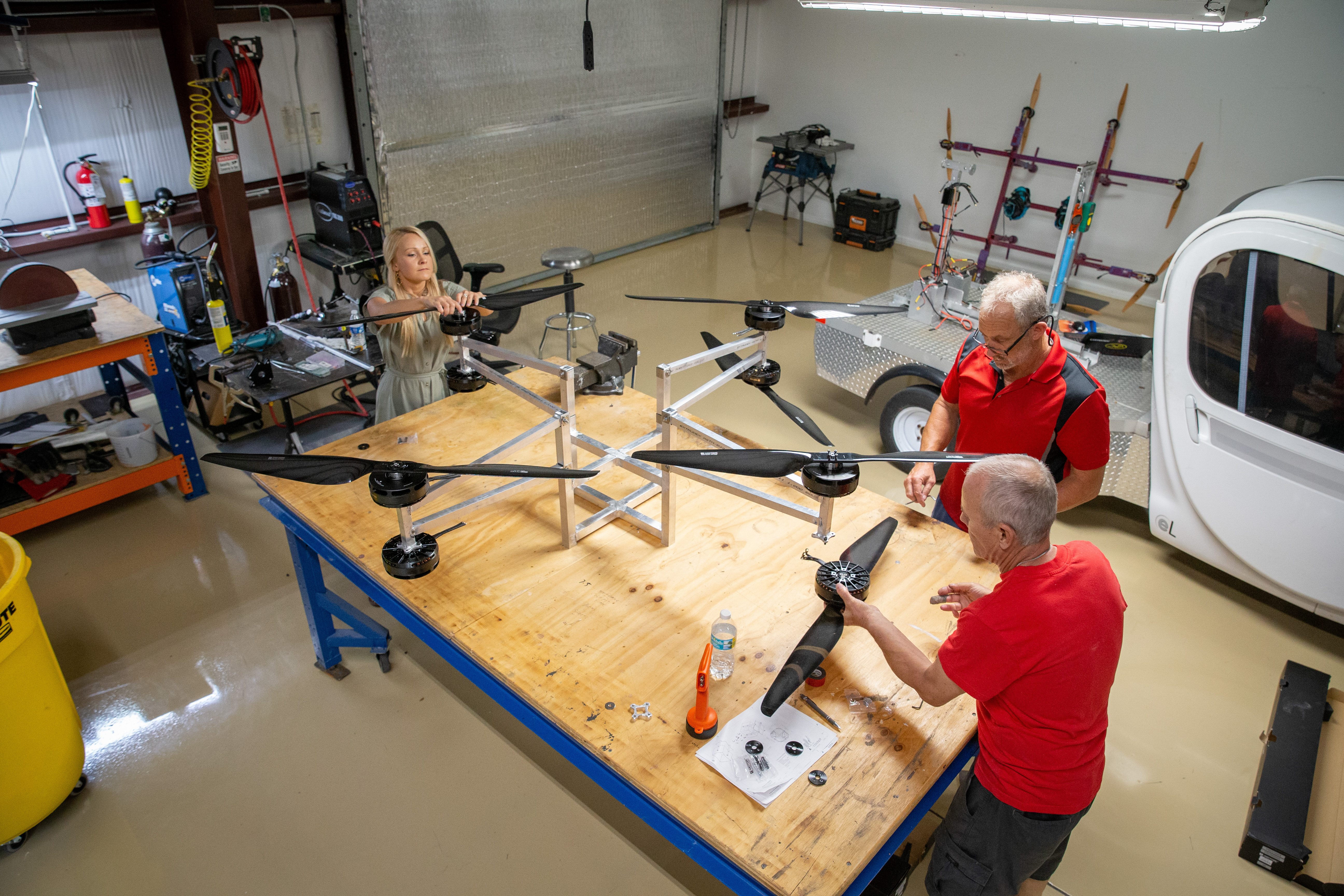
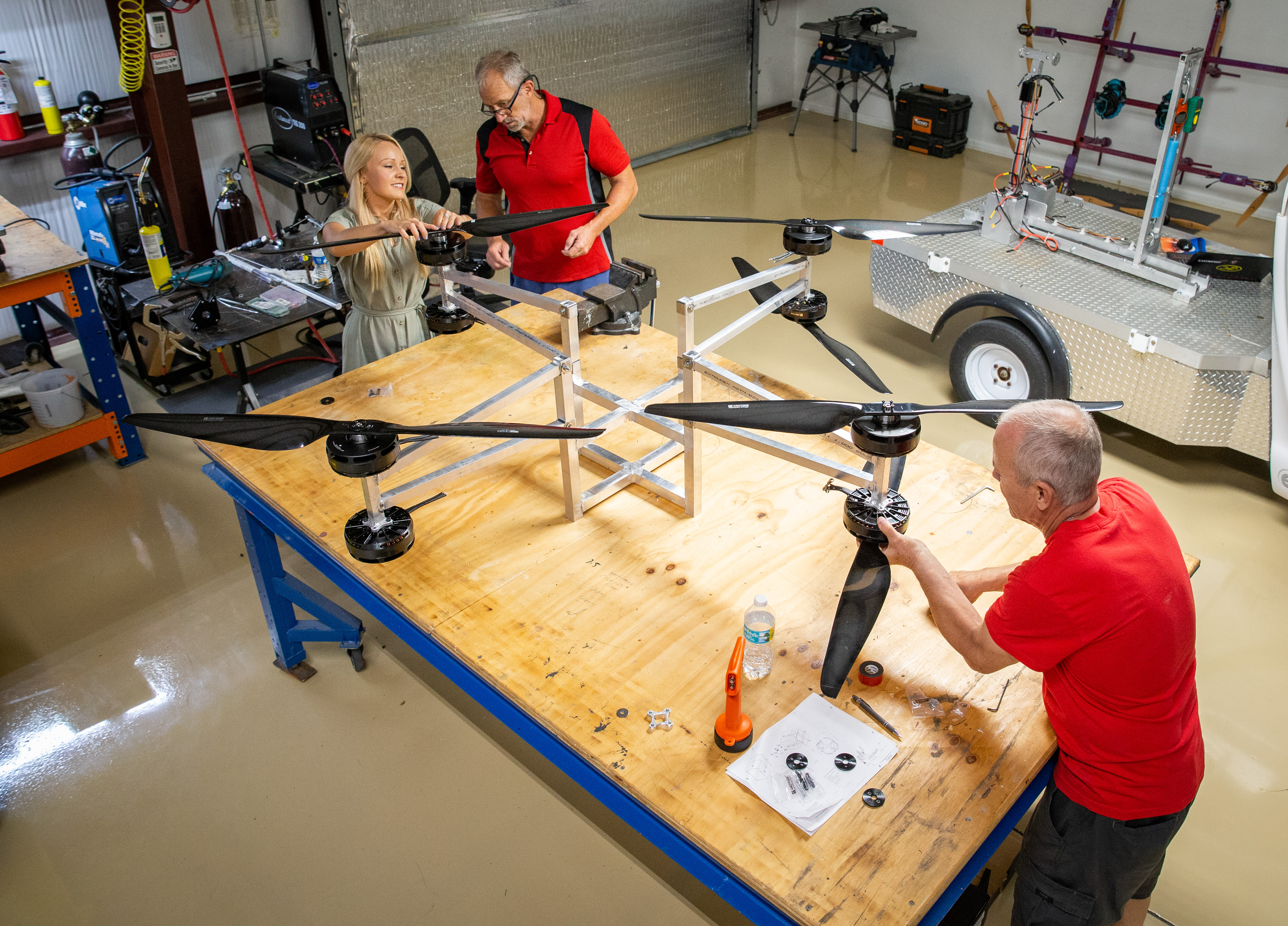
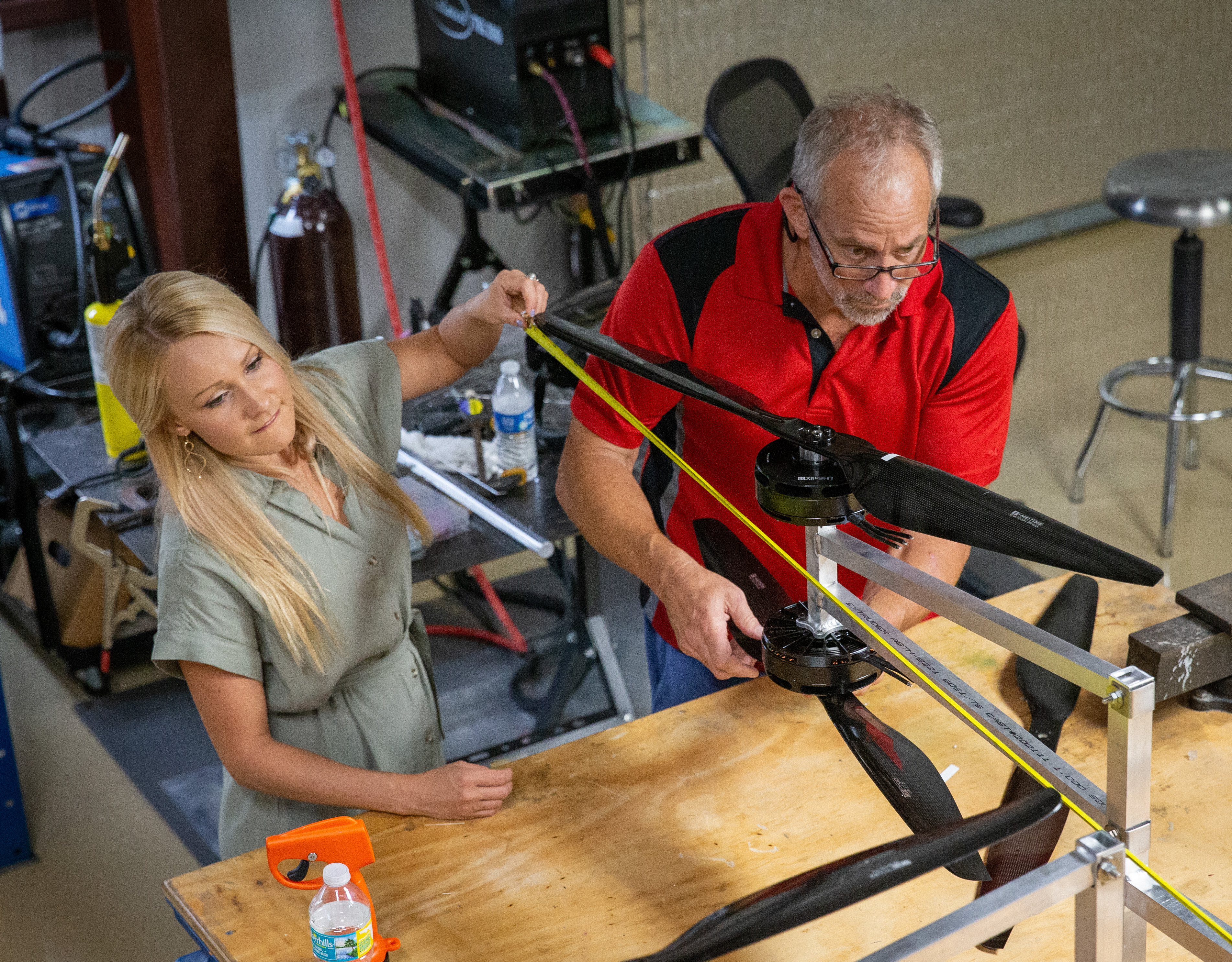
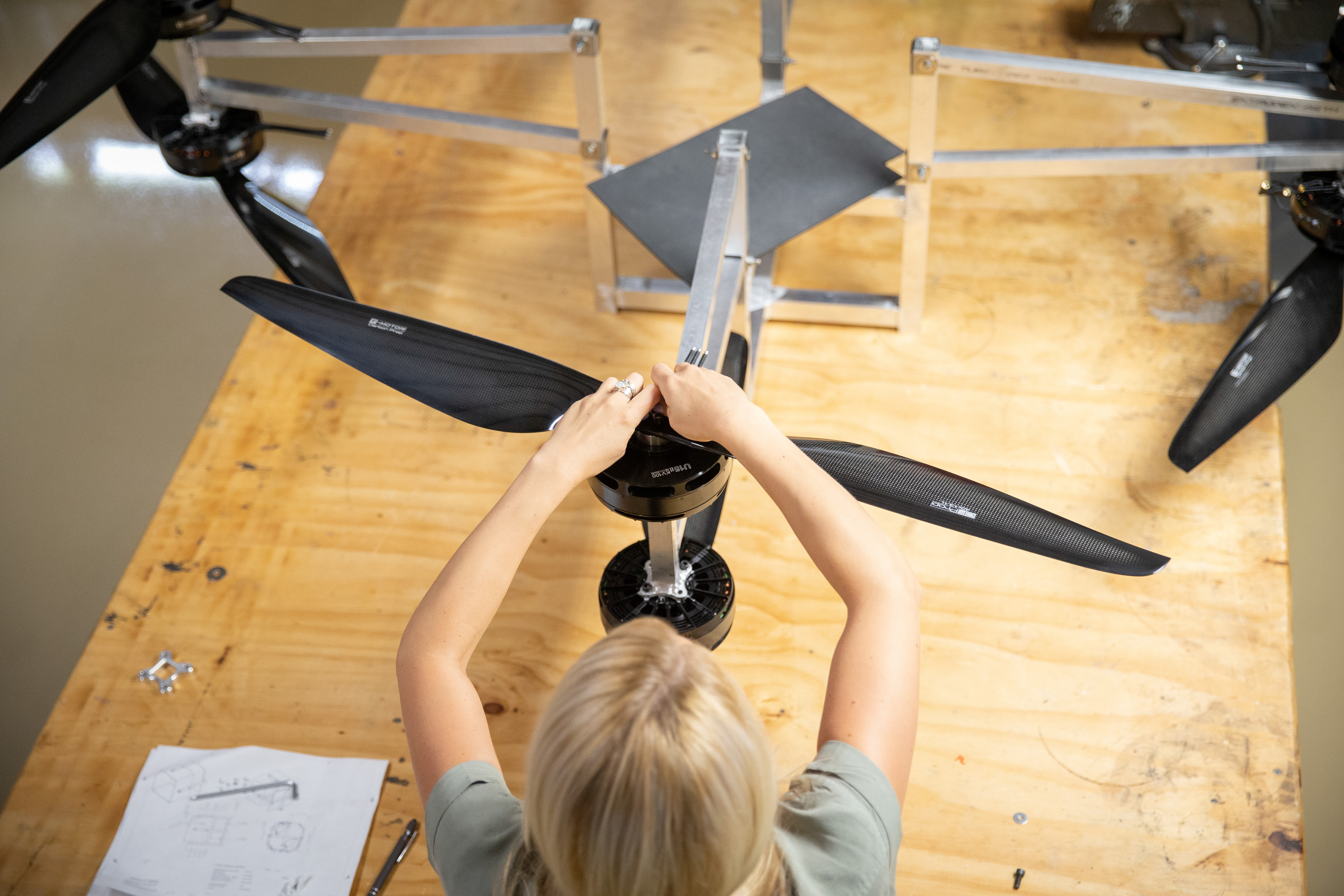
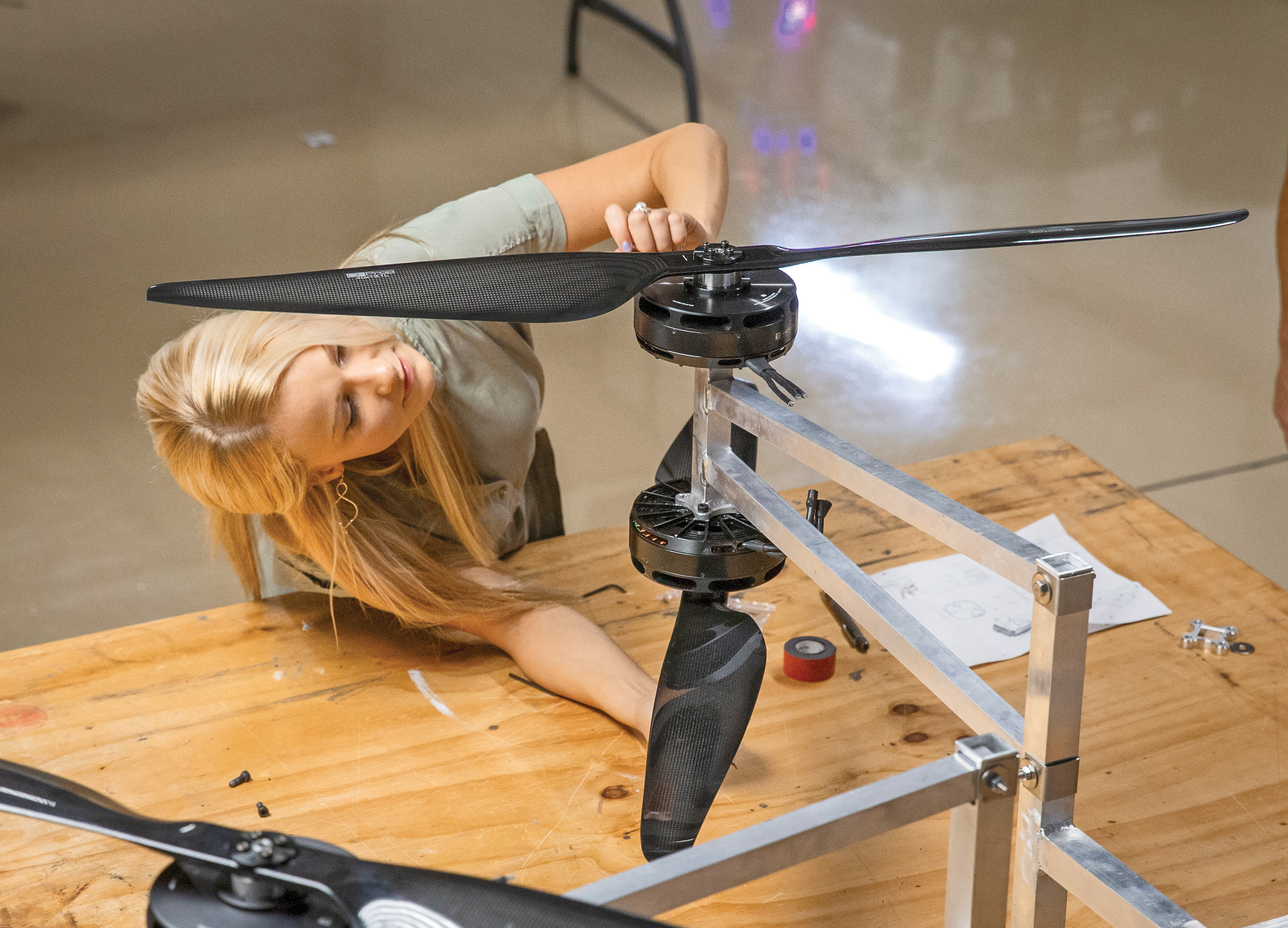
Her team likes to tease her just a little sometimes. “She’s small, light, compact, and brave,” they say with large smiles, clearly admiring her daredevil attitude. With more than 50 flights over the past couple of years on the prototype Airboard, she is not just a natural talent but the only pilot worldwide with expert experience in flying this new invention.
The team, with the help of machinist Ray Brandes, estimates that it took a year from the time the first Airboard was built until they could get it to fly. “You can’t buy the components the way they are because they are made for different types of aircraft. Everything had to be modified, from the motors to the speed controllers to the flight computer and the air frame. All the electronics were non-standard and the propellers are very unique—the first Airboard had wooden propellers,” the team summarizes.
“… wherever she moves the bars, that’s where she goes. And then she can control the throttle to make herself go higher or lower. And that’s all you really need.”
Asked if landing the Airboard is particularly challenging, Mariah says, “The original Airboard did not have any crossguards, so you had to land perfectly flat on your landing gear and it definitively takes practice to come down softly.”
“We used to break a lot of props,” Jeff Elkins adds. “There’s this thing called ground effects—a turbulent amount of air underneath the props when you’re close to the ground. You get a lot more extra lift, but it’s choppy and rough. We have Mariah get up into the clean air above the ground effects. There is a particular way to land.”
At the Go Fly Prize event, each competitor will have to fly 20 minutes with a pilot that weighs 200 pounds and has to demonstrate a 10-minute flight-time reserve. “We’re going to weight me down,” Mariah says, laughing. “But I’ll be wearing parachutes and all sorts of flight gear. They wanted to demonstrate flying a person, but the teams don’t actually have to; they also have the option of flying a dummy. But we already fly a person, so we think it’d be silly not to.”
Beyond participating in the Go Fly Prize, Jeff Elkins has a vision that involves the large-scale manufacturing of the Airboard. “If we will win the competition, we will be proving to the world that this is how we can make personal aircraft simple. So many people are trying to build these now. But they end up making them very complex—and this leads to a price increase. If you end up with a helicopter that’s got eight propellers, then you might as well buy a helicopter that has millions of successfully logged flight hours rather than some multi-copter. The reason we want to build the Airboard is because it’s small, and it’s light, and it’s efficient. And you can get it at a decent price and go fly. We’ve learned a lot through the people at Boeing, the mentors at Go Fly, and just our own personal research. How many hoops do we have to jump through until we can sell these to the public? I think there will be a lot of hoops ahead. But what helps is people’s imagination.”
Mariah nods. “We get to be part of something where we can mold the future. The way that this spins out and progresses over time, it’s going to take a while, but we get to be one of the first ones. It’s really exciting.”
To find out more about Dragon Air Aviation,
visit their Instagram account @flydragonair and make sure to watch their amazing videos on YouTube. For more information about Boeing’s Go Fly Prize visit goflyprize.com
Watch the Go Fly video about DragonAir: