
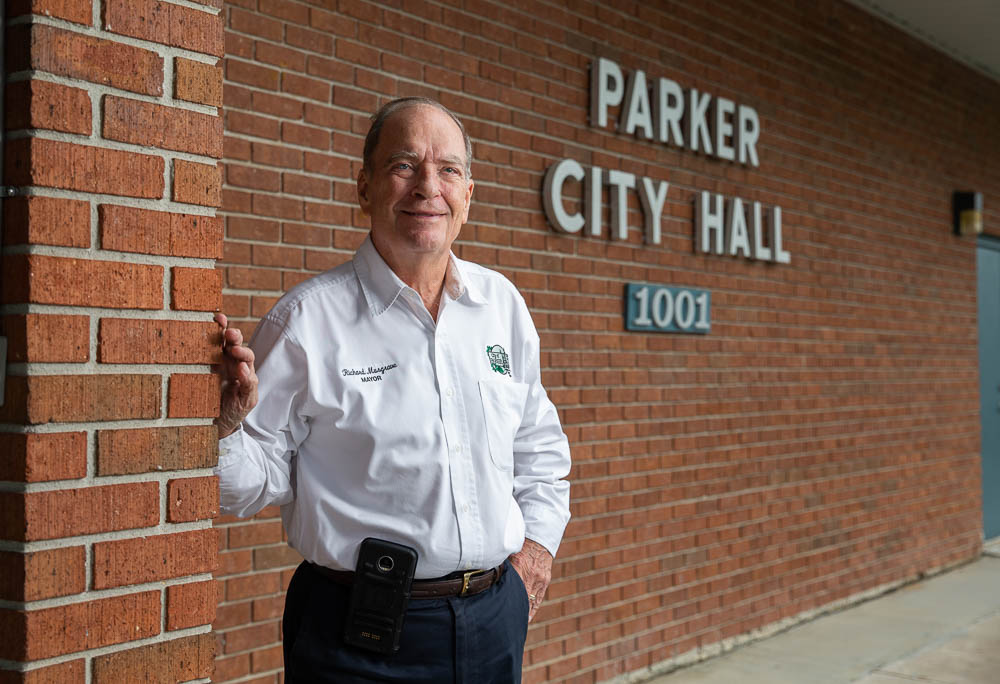
The City of Parker MAYOR RICHARD MUSGRAVE


BY VAL SCHOGER
PHOTOGRAPHY BY MIKE FENDER
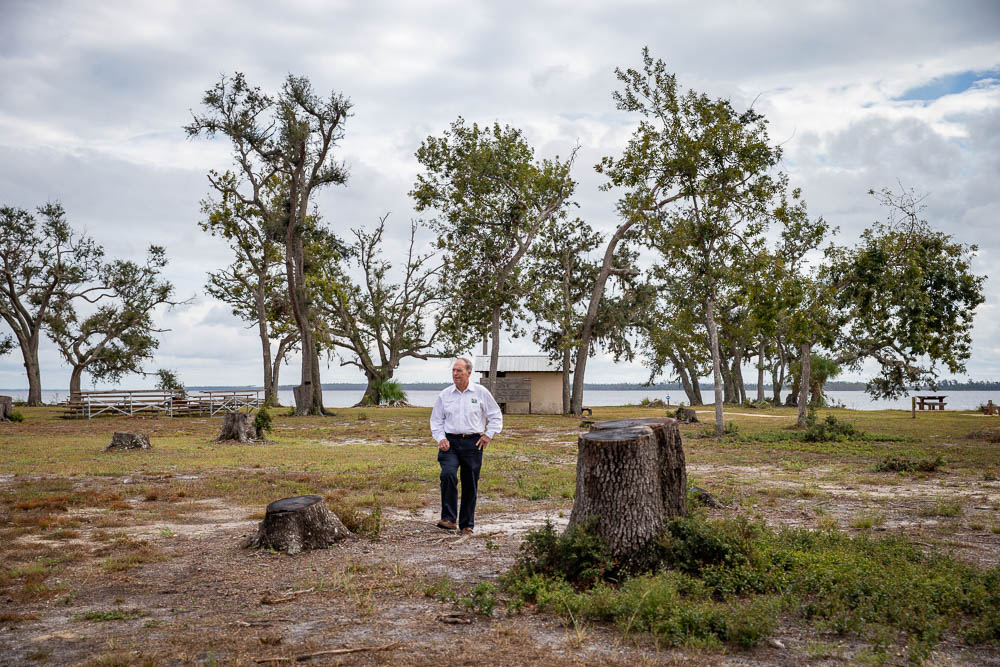 The City of Parker fared better than most of the municipalities in Bay County. When Hurricane
Michael subsided, the city’s government buildings were still standing and workable, including City Hall. But Parker’s formerly 4,500 residents faced severe destruction of their homes. “Currently, we estimate we have a population of 3,600 to 3,700,” says Mayor Richard Musgrave. Just like neighboring communities, his city saw a decline in population immediately after the storm.
Many of the residents are in some way connected to Tyndall Air Force Base, whether they presently serve active duty, are employees, or are retirees. Richard Musgrave himself was stationed at Tyndall from 1964 to July 1967 but, at the time, he was not even aware of the small but growing community that would become a city in September of 1967. In 2005, after having owned and operated a business in Atlanta, Musgrave and his wife bought a house in Parker to live here permanently and be close to family.
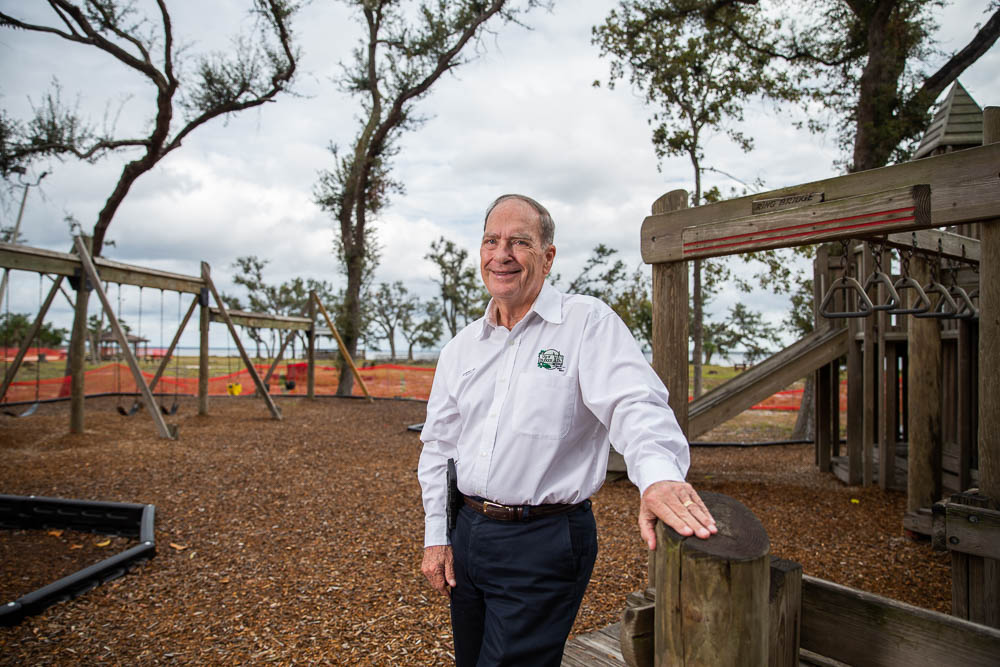 “My wife and I both noticed when we first moved to Parker that the people here can be identified, for the most part, as being genuine. We have incredibly good folks in our community,” he says. Apart from the people, another distinction that makes Parker attractive is its waterfront. “We are only two square miles in area, but we have 12 miles of coastline,” he points out. “That’s an asset we have that makes us unique. We hope that we can be attractive enough to start drawing people that are coming into Tyndall Air Force Base and seeing us as a viable preferred place to live.”
According to the mayor, Parker is primarily a bedroom community. He adds that the city faces the same problems as its neighbors, with a lack of housing, especially affordable housing—after the storm. But even before the storm, he had a wish list of improvements he hoped to make, with the revitalization of the business district along Business Highway 98 as top-priority item. Just before the storm, the city had replaced and updated some of their fleet vehicles and infrastructure, which proved advantageous post-hurricane.
Before the storm, the city proudly promoted its new dog parks that were unique in the area and drew people from all over Bay and other counties. One was a social dog park and the other a fully equipped dog training park, also called obedience agility park, “So that’s what people miss and they want to have back,” he explains. “It’s one of the design elements that we absolutely have to have in our sports park planning.” National Park Services and FEMA groups are working with the city on concepts for new parks.
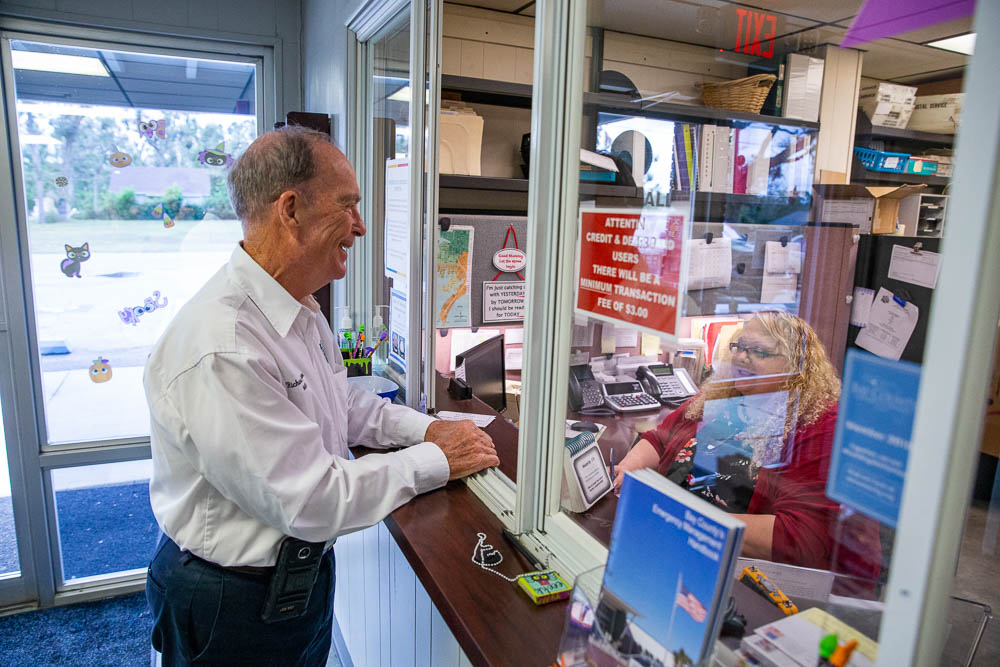 With around 630 children currently enrolled at Parker Elementary School, Musgrave is glad to report that the school had only minimal damage from the storm and was selected to take in kids from other schools that were inoperational.
The City of Parker made fast progress in their initial recovery, with most roads passable by day three after the storm and water and sewer operational by day nine. “In the beginning, we had to make sure that we took care of our employees so they could turn around and take care of the citizens. Some of our employees have faced incredible loss,” he explains and adds that the debris pickup was completed around April 15th, with 600,000 cubic yards removed, a cost of about $8 million.
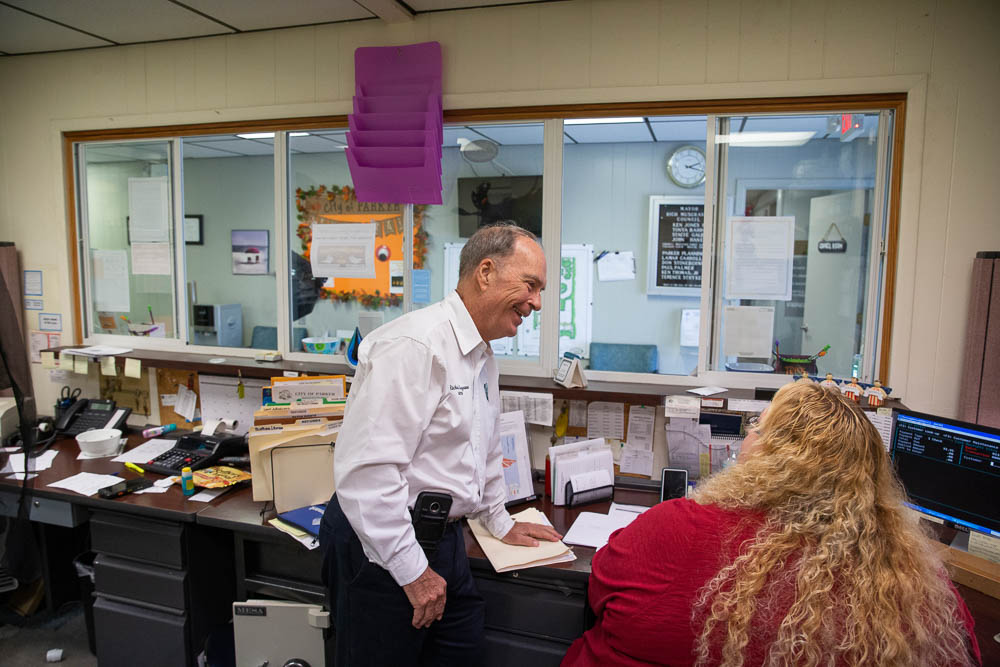 On the lookout for cost savings, the city’s debris hauler came to an agreement with WestRock, the current operator of the paper mill in Bay County, resulting in lower travel costs as chipped wood could be unloaded at the mill. To avoid drawing on its reserve funds, the city negotiated a multi-million dollar credit line for invoices that require immediate payment.
The City of Parker does not impose an ad valorem tax on their constituents, and with a decrease in revenues—Musgrave estimates that around 400 of their 2,000 customer accounts were lost—the city had to file for community disaster loans.
The people of the City of Parker remain one of its strongest assets and Musgrave is full of praise for the community. “The real high points and benefit of a small community, is, for example, having a police department where the officers know many of the residents, and the residents know them. I think our people understand that they get superior service, which makes Parker a great place to come home to.”