
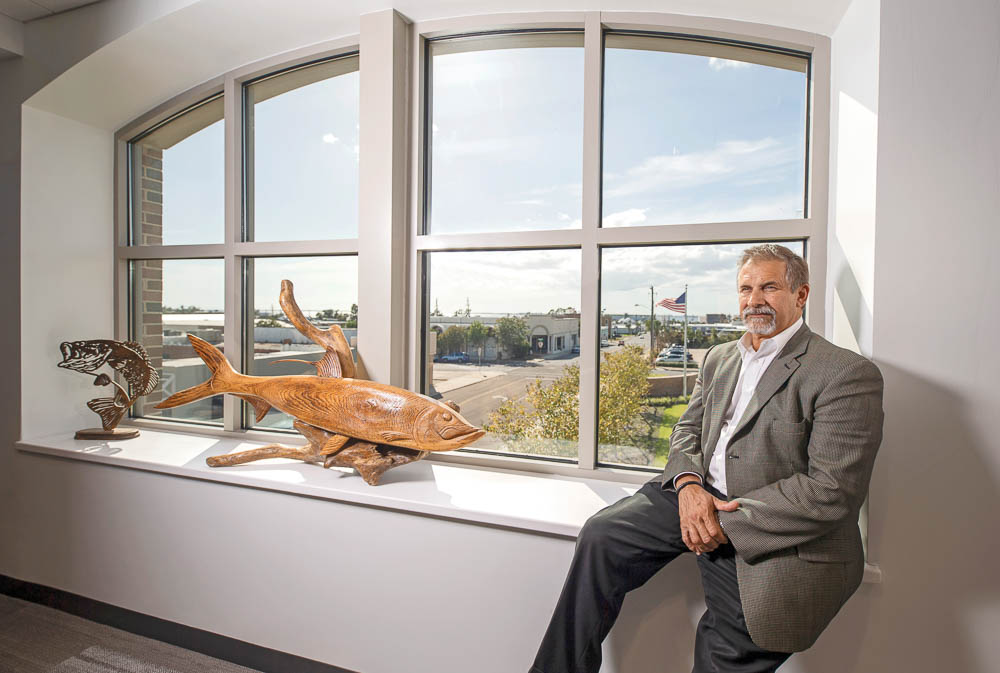
The City of PANAMA CITY MAYOR GREG BRUDNICKI


BY VAL SCHOGER
PHOTOGRAPHY BY MIKE FENDER
Panama City, one of the most populated and history-rich municipalities in Northwest Florida, has seen much change in the last 110 years since its incorporation. The city is positioned for economic growth. The area’s largest hospitals are within city limits, as is the Port of Panama City, an international seaport administered by Panama City’s Port Authority. Other nearby infrastructure such as Northwest Florida Beaches International Airport and the Bay Line, a short-line railroad, makes Panama City one of the area’s most convenient locations for business and industry.
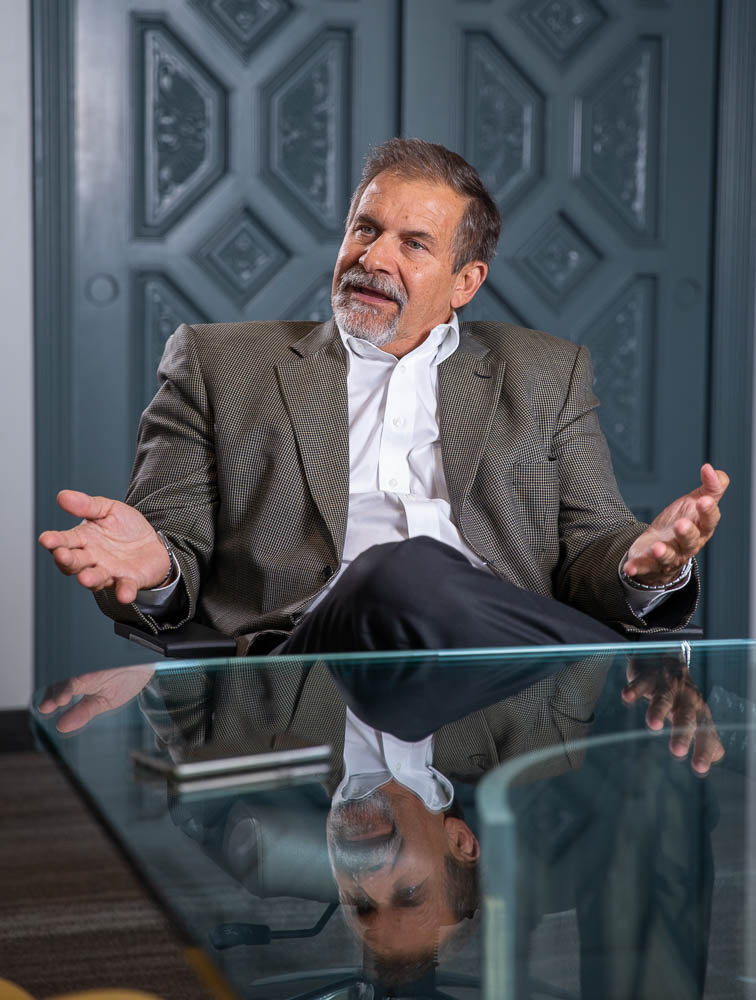 With Hurricane Michael leaving deep scars on Downtown Panama City and its oldest neighborhoods, the marinas and the 2,000-seat Marina Civic Center remain closed. The displacement of many of Panama City’s businesses and residents after the storm also remains an acute post- Michael status. Panama City’s mayor, Greg Brudnicki, has lived in Panama City since 1965.
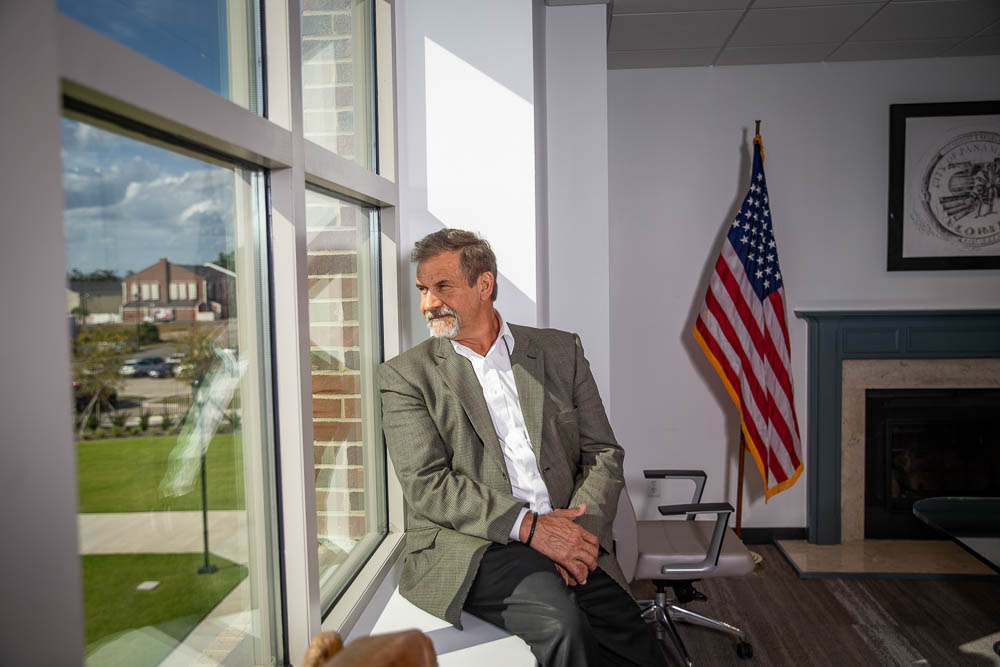
He has a background as accountant and is a local business owner. Serving as mayor since 2011, Brudnicki has started his fifth term in office, doubtlessly his most-challenging. The city government has just moved into the new City Hall on Harrison Avenue and Brudnicki’s office overlooks the rooftops of West 5th Street. “I remember sitting on the roof of one of the buildings here on Harrison Avenue as a boy, watching how the Dixie Sherman Hotel was demolished,” he says, his eyes shifting in the general direction of where the hotel once stood, just a few hundred feet away.
The 100-room hotel was one of Downtown Panama City’s icons and economic drivers until its destruction in April of 1970 heralded the decline of Downtown’s economy, caused in part by retailers migrating to the Panama City Mall that opened in 1976. Today, construction plans by locally committed and invested St. Joe Company, Northwest Florida’s largest landowner and developer, are underway for a new hotel to be built—not too far from the Dixie Sherman’s old location.
The immediate negative effects of Hurricane Michael are certainly not resolved yet. “It’s been a learning experience and it’s one of those things that you hope never happen. We had no idea it would be that bad,” Brudnicki says, adding that the cleanup and debris removal cost has a harsh impact on the city’s finances. “We’ve gotten to the point now where we picked up 36 years’ worth of debris. In other words, we usually have about 100,000 cubic yards a year in the city from tree trimmings. From a cost standpoint, our city has a budget of about $90 million a year and we were adequately reserved, with between $14 and $16 million.
 Our debris and emergency expense bill is north of $150 million now, which is 10-times what our reserves were.” The city had to take out a loan to pay the bills and the interest fees are impacting the city’s budget. “I would like to not have that much debt on the books,” Brudnicki says, remarking that all the city can do is file and wait for reimbursement from FEMA. While there is no immediate solution to expediting the reimbursement process, the migration of residents can also not be resolved immediately. “We probably lost 25 percent of our population. 70 percent of the people in Bay County are renters. Which is opposite of most communities.” He hopes to get several destroyed apartment complexes reopened within the next few months. Eight million in funding has been received from the Florida Housing Authority.
His estimate of the current population count is somewhere around 26,000, or around 30 percent less than the 36,000 residents that were counted in the 2010 census. Each resident generates around $1,000 to $1,500 in tax revenues per year in addition to economic impact, according to Brudnicki. Despite the challenges, he remains dedicated and focused. “I treat everything in this city as if it was my personal responsibility to take care of. That’s the oath that you sign. I am very optimistic about the future. I think that there is a silver lining to the storm.
If you are going out to the marina right now, we’ve got about half of the destruction cleaned up and most of the assets that were on the marina that are out in the water were over 50 years old. It needed to be replaced. So, the demolition was done by the man upstairs and now we’re cleaning it up. I will always take the positive approach to rectifying a situation.” He points at the success of the Bay City Point development on 23rd Street that has now entered its second development phase. “We are still the hub for commerce.
Our business corridors are very active. We may have a decline in population but the number of people that go in and out of the city every day is much higher. These are people who live in other parts of the county but come to work in the city. Our government is policing and maintaining a large area that has a huge amount of commerce that goes in and out.” The redevelopment plan for Downtown Panama City was finalized in October by town planning firm Dover, Kohl & Partners. After months of studying Downtown and surveying its residents, the new concept has garnered the highest approval rates from locals.
 The hotel development is planned to break ground in 2020, and it is just the first step of many. “With St. Joe Company we finally have a partner with the wherewithal to do something substantial. The construction of a beautiful hotel, a restaurant, and amphitheater on the downtown marina will get the redevelopment started. They are going to do it right and it’s going to be first class and that’s what our people deserve,” Brudnicki states. With long-anticipated plans finally underway, he explains that these are just the first steps.
“One of the goals that I had when I was elected back in 2011 was to redo downtown and take non-income-producing assets and turn them into income. But we still need infrastructure. We have dated water pipes. We are estimating probably $150 million to replace all the outdated infrastructure that we have in the city. Well, you can’t do that without a revenue source. Our goal right now is to make Panama City the premier city in the Panhandle. We have the opportunity now to do it. We will get some help from the federal government, with hardening plans to help us make the city more resilient. This will mean that the Marina Civic Center will be most likely relocated, away from the waterfront. We have just gotten started.”
Find out more about Downtown Panama City’s redevelopment concept online: doverkohl.com/panama-city
For updates on the progress of the St. Joe Company’s Marina Hotel, visit pcmarinahotel.com