
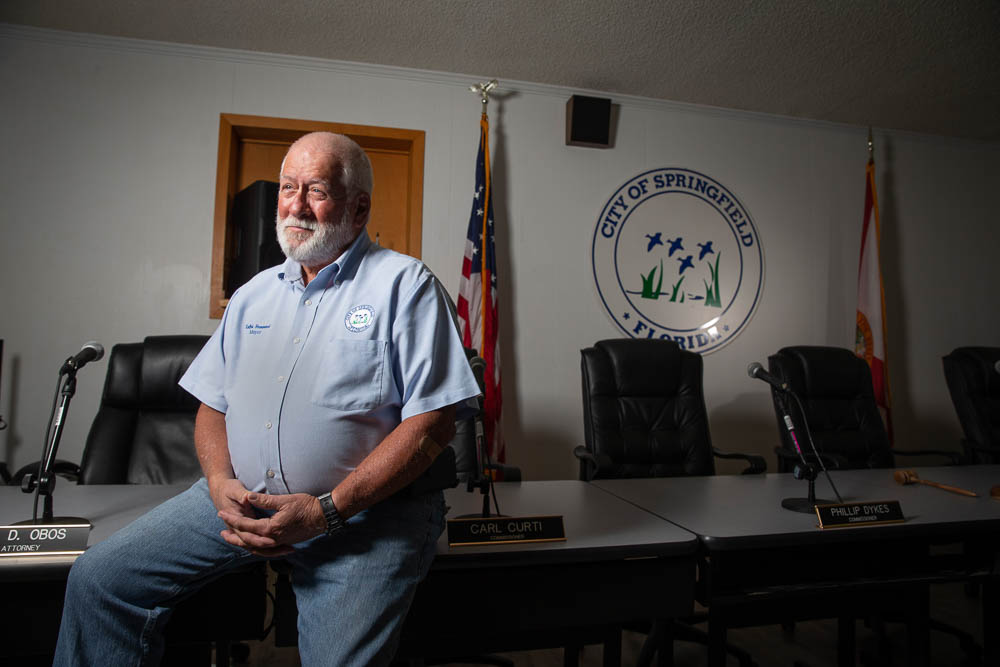
The City of SPRINGFIELD MAYOR RALPH HAMMOND


BY VAL SCHOGER
PHOTOGRAPHY BY MIKE FENDER
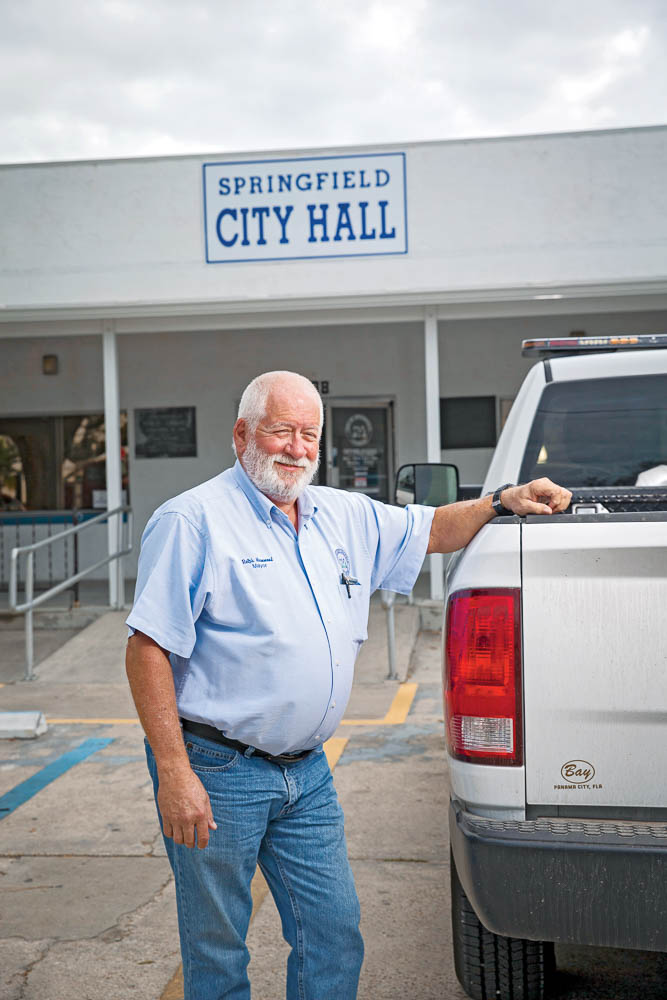
The mayor of Springfield, Ralph Hammond, has a message: “Give us 10 years and we will be one of the most beautiful cities in our area.” He smiles his widest smile when he makes the announcement and explains that plans are well underway to completely transform his city. Springfield will have several parks with nature walks, as well as new government buildings
Even before Hurricane Michael had wreaked havoc, city employees and commissioners had secured grants for improvements to the city’s infrastructure. Long-term plans for the construction of new government offices were in place. Now these plans have been expedited and his team, as he opts to refer to city employees, are rallying to make their community a better place.
After losing all but one government building during Hurricane Michael, city employees have settled into a building that was last used as the local library; it was once city hall, back in 1961. “This is just temporary,”
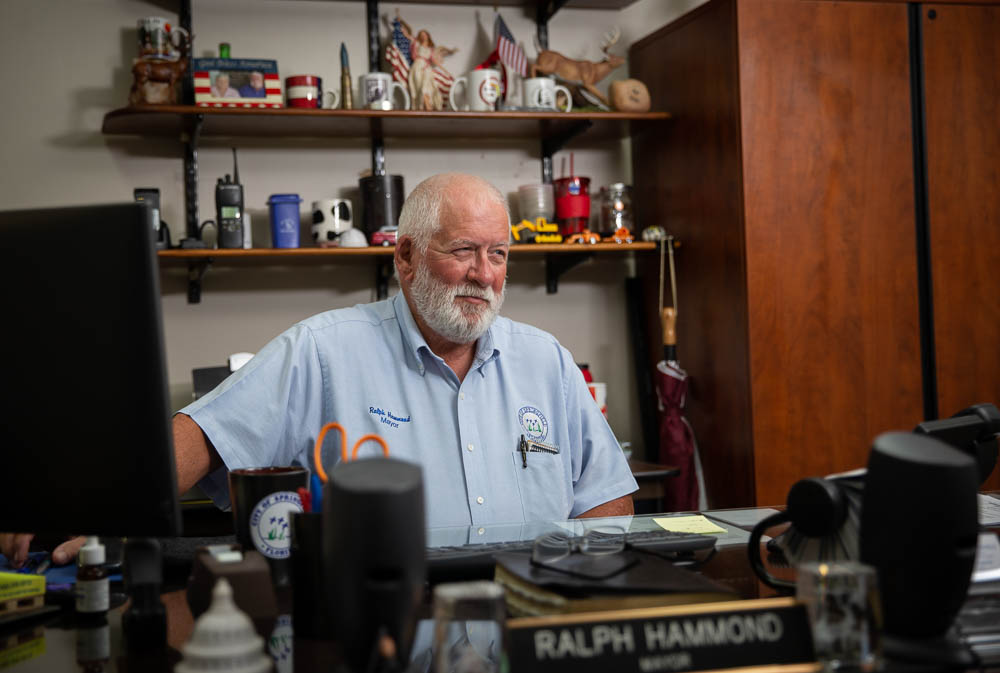 Hammond says about the cramped quarters that he and his team are working in. A 28-acre land tract along Highway 22 has been purchased and the city is in the process of requesting proposals for the design and construction of the new government buildings.
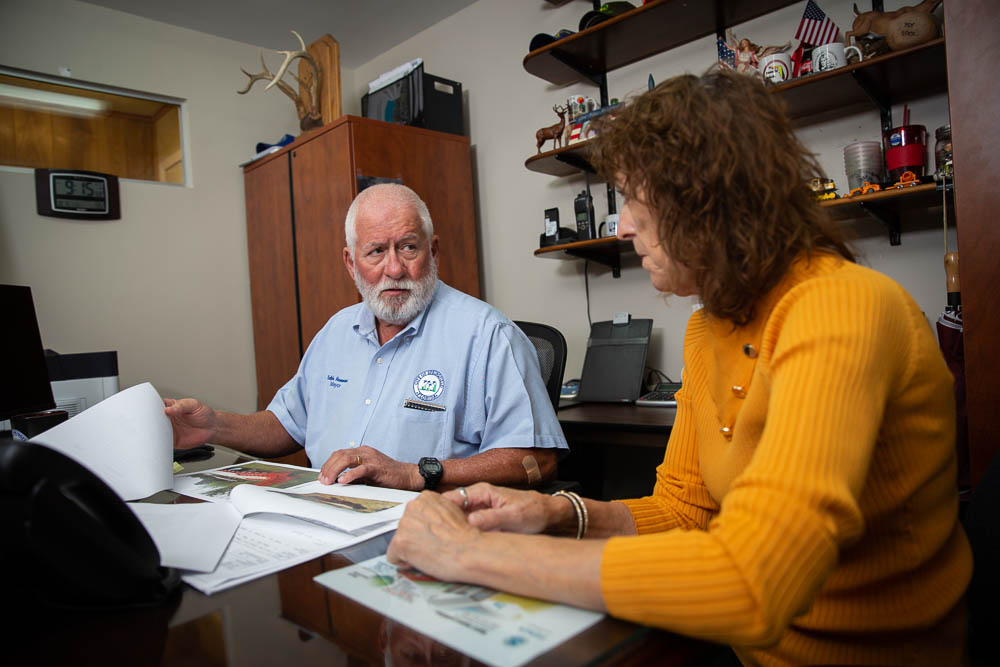
Hammond moved to the area in 1981 when he was stationed at Tyndall Air Force Base. He met his wife, a nurse, here and they have been married for 34 years and have lived in Springfield for just as long. In the 1990s, after retiring from 22 years of serving in the Air Force, Hammond started working as a heavy equipment operator, a skill that he is now putting to good use for his city. Nowadays, when he is not attending to day-to-day business or participating in meetings to discuss recovery efforts, he can be found working alongside the demolition crews.
 His background resembles that of many of Springfield’s residents. “Many of our residents are connected to Tyndall Air Force Base,” he explains. While the paper mill has been providing steady employment, its need for workers is limited. New jobs only open up when someone retires or leaves. When the City of Springfield was founded in 1935, the majority of its residents worked at the paper mill. Once the gunnery range that would become Tyndall Air Force Base opened in 1941, it brought more population to Springfield. From around 5,000 residents in 1985, the city had grown to around 9,000 residents before Hurricane Michael, with an estimated 35 percent of the population leaving the city after the storm.
When Tyndall Air Force Base announced its “installation of the future” plans for reconstruction, it was the moment of assurance for the City of Springfield. “It was a tremendous relief to all of us. Tyndall is a very important part of our economy,” Hammond points out.
There is still uncertainty about two of Springfield’s schools, Everitt Middle School and Springfield Elementary, which were closed after the storm. Students now attend schools in neighboring communities and Rutherford High School has become a combination school for grades 6 to 12. The reinstallation of Springfield’s closed schools will depend on its re-growing population.
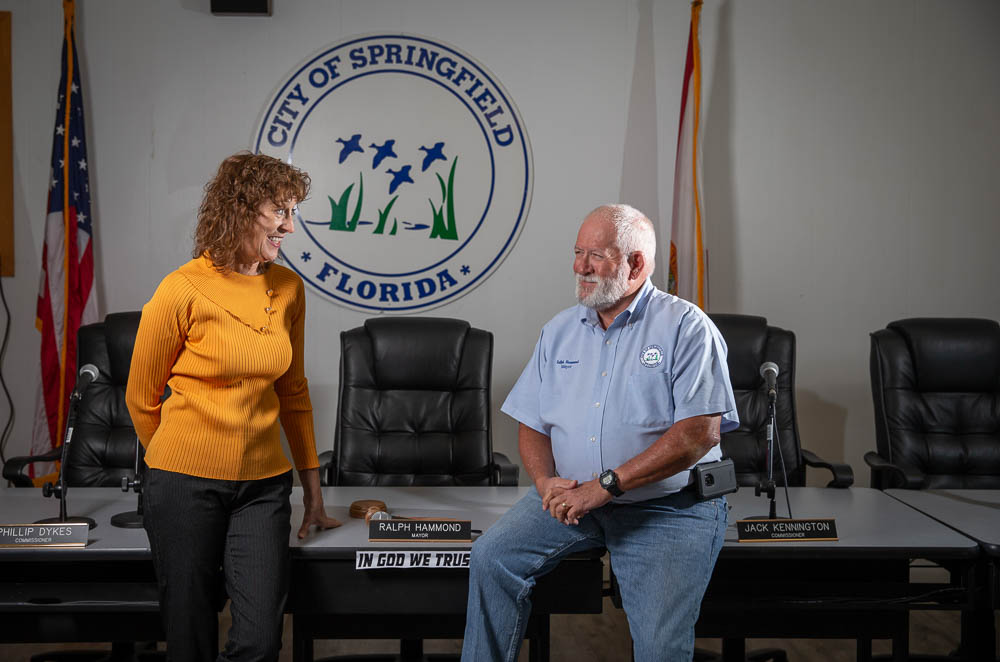 Just like its neighboring municipalities, the City of Springfield faces large expenses for debris removal that are yet to be reimbursed by FEMA. “Right now, we are around $14 million in debt. That’s not counting the private property debris removal yet. By the time that is completed, we are probably looking at $20 to $25 million in debris removal costs.” Hammond explains that the city negotiated a line of credit with their bank and is having to pay interest fees until the reimbursement of the invoices from FEMA comes through. But the good news is, there are residential developments underway. “Growth is planned towards the north and east of the city,” says Hammond. Several developers have announced plans for residential units.
The last 12 months have been challenging and emotional for Mayor Hammond and the entire team. During Hurricane Michael, he and 23 members of the police department were trapped in the now demolished city hall. The terrifying experience is still vivid in his mind. “When the storm raged, the building came down around us. We could not get out and found refuge in a small hallway in the center of the building. We huddled together, sat on the ground and prayed. We thought we were dead.” Even several hours after the storm, the men could not get out. His wife, who stayed at their house with other city employees during the storm, endured several hours of devastating uncertainty until the men were found.
 The events confirmed Mayor Hammond and his family’s faith in God. Around 10 days after the storm, when he went back to salvage documents and personal items from his office, everything was waterlogged. “My secretary, Jeanie, found the Bible that my wife had dedicated to me when I first took office. It had sat in three inches of water. I took it home and laid it out to dry. When I went back to check on it after a few weeks, there was not a fade and wrinkle. You know what water does to paper … but there was no water damage to the Bible. My wife had written a dedication inside and it was clear to read, no blurring. The only thing that was different was the gold foil that had come off from around the edges of the pages.” As the emotions are written plainly on his face, he adds, “It was like a message. It told me that Springfield will make it through. It’s going to be a long recovery but we are up for it. People said 850-strong after the storm; now it’s 850-stronger.”