
A Helping Hand for Nature: REDFISH RELEASE IN PORT ST. JOE

Story and photography Mike Fender
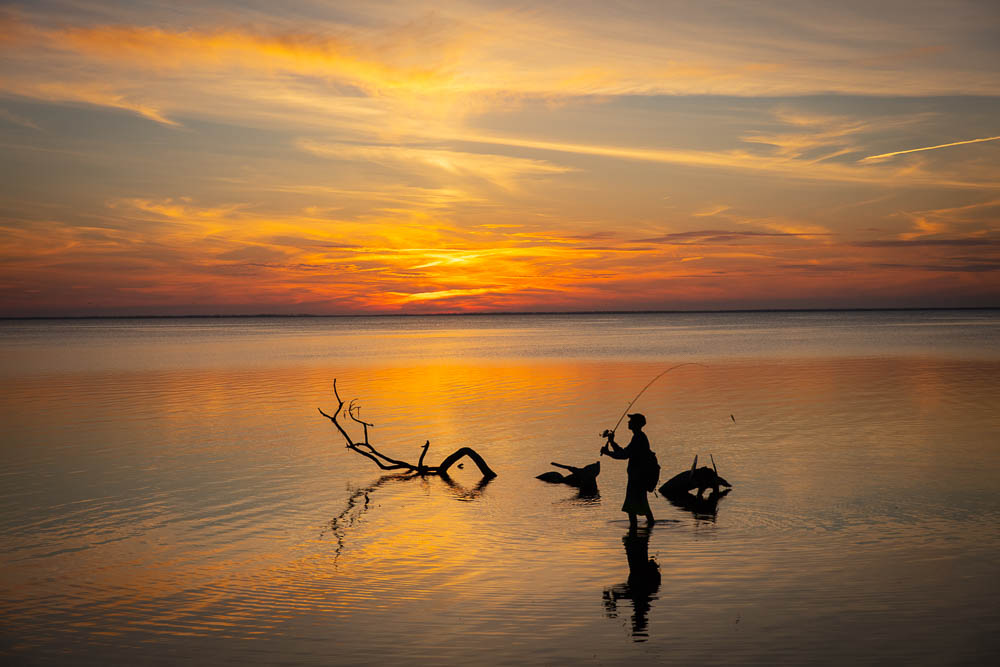
The waters off Port St. Joe in Northwest Florida are a fisherman’s dream—at first glance. Driving along Highway 98, the road hugs closely to the bay, with water so still on some days, it looks like liquid metal and mirrors the sky above. It begs you to throw in a line and watch the surface ripple while you wait for a fish to take hold. Beneath the surface things are not quite so picture-perfect. Red tide, a phenomenon caused by algal blooms, is a frequent occurrence in the Gulf of Mexico and while its effects are most frequently observed along the coastlines of west and south Florida, in 2017 and 2018, red tide struck Port St. Joe. One of the results of this toxic algal bloom was the death of massive numbers of fish.
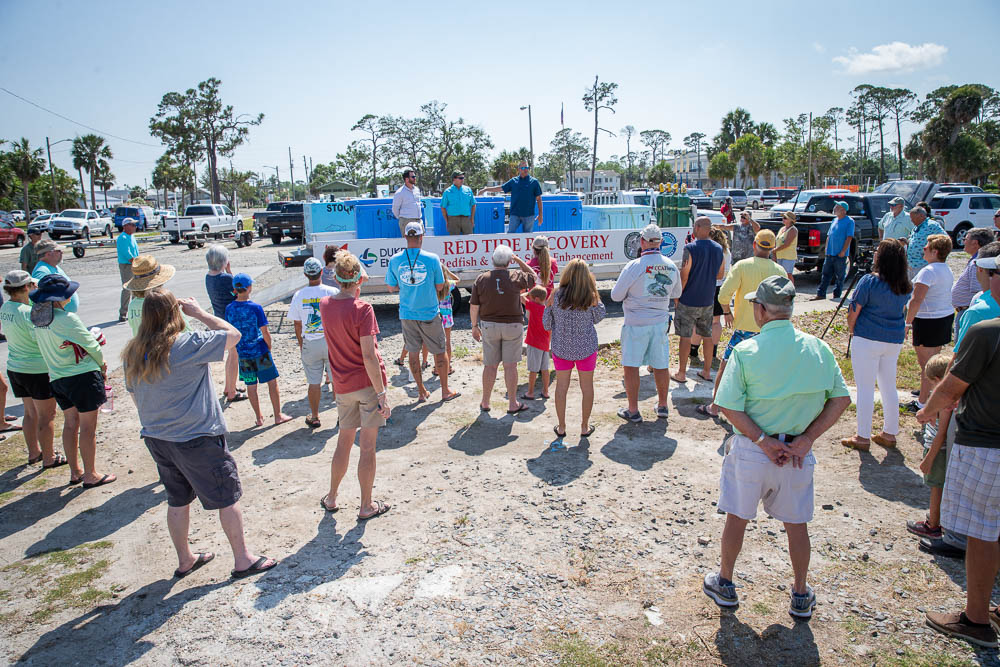
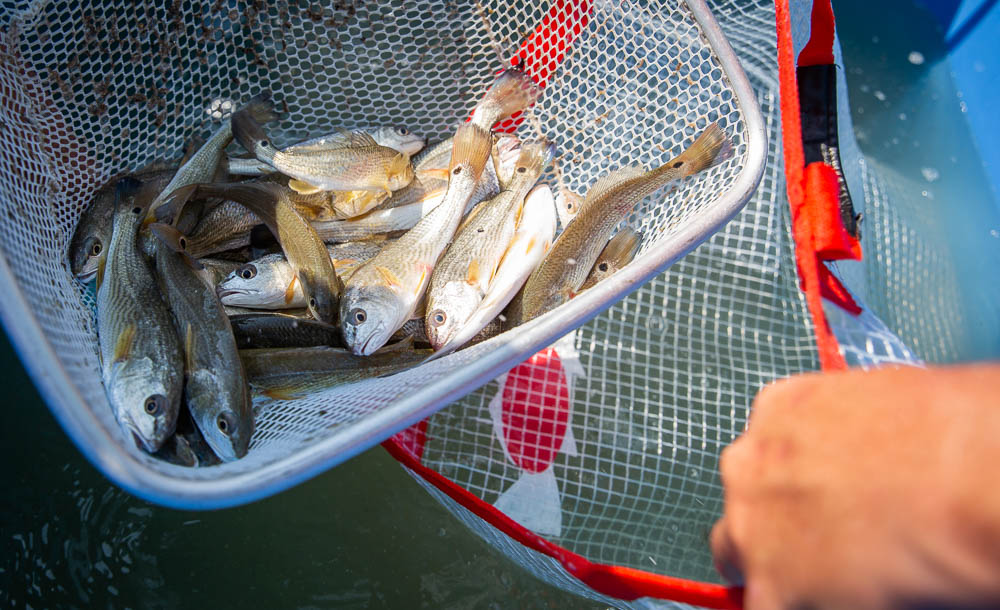
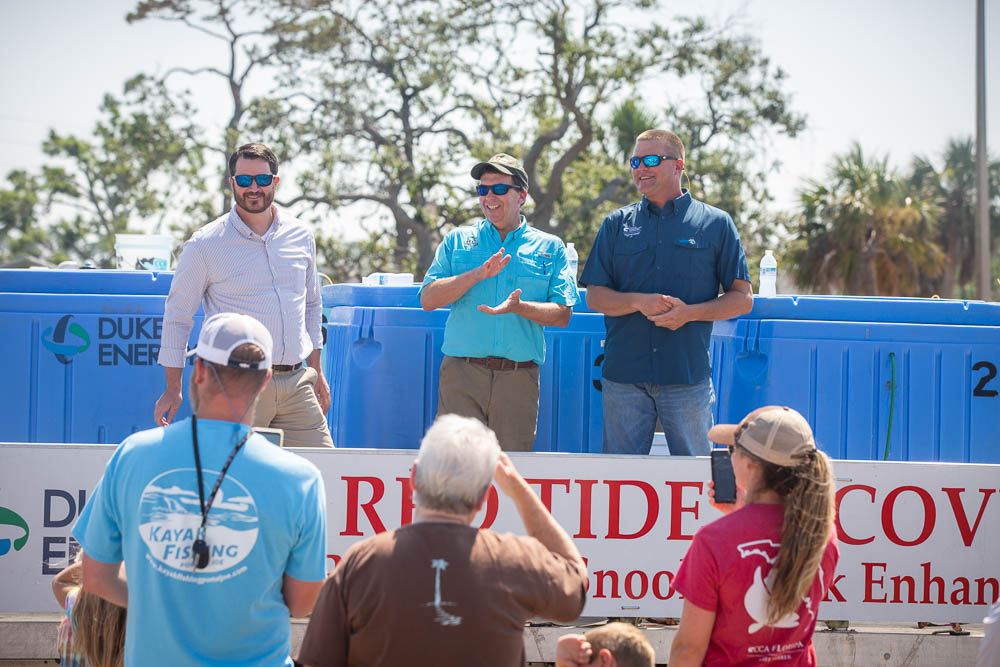
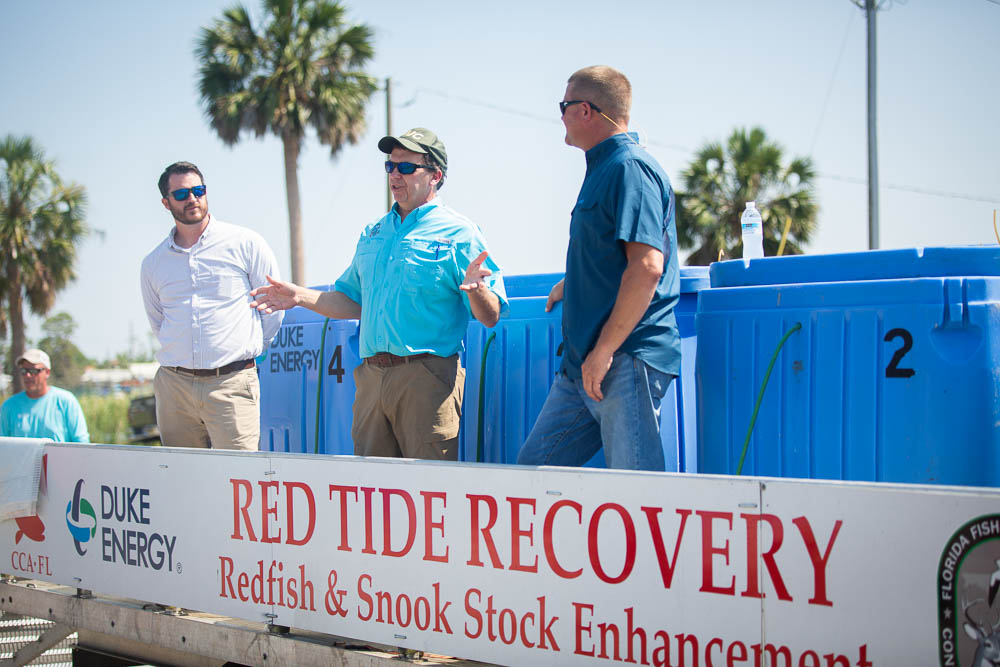
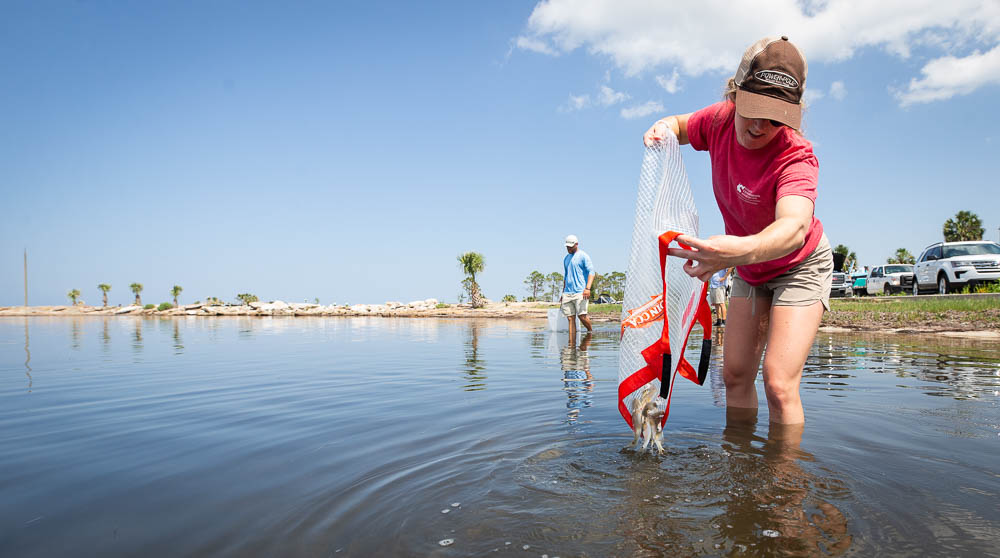 In May 2019, to help mitigate the effects of the disaster, local residents came together to release 8,000 juvenile redfish, also known as red drum, into the bay at Port St. Joe. The release was organized by the Coastal Conservation Association of Florida (CCA Florida), Duke Energy, and Florida Fish and Wildlife Conservation (FWC).
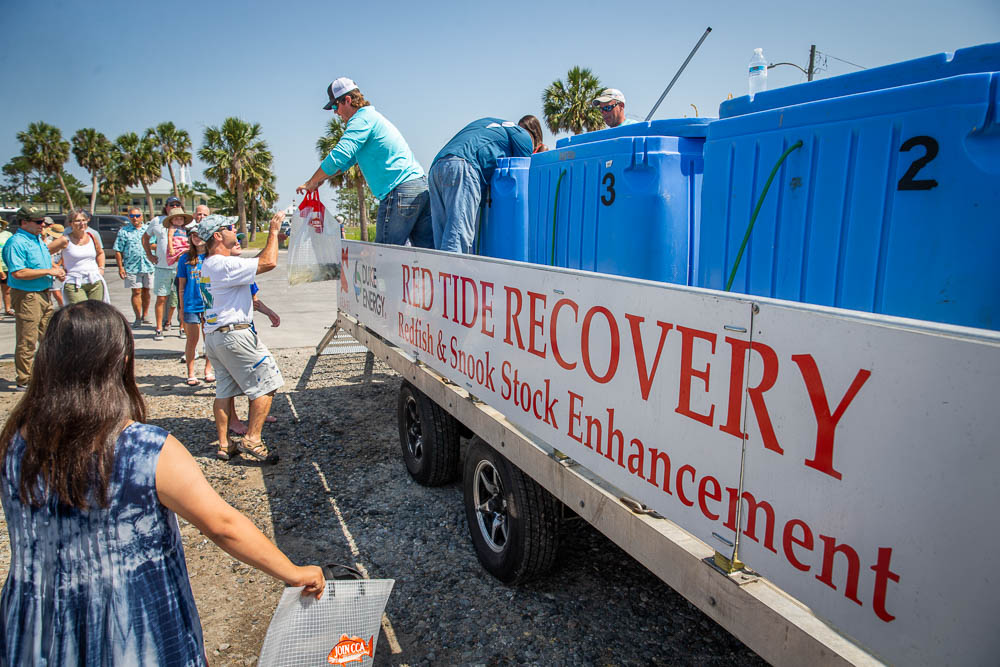
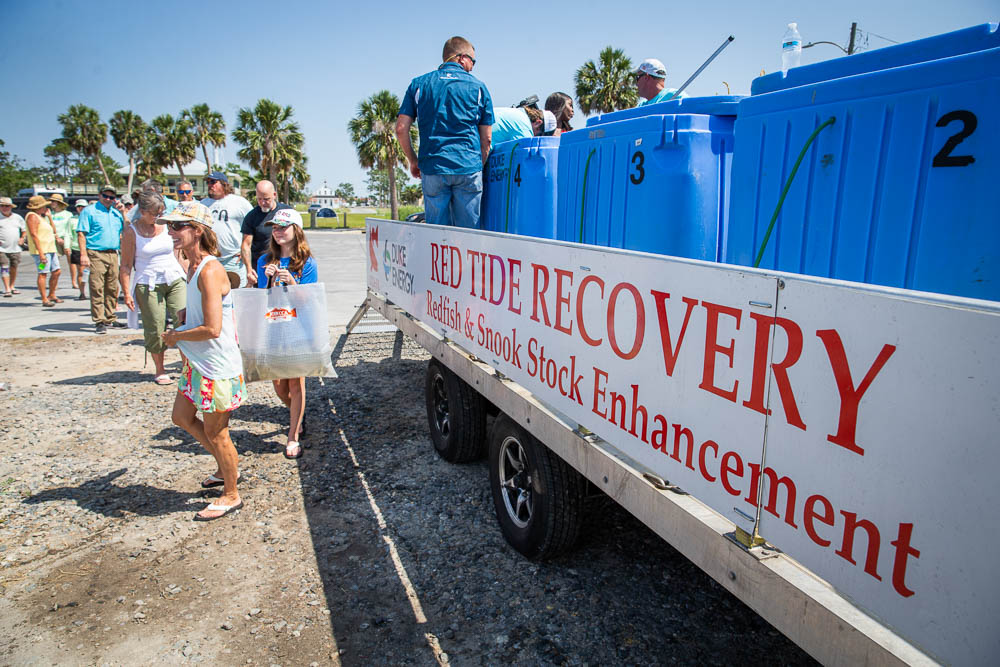
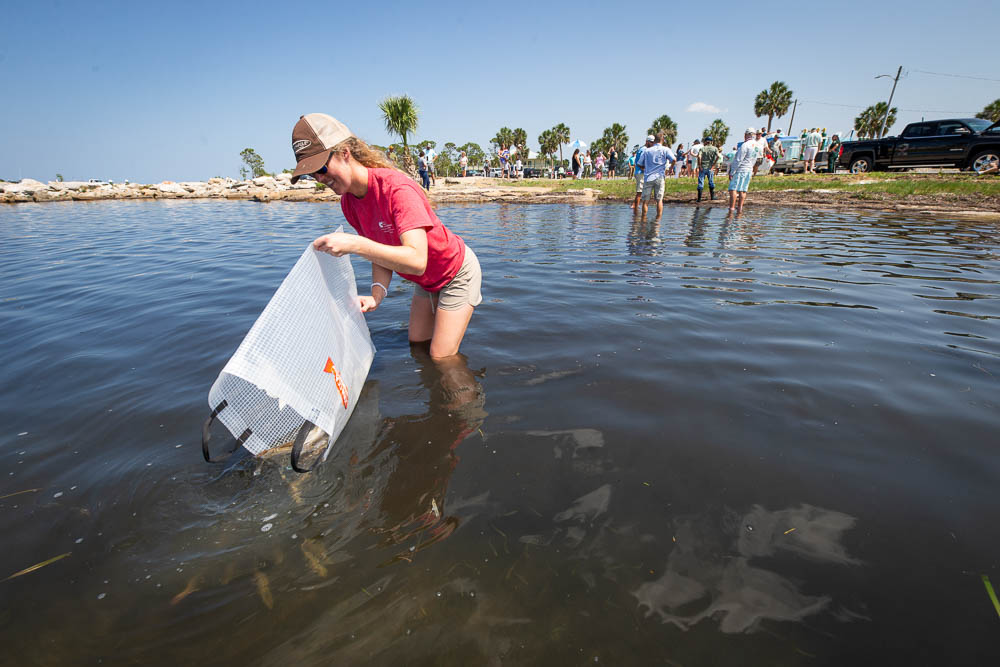
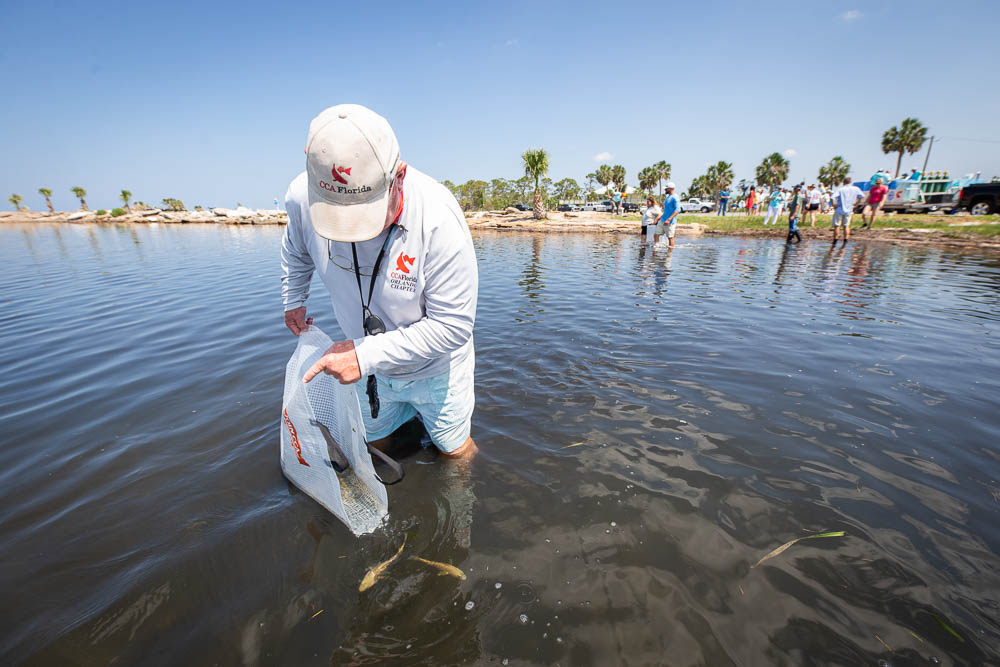
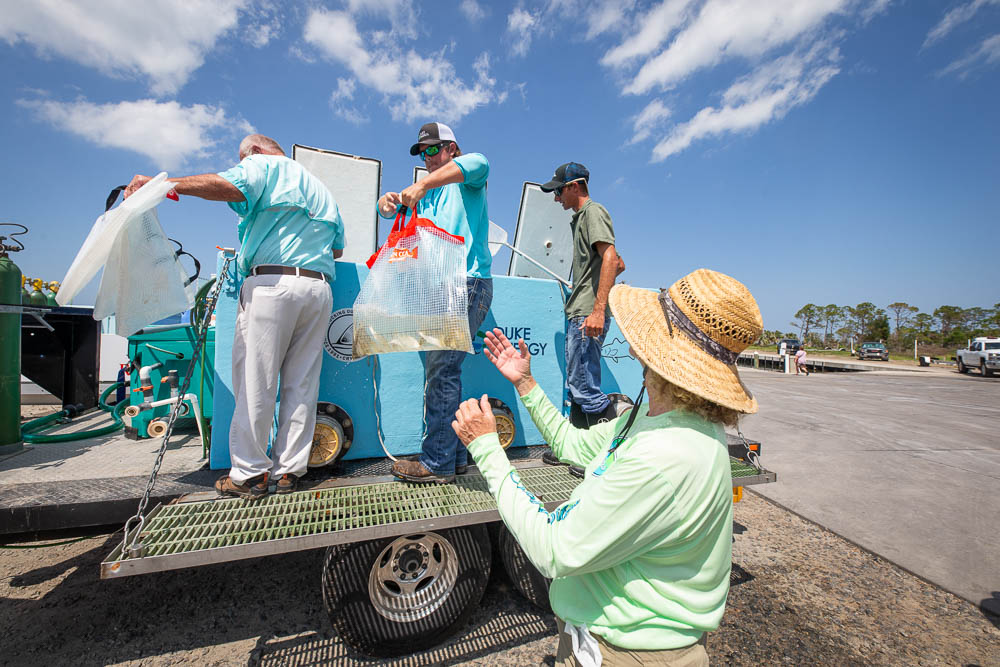
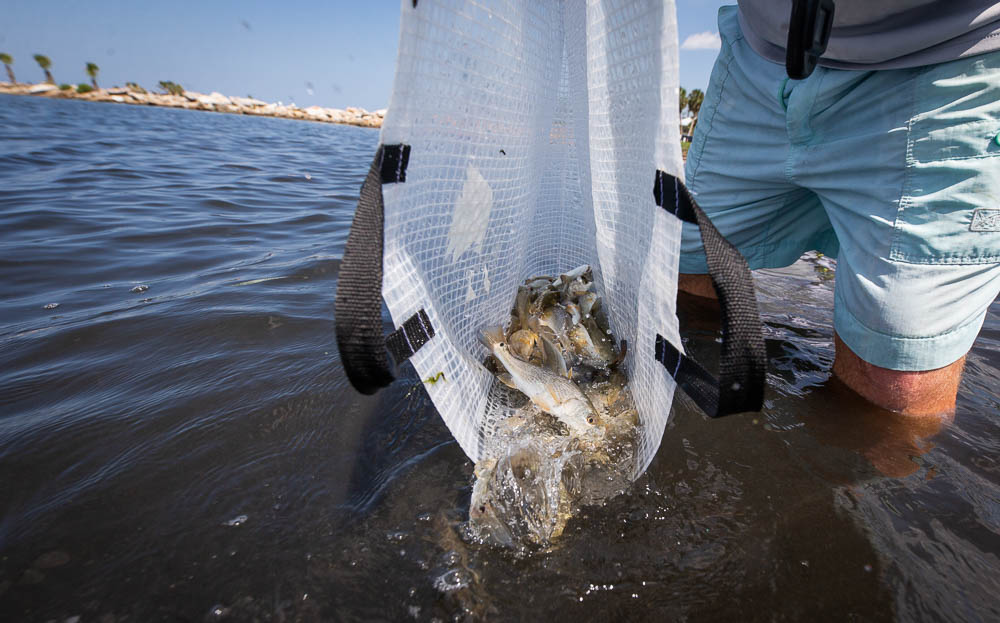
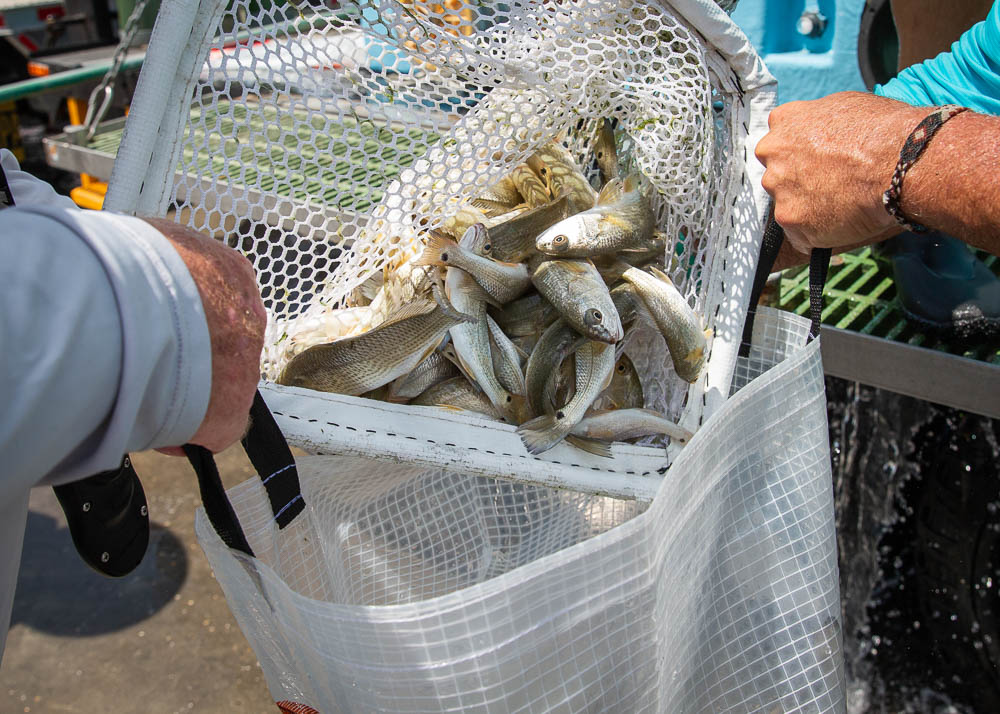
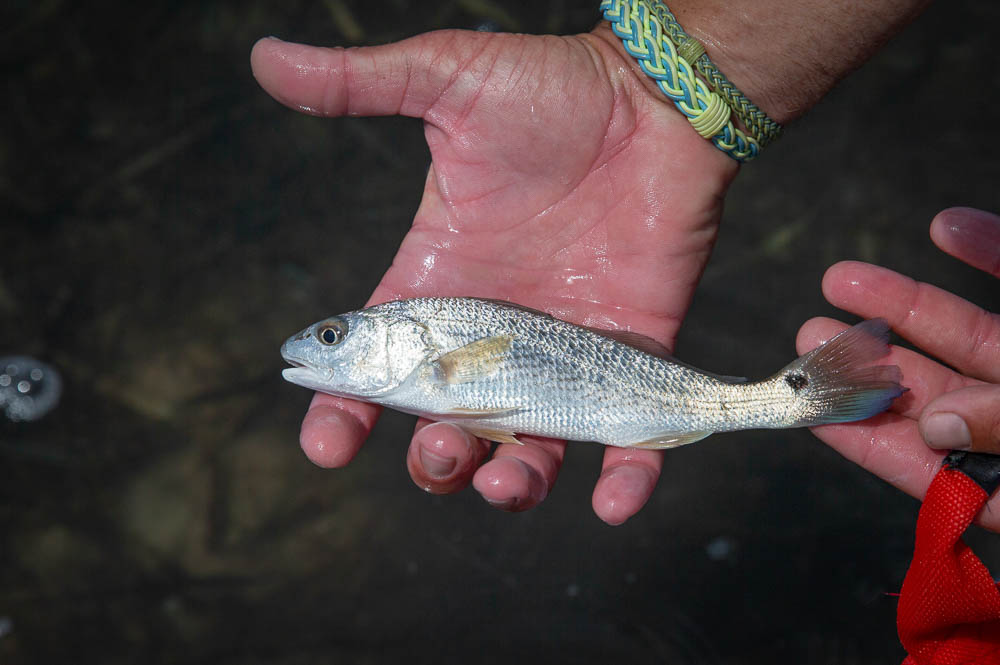
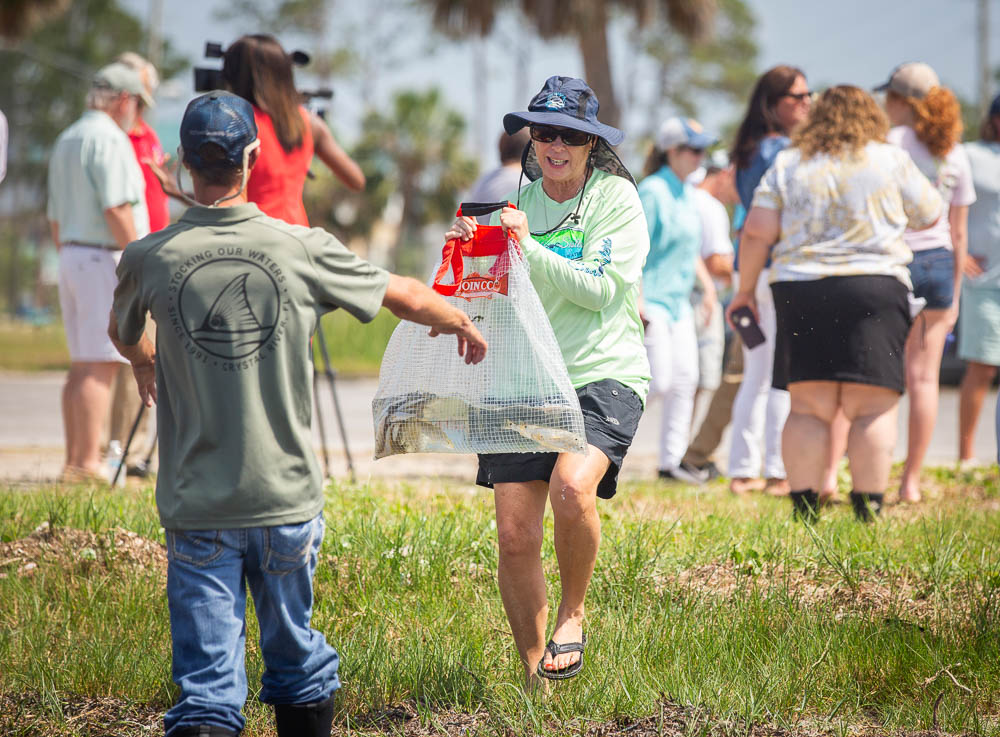
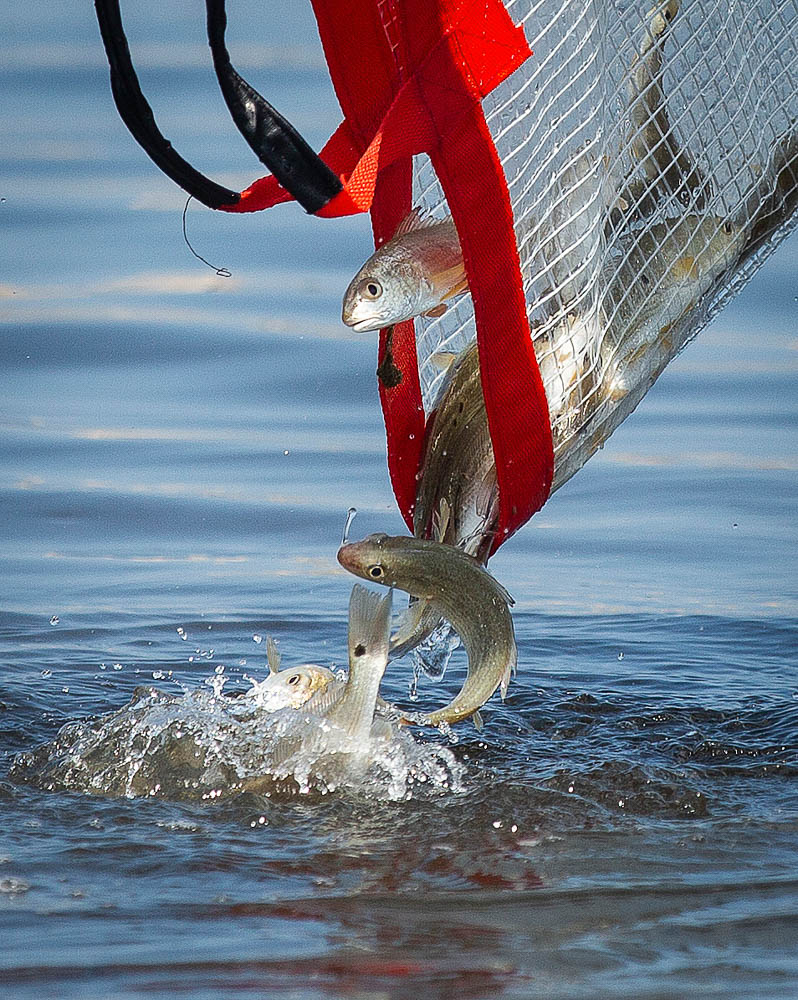
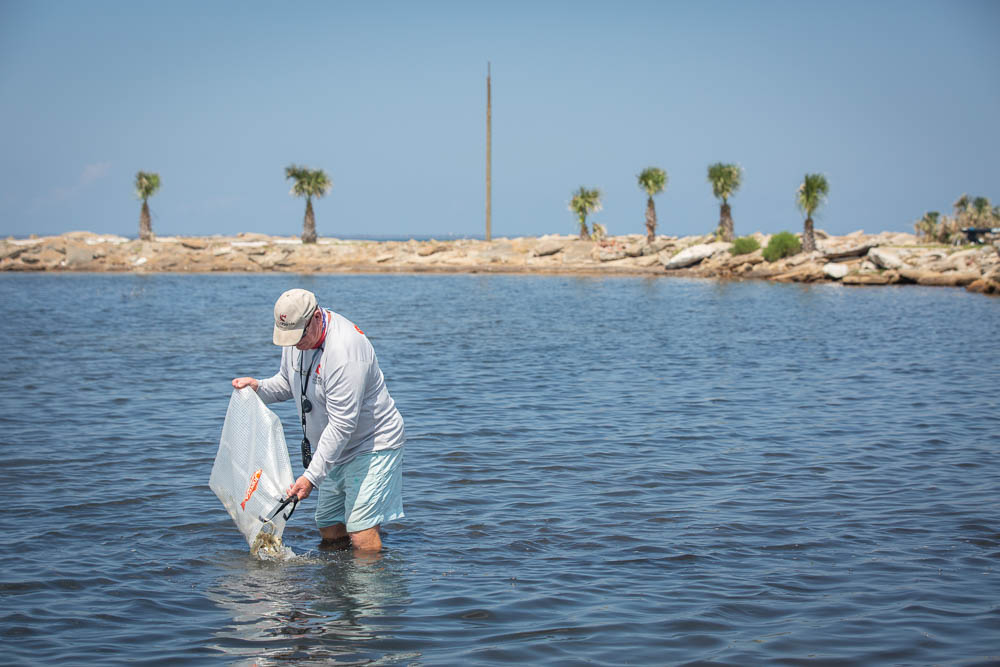
Community members gathered at Frank Pate Park Boat Ramp, forming a steady line of people carrying the fish in plastic bags from holding tanks to the bay, carefully easing the bags into their new habitat, to see the 5- to 8-inch juvenile redfish dash off into deeper waters.
Brian Gorski, executive director of CCA Florida, explains that 34,000 redfish have been released this year in waters that were impacted by red tide in Florida. Both juvenile and adult fish were released, though only juvenile fish were used in Port St. Joe. When adult fish are released they are tagged with dart tags that carry a phone number and an identifying tag number. The tags help CCA Florida track the size and release location for each fish, and tracking them requires active participation from fishermen. Fishermen who catch tagged fish should call in and report it. Juvenile fish released by CCA Florida can be tracked by DNA testing from a simple fin clip from a live fish. “We take this data and are able to track the catches and see where the fish have traveled, how much they’ve grown, etc.,” Gorski explains.
The juvenile redfish in Port St. Joe were hatched and raised under watchful human eyes in the tanks of Duke Energy’s Mariculture Center in Crystal River, described on their website as “two-story, 8,100 square-foot multi-species hatchery that cultivates and releases about 100,000 fish fingerlings, including redfish, pigfish, pinfish and spotted seatrout, into the Gulf of Mexico each year.” Several months pass by before the fish are ready to travel in tanks to their new habitats and be introduced into the wild. Gorski says after spawning and growing through the larval stage, they are stocked in outside grow-out ponds that mimic natural habitats, which helps the fish to be better acclimated when they are finally released. Redfish normally grow to be 10 to 15 inches in length in one year and mature between three and five years, reaching average lengths of 28 inches for males and 33 inches for females. Redfish can live up to 60 years.
According to Gorski, in Florida, the fishery is part of the natural ecosystem. He explains that helping restore the fish population in Port St. Joe and other parts of the state after an event like red tide is highly important. “An intact ecosystem not only benefits recreational anglers; it contributes to the Florida economy,” he reiterates. The FWC, using data from Southwick Associates and the American Sportfishing Association, reports that Florida’s sport fishing industry, which includes both saltwater and freshwater fishing, supports more than 106,000 jobs and generates $11.5 billion in economic activity each year.
Replenishing the fish population helps, but it doesn’t solve all the problems red tide brings to places like Port St. Joe. Sven Kranz, assistant professor of oceanography at Florida State University, says communities can help by “getting their water quality to a more pristine level.”
In some places, like Tampa Bay, efforts to clean the coastline of the excess nutrients that feed red tide have shown progress. The Smithsonian Institute reported last year that following a population boom in the 1950s, Tampa Bay became covered in a thick layer of algae after the removal of mangroves and the dumping of polluted water into the bay. By reducing the nutrients and pollutants flowing into the bay, the efforts brought seagrass back to levels not seen since before the spike of human population on Florida’s coast around 1970. One effect of red tide in the relatively shallow waters of bays is that excessive algae growth deprives seagrass of the light it needs to grow. Seagrass is a key part of the ecosystem and without it, the marine life that rely on it will disappear, eventually causing the entire ecosystem to collapse. When that happens, popular fishing spots become fish-free zones.
The return of seagrass to Tampa Bay has been one success story in the fight against red tide, but it is not a quick fix. The Smithsonian reports that the turnaround in Tampa Bay, from ecological collapse to visible strides toward recovery, took 30 years. Another effort that is being tried with success in Florida is the addition of shellfish to waters where red tide is a problem. Franz says adding shellfish, such as oysters, provides a natural filter for the water. One oyster can filter an average of 50 gallons of water a day. Oysters that grow in areas where red tide occurs are unsuitable for human consumption.
As efforts to clean up the Gulf waters continue, so will the need for people to intervene and repopulate certain fish species. Kranz says he believes we will see even more red tide incidents than we’ve seen in the past. He points out that the higher concentration of nutrients and warmer waters we’ve been seeing create a perfect environment for red tide to thrive.
As the volunteer community members from Port St. Joe stood on the beach during the fish release in May, it felt like residents had just won a small battle in the bigger war against red tide. With the large crowd of helpers, it only took about one hour for 8,000 juvenile redfish to make their way into the bay. As the final bags of fish were poured, released redfish could be seen swimming in the shallows. The newest residents in Port St. Joe were settling in, along with the hope for a year free of red tide.
WHAT IS RED TIDE? Red tide is nothing new. It is a natural occurrence that Spanish explorers talked about seeing in Florida in the 1500s. In recent years, red tide has been a newsmaker with fish kills and beach closings. Studies suggest climate change and the increase of nutrients in the water are to blame for increased incidents. In short, it is getting warmer and we are dumping more pollution into our water.
Red tide starts with microscopic algae that float through the ocean. Even though you can’t see them, the algae are an essential part of ocean life that takes light from the sun and converts it into fuel. When the algae encounters excess nutrients it multiplies quickly and becomes a mass known as “red tide.” As it grows, it smothers any ocean life in its way.
Sven Kranz, assistant professor of oceanography at Florida State University, says red tide is basically a floating passenger in the ocean, pushed along with the tide and the currents, even the surface winds. “Wherever the water mass travels, the red tide will go,” he says.
Some algae species, like Karenia brevis, tint the ocean surface a deep red color, which is where red tide gets its name. Many other species are brown, and some don’t become dense enough to color the water.
Red tide is not only harmful to fish and marine life, it can produce toxins that become airborne and affect humans, birds, and other animals. In past outbreaks, red tide has been blamed for killing manatees, 149 in 1996. Between 1987 and 1988, it killed 740 bottlenose dolphins that had eaten fish contaminated with red tide.
– Information compiled from the Smithsonian’s website, ocean. si.edu and an interview with Dr. Sven Kranz, assistant professor of oceanography, Florida State University
While the juvenile redfish were not tagged when they were released at Port St. Joe, if you catch a tagged fish in Florida waters, call: 1-800-367-4461.
Record the capture information:
• Tag number, fish length, specific catch location.
• Note any unusual circumstances regarding the catch.
• When releasing a tagged fish, do NOT remove the streamer tag. (Repeat captures of the same fish are not uncommon.)
• If the fish is harvested, please return the tag to the address below.
• When releasing a largemouth bass for cash reward in Florida waters, cut the tag close to the body wall and return the tag to FWC.
Or send and email to tagreturn@MyFWC.com or submit the capture report to the mailing address: Stock Enhancement Research Facility 14495 Harllee Road Port Manatee, FL 34221
OBSERVE CURRENT FISHING REGULATIONS
To view the most current saltwater fishing regulations for the state of Florida, visit MyFWC.com