A Guiding Hand Through the Maze of Legalese


BY JUDGE DON SIRMONS
PHOTOGRAPHY BY MIKE FENDER
When you ask a lawyer a question, the answer usually begins with, “It depends.”
The American legal system is complex. It is based primarily on the principle of the common law system that originated in historic England, premised upon custom and judicial decisions as opposed to statutory language. Also called case or precedent law, in the U.S., case law establishes precedence for subsequent similar court cases. Each state has its own case law and the federal system also has its own case law. Therefore, to resolve an issue, one must have knowledge of whether that issue has previously been decided by a judge and, if so, the rationale for why the judge made the decision. Facts become important in this process. A change in facts could change a decision.
Some issues are decided by statutes passed by legislative bodies or administrative rules and regulations passed by governmental agencies. This calls for statutory interpretation. Do the facts of a given situation fall within the intent and meaning of the applicable statute? Plus, when there is any issue that needs to be addressed, it seems everyone wants a statute passed to address it. And each new statute is subject to interpretation.
Finally, there are different areas of law such as civil, tort, criminal, juvenile, domestic, mental health, guardianship, estate planning, tax, and social security, to name a few. Each area has its own special rules of procedure to follow.
When faced with legal questions, anyone who has not studied the law will find that they can rarely get definitive answers. Is the legal system treating everyone the same? Why do I need a lawyer to handle my case? Can I afford to hire a lawyer to resolve my case? Why does it take so much time to resolve an issue? Carol Hoots, the librarian at the Bay County Law Library, has been hearing these and so many more questions on a daily basis for the past 35 years.
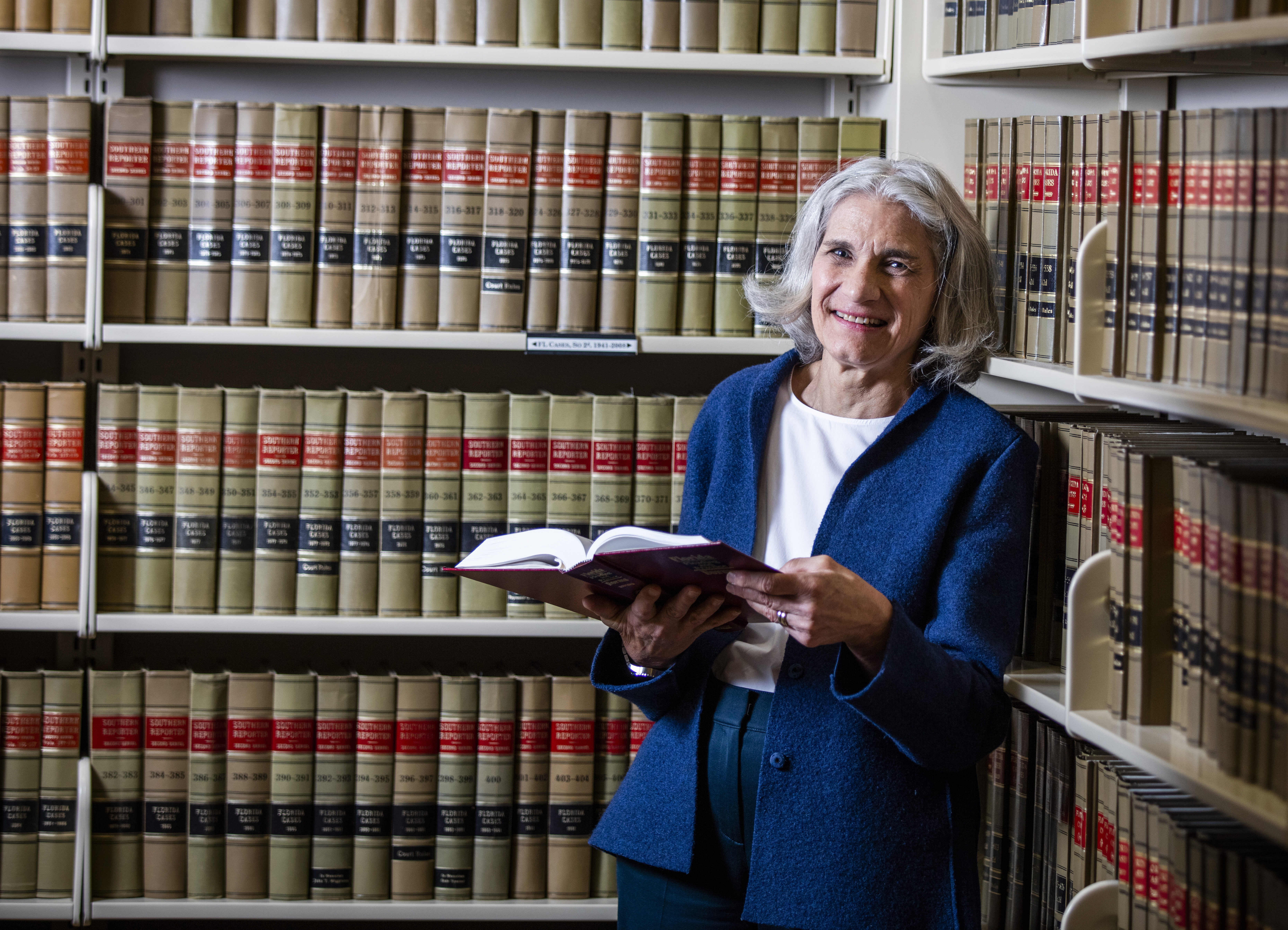
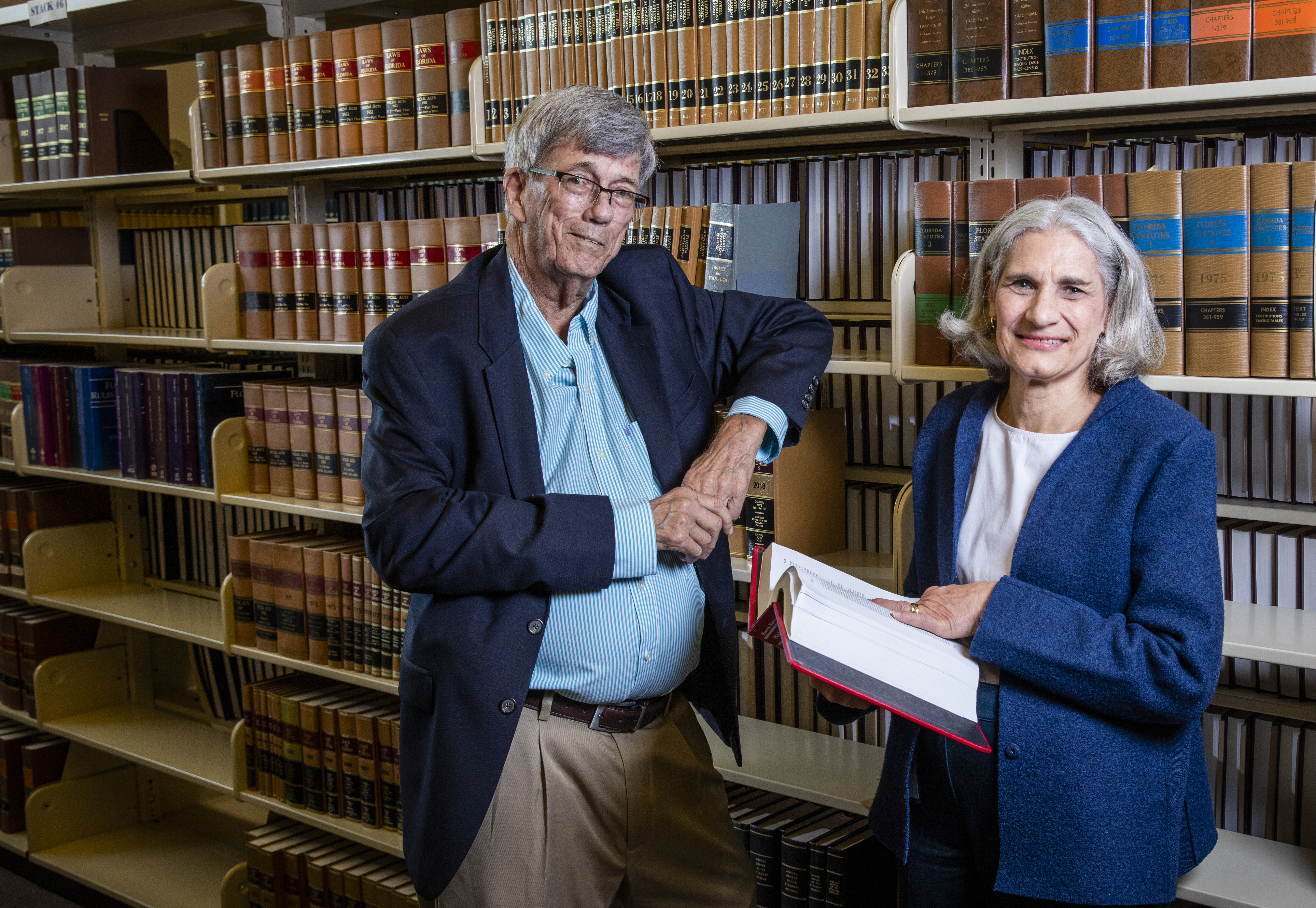
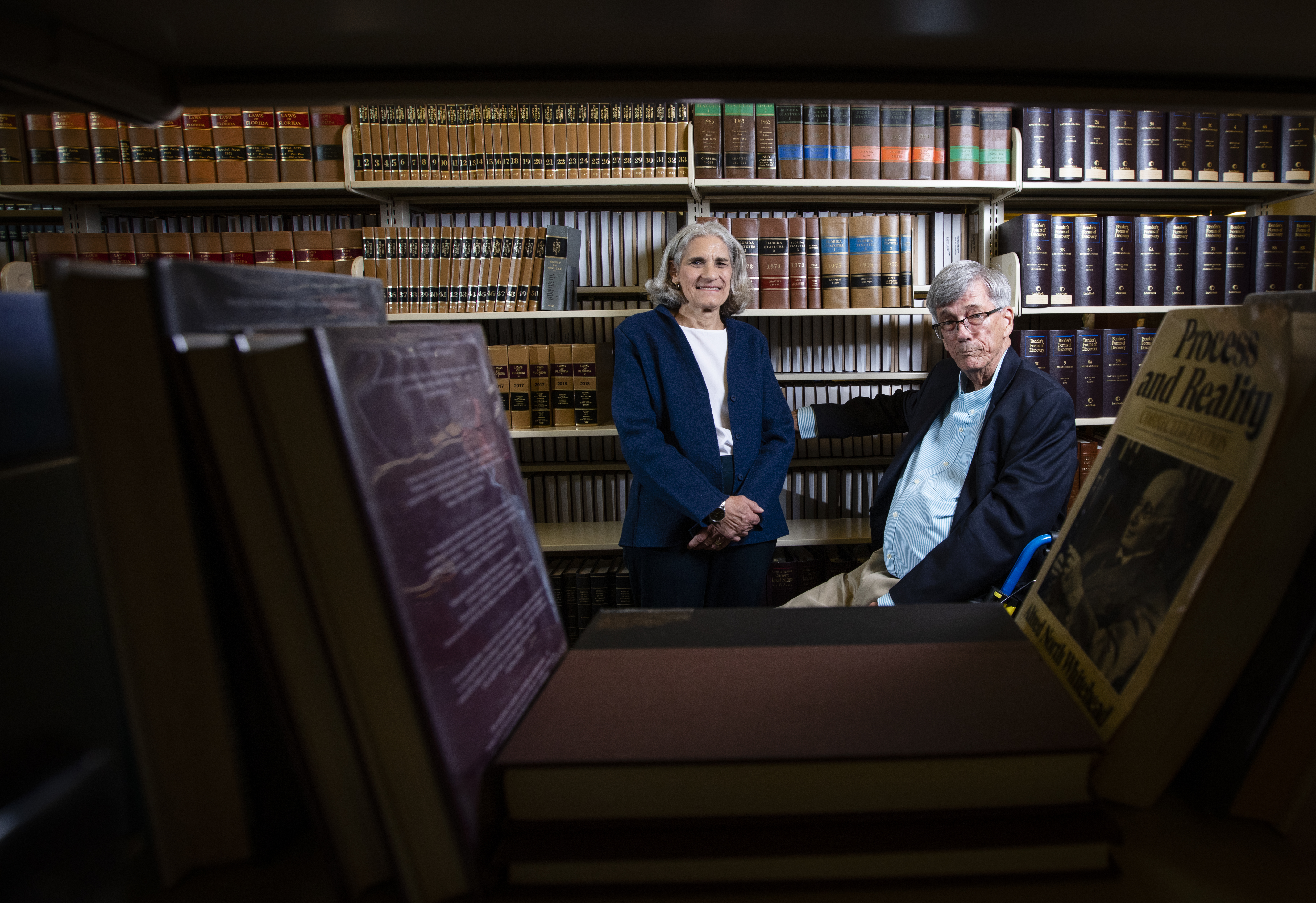
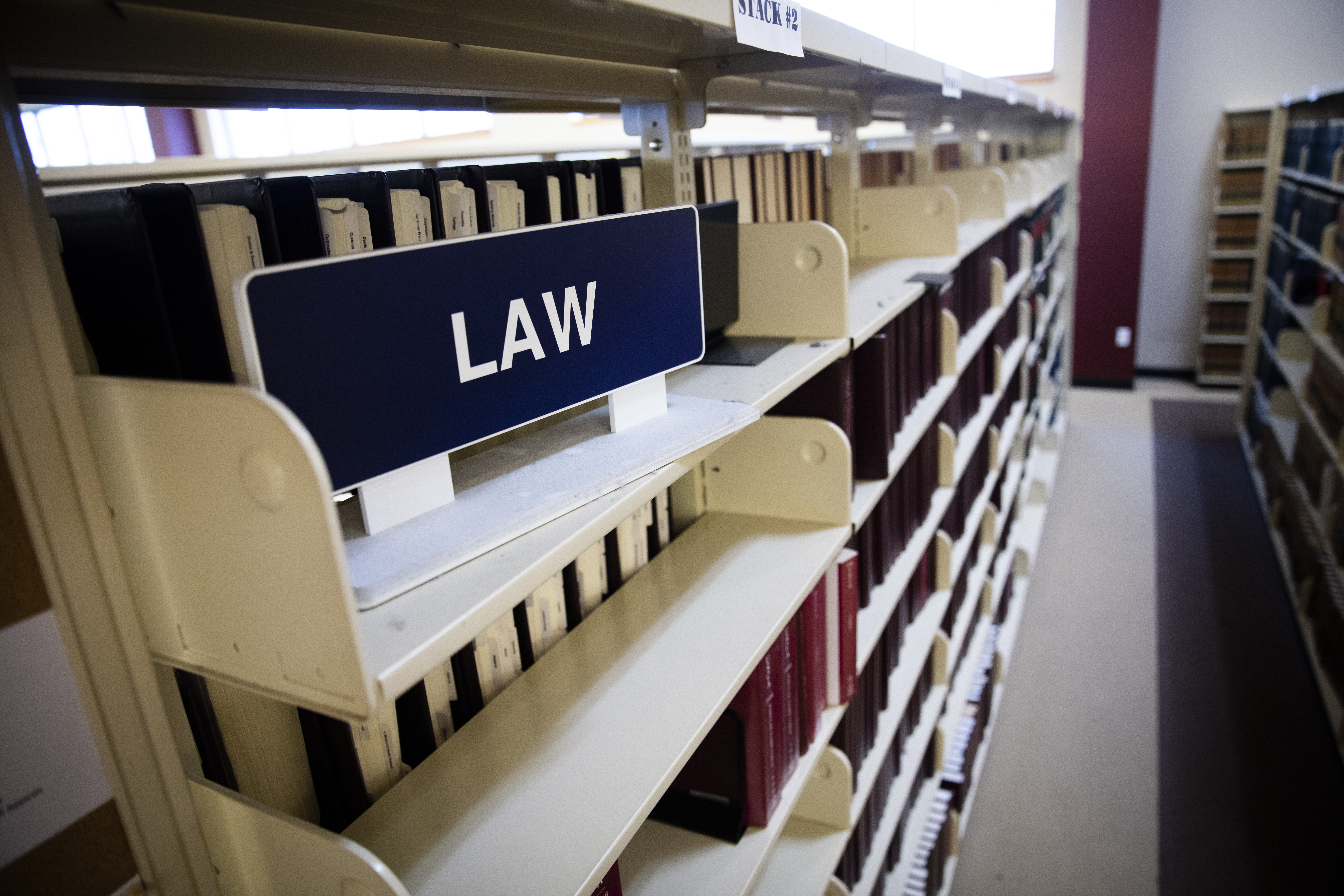
Situated within the Bay County Public Library on 11th Street in Panama City, the law library takes up space in the southeast wing of the sprawling building. Carol can be found next to stacks of legal books near the information desk where she offers assistance to library patrons conducting their own legal research. She is not a lawyer and cannot offer legal advice, but she can assist a library patron in navigating what can easily be described as a daunting quagmire of legalese.
Efficiently and with much expertise, she guides patrons through the complexities of extensive statutes, regulatory codes, state and federal case law, computerized databases, forms, and other legal materials of the local court system. Her work has taken on legendary proportions for those whom she has led through the maze in the last three and a half decades.
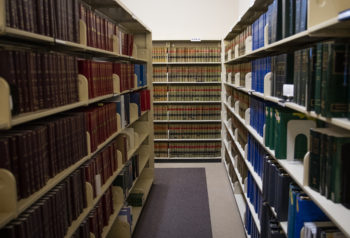 Once situated in a small remote corner on the third floor of the Bay County Courthouse, the law library initially housed a modest collection of reference and research materials for judges, attorneys, and the general public, including inmates who represented themselves. Carol became the law library’s first employee in 1983, shortly after she and her husband, Tom, relocated to Panama City for his work. With a degree in education from the University of Delaware, she began working for a local law firm and soon was tasked with assisting in the library. Little did she know she would spend the greater part of her career doing so.
Carol began to supplement the library’s resources and services to meet the growing needs of both the local legal community and laypersons, in all areas of the law. After the State implemented a new statute in 2004, the library’s funding structure changed considerably and finding sufficient funding for new resources has been a challenge ever since.
A milestone in both Carol’s career and for the law library was when West Publishing Company first offered a computerized legal research engine in the late 1980s. “The terminal was the size of a refrigerator! It was called West’s Automated Legal Terminal, nicknamed WALT,” she remembers. Its importance in the quickly developing future of computerized legal research was apparent and Carol successfully advocated for its purchase. After extensive training, she was certified as a Westlaw specialist.
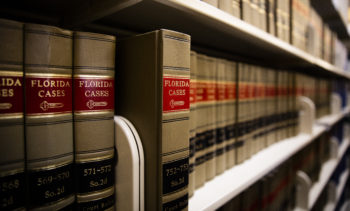 As Bay County’s first and only law librarian thus far, Carol recognizes that, as technology has evolved and expanded, legal research has moved far beyond paper copies of case law or lists of authorities cited in Shepard’s Citations. “Attorneys do not need to frequent the law library nearly as much as they did when I first started in the early ’80s. I can remember attorneys copying dozens of court cases out of regional case law reports; now, cases can be affordably retrieved through several databases. Our present collection of hard copies is a fraction of the library’s original inventory, but hard copies are necessary for the layperson who either does not have access to or is not computer savvy. I continue to assist people with research using our hard copies,” she says.
In 2011, the law library was relocated to the Bay County Library, a much more convenient and accessible location for the public than the courthouse. It has proven to be a good move; according to Carol, as of the end of 2018, the number of patrons utilizing the law library since its relocation had increased by 38 percent. And the upward trend continues. “People who cannot afford an attorney will rightfully attempt to represent themselves,” she reports. There is pride in her voice. “Also, I believe pro se litigants are receiving a more encouraging reception in the courts than they had previously.”
Carol’s patience and attention to detail is well known to a generation of lawyers and judges who have benefited from her knowledge and efforts. She has assisted many young lawyers in their transition from legal research in a law school setting to their day-to-day work environment.
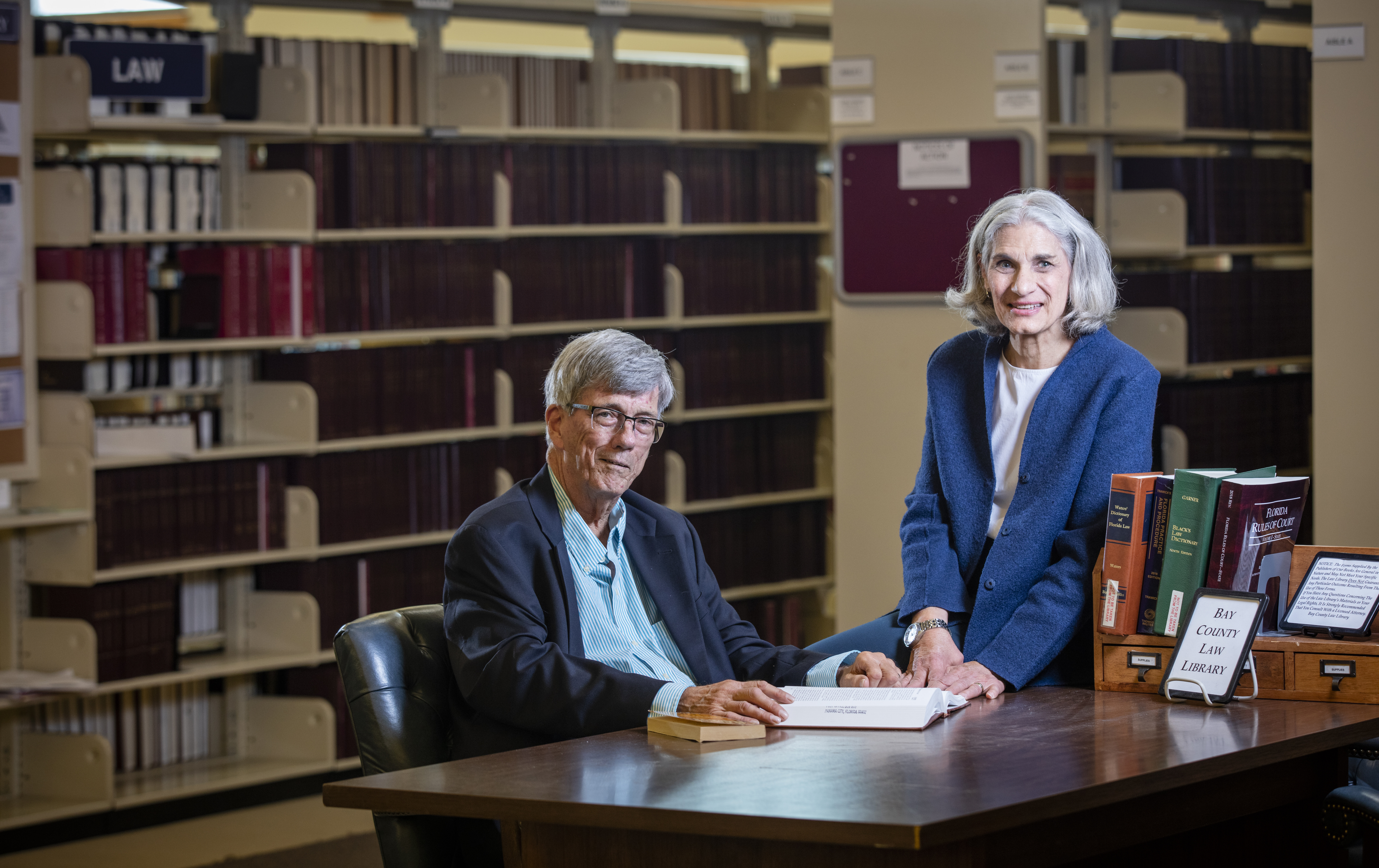
Carol smiles when she describes the best part of her job. “When an overwhelmed and discouraged patron comes in and I watch them find answers to their law-related questions or they’ve properly completed a much-needed court form, seeing their pride and accomplishment is rewarding to me.” And, she says, sometimes a patron will return to let her know her efforts did not go unnoticed and that the outcome was a success. “Sometimes I even get a hug,” she says with a smile.
Carol’s typical stoicism turns emotional when she thinks of the challenges.“It is so hard when a patron is in tears while explaining their situation or struggles to me, especially the Hurricane Michael-related stories,” she admits. Landlord and tenant law, followed closely by probate, family, and criminal law, are the most frequently sought-out areas of inquiry and research. “Since the hurricane, there has also been an increase in interest concerning property conveyances,” she says.
 She must often remind patrons that she is not an attorney and is not authorized to offer legal advice. She sees herself as a legal “clearinghouse,” steering patrons in the right direction in an area that can be intimidating to a layperson. “People are often surprised and disappointed that I am unable to provide legal advice. Our societal desire for instant gratification makes it difficult for people to grasp that it is often difficult, and at times impossible, to find a quick, easy answer to their legal problem,” she points out.
Legal research technology is constantly created and updated. Carol reports enthusiastically that the law library recently upgraded to the newest research tool, WestlawNext, and added an interactive software program to assist people in filling out legal forms. What may be routine for a legal professional is often not a simple or straightforward task for a person with no legal training or background. This is where Carol shines, as she encourages patrons in their efforts.
While the internet provides good information, people need to beware of bogus websites providing forms that may not be state-specific or appropriate for a Florida resident to use. Carol offers guidance in this area and her assistance is invaluable.
Perhaps Carol’s dedication and that of others like her will ultimately result in a better funded and staffed system that efficiently provides reliable legal assistance in a timely manner for persons with limited financial means involved in civil cases. In some states, these efforts have been labeled “civil Gideon” cases. And, like the historical case of Gideon, Carol’s efforts certainly contribute to better and fairer access to civil justice in Bay County.