
SPIRIT AND DEVOTION: Avicenna Clinic


BY DR. STEPHANIE COLE JEHL
PHOTOGRAPHY BY MIKE FENDER

This incident would be the first of many seizures for Marquez, who would lose consciousness and often experience convulsions for 15 minutes at a time. The seizures began to occur every two weeks, forcing him to drop out of school, forfeit his scholarship, and return home to Port St. Joe, Florida, where he grew up.
Marquez and his family did not have health insurance, and they could not afford the specialty medical care needed to treat his condition. Luckily for Marquez, his mother sought and eventually found the life-changing health care Marquez needed. Marquez enrolled as a patient at Avicenna Clinic, a medical clinic in Panama City offering free health care to uninsured residents. Avicenna Clinic is a 501(c)(3) nonprofit with approximately 25 doctors volunteering in rotation to provide primary care and specialty care in the fields of neurology, cardiology, rheumatology, pediatric care, and nephrology. The name Avicenna is the Latin version of Ibn Sīnā, a revered Persian scholar and physician who lived from 980 to1037 AD and is said to have treated his patients without asking for payment. For Marquez, access to Avicenna Clinic would mean access to a neurological specialist and the prescription medication to treat his condition.
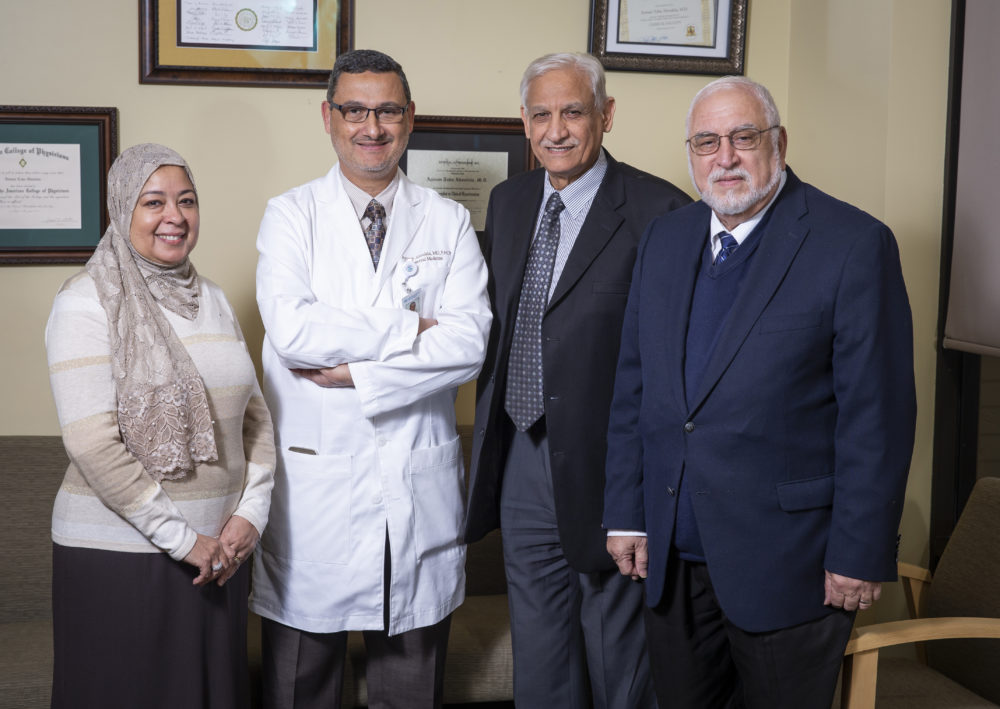
Avicenna medical director Dr. Ayman Aboulela says that he has witnessed countless similar cases where access to Avicenna’s care has changed a patient’s life. “At Avicenna, we believe that health care is a right, not a privilege,” he says. Dr. Aboulela, an internist in Panama City, immigrated to the United States from Egypt during the late 1990s and has worked tirelessly to serve the Bay County community he now calls home. When he and a group of members of the Islamic Understanding Institute (IUI) founded Avicenna in 2010, they were driven by a desire to serve the local community. Spearheading this effort were IUI members Medhat Elmesky, Dr. Aly Shaaban, Wasima Shata, Dr. Ayman Aboulela, and Dr. Mohamed Rahim.
As physicians, Dr. Aboulela and Dr. Rahim point out that it is their belief that the best way to serve their community is to make health care more accessible. “By providing a free service, we are not running medicine as a business but as a service to anyone who needs our expertise. Our work is about building bridges to the community. It is part of our commitment to our faith and to the community at large,” Dr. Aboulela says.
The tremendous staffing and administrative efforts at Avicenna are managed by clinic coordinator Vivian Mohamed, who also supervises a small paid staff of receptionists and a part-time nurse practitioner. Medical supplies are funded by a grant from the Bay Health Foundation, and Bay Medical Sacred Heart (currently undergoing a restructuring) donates a set number of diagnostic services, such as two MRIs per month. Collectively, these donations and volunteer efforts allow Avicenna to serve approximately 100 patients per month.
To qualify for treatment at Avicenna, patients must not have health insurance, and their income must not be higher than 200 percent of the federal poverty guideline. The need for affordable health care options in Bay County is considerable, according to Dr. Aboulela, where 19 percent of residents, or about 30,000 people, are uninsured.
“Our patients often have to choose: Do I eat, or do I take my medication? This is the population we serve,” Mrs. Mohamed explains. With nearly a decade of experience managing patients at Avicenna, she says that a person who does not have health insurance will often go without treatment until absolutely necessary or will use an emergency room for their primary care, where there is no follow-up care. Avicenna Clinic stresses continuum of care for its patients. “Here, our patients feel like they can build a relationship with our doctors. These are not one-time patients. These are very much our patients,” she says.
At Avicenna, Marquez was placed in the care of volunteer neurologist Dr. Mutaz Tabbaa, the founder of the neurology branch at Avicenna. Dr. Tabbaa diagnosed Marquez with epilepsy and worked with him to find the proper combination of medications to control his seizures. Marquez was fortunate to find Avicenna, and he was particularly fortunate to find a neurologist, as most free clinics offer only primary care, not specialty care.
Asked about his reasons for starting a neurology branch at Avicenna, Dr. Tabbaa stresses that specialty care must be more accessible for people who need it. “Our cases are often tough cases–congenital ataxia, Lou Gehrig’s disease, Parkinson’s disease. And these patients are often young people, with their whole lives ahead of them. Young people, with no insurance.”
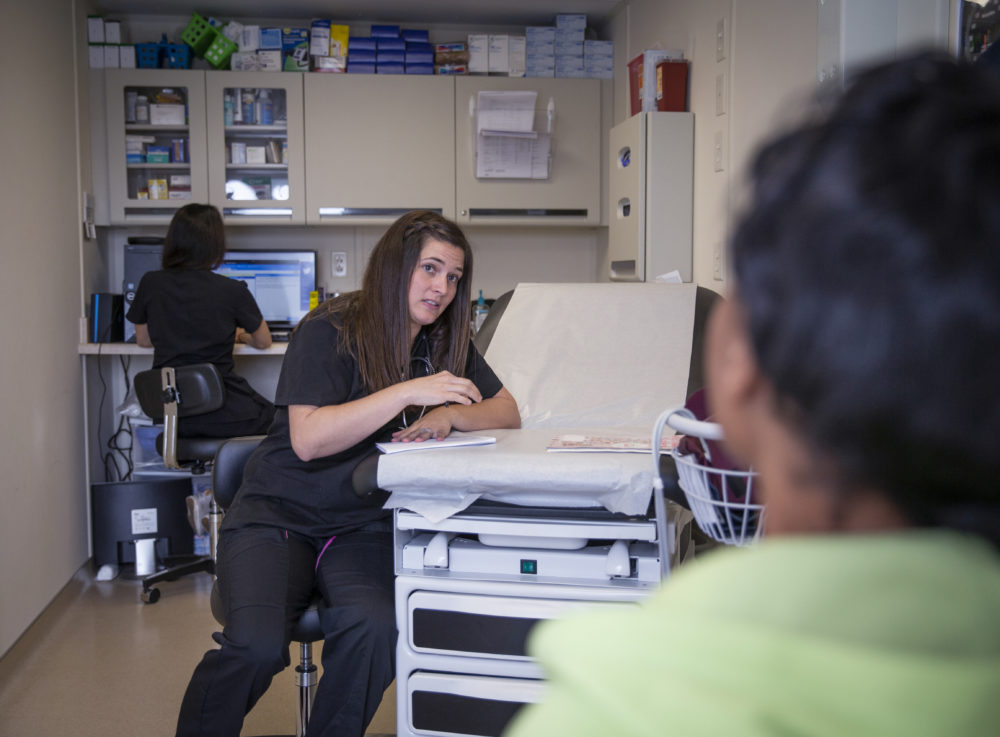
Today, Dr. Tabbaa and Dr. Thomas Derbes oversee the neurology branch at Avicenna, where they and a handful of local neurologists have approximately 12 neurology patients on record.
Dr. Tabbaa says that, for him, medicine is not only an occupation, it is his passion. He says that the difficulties of treating patients at a free clinic, where there are few diagnostic resources and limited access to labs, are outweighed by the rewards, where the patient-physician interaction is at its best—its most personal and simple. For many of Avicenna’s patients, this relationship extends beyond the walls of the medical clinic with the staff’s significant efforts to connect their patients to other community resources. Once a month, Vivian Mohamed attends the Northwest Florida Continuum of Care meeting, where she and other local non-profit representatives stay educated about newresources and services. “Being able to know all available resources and provide that information to our patients better serves our community,“ she says. If Avicenna doesn’t offer a specific medical specialty, the staff will try to find another organization that can donate the service. For patients who need medication, Avicenna will connect them with Florida’s Prescription Assistance Program (PAP), which provides free or low-cost medications. As a major provider of free Hepatitis C treatment in Bay County, Avicenna’s familiarity with PAP has allowed patients to secure costly antiviral treatments—which can run $94,500 for a 12-week regimen—for only a modest copay.
When Hurricane Michael ravaged Bay County on October 10, 2018, the relationships that the Avicenna staff had worked so tirelessly to build proved instrumental in helping the community rebound. Insurance or not, most Panama City residents found themselves without access to health care—doctors’ offices were destroyed, phone calls from patients went straight to voicemail, the hospitals in town were evacuated, with two hospitals providing only emergency services. Lincoln Center Plaza, where Avicenna operated for the past 8 years, suffered significant structural damage, resulting in the loss of the clinic’s computers, furniture, desks, and medical supplies. Avicenna’s staff knew that the community would need help.

A mere eight days after the storm, Vivian Mohamed and Dr. Heather Shaffer, a volunteer physician, reopened Avicenna—not from their damaged medical building, but from Mohamed’s car. “It was particularly important for us to get to our Hepatitis C patients to make sure they didn’t lapse on their treatment,” she says. The duo worked with the emergency PAP to get prescriptions refilled and personally delivered medications to patients’ homes. They drove people to the ER and called patients to see if there was anything they could bring them. Vivian Mohamed even kept one patient’s insulin in her home refrigerator, keeping it cold during the area-wide power outage, and later drove it to the patient’s home.
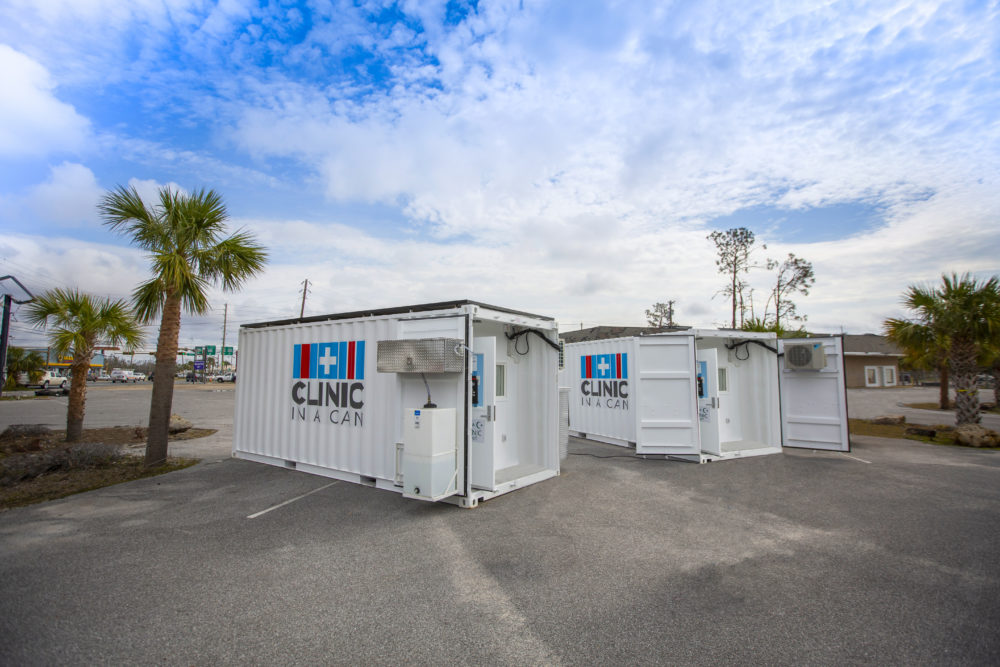
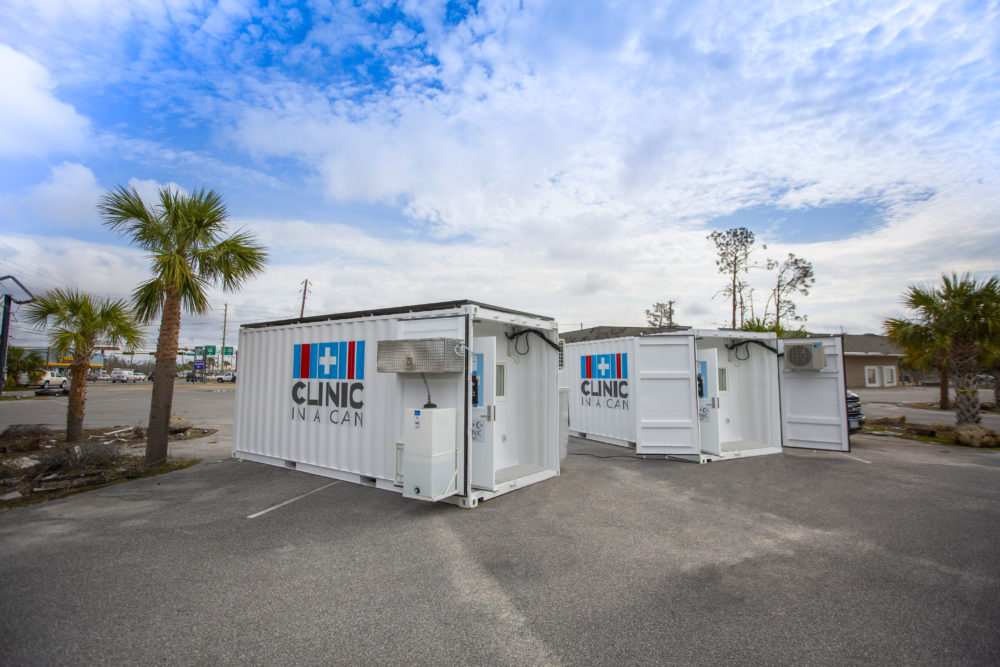
Three months after the storm, the parking lot of the now defunct building that once housed Avicenna Clinic remains littered with twisted metal and broken glass. On the far northeast corner of the parking lot sit two metal containers, each with signs reading “Clinic in a Can.” These solar-powered, mobile medical care units were loaned to Avicenna from Americares to assist with hurricane relief.
In a town where very little remained unscathed after the storm, these unheated metal boxes have been a respite for many of Panama City’s indigent population. One trailer has been converted into a makeshift receptionist area and waiting room, where Vivian Mohamed and receptionist Malak Lakhdari welcome the first patients of the day. Motioning to the trailer, Mrs. Mohamed says, “If we can be one normalcy for people during a time like this, then that’s what we need to be. After the hurricane, we had patients who came over just to see us, just to talk. There were patients who came to us and said ‘I have no home, I have no job, I have no car.’ We were something that they did have.” She pauses and then nods, “I think the community is going to need us more than ever.”
Prepared for the challenge, Avicenna Clinic has plans to expand, with a current offer to purchase a building, according to Dr. Aboulela. Mary K. Steed, previously a part-time nurse practitioner at the clinic, now works full-time to accommodate more patients. Through the immense efforts of Avicenna’s numerous volunteers, the clinic will continue to serve patients Mondays through Thursdays, with plans to extend business hours in the future and ultimately make health care more accessible for their community.
As for Marquez, he has been seizure-free for one year this month, he says. He will attend St. Petersburg College in the fall, where he plans to study civil engineering, and will commute to see Dr. Tabbaa every six months. And rather than worrying about when he might succumb to his next seizure, he can worry about his upcoming Thermodynamics class—and that makes all the difference.
Avicenna Clinic is currently located at 237 W. 15th St, Panama City, FL, and can be reached at (850) 215-8200 or by visiting avicennaclinic.net
Avicenna Clinic Medical Providers
[box type=”shadow” align=”aligncenter” ]Primary Care
Ayman T. Aboulela, M.D.
Azzam Adhal, M.D.
Zakir Patel, M.D.
Syed Gilani, M.D.
Liaqat Hayat, M.D.
Keith Banton, M.D.
Masood Ahmad, M.D.
Heather Shaffer, M.D.
Pediatrics
Sameh Elamir, M.D.
Mohammed Rahim, M.D.
Neurology
Mutaz Tabbaa, M.D.
Thomas Derbes, M.D.
Hoda Elzawahry, M.D.
Kamel Elzawahry, M.D.
Mustafa Hammad, M.D.
Sana Ebeid, M.D.
OBGYN
Sam Wolf, M.D.
Cardiology
Francis Le, M.D.
Ajay Labroo, M.D.
Nephrology
Patricia Anderson, M.D.
Supporting Staff
Vivian Mohamed, Office Manager
Cristina Hightower, Receptionist
Malak Lakhdari, Receptionist
Maryem Mohamed, Medical Scribe
Mary K. Steed, ARNP
[/box]