
BUILDING STRENGTH AFTER HURRICANE MICHAEL: Panama City


BY BRITTANY HAWES AND VAL SCHOGER
PHOTOGRAPHY BY MOLLY MCDANIEL MARSHALL
With approximately 37,000 residents, Panama City is the largest municipality in Bay County, Florida. Located 23 miles to the east of Hurricane Michael’s ground zero, the 110-year-old city sustained substantial damages to its utility system, residences, businesses, municipal buildings, and two of Bay County’s largest hospitals with unprecedented disaster status and the displacement of residents and hospital patients. Electricity was lost for one to two weeks for many. Residents in some of the older neighborhoods are coping with a completely changed landscape with the loss of thousands of trees that once characterized several of the city’s neighborhoods.
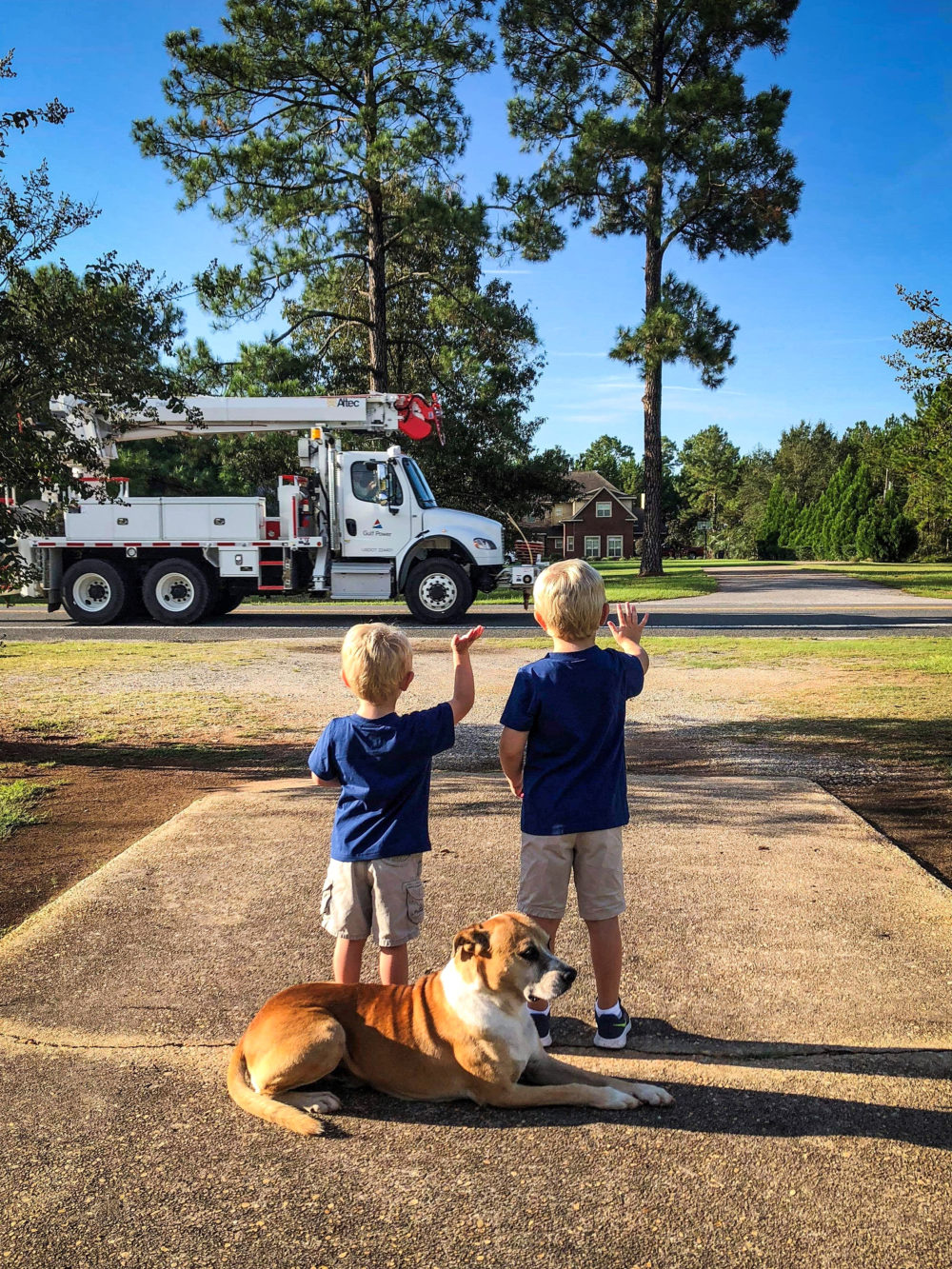
The power companies made a promise to us and met that promise with 95% of our residents hooked up to power now.
Mayor Greg Brudnicki, a lifelong resident of Panama City, lived through the storm and faced the destruction of his house in the Cove neighborhood. “I was in an inner room with eight other members of my family. The room is almost like a bunker. I knew that I had to stay and tried to convince my family to evacuate, but they refused. I can tell a lot of people what to do, but my wife … she just doesn’t listen to everything that I tell her. But I listen to everything she tells me,” he laughs. We stayed and the house has damage. But the thing that I was most thankful for was the fact that we did not lose any lives in the City of Panama City. There were no deaths as a result of the storm, which is pretty amazing looking at the horrific destruction. We pretty much got carpet-bombed. It was a 40-mile-wide tornado.”
He has witnessed tragedies in the last few weeks, but the positive attitude of his residents outweighs some of the setbacks. “I’m just amazed how fast we bounced back. Our citizens are resilient people. We have not had this type of horrific storm here, but our residents have a certain amount of practice from just going and helping other people after some of the other hurricanes such as Katrina, Rita and Ivan. With the lack of communications that we had in the beginning, neighbors were helping neighbors get through this. We had employees in the city who had their entire houses destroyed and they’re next door or down the street, helping other people and they didn’t even have a place to be themselves. So, it’s just a very giving attitude in our community. I’m just so proud to be associated with these people.”
During our interview in the beginning of November, he reflects on the progress that has been made. “The power companies made a promise to us and met that promise with 95% of our residents hooked up to power now. The only way you don’t have power is if your house or your business can’t take power because of damage. It took a team of more than 100 additional contracted emergency workers for our water and sewer system to be restored. We delivered potable water to our hospitals as soon as we could. Unfortunately, both our hospitals are not fully back in operation. I believe Gulf Coast Regional Medical Center has 50 acute beds right now. Bay Medical/Sacred Heart Hospital is providing emergency care only. Several nursing homes and rehab facilities are still not restored to operations.”
With targets and goals for the medical community, other priorities that affect residents directly include the reopening of the schools. “We worked with the school board in helping them find ways to be able to reopen schools as soon as they could. Most of our schools opened last week and the rest of them this week. They are running split sessions, having to improvise. I addressed Bay High School students on Tuesday. They are having classes temporarily at Jinks Middle School. The students were energetic and resilient and ready to go to work and I think over all about 75% of the students were there. I know that we have got a certain number that are displaced. The ones that were there were so full of hope and were ready to get back to work.”

With debris removal as one of the next-biggest concerns citizens call about, Mayor Brudnicki asks for patience. “The city has picked up 24 years’ worth of debris in four weeks. That’s 900,000 cubic yards. People will say, ‘When is this going to get done?’ Believe me, the trucks are flowing. It’s very systematic. We’ve increased the number of trucks. We’ve increased the velocity. And I think they’re doing an amazing job.”
Panama City has been planning modernization and development of its downtown and marina for years and if there is one good thing that came from the devastation, it is the ability to hopefully expedite the development plans. “One thing that we are going to take advantage of is … we’ve got a blank slate on some of the city-owned properties. We will be able to revisit development plans sooner than we thought possible. We created a 25-year plan that we were working on many months before the storm. It looks as if we can expedite those plans. The fact that we’re going to get a 5G network in the area is going to be a phenomenal resource for the city, for the county, for the school system, for Tyndall Air Force Base, and for all the citizens. If you look at the top 300 or 400 cities that were next in line to have a 5G network installed, Panama City probably was not next in line on that list, but because of the storm we were bumped up to number five … it will really help us with our school system.” Communities and regions are defined by their healthcare and school system, he explains. “This will help us attract and retain industry and talent. The school systems will benefit, universities will benefit. There will be blessings in disguise because of the storm. It’ll just be up to us to make sure that we direct everything as good as possible.”
With a large impact on the entire community and several communities still struggling to reestablish their basic services, he knows that it will take a unified effort to make the best out of the catastrophic events. “I’ve probably got 100 employees in the city that live in Springfield. Whether it’s Springfield, Parker, Panama City, Callaway, Lynn Haven, we’re all citizens of Bay County. We are all in this together and we are all going to make it better. So, I think that’s one of the things that this storm has exposed—that we are one united Panhandle-strong.”
Find out more online: pcgov.org