HISTORIC TREASURE: Florida’s Oldest Pipe Organ


BY LAURA ROESCH
PHOTOGRAPHY BY BONNIE BRANT
A historic treasure at Trinity Episcopal Church in Apalachicola, Florida
Apalachicola, a sleepy fishing town on Northwest Florida’s Gulf Coast, was once one of Florida’s fastest growing trade settlements. The charming town combines a flair of the Old South with the grit of an enduring fishing village—a haven for travelers who appreciate the peaceful charm of a historically significant city over bustling beaches.

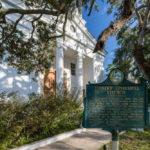
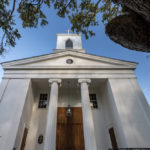
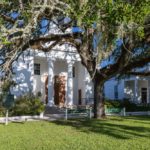
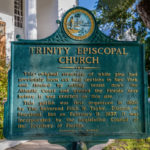
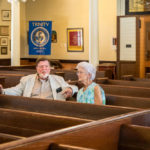
The town center boasts quaint shops, cafes, and restaurants in picturesque buildings dating back to the 19th and early 20th century. Among the rustic brick, one stark white structure stands out with its architecture. One of two buildings in the town built in Greek Revival style, Trinity Episcopal Church’s classic Ionic white columns and walls stand silent against a clear blue Florida sky. Founded before Florida even became a state, the church was originally known as Christ Church. Services have been continuously held since 1837, just six years after the town, with its bustling cotton-shipping port, was officially named Apalachicola. The organization of the church predated the Civil War by 25 years. It was the first continuous house of worship in the coastal town and is considered the second-oldest church in Florida.


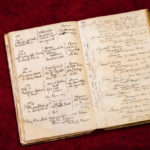
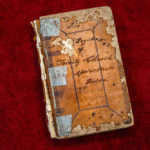
The 1838 territorial census revealed an estimated population of 2,000. That number varied greatly depending on the season, increasing in the cotton-shipping months from October to May. In those early settler days, prominent town citizens decided that organized religion would be a welcome addition to the community. Founding members included Dr. John Gorrie, best known for pioneering the artificial manufacturing of ice, refrigeration, and air conditioning. Other founders included Cosam Bartlett, editor of Florida’s first daily newspaper, “The Apalachicola Gazette,” and prosperous merchants David G. Raney and William G. Porter. Land for the church’s location was donated by the Apalachicola Land Company and a campaign began to raise construction funds. Subscriptions (monies personally pledged by members) and the rental of pews to members for designated seating provided the financial fundament for the tall building with its imposing pillars. The original plat of the pews, dated April 1, 1839, shows the price and correlating location of the rental pews, and lists the names of the families. It is still on display inside the church.
Despite secured funding, the construction process proved to be a challenge. Native timber was abundant, but skilled labor and necessary tools were in short supply for such a large ambitious structure. The citizens chose to have the church pre-constructed in the distant town of White Plains, New York, and shipped south. Its prefabricated framework was crafted of cut-to-measure white pine, disassembled, and then shipped by sections in containers aboard large schooners. The sailing vessels made their way south along the Eastern seaboard around the tip of Florida and north into the Gulf of Mexico to the Florida Panhandle.
Upon arrival in the port, the containers were hauled from the waterfront five blocks inland to the corner of Avenue D and Sixth Street where the large one-story building was reassembled with mortise-and-tenon joints secured by wooden pegs and hawsers. Final completion took two years.

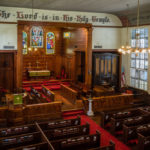
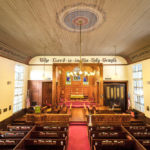
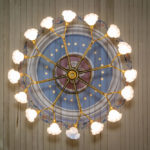
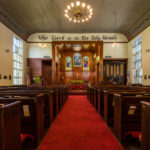
The architecture, Greek Revival, was en vogue at the time, with the front entry doors set inside a portico behind tall columns. A colorful stenciled motif of floral patterns, vines, and fleur-de-lis is still visible on the high ceiling today. The circular stenciling above the chandelier is believed to have been completed around 1845, when Florida joined the other U.S. states. There are 27 stars in the field, representing the number of states in the union at the time. The interior walls are paneled by horizontal beaded siding, with vertical beaded siding wainscoting. The building was significantly enlarged in 1921 with the addition of the sanctuary, allowing space for the choir and an altar recessed from the nave.
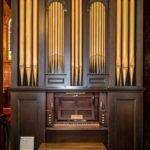
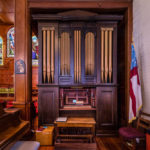
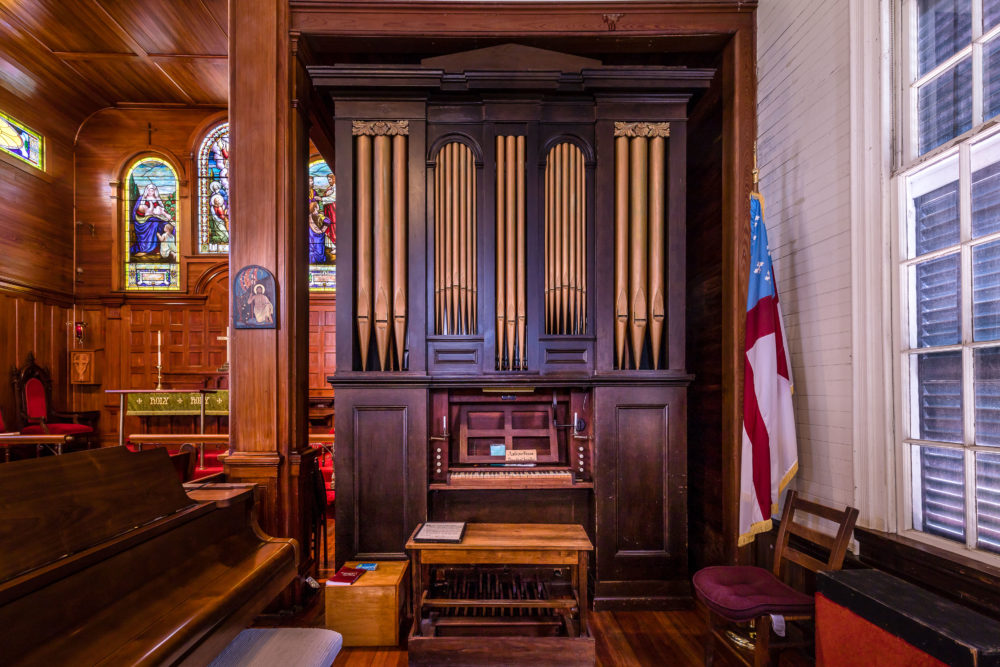
Topping off the accomplishment of such a fine church was the addition of pipe organs built by Henry Erben. Erben was considered one of the most illustrious organ builders of the day and is believed to be one of the first to advertise his products throughout the mid-Atlantic states. As many of Apalachicola’s citizens were originally from those states, it is thought Erben’s reputation was familiar to them, and likely accounted for how the church ultimately purchased these particular organs.

During the 1840s and 1850s, Erben organs could be found in many of America’s prominent churches and cathedrals. By 1859, the congregation in Apalachicola had grown to 94 members. There is speculation about how such a small port town came to purchase not just one, but a second Erben organ, as the original one was replaced with a larger model in 1859. The fate of the original Erben is unknown. At the time before the Civil War, the town was prosperous. This likely accounts for such fine instruments finding their way to the church.
The second Erben organ is still in use today and is a “tracker” model with seven stops. Unlike others during the Civil War, Trinity’s organ survived, thanks in great part to its location. The port of Apalachicola was placed under Union naval blockade from 1861 until the end of the Civil War.
During the 50-year period from 1921 to 1974, the organ was disassembled and stored in the gallery where it sat idle while a Pilcher & Sons organ was installed in its place as a memorial to a prominent family. The 1859 Erben was eventually refurbished and reinstalled to its original location, an electric lower added, and has been in service since. Today it remains the oldest pipe organ till in use at its original site in Florida.

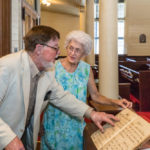
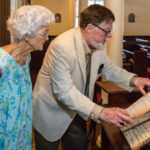
Ina Margaret Meyer, Trinity’s choir master and organist, first began playing the instrument as a 10th-grader in the 1970s. She recalls a special Fourth of July celebration when the manual pump was reattached for the holiday celebration, and “two young children hovered over it pumping as hard as their little hearts could to get air into the swell box during the processional and recessional part of the service.”
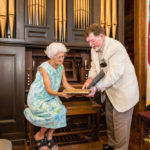
Organ conservator Darwin Klug lovingly cares for the Erben organ, visiting Apalachicola twice a year to maintain and tune the imposing instrument. Based in Orlando, Darwin Klug and his brother Dave Klug travel the United States servicing pipe organs. Both learned to play from their father, who was an organist, and later studied the maintenance and repair at Heissler Organ Company in Germany.

“Each organ has its own personality,” Klug says. “Trinity’s Erben is a living thing with a distinctive sound, very English. By English, I mean the Erben has a warm sound, compared to a German sound, which I would characterize as ‘precise,’ or French, which would be a more romantic sound, or American, which would be a mixture of all three. The Erben is relatively small in size, and is very stable, a delight to service, and I can’t help but think of the history it brings to mind as it is the same style that Bach played in Germany.”
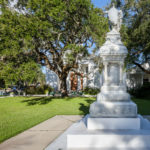
Today, the church sits in the shade of giant oak trees overlooking Gorrie Square. The black-and-white photographs lining a corner inside the quiet nave include one taken from atop a water tower that at one time stood across the street. From that vantage point, dirt roads and sparsely populated Apalachicola can be seen in the background. Apalachicola has changed, although not much, over the decades. Trinity Episcopal Church was added to the U.S. National Register of Historic Places in 1972 and continues to surprise visitors with its Greek Revival style.
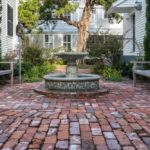
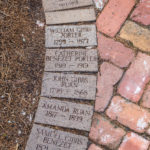
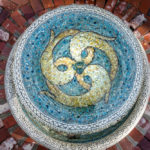
Vestry member Patti McCartney spearheaded the creation of a memorial garden and pathway just outside the church. Made entirely from memorial bricks honoring departed loved ones, it is a reminder of personal connections to ancestry, history and faith. The pathway is one more feature that adds to the sensation that many have experienced but rarely can put into words. McCartney describes it poignantly, “Worshipping in the church feels like being soaked with a historical presence of so many, many wonderful people who came before.”