
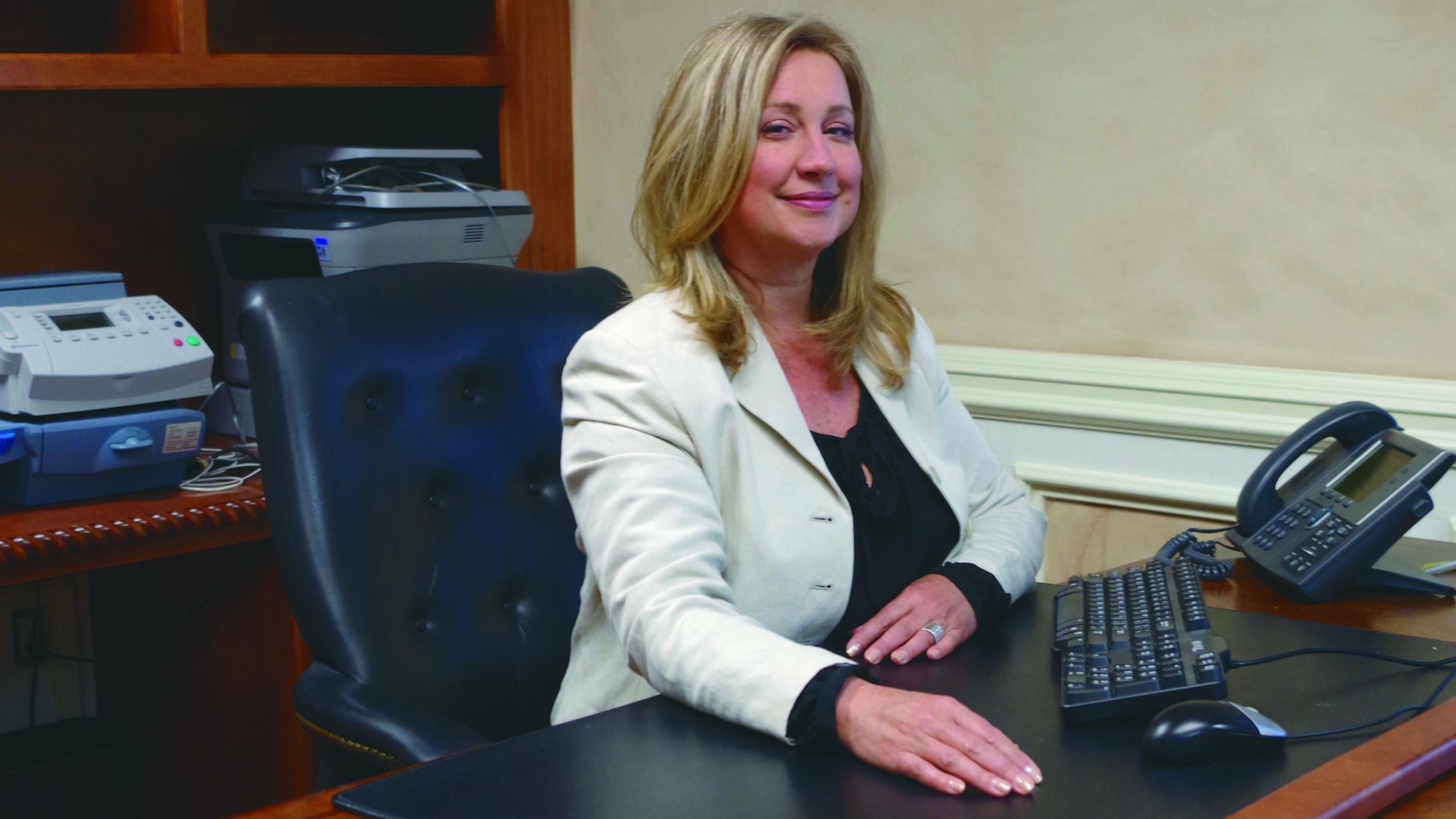
Close to Her Heart: Terri Hoehn’s life depends on an implantable cardiac defibrillator


BY PATTI SMITH; PHOTOGRAPHY BY VAL SCHOGER
Congestive heart failure. It was a diagnosis that a 39-year-old woman was not prepared to hear. Terri Hoehn knew something was wrong. For days she had been short of breath, suffered extreme fatigue, and she had to sleep sitting up because she couldn’t breathe when lying down. Congestive heart failure, however, did not enter her mind.
Fatigue and shortness of breath were the biggest indicators that Terri had a serious problem. “When your heart is messed up, it’s literally like a battery—as far as your energy goes. When it’s not working, you’re not working. It’s not optional. You don’t push through.”
Terri was too young to have such a serious heart condition and, with her tanned skin, blonde hair, and red fingernails, she did not look sick. But Terri wasn’t typical, and she was past the point of sick. She was dying.

“The third day in the hospital they told me I needed to get my affairs in order. They told me to sign my living will and do my last will and testament, and have it notarized, so I had to do it that day,” she recalls. There was a moment of fear when Terri received her diagnosis. Everything felt surreal. She expected her problem to be something simple and easy to fix, not a life or death diagnosis.
Terri was prescribed several medications, and specialists performed cardiac ablations on her heart to try to repair the chaotic arrhythmia she was experiencing.
Procedures and medications worked for a few years but the medicine made Terri forgetful. Her mind wasn’t sharp, and that wouldn’t work for Terri, whose career in banking demanded clarity and a quick-thinking mind. Without the medication, doctors told her that her heart would continue to deteriorate. Not ready for death in her early 40s, Terri talked to her doctor who recommended installing a pacemaker. Terri’s life has been 100 percent dependent upon it. Her latest model, her fourth, is a wireless implantable cardiac defibrillator, which keeps her heart beating steady and strong. If abnormal heart rhythm is detected, the built-in defibrillator shocks her heart to restore its beat to normal.

“You can feel it working when it shocks you for sure,” Terri says. “You can feel when your heart is out of rhythm, and you can barely feel it being corrected by the pacemaker.”
Fatigue and shortness of breath were the biggest indicators that Terri had a serious problem. “When your heart is messed up, it’s literally like a battery—as far as your energy goes. When it’s not working, you’re not working.
It’s not optional. You don’t push through.”
Terri’s never-give-up attitude has carried her through the darkest moments of her journey. It’s not always easy, especially when it causes long-term life interruptions. She knows that positive thinking is essential, and she has learned other valuable lessons that can help someone else who is facing life on a machine.
For instance, in addition to depending on her ICD, Terri has had to learn to depend on the power of prayer and people closest to her for support. Her good friend, Ann Henry, has been by her side from the very beginning, and helped bring out the fighter in Terri. “I am independent to a fault,” she says. “One of the biggest lessons is that you have to depend on people. I was never used to that, but I’m used to it now.”
Terri also had to accept her limitations and that her life was different. She had to force herself not to dwell on her condition or the fact she is reliant upon a machine to do its job. “I wouldn’t be here without it,” she says.
“It changes who you are, and it changes what you can do, and you just kind of have to embrace it.”
Terri, in charge of business development for Centennial Bank in Panama City Beach, receives a boost every time someone is shocked to learn she has a serious health condition because you would never know it unless she shared it.
During her last long hospital stay two years ago, Terri had to take leave from work for several weeks. When she returned, a coworker whom Terri says did not say much to anyone, said to her, “I never knew you had those problems. You are very, very cool.”
“That meant a lot to me,” Terri says. Until then, the only people who knew were those closest to her.
Terri, who is active in her job and in community organizations, shares her story here to inspire and encourage others who depend on technology to live their best life. “Surround yourself with positive, energetic people,” she says. And to everyone else: “Be supportive and not judgmental. You have no idea what someone else is going through.”