
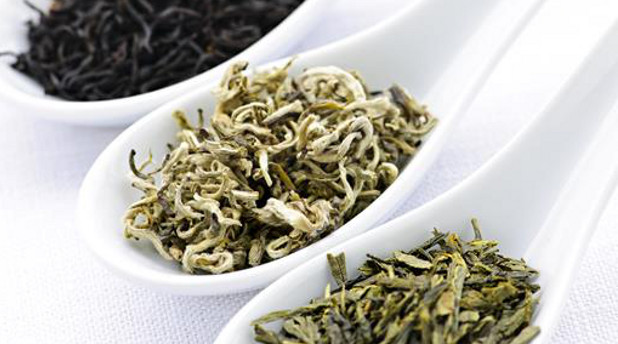
Tea for you and me – A Guide to Black, Green, Red, White and Oolong Teas


By Linda Mix, RN
The British have a good idea – tea time every day! A host of studies have shown that teas are not only tasty, but are actually beneficial for your health. Most of them come from the leaves of the same plant, Camellia sinensis, but they are processed differently to produce different flavors and benefits. Although these teas are often used as hot teas, they work equally well as iced tea, which is especially appreciated here in the hot, humid South!
Black, oolong and green tea contain abundant amounts of powerful antioxidants, such as catechins, flavonoids and polyphenols, although the darker teas have lesser amounts. However, when milk is added, the antioxidant effects are reduced. Teas brewed from tea bags or loose leaves, rather than instant or bottled, and steeped for at least five minutes, produce the strongest antioxidant effects. Black, oolong and green teas are excellent sources of Vitamin C, with 2 cups providing the equivalent of 3 glasses of orange juice. Additional medicinal properties include anti-allergenic, anti-inflammatory, antibacterial and antiseptic effects. According to a study in the Proceedings of the National Academy of Science, April, 2003, tea boosted the immune system, helping it to respond to germs five times faster than coffee. Tannins, which help produce the dark color, contain catechins and polyphenols, which appear to be the strongest therapeutic chemicals derived from plants, possessing antioxidant, antiseptic and detoxifying properties, says Rajinder S. Hullon, MD. Several studies cited in Hullon’s work also show that the catechins in tea seem to help inhibit tumor cell proliferation while aiding in the destruction of tumor cells . Among other benefits, flavonoids strengthen veins and decrease their permeability. Polyphenols help protect the heart, and help neutralize enzymes and cancer promoters that are essential for tumor growth. Japanese researchers found that the more tea you drink the more protective the effects, on the heart (Annals of Epidemiology: 2000;10(6):401:8). Decaffeinated tea is not as good for you, since the oils, tannins, acids and other chemicals used to remove the caffeine are found in the decaffeinated version . For a greater variety, consider using tea to enhance the flavor of foods as the Chinese do. For instance, use brewed tea as a soup base, include the leaves as an additional vegetable or add dry leaves to stir-fried vegetables at the last minute . According to Ying Chang Compestine, plain green tea works best in most dishes. She recommends 2-3 times as much tea for cooking (than for drinking) for maximum health benefits and peak flavor.

Black Tea
This tea, most popular in India and Western countries, is fully fermented, meaning the leaves are exposed to the air, causing oxidation, and turning them a rich brown color. Its caffeine content of 50-60 mg . per cup is the highest of these teas, but less than coffee which has about 100 mg. per cup. It helps reduce LDL (bad) cholesterol and improves blood vessel function . Researchers found that the flavonoids and catechins in tea appeared to help stop cancer cell growth (Anti-cancer Research, 2000;20 (5B): 3459-65). Anti-inflammatory properties reduce arthritis and stomach inflammation. Anti-bacterial properties help neutralize germs, including those which cause pneumonia, diarrhea, cystitis and skin infection, as well as viruses, fungi and parasites. Some studies also link the tea with combating osteoporosis and the relief of some allergy symptoms.
Green Tea
Loaded with antioxidants, it is the least processed, by quickly steaming the leaves. This process helps the leaves retain their natural color, which leads to its name. Its catechin content is greater than black tea, but its caffeine content is only 15 mg. per cup. Green tea includes a variety of active compounds such as polyphenols, essential oils, vitamins and proteins. Its beneficial effects include sterilizing the blood and reducing blood sugar and cholesterol levels. Green tea contains high amounts of fluoride, thus reducing dental plaque and cavities . In one study by Hitoshi Ashida of Kobe (Japan) University, several compounds in green tea blocked dioxin from attaching to cells.
Oolong Tea
Oolong tea is made from the same type of leaves as green, white and black tea, but it is processed less than black tea, yet longer than green tea. The caffeine content is about 35 mg . per cup. It is rich in antioxidants, containing more than black tea, but less than green, and has twice the benefits of black and green tea combined. It has a pleasant, fragrant aroma, with a fruit-like flavor and contains Vitamins A, B, C, E and K, and minerals, such as calcium, copper, manganese, potassium, and selenium. Oolong’s benefits include lowering triglycerides and cholesterol in the blood; reducing blood sugar and high blood pressure; inhibiting tooth-decaying bacteria, reducing inflammatory disorders, helping increase bone density and improving atopic dermatitis (eczema) . By increasing metabolism, blocking dietary fat absorption and burning fat, it also has a reputation as weight loss aid.
White Tea
White tea comes from the same plant as black, oolong and green tea, but it contains the buds, as well as leaves, and it is steamed, rather than roasted or fermented. Thus, it is lighter in color with a delicate flavor . Surprisingly, its caffeine content is about twice that of green tea. In a 1999 study at Oregon State University by Dashwood and Santana- Rios, its particular caffeine protected the DNA from damage five times better than green tea. It is rich in catechins, protecting the heart, lowering cholesterol and blood pressure, thinning the blood and improving artery function. High in flavonoids, it especially protects against stomach, colon and prostate cancers. White tea’s abundant fluoride content protects against dental plaque, tooth decay and bad breath. It reduces blood sugar and stress, increases energy and metabolism. Additionally, it improves skin damage caused by the sun, stress and poor diet.
Rooibos Tea
Grown mostly in South Africa, rooibos tea is from a broom-like plant (Aspalathus linearis) with needle- like leaves in the legume family. This naturally sweet tea, with a subtle woody flavor, is rich in powerful antioxidants and minerals, is low in tannins, and has no caffeine. It helps reduce nervous tension, stress, allergies, gout and digestive problems, such as colic and indigestion. Its broncho-dilating effects help reduce respiratory conditions and blood pressure. In addition, it contains some cancer-fighting properties. So grab a glass of iced tea and relax for a few moments while it is hard at work improving your health! I like to use my coffee maker to make my tea, using 2 bags of green tea, 1 bag of oolong tea and 1 bag of white tea to a half gallon of water. This recipe gives me lots of antioxidants and other benefits in a cool, refreshing drink!
[box type=”shadow” align=”aligncenter” ]Caffeine can have negative side effects, such as nervousness, jitteriness, heartburn, stomachaches, headaches, poor sleep quality, insomnia, moodiness and increased urination, particularly in non-habitual coffee and tea drinkers. However, a growing body of evidence has shown that moderate natural caffeine intake, such as in plain coffee and tea, also has health benefits, such as being less likely to have dementia, Parkinson’s Disease, type 2 diabetes, heart rhythm problems and strokes, according to Frank Hu, MD. Benefits for the cardiovascular system include increased metabolism, blood flow, alertness, mood and stamina. Caffeine also reduces some headaches, relaxes muscle tension, increases broncho-dilation and increases the effectiveness of pain medications. The caffeine content of teas can vary, depending on the amount of tea used and the length of time it is steeped.
Sources:
- Carper, Jean, Food, Your Miracle Medicine, Harper Collins Publishers, 1993.
- Compestine, Ying Chang, Cooking with Green Tea, Avery/Putnam, 2000.
- “Green, black, and red: the tea-total evidence,” Wellness Letter, University of California, Berkeley, Vol. 16, Issue 6, March, 2000.
- Hu, Frank, MD, NPH, PhD, professor of Nutrition and Epidemiology at the Harvard School of Public Health, Coffee and Your Health,” www.webmd.com.
- Hullon, Rajinder S., M.D., J.D., “The Mysteries of Coffee and Tea: The Latest Health Findings,” Institute For Natural Resources, Sept., 2009. Oolong tea, www.amazing-green-tea.com/oolong-tea-health-benefits Oolong tea, www.organicfacts.net/healthbenefits/oolong-tea
- Recer, Paul,“Study: Tea sharpens body’s defenses,” The Associated Press, The News Herald, Panama City, Florida, April 22, 2003.
- Raloff, Janet, “Green tea takes on poison,” Science News, June12, 2004.
- Raloff, Janet, “The power of caffeine and pale tea,” Science News, April 15, 2000, p. 251.
- Rooibos tea, www.organicfacts.net/health-benefits/beverage/health-benefits-of- red-rooibos-tea.html
- White tea, www.whiteteaguide.com/whiteteahealthbenefits.htm [/box]
[author image=”https://www.panamacityliving.com/media/2014/07/LindaMix.jpg” ]Linda Mix, R .N ., is the author of HERBS for LIFE! Understand, Use and Grow Your Own Medicinal Herbs, describing 98 plants with medicinal properties, with full color photographs, covering how to use the herbs for health benefits and culinary use, and how to grow them. Linda grew up and lived in Panama City for over 30 years as an adult. She is a 4th-generation gardener with experience in a wide variety of soils and climates, growing and using many of the plants in her book. Linda has had an interest in “Alternative Therapies” for over 40 years. Her main goal is to help people improve their health practically, intelligently and safely. Contact information: Linda@MedicinalHerbsForLife.com and www.MedicinalHerbsForLife.com. [/author]