
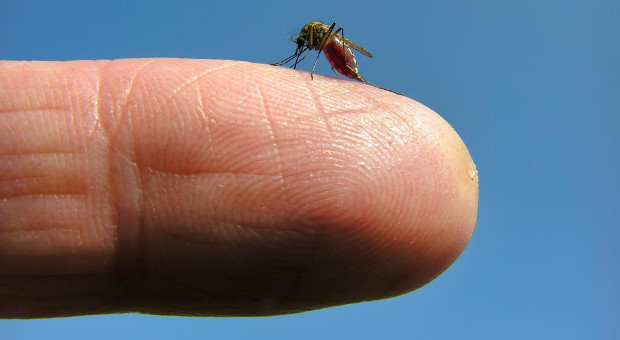
More Than Just Annoying… Mosquitos


By John P. Smith, Ph.D., B.C.E. Medical/Veterinary Entomologist
The week of June 22-28 has been declared “Mosquito Control Awareness Week” by the American Mosquito Control Association, an international organization of mosquito control and research specialists. Did you know mosquitoes are the deadliest animals on the planet?
Aside from being a nuisance, mosquitoes are transmitters of infectious organisms that can cause serious human and animal diseases such as malaria, dengue and yellow fever, West Nile virus, other encephalitis viruses, and dog heartworm. These are serious illnesses that can be highly debilitating and even cause death . Millions are afflicted with these diseases every year.
June marks the beginning of the hurricane season in Florida. In the months until November, when hurricane
season officially ends, the risk of mosquito-borne diseases is greatest. Everyone should take precautions to avoid being bitten by mosquitoes, particularly during this time. In 2012, 36 of the 68 West Nile virus cases in the state occurred in Northwest Florida. For many decades, the Florida Legislature recognized the health concerns raised by mosquitoes by annually appropriating funds to support control and research. State university support was provided at research centers in north and south Florida. Regrettably, the north Florida Public Health Entomology Research and Education Center (PHEREC) located in Panama City was closed because of state revenue shortfalls, despite the Legislature approving minimal funds to keep PHEREC afloat. As a result, there are no state- funded medical entomologists in this part of the state to conduct research and provide technical assistance to the counties and public.
Upon support and urging of mosquito control agencies throughout the Panhandle, the Panama City campus of Florida State University is working to alleviate this situation and is hoping for backing from the community and Panhandle legislative delegation.
In the last few years, two “new” serious mosquito-borne diseases…“break-bone fever” (dengue) and “contorted- bone fever” (chikungunya) have been introduced to Florida from the Caribbean Islands . There have already been 48 imported cases of chikungunya this year. South Florida legislators have done an outstanding job increasing the number of medical entomologists in that part of the state to help protect the public and tourists from these diseases. Unfortunately, Northwest Florida is falling short unless the legislature restores at least some level of medical entomology support for this region of the state
You can have a significant impact by contacting your state legislators and making them aware Northwest Florida deserves locally available research and technical assistance to protect our citizens and tourists from mosquito-borne diseases. You can also contact your local mosquito control agency* and let them know you support the FSU PC “Mosquitoes and Your Health Initiative.” Lastly, a letter of support sent to Dr . Stephen Leach, Interim Dean, FSU Panama City, 4750 Collegiate Drive, Panama City, FL 32405 or sleach@pc.fsu.edu would be helpful.
[author image=”https://www.panamacityliving.com/media/2014/07/johnsmith.jpg” ]Dr. John Smith is a Ph.D., board certified medical/veterinary entomologist practicing in Florida for twenty-nine years. He currently is a faculty member at the Panama City campus of Florida State University where he teaches biology and assists coordinating science programs. He is also an elected commissioner of Beach Mosquito Control District in Panama City Beach. Dr. Smith was the director of thePublic Health Entomology Research and Education Center in Panama City for twenty years and served as a medical entomologist for the Florida Department of Health for over six years. * Bay County Mosquito Control – http://www.co.bay.fl.us/mosquito.php * Beach Mosquito Control District – http://www.pcbeachmosquito.org/[/author]