
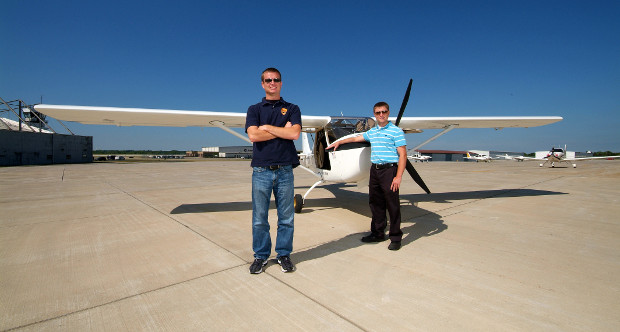
Jason Jernigan – Being deaf is no obstacle


Jason Jernigan set his goals sky high and ocean deep. He obtained his sport pilot license in 2012 and is studying Underwater Crime Scene Investigations at FSU-PC. Jason also works fulltime in the warehouse of a large local retailer and has been taking on more and more responsibilities at work. Recently he was elected to serve on FSU-PC’s Student Government Council.
Other than sounding accomplished and adventurous, there is nothing unusual about Jason’s career choices except Jason cannot hear. Jason has been deaf since he was fourteen months old when TB immunization shots caused permanent hearing loss. He communicates with other deaf people through sign language. His colleagues at work communicate with him in writing, mostly by using instant messaging on their smartphones. Another way for him to communicate (and this is the only option that enables him to participate in University courses) is through his sign language interpreter, Rhonda Tingler. For the interview with Panama City Living he brought a UbiDuo, a face to face communicator that consists of two devices that look like laptops. With the UbiDuo, two users can exchange instant text messages but the communication through Rhonda is much faster as she signs conceptually in the language he understands best. Rhonda and Jason explain that his vocabulary is different. He is not used to the choice of words with a conversation partner that he exchanges in text messages. Rhonda’s interpretation makes communication faster and more accurate. She is diligent about understanding and interpreting the questions and answers and eliminating misunderstandings.
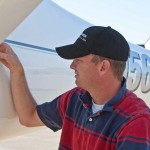
The spark for becoming a pilot was lit when Jason was 12 years old and his father was playing a flight simulator computer game with him. Since then his dream has been to fly a real airplane. He remembers that both of his parents have always encouraged him in his endeavors. His mother, a school teacher, was adamant about enabling him to get the best education possible. When he became older, he researched the possibilities. People had been telling him he could never fly but he found out that FAA allows deaf pilots to obtain a sport license and in his research he found out about Able Flight, an organization that provides pilot training scholarships to disabled people. He was the second deaf student to be trained under Able Flight’s program at Purdue University in Lafayette, Indiana. Jason recalls, “I knew I could do it and while flying I feel free of my disability.” There are 2,000 hearing impaired pilots in the USA. He explains that he needs specialized equipment to be able to fly. For communication with the tower, a light gun that shows different colors and is very bright is used. It is similar to using the colors green and red when driving a car, Jason states. When he flies, he will need to make a pre-flight plan and let the airport know the specific time that he will arrive. The tower will direct all other air traffic out of the way and will communicate with him with a signal light. There are special light codes that every pilot has to learn as part of the FAA FAR rules. “Flying will give me freedom. I want to be able to touch down in different places but I fly as a hobby” he states. “It is not what I want to do for a job. I want to find a good job and be able to buy my own airplane, a Piper Cub preferably.”
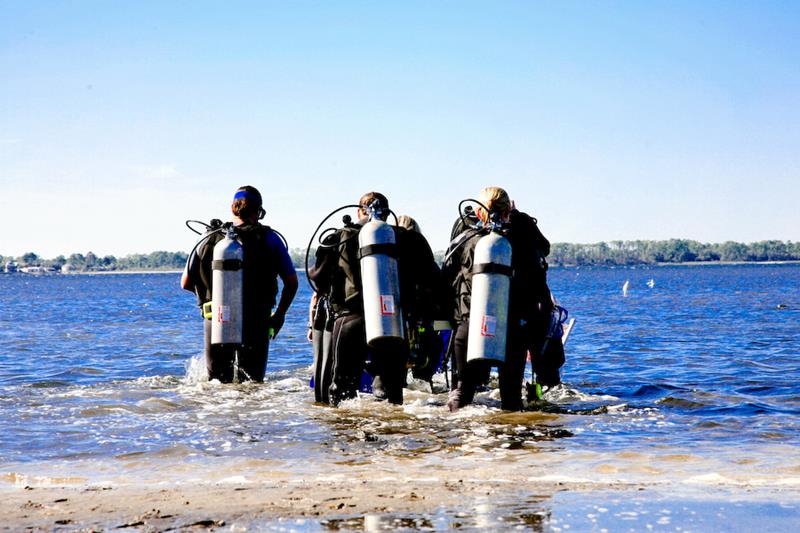
Jason is currently putting flying on hold to finish his studies at FSU-PC. He is majoring in Law Enforcement Intelligence with a minor in Underwater Crime Scene Investigation where diving is a must. “I am trying to teach my classmates sign language because under water we all can’t hear. My professor, Mike Zinszer, has tried to think of different tests and evaluations to see if I could hear his voice under water. I can’t. I still require my interpreter to dive with me and/or interpret from land or boat.”
Jason credits his grandfather with motivating him to always strive for more and never give up. When Jason explains about his recent election to the Student Government Council, he adds “I wanted to be a representative and encourage other students with disabilities to study here at FSU.”
Dr. Kenneth Shaw, dean of FSU-PC, states about Jason’s progress “We have a Student Disabilities Office that assesses students’ disabilities and provides appropriate accommodations to meet the learning needs on campus. Jason Jernigan can be seen most days heading to class, accompanied by an interpreter. Jason is outgoing and desires to improve students’ experiences here at FSU-PC. I am very proud of his progress and his dedication to all of our students.”
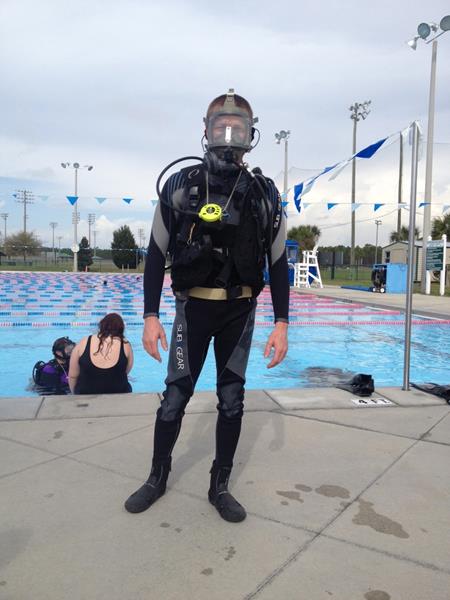
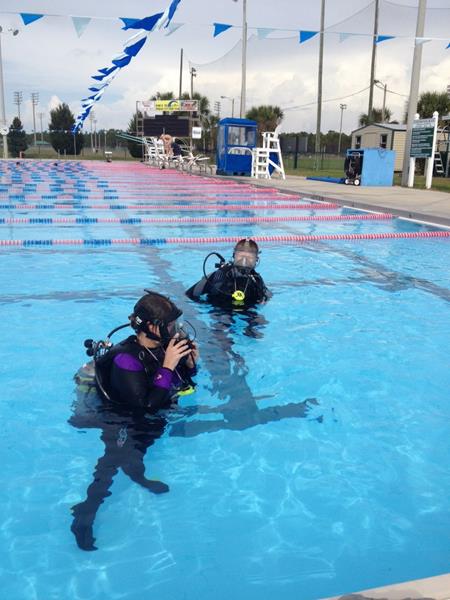
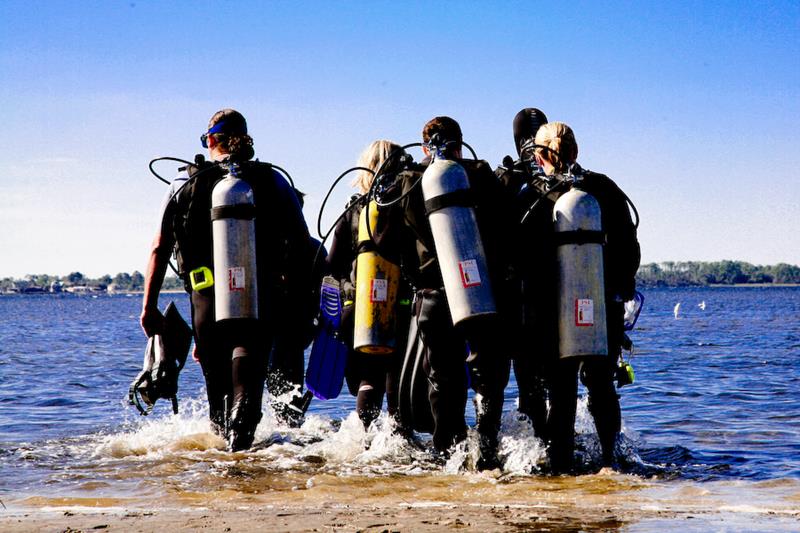
Jason recalls: “It took me nine years to finish my Associate Degree at Gulf Coast State College” and he signs “Overcoming barriers and finding an appropriate interpreter for me in my classes was difficult. Once Rhonda, my current interpreter, moved here from Ohio in 2004, it made things easier for me. But it was a slow process. It took me a while to get used to her signing because she signs very fast and I was not used to American Sign Language, only to English Sign Language.” He explains that there is a huge difference and Rhonda adds that signing Exact English uses English word order and signs often have a letter representing the word.
“My dream job would be to teach others how to interact with deaf people and maybe even help law enforcement communicate with deaf people. Another possibility would be to go to grad school for public safety and security. I hope to be able to contribute to writing policies for people who interact with the deaf community. For example, if a deaf person gets into a bad situation while driving a car and they get stopped by police, there is nothing to help them communicate. They are at risk of being misunderstood. A deaf person’s drivers’ license should identify a person as being hearing impaired. There should be a special remark as a protective measure. Another example is that some deaf people cannot call 911 from their cell phones and communicate if they do not have a video relay service.”
“Irving King Jordan, first deaf president of Gallaudet University, the world’s only university with all programs and services designed specifically for students who cannot hear, said: ‘Deaf people can do anything except hear.’ I agree with that.” Jason concludes.
By Val Schoger