
Fishing Heats up in Cool Water


Chuck Carter fishes the Russell-Fields Pier nearly every day, rain or shine, hot or cold. He prefers the cold.
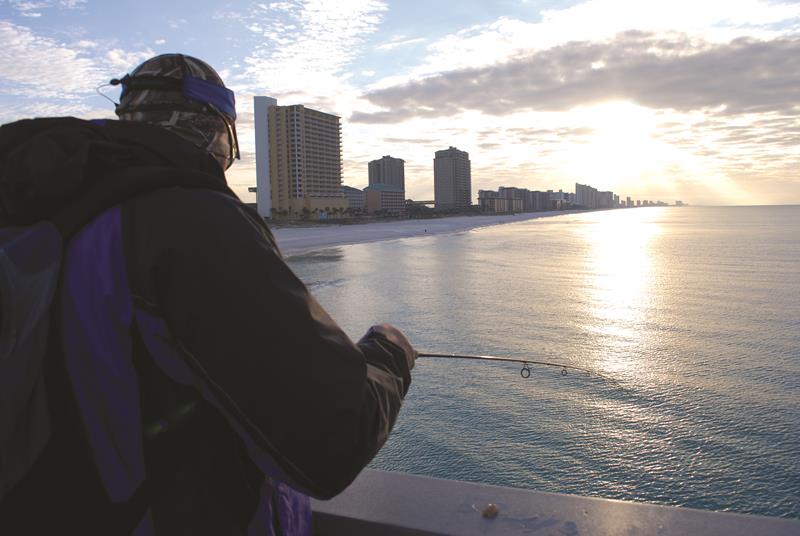
During a brisk morning in early December, Carter of Panama City Beach, bundled up in a lined hoodie and carried his gear and pole to the end of the pier. The wind was icy, the water a startling green, calm and clear. He swung his leaded, squid-baited line and dropped it near the pilings.
“I shouldn’t even have come out without getting some bull minnows,” he said.
He was after flounder, the prize fish this time of year, but one that is surprisingly picky about what it will hit. Live bull minnows netted Carter eight flatfish the day before and he’d hoped that his luck would hold this day with inferior bait.
It did not.
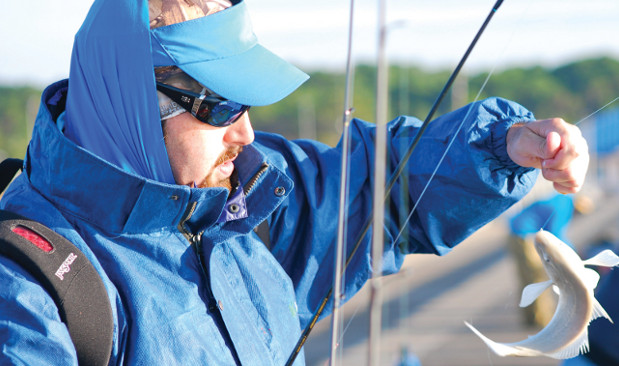
Back along the pier, much closer to shore, David Stadler was sight-fishing for whiting – also known as white drum – and having great success. He could easily see the small schools of whiting circling close to shore, searching for sand fleas. He would toss out a small hook, on thin line, lightly weighted and tipped with a pinch of shrimp. His goal was to present the easily-spooked fish an easy meal, but do so with the slightest splash.
It was working. Stadler, of Lynn Haven, already had several of the small silvery fish in the bucket. As the sun rose, he moved down the pier over deeper water, knowing the fish would be headed in that direction. Soon, he was joined by a half-dozen other fishermen who were joyously reeling in whiting and bringing them up as quickly as possible so the lurking pelicans wouldn’t swipe them off their hooks.
Carter soon joined that group, but his luck remained poor. He didn’t seem to mind. He considers fishing at the pier to be a social event and he enjoyed the interaction with other fishermen.
Carter said when the weather is warm he fishes for Spanish mackerel, even bonito, or any of the migratory fish that pass through. The fall and winter are times for flounder, redfish, and whiting. In January and late February to early March are times for pompano and sheepshead.
“It’s all a cycle,” he said.
Jubilee
Tom Putnam, owner of Half Hitch Tackle, said the fall and winter months differ from the spring and summer only in what is available. Most fish have a migration pattern of some sort when the water temperature changes. Mackerel, for instance, travel great distances and head south for the winter and north for the summer. Bay species like redfish and trout, which generally prowl the shallow flats, move into deeper water but within the same geographic area.
The way that flounder migrate is unique. Gulf flounder move into the bay during the winter while bay flounder move into the gulf. At certain times of the year, like November and early December, both kinds of flounder are in roughly the same locations.
“They call this a jubilee,” Putnam said.
They congregate near shorelines, around structures and grass flats, but always on sandy bottoms. Sometimes, the flounder will be so thick they stack up on one another.
They go to the same areas because they all hunt the same way: they conceal themselves in the sand and wait for a meal to go past. For the best results, they wait around areas where baitfish are more likely to be – like reefs, submerged boats, rubble and pilings.
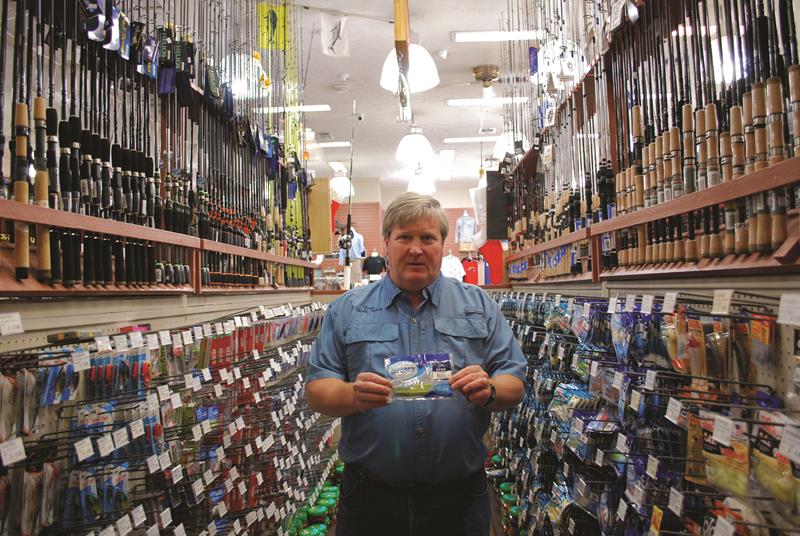
The keys to catching flounder, Putnam said, are bait and tide. A good flowing tide, especially and outbound tide, is best. Flounder like it when things drift past them and are more likely to hit aggressively during an outgoing tide.
A Carolina rig, with an egg sinker situated behind a swivel, with a lip- hooked live minnow works best. Fishermen who prefer lures should go after brands like Berkley Gulp!, which wriggle and smell.
Putnam said for those fishermen who do not have a boat, a few good spots for flounder are: the pass, Deepwater Point, marinas, docks, bridges, entrances to bayous, the piers and at the base of the Hathaway Bridge.
“The one thing you’ve got to remember when it comes to flounder is, you gotta go to him. He’s not gonna go to you,” Putnam said. The bait or lure has to be brought near enough for the flounder to strike. Also, don’t keep working one spot. Throw out and reel back in slowly, then throw to another spot a few feet away and repeat. “If you’ve drug it past the same place 10 times, he’s either not gonna hit it or he’s not there.”
Fishing the rock piles at the base of the Hathaway and the rock jetties will mean numerous snags and broken lines. Be prepared to change your rigs often.
Trout and redfish move off the flats and into deeper water during winter time. Bull redfish, however, stay in the pass near the jetties year-round and will hit most anything from minnows to shrimp and crabs. While they’re usually too big to keep, bull redfish are a good fight and lots of fun.
The best bets in February are sheepshead and whiting, and by late February through March, the pompano return to the beaches. Whiting and pompano roam the same sandbars within casting distance of the beach. Sheepshead are almost always around barnacle- encrusted pilings and rock piles.
The general rules for fall and winter fishing, Putnam said, aren’t very different than fishing the rest of the year. Look for a day that has a decent tide, preferably an out-going tide. Fish within two hours of sunrise or sunset. Don’t bother fishing within two days of a full moon.
And go with the right bait.
For more information and tips on local fishing, check with the experts at Half Hitch Tackle.
By David Angier