
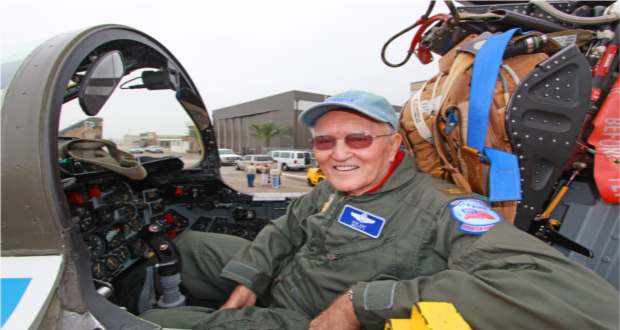
Tribute to a Hero


Surrounded by his children and grandchildren, Col. George E. “Bud” Day died on July 27, 2013 at the age of 88 quietly at his home in Shalimar, Florida and, following the service in Fort Walton Beach, Colonel Day was laid to rest at Barrancas National Cemetery at NAS Pensacola. Florida Senator Don Gaetz: “Colonel Bud Day was America personifi ed. He was my constituent, my friend and my hero. There is a lonesome place against the Northwest Florida sky today.”
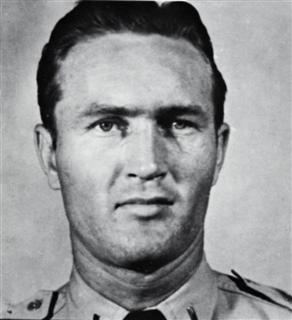
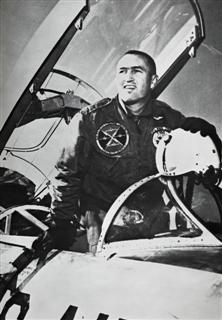
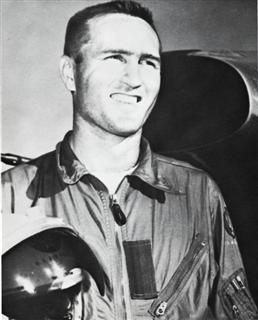
George Everett Day was born on February 24, 1925, in Sioux Falls, Iowa. At the age of 17, George, known to his friends as ‘Bud’, dropped out of high school to join the Marines and serve in the Pacific Theater in World War II. After the war, he returned to Sioux City where he used the GI Bill to earn his bachelor’s degree from Morningside College. He joined the Army Reserve, and later the Iowa Air National Guard, and learned to fly at Webb Air Force Base in Big Spring, Texas. He continued his education at the University of South Dakota, where he earned a Juris Doctor degree and was admitted to the bar in 1949. It was also in 1949 that Bud Day married his sweetheart, Ms. Doris Sorensen. The couple raised two sons and two daughters.
1953 saw Day called up for service for the Korean War where he served two tours of duty as a fighter-bomber pilot. After the war, he moved to St. Louis, Missouri where he taught aerospace science at St. Louis University.
In 1967, Bud, now Major Day, volunteered for the Viet Nam War. He was 42 years old and only one year shy of retirement. He flew an F-100F fighter jet that he named “Misty,” after his favorite song. On August 26, 1967, flying his 65th mission, Major Day was shot down north of the Demilitarized Zone (DMZ) by a surface-to-air (SAM) missile. Ejecting from the plane, he broke his right arm in three places and sustained eye and back injuries. He was captured by the North Vietnam militia and stripped of his boots and flight suit. He escaped his captors and, although injured and almost naked, trekked 20 miles back to South Vietnam, making him the only prisoner of war (POW) to escape from North Vietnam. Just two miles from the safety of a marine base, he was recaptured by the Viet Cong and suffered gunshot wounds to the hand and leg. He was taken to a Hanoi prison camp where he was tortured and starved. His cellmate, John McCain, would later become the US Senator for the State of Arizona and a presidential candidate. On March 14, 1973, now Colonel Day was released from prison after five years and seven months as a POW.
Colonel Day was appointed vice commander of the 33rd Tactical Fighter Wing at Eglin AFB in 1974, where he served until his retirement. This was not Day’s first assignment to a base in the Florida panhandle. In 1952, Day was stationed at Tyndall AFB. In 1976, he received the nation’s highest military award, the Medal of Honor bestowed to him by President Gerald Ford in the name of the Congress. He was the sixteenth-most decorated Medal of Honor recipient in US military history. He retired from active duty in 1977.
After returning to civilian life, the Days settled in Shalimar, Florida, and Day continued his education. He earned a master’s degree and two doctorate degrees. He was active in the Florida Republican Party and campaigned for Presidential candidates George W. Bush and John McCain. Day opened his law practice in Fort Walton Beach, Florida, in 1977. He would go on to wage battle against cuts to military retiree’s medical benefi ts. Although his case was not successful, his crusade brought about change in the form of new legislation, TRICARE for Life, extending medical coverage to medically retired veterans, or those with 20 years’ service.
Colonel Day’s numerous accomplishments have been recognized by both military and civilian institutions. Sioux City honored Day by naming an airfi eld after him, the Colonel Bud Day Field Airport. Ross Perot was instrumental in the placement of the Bud Day statue, also in Sioux City. Visitors and enlisted personnel now enter Eglin AFB via Colonel Bud Day Boulevard.
Upon learning of his death, John McCain said of Colonel Day, “He was the bravest man I ever knew.” McCain added that once in the POW camp, he witnessed Day “sing the national anthem in response to having a rifle pointed at his face.” McCain concluded by saying, “But, he is gone now. To a heaven I expect he imagined would look like an Iowa cornfield in early winter, filled with pheasants. I will miss Bud every day for the rest of my life. But, I will see him again. I know I will. I’ll hunt that field with him.”
By Dr. Dan Finley and Connie Head